• A Free Man’s Worship

    Friday the 19th began strange and remained that way. I ordered a licuado – milk blended with fruit – and sat on a stool outside a shack on the roadside in La Maquina, Guatemala; or The Machine. I work here. Don’t bother: There is no sign that says Bienvenidos a La Maquina or I would have stolen it already. I sat disdainfully sipping the licuado after watching the kid behind the counter pour roughly a quarter pound of white sugar into the blender. I got up and walked back to the car, sulking about what could have been.

    I tried to pay for gasoline an hour and a half later and could not find my backpack. The backpack with all of my money, my camera, my ereader, and my journals. I began looking around the car. It has to be here since this is where it belongs. I tried to be cool, watching myself go through the motions. Maybe it is under these papers or maybe it is under this jacket that I have already checked three times. I seemed to be doing all of this for the benefit of the gas station attendant. Then I accepted reality: it is at the licuado stand. I frantically flew out of the gas station, punching inanimate objects and shouting obscenities. I would do this for a few seconds and then laugh at myself for being ridiculous; there is no sense in fretting about what you cannot change or do not have control over.  My pictures, my writing, my money! Fuck! It doesn’t matter, they are just things, if it is all gone it is the universe teaching me to be more mindful. NO! FUCK! I would give whoever has it all of my money, I would do anything….seriously…..anything. I flew over speed bumps and threaded my way through fields of potholes on my return journey.  I arrive in La Maquina, almost crashing the car as I saw the backpack miraculously sitting where I left it. I ran up and aggressively grabbed it by its body, like the scruff of an insolent puppy.

    ‘Thanks for guarding my backpack!’ I shouted.

    ‘Uh….yeah.’ The kid behind the counter seemed confused.

    ‘I left this here for several hours and everything is still here!’

    ‘What is in it?’

    ‘Oh…uh… my notebook.’ I pulled out just the notebook to show him. I never performed any of the depraved acts that ran through my mind that would be necessary to recover my backpack.

    I hopped back in the car and returned to Retalhuleu; met with a machinist; caught a tuktuk to the terminal; and finally hopped onto a bus, after merely glancing at the plaque in front listing Xela as one of its destinations, filled with merry musing about my upcoming sojourn in Mexico for a ten day silent Vipassana retreat. I began reading “A Free Man’s Worship” by Bertrand Russell while I waited for a bus to depart and quickly became engrossed. As we thundered over potholes, the driver whipping the wheel and veering all over the two-lane road, I diligently maintained my deep concentration. I marveled at my aplomb; a bohemian vagabond deepening his erudition despite the pettiness and uncouthness that abounds.

    ‘Where are you going?’ I look up from my book slowly before responding to the ayudante’s question.

    ‘Xela.’ I smugly hand him 13 Quetzales, which I had already counted out, as that is how much the fare always costs. Everyone seemed to be laughing as they marveled at the gringo who knows the fares and routes on these rudimentary thirdworld transport systems.

    ‘We aren’t going to Xela; we are going to Coatepeque, but I can drop you off at a junction further down the road where you can get a bus  back towards Xela.’ He laughs at me and bellows out.

    ‘Oh. I uh..I saw the sign that…..Alright.’

    I finished the essay as I sat sweating and pressed against 87 other people on the bus. 9 rows, 2 seats per row, 3 people per seat, count babies (sometimes as many as four per seat), count people in aisle, count ayudante that is occasionally on the roof. Sometimes you just read things at the right moment. The subject: Humanity under the blinding light of impermanence.

    A Free Man’s Worship by Bertrand Russell

    To Dr. Faustus in his study Mephistopheles told the history of the Creation, saying:

    “The endless praises of the choirs of angels had begun to grow wearisome; for, after all, did he not deserve their praise? Had he not given them endless joy? Would it not be more amusing to obtain undeserved praise, to be worshipped by beings whom he tortured? He smiled inwardly, and resolved that the great drama should be performed.

    “For countless ages the hot nebula whirled aimlessly through space. At length it began to take shape, the central mass threw off planets, the planets cooled, boiling seas and burning mountains heaved and tossed, from black masses of cloud hot sheets of rain deluged the barely solid crust. And now the first germ of life grew in the depths of the ocean, and developed rapidly in the fructifying warmth into vast forest trees, huge ferns springing from the damp mould, sea monsters breeding, fighting, devouring, and passing away. And from the monsters, as the play unfolded itself, Man was born, with the power of thought, the knowledge of good and evil, and the cruel thirst for worship. And Man saw that all is passing in this mad, monstrous world, that all is struggling to snatch, at any cost, a few brief moments of life before Death’s inexorable decree. And Man said: `There is a hidden purpose, could we but fathom it, and the purpose is good; for we must reverence something, and in the visible world there is nothing worthy of reverence.’ And Man stood aside from the struggle, resolving that God intended harmony to come out of chaos by human efforts. And when he followed the instincts which God had transmitted to him from his ancestry of beasts of prey, he called it Sin, and asked God to forgive him. But he doubted whether he could be justly forgiven, until he invented a divine Plan by which God’s wrath was to have been appeased. And seeing the present was bad, he made it yet worse, that thereby the future might be better. And he gave God thanks for the strength that enabled him to forgo even the joys that were possible. And God smiled; and when he saw that Man had become perfect in renunciation and worship, he sent another sun through the sky, which crashed into Man’s sun; and all returned again to nebula.

    “`Yes,’ he murmured, `it was a good play; I will have it performed again.’”

    Such, in outline, but even more purposeless, more void of meaning, is the world which Science presents for our belief. Amid such a world, if anywhere, our ideals henceforward must find a home. That Man is the product of causes which had no prevision of the end they were achieving; that his origin, his growth, his hopes and fears, his loves and his beliefs, are but the outcome of accidental collocations of atoms; that no fire, no heroism, no intensity of thought and feeling, can preserve an individual life beyond the grave; that all the labours of the ages, all the devotion, all the inspiration, all the noonday brightness of human genius, are destined to extinction in the vast death of the solar system, and that the whole temple of Man’s achievement must inevitably be buried beneath the debris of a universe in ruins–all these things, if not quite beyond dispute, are yet so nearly certain, that no philosophy which rejects them can hope to stand. Only within the scaffolding of these truths, only on the firm foundation of unyielding despair, can the soul’s habitation henceforth be safely built.

    How, in such an alien and inhuman world, can so powerless a creature as Man preserve his aspirations untarnished? A strange mystery it is that Nature, omnipotent but blind, in the revolutions of her secular hurryings through the abysses of space, has brought forth at last a child, subject still to her power, but gifted with sight, with knowledge of good and evil, with the capacity of judging all the works of his unthinking Mother. In spite of Death, the mark and seal of the parental control, Man is yet free, during his brief years, to examine, to criticise, to know, and in imagination to create. To him alone, in the world with which he is acquainted, this freedom belongs; and in this lies his superiority to the resistless forces that control his outward life.

    The savage, like ourselves, feels the oppression of his impotence before the powers of Nature; but having in himself nothing that he respects more than Power, he is willing to prostrate himself before his gods, without inquiring whether they are worthy of his worship. Pathetic and very terrible is the long history of cruelty and torture, of degradation and human sacrifice, endured in the hope of placating the jealous gods: surely, the trembling believer thinks, when what is most precious has been freely given, their lust for blood must be appeased, and more will not be required. The religion of Moloch–as such creeds may be generically called–is in essence the cringing submission of the slave, who dare not, even in his heart, allow the thought that his master deserves no adulation. Since the independence of ideals is not yet acknowledged, Power may be freely worshipped, and receive an unlimited respect, despite its wanton infliction of pain.

    But gradually, as morality grows bolder, the claim of the ideal world begins to be felt; and worship, if it is not to cease, must be given to gods of another kind than those created by the savage. Some, though they feel the demands of the ideal, will still consciously reject them, still urging that naked Power is worthy of worship. Such is the attitude inculcated in God’s answer to Job out of the whirlwind: the divine power and knowledge are paraded, but of the divine goodness there is no hint. Such also is the attitude of those who, in our own day, base their morality upon the struggle for survival, maintaining that the survivors are necessarily the fittest. But others, not content with an answer so repugnant to the moral sense, will adopt the position which we have become accustomed to regard as specially religious, maintaining that, in some hidden manner, the world of fact is really harmonious with the world of ideals. Thus Man creates God, all-powerful and all-good, the mystic unity of what is and what should be.

    But the world of fact, after all, is not good; and, in submitting our judgment to it, there is an element of slavishness from which our thoughts must be purged. For in all things it is well to exalt the dignity of Man, by freeing him as far as possible from the tyranny of non-human Power. When we have realised that Power is largely bad, that man, with his knowledge of good and evil, is but a helpless atom in a world which has no such knowledge, the choice is again presented to us: Shall we worship Force, or shall we worship Goodness? Shall our God exist and be evil, or shall he be recognised as the creation of our own conscience?

    The answer to this question is very momentous, and affects profoundly our whole morality. The worship of Force, to which Carlyle and Nietzsche and the creed of Militarism have accustomed us, is the result of failure to maintain our own ideals against a hostile universe: it is itself a prostrate submission to evil, a sacrifice of our best to Moloch. If strength indeed is to be respected, let us respect rather the strength of those who refuse that false “recognition of facts” which fails to recognise that facts are often bad. Let us admit that, in the world we know, there are many things that would be better otherwise, and that the ideals to which we do and must adhere are not realised in the realm of matter. Let us preserve our respect for truth, for beauty, for the ideal of perfection which life does not permit us to attain, though none of these things meet with the approval of the unconscious universe. If Power is bad, as it seems to be, let us reject it from our hearts. In this lies Man’s true freedom: in determination to worship only the God created by our own love of the good, to respect only the heaven which inspires the insight of our best moments. In action, in desire, we must submit perpetually to the tyranny of outside forces; but in thought, in aspiration, we are free, free from our fellow-men, free from the petty planet on which our bodies impotently crawl, free even, while we live, from the tyranny of death. Let us learn, then, that energy of faith which enables us to live constantly in the vision of the good; and let us descend, in action, into the world of fact, with that vision always before us.

    When first the opposition of fact and ideal grows fully visible, a spirit of fiery revolt, of fierce hatred of the gods, seems necessary to the assertion of freedom. To defy with Promethean constancy a hostile universe, to keep its evil always in view, always actively hated, to refuse no pain that the malice of Power can invent, appears to be the duty of all who will not bow before the inevitable. But indignation is still a bondage, for it compels our thoughts to be occupied with an evil world; and in the fierceness of desire from which rebellion springs there is a kind of self-assertion which it is necessary for the wise to overcome. Indignation is a submission of our thoughts, but not of our desires; the Stoic freedom in which wisdom consists is found in the submission of our desires, but not of our thoughts. From the submission of our desires springs the virtue of resignation; from the freedom of our thoughts springs the whole world of art and philosophy, and the vision of beauty by which, at last, we half reconquer the reluctant world. But the vision of beauty is possible only to unfettered contemplation, to thoughts not weighted by the load of eager wishes; and thus Freedom comes only to those who no longer ask of life that it shall yield them any of those personal goods that are subject to the mutations of Time.

    Although the necessity of renunciation is evidence of the existence of evil, yet Christianity, in preaching it, has shown a wisdom exceeding that of the Promethean philosophy of rebellion. It must be admitted that, of the things we desire, some, though they prove impossible, are yet real goods; others, however, as ardently longed for, do not form part of a fully purified ideal. The belief that what must be renounced is bad, though sometimes false, is far less often false than untamed passion supposes; and the creed of religion, by providing a reason for proving that it is never false, has been the means of purifying our hopes by the discovery of many austere truths.

    But there is in resignation a further good element: even real goods, when they are unattainable, ought not to be fretfully desired. To every man comes, sooner or later, the great renunciation. For the young, there is nothing unattainable; a good thing desired with the whole force of a passionate will, and yet impossible, is to them not credible. Yet, by death, by illness, by poverty, or by the voice of duty, we must learn, each one of us, that the world was not made for us, and that, however beautiful may be the things we crave, Fate may nevertheless forbid them. It is the part of courage, when misfortune comes, to bear without repining the ruin of our hopes, to turn away our thoughts from vain regrets. This degree of submission to Power is not only just and right: it is the very gate of wisdom.

    But passive renunciation is not the whole of wisdom; for not by renunciation alone can we build a temple for the worship of our own ideals. Haunting foreshadowings of the temple appear in the realm of imagination, in music, in architecture, in the untroubled kingdom of reason, and in the golden sunset magic of lyrics, where beauty shines and glows, remote from the touch of sorrow, remote from the fear of change, remote from the failures and disenchantments of the world of fact. In the contemplation of these things the vision of heaven will shape itself in our hearts, giving at once a touchstone to judge the world about us, and an inspiration by which to fashion to our needs whatever is not incapable of serving as a stone in the sacred temple.

    Except for those rare spirits that are born without sin, there is a cavern of darkness to be traversed before that temple can be entered. The gate of the cavern is despair, and its floor is paved with the gravestones of abandoned hopes. There Self must die; there the eagerness, the greed of untamed desire must be slain, for only so can the soul be freed from the empire of Fate. But out of the cavern the Gate of Renunciation leads again to the daylight of wisdom, by whose radiance a new insight, a new joy, a new tenderness, shine forth to gladden the pilgrim’s heart.

    When, without the bitterness of impotent rebellion, we have learnt both to resign ourselves to the outward rules of Fate and to recognise that the non-human world is unworthy of our worship, it becomes possible at last so to transform and refashion the unconscious universe, so to transmute it in the crucible of imagination, that a new image of shining gold replaces the old idol of clay. In all the multiform facts of the world–in the visual shapes of trees and mountains and clouds, in the events of the life of man, even in the very omnipotence of Death–the insight of creative idealism can find the reflection of a beauty which its own thoughts first made. In this way mind asserts its subtle mastery over the thoughtless forces of Nature. The more evil the material with which it deals, the more thwarting to untrained desire, the greater is its achievement in inducing the reluctant rock to yield up its hidden treasures, the prouder its victory in compelling the opposing forces to swell the pageant of its triumph. Of all the arts, Tragedy is the proudest, the most triumphant; for it builds its shining citadel in the very centre of the enemy’s country, on the very summit of his highest mountain; from its impregnable watchtowers, his camps and arsenals, his columns and forts, are all revealed; within its walls the free life continues, while the legions of Death and Pain and Despair, and all the servile captains of tyrant Fate, afford the burghers of that dauntless city new spectacles of beauty. Happy those sacred ramparts, thrice happy the dwellers on that all-seeing eminence. Honour to those brave warriors who, through countless ages of warfare, have preserved for us the priceless heritage of liberty, and have kept undefiled by sacrilegious invaders the home of the unsubdued.

    But the beauty of Tragedy does but make visible a quality which, in more or less obvious shapes, is present always and everywhere in life. In the spectacle of Death, in the endurance of intolerable pain, and in the irrevocableness of a vanished past, there is a sacredness, an overpowering awe, a feeling of the vastness, the depth, the inexhaustible mystery of existence, in which, as by some strange marriage of pain, the sufferer is bound to the world by bonds of sorrow. In these moments of insight, we lose all eagerness of temporary desire, all struggling and striving for petty ends, all care for the little trivial things that, to a superficial view, make up the common life of day by day; we see, surrounding the narrow raft illumined by the flickering light of human comradeship, the dark ocean on whose rolling waves we toss for a brief hour; from the great night without, a chill blast breaks in upon our refuge; all the loneliness of humanity amid hostile forces is concentrated upon the individual soul, which must struggle alone, with what of courage it can command, against the whole weight of a universe that cares nothing for its hopes and fears. Victory, in this struggle with the powers of darkness, is the true baptism into the glorious company of heroes, the true initiation into the overmastering beauty of human existence. From that awful encounter of the soul with the outer world, enunciation, wisdom, and charity are born; and with their birth a new life begins. To take into the inmost shrine of the soul the irresistible forces whose puppets we seem to be–Death and change, the irrevocableness of the past, and the powerlessness of Man before the blind hurry of the universe from vanity to vanity–to feel these things and know them is to conquer them.

    This is the reason why the Past has such magical power. The beauty of its motionless and silent pictures is like the enchanted purity of late autumn, when the leaves, though one breath would make them fall, still glow against the sky in golden glory. The Past does not change or strive; like Duncan, after life’s fitful fever it sleeps well; what was eager and grasping, what was petty and transitory, has faded away, the things that were beautiful and eternal shine out of it like stars in the night. Its beauty, to a soul not worthy of it, is unendurable; but to a soul which has conquered Fate it is the key of religion.

    The life of Man, viewed outwardly, is but a small thing in comparison with the forces of Nature. The slave is doomed to worship Time and Fate and Death, because they are greater than anything he finds in himself, and because all his thoughts are of things which they devour. But, great as they are, to think of them greatly, to feel their passionless splendour, is greater still. And such thought makes us free men; we no longer bow before the inevitable in Oriental subjection, but we absorb it, and make it a part of ourselves. To abandon the struggle for private happiness, to expel all eagerness of temporary desire, to burn with passion for eternal things–this is emancipation, and this is the free man’s worship. And this liberation is effected by a contemplation of Fate; for Fate itself is subdued by the mind which leaves nothing to be purged by the purifying fire of Time.

    United with his fellow-men by the strongest of all ties, the tie of a common doom, the free man finds that a new vision is with him always, shedding over every daily task the light of love. The life of Man is a long march through the night, surrounded by invisible foes, tortured by weariness and pain, towards a goal that few can hope to reach, and where none may tarry long. One by one, as they march, our comrades vanish from our sight, seized by the silent orders of omnipotent Death. Very brief is the time in which we can help them, in which their happiness or misery is decided. Be it ours to shed sunshine on their path, to lighten their sorrows by the balm of sympathy, to give them the pure joy of a never-tiring affection, to strengthen failing courage, to instil faith in hours of despair. Let us not weigh in grudging scales their merits and demerits, but let us think only of their need–of the sorrows, the difficulties, perhaps the blindnesses, that make the misery of their lives; let us remember that they are fellow-sufferers in the same darkness, actors in the same tragedy as ourselves. And so, when their day is over, when their good and their evil have become eternal by the immortality of the past, be it ours to feel that, where they suffered, where they failed, no deed of ours was the cause; but wherever a spark of the divine fire kindled in their hearts, we were ready with encouragement, with sympathy, with brave words in which high courage glowed.

    Brief and powerless is Man’s life; on him and all his race the slow, sure doom falls pitiless and dark. Blind to good and evil, reckless of destruction, omnipotent matter rolls on its relentless way; for Man, condemned to-day to lose his dearest, to-morrow himself to pass through the gate of darkness, it remains only to cherish, ere yet the blow falls, the lofty thoughts that ennoble his little day; disdaining the coward terrors of the slave of Fate, to worship at the shrine that his own hands have built; undismayed by the empire of chance, to preserve a mind free from the wanton tyranny that rules his outward life; proudly defiant of the irresistible forces that tolerate, for a moment, his knowledge and his condemnation, to sustain alone, a weary but unyielding Atlas, the world that his own ideals have fashioned despite the trampling march of unconscious power.
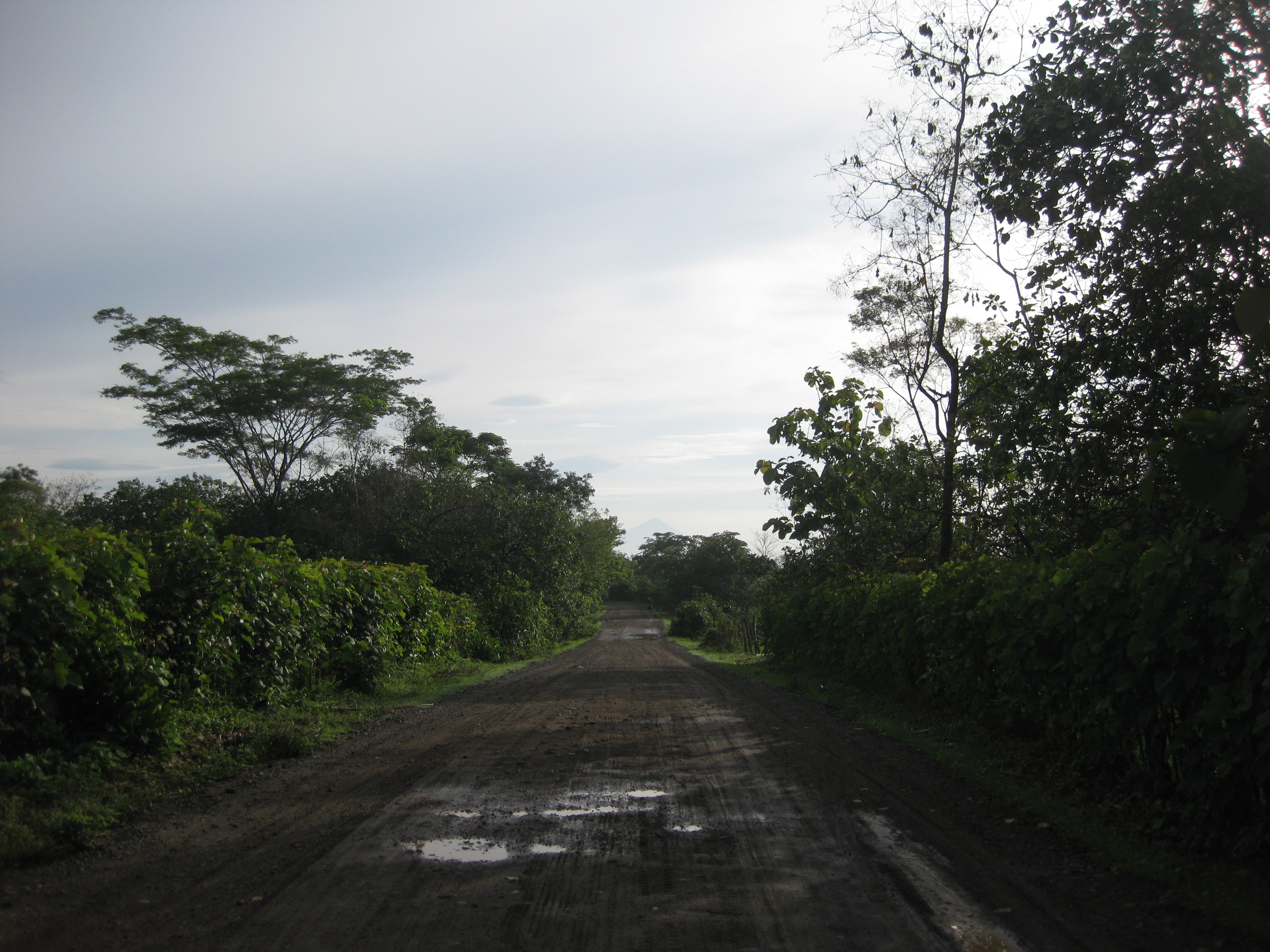
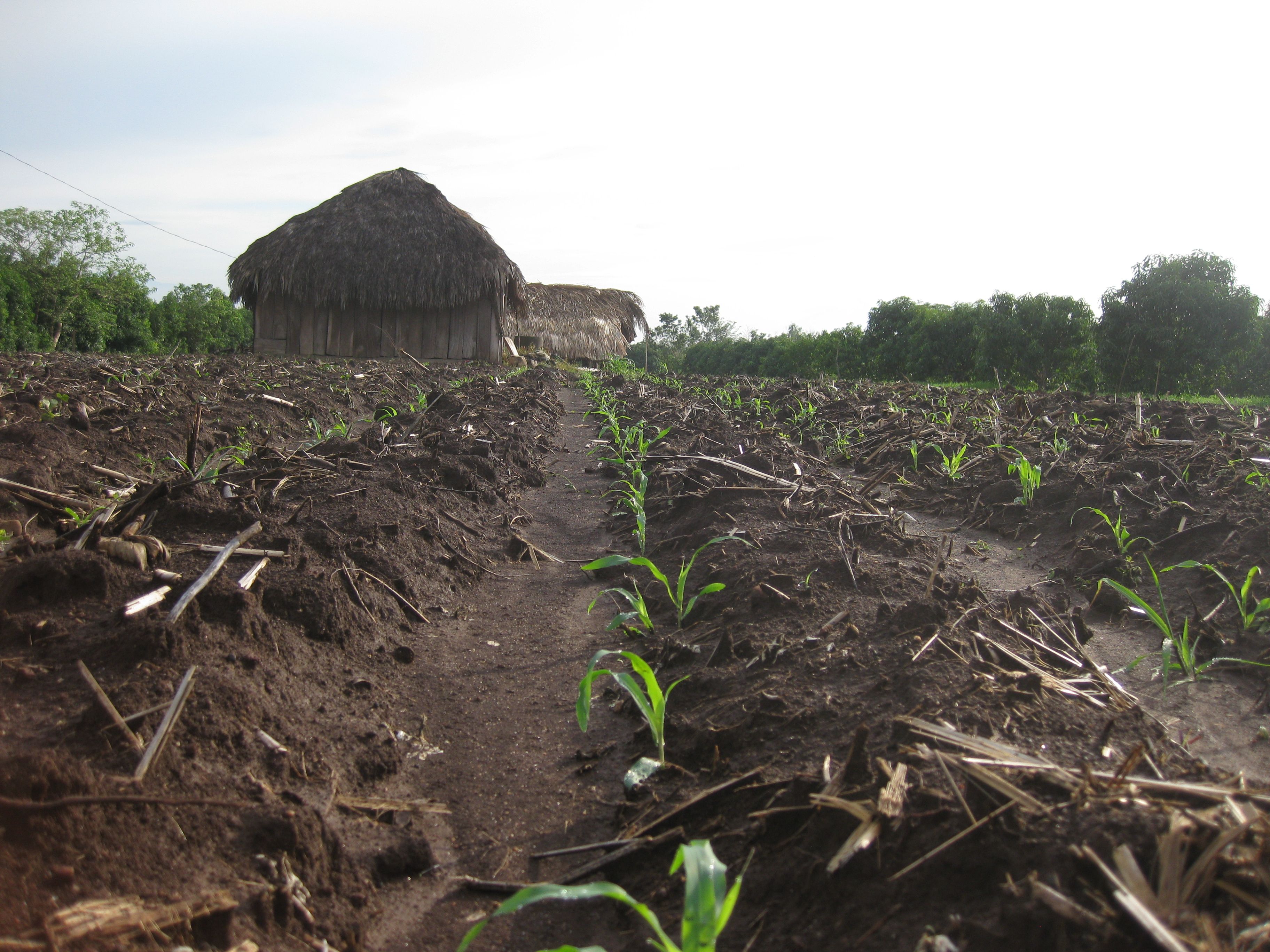
  • Thank You Chase Bank

    I graduated college in May of 2008, walking out of academia in a black Chinese-made robe befitting of an executioner into an economy and s society catching the first whiffs of the miasmatic decay created by our materialism. I decided to spend another summer fighting forest fires and save money for what could be a long winter. I worked 112 hours running a chainsaw on a good week, spending most of the summer in Northern California’s timber stands. I finished the season in September and moved back to Chicago right as Lehman Brothers collapsed; the first limb shed from the leprous system. Chicago had a ‘good job market’ and it was time for me to seek out a Sisyphean task that would bestow me with a stainless steel refrigerator, George Foreman Grills (yes, plural), a waffle maker, low slung Japanese chic memory foam orthopedic bed, and the slimmest profile television available as the centerpiece my loft in a district where meat used to be packed. In essence, all that I was promised and deserved after years of studying. I lackadaisically applied for quite a few jobs as I watched and read about the hornswoggling, the avarice, the delusion, the Ponzi schemes, the fraud, the losses, the prospects of retirement evaporating for millions; It was like watching 300 million people find out that Santa isn’t real. Fighting a forest fire has a clear cut purpose, something that could not be further from the idea of bundling something, derivatizing it, rating it as quality since you don’t really understand what it is and then selling it to people who don’t understand what you are selling either. But everyone is going to earn a lot of money, right? Right. Nobody loses? Nobody.  I was appalled and stressed about my future, until Chase Bank offered me a job interview. I was going to get a low level position in the orgy!

    I was going to get rich, if only I could figure out how to convince myself and these people that I would be good at doing something that I had zero interest in doing. If I got rich then in quite a few years I could possibly do something that I would enjoy; it is just like indentured servitude, it wouldn’t be that bad. I began sweating as soon as I received the phone call as my mind frantically searched for a way to lie to myself and everyone else. If I could pull it off, I would be perfect to work in finance. I entered the office, shorn of my beard and wearing a suit; the lie started there. Four pale faces sat behind a desk, some sort of panel of midlevel managers from far-flung, forsaken branches of the bank in the Chicago suburbs. They were still doing the indentured servitude portion of their career from what I could gather. We cover the formalities; I kept a copy of my resume on my lap to make sure that my words corroborate with the carefully tailored distortions written in sexless, sleek Arial Narrow. I worried that I might lose control of my hands and watch them float away or that my face would tire from smiling incessantly, but neither came to pass. I sat thinking about how I should have drank either more or less coffee, until it became apparent that merely handing them my resume was insufficient to get me a piece of the sweet apple pie that is America. They wanted me to do some role playing, but I was already role playing. You can see how this might become confusing.

    ‘Okay. Let’s pretend that I am a bank customer who simply wants to make a deposit. You will be my teller. Your goal is to convince me to refinance and move my mortgage to Chase Bank.’ She actually pretended to be driving a car, her hands rotating the steering wheel to pull up to a hypothetical air tube and speaker through which we would communicate. I am not sure if her feet were doing the pedals as they were under the desk and I could not seem them.

    ‘Hello, I would like to make a deposit. Could I have a deposit slip?’ She calmly leaned towards the non-existent speaker.

    ‘Good afternoon! I will send that right out to you!’ I can’t remember if I pretended to put it in the airtube or not, but my adrenaline was building to crescendo amid a sense of impending doom.

    ‘While you are writing that out, DO YOU CURRENTLY HAVE A HOME MORTGAGE!’ I asked in sheer terror, surprising myself as I yelled the last part at the fictional speaker and the woman.

    ‘Yes, but it is with another bank.’ She curtly replied, seeming unfazed by my loss of control.

    ‘Have you ever thought about…..refinancing… your loan with Chase Bank? It could…..save money. RATES ARE LOW!’ I consciously took breaths in between words in an attempt to hold it together, making it until the last bit before my tone and volume began rapidly fluctuating again. The adrenaline and disgust were rising rapidly and overcame me. They must have been able to smell the sweat and fear, I briefly wondered if they enjoy this? I contained the overwhelming urge to run.

    I felt like some sort of lab rat being grotesquely tortured, completely incapable of understanding the overarching purpose for having electrodes attached to my miniature nipples. I was shaking at this point, my fists balled, my pupils dilated, and my feet twitching in fight or flight response. They asked me some benign questions and things slowed down a little bit. The adrenaline slowly wore off and I sat in a post-ictal state as they talked more about the specifics of the Personal Banker position. I peered out at the glimmering SUVs backed up behind a red light. I observed a woman talking on her phone in one car, looking absolutely crazy as she gesticulated in the absence of context. I alternatingly glanced at the desk, at these people, at my shoes.

    ‘Are you motivated by financial incentives?’ A bald man officiously squaring a stack of papers over and over again asks me.

    ‘I don’t think so, no not really. Well….I mean… it depends. I want to earn some money.’ I couldn’t lie, the fear had evaporated. It all fell apart, but the honesty was a release. I knew the job was lost at this moment. I view my general indifference to pecuniary remuneration as a virtue, yet what I had just said was tantamount to confessing to a battery of priests that you don’t believe in god. These people lived for money, they worshiped it. There was no other reason they would work within this nightmare.

    I walked out of the sterile box into the afternoon sun with new knowledge about myself and the world. Thank you Chase Bank for changing my life. I went home and bought a plane ticket to Mexico that left a few days later. I have never put that suit on again, it currently serves as moth food in some unknown closet.

    I am certain that some will read this and perceive me as selfish, privileged, shortsighted, a shirker of duties, an addled mind detached from reality, a bum, naïve. In response: you can take whatever path you would like, but I have chosen a different path, something that can probably be gathered from this strange collection of writing seemingly devoid of purpose. I have had to struggle, but I have found profound happiness and tranquility. I have chosen to make time to sit in the sun, to enjoy my food, to walk, to meditate, to meaningfully converse, to make sumptuous food, to travel, to read, to write, to learn for learning’s sake, to make love, to challenge myself. I watch the frenzied pace of society with the utmost mirth.

    I have made the effort to live the life that I want to lead in a world that increasingly seems to strive to make this more difficult.

    We can never perceive where the path that we chose to walk will take us, the end is only an illusion, yet we can make decisions in each moment that will continue taking us down the path that we would like to walk. The radiantly profound moments drawing one onward, happiness is found in moments that pass as we walk the path, not in an end or in abstraction. I find my life expanding, flowering with each passing day. I chose this path with full consciousness and all of my heart.

    There seem to be few dissenters bothering to speak over the din; I am writing to elucidate that it is an individual’s choice how they lead their life. I am exhorting you to sit down and take the time to figure out what your values are and examine to what degree you are living in accordance with them. You only have so many moments left.

  • The Reality in the Rows

    There are several sentences in this paragraph that need to be set to the Fresh Prince of Bel Air theme song. Now this is the story all about how my weekend got flipped, turned upside down and I’d like to take a minute, just sit right there. I lay in bed on a Saturday morning, relishing the sunlight angularly splayed across my bed. My phone rings, I spring up and quickly answer it. I had anticipated this call as the night sky over Quetzaltenango erupted with dendritic shafts of lightning and a long anticipated deluge of water. I pick up my clothes off the floor and stuff papers into a backpack and run into the street, headlong into the maize planting season in the communities around Suchitepéquez, Guatemala. I whistle for a bus and as it comes near the windshield says “Lopez” and it has Jesus  in the mirror. If anything, I could say that this bus was rare. But I think nah, forget it. ¡Oye vos a Reu!

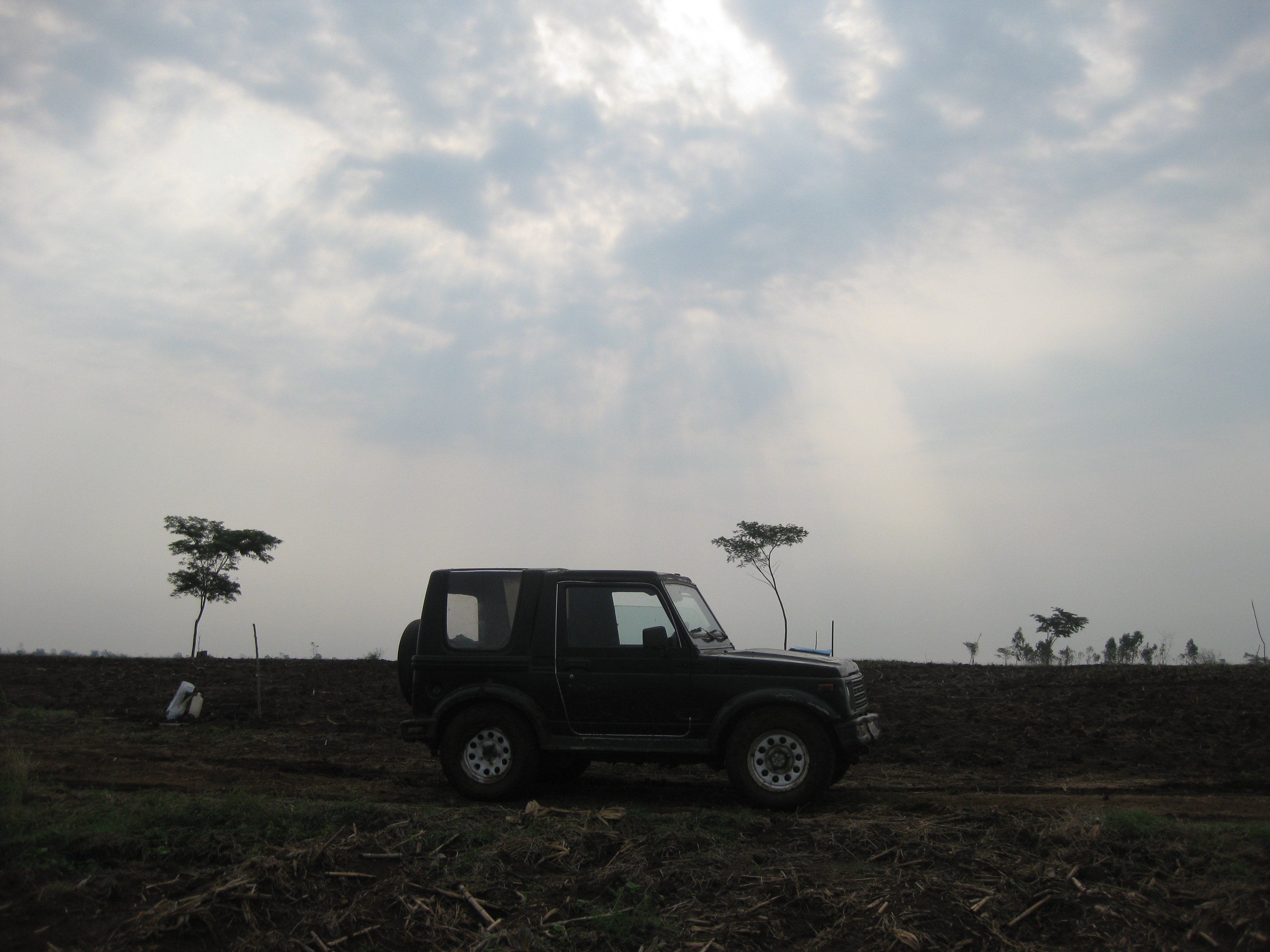
    My curly hair expands outward as the magic school bus slowly immerses me in the coastal humidity. I get dropped off by the bus a kilometer shy of the mechanic’s shop where I will pick up the old champion of a Suzuki that I use in the field. I am walking against traffic in frustration until I hear someone shout:

    ‘Gringo!’ from across the road.

    He runs to the curb with a mango in each hand. We stare at each other from across the road until there is a break in traffic. I run over and he hands me the mangos.

    ‘Por el camino.’ For the road he says through a smile.

    I begin a pothole dodging drive, occasionally spraying rusty water out to the sides as the road itself becomes one large, unavoidable pothole. I shout out the window occasionally at teenagers on mopeds;  there is no time for patience when it comes to agriculture. A slate blanket of clouds smothers the fallow fields; men walk with purpose carrying machetes and hand hewn planting sticks.

    I pass through Cuyotenango, prostitutes lean and leer from cantina doors in the early morning. A drunk pauses as I approach, staring into my eyes, the whites of his eyes cast against the backdrop of the brilliant blood pouring down his face. Nobody else seems concerned.

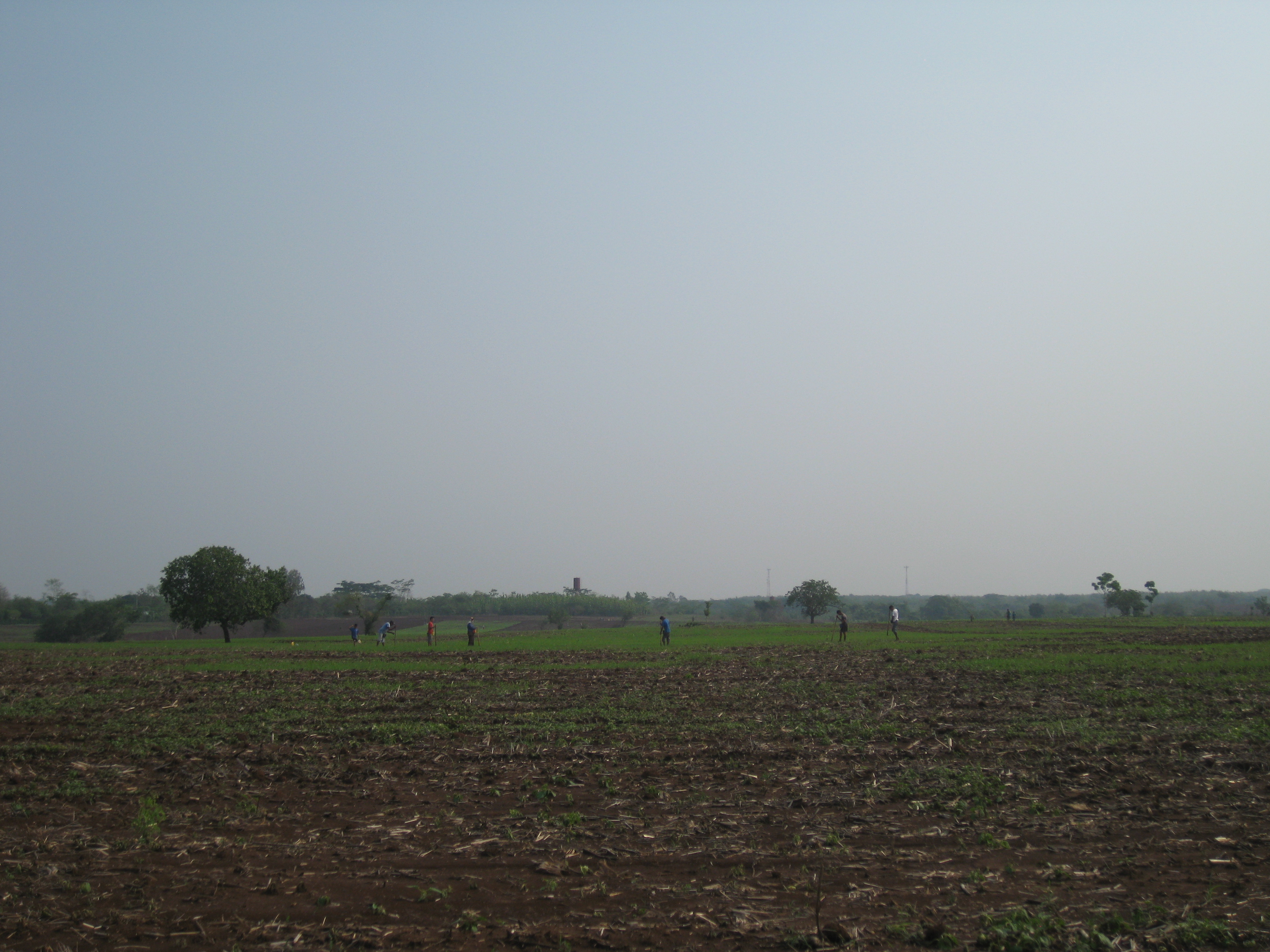
    I currently work for a farmer to farmer organization that works with smallholders farmers on the Guatemalan Pacific coast to improve agriculture, livelihoods and food security through small scale experimentation. Farmers in this area of Guatemala, Suchitepequez and Retalhuleu, generally plant maize (corn) and sesame in soil depleted from years of intensive cotton monocropping that proceeded the land grants that occurred during or after the civil war. Sesame is planted purely for export, and maize for both sale and consumption. I am planting two different varieties of maize with the farmers that are nutritionally superior to the varieties that are currently planted in this region: Quality Protein Maiz and ICTA Maya. Farmers in this region traditionally only have access to information regarding seeds, chemicals, pests and weeds from rarely seen government officials or self-interested representatives from Monsanto or Disagro. We are trying to offer an alternative: I have collaborated with 15-20 farmers to set up small experiments on their parcels with the aims of introducing them to the experimentation process and these varieties of maize. We have been through the process of measuring and marking the experiment in the field; I am rushing to the coast to assist with planting to both monitor their experiments and to take part in the ritual.

    I rattle through the shady tunnel created by a finca of Palma Africana; the symmetry is both beautiful and disgusting. My feeling is similar with regard to the strange smelling water that hits and cools my face from the sprinklers that line the roadside. I try to make it out to the field of Paula Jimenez in 2wd, but I am quickly mired in deep, slick mud as farmers knowingly snicker as they pass on bicycles. I wade out into the mud and lock the hubs, before emerging in a spray of mud.

    I park the car before one daunting pit where a horse drawn cart wallows. I proceed on foot. I arrive late to Paula’s field, something that I see as a positive cultural adaptation to Guatemala on my part. I watch the farmers wander their fields, barefeet caked in black. I quickly come to understand the custom as I suddenly feel quite Dutch as my shoes are transformed into four inch clogs. I measure and remark an already planted experiment and make plans to return the following day to finish the planting of Paula’s field.

    The day is fading quickly and I need to find somewhere to eat, somewhere to sleep and then be back here before 6am. I pass by a few other homes on my way out of town to check up on planting plans, navigating roads riven by rivulets. I eat five empanadas on the roadside, situate myself in the municipal building of a small town called Lupita and cool myself by dumping bowls of water on myself under a constant cacophony of grackles.

    I sit reading Breakfast of Champions by Kurt Vonnegut under a single dangling lightbulb as I am assailed by mosquitos. In amusement I read, ‘Kilgore Trout once wrote a short story which was a dialogue between two pieces of yeast. They were discussing the possible purposes of life as they ate sugar and suffocated in their own excrement. Because of their limited intelligence, they never came close to guessing that they were making champagne.’

    I hear a polite knock on the screen door and Daniel, Treasurer of the local development organization, pulls up a chair. We talk about the organization where I work and the challenges that Guatemala faces. Daniel explains the history of the village: Lupita was founded 17 years earlier by refugees returning for Mexico as the Guatemalan Civil War drew to a close in 1996. The founders came from indigenous communities in the highlands: Quiche, Quetzaltenango and San Marcos. There are still six different languages spoken in the community. The community has benefited from a high degree of organization, despite the cultural diversity. Community organization here is synonymous with agricultural organization; this has allowed the town to prosper through coordinated development projects.

    Daniel sums up the government development and agricultural extension programs that visit the town by saying the following: ‘They love talking, but hate to get their boots dirty. We learn in the fields, we learn by doing. They pass out sheets about how to do technical things, like make organic fertilizer, to people who cannot read, then a farmer tries to do it and it doesn’t work because they didn’t understand how to apply it because it was never demonstrated. Everyone then thinks that organic fertilizer doesn’t work. It happens all of the time; I don’t even want to ask the community to gather for trainings or meetings from the government anymore. The people have no confidence in them and most of the time just hope to receive free fertilizer.’

    ‘How should an organization try to help people and make lasting change here?’

    ‘You should work closely with a few people that can create good examples. Show us what you’re talking about, show us the benefits. I went to university and studied agriculture, came back, and then tried to convince my father to try using organic fertilizer. He wouldn’t . If I showed him how to do it he might try it, but how does anyone expect to show up as an outsider and convince anyone of anything with words? You need to build trust and a relationship with the people and then they will listen to you.’

    Nuevos Bracitios, Suchitepéquez, Guatemala

    I wake up to the same raucous cackling, the intensity increasing as dawn nears. I throw my things in the car in a somnambulant daze and take off. The sky is light as I park in front of the house belonging to a friend named Catocho in Nuevos Bracitos. I slap him on the back as he mixes his seed with a treatment to combat pests, a neon yellow substance called Blindage, with a grin on his face. We sit down for a bowl of black beans and deep yellow tortillas made from a native variety of corn. Catocho and his wife were brought together, in my mind, by one defining and hilarious mannerism: they scream to communicate. They will shout at you from across the table about a mango or to offer you a delicious, cold drink.

    Catocho began working in the cotton fincas at the age of six years old, something that was normal in the 1970s. He grew to be a man who is constant motion and energy, words coming out of his mouth in torrents punctuated with laughter. He is off to an early start today, spinning tales of bad harvests and about the time they accidentally planted all of the rows maize diagonally. Everyone is in high spirits; there is an energy in the fields and houses that is a release after months of anticipation.

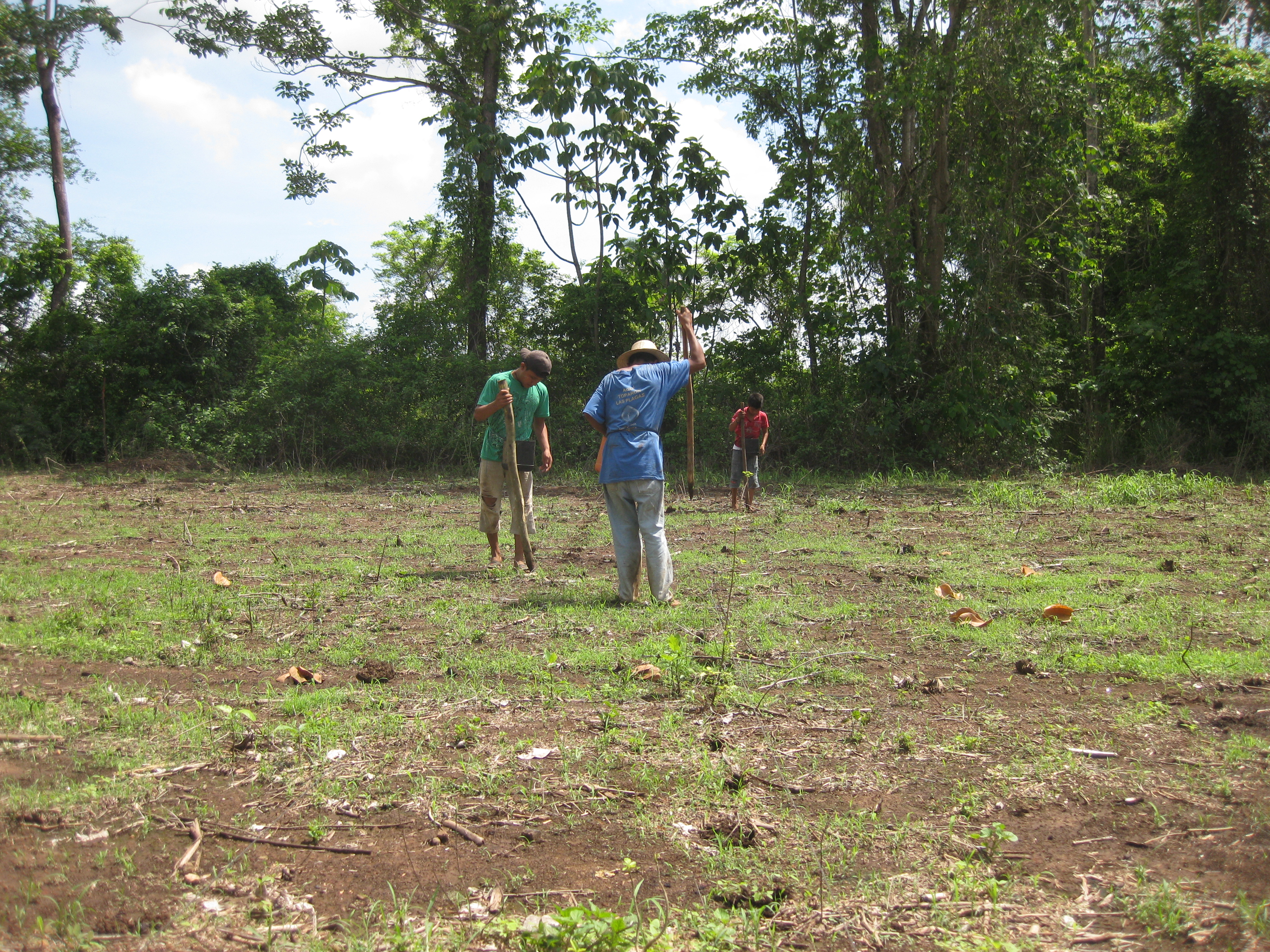
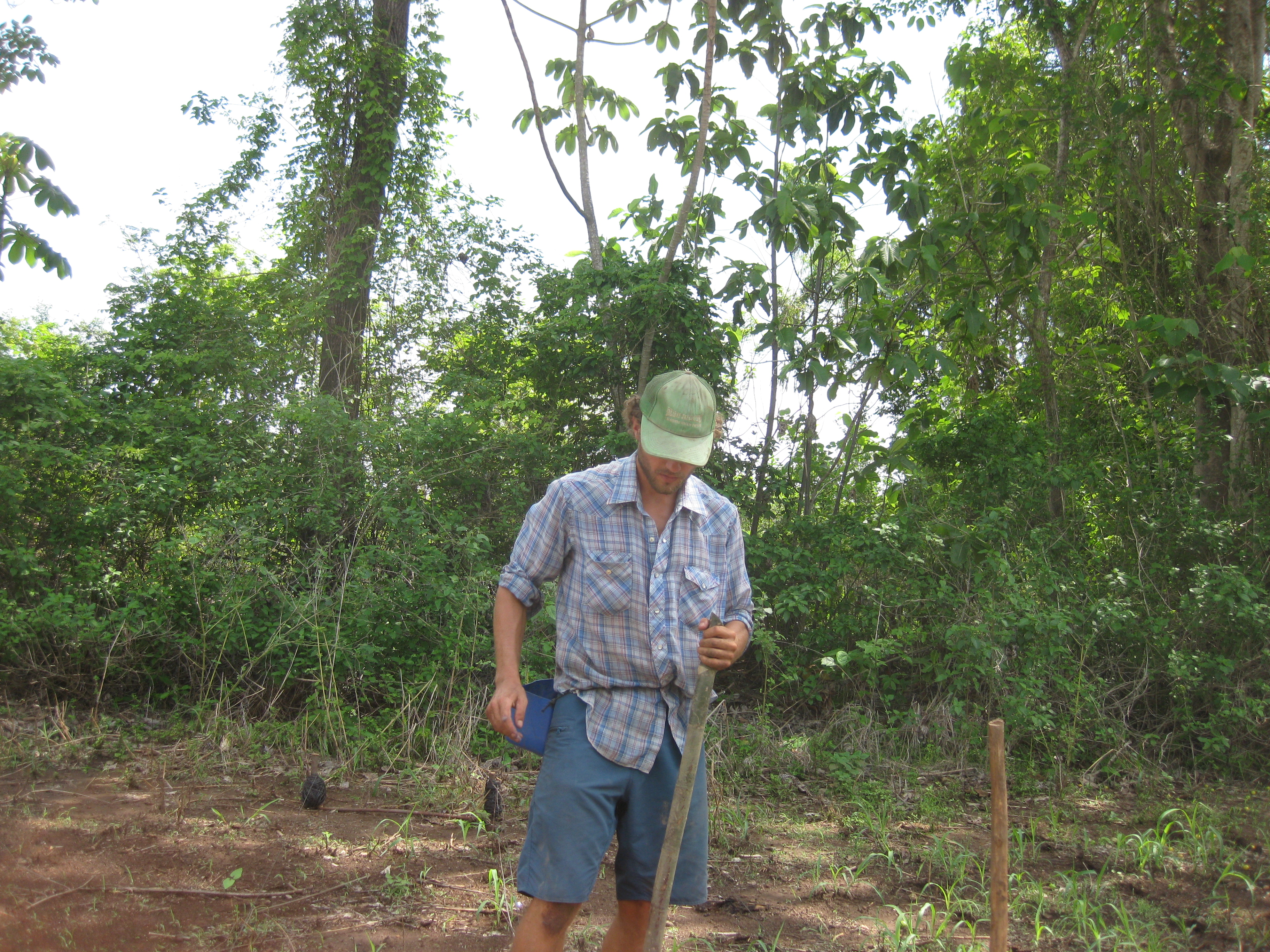
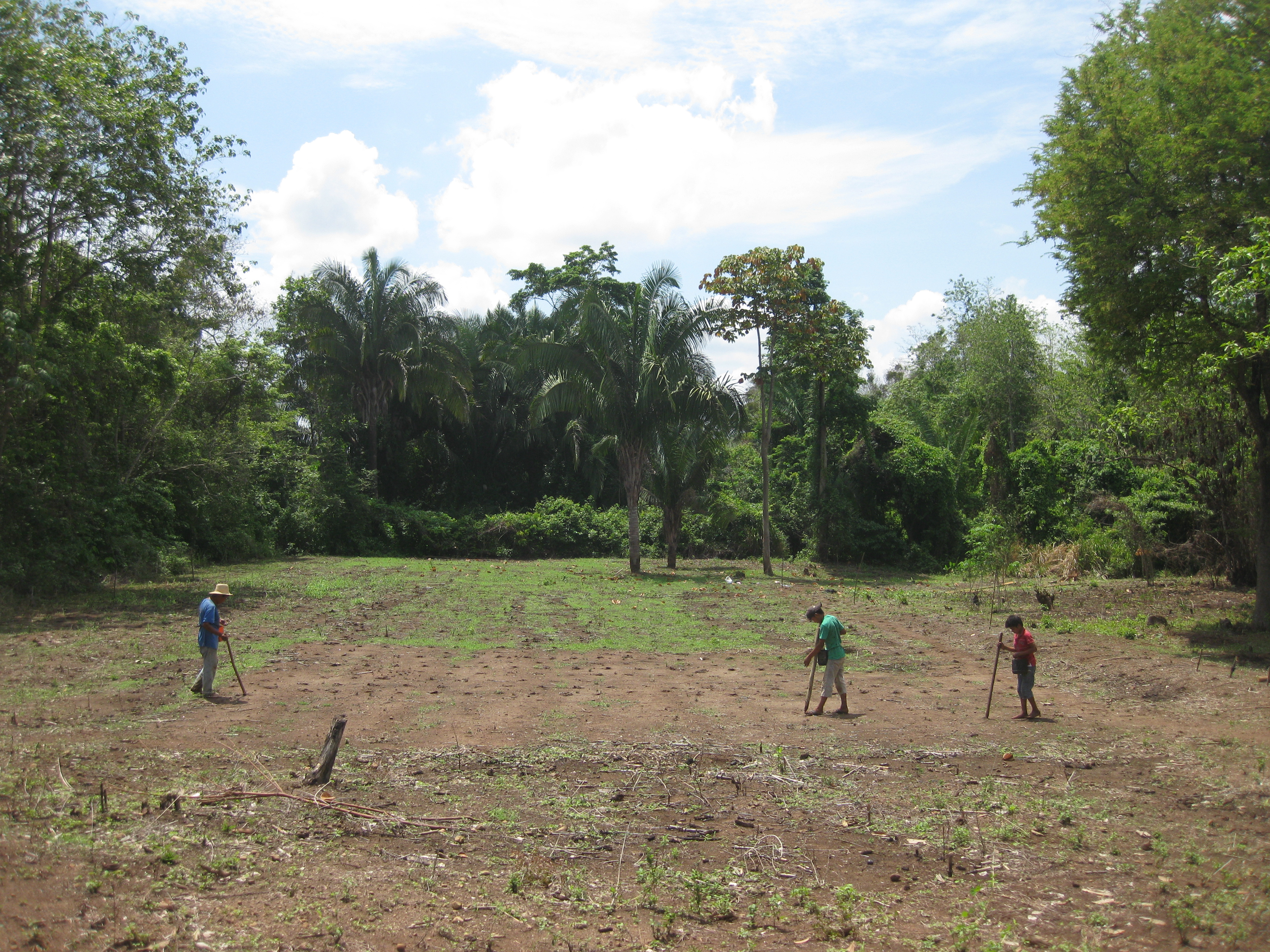
    The fields in every direction are filled with men, women and children thrusting planting sticks into the ground made soft by the rain. They expertly cast two kernels into each hole before gently covering it.  I  measure several parcels, help plant one and then head out to help Catocho. I leave the car at an impassable mudhole and walk through the fields with my machete, a few sticks and some twine. I pull off my shoes and fill up a plastic container that I sling off my hip with seed.  We plant seed that will yield hundreds of pounds of food nourished by the sun, rain and soil…..well and copious amounts of chemicals. The fields are  littered with colorful plastic bottles from frequently fertilizer and pesticide applications, the water in one puddle glows bright blue. The poor soils and imbalanced ecosystem here have lead to an unhealthy reliance on chemicals, both economically and physically, to yield a decent harvest.

    We work silently, each in our own row. It is a meditative exercise for me; Catocho talks on his cell phone and still plants quicker than me.

    ‘I didn’t hire anyone. I just have one slow gringo.’ He looks over at me grinning.

    After planting, we head back to Catocho’s house to eat lunch. Catocho quickly bathes and changes before we sit down to eat. His wife Gaby has set the table beautifully, in keeping with the auspiciousness of the day.

    I check up on a few more parcels before Humberto, an agronomist with whom I work, and I rush out towards Conrado de La Cruz to mark a parcel there, racing against the fading day. Mango trees line the road, holding the last of the season’s bounty, much to my dismay as I often pick mangos out of the car window for lunch. I get out of the car at one point and wade out into a flowing stream,  which comes midway up my thigh, to make sure it is passable. I think that I learned this from Oregon Trail. I shrug at Humberto and he grins before plowing the truck into the chocolaty flow.  The fan slaps the water and the truck billows steam as it roars through the waterhole.

    Linea A-13, La Maquina, Suchitepéquez, Guatemala

    The rains are late here.  A-13 falls within the ‘dry corridor,’ something that local belief holds to have resulted from severe deforestation. I pass the following week in waiting, clouds perpetually looming in the distance. I mark parcels amidst the smell of rain and rumbling in the distance. I ask all of the farmers if it is going to rain and they always answer optimistically while looking at the sky.

    The week passes without rain. On Friday morning I am awakened by a soft blob bludgeoning me in the face, interrupting my slumber in a bed made of straw.

    ‘What the fuck!’ I shout in confusion in the pitched black, windowless room.

    I frantically grab around my face to confront my assailant. I grab a roughly textured, cool blob that takes both hands to corral before it urinates on me. I toss it on the floor.

    ‘What is it? What was that?’ Humberto inquires in concern from the floor where he lies.

    ‘A toad!’

    ‘What did you do with it?’

    ‘I put it on the floor.’ I start laughing.

    ‘You mean where I am sleeping?’

    ‘Yeah.’ He starts laughing as well.

    To this day it remains a mystery how this toad got into the room, how it got onto the bed, how it gained enough force to bludgeon me from above with substantial force. There is simply no way realistic explanation. I briefly harbor suspicions that maybe Humberto is responsible, but I dismiss them as paranoid.

    The one thing that I think that I, along with every witch or shaman, would agree upon is that this is a sign that it will rain today. I check a few more parcels and then wait. The sky unleashes a torrent all over Southern Guatemala that night, setting in motion the last round of planting.

    The sky is clear, the cones of the volcanoes idyllically hang over the fields as the farmers plant a crop derived from a grass thousands of years ago; a sacred ceremony under volcanoes that have been shrouded in clouds for months. I plow through puddles once again, frantically answering phone calls regarding planting from all directions. I visited planted parcels in the morning and then plant all afternoon. Stab, throw, step, cover.

    I eat dinner with Humberto at a family’s home in a town called Willy Woods. We repeat a ritual that keeps both of us contented in the field: eating stacks of ember toasted tortillas in Rosaura’s smoke filled kitchen. Chickens, a cat and a few puppies mill the room. I snicker to myself as Rosaura always makes noises at them and softly yells at them to get out, but never actually does anything about it.

    The following morning we rise in the darkness to canvas different areas. I check two experiments before arriving at Cirilo’s house in A-13. We treat the seeds with a different neon blue treatment and then start planting with his sons; the four of us work two different rows, each one starting at an opposite end. We quickly shift the ropes and my inefficiency shines.

    ‘Let’s go to Los Angeles.’ Cirilo declares in jest.

    ‘Why? Do you want to plant corn there?’

    ‘No, I want to see the skyscrapers.’

    ‘I think we should go plant corn there instead.’

    We finish up and scrub the pesticides off of our hands.  I decapitate a coconut and devour a mango, filling my beard with orange flesh. I get into the car in excited exhaustion, chickens and iguanas scatter as I clatter and clunk down the dirt roads of A-13.

    What awaits these people? It is a question that is increasingly tied to the question of what happens to us, to the earth in general. The problems that Guatemala currently faces have not arisen overnight, but they are increasingly more apparent and exacerbated by our interconnected world. Inequality, resource scarcity, expanding populations and environmental degradation are universal problems that cannot be contained by borders, yet we live within an economic and political order that is currently structurally unsuited to deal with complex, global problems. I feel that, as individuals, we are left with several options:

    1. Live in a solipsistic world and deny the reality of these problems.

    2. Defer to some other hypothetical man’s infinite ingenuity as justification for personal inaction. To look towards technology as a solution to the problems that technology causes.

    3. Recognize the reality of these problems.

    • Do nothing in despair/perception that one’s locus of control is limited.
    • Make mindful choices in your personal life each day to try and create a better world.
    • Actively work to create a better world using increasing interconnectedness; economically, socially, politically, informationally; to foster a counterbalance to these externalities.
  • Cloud Chasing Levity

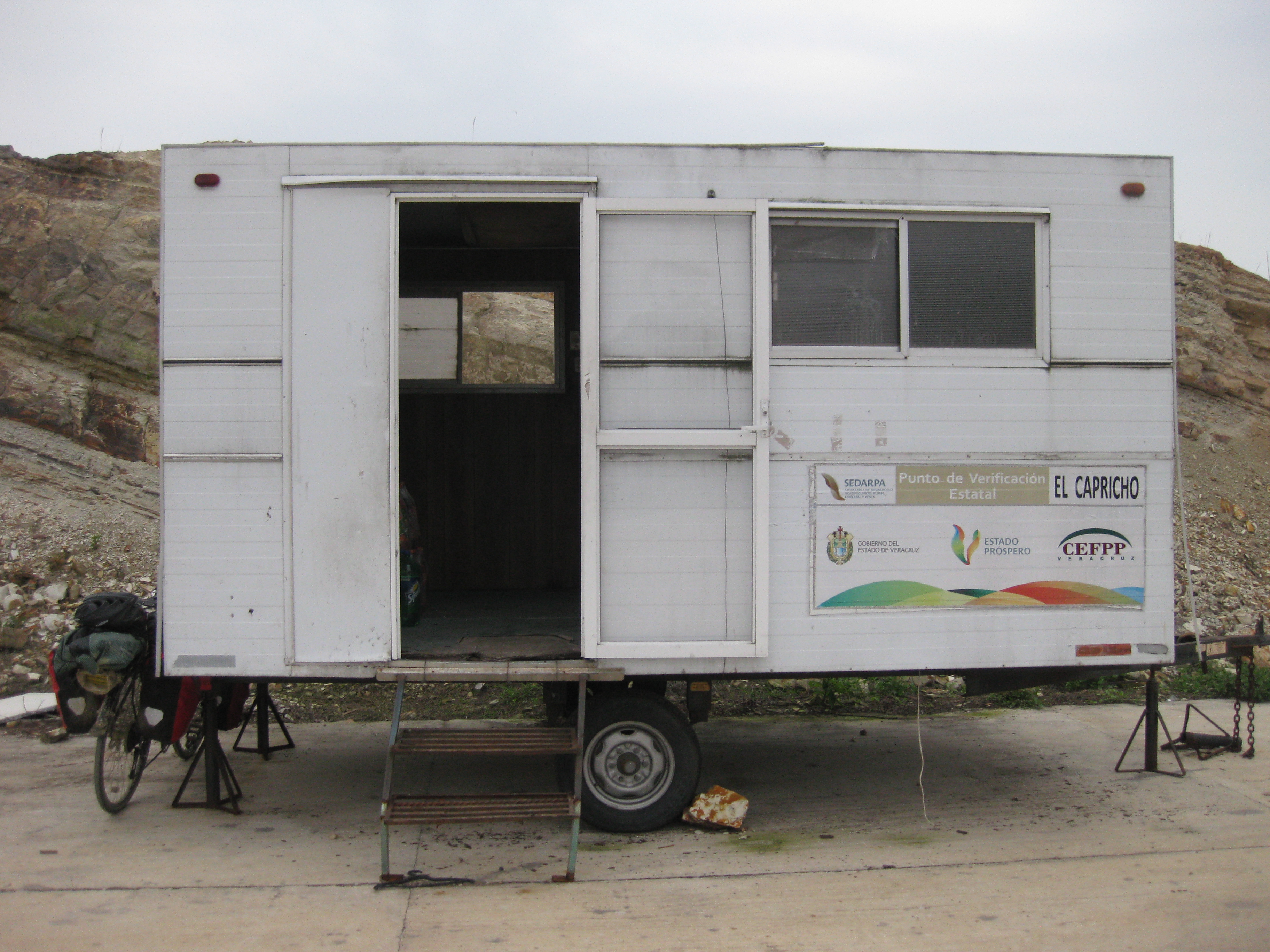
    ‘El Capricho’ Km. 52 Cattle Inspection Station to Luis Espinoza, Chiapas

    Trucks clatter and squeal me awake to a fetid trailer, rank with a pungent miasma. We roll our bikes out onto the concrete slab under a steely sky. Adam had told us the night before that he had been trying to learn to read English, but currently had no books. He also had timidly asked if either of us had a one dollar bill from the United States that we could give him as a memento from his time spent there. We give him ‘The Time Machine’ by Orson Wells and a crisp dollar bookmark; he hands us two manila mangos.

    Riding on the highway changes the way that I think, I don’t notice it immediately. Highways are designed for going from point a to point b, the signage tells me so. I don’t know where either of those places are located, so I arbitrarily choose certain towns and meticulously watch the kilometers laboriously decline.  I whir through a wasteland of barbed wire that protects rolling green slash-and-burn-scapes. I could ride a highway anywhere in the world and likely have the same experience. I long for the rural roads where chickens run rampant, where dogs rambunctiously chase with no mal intent, where snatches of shouted English resound from hammocks, where our passing is enough to give rise to smiles and laughter.

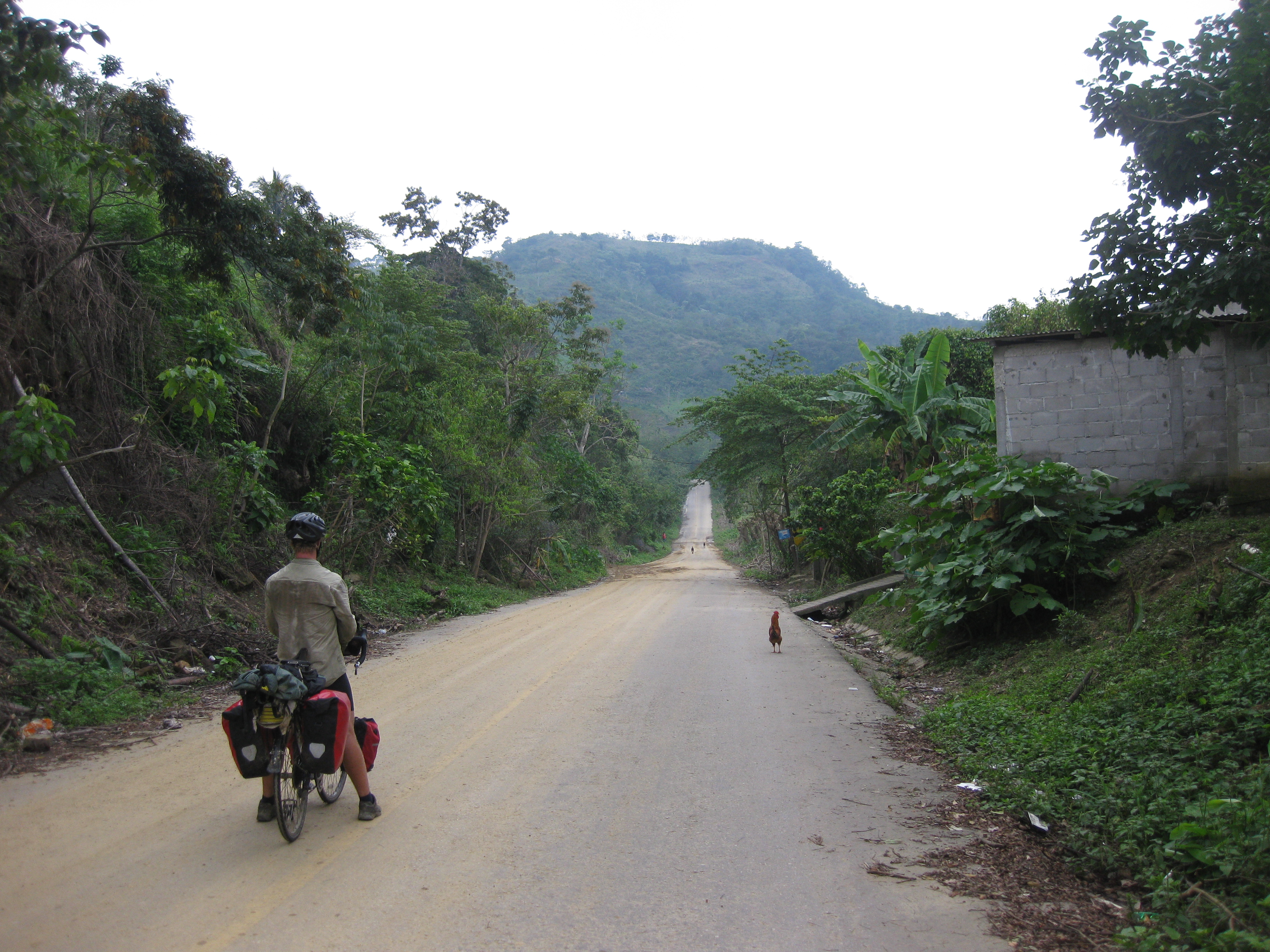
    We turn off near Raudales towards Tecpatan and sigh in relief as a chicken struts across the road to the bellowing of a hackled cur. Land slides frequently spill into the road. Everywhere water falls and then runs, the final arbiter on existence and form, necrotizing sizable sections of concrete. We luxuriantly weave across the road, traffic almost nonexistent. We drop into Luis Espinoza and are greeted profusely as we enter town; we find ourselves perpetually descending, to our dismay, in search of the municipal building. We pull up filthy and sweaty and begin shaking hands.

    ‘Can we stay here?’ I ask some  man indolently lazing in front of the municipal building, a man who could be a drunk or the mayor, it is difficult to tells sometimes without our culture of opulent ostententatious fetters.

    ‘Yeah sure! You can stay here, right in front of the municipal building on the steps.’ He confidently responds.

    In the next half hour we meet all of the political heavyweights in Luis Espinoza political arena before finally receiving formal permission to spend the night. We are offered use of the showers, a very privileged and coveted service, and round the clock police protection. I answer endless questions on the front steps and pose for dozens of pictures on camera phones where I likely appear as some sort of hairy white blob. The police usher us into the municipal building to offer us a reprieve from the masses of adoring rubes. They grant us the use of their stove as well, but they continue questioning us with genuine interest.

    ‘I am going to try and get my mom to come see you guys, she has never seen anyone with blue eyes before.’ One of the police tells us bashfully. I always wonder if anyone is confused why all of the characters in my writing speak English and speak in strangely bland paraphrases.

    ‘Everyone is really excited for you to be here. Foreigners don’t come here, but most of us will never have the opportunity to travel like you do, so it is really interesting to talk to you… To find out about you and your lives.’ We sit around showing them photos and compare our respective pueblos. It is beautiful. I talk about poverty in America, food stamps, my childhood home being taken by the bank because my family was ineffectually avaricious. I cannot unfortunately paint my peregrinations out to have resulted from some sort of tragedy akin to the atmosphere stealing all of my topsoil and blotting out the sun. I am filled with rage at the inability of society to offer me martyrdom or elect me as an archetype of a generation.

    Luis Espinoza, Chiapas to Chocasen, Chiapas

    We met a dentist the night before who invited us to eat breakfast with him. He runs an icecream parlor that is a facsimile of an American malt shop, which happens to be attached to his dentist’s office. Damien and I roar laughing at the concept.

    ‘Would you guys care for some cokes?’ We politely decline at 7am and chortle.

    ‘What do you guys want to eat? Cheeseburgers?’

    ‘Oh any type of breakfast food sounds good.’

    ‘Make a few cheeseburgers for these guys!’

    We leave, but we are not full. We are riding in search of food, our eye scanning for billowing smoke and our finely tuned noses aggressively flaring in pursuit of any trace of meat at any temperature above 45 degrees Celsius. A set of stairs strangely juts out into the street. Damien rams into it and topples to the ground in laughter. Two women come out of the door that leads to the stairs that he hit and cover their mouths as they laugh at him writhing on the ground. They then invite us inside to eat breakfast.

    We climb most of the morning before a steep descent into Tecpatan where a few locals from Luiz Espinoza yell at us and stop to chat. The golden nectar of mango runs down my face and coats my hands; there is nothing in the world more helpless and irresponsible and depraved than a man in the depths of a mango binge. I cut up a mango for a few kids who watch me eat in amusement.

    My mind is clear, my thoughts incisive and collected. I am not sure if I can ever lead a meaningfully happy life as a component of what I see developing around me. This morning it is clear, the disparate pieces are being assembled in my mind. The increasing stranglehold of a political, culture and economic system rooted in the diffusion of responsibility, in the faceless degradation of humanity to the level of groveling imbeciles subservient to an incomprehensibly complex, unsustainable system of material production with a nebulous purpose, yet deadly serious modus operandi. I try to understand it as merely a manifestation of our humanity, something that could only be different insofar as we are different. Sometimes my mind is gripped; fragments previously irreconcilable coalesce and find coherence through a perspective that painfully dominates my consciousness like a billowing black cloud enveloping me; my mind retreating into the synaptic orgy occurring in some strange corner of my brain indefinitely until I see some sort of colorful bird trace a streak through my unwavering vision in deft flight or I hit a pothole that gives me a prostate exam, then I realize that it all is and that it all isn’t.

    We pass Copainala, dropping down to Chicoasen and the bottom of the river valley. We climb the narrow inclined streets to the police station in search of a place to stay, but are directed towards a boarding house. We walk in, dirty and disheveled (I am not sure why I keep stating this description, I should probably just preface most of my writing with the concept that I am perpetually filthy and pungent in an endearing way that most women find incredibly alluring and irresistible.)

    I do not have the disarming apparatus of my bicycle to defuse the proprietress’s incredibly agitated pheromone receptors.

    ‘Good afternoon! We are looking for a place to stay, the police told us that you had rooms for rent.’ Looking back on it this is not a good introduction. She stares harshly at us before sternly and suggestively muttering:

    ‘You won’t like it here.’

    ‘Look, we just need a place to sleep for one night.’ I explain in confusion.

    ‘Here is what a room looks like.’ She glares at me in a menacing way, threatening me with what I remember as bared teeth. There is one lightbulb dangling from the ceiling, enough room for a bed and no window.

    ‘Perfect! Thanks, we’ll go grab our stuff from outside!’ I decide to melt her icy demeanor with my warm, boyish charm.

    As soon as I load my stuff into the room, I sit down to eat peanuts. I have both fists completely full of them as she approaches.

    ‘Are you going to pay?’ She mutters in geriatric suspicion.

    ‘Both of my hands are full,’ I show her my hands, ‘I can’t right now.’ Small pieces of peanut spray out of my mouth as I laugh. Damien hears the conversation and comes out to pay her.

    We walk around the small town and eat some street food as the elderly stroll, teenagers giggle and ride bike,s and adults rest from the day on benches.

    We return to our lodging and I sit up for an hour or two talking with the proprietor as he rubs his belly and tells me about the indigenous tribe in Lacandon. A tribe of pure Mayan blood left untouched in the depths of the Chiapan jungle until the early 20th century. The sky breaks and I can see the stars for the first time in a week.

    Chicoasen, Chiapas to San Cristobal de Las Casas, Chiapas

    The street we take to leave Chicoasen is the steepest that I have ever seen in my life. My arms strain and burn as I push my bike upwards. I finally summit and straddle my bike to set out towards Soyalo; the road in various states of decomposition. We follow a roaring river before switchbacking our way up to San Francisco Sarabia. A hundred meter waterfall casts rainbows as it pour off the cliff on which the town is perched. Old men with belt slung machetes amble towards the field, dispensing sage advice as I stop to sweat and pant. I don’t remember any of the sage advice.

    As we keep climbing to Soyalo I curse the genial old men who gave me spurious information about the route, imagining each of their faces as I belittle their navigation and perception skills. Dark clouds overtake us in Soyalo. A chilly winter breeze sweeps across the fields, giving lift to both trash and vultures. I pour sweat and mash my pedals on an increasingly steep section of climbing. I eat fruit by the kilo, I don’t deal in grams or ounces anymore. The road planes out and leads us into Ixtapa.

    I pull up next to a few men that greet me with sated post prandial stares and state, ‘We want to go to Chamula. How do we get there?’

    ‘It’s easy. You just go straight and then climb into the clouds.’ He points towards the clouds that have swallowed the mountains in the distance.

    We ride out of town and the smooth pavement gives way to rough dirt that begins a precipitous descent into a canyon. We follow a clear river that boils white water over black rocks. I can hear nothing but the rush of water and the crunch of gravel under my tires. Strange abandoned buildings appear out of the growth, slowly being claimed by the jungle. We leave the river and ride through towering fields of criollo maize with the sierra still looming distant.

    We pass through an indigenous village, several people peering out of doors and windows as we pass. The faces noticeable darker, contrasted with bright, resplendent traditional dress. We pass over another river and then look upwards towards the road incised at a daunting angle into the mountainside; I ocularly trace it until it disappears into the clouds. My back tire spins on steep sections. The afternoon passes quickly amidst frequently breaks as our weeks of consecutive riding begin to call in payment.

    I ride ahead of Damien, my mind drifting in frustration with nothing in particular. Neither of us speak for a bit. I want to get there. Get where? Before dark? Why? We are out of water…so? I am just tired, so tired. And? I reach a moment where everything seems inconsequential. Nothing can touch me, nothing can take anything away from me. All the worrying, planning and fighting are all for naught. All the speculation and hypothetical situations are pointless. I can fight my way through the rest of the way to San Cristobal with no difference in outcome or I can embrace the trajectory that we are on.

    We ride slowly, enjoying ourselves in acceptance of the reality that we will be spending a significant amount of time riding in the dark this evening. We arrive in a small town as the golden light before sunset strikes. We pass a bottle of honey back and forth, gulping it down as we look up at the climb ahead. Quite a few people gather in front of their homes and discuss us in Tsotsil and laugh at us as we chug honey. The road once again disappears into the clouds. I catch the glint of a guardrail in the distance; pavement ahead.

    The final climb requires exacting concentration and effort, every time that I push downwards my legs quiver in protest. I grit my teeth and inhale voluminous breaths. I push myself to the edge of my limits and hold it. I fight, time a meaningless abstraction to me. I arrive at the summit and look back on the spine of the sierra and the floor of clouds below painted by the disappearing sun. My mind is vacant of internal ruminations as I feel my chest expand and contract. Everything is brilliant, gilded with light as I have never seen before in my life. Everything is perfect, I see myself, my life and the world in one brilliant clairvoyant oneness. I feel the energy and richness of life and every moment running through my veins. It all erupts and explodes within my head, beatitude burns within me. Everything is insignificant when compared to the crimson edge smeared across the sheared clouds by an exploding ball of gas that is the basis for all life or to the cold wind luxuriantly prickling my skin.

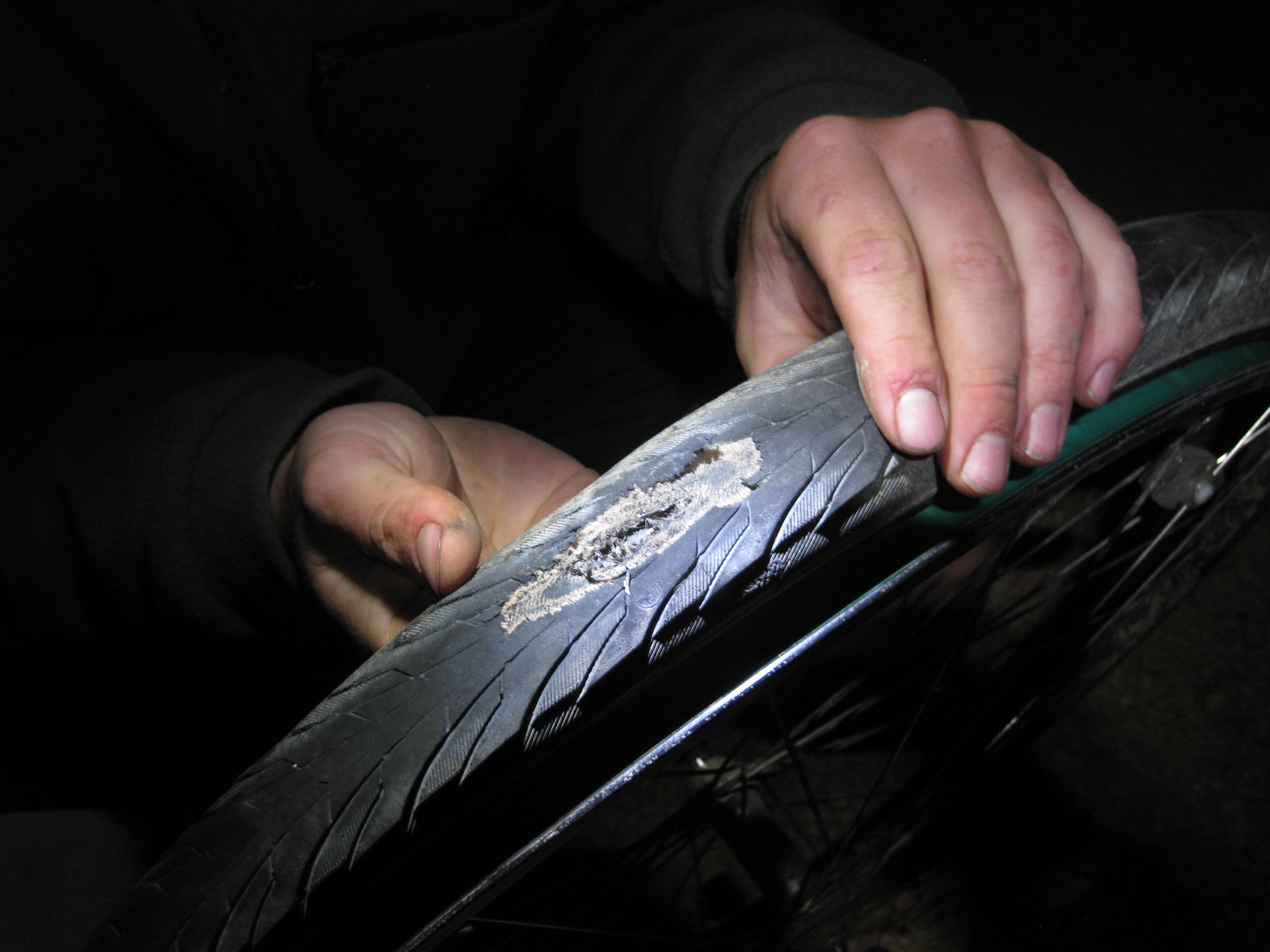
    I ride down from this point in elation, my perspective changed. The day is done; in twilight we climb upwards until a gunshot rings out. I flinch, quickly swerve and look around. Damien hops off his bike and I see his front tire is flat. We examine the tire and the tube has exploded and the tire is completely worn through in several spots. After making the questionable decision to continue on this tire a week ago, it fails within spitting distance of San Cristobal at a rather inauspicious hour and location. We sit in the darkness on the roadside, the cold breeze pouring down of the mountain summits. We cut up the tube and reinforce the tire with this and ducttape amidst much laughter, laughter of abandon. We inflate his new tube and the tire bulges at this spot without any structure to constrain the internal pressure. Our headlamps pan the darkness, emerald animal eyes occasionally glowing and silently moving through the darkness.

    We arrive in a small village and see the light of a small store. We pull over, haggard and delirious in the way that a day like this can make you, the world only gaining in absurdity. The residents are in an adjacent house, their faces glowing through a screen of smoke as they warm themselves around a fire. An old man cautiously emerges and is amused as we devour anything that he offers us. Women wearing luxurious black wool skirts gather in the room quietly whispering in Tsotsil with babies swaddled in robozos on their backs. Everyone is uncertain what to make of these gringos stumbling in out of the darkness on bicycles, but they find nearly everything that we do amusing. We sit under the porch light repairing Damien’s tire with more ducttape in front of an audience. Little boys retrieve their bicycles from their houses and ride in excited circles. Old ladies cautiously peer from afar. The little girls are incredibly cute miniature replicas of their mothers, they stare at everything we do and hide if I smile at them.

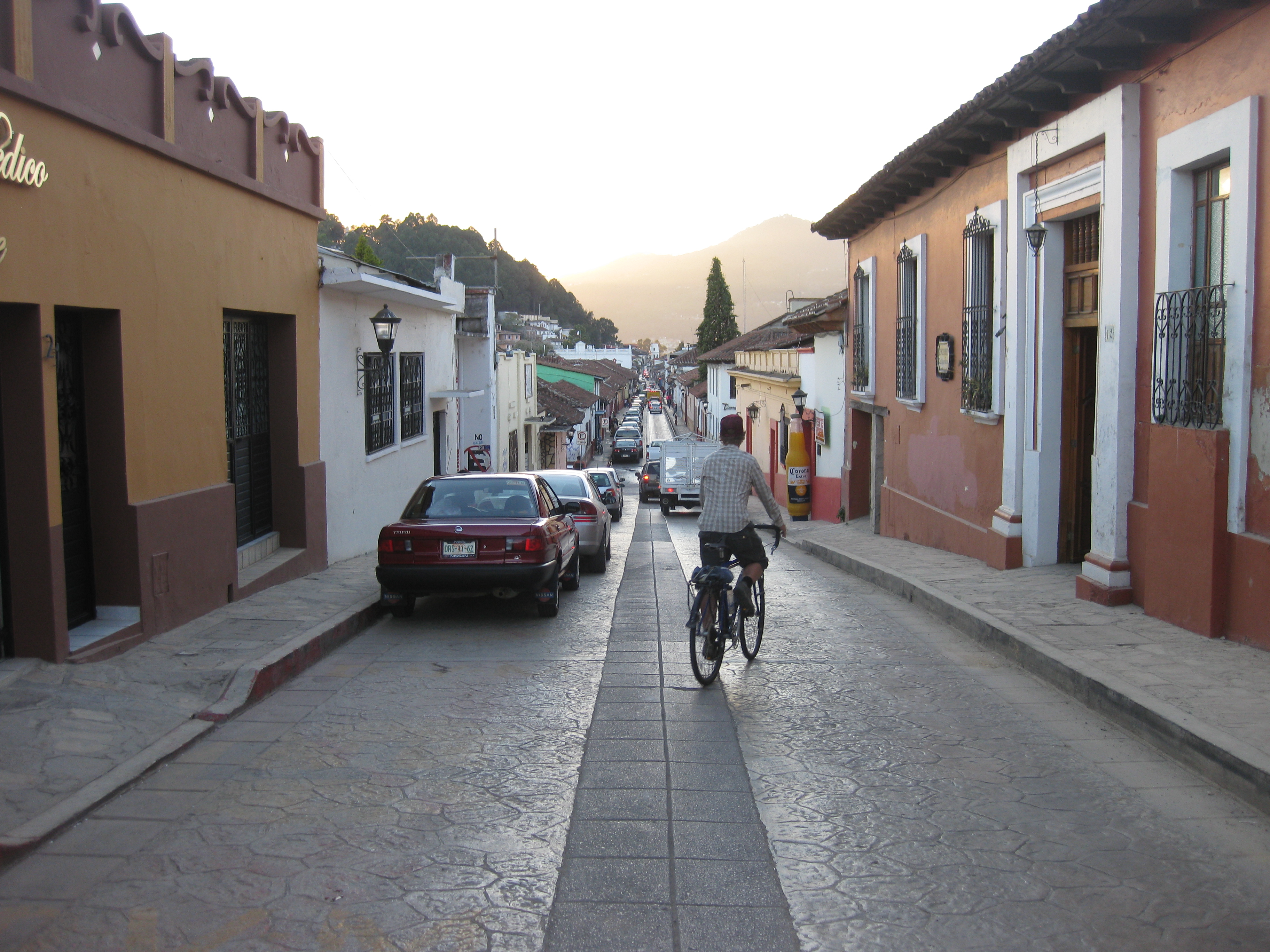
    The light pollution of San Cristobal lights the clouds in the distance. We ride past a few small villages, the dogs barking through town as soon as one hears us rattling past at this hour. They charge us aggressively, but never bite. Rain starts gently falling on us. San Juan Chamula covers a mountainside and we pass through the outskirts on our descent into San Cristobal. Traffic flies past us with our dim lights, the road surface is variable and treacherous in the darkness. Damien and I quietly revel in our luck at having made it this far on the Macgivered tire, but I ride worrying about a blowout on the quick descent.

    Not dying on this descent requires mustering every bit of focus that I have left; my mind is in a dangerous haze of exhaustion.

    Another gunshot rings out and I look back as Damien hops off his bike on the outskirts of San Cristobal. There is no fix; our riding for the day is over.  A rock is impaled through the tire and tube at the very hole that we strove to fix previously. We stand two kilometers from the city center in the cold drizzle, so close.

    I decide to be proactive and flag down a family in a pickup and explain our situation; they seem to pick up on the exhausted, desperate edge of my voice.

    ‘Toss your bike in back and we will go find your friend. Where do you guys want go to?’

    The world provides. I am filled with gratitude. Every day through actions like this, the world is made livable, held together.

    We walk down Real de Guadalupe, or Gringo Alley with Damien carrying his bags on his shoulders and lifting the front tire of his bike. Tourists pass in chic, flowing clothes that declaim their leisure through their impracticality; British accents loudly shriek from the front of the London pub; Argentines busk and Americans peruse storefronts. The eco tour operators. The boutique wine shop. The seriousness of all of this, the gravity and importance placed on anything and everything. It is laughable. A joke.  Night clubs? Televisions? Fashion? Trash dumps? Fiscal cliffs? Retirement? My pretentiousness?

    I eat dinner and curl up in a ball. I have a dream where I am riding my bike uphill for what seems like days. I finally summit in a perfect village, radiant in noontime sun under an immaculate sky. I let my hubs gradually gain velocity as I roll over the highpoint of the parabola. I let gravity pull me through the wavering mirage rising off of the obsidian tarmac. I stare out over verdant valleys and towering craggy spines. The beauty overcomes me as I peer off the precipice to the left; my velocity is incredible. The feeling of effortless speed suddenly shatters as I hit an anomaly in the perfection that sends me hurtling through the air towards the mesmerizing view. I hit the glassy obsidian slick and begin sliding. I grasp with my hands, using my skin as a friction brake to avoid learning what flying feels like. I stop teetering on the edge with the feeling of being unable to move without falling.

    San Cristobal de Las Casas, Chiapas

    I read, wander and cook what I find in my wanderings. I run across old friends. I get parasites and empty myself out. I don’t eat for four days. I drink a lot of tea and sleep. I take antibiotics. I read about and watch documentaries on the Zapatista revolution. Two weeks pass.

    San Cristobal de Las Casas, Chiapas to Comitan de Dominguez, Chiapas

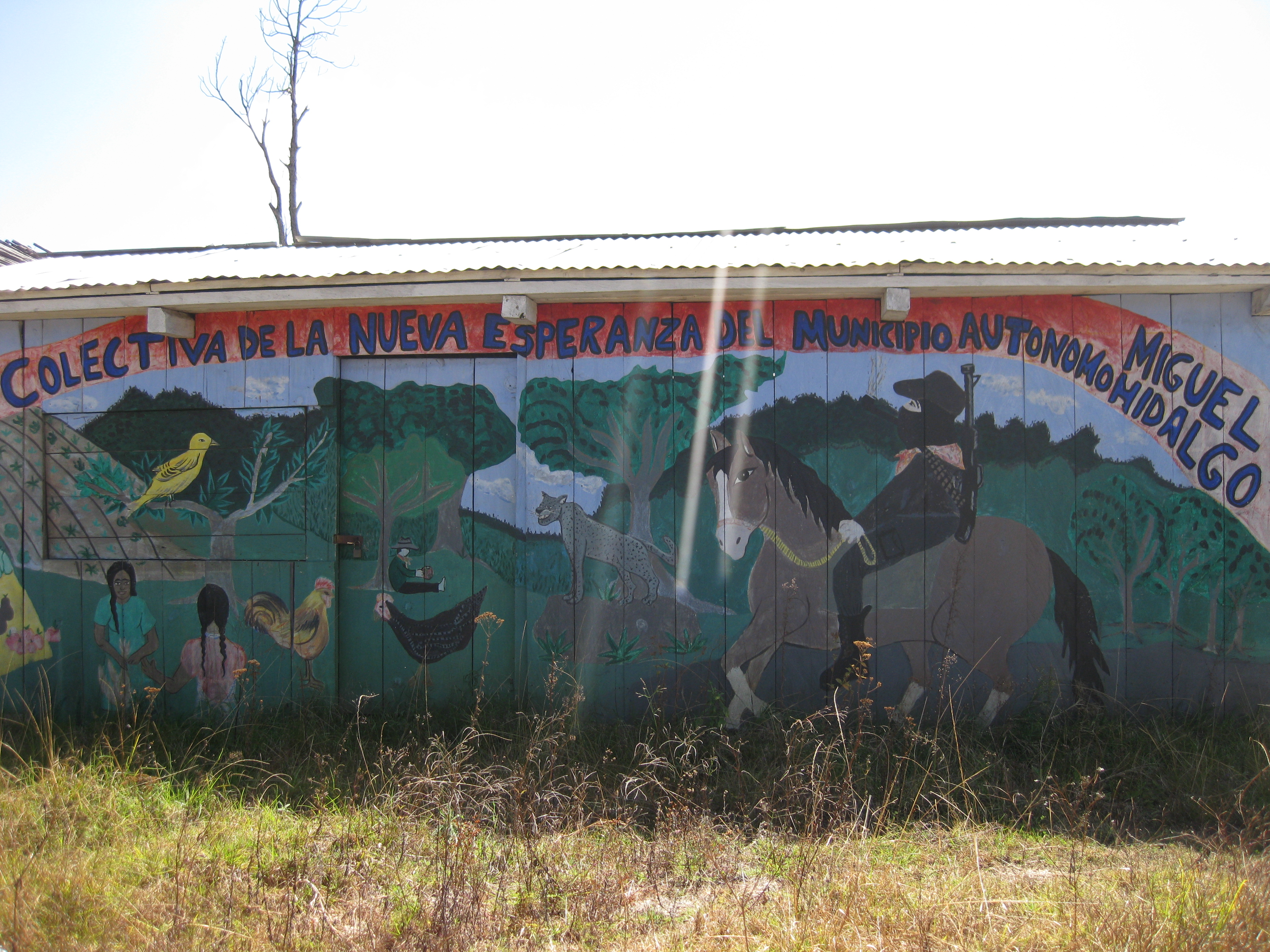
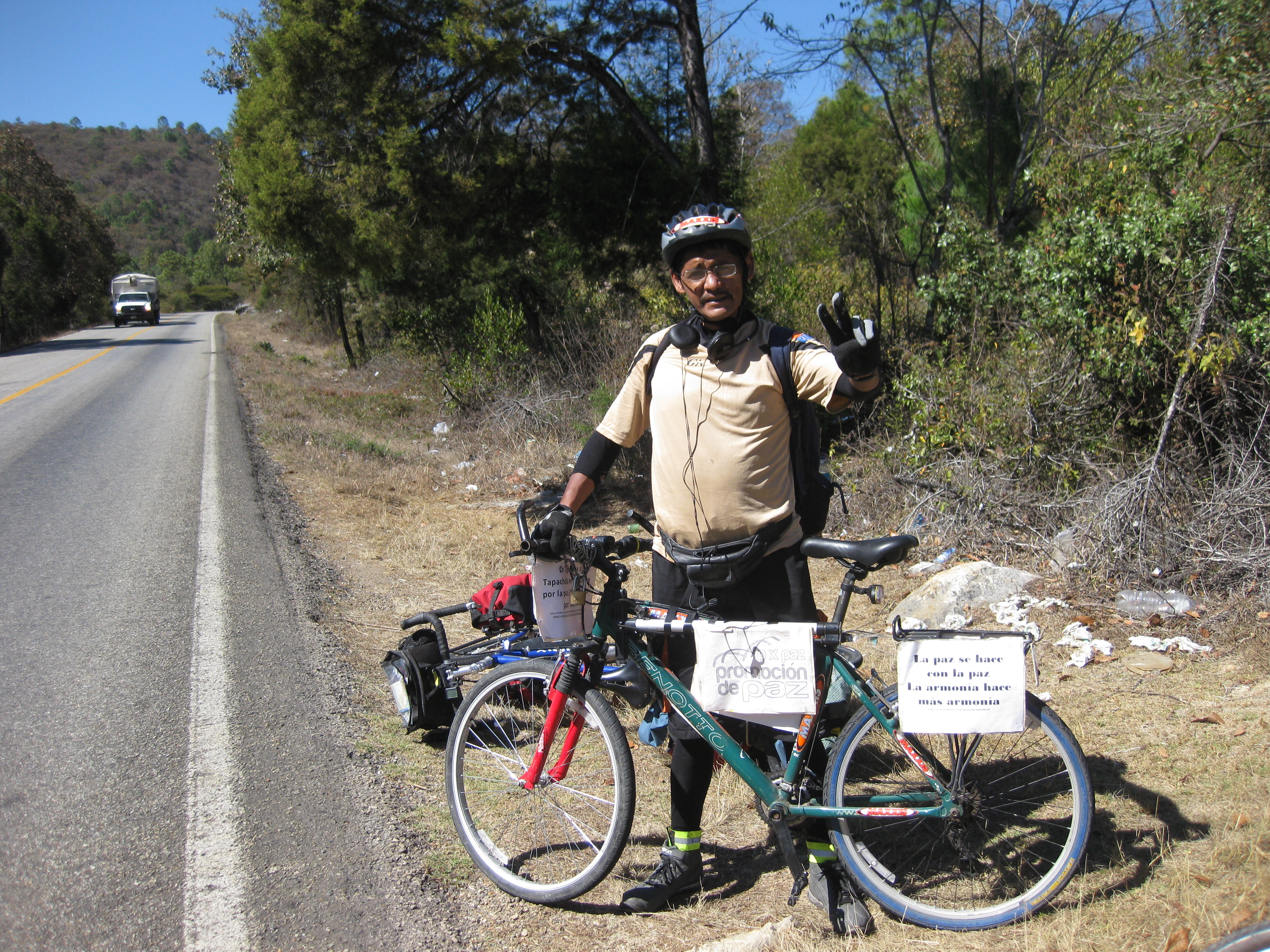
    I start to feel the sun of the tropics, the sun of the coming spring. We ride past military bases teeming with feverish activity with no clear purpose and then through the autonomous Zapatista towns that they are meant to oppress. The towns look lifeless except for the signature colorful murals across the sides of the buildings. The riding is remarkable, but both Damien and I are quite ill. As we near Comitan, I see a haggard man climbing upwards on a bicycle nearly devoid of gear, apart from a few spare parts; the first other cyclist that I have crossed paths with while en route. I swerve across the highway. He tells me that he is riding for peace out of his exasperation with the escalating violence in Mexico, visiting every state in the republic to speak out in favor of action.

    Comitan de Dominguez, Chiapas to Cuidad de Cuahtemoc, Chiapas

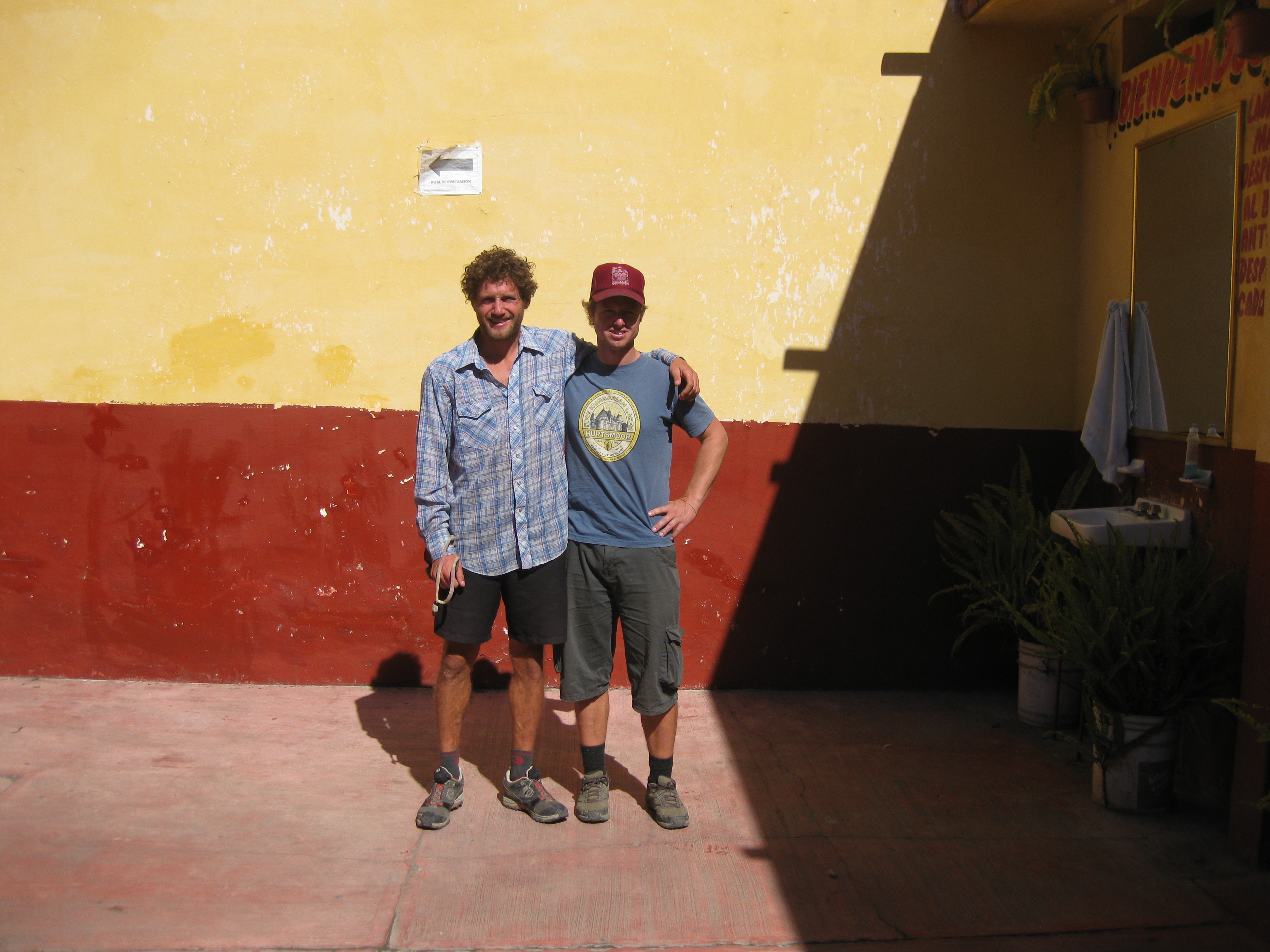
    Damien is too ill to continue. After riding several weeks with one another, something that bring people together in a way that few other things can in life, we solemnly part ways. I worry about turning him loose, letting him fly solo. My options are limited though, it is either this or brutally clipping his wings. I decide after much consternation not to cripple him.

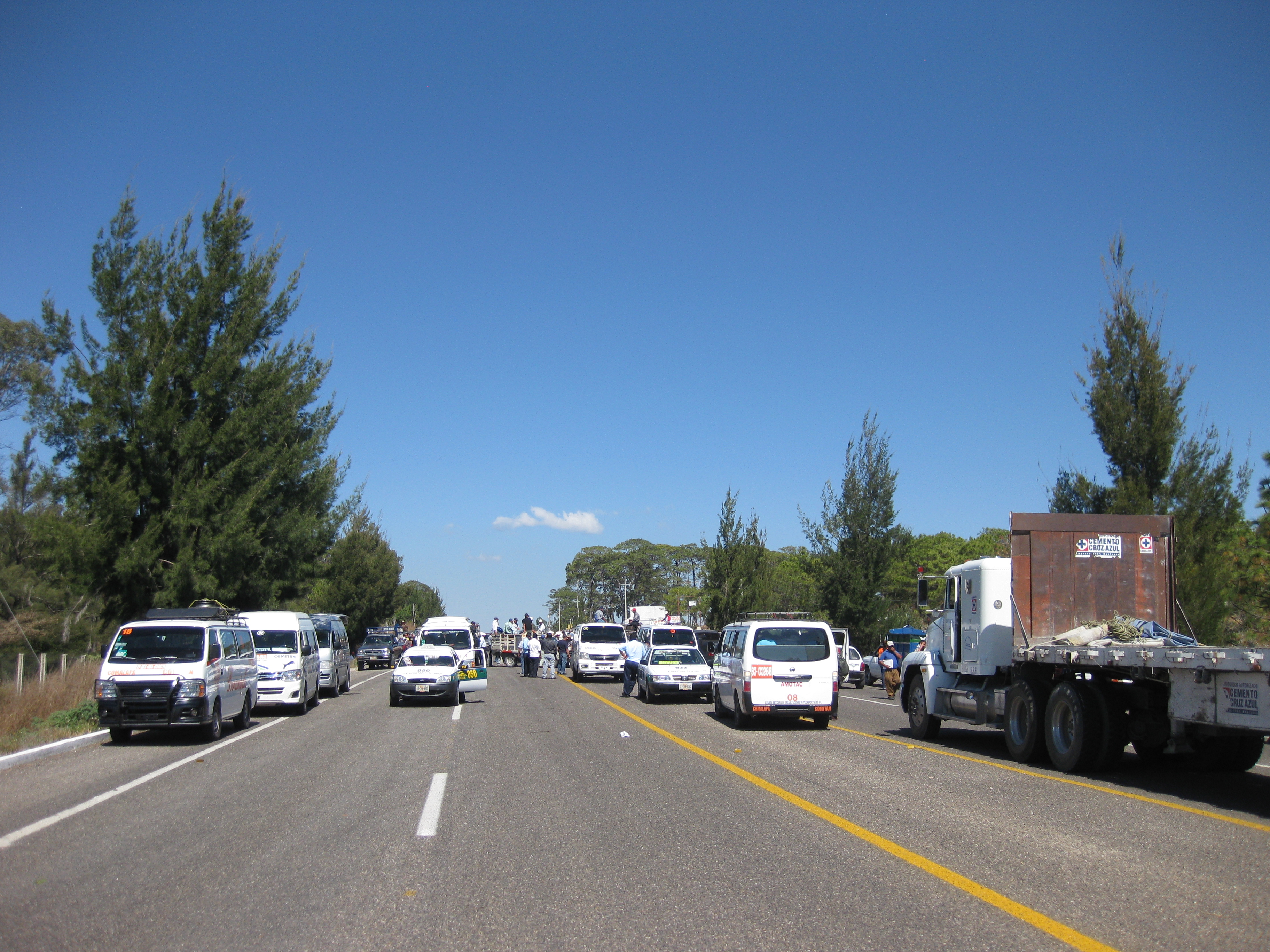
    I ride under a vacant sky towards the end of Mexico, slowly sliding down a continuous downgrade, the heat growing as I descend into a hazy valley surrounded by rugged mountains. I come upon a roadblock, where cars and trucks stand motionless as a mob mills. I carefully approach, uncertain of my reception at this function as a denizen of a nation widely viewed as some sort of evil empire bent on world destruction using our very species as complicit slaves in the process. All eyes are focused on me, I look around and weigh my options. I lay my bike down on its side and something unexpected happens: they erupt in cheers. I am handed a manifesto expounding the abuses of the Mexican government and its corporate handlers. I sit on the pavement and read it before expressing my sincerest condolences.

    ‘Would it be a problem if I continued riding?’ I ask anxiously.

    ‘Not at all!’ The ringleader jovially responds.

    ‘Continue fighting!’ I shout to much cheers and applause.

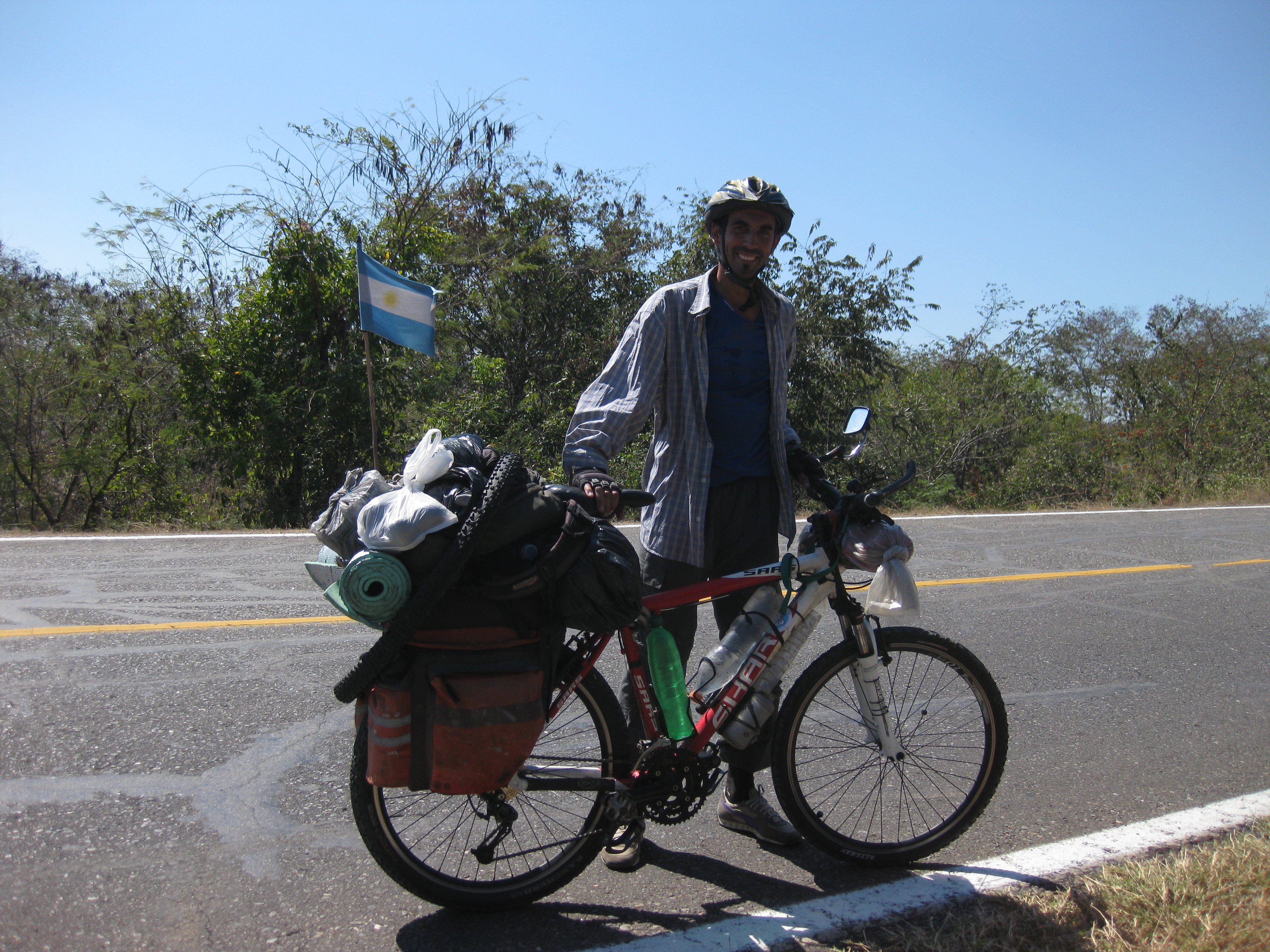
    I see another cyclist coming, we are both wearing huge grins as we cross paths. Javier began in the South of Argentina. We talk about our trips briefly, take a photo and part ways. I had always imagined this moment differently: The other rider would emerge from a sun scorched mirage as the wind swept sand and detritus across the road. Our pedal strokes both slowing as we size one another up. A hawk lets out a shrill screech from above. Her perfectly matched hand slides into mine, there is no ring. I look into her gentle eyes and something passes between us, I feel a jolt, not just between my legs, but somewhere deeper. On the right side of my body. My heart. I don’t let go of her hand, using it to pull her into a sweaty, heartwarming embrace. It turns out that we are soul mates, both of our mothers still cut up our Eggo Waffles, as they know how to do it best. We both used to dress our pet chickens up in clothes left over from our childhood. We both write blogs that nobody reads because they are rambling pretentious musings or too uncomfortably weird to read. We both adhere to a terrible strain of romantic philosophy that leads to a myopic focus on self-development and rejection of anything that does not accentuate our grandiose self-image. We laugh, we cry, we make love on the roadside with reckless abandon. I take a job training birds of prey to protect malnourished children from vulture attacks and teaching yoga to quadriplegics. She works for a social enterprise that offers subsidized ice cubes and teaches indigenous African languages to Guatemalan refugees. We hyphenate our last names. We have children that are so intelligent that everyone believes that they are borderline autistic. We are bequeathed an estate from a bitter widow who manages to secure her place in the afterlife through this last gesture of benevolence towards a family that could not be more deserving.

    I feel elated and wallow in my greatness as I reach the Mexican immigration booth at Ciudad Cuahtemoc. It is strange the effect that accomplishing this goal can have on a person. The strife, the doubt, the suffering all fade, my success takes primacy. All of the luck and generous people along the way are utterly insignificant in contrast against the scintillating force of my will. I did this myself, look at me. Nobody does though, so I will write about it.

    I sit eat on the Mexican side and sit across from a man with a small backpack and a machete. He eats with relish and purpose.

    ‘Where are you going?’ I ask him, knowing the answer.
    ‘Mexico, Mexico City.’ He cautiously answers.

    We talk for a while about Guatemala and he seems to relax.

    ‘Is the border crossing hard?’ He asks me timidly. I explain the sad and dangerous realities of crossing as best I can.

    ‘Where will you cross?’

    ‘I don’t know.’

    ‘Where are you going in America?’

    ‘I don’t know where I am going either.’

    He leaves quickly with his machete, off to work in America. I sit sadly thinking about the tough road ahead of him beset on all sides by people who are going to take advantage of him, including at his final destination.

    I sit in a strange lounge chair that faces the border inspection station and watch for a few hours.

    Ciudad de Cuahtemoc, Chiapas, Mexico to Huehuetenango, Quiche, Guatemala

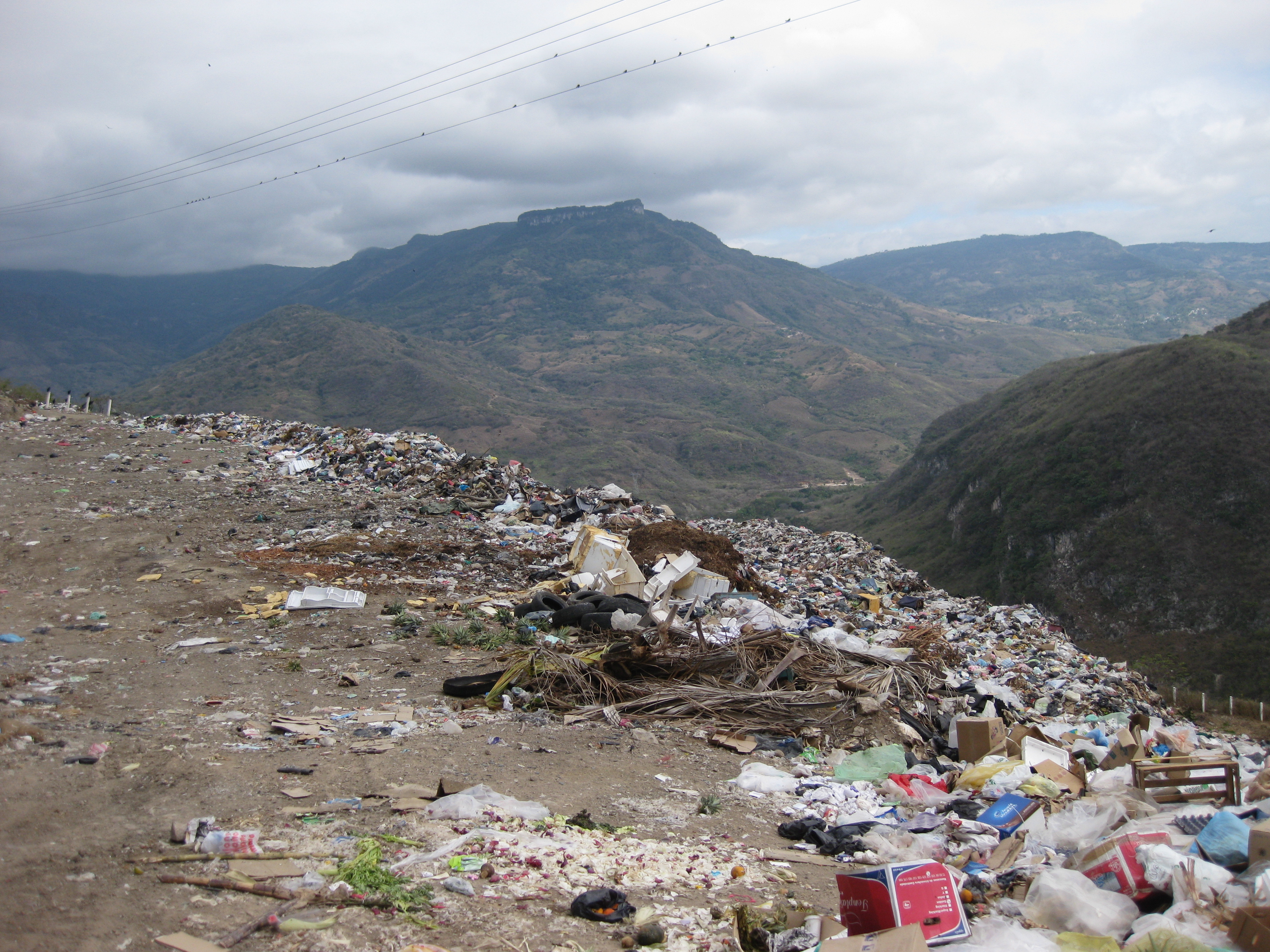
    The climb begins. I pass a trash dump that separates the two nations, several people climb on the smoldering stain that spreads across the landscape. Anti-littering signs abound, they seem to actually be anchored in trash.  Vultures circle in the acrid air of burning plastic.

    At the Guatemalan immigration station I am processed by the same agent that has been there the previous two times that I have passed. He is the best border patrol official I have ever seen, a paragon of efficiency with an air of politeness that is borderline reverent.  I have deduced from these three border crossings that he is deaf and mute. He never says a word to me as I pass through, he simply stamps my passport and sends me on my way each time.

    4100km exactly to this point. Immediately upon crossing the chaos of Guatemala begins; the chaos that I have come to love. People yell at me, kids run alongside, chickens crispin in vats of oil, stereos compete outside small stores, buses bellow and ayudantes shout.

    I thought that the topes, reductores de velocidad, vibradores, speed bumps would disappear as I cross, that this balderdash would be seen as ridiculous by the practical Guatemalans not gripped by a tope-industrial complex. I see a sign warning the approach of something called a ‘Tumulo’ on a steep downhill. Hmmm.. that sounds pleasant and non-three dimensional. I think nothing of it until I am rudely jolted, my speed forcefully reduced. No, it can’t be! I repeat this process several more times until my disillusionment is complete.

    I ride with the wind and shouts of ‘Gringo!’ at my back. I never researched this section. The scenery slowly changes and the air cools until I reach a high plain. As I ride I invent my own radio station, ‘Uno!….Cero!…..Cinco!….Puntoooo! Dos!….Tha Mixxxx!’ I yell this over and over again in my best rendition of a Mexican DJ/the guy who seems to do the voice for ever commercial in Mexico. The station consists of my unconstrained and oft non-sensical thoughts, a steam of consciousness monologue that vomits forth and occasionally carries a tune. I am pretty sure that I have lost my mind, lost it to my own personal radio station. I tune in and out. This blogpost is a transcript of the radio stations first broadcast.

    I sleep in Huehuetenango and set out early. I drink coconuts and orange juice with raw eggs on the roadside as I perpetually climb towards Xela, my radio stations #1 hit becomes me yelling ‘Xela…Xela….XELAAAAAA!’ like one of the ayudantes on the old American school buses that traverse the highlands.

    I ride into Xela with a feeling of levity, the future boundless and my life as pure potential.

    How did I got here, to Xela, Guatemala, is a question that is far more vast than pertains to me or you. On the surface, I took one stroke with my left leg, then one with my right and then I kept going. An infinite sum of pieces, each infinitesimally small, comprises a whole.

    I crossed vast vacant expanses. The wind blew, rain fell, I got sick, I got lost and sometimes I forgot what I was doing this in the first place. Then I took another stroke. Night after night I laid looking up at an ocular symphony in awe, in terrified awe of the reality of this inexplicable anomaly. The life will leave my body one day and I will have understood so little through eyes that are inherently mine and are only open for a brief period of time.

    I will never know the answers to the questions that loom over us omnipresent and radiant like the sun. We can stare at the sun, stare at these unanswerable questions until we are blind and wander desperately groping for an explanation or a purpose. Our only other option is to let it illuminate our path, to continue walking with our eyes humbly downcast.

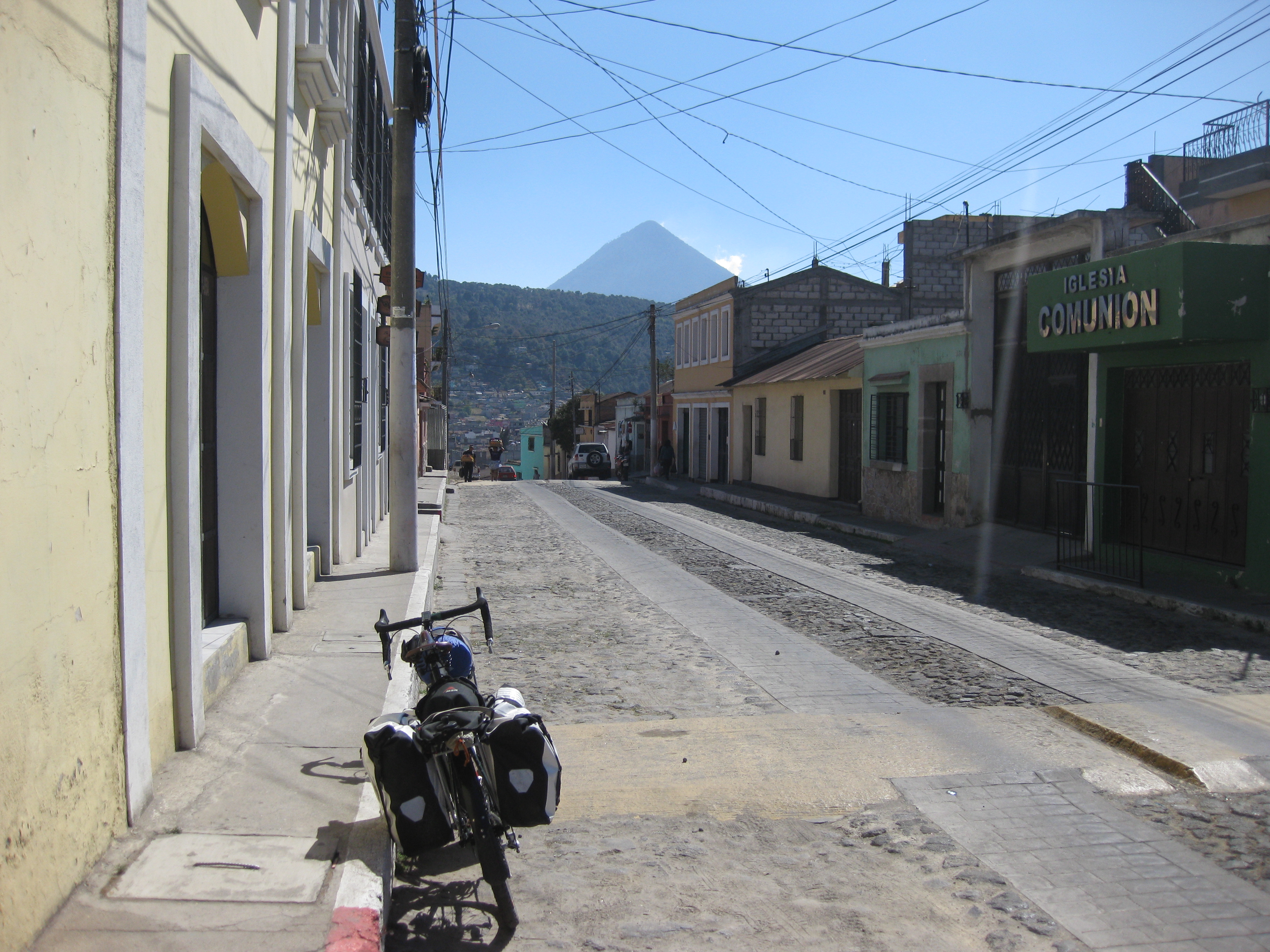
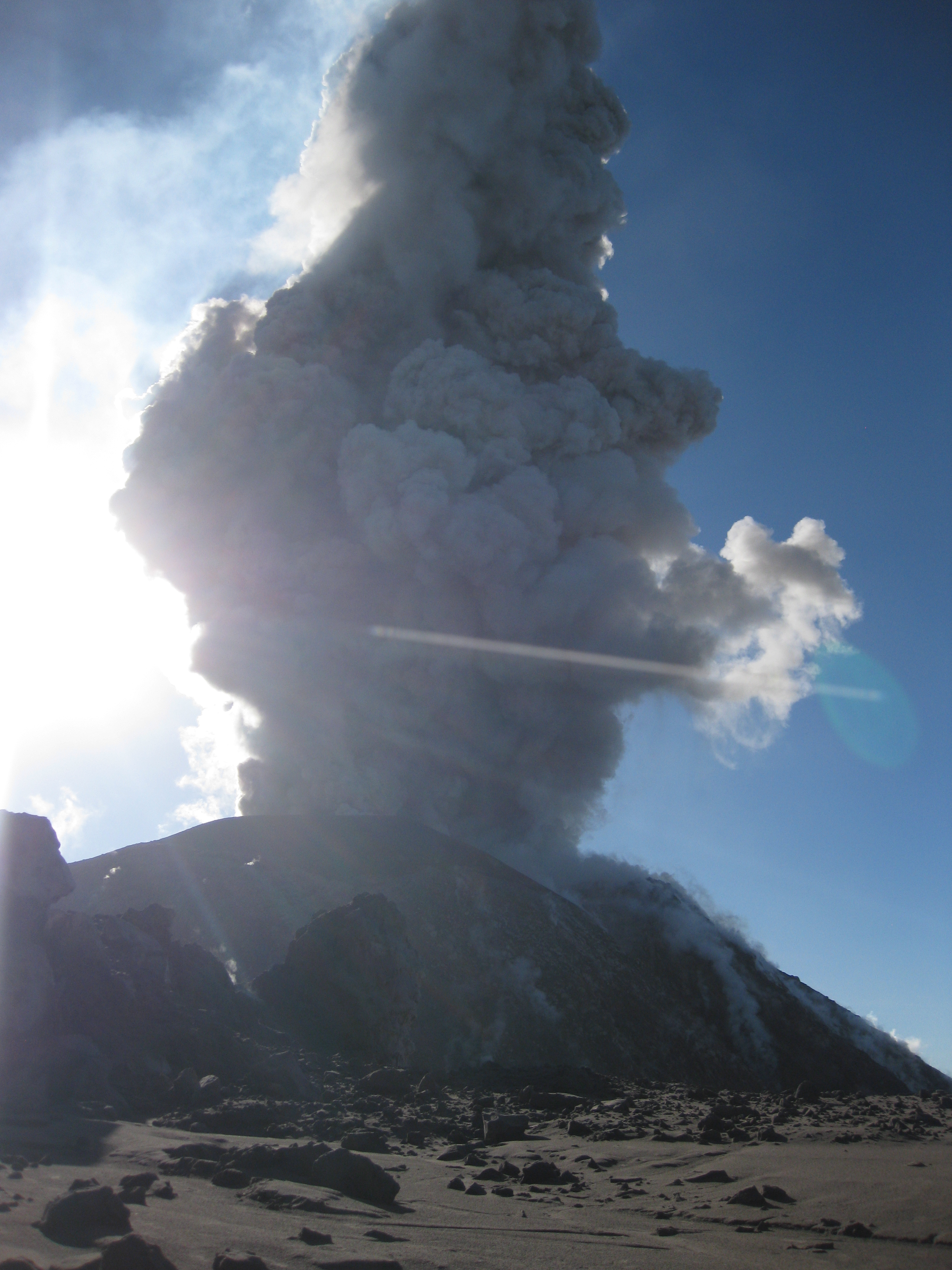
    I pass a few days in contemplation before passing a sleepless night under Volcan Santiaguito as it roars and vomits forth a cascade of sanguine rock. I sit anticipating each hourly explosion and the accompanying raucous rasp; it is primal and riveting; it is terrifying and perspective altering. The ever salient question: what do I want to do with my fleeting time? Ash rains down on me. I decide that I should do something different, chase the loose ends that tantalizingly dangle in front of my face. The needle on my compass is not pointing North, it is spinning capriciously. I am not returning home.

    I look back at all of this, well everything, in bewilderment and mirth. All of it an infinite sum, a discontinuous function if any piece of it were to be missing. I am still in Xela.

  • ‘El Capricho’ Km. 52 Cattle Inspection Station

    La Horqueta/Poblado 12, Veracruz to Cerro Nanchital, Veracruz

    As I lay in bed, a crisp dawn never comes, only a gradual lightening. I only get out of bed as a baby cries and pots clang in the kitchen that is separated from my head by several inches of thin wall. I lugubriously eat, struggling to lift my spoon to my mouth. Damien feeds his leftover cereal to the chickens that graze around out feet.

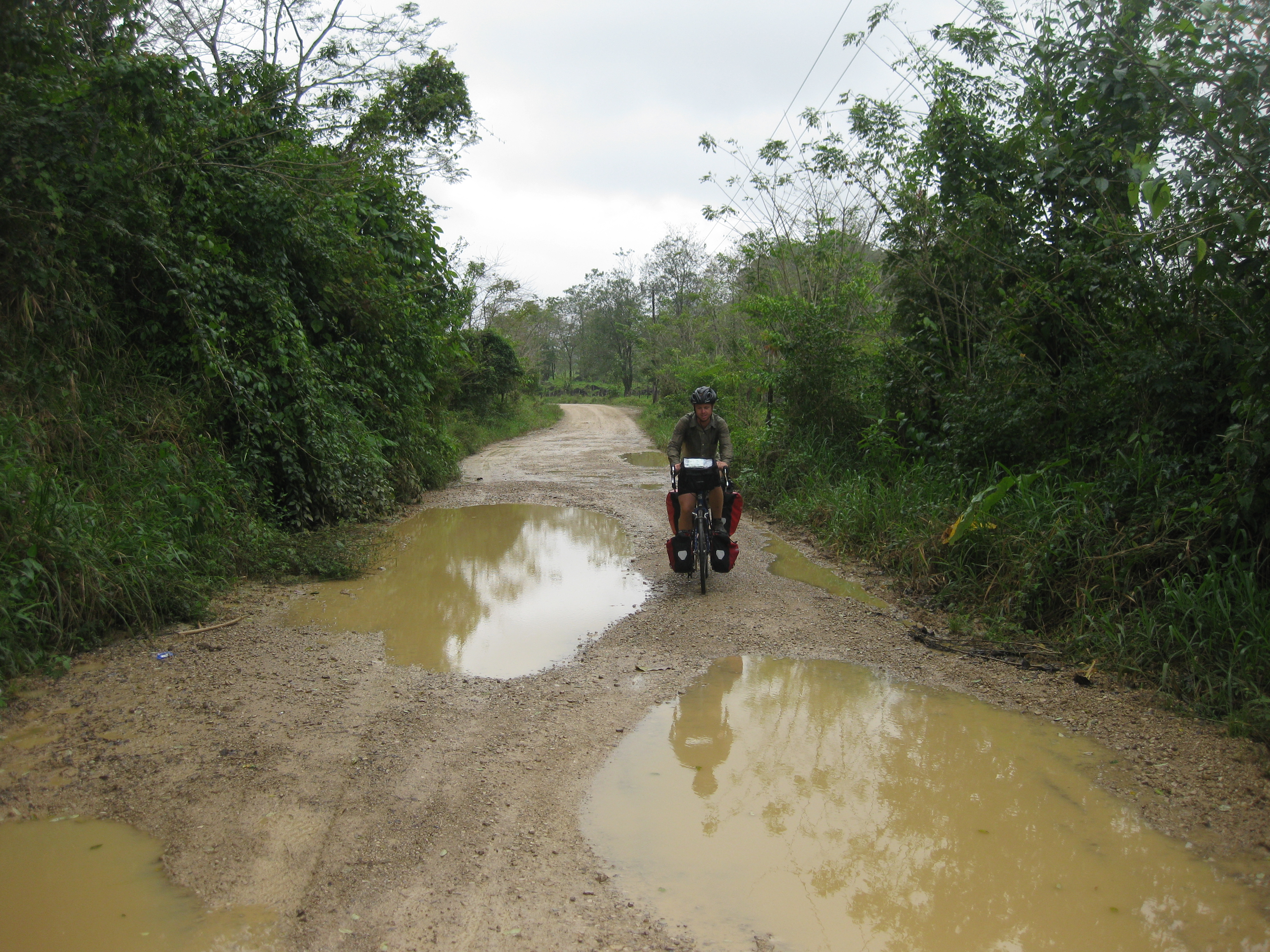
    We retrace our route a few hundred meters to get to the bridge over the Rio Uxpanapa  to continue towards Poblado 13. The parting words from the grandma’s frowning mouth are, ‘You are going to get rained on today.’ Thanks for that. The clouds are low and they start spitting on us as soon as we leave. We gradually climb and weave on a road pockmarked by potholes engorged with opaque water.
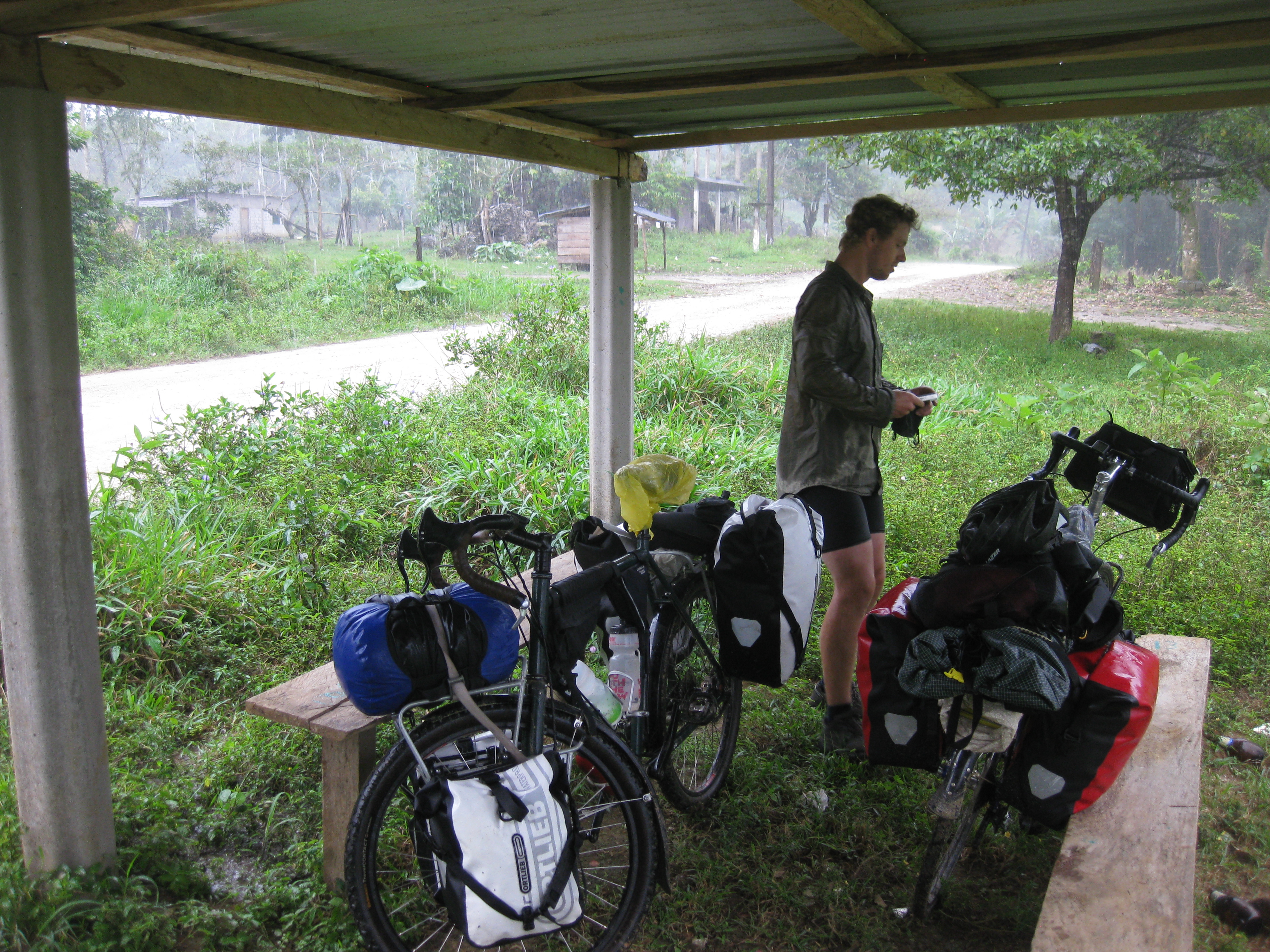
    The rain finally comes after looming ahead for quite a while, always just a bit ahead in the mountains the tower over us. It comes in wavering sheets, green parrots scatter as we stop to rainproof our bikes. We enter a town and a strong gust sweeps down on us before the sky unleashes a deluge. We ride laughing as it pelts us; it isn’t much of a rainforest if you don’t get rained on. We duck for cover under a shanty on the roadside, the sound of the rain pelting the roof is deafening. We sit silently listening to the pitterpatter as we spoon out the inside of a cantaloupe.

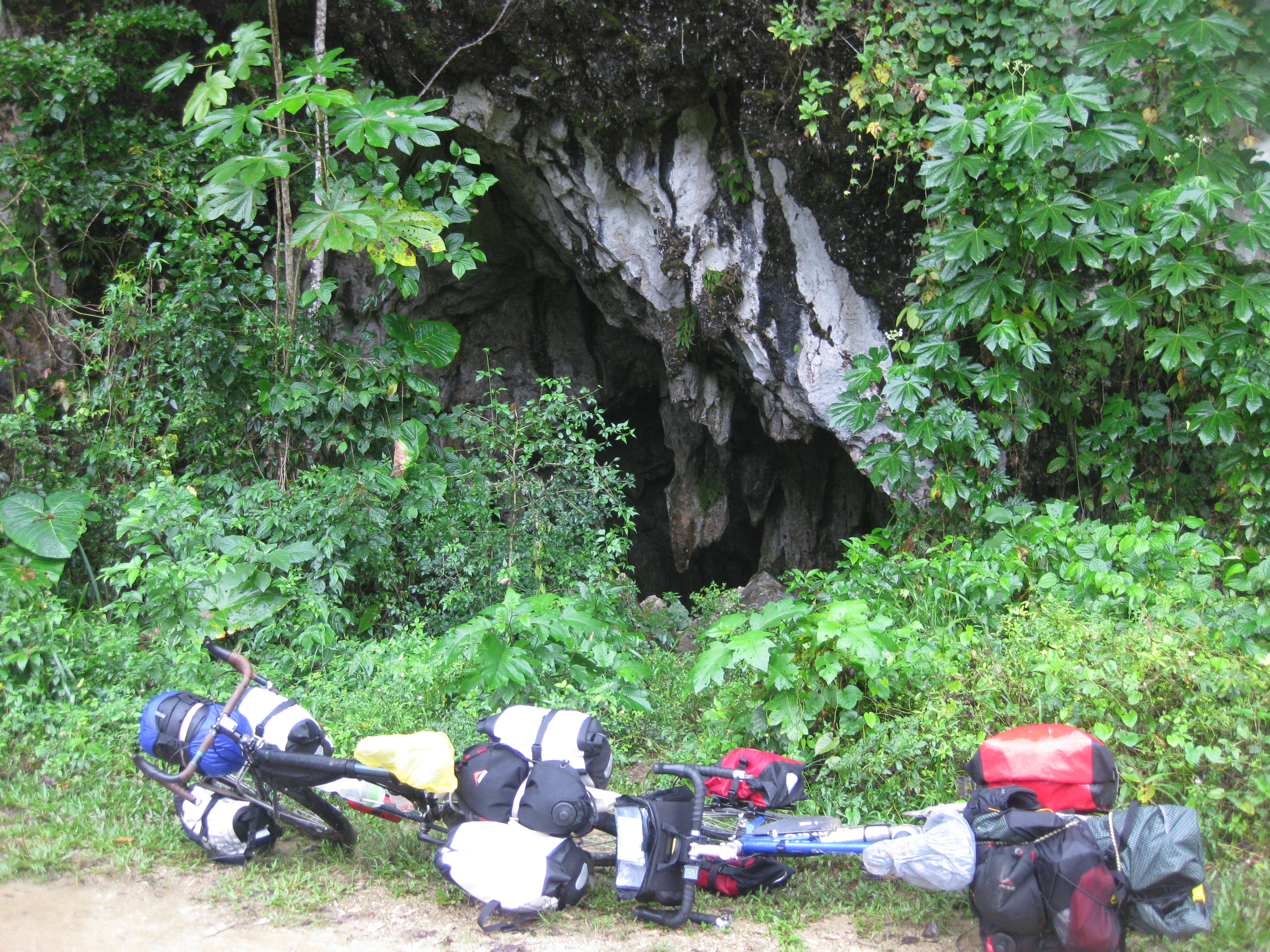
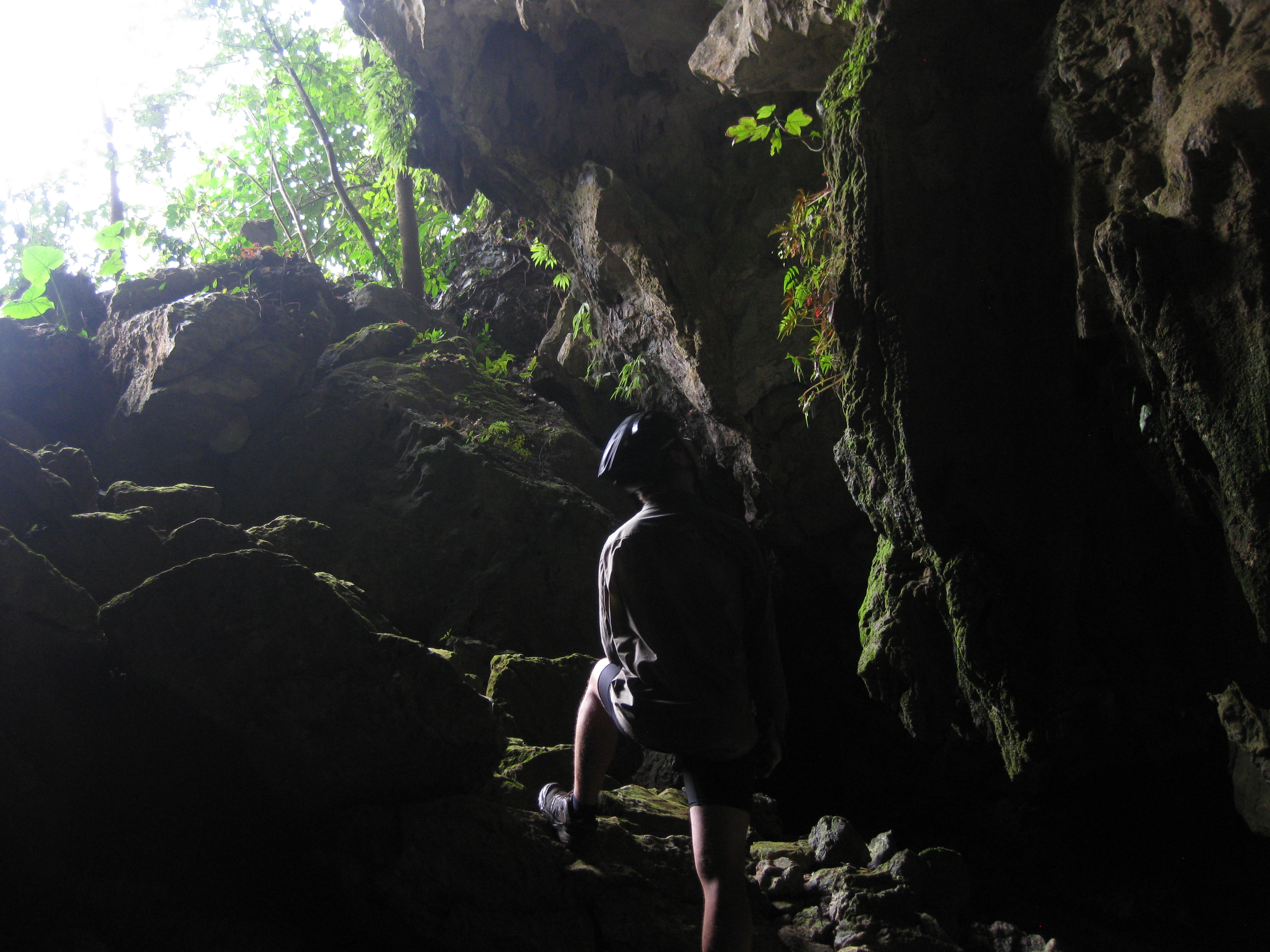
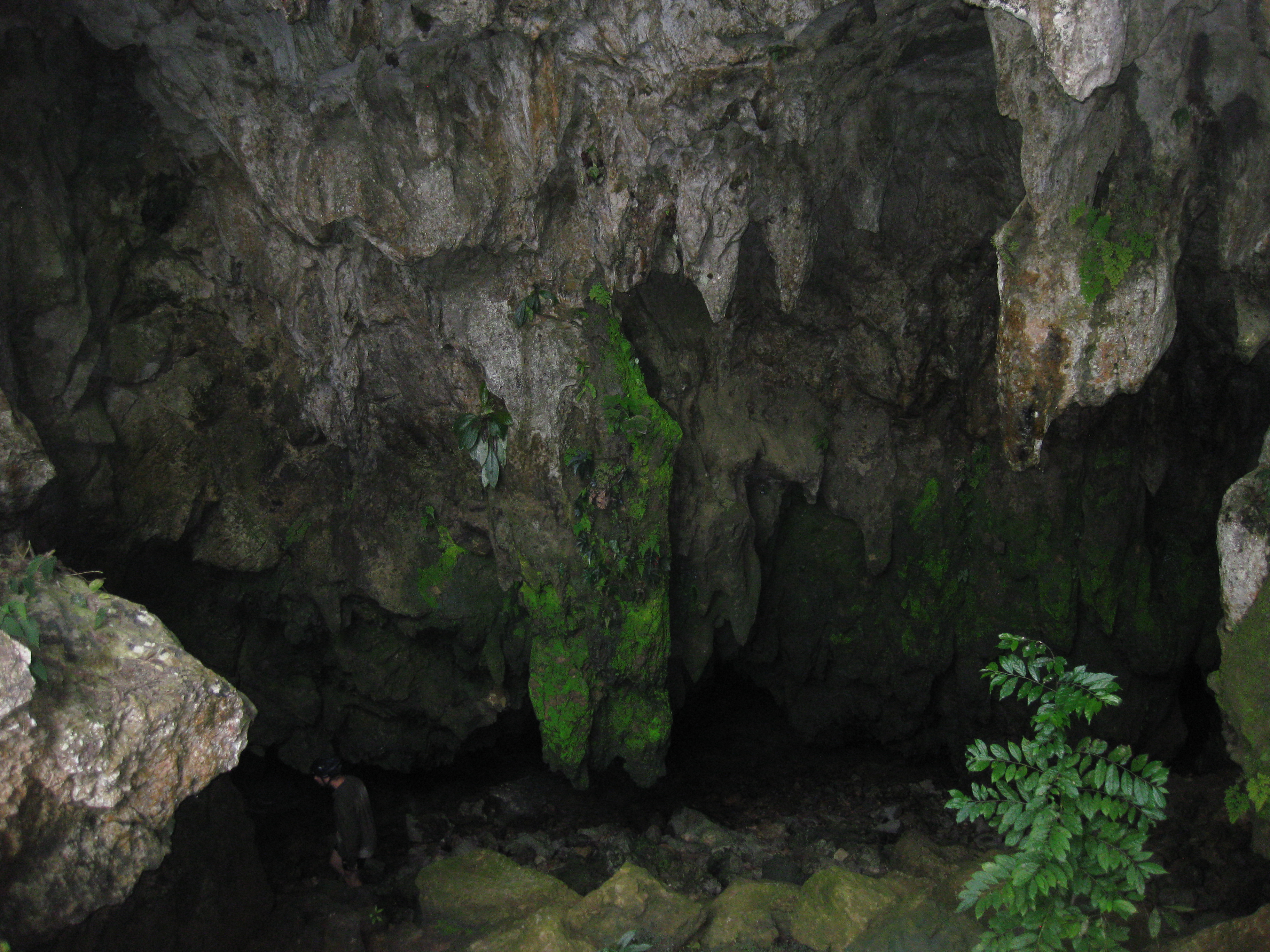
    The rain slows to a drizzle and we set out. The terrain becomes steeper and more rugged as we climb further into the mountains. I lock up my brakes and skid to a stop outside the mouth of a cave, stalactites looking like teeth as we climb enter. We descend down into the darkness and are greeted with the sound of running water echoing off the walls. A shaft of life illuminates a small river that runs through the bottom. I dip my hand into the current and am surprised by warm water. I shine my headlamp around examining a pool, a bat panics and screams past my face. I hold my breathe like I do near packs of pigeons, assuming that even the air that comes off of their wings could give me some sort of disease.
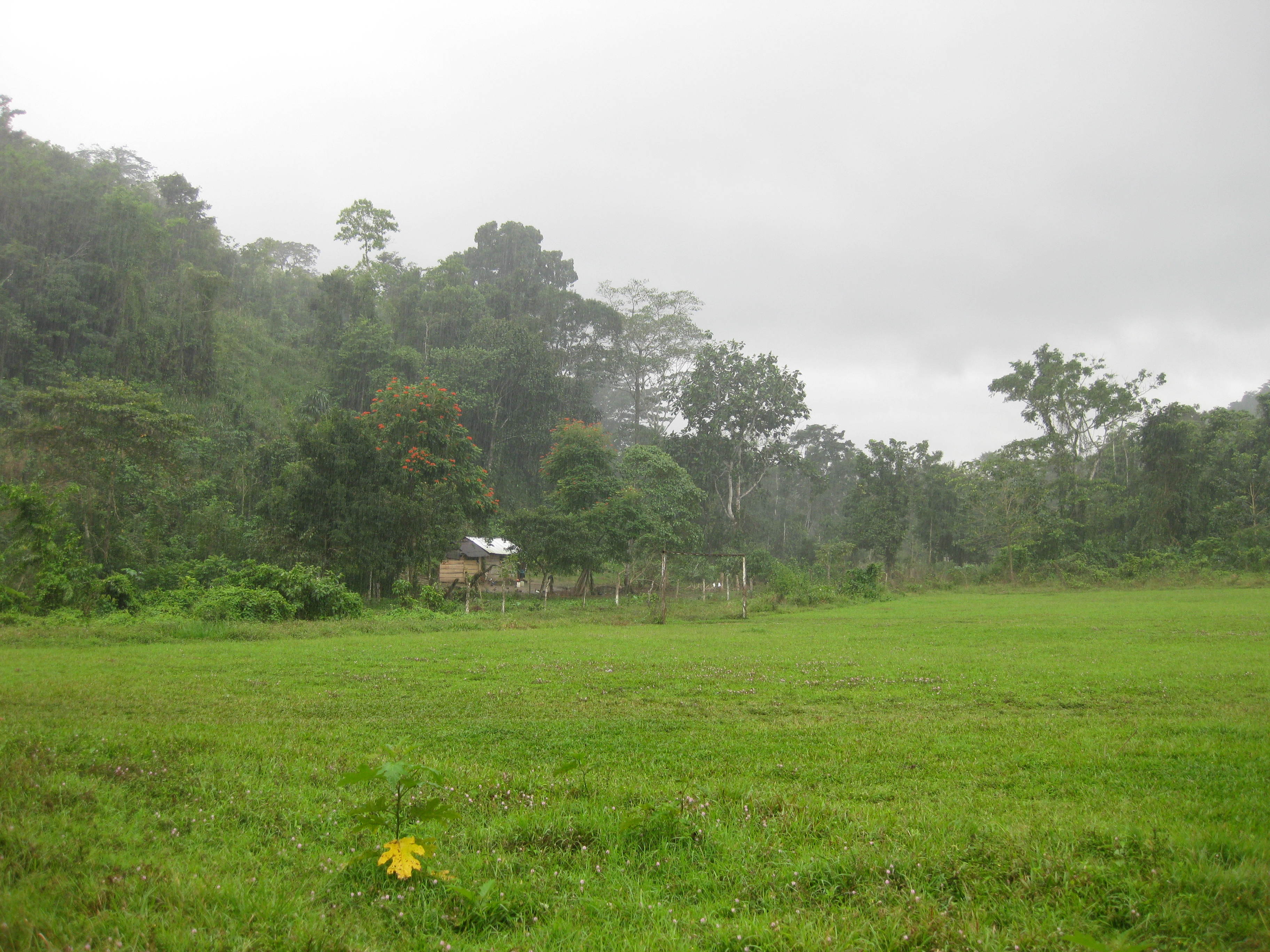
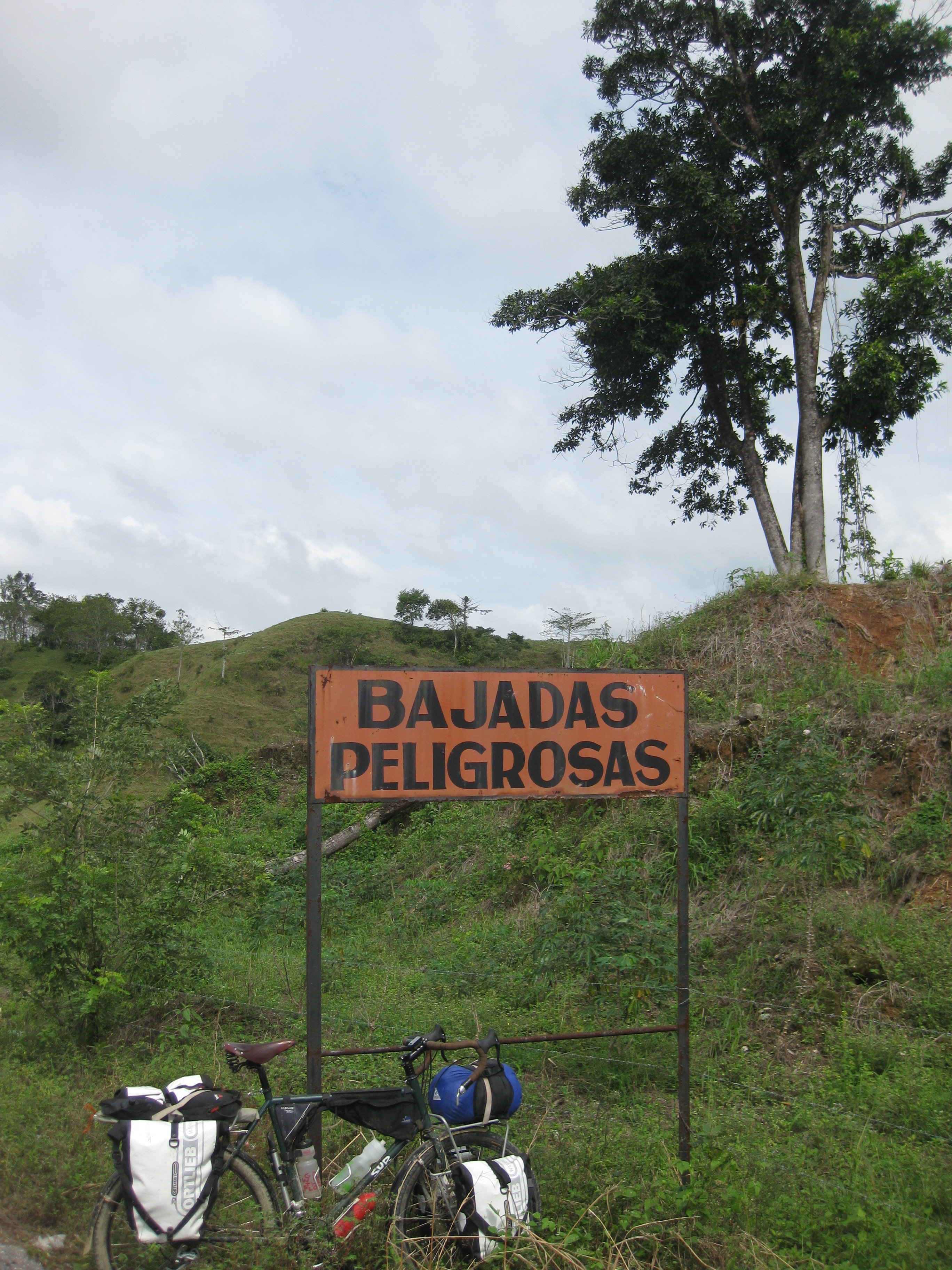
    Motorcycles pass us every half hour or so, but we see no cars. The reason for this becomes apparent as we begin climbing the steepest section of road surfaced with limestone ledges, rounded river cobble and slick clay. I pedal hard and try to snake my way upwards before finding myself getting bucked off my bike and walking until a suitable spot where I try again. I repeat this a half dozens times until I have walked most of the climb. I reach the top where I cross paths with two guys on a motorcycle dragging an emaciated hound dog with a nylon rope cutting into its neck.

    ‘Where are you guys going?’ I ask while suspiciously eyeing the dying dog.

    ‘To Matias Romero.’ A city at least 100 kilometers from here.

    ‘With that dog?’ I ask with a cringe.

    ‘Yes?’

    ‘Is he sick?’ Trying to suggest that maybe the dog doesn’t look too good.

    ‘No, he’s fine.’ I look at him and am pretty confident that he will die today.

    ‘Incredible, simply incredible. See you later.’

    The downhill is equally treacherous, my rear tire frequently sliding off rocks and my front tire wildly careening off obstacles. Suddenly the road smooths out and the dense jungle opens up into green pasture. The riding is easy as we build momentum and pedal hard. The entirety of this trip we have received answers of degree of diversity regarding the distance to Cerro Nanchital. The wind blows hard and we are soaked to the bone. Powerlines? check. Trash? check. Cars? check.

    We ride across the Rio Nanchital and arrive into a town where an elephant would seem less of a spectacle than a couple of gringos riding around on bicycles. Everyone stares as we ride the main drag eating several lunches at several different eating establishments. A kid dangles his hand out the window and makes eye contact with me, I instinctively stick mine out and we have a serendipitous highfive without a word exchanged.

    My bike is a muddy mess with a flat tire that doesn’t want to shift . We are in shambles and I am amazed when a woman allows us to roll our bikes into a hotel room and soil it permanently with heaps of damp gear. Afterwards we roam town asking the least rubeish citizens about the roads out of town. The answers are highly varied. We find an internet cafe where a group of boys outside passes half an hour yelling, ‘Fuck!’ and ‘Hey, what’s up man?’ I guess this sums up what our media culture imparts on the rest of the world.

    We head out into the pouring rain in search of dinner. We sit at a restaurant staffed by five young girls who giggle whenever we say anything and huddle around the glow of a television with flickering images of immaculately groomed and painted milkfed stars bathing in sumptuous wealth and hemorrhaging sexual energy. The commercials flaunt flat screen televisions, makeup, processed food, cars. You need it, you will be happeier with it. Buy it. If you aren’t happier then there is something wrong with you, luckily we have a product for that as well. What do they think about this?

    ‘Behold through you as bad as the rest,
    Through the laughter, dancing, dining, supping, of people,
    Inside of dresses and ornaments, inside of those wash’d and trimm’d faces,
    Behold a secret silent loathing and despair.
    No husband, no wife, no friend, trusted to hear the confession,
    Another self, a duplicate of every one, skulking and hiding it goes,
    Formless and wordless through the streets of the cities, polite and bland in the parlors,
    In the cars of railroads, in steamboats, in the public assembly,
    Home to the houses of men and women, at the table, in the bedroom, everywhere,
    Smartly attired, countenance smiling, form upright, death under the breast-bones, hell under the skull-bones,
    Under the broadcloth and gloves, under the ribbons and artificial flowers,
    Keeping fair with the customs, speaking not a syllable of itself,
    Speaking of any thing else but never of itself.’ – Walt Whitman

    Cerro Nanchital, Veracruz

    It is still raining, day three of rain. A cold front has swept over Mexico bringing snow to the North. We decide to try our luck and continue riding in the direction of a small town/ranch called El Desengaño, or the Disappointment. I debate dumping white gas all over the hotel room and burning its forever tarnished interior to the ground, but we will need that white gas for the coming days. Two locals draw us maps of the route and detail how we can get a boatride across the Malpaso Dam where the road ends. We ride out under a gray sky, sheeted in low clouds. The rain falls gently and consistently. We are prominent local figures at this point, our exit something of an occasion.

    We take a righthand fork roughly a kilometer outside of town where the road has been recently graded. The slick red slurry starts spraying. My legs are painted in red, my bike slathered in it after ten minutes. A man, a foreboding figure, approaches us on his motorcycle with his entire frontside painted in copper mud, the whites of his eyes bold against this backdrop. My brakes start grinding, my shifts skipping. I look back and Damien is missing. I stop and wait as the rain soaks deeper into my clothing. He reaches the top of the climb looking dismayed. We talk briefly about our bikes that have been rendered useless in only a few minutes in this quagmire. We reach Disappointment without having to ride the 50km we were expecting.

    We ride back to Cerro Nanchital in defeat. We find shelter under the awning of a building, flip our bikes over and shiver as we clean every component of our bicycles.

    A man’s head pops out of a window nearby:

    ‘How much does your bike cost?’ I mumble something in response, his head disappears back inside.

    I spend the next four hours getting my bike into a semblance of working order until a man pulls up in his car.

    ‘Do you guys need a mechanic?’ He amiably asks.

    ‘Do you work on bikes?’

    ‘Yes, a bit.’ He says this in a way that leads me to believe that he might know something about bikes.

    I show him how my shifting is getting slightly hung up and I cannot get the adjustment right. He grabs my hex keys and screwdriver and works quickly. He turns screws, loosens the cables, shifts through the gears. He is extremely efficient at undoing all of the work that I have done and worsening the condition of my bike. I watch in horror as metal grinds, the chain binds, screws are wildly wound in different directions and his brow furrows in confusion.

    ‘Something is wrong with your bike, but I need to get to work. Good luck.’ I am deliriously incensed, laughing as a pace and curse the chummy clodhopper.

    My tire is flat again as I try to head back to the hotel in confusion. My derailleur binds and snaps. I patch my tube once, put it back on the rim, another leak develops, I patch it. I start to pump it up and the tube bursts. I put in a brand new tube and it has already been punctured. I patch it and then find another leak. I patch it. I pump it up and the tube bursts irreparably. One tube left: a Chinese made tube bought from a greasy little bike shop in Amecameca. It holds. The rain pours day and night, steadily audible from our windowless room.

    Cerro Nanchital, Veracrus to ‘El Capricho’ Km. 52 Cattle Inspection Station

    The sound of rain buffeting the roof has abated and we walk out into sunshine. I ride my bike around to test it out and stop to talk to a cute girl that works at one of the restaurants. An old man emerges from the house to contribute to the conversation:

    ‘Where are you from?’

    ‘How much does that bike cost?’

    ‘What’s in those bags?’

    ‘Do you have any cocaine?’

    ‘Do you have any weed?’

    We ride past the hogswallow that leads to Disappointment, it is a somber moment. Signs threatening dangerous climb and descent as I ponder slash and burn landscapes. The topes and the dogs are aggressive on this stretch. I taunt the dogs, howling and barking as I pass to stir them up. It is even better when Damien is still behind to draw their wrath. The roads and bridges here were build by PEMEX for oil and gas exploration according to plaques on the roadside.

    We ride 50km without stopping, eventually merging onto a highway where we eat at a restaurant managed by a taciturn woman, terrorized by a half dozen children and presided over by an old cowboy. The kids scream and laugh; the husband quickly stands up and shoulders a rifle that somehow manages to shatter the preexistant raucous chaos with several shots. He walks into the forest to retrieve his bounty.

    After we finish eating they show us their collection of jungle pets/living food stockpile. They lift the boxes off a few tepesquintles that peer at us in terror with  nocturnal saucer eyes.

    We ride out in search of a camp after buying a bunch of vegetables out of the back of a pickup truck. The road is lined with barbed wire guarding open pastures that would be unpleasant sleeping grounds. Not fit for someone of my position in society. But we come across a more befitting local in the drizzlely afternoon: the State of Veracruz Cattle Assessment station, managed by Adam who greets us in perfect English as we pull up. I explain our trip quickly and then get to the point:

    ‘Can we sleep here somewhere? Out there in the field or something? We have everything we need to camp?’ I ask as politely and pitifully as I can.

    ‘Sure, anywhere. You guys can sleep in that trailer over there if you want.’ He seems ecstatic to have visitors.

    ‘Are you sure?’ Damien asks.

    ‘Yeah. It is full of soda from a Coke truck that crashed near here last week, but you can just move that aside.’

    So we set up camp in an old camper with the floor rotting out and collapsing. It is partly burnt down and sits on the manure covered concrete slab of a 24 hour livestock inspection station. We move hundreds of cans and bottles of soda to one side. There is used toilet paper inside the trailer and some poop in the corner. I kick the toilet paper into the corner with the poop and then move a file cabinet on top of all of it.

    We cook dinner in the kitchen of the cattle inspection station with Adam and the security guard Johnny. Adam occasionally runs off when a truck full of chickens pulls up clucking or a silver cattle trailer arrives sluicing manure out of its slats. Adam  reminisces about America before showing us pictures of his kids and his ranch. We talk 1990’s baseball and I nostalgically recollect some of my cards.

    Strange bugs flit and dart around the humming white lights, beautifully knocking themselves senseless. Metallic beatles, particolored moths, something that terrifyingly looks like a flying scorpion.

    Damien looks at one of the particularly brilliant moths and exclaims:

    ‘This one looks like my grandma made it!’