• No, I Don’t Want to Buy a Jaguar Cub or Cocaine.

    Puxmetacan, Oaxaca to La Mixtequita, Oaxaca

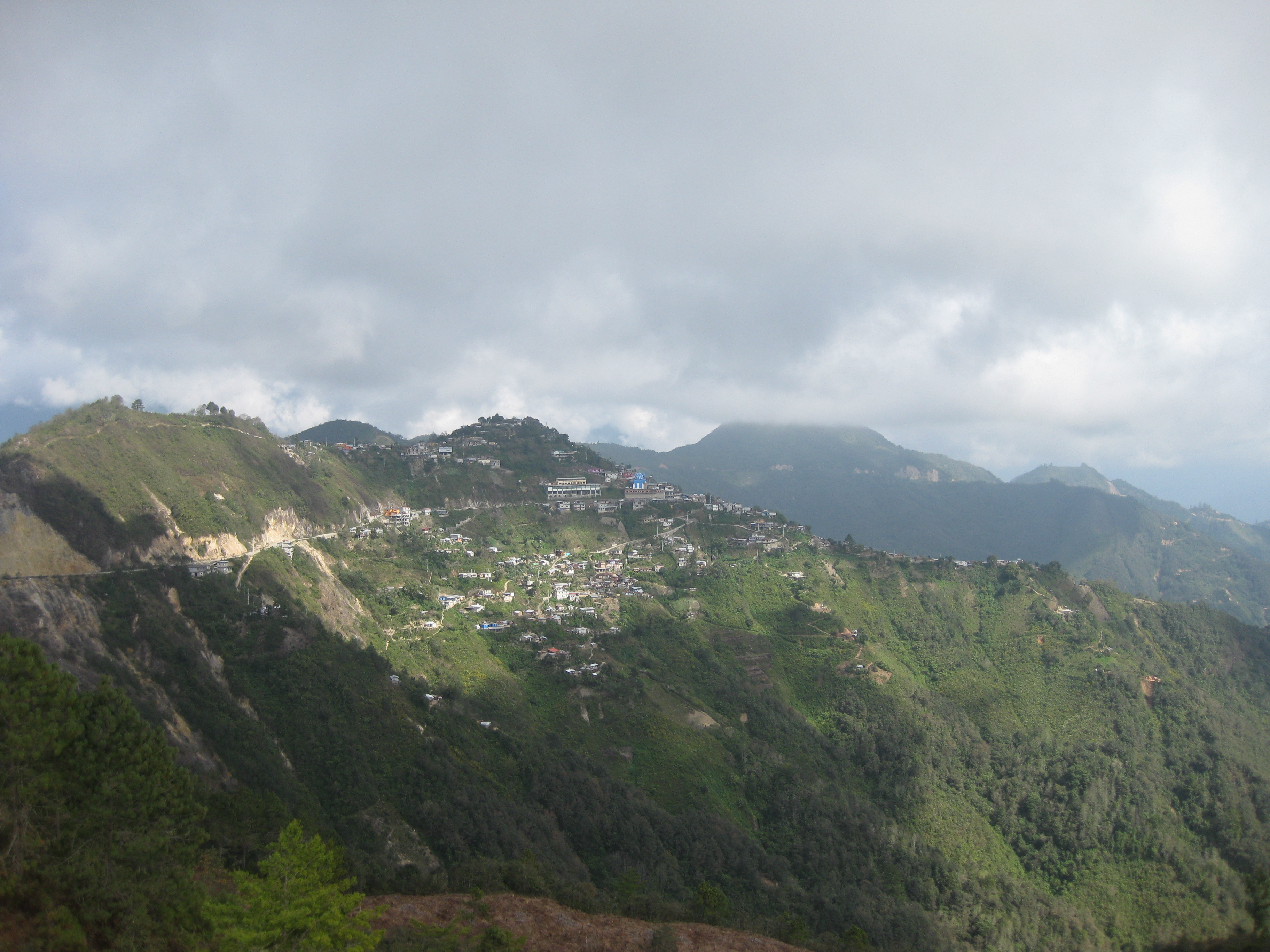
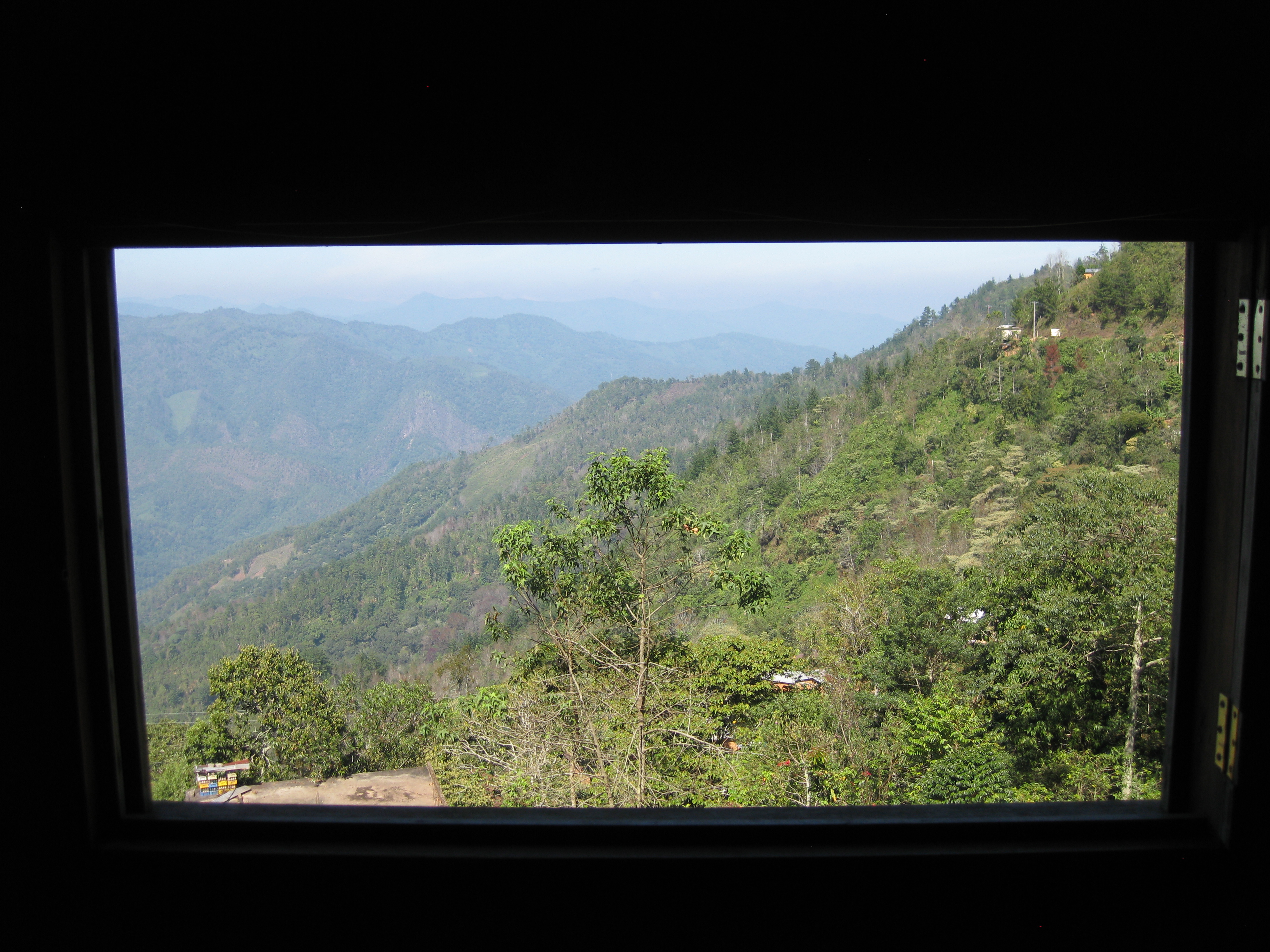
    I toss and turn, the night too warm for anything beyond the clothes that I wear to keep the mosquitoes off of me. The town comes alive with the rising of the sun, its rays piercing the clouds that fill the valley and buffet the mountains. A rooster’s talons click on the zinc roof as it struts and crows. An orange trees blooms and stirs outside the window; hummingbirds dart and stab the pungent pistils. I somnambulistically descend a foottrail down the steep mountainside to buy fruit from a woman’s living room. Here a man teaches me how to greet in Mixe, phonetically it is pronounced ‘mi-gep-ay.’

    ‘Puro Mixe.’ He repeats over and over again with a  smile on his face.

    We disrupt some festivities as we leave town, parting the crowd as we walk our bikes through. After giving a brief speech thanking everyone for their hospitality, I awkwardly wait for the tickertape to rain down upon us before realizing that it is Sunday and the stock market is closed.

    I sound like a dumb infant as I leave town, perpetually saying the same word over and over again. Mi-gep-ay! Everyone loves it though. We begin a general descent, with frequent interspersed climbs. The jungle is thick and the air stagnant. I dodge treacherous patches of marble sized rocks with Damien on my side doing the same, leading to several near disastrous incidents as we race into turns. Several pickup trucks loaded with passengers pass, dozens of eyes inquisitively fixed upon us from the bed.

    The forest filled with strange bird calls and rustling bushes gives way to land co-opted for cattle. The approach of civilization is always apparent. I eat bananas, mangos, mandarins, guayabas, peanuts and chocolate as the next town remains ever elusive. It doesn’t exist on our map, only as a rumor. I ride in a ravenous haze in the early afternoon.
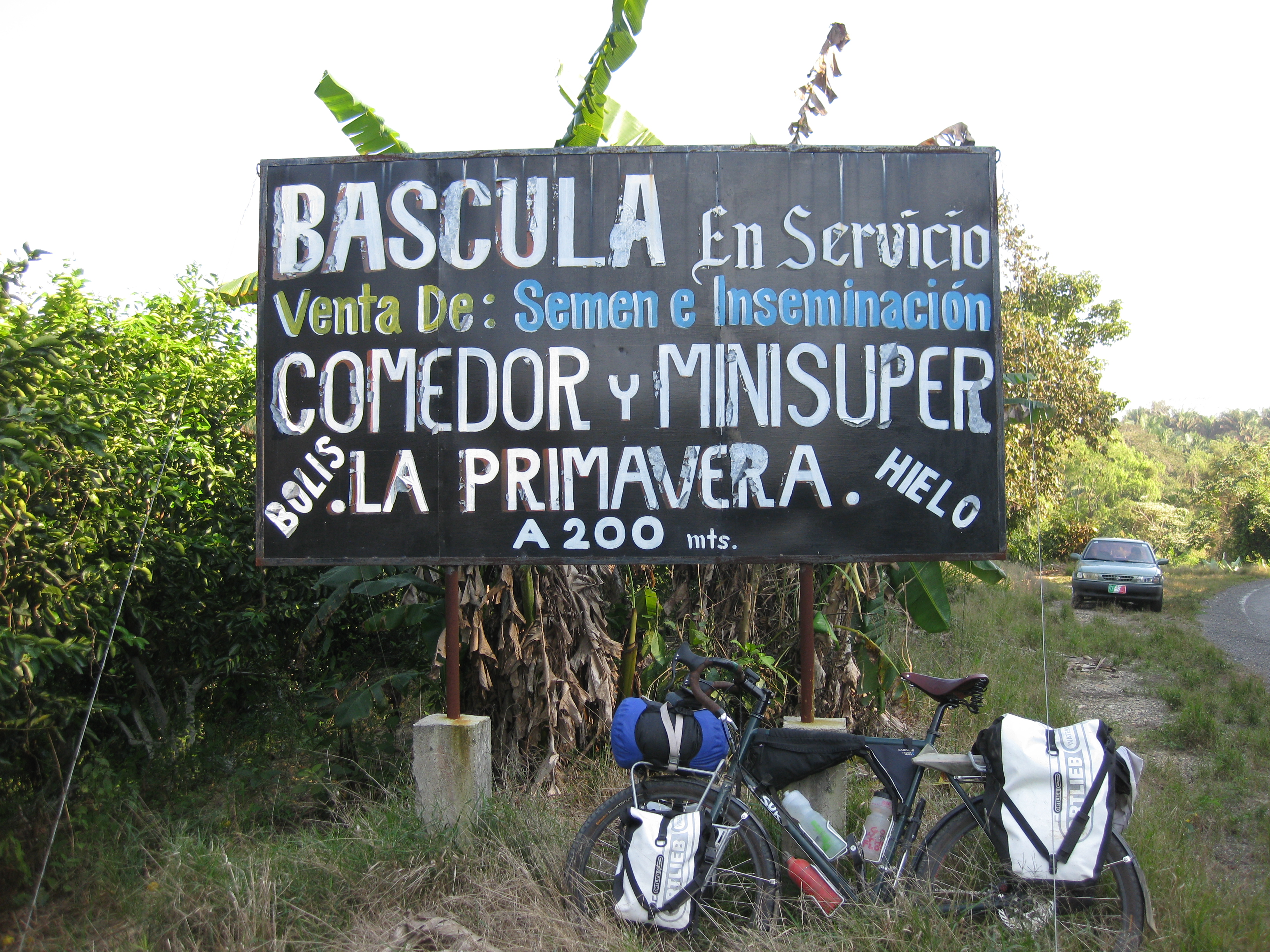
    Scale in Service.
    For Sale: Semen and Insemination. Restaurant and Supermarket. Toilets. Ice.

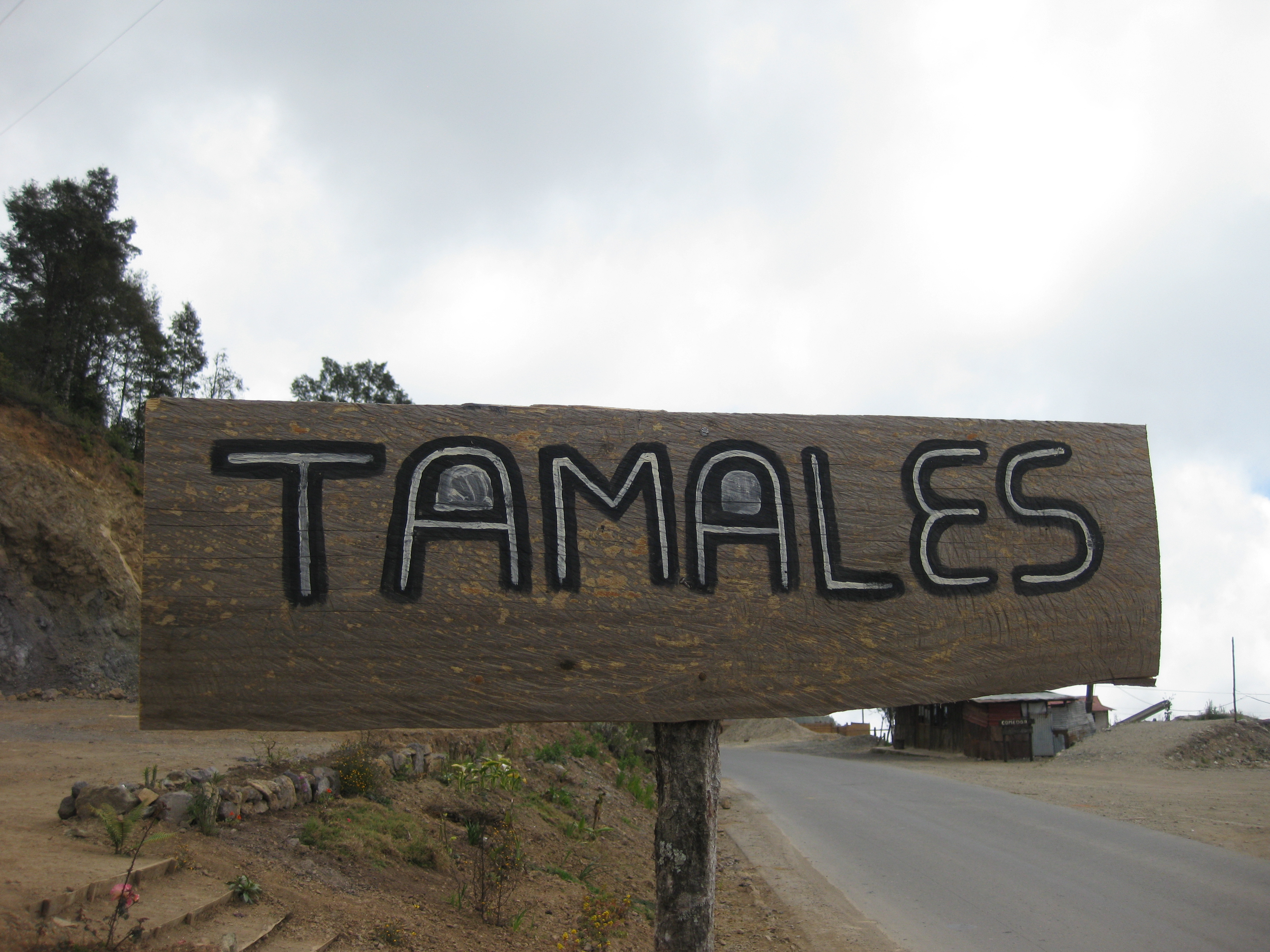
    Then I hit pavement and give out a loud whoop and pump my fist as a few bewildered locals timidly gaze from the back of a truck. The pavement is so smooth, so easy…so unsatisfying. We limp into a roadside restaurant where I collapse into a chair and sip on a glass of agua de tamarindo.

    ‘Hey man, what’s up man?’ I hear in heavily accented, drunkenly slurred English. Fuck. I wince and slowly turn my head towards a nearby table.

    ‘Hey, how’s it going?’ I slowly respond.

    ‘Yo man, you from the United States?’ I am convinced that most immigrants learn their English from early 1990’s action films. Maybe Scarface?

    ‘Yeah….from Utah.’ He doesn’t pick up on my exasperation.

    ‘Oh yeah, Utah! I was a drug dealer in Indianapolis for four years. Mucho cocaina man. Haha!’ He is glassy eyed, stoned drunk. I hope this stops soon.

    ‘….until they deported me for no papers. I am going to go back soon. Fuck them man! I have fucking money man, those are my fucking papers! Hahaha!’ Would an immigrant to any other country than America proudly tell a citizen that they came there illegally, dealt drugs for a living, got deported and plan to return? How am I supposed to respond to this? I don’t say anything.

    ‘How much do you make man?’ He asks aggressively, his bloodshot eyes bulging forth.

    ‘Not much.’

    ‘How much does that fucking bici cost man?’

    ‘Enough.’ Damien and I try to maintain a steady conversation amongst ourselves to put an end to this.

    ‘See you later man! Hahaha!’ He stumbles out the door and hops into the driver’s seat of his taxi.

    The waitress intentionally overcharges us. Trucks thunder past, vexing my delicate senses with dust. Children stare vacantly at a television. These people are materially richer than the people in the mountains, but infinitely poorer in another way. I want to go back to the mountains.
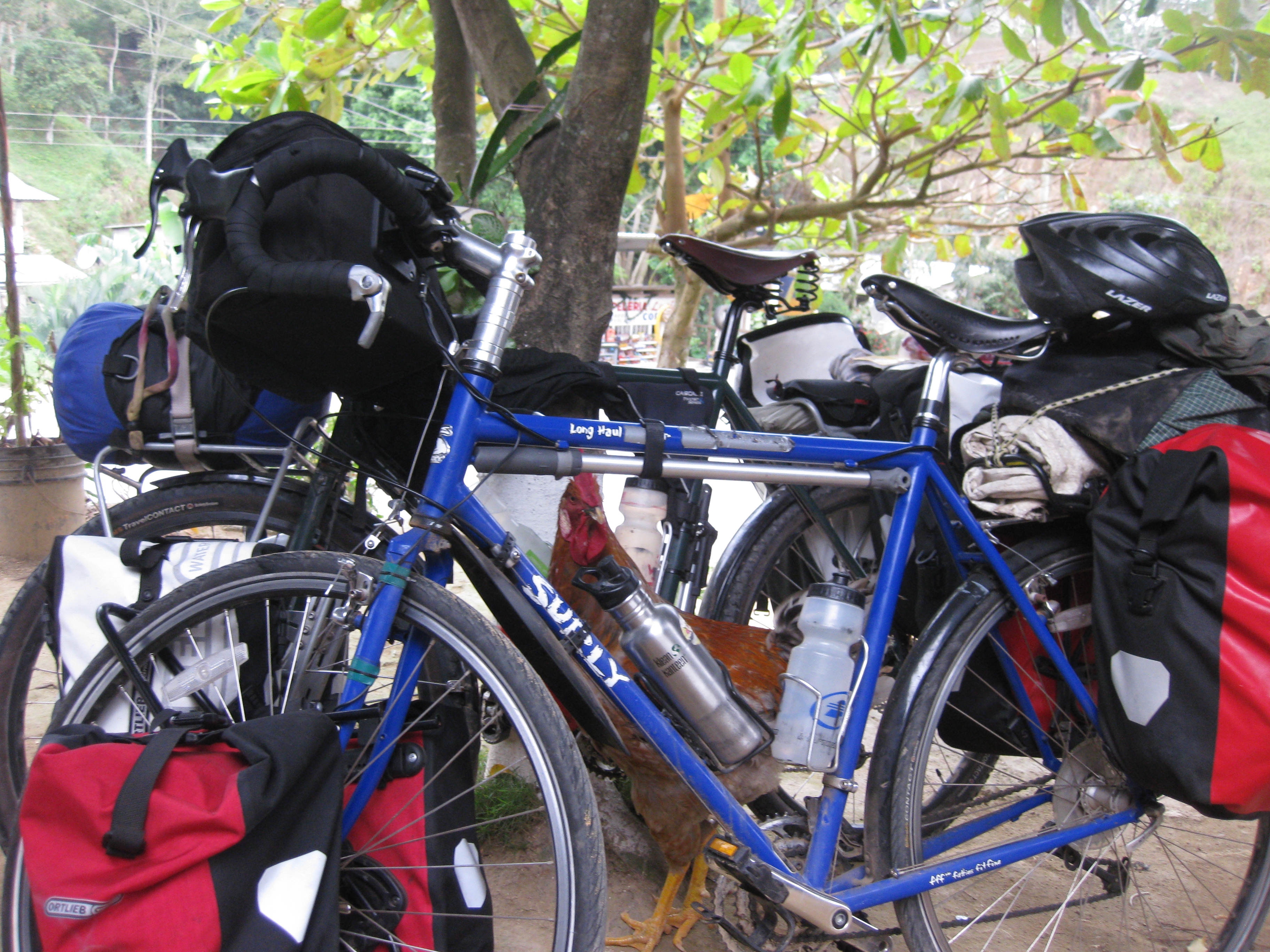
    We arrive in La Mixtequita at dusk, interrupting a futbol game as we ride up. I ask about a place to stay and am told to talk to the police who are on duty for the night. We ride down the road to a restaurant with a hilarious old lady, her drunk illterate son, a 3.5 kilo rooster and a drunk midget who insists on speaking in English that I cannot understand. We stay for a while in good company. The head of the local police hears about our arrival and comes over to talk, offering us permission to stay in the town’s municipal building.
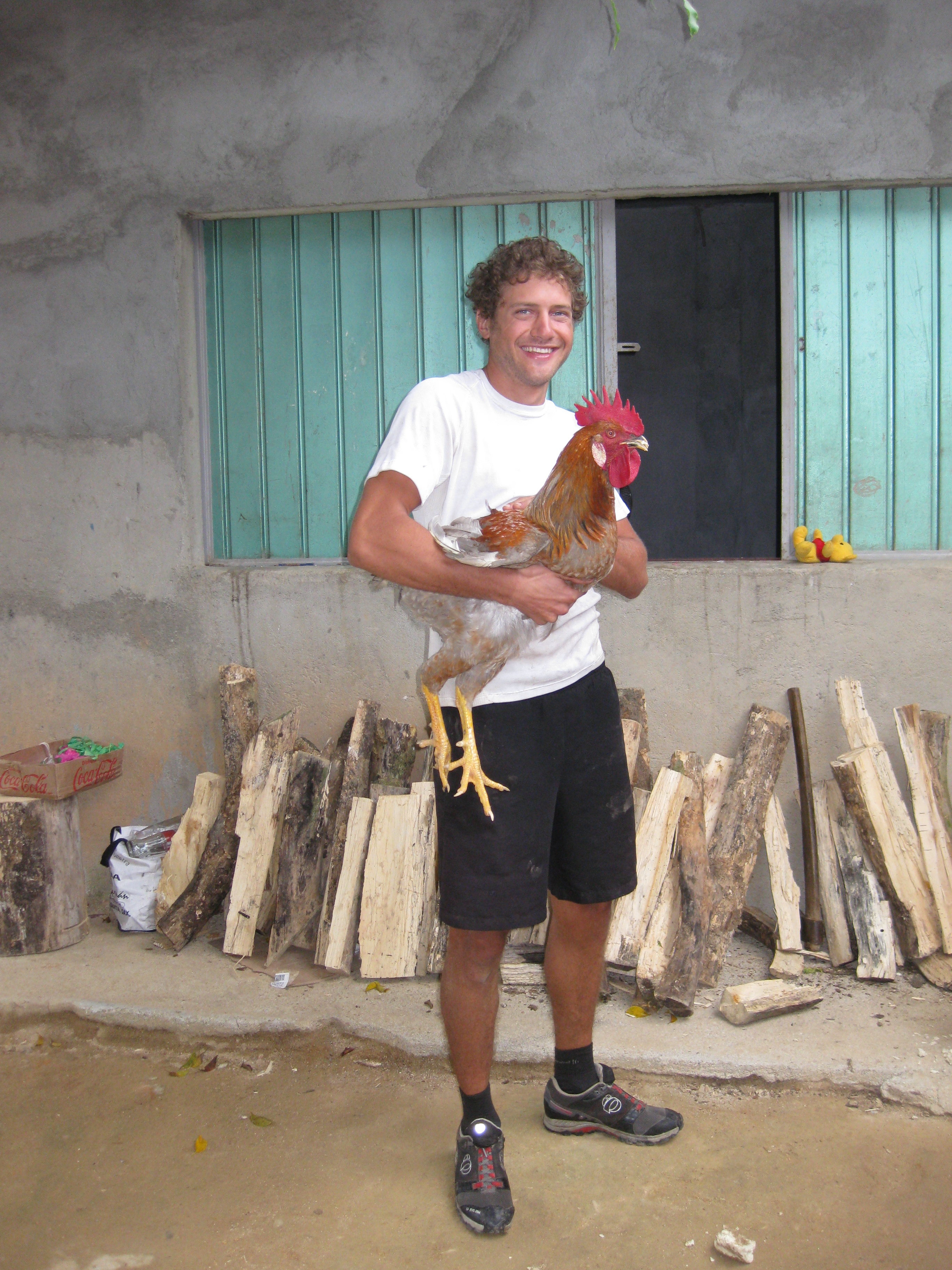
    We stop to get snacks and a girl disappears for a moment before returning carrying her five year old sister who is fighting in terror.

    ‘They aren’t going to eat you!’ She declares amidst laughter, holding her sister out towards us before setting her down. She takes off running.

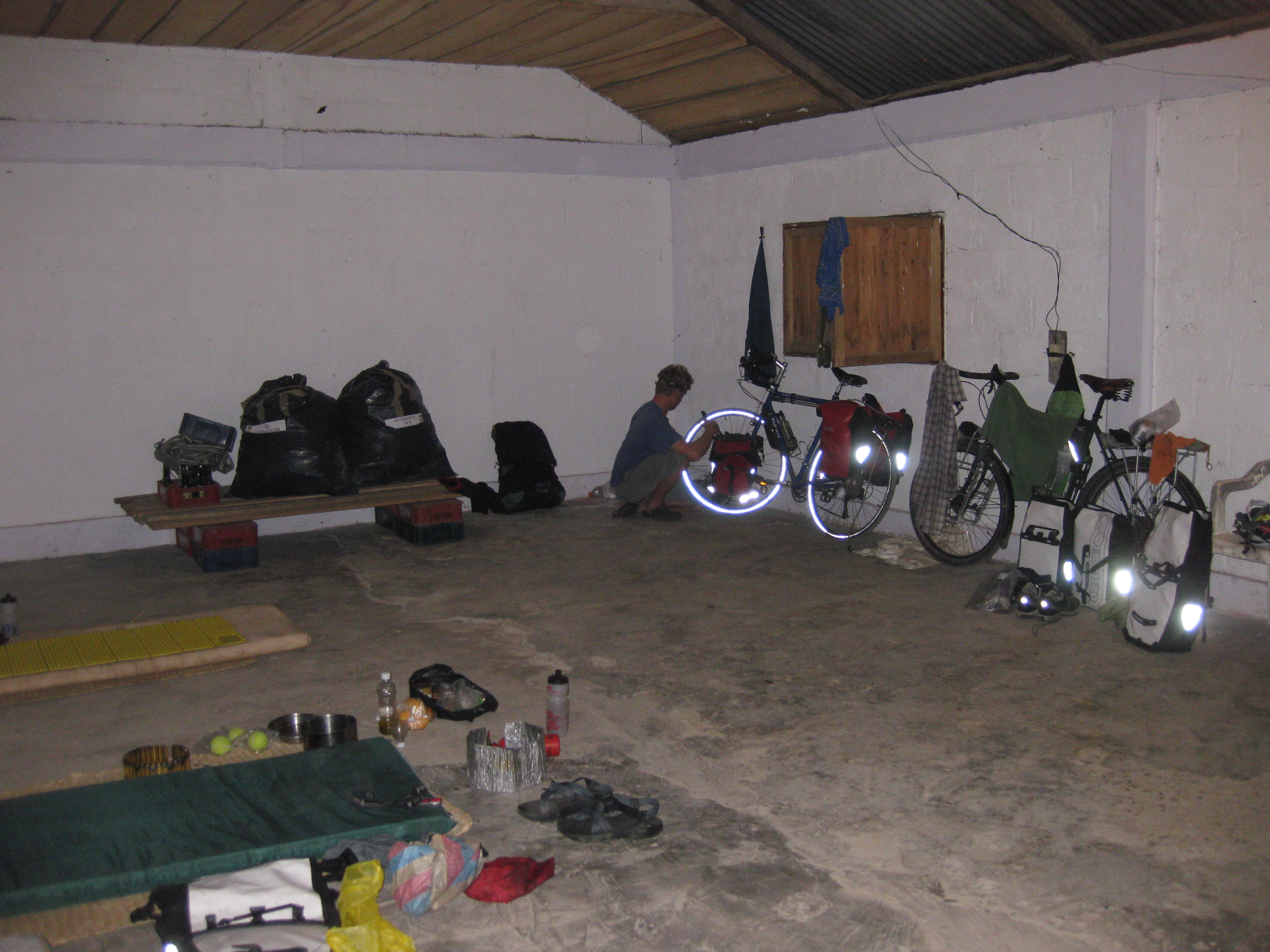
    Nobody ever arrives to open the municipal building for us, so we sleep behind it, under a metal roof.

    La Mixtequita, Oaxaca to Palomares, Oaxaca

    A cow bellows in the corral attached to the municipal building long before first light. A group of men are already working on a pickup truck and howling in laughter. As we pack up they come over to talk. We quickly move from our trip to more pressing matters.

    ‘Haha… Look at the Australian’s bike, he is so poor that he cannot afford disc brakes!’

    ‘Why didn’t you bring down a white girl? You know? A little thing.’ He makes an obscene gesture with his hands that is appears to be universal amongst Latin American men.

    ‘You should come to San Juan Mazatlan in the mountains, where we are from. There are waterfalls and beautiful mountains and lots of wildlife. We caught a baby tiger up there the other day.’ He says casually.

    ‘A tiger?’ I play it cool as well.

    ‘Yeah, a baby jaguar.’ He holds his palm about 30cm off the ground to show me the size of the cat.

    ‘How did you catch it”‘

    ‘Oh we used a trap. Do you want to buy it?’

    ‘How much do you want for it?’

    ‘One hundred dollars. It’s  cheap. There is a guy coming down here from Chicago to take a look at it in the next few days.’

    ‘Oh….’ This jaguar is as good as dead and I cannot think of a way to change this outcome. In the next few weeks I tell several government officials and police officers about this exchange. Here is a typical conversation:

    ‘That is definitely illegal.’

    ‘Is there anything you can do about it?’

    ‘Oh, well somebody should. It isn’t my job though.’

    We ride 20km of rolling hills into Palomares. We cross paths with the chief of police from La Mixtequita at a restaurant with a few friends. One of them lived in America for a while, so we have a fruitful dialogue about cocaine, banging white girls, getting drunk and eating at buffets. Somehow in the course of all of this he managed to get a DUI and was deported.

    ‘You guys want to buy some cocaine? Only one hundred pesos.’ He leers at us.

    ‘No. I am trying to lead a healthy life.’ I try to tactfully decline amidst rising frustration with conversations like this.

    Cocaine and jaguars. Welcome to the Isthmus.

    Palomares, Oaxaca to Poblado Doce/La Horqueta, Veracruz
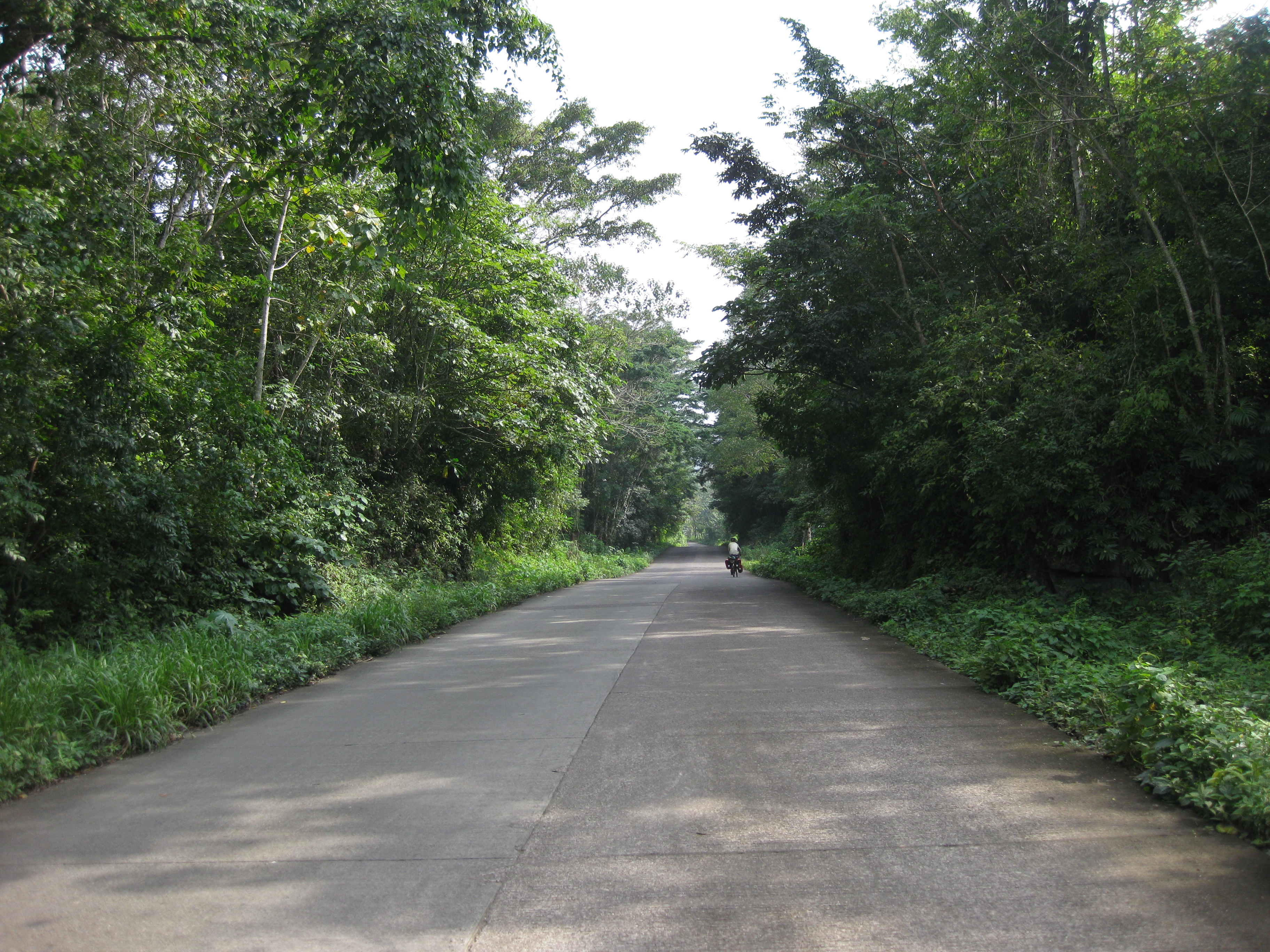
    One of Damien’s tires looks like it has leprosy with several sores and missing chunks. There is nowhere to get a spare that will not cost us several days, so we switch the front tire with the back and hope for the best. We stock up on supplies before heading out into the unknown. The entrance into the Ishtmus of Tehuantepec is called La Boca del Monte or The Mouth of the Wild. The road on my map is shown as nothing but dirt as it snakes through several small towns named Poblado 1-14 or Population 1-14. There is nothing in this region on our maps other than what lies along this small road until one reaches one of the two coasts.

    The road stays paved as we pass through the final frontier town that  bustles with activity from the natural resource exploitation beyond. I receive varying and conflicting answers regarding the road ahead, but almost universally we are told that we should turn around and head to the coast. The air is filled with a miasma of decaying organic matter, cow shit and dead animals. Development?

    We continue on a concrete road through pasture. Where is the adventure and rugged country? The swarthy savages clothed in loincloths that jump out of trees onto animals backs to stab them to death? The jaguars barking at us? The monkeys flinging shit at us?

    What is it like to live in a town called Population 2? There is a sign out front built out of scrap metal with the village name spray painted over rust. Orange trees overburdened with fruit line the road.
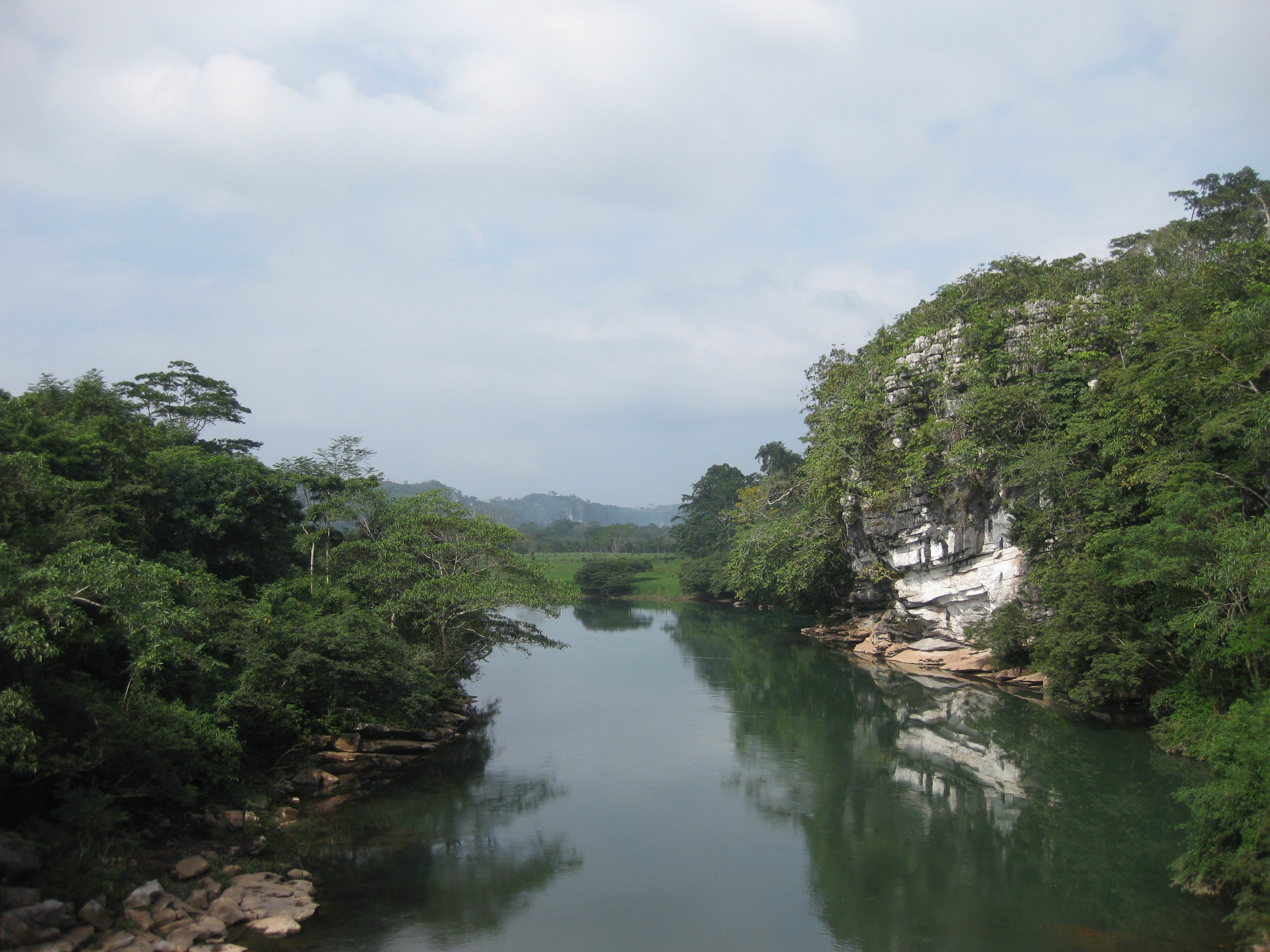
    We cross into Veracruz and are questioned by curious assault rifle wielding police. I keep my answers concise and we are sent on our way. The jungle slowly thickens, swollen beautiful rivers whisper to us from below bridges. In Plan de Arroyo we are flagged down by a local and I stop in confusion. He points at some vibrant orange and green iguanas tanning their scales in the sun. The town’s name either translates to River Plan or Gutter Plan, I prefer Gutter Plan.
    We resupply in one of the populations between 5-8. Our map shows a town called Las Carolinas where we plan to spend the night and resupply on water. We are tired from the heat and the day loses its luster. We ride hard through interminable rows of rubber trees. The remote mountains of the Chimalapas lie to our right as we pass their flanks. I flag down a truck in frustration, the driver never having heard of a town called Las Carolinas. Over the clang of the diesel engine he tells us that we are only a few kilometers out from La Horqueta/Poblado Doce. We cross paths with a man on horseback a bit later who directs us to keep riding a bit further, town invisible in the incipient darkness. 117km later.

    I ask for a place to stay at a small store, a woman who’s mouth has corners perpetually downturned into a frown offers to rent us her son’s room for the night. We spend an hour laying out all of our different maps on a concrete slab in front of the store for dozens of locals that encircle us under a dangling, dim lightbulb. I talk about our trip, waiting for the woman to show us to our room.

    We eventually carry all of our gear through the living room, the rest of the family quietly taking stock of us. I quickly head out back and bath myself with bucketloads of water. We pass the evening chatting with the family about our trip and the area before cooking dinner on my small stove out back. They give us cilantro, oranges, chiles and plantains to add to our dinner. Our evening here is incredible, despite the matriarch’s defect of frowning at all of my jokes. The walls of the house are lined with dozens of photos of frowning family members. I want to make a joke about this, but I know how it will be received.
  • unknown road to unknown road

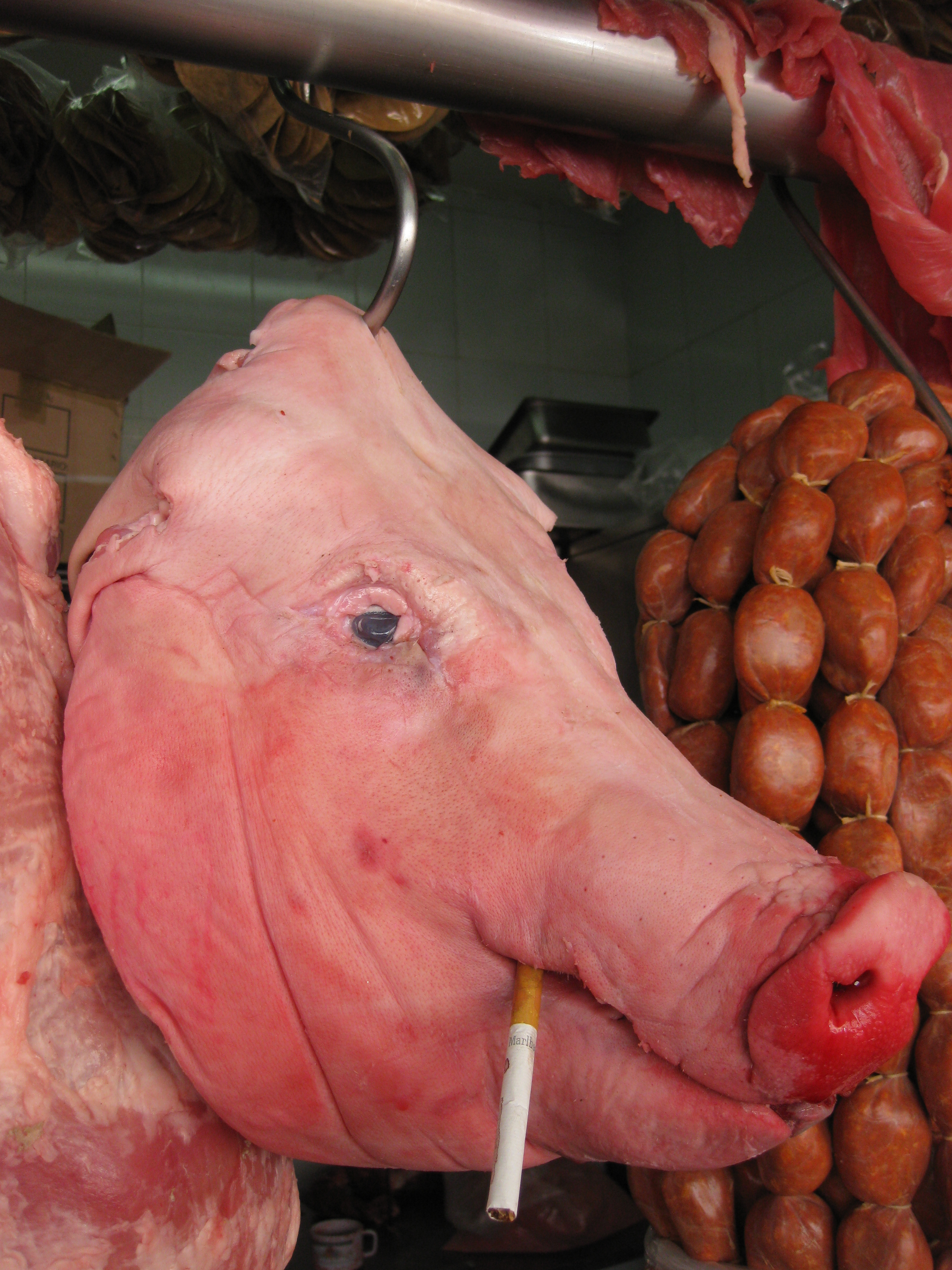
    The year previous the front of the municipal building in Oaxaca de Juarez was occupied by an indigenous group called the Triquis. I added this pigs head to draw you in and get you to read an otherwise biased and rambling rant about another repressed indigenous group. I am not sure why I am writing about this, other than the fact that I passionately told the Triquis that I would do so. I remember walking past and not thinking very much of the shanty town in front of the government building, my Spanish likely insufficient to understand anyways. I choose to stop this time as I walk past and figure out what is going on. I am quickly drawn in and told a harrowing tale. Many simply look on as I speak with one of the leaders as they do not speak Spanish. The group initially drew the ire of the Mexican government and the state of Oaxaca by declaring their desire to live autonomous from the state, in accordance with their customs. A demand similar to that of the Zapatistas in Chiapas, where several indigenous villages have lived independent of the Mexican government since the revolution in the mid-1990’s. This declaration made San Juan Copala politically unpalatable and divisive, but the Mexican government had a response derived from the Zapatista rebellion: use paramilitaries instead of actual government forces to wage a proxy war. Through promises of land, political power, weapons and money the government convinced members of another nearby village to form a paramilitary group called MULT to assail the village. Dozens were murdered in cold blood, their bodies littering the bullet riddled town square. The population of the village was forced to flee, seeking refuge in the city center of Oaxaca de Juarez with the hopes of seeking justice and recovering their village. Both state and federal governments have conveniently turned a blind eye.

    Several military and police assaults have attempted to violently evict the blight that the occupiers pose. The night before Christmas Eve police forces descended upon the makeshift slum with force, literally beating the hundreds of homeless people away in preparation for the celebrations in the square. After another year they still huddle on a sidestreet during the cold nights, pictures of bloodied corpses taped to the plastic tarps flapping in the wind.

    Oaxaca de Jaurez, Oaxaca to outside Cerro Pelon, Oaxaca

    We set out in the morning to a flurry of goodbyes, it is strange when you get to a place and all the right people come together. Energy builds rather than dissipating. After two weeks in the city, a diaspora sets out: April and Chelsea on their bikes towards Palenque, Kyleen and Chris towards San Cristobal. The feelings of doubt and exhaustion have lead me to reevaluate my approach to riding, to eschew goal oriented thinking and focus on simply being mindful. To honor the piece of me that revels in connecting with people, of staring in wonder at the world that abound in life and beauty, to commit myself deeper into this trip than before, to lose myself in it. GO.

    I do some research on the hypothetical route that I have seen only vaguely traced in my map through towns with names like Poblado 1-14. There is not much to be found, beautiful. The other options are riding either on the Carribean or Pacific coast highways, either of which sounds like a boorish slog. Damien and I set out together planning to ride the following route through the Sierra Mixe, through the center of the Isthmus de Tehauntepec and on backroads into San Cristobal. Google titles the map: Unknown Road to Unknown Road. We don’t discuss it too much, we simply agree to leave one morning.

    We will try to follow the faint lines that wander through the jungle, not overly concerned about where it leads us. Turns are subjectively judged wrong only by certain premises, viewed with a different perspective they are whatever you want them to be. Pay attention. Confused readers or family members begrudgingly wading through my musings through some sort of obligation stemming from your desire to avoid awkward Skype phone calls: in all of my writing I am trying to share a philosophy that does not simply apply to cycling or traveling, it applies to every facet of life. It is my life’s work.

    The city characteristically challenges our egress through traffic spilling uncontrolled and violent from arteries radiating from the city center in a blur of glass and steel. We ride shoulder to shoulder to continue conversations that seamlessly sweep from Noam Chomsky, finding meaningful happiness, economics, topes, Spinoza, agriculture, cycling, indigenous rights, environmental degradation, inequality, interconnectedness, mining, literature, our feces, globalization, the impossibility and undesirability of unconstrained growth, Wittgenstein. The challenges of our generation. Damien unselfconsciously unleashes a contagious roaring laugh at the world as he passes through it, whether canoeing through the Yukon Territories, walking the Pacific Crest Trail or cycling through the Americas. Cars narrowly pass with Doppler shifted horns wailing, protesting our egregious occupation of an exorbitant extension of the thoroughfare. This leads to more laughter.

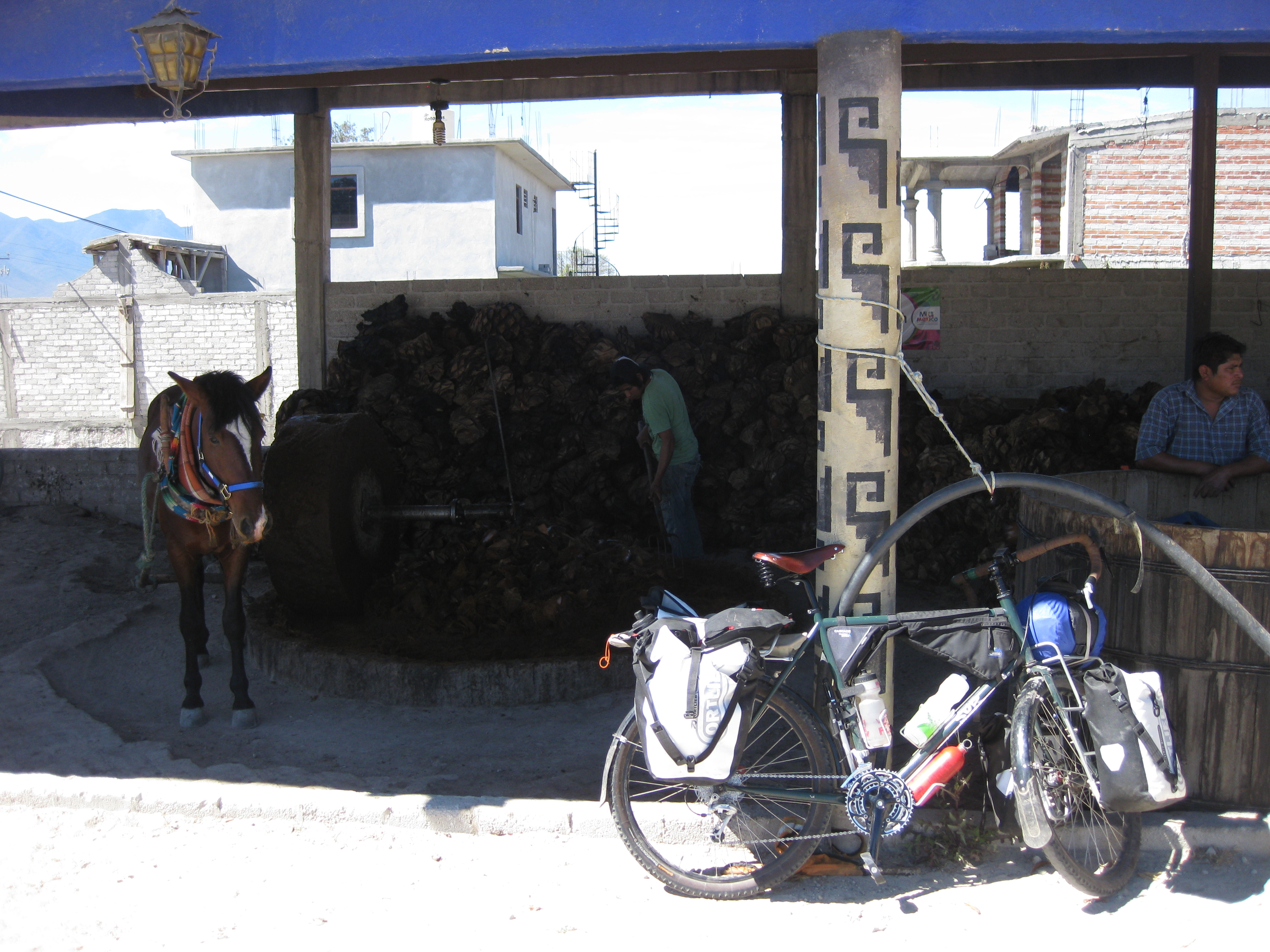
    I lead us to a mescal factory, called El Espadin, outside of Mitla. A mule tows a massive stonewheel in circles which grinds roasted maguey over a stone slab, the juice is collected for fermentation. We knock back a few sample shots that give the morning a strange texture. The walls are lined with jars of mescal with snakes neatly coiled inside, scorpions arching in a final death throe and tarantulas preserved in poise.

    ‘We need to shake it mate!’ Damien exclaims with a grin. (I am going to give Damien a more Australian accent for my own amusement.)

    ‘Why?’

    ‘I reckon if I stay here any longer I will wake up here in 20 years with an ungrateful wife and a half dozen children that I struggle to support with a corn farm in the desert. Mescal will give you roos loose in the top paddock.’ He roars.

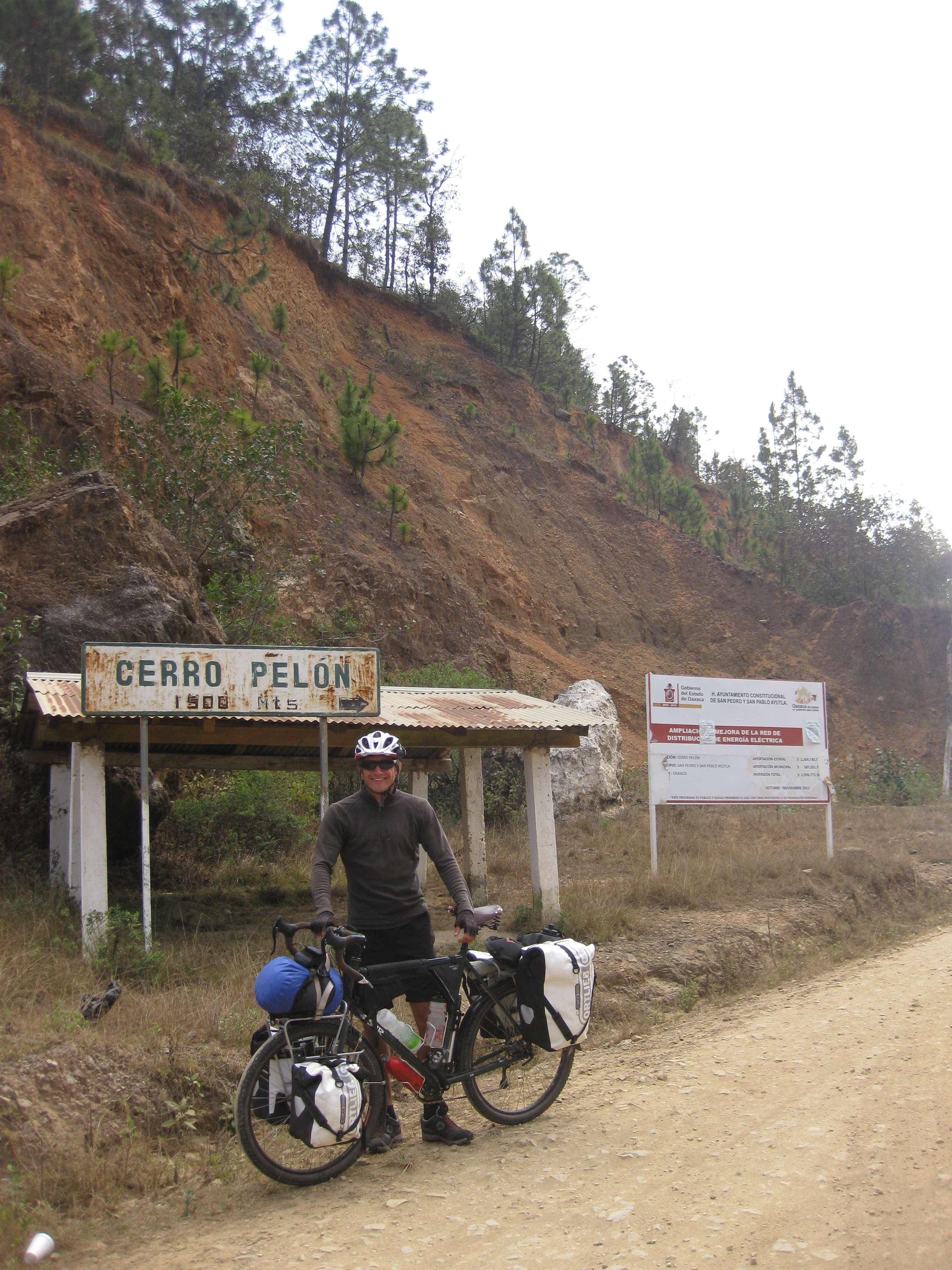
    This mescal factory served as the starting point for several adventures the previous year. I am riding a nostalgic road, one that lead to one of the stranger experiences that I have had on the road: a predawn gringo hunt in the woods outside of a small town called Cerro Pelon that lead to some sort of loose imprisonment for the night.

    As we eat a woodfire cooked chicken on the roadside we laugh as a big white dog with something stuck in its foot prances instead of walking, all the while viciously lashing out at other dogs on the street.

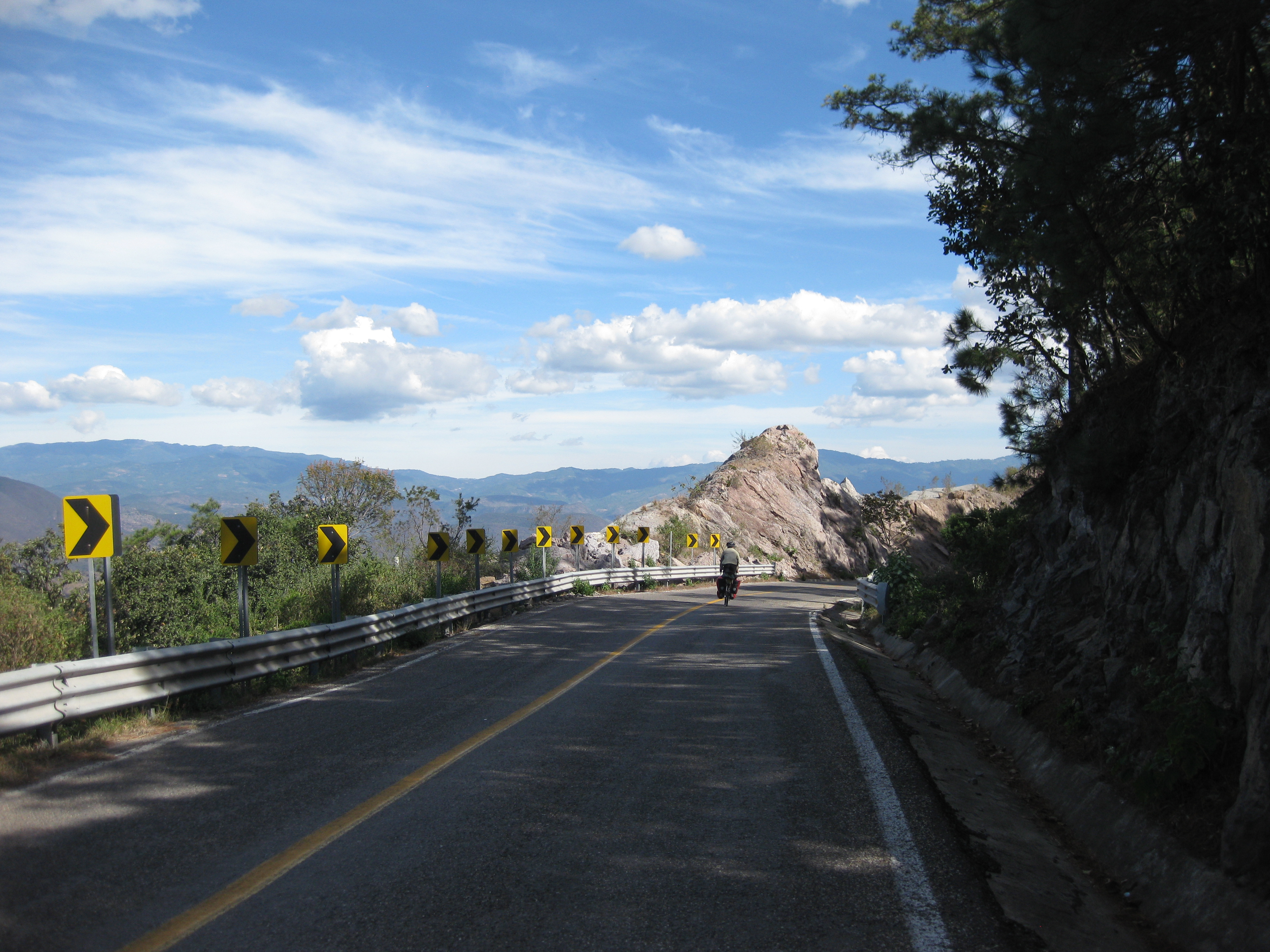
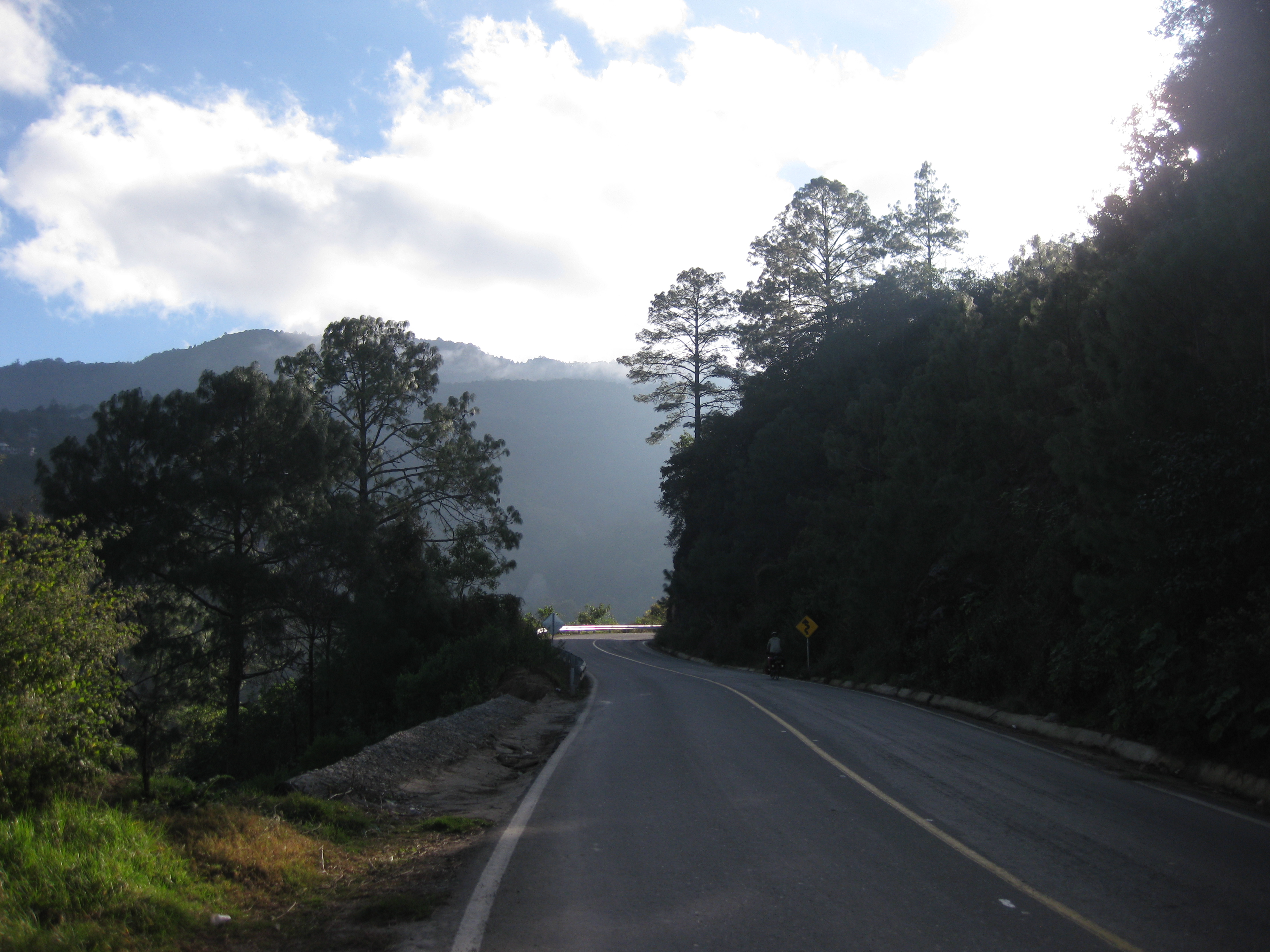
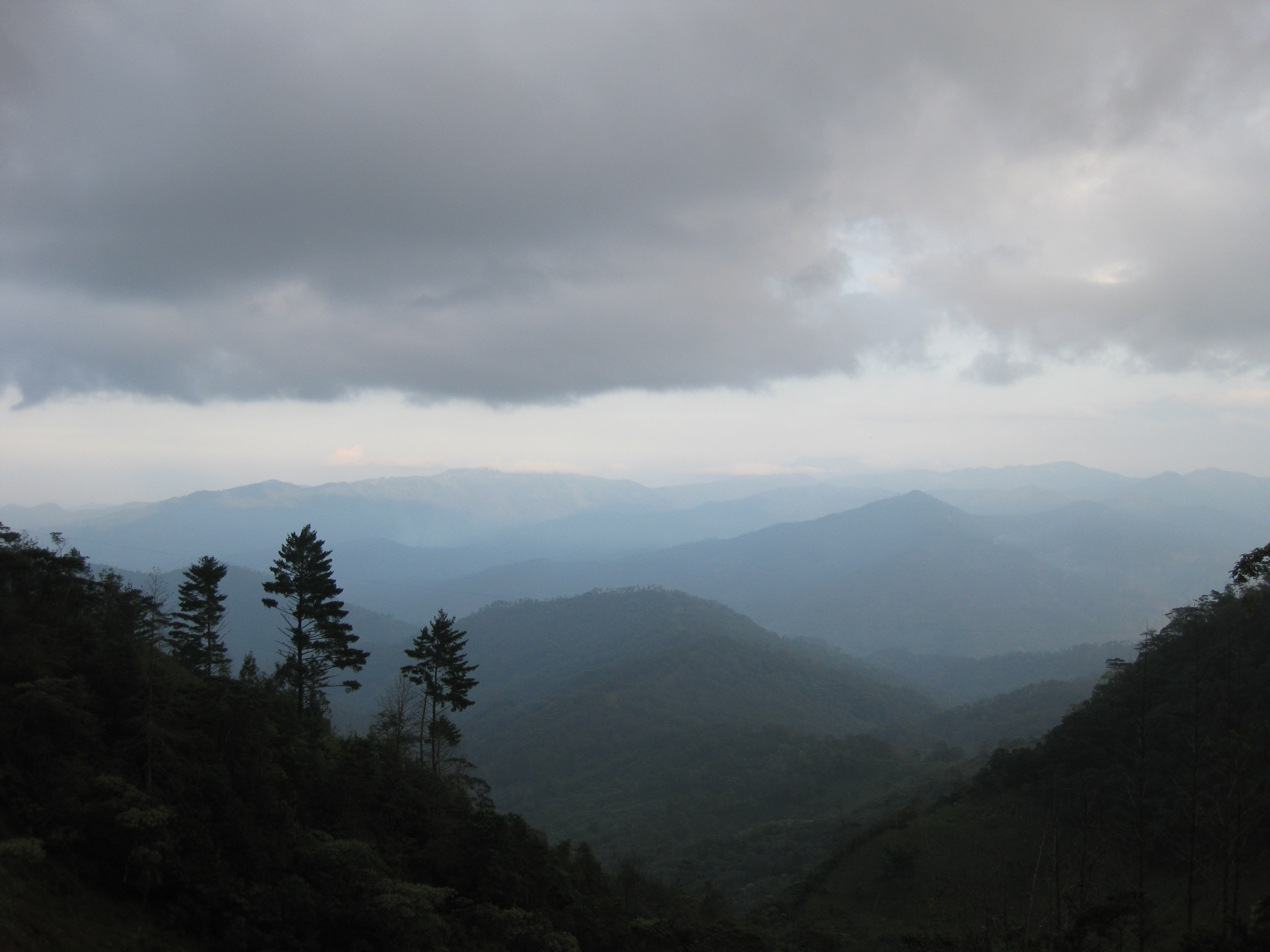
    Deciduous trees dot the mountainside of the Sierra Mixe, smearing brilliant reds and yellows across the landscape. Water cascades in waterfalls, trickles from cracks and slowly rolls off the points of leaves of grass. The chaos of the valley fades behind and below.

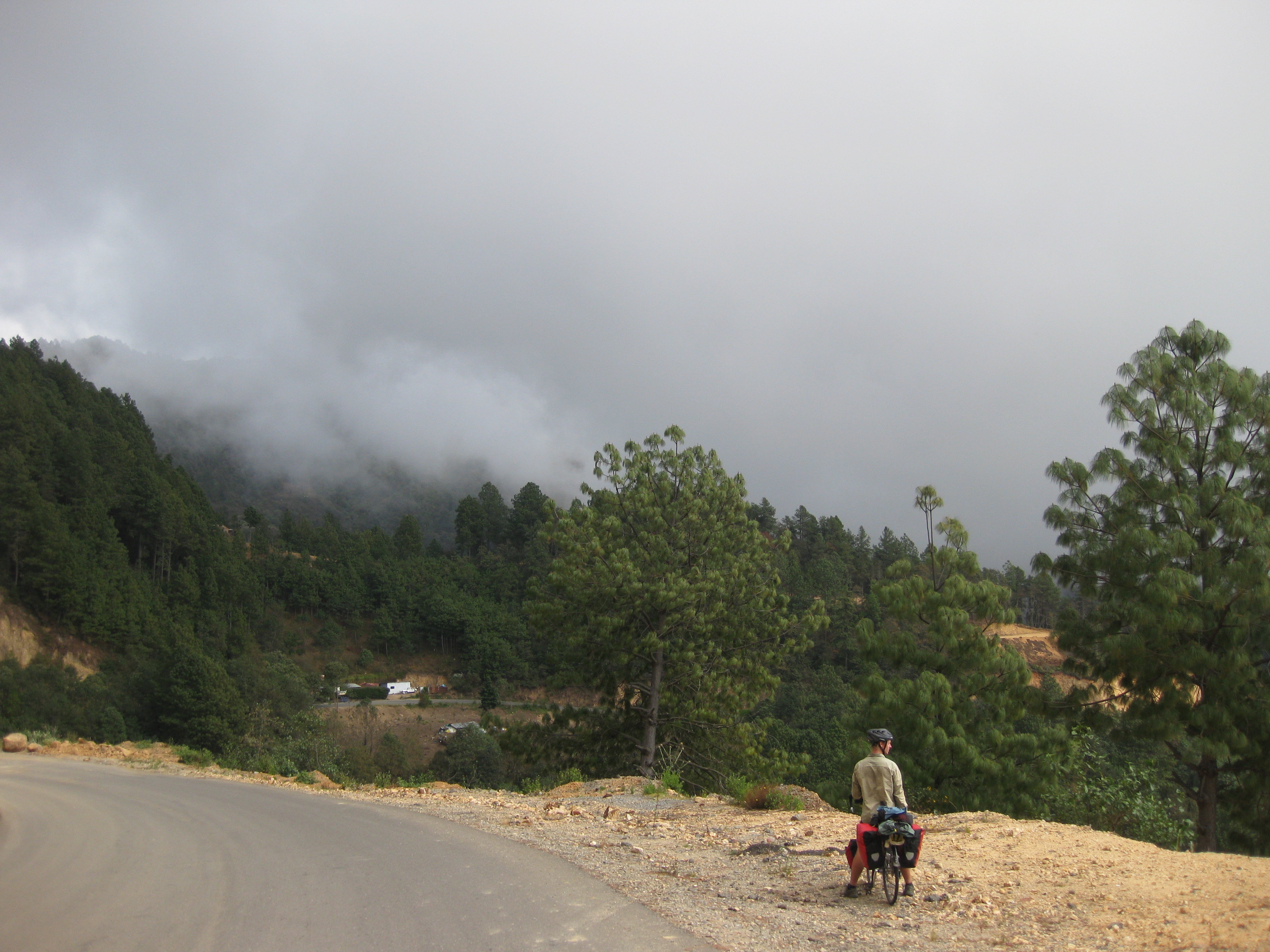
    We crest a pass and are sent on a precipitous, curvaceous downhill marred with irregular deep potholes. I am nearly bucked off my bike several times, holding my breath as it miraculously does not explode on impact with the unavoidable. I keep my eyes on the road, reading the map of the surface. A driver approaches doing the same, she swerves completely into my lane as I silently approach at 45km/hr. I cut hard right and nail the brakes, adrenaline instantly coursing through my veins as I struggle to regain control of the bike.

    After 15 minutes we are ejected into a small town that appears to grow nothing besides tomatoes. I harass the driver of a potato chip truck about the route forward. Coca-Cola, Frito Lay and beer penetrate into every crevice and niche of this country, and likely the world, that is accessible by bike. This is the reality of our world, making the drivers are a valuable resource. He draws a detailed map for us of the road ahead, far more detailed than the blurry, discontinuous lines on Google Maps.

    We begin climbing again. The afternoon heat radiates off the pavement, each breath seeming to heat my body further, stoking me like a furnace. Pines dominate the landscape.

    I find myself once again outside of Cerro Pelon with the night closing in upon us. I debate boldly entering town with a smile on my face and asking the head of the agency if we can stay in the cell where I slept last time. We ride on until spotting a small trail cutting up into a canyon. We pass the bikes over a guardrail before cooking one of my signature questionable dinners cobbled together from random items we bought on the roadside. Sardines, beans in a bag, rice, butter, bullion cubes full of MSG, chiles…..

    Outside Cerro Pelon, Oaxaca to Santa Maria Alotepec, Oaxaca

    I awake to a sky filled with shifting and rising clouds, the sun occasionally winking through. We hit the steep gradient as soon as we pass the bikes over the rail. We reach San Pedro and San Pablo Ayutla where we restock and eat breakfast above the gaping chasm that the city is anchored above. I seek out deep yellow handmade criollo tortillas, my journey leading me to a small lady at the end of an alley. She claps out tortillas in a smokey room so small that you couldn’t spin a cat by the tail without hitting one of the fire-darkened walls. She cackles as we talk about tortillas, her face hovering over the comal as the corn rises on the heat of the red embers.

    We take a right hand turn on the outside of town that cuts steeply upwards. The towns water is supplied by pipes that funnel water pouring off of a sizable waterfall, as it should be.

    I paperboy up the precipice that leads to Tierra Blanca. Chickens and turkeys disproportionately react to my incredibly slow approach, scattering in a racket. I build a map of the cloud shrouded sierra as my tires traverse the serpentine jagged spine: it looks like a mad tangle of yarn with little to no order. A man seems to be climbing a cliff with corn growing out of it, I gasp as he risks loosing his handhold on the surface as he waves.

    We ride a road that is simply a gash cut into the mountainside by machinery, the road littered with rocks and debris from above. A town looms ahead on the spine, its sky blue church catches my eye first. We roll into Ascencion Cacalotepec where we lunch in a small shack that hangs over a cliff, we look down through cracks in the irregularly planed wooden floor to see clouds below.

    A little girl of eight brazenly and uncharacteristically approaches us while her mother heats tortillas for us. She has never spoken to any foreigners before and asks us about what it is like where we live and why we are riding our bicycles. She hands us some fruit as we set out, the whole family coming out to wish us the best.

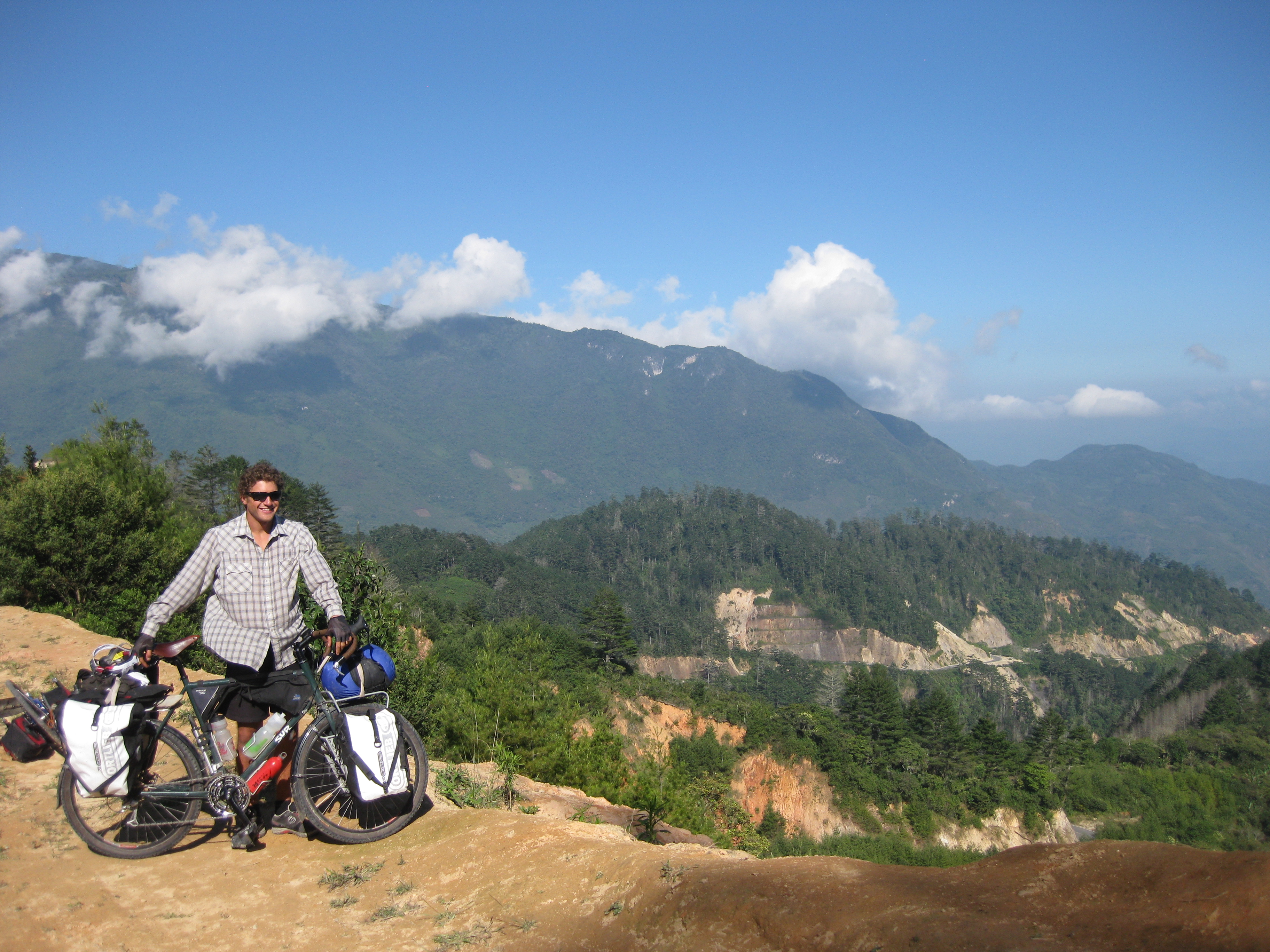
    A descent begins here that is strewn with potholes, landscape debris, animals and all manners of hazards that we navigate as we pedal and lean through the turns. What lies ahead is unknown. The mountains here are the most rugged and steep that I have encountered yet. There are gradients that deceptively lead into medieval tope traps. We cross a saddle that is just wide enough for the road, sheer drops on either side. I frequently brake and stop to take in the rugged landscape with bold outposts of civilization dotting the flanks. I am far away.

    We pass San Isidro Huayapan, drop towards Estancia de Morelos in the river bottom below before winding our around the mountainside to Alotepec. A man who has returned home after 15 years in the United States chats with as for a bit at a fork in the road.

    ‘It is great since I have been back here. You have to pay for everything in America. Freedom to me is owning your own land, having free water, producing your own food, owning your time.’ He passionately explains. I vehemently nod my head in agreement.

    The landscape at the river bottom is comprised of coffee and banana fields. Flowers waver around the small homes with coffee drying out front.

    We pass men and women returning from the fields, wrestling loaded bags  of coffee with machetes dangling by their side. Laughter emanates from the rows of coffee trees. This sierra represents a surreal paradise to me. On the final climb into Alotepec I am pursued by a burro burdened with wood, I struggle to keep ahead. Several men emerge from the trees on the roadside carrying rifles, giving me a little bit of anxiety as they stand in the roadside and stare out at us from behind blank faces hardened by life here in the mountains. At one point more than half of the road has been consumed by the cliff that it dangles over, a gaping hole into nothingness. The white church of Alotepec stands like a beacon in the distance.

    I ride into the town square and make a few circles in front of the municipal building, before sitting down sweatsoaked to shiver and wait for Damien. The sun has been lost in the gray sky.

    ‘Where can we sleep?’ I ask a few men sitting on the steps of the municipal building.

    ‘Anywhere? Over there?’ An old man in a cowboy hat points to some steps in front of the municipal building.

    Friday night unfolds in a cacophony of dog barking, music, giggling teenagers as we cook dinner and relax. People stare at us and talk amongst themselves in Mixe. I feel like an exhibition, a representation for gringos in general. What rumors will start about gringos based upon my behavior? What if I ate an onion like an apple? What if I Damien and I did headstands and carried on a conversation for a while? What if I sacrificed something? Or build a shrine to an inanimate object?

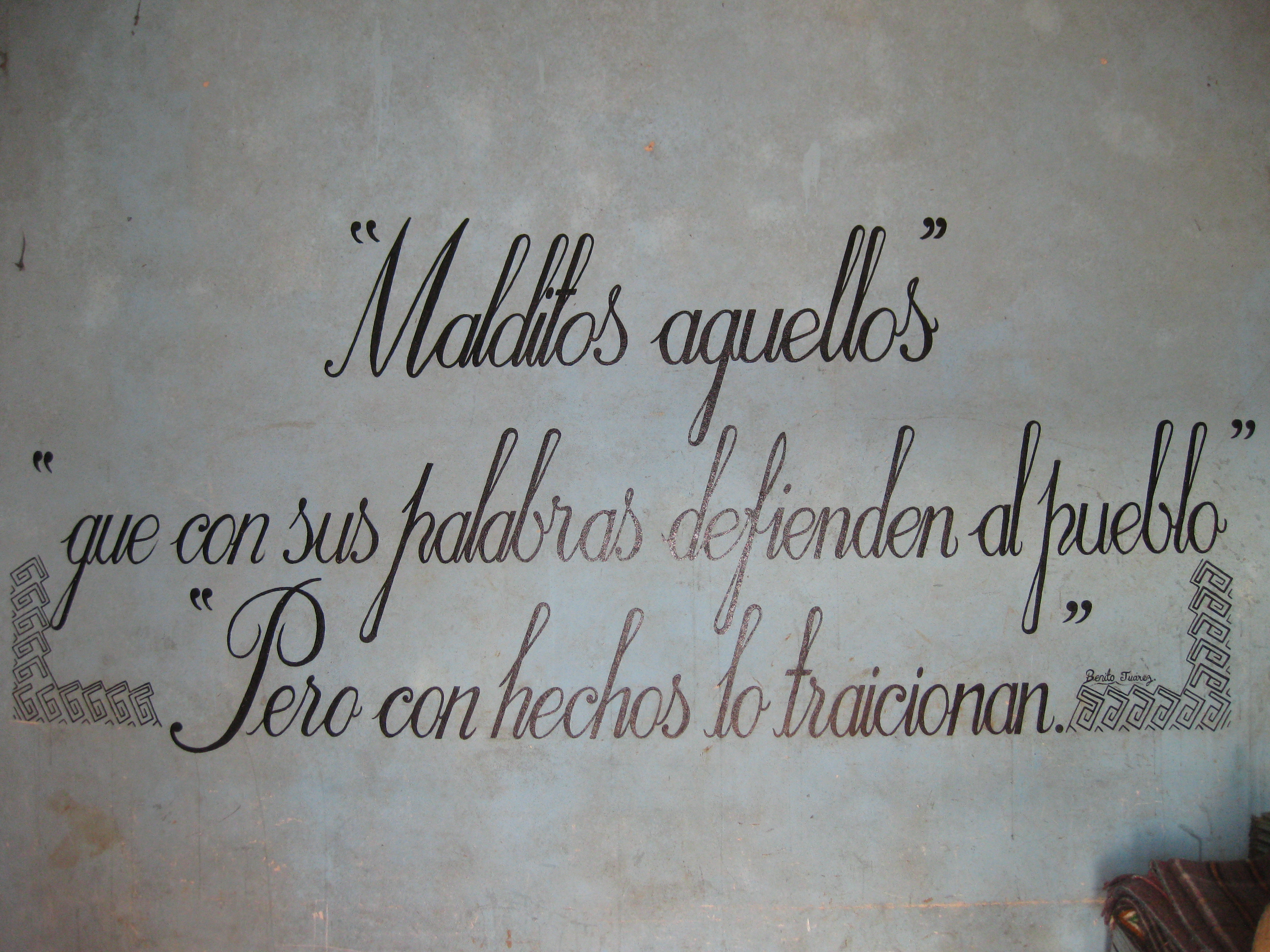
    They move us into the police station as night falls, the police sleep by our side waiting for….. I am not sure. We sleep under a mural with a quote from Benito Juarez that says the following: ‘Damn those who defend the town with their words, but betray it with their actions.’

    Alotepec, Oaxaca to Puxmetecan, Oaxaca

    Someone pounds on the door until the policemen wake up, which disconcertingly takes a few minutes. I stroll out to have a leak and am greeted with a luminous blue sky. The towering cliffs that back the town are illuminated. I stand transfixed with genitals in hand. I spend the next hour or two answering questions about how expensive my bike is and doing alternating impressions of the billowing loudspeaker that presides over town. The quality is mediocre and the Mixe sounds like Charlie Brown’s teacher. Here is a rough translation from what I could gather, ‘The white devils have arrived and have arisen to drink the blood of the pure. We must eliminate them before the ball of fire in the sky reaches its apex. Assemble in the town square for the reckoning. There will be free flan courtesy of Mrs. Martinez. Juan, your mother called to notify us that you left your sack lunch at home.’
    Turkeys and chickens peck the square.

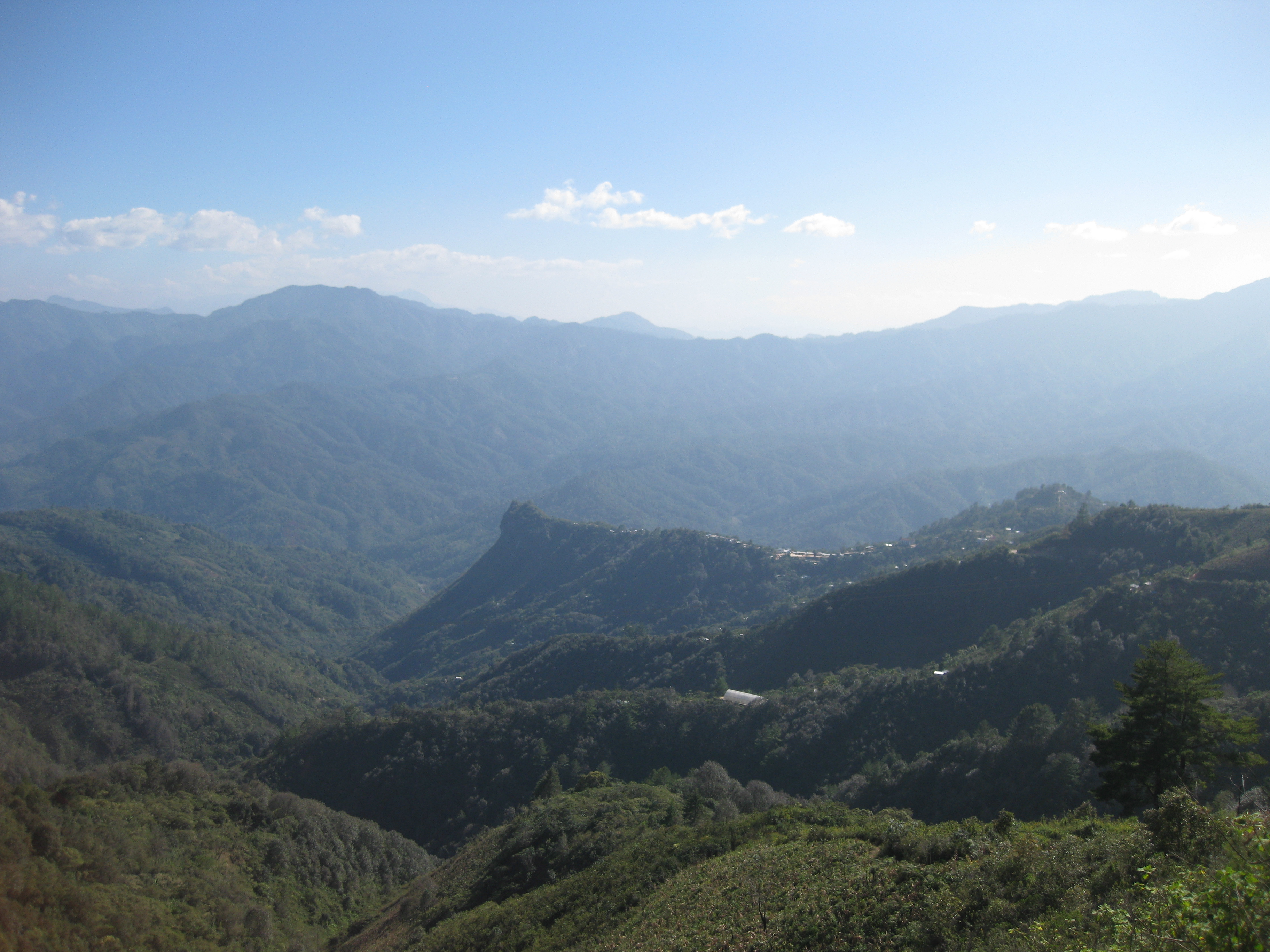
    I look at Cotzocon in the distance in sheer bewilderment, unable to discern a way. There are several ridges and valleys separating us. We start with a descent down a loose rock filled road, my hands cramping from perpetual braking. In Cotzocon we stop in front of a school to ask directions, the small schoolhouse empties rapidly. Dozens of children stare at us, refusing to answer any of our questions.

    Over lunch I try and learn some Mixe words from the locals, they fade from my memory within minutes. Wizened old men burdened with coffee beans and firewood smile as we pass. We dismount and walk past packs of wary donkeys.

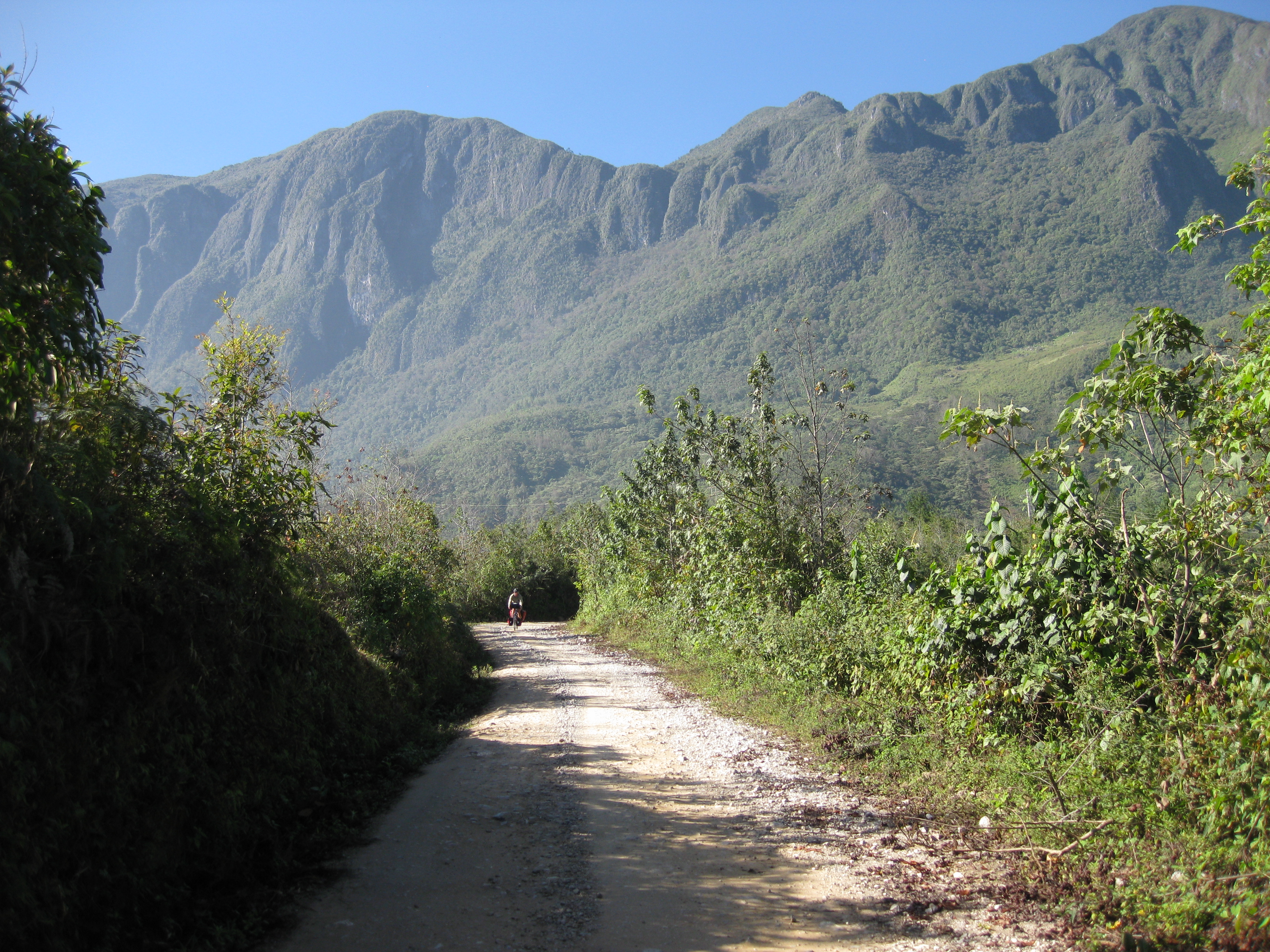
    The road is wet red clay that sends us sliding occasionally. Damien falls to the ground several times on one descent, laughing the entire time. We rattle over solid limestone slabs in dark verdant tunnels. The air is fragrant with flowers and the smells of the jungle.

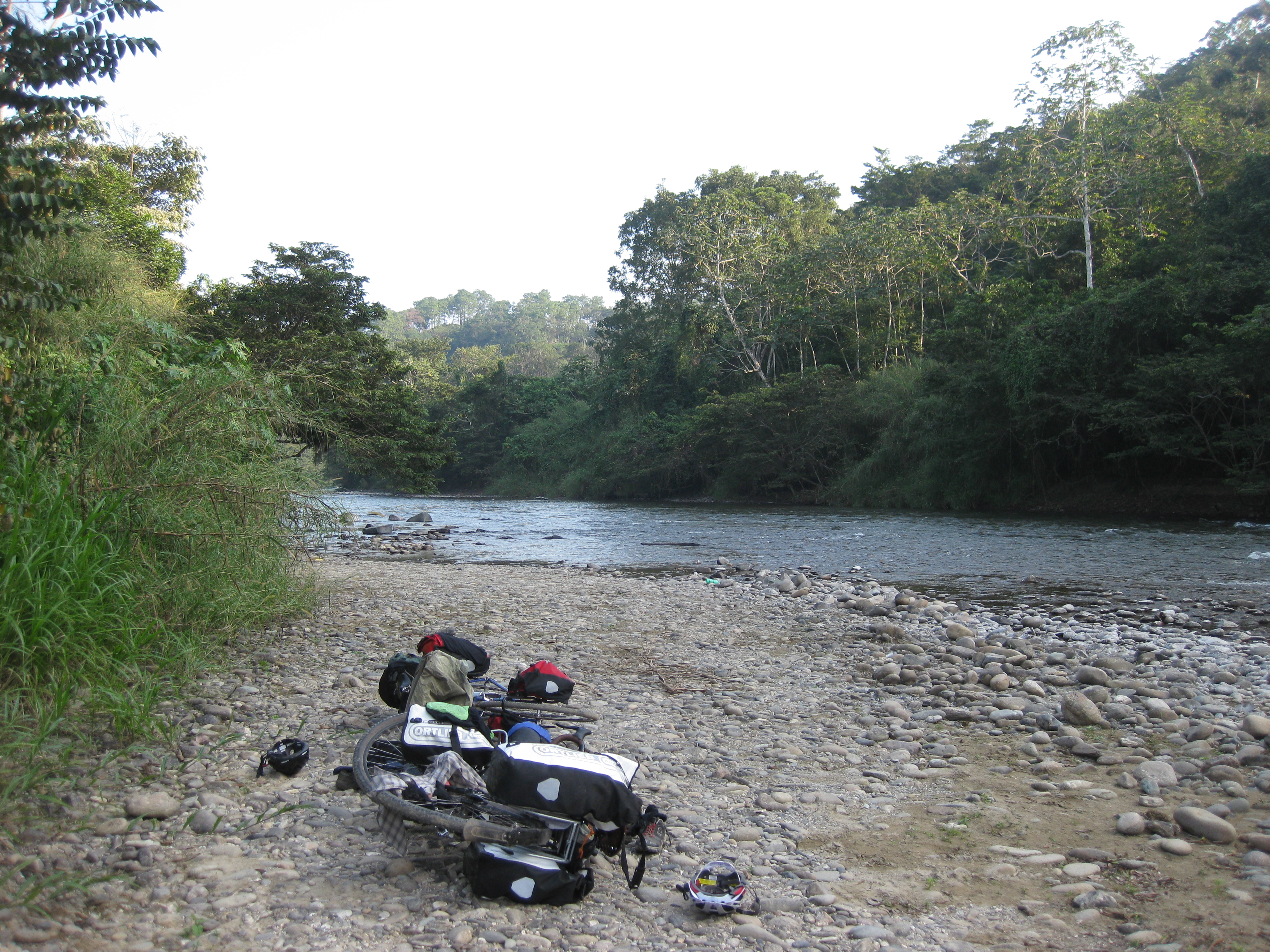
    We reach our nadir for the day, Rio Puxmetecan. We peer off the bridge as a few men walk upstream in their underwear wielding spears. We ride down to the river and swim in the cool water of the river, white flowers dangle over its surface and drop petals. The young men show me a bag of fish they speared. A truck crosses the bridge, a rare bit of traffic on this stretch of road. Everyone starts screaming and running in their underwear up the river bank after the truck.

    ‘Watch out for the crocodiles!’ One of them shouts as he takes off. They catch a ride back to town.

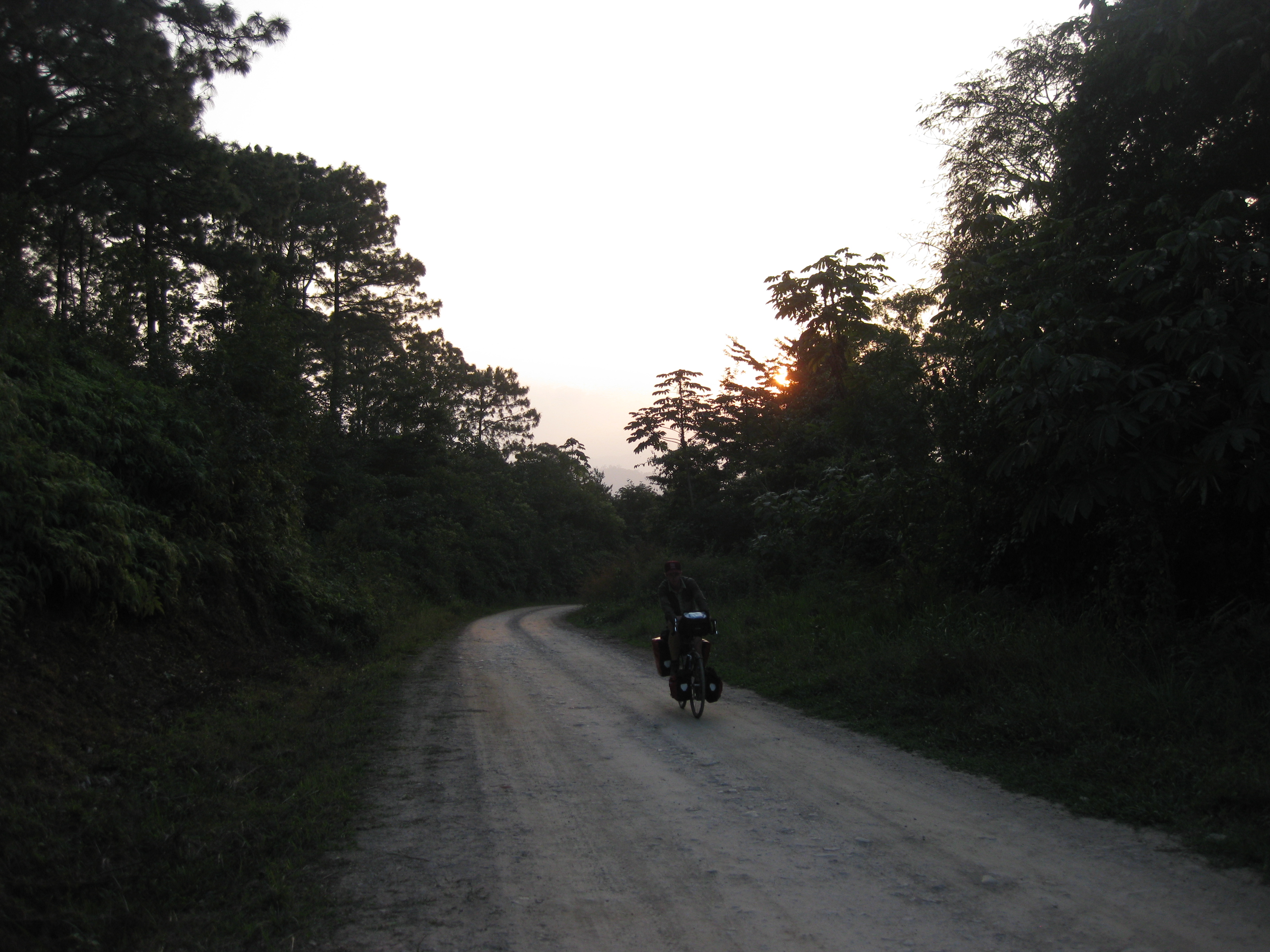
    We make our final approach as the sun cuts horizontally through the trees, slogging upwards towards Puxmetacan on a distantly near ridge. The sun sets as we ridge into town. I set a group of girls hysterically laughing by merely saying ‘hola.’ The gringo payaso.

    2000 miles.

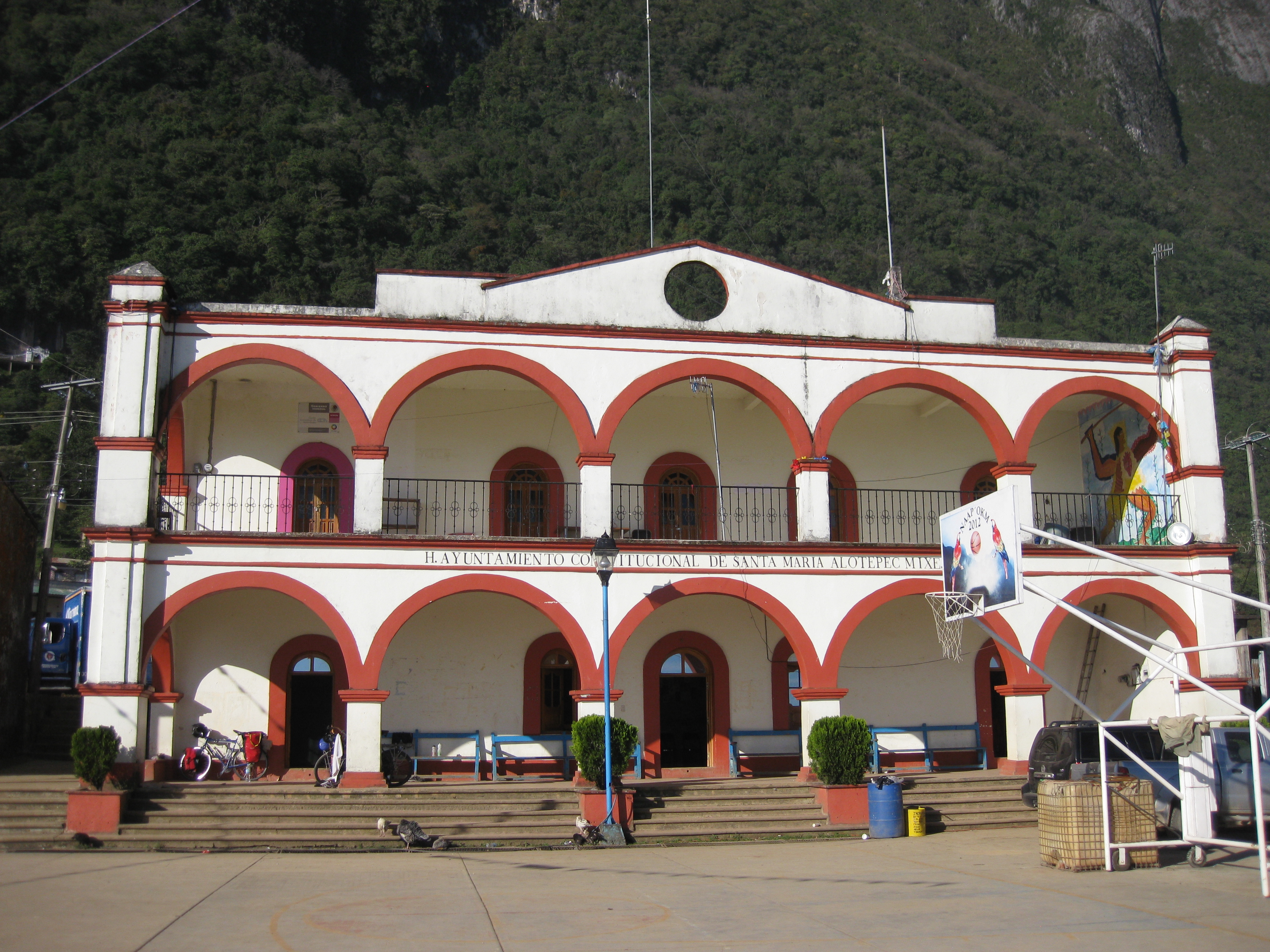
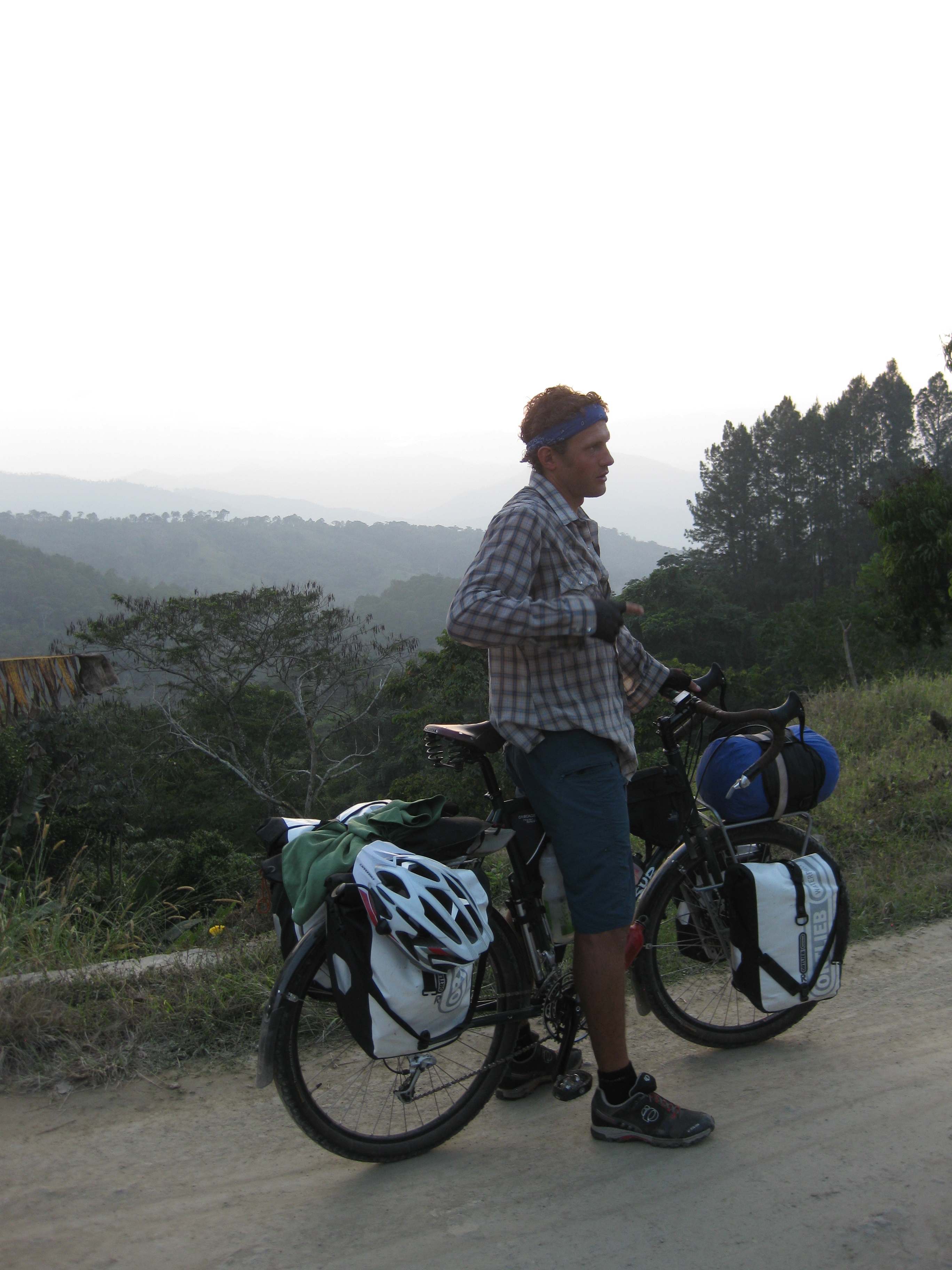
    We ride up to the municipal building drenched in sweat and delirious. I take off my bandana and comb my hair with my hand. I straighten the shirt that is stuck to my skin. I suavely explain to a group of men who we are and that we need a place to stay. I am told that I need to speak with the authorities.

    I am ushered upstairs in a very formal manner, where I am told that I have to wait until the authorities are ready to see me. I am given a plastic lawn chair. I wait a minute before I am brought into a nice office with four men sitting behind hardwood desks with stacks of paper on them. They wear collared shirts like me, a sign that we are all respectable and trustworthy. I greet them and then give my story, being as polite as possible. They say that they have a spot for us and that we can wait below until we are notified that it is ready. I thank them and say a few kind words about the village.

    ‘Also, a kid told me that there were crocodiles in the river while I was swimming, are there?’ I ask hesitatingly.

    ‘No.’ They all laugh at me in a way that says hopeless gringo.

    We wait on the municipal steps and watch young and old play futbol, basketball and light of fireworks. The futbol pitch overlooks a steep drop, it is the centerpiece of town. We are lead to a freshly cleaned house with matresses  laid out for us. We cook dinner and make hot chocolate, we accept many visitors who we regale with tales of our distant lands.

    ‘I am from America, but he is from Australia. The other side of the world! There are kangaroos there and women three meters tall. There are more toads and sheep than people and there president can’t read.’ This is generally how I shift conversations over to Damien so that I can write or read after a long day of riding.

    The town, like most Mixe villages, operates relatively democratically. Land is communally held through the ejidal system, there is no buying or selling. It is given with the explicit agreement that one will serve a year working for the municipality for one year out of every two or three performing a variety of different functions that are randomly given. Although the nature of the job rotates, one stature or rank within the municipality increases over the years. The townspeople work together constructing houses, planting and harvesting. All community gatherings work like potlucks, with everyone contributing. It is hard not to idealize this place.

    ‘Can I live here?’

    ‘If you agree to work we would give you land.’ One of the village leaders sincerely tells me.

    Massive moths circle the room and a gecko clicks on the ceiling. The PA here is preceeded by a futuristic sound effect, which is where most of its authority is derived from. The monotone Mixe message that follows seems inconsequential after such a regal introduction. Damien rolls around on the ground laughing everytime. I think about accepting the free land, but the PA system really lowers real estate values.

  • A Top Down Approach to Aid

    There is a community that to this very day remains beyond the reach of aid, in the periphery that lies outside the blinders of both governmental and nongovernmental organizations. A place where thousands live frantic and stressful lives in a perpetual famine of time and resources, their needs marginalized and left unaddressed due to stereotypes, their lives spent frantically striving simply to meet their perceived basic material needs with limited time to spend with their families or on the simple pleasures in life, forced by their environment to live in a perpetual state of debt, resiliently putting on a smile despite, day after day, waking to face a world that will never be capable of meeting these needs. A place of alienation and shame, neighbors living isolated in fear of judgment for their relatively low standard of living. A place where stressed wracked parents frequently erupt into violence at children’s sporting events. A place where families are torn apart as breadwinners are forced to commute long distances as the local economy is unable to provide a living wage. A place where children and adults frequently resort to drugs to escape their reality. A place where suicides are swept under the Oriental rug, dismissed as just another case of ‘autoerotic asphyxiation.’ A place where the majority sees the need to drink bottled water out of fear of drinking from the tap. A place incapable of locally meeting its own food demands. In Lake Forest, Illinois the cries for help go muffled into down pillows or echoing through the dozens of rooms and furnished basements in each home.

    Save the Poor Rich People will be there to listen and help carry these misconstrued miscreants into a brighter day. We will work to foster appreciation for the inevitably limited resources that one has. We will try and teach basic financial management courses to enable families to live sustainable and meaningful lives within their economic means. We will provide economic opportunities for children, so that they are no longer offered the limited choices offered to their parents’ generation: lawyer, doctor, businessman, financier, robber baron. We will provide other avenues for self-actualization and try to fight against a culture that turns to drugs, prescription or otherwise, as a solution to legitimate psychological issues developing out of an unhealthy environment. We will try and repair broken homes, to bring families back to the dinner table.

    I feel the gravity of my home calling me back, my 28 year celestial cycle coming full circle, calling me to stop escaping the poverty of my homeland by gallivanting around Latin America;  to return and share what I have learned from other cultures regarding human development and quality of life.

    Let’s go America, we have work to do! The top 1% has not grown as a percentage of the population in decades. Email me for funding opportunities to improve the world from the top down!

  • the whirl is why i wander

    Tehuacan, Puebla to 30km outside Teotitlán de Flores Magón, Oaxaca

    It is raining when I wake up, something that inevitably slows me down. I am run down, I am sick. I meditate for awhile, again watching my mind wander to changing my plan, rather than letting myself be and letting each day come as it may. I stand up with some sort of vague decision to let myself be free and revel in the moment. As I write this and think about my previous writing, I feel like some sort of directionless, depressed, single, jobless, middle aged man desperately reaffirming himself and his life through vague and alternative mediums as his life is a failure in the objective measures of society. I am not middle aged. I stand on an old brass scale in the courtyard of a hotel in Tehuacan, grunting and cradling my bike as befuddled diners stare. I am probably sweating already for some unclear reason.

    Me: 72.5 kilograms (150 pounds)
    My bike: 53 kilograms (127 pounds)

    This is the weight of my bike with 8 litres of water and a days worth of food. I have absolutely zero clue how the weight of the bike got this out of control. I solemnly vow to mail my slingshot home against my own best instincts.

    I struggle down a gradual slope towards Oaxaca de Juarez, Oaxaca: the mezcal, chapulin and mole negro capital of the world. My mind and digestive tract have conflicting opinions on this region of Mexico. I crane my head to check out the cactus lined mountains that are shrouded in a patchwork of clouds and vegetated limestone cliffs. I cover 95 kilometers in six hours with at least an hour and a half spent procrestinating (avoiding something with the ostensible purpose of resting).

    30km outside Teotitlán de Flores Magón, Oaxaca to San Francisco Telixtahuaca, Oaxaca

    The night passes strangely as a chestnut mare and her foal traipse the rocky hillsides, we mutually spook one another several times.I sleep fitfully and am awakened by a fourwheeler passing by the grassy ditch where I sleep partially obscured by a trees. I pack quickly in panic that he wants to steal my slingshot or bicycle like a childhood nemesis

    Horses and donkeys clomp down the pavement, the old Mexico.  Banana trees promise heat. I arrive in a town called El Chilar, a small town where I spent a night the year before as I hitchhiked through.

    As I park my bike and awkwardly approach a house that evokes blurry memories, from the year before, of  drinking home made moonshine called mata ratas, or rat poison, out of coconuts with a man who was collectively referred to as Bill Clinton due to his, albeit swarthy, uncanny resemblance to the former president. The evening is also notable as the second time that I got drunk with an on-duty police officer in a one week period. Ever yells MATA RATAS! and grins as I amble closer. We both crack up laughing. We do some catching up, Bill Clinton is well…

    Over the past few days the palms of drivers have gushed sweat as they recounted their experiences climbing from here to Oaxaca; prediabetic families collectively shudder and let tortilla masa tumble from the corners of their mouths as they speculate about the climb. UNA BICICLETA?

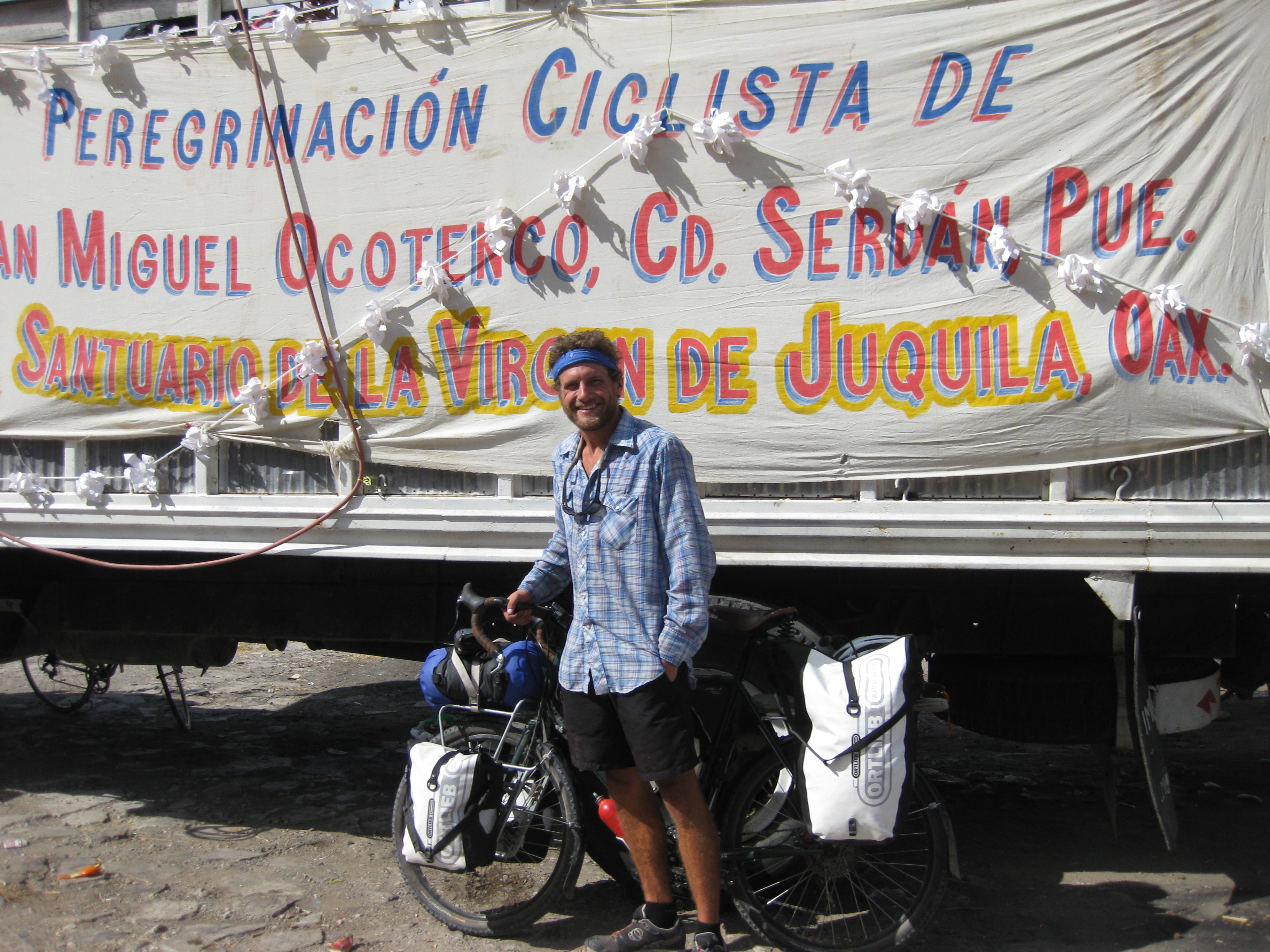
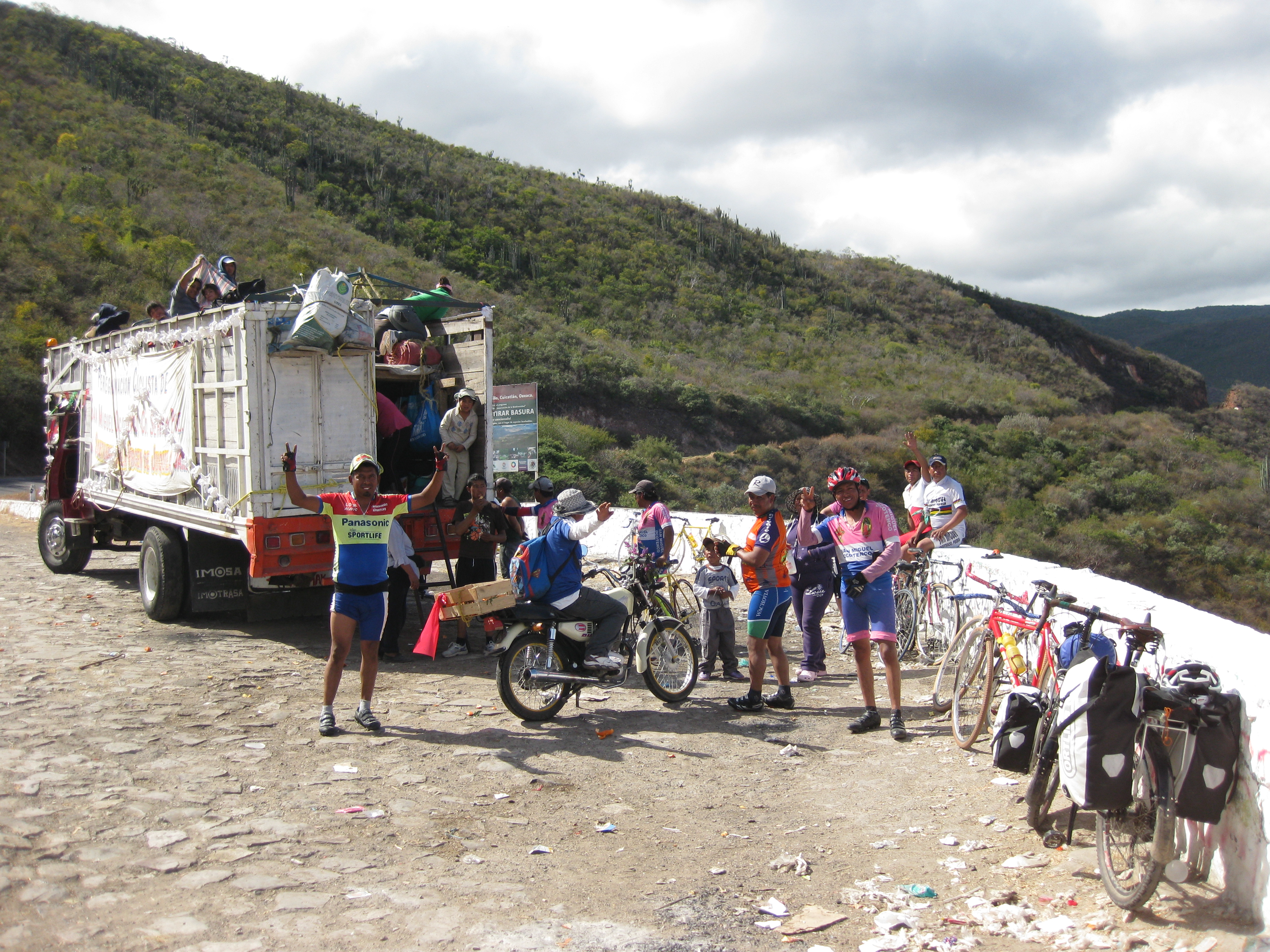
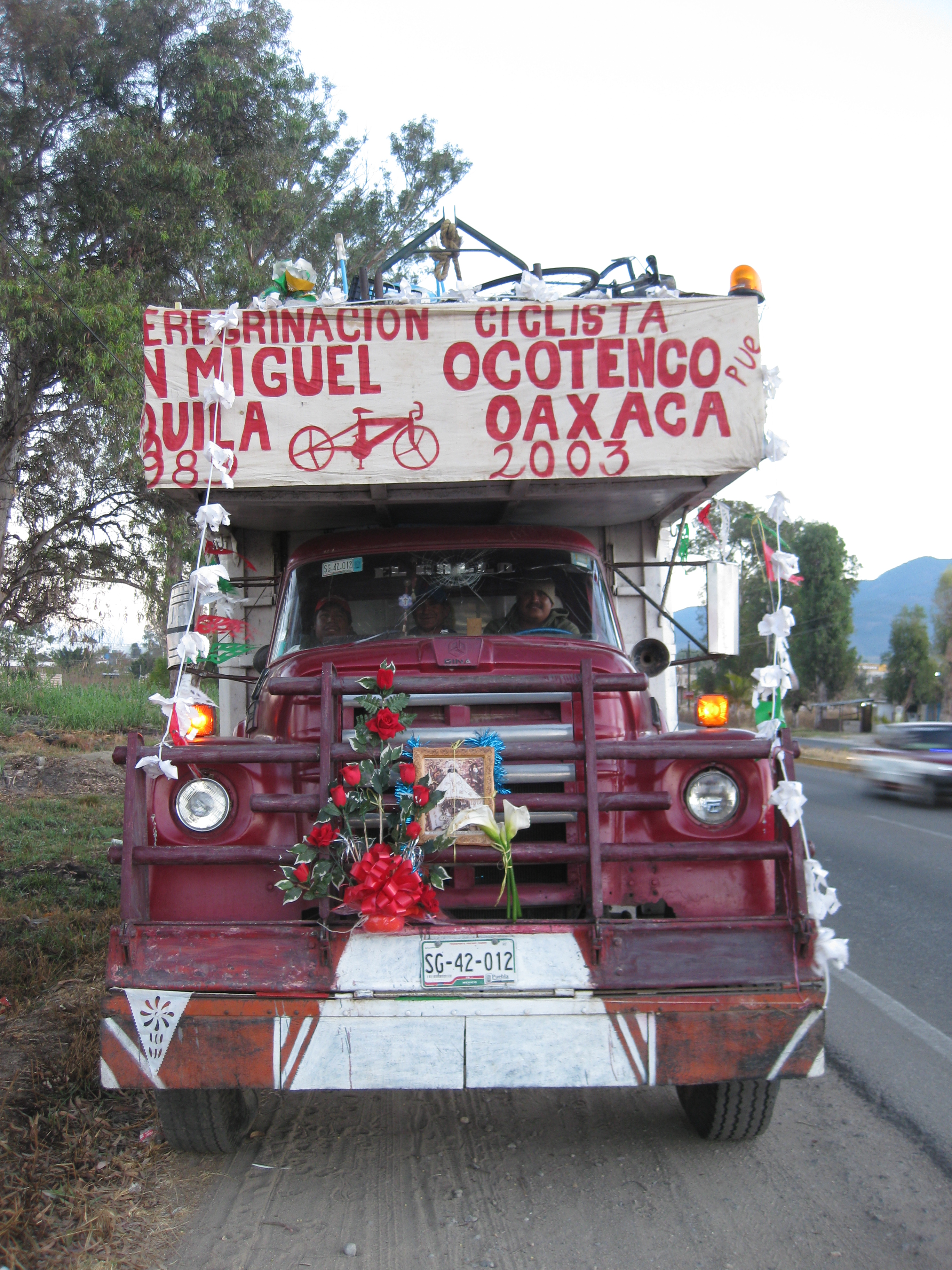
    As I start climbing from Dominguillo I see an old, banner covered truck loaded with people and a bunch of spandex clad cyclists scattered about the shoulder. I stop to find out that they are on a cycling pilgrimage from San Migel Ocotenco on bicycle to visit La Virgen de Juquila in Juquila, Oaxaca. Juquilita is a 30cm tall statue was brought to Amialtepec, Oaxaca from Spain in the 16th century. In the 17th century Amialtepec was destroyed by a fire, along with the church where Juquila resided. She rose from the ashes, her skin darkened to the color of her devote indigenous following by the fire, to perform countless miracles. We don’t know what kind of miracles she performed, but the fact that she did so is not in doubt. She was then moved to gilded surroundings in Juquila that are befitting a statue that is, ounce for ounce, the most benevolent, charismatic and compassionate that the world has ever seen. You might find yourself asking: Has she ever been stolen only to return? Yes, countless times.

    I leave the pilgrims in my wake. At least until they pass me, one by one, under their own power or holding onto the rope of a motorcycle. I begin to feel the climb, the mountains seem to reach endlessly into the sky as I look upwards through sweat stung eyes. Eight kilometers an hour means 7.5 minutes per kilometer. The key to suffering is to just keep doing it. I arrive last to the first break and am greeted with a mountain of mandarins, watermelon and questions. I walk around like a drunk, red faced and delirious. I am feeling the climb and look downwards into a canyon that doesn’t seem very far below. I ride off first, only to be passed by a peloton of cyclists in the next few minutes.

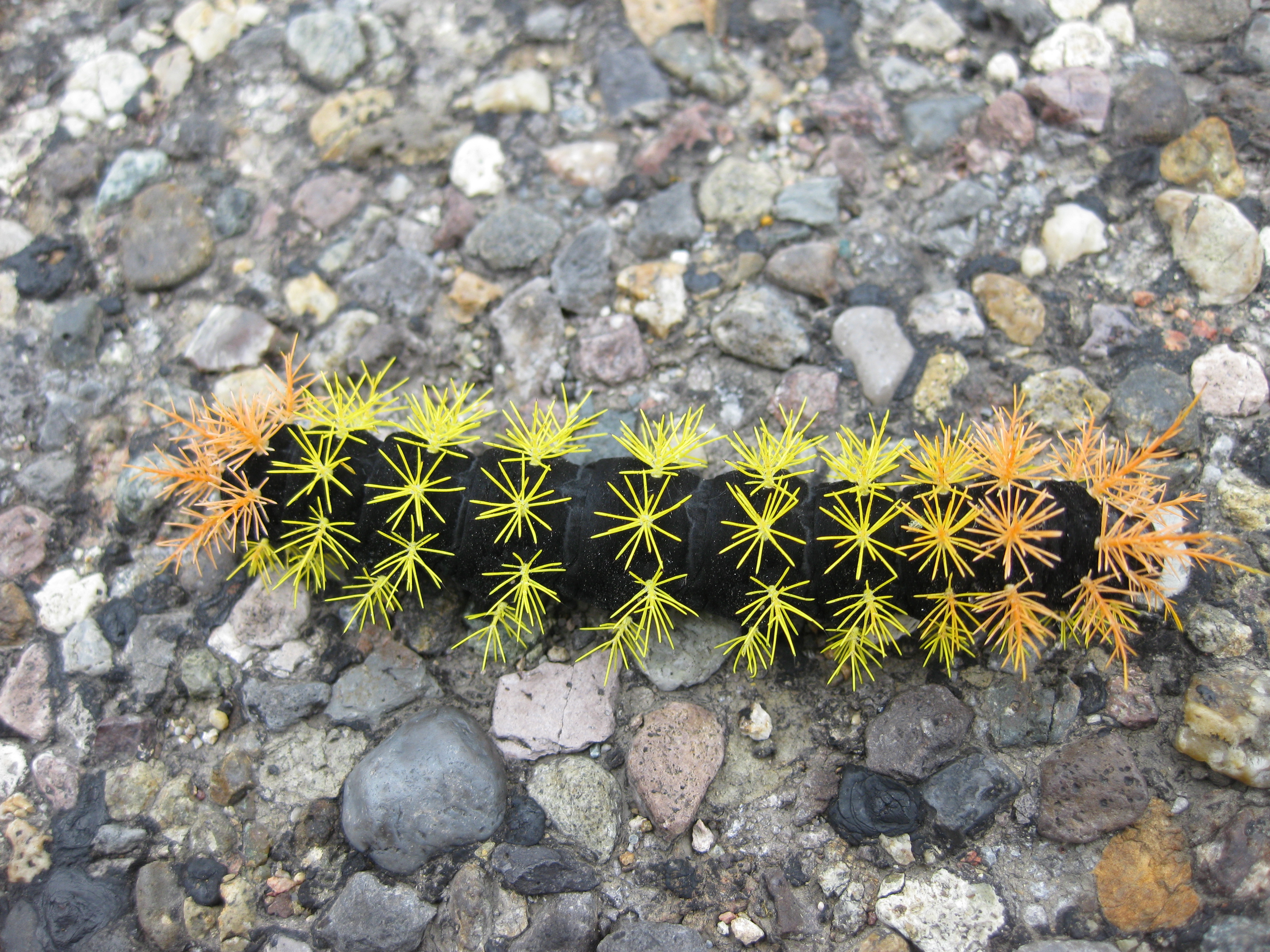
    The profound thoughts that resonate through my incomprehensibly complex mind capable of infinite combinatorial thought: Yes! The top! Oh, No. Yes. Maybe. Wait….no. All the other cyclists have left when I arrive at the next break point, the truck starts its engine and the passengers shout for me to keep riding. I pedal past the only place eating establishment for many kilometers, skipping lunch. Plants grow in stature, become more verdant. A brilliant caterpillar crosses the road. I wince as a car nearly runs it over and then move him to the side of the road. I ride away worrying that he will walk out into traffic again, filled with genuine concern for some reason. I decide that he is a sentient being and it is his prerogative to commit suicide.

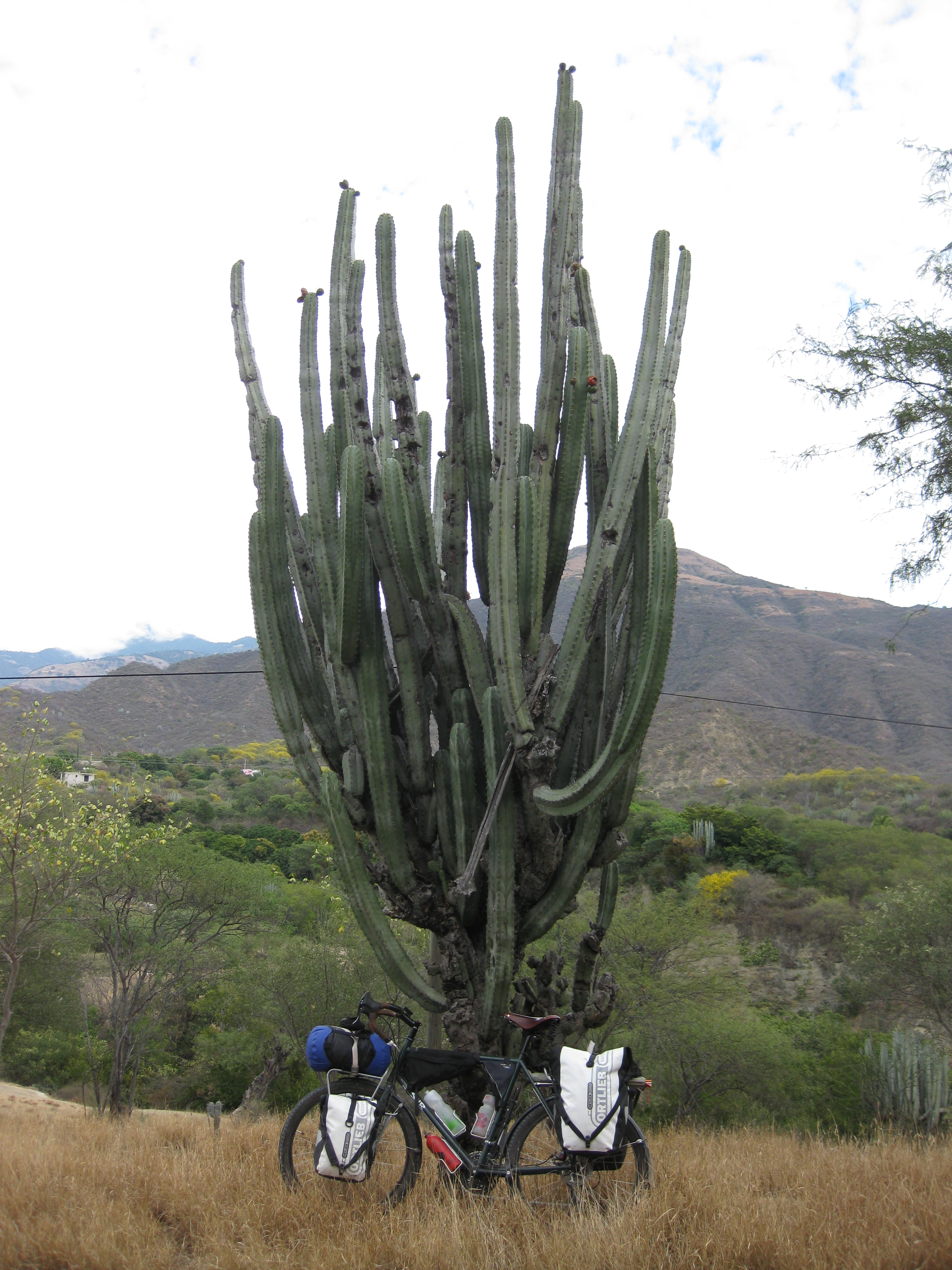
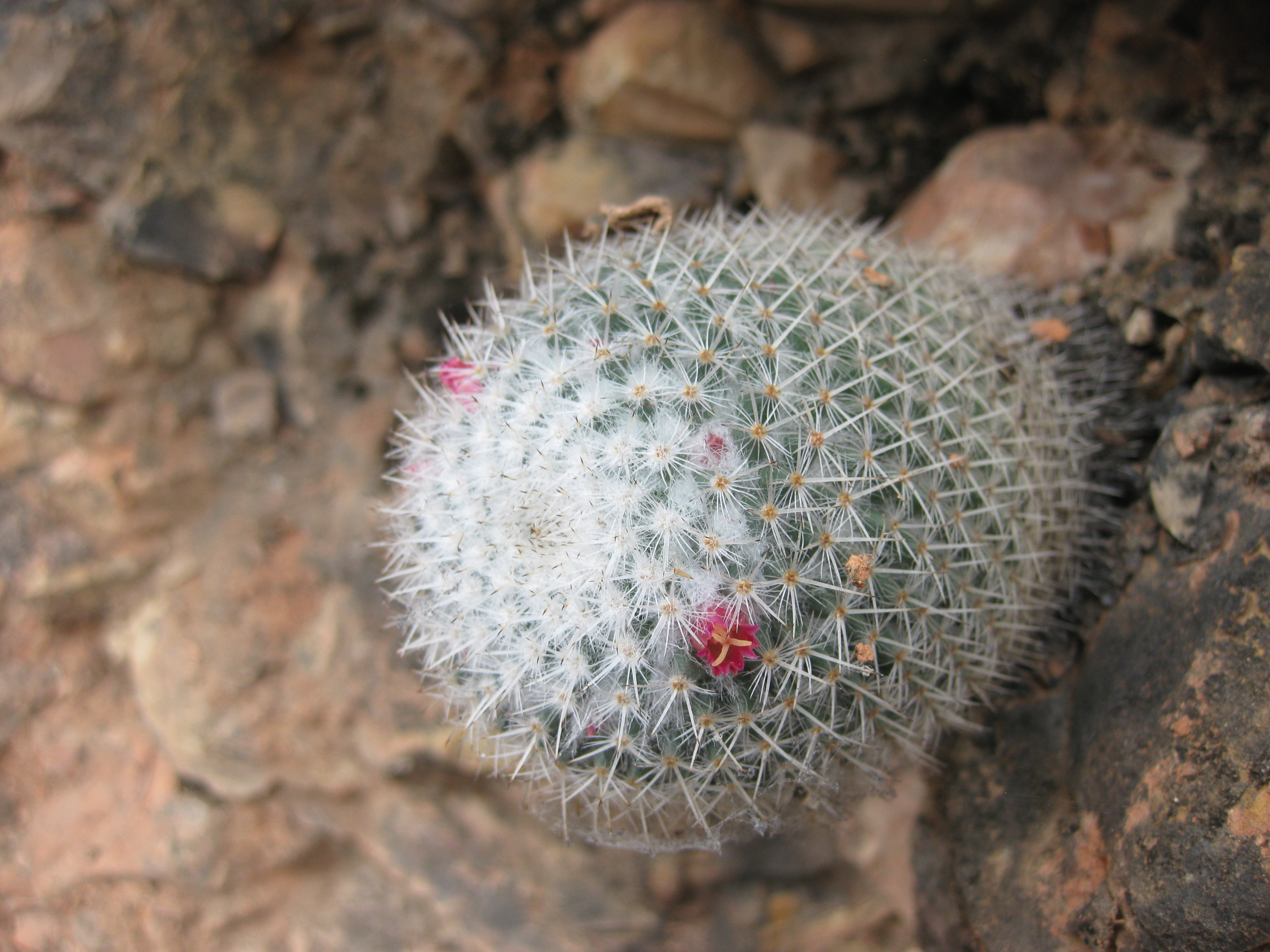
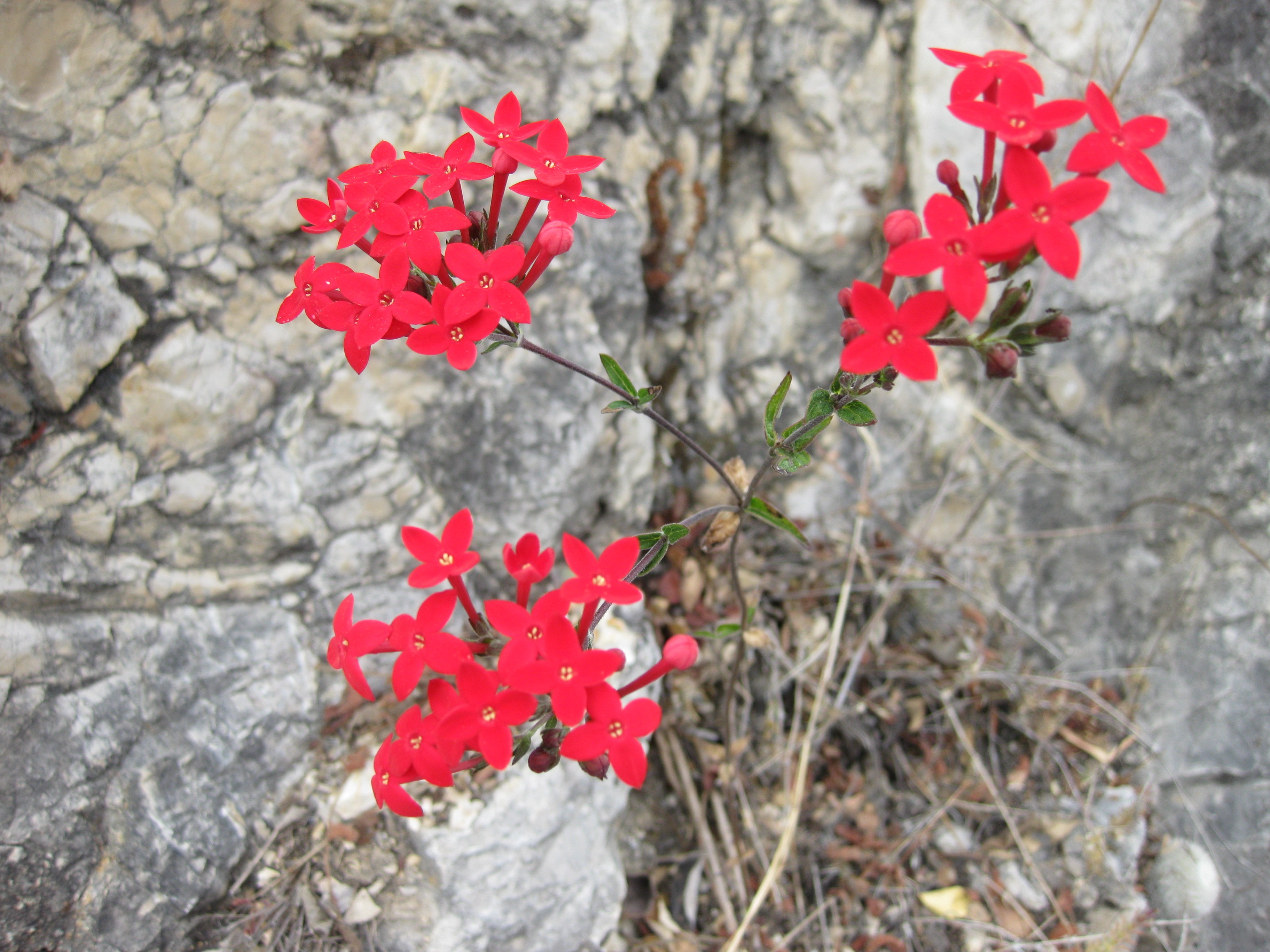
    I stop and stare at the rockwall where the road gashes the landscape. A cactus guarded in intricate whispy spines crowned with brilliant flowers grows from a crack in the otherwise dismally grey wall. I am almost hit by a car as I wander out into the road to look at some flowers waving to me in the wind. Am I unconsciously taking an uncharacteristic interest in the flora and fauna solely to take breaks?

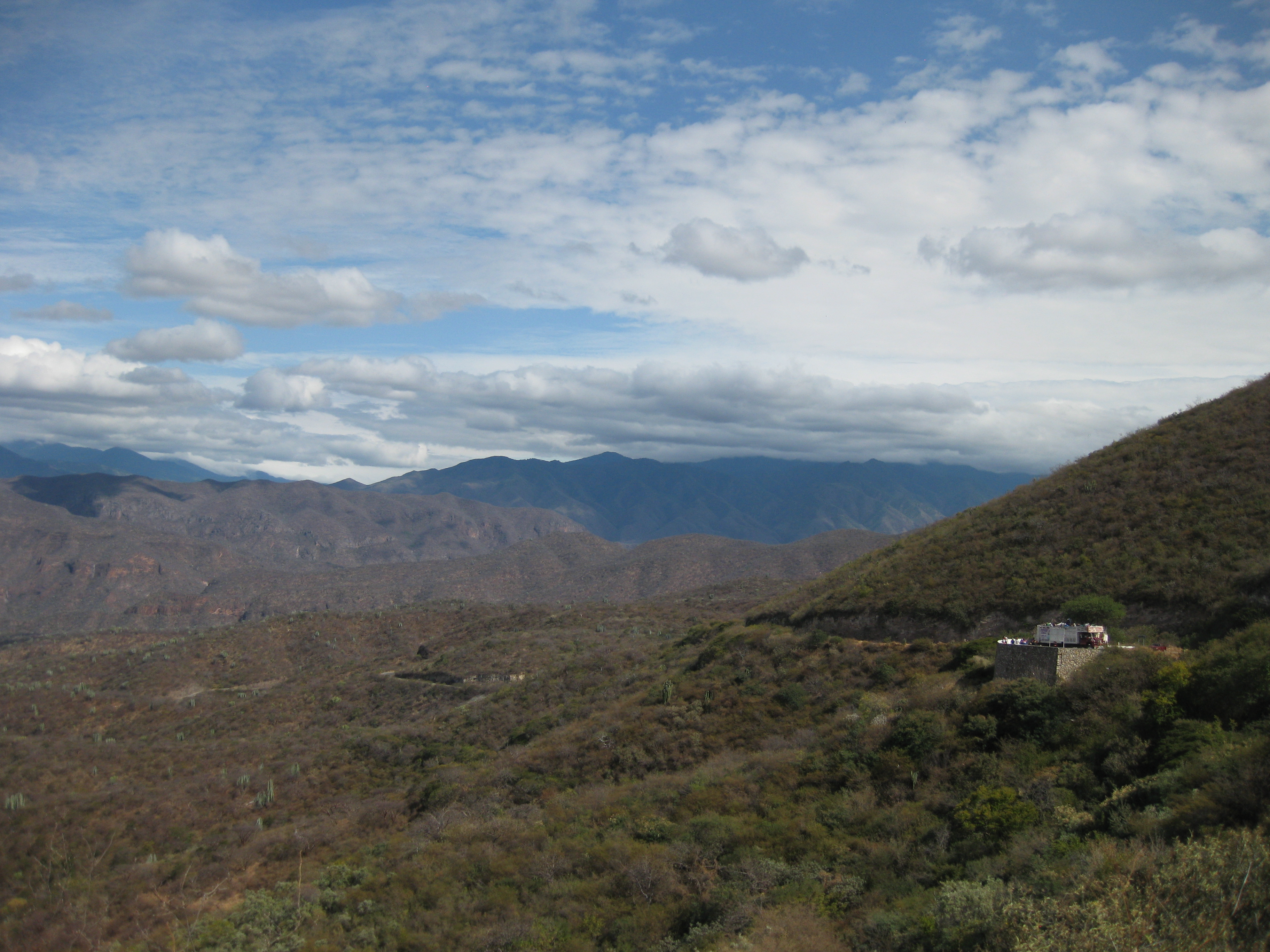
    Up. Up. Up. I have sweated out all of my vinegar from the smell of it and there certainly hasn’t been any piss for quite a few hours. Clouds overtake me, the air takes on a chill. I desperately need a break, but I worry that the other riders are waiting for me. I find everyone shivering near a false summit, huddled in a Juquila shrine.

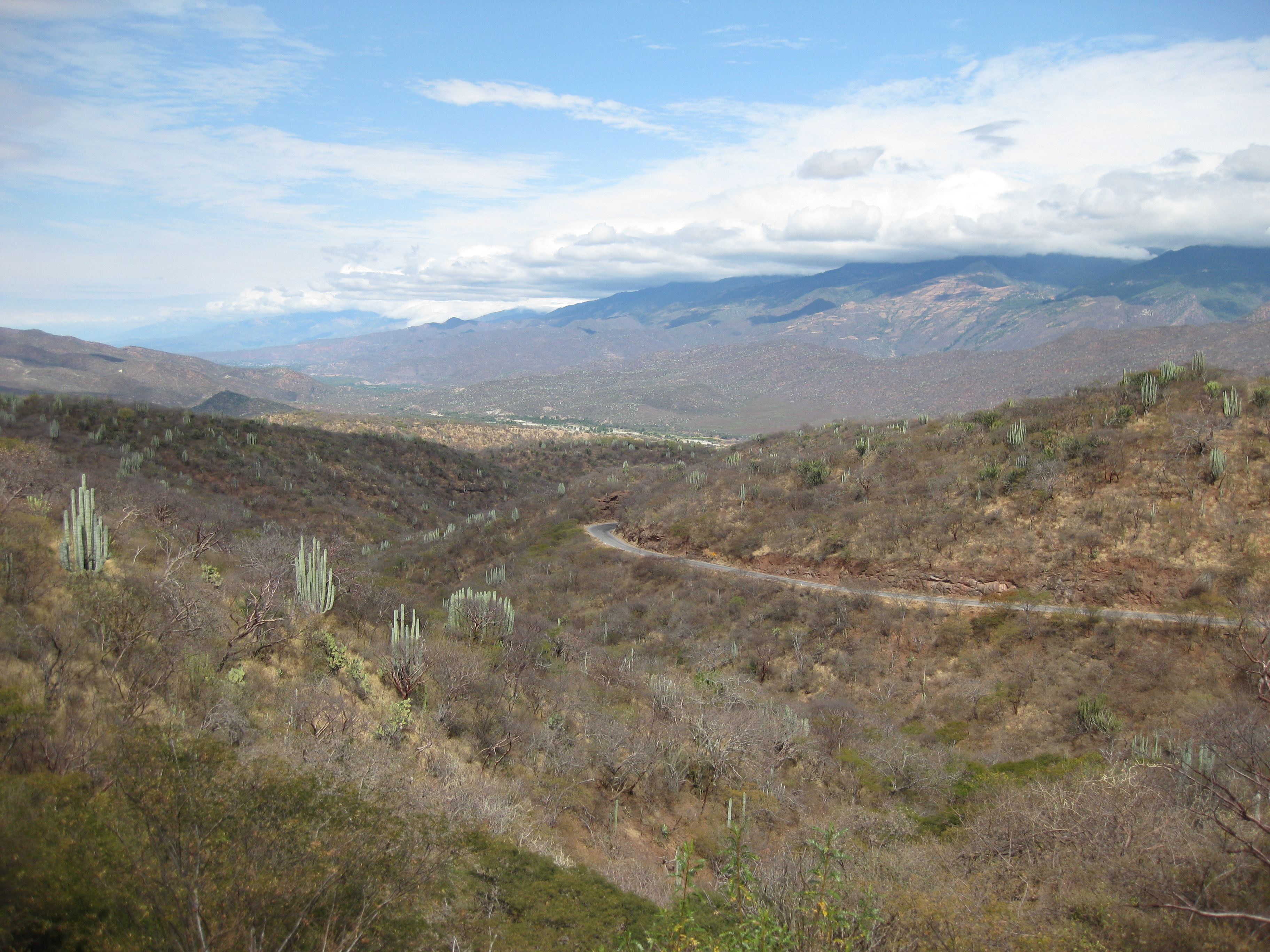
    We ride with the dying of the day, under orange rays creeping out from under the cloud blanket, on a ridgeline at the top of the Oaxacan Sierra that fades out into the horizon. I mark the top at 47 kilometers of climbing. I lament my exhaustion as I seem to float down the backside of the sierra in a pothole hitting daze.

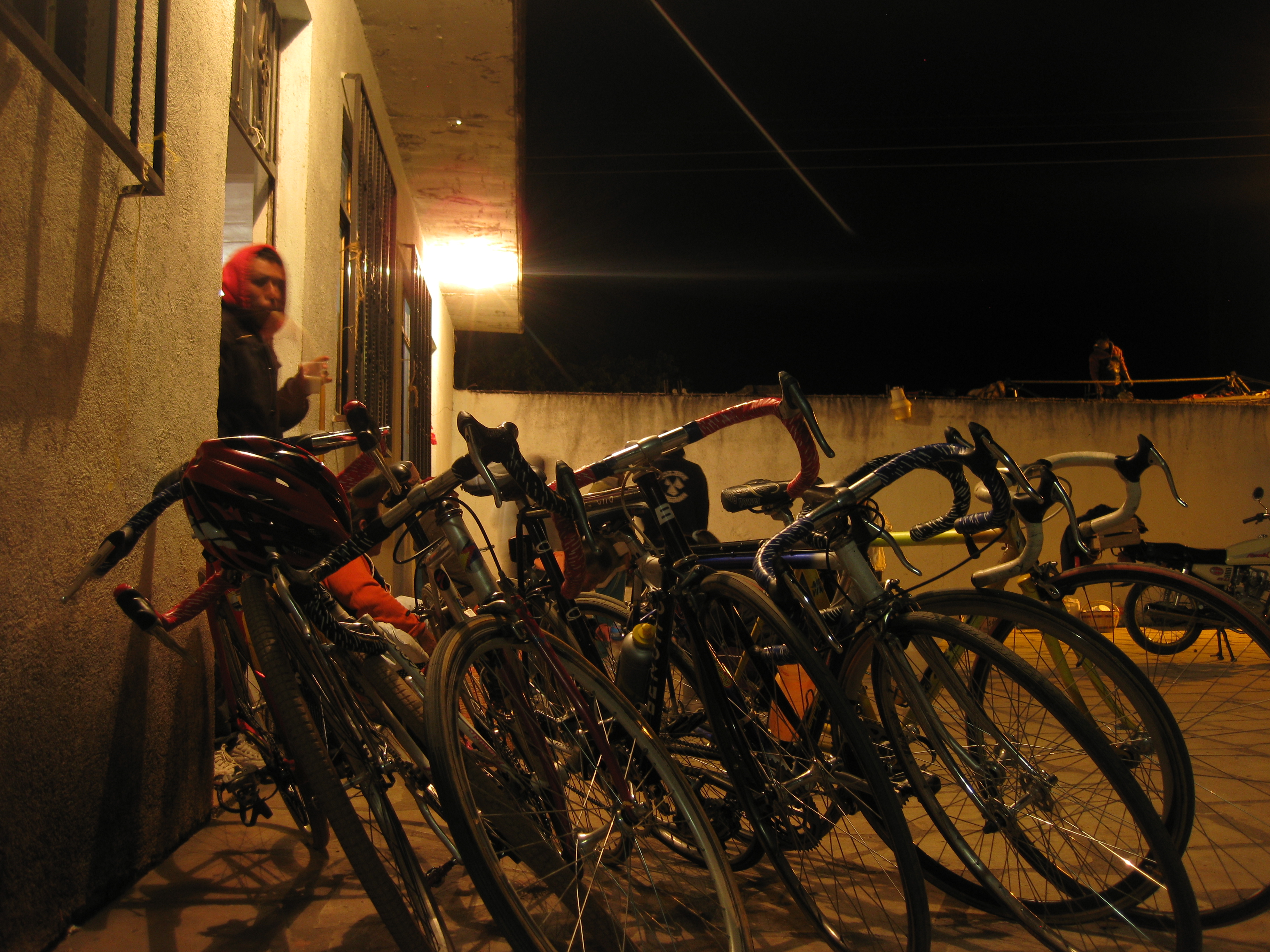
    In San Francisco Telixtahuaca I stand shivering in the dark, in a state of exhaustion that I have never reached before in my life, as several men try to find a new clutch for the truck. After an hour of waiting we follow the truck to a large church courtyard where I will sleep with the pilgrims. I eat a few snacks and lift my spirits a bit. I talk about my trip and juggle. Several women compete for my company, so I graciously eat several dinners.

    I pull a bag of cookies out that I bought for everyone in town and pass another strange night under the Oaxacan sky. I wake up at some point in the night in the midst of a strange dream where I am dying and the halogen floodlight that shines down on the courtyard calls me onward.

    San Francisco Telixtahuaca, Oaxaca to Oaxaca de Juarez, Oaxaca

    I wake up to women mixing up atole under starlight. I pack my things and am ready to leave at 5am as we had planned the night before; we leave in typical Mexican fashion at 6:30am in the dark. My breathe is visible in the headlights of cars as they pass. My whole body shakes from a profound exhaustion, my vision starts to close in from the sides and I worry about falling unconscious into traffic, snot freely runs down my face and it isn’t even funny to me.

    The sun glows behind the mountains before warming hitting me directly and seeming to finally wake me. I wish everyone my best as I ride into a city that stands as a massive mental milestone.

    Stress has insidiously crept upon me, physically and mentally. I am on the verge of complete and utter breakdown. I am cerebral and disconnected. This trip has become too goal oriented. I imagined myself months ago tipping my helmet to mounted cowboys on tranquil cactus lined country roads before stopping to swing in hammocks and write as the day’s heat fades in the lonely desert expanse.

    Our minds are strange; my mind projects into the future a labyrinth of forking paths, each turn beset with consequences, implications and rewards. The labyrinth is constructed from our personal experience and our unique perception of the world. We set about living as if this mentally constructed labyrinth were reality, only to for the entire edifice to change at the first turn, only to be reconstructed infinitely. We often wander in confusion, unable to connect our choices to their outcomes.

    I had many expectations about this trip and it has gone very differently.  I am not enjoying myself at this moment, but learning is very rarely pleasant.

    This is hard to perceive this without slowing down for a minute.

    I lay exhausted on my bed and then begin to write.

    the sea vibrates.
    an energy coursing through its uncharted depths, its origin unbeknownst.
    as it takes form and swells, pelicans float on the air rising off the surface,
    it winks in the sun as it morphs and races forward,
    the concave face inevitably collapsing.
    white froth pours across the fathomless plain of sand
    that is swept continually by a breeze similarly emergent out of boundless chaos.

    trees and grass stir in the breeze,
    imperceptibly growing; their colors gradually changing
    as we orbit the sun and the seasons change.
    greens turn to browns, buds turn to flowers,
    flowers wilt in the cracks of rocks that crumble.

    we are carried by a whirling frenzy,
    our direction is unclear, our compass spinning as we float onward
    carried by a force that lacks purpose or intent.
    we try to navigate by philosophies, ideologies, religions,
    all failing to guide us toward any end.
    words ring hollow.

    the means become the end.
    we turn our eyes from the blinding sky toward the ground.
    we build towers of steel, ensnare the world’s surface
    with a net of wires and pavement.
    we frantically cut, dig, level, extract, refine, replace, buy, sell, exhaust.
    the scale ever grander, ever more complex.

    a steadily rising tide, a gust, a phantom wave.
    events occur and post hoc explanations come forth.
    individual particles colliding, careening, amassing.
    we are steadily whirling,
    confusing having an explanation with having control.
    knowing that we are spinning clockwise does not mean that we can stop it.

    watch the world around you.
    watch the ceaseless undirected activity.
    watch the moments slipping by,
    passing through your mind like sand through your splayed fingers.

    feel the air passing into your lungs.
    the water coursing through your body.
    relish the flavors that wash across your tongue.
    warm yourself by the rays of the perfectly distant sun.
    watch the birds dancing on winds of chaotic birth.
    live conscious of the vast world vibrant with life.

    a beautiful serendipity in the universe.
    as i look into your eyes i know you as i know myself, what it is to be human under the vast sky.
    i judge not and forgive all.

  • The Strong Protect the Sweet

    I have ridden my bicycle through Mexico and through Guatemala, learning about where our food comes from as the panorama passes and through conversations with farmers on the roadside. I have slept in corn fields, cow pastures, below apple trees and in the wild. I felt seen the trees, grasses, stalks and vines. I have met the sinewy, tired, wrinkled, tough, proud people who tend them. I became strangely interested in agriculture and today I find myself interviewing farmers on the Southern coast of Guatemala with the intent of helping a sustainable agriculture organization learn more about the communities where they work. I have spent weeks so far swinging in hammocks and reclining in the shade as I try to capture their story. In my spare time I climb mango trees and gorge myself, unsure whether my stomach pain is from too many mangos or parasites. I consistently fail at resisting the delicious cold beverages made with well water that consistently leave me running to the bathroom.

    Here is generalized profile of a campesino (small farmer): A small landholder, with 1-3 manzanas (1.72-5.16 acres)  through land grant or a lease, that farms maize (corn) for consumption and sale and sesame for export. The typical diet here revolves around beans and tortillas, with occasional garnishes when they are affordable. Farming is the sole source of income for the family (occasional family members contributing through remittance payments from the United States or by working on palm, banana or sugar plantations). The agriculture in this region, due to the poor quality land of the land received, requires a substantial amount of inputs in the form of fertilizers, pesticides and herbicides. Incomes have risen through yield increases that reflect an increased intensification of agriculture through the heavy use of these inputs and hybrid seeds adapted to their use. Money is borrowed from banks, money lenders or input distributors to finance the agricultural process at usurious rates. A succinct summary of their felt need: economic development, a healthy environment and a path forward for their children. It sounds relatively similar to what much of the rest of the world desires.

    The connection that farmers here feel to the land is difficult to fully grasp for anyone from a culture that is disconnected from the land, as is typical of much of the industrialized world. The culture of Guatemala today grows from agrarian life, which is rooted deeply in the land itself. Virtually all strife within this country can be traced back to land, especially the 36 year civil war that ravaged the countryside before ending in 1996. Here is one rant from the coast, one of many that I hope to share. It is a rant because I am not sure if I know how to assimilate all of these things that I am feeling and trying to understand into a coherent narrative. We live in a complex world. Here is where sugar comes from:

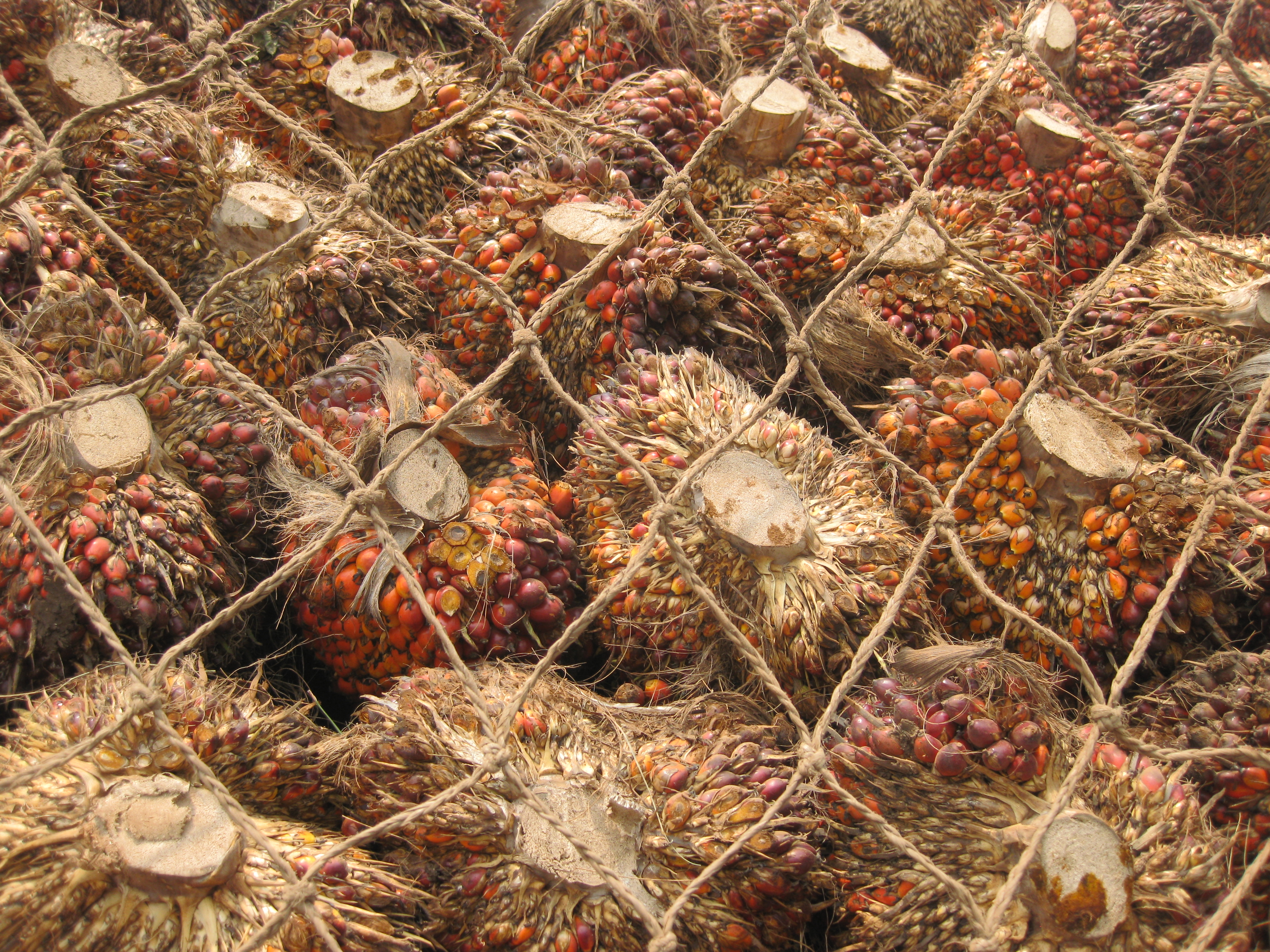
    Palma Africana

    Land ownership in Guatemala has a markedly skewed distribution: 2.5% of the country’s farms control 65% of agricultural land, while 88% of all farms, with an average size of 1.5 hectares, occupy 16% of the land. Approximately 40% of the economically active rural population does not own land. Along the South slope this distribution is reflected at ground level in expansive plantations that produce valuable export crops that can exploit the cheap cost of labor and the simple spreads of the cheap labor. The primary export crops produced on a large scale are: palm oil, sugar cane and bananas. I spend my days weaving through potholes and inhaling dust as I navigate the endless and confusingly homogenous landscape on my way to small communities sometimes only known by a name like A-13 or Calle 2.

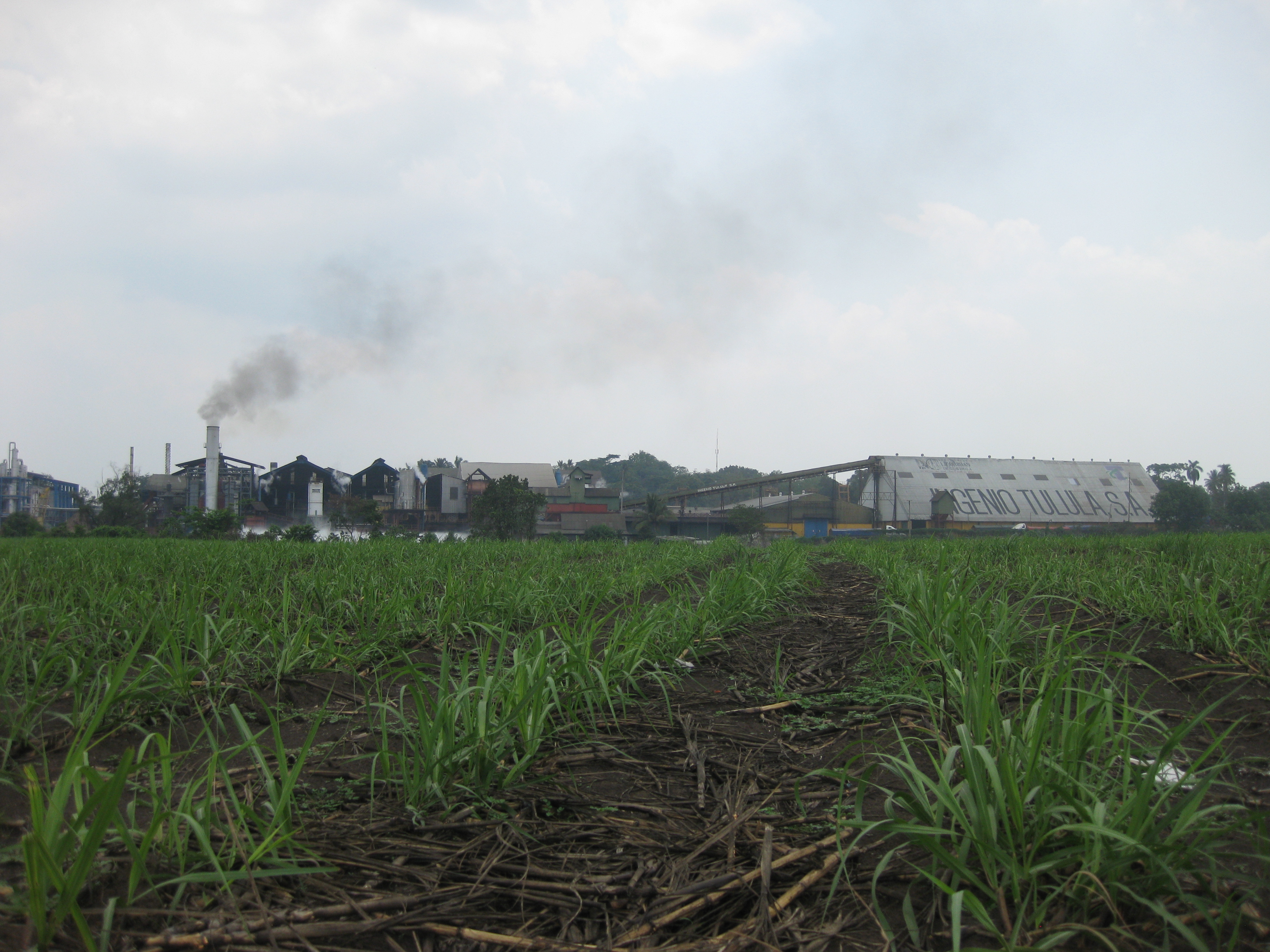
    Sugar processing facility with cane in the foreground.

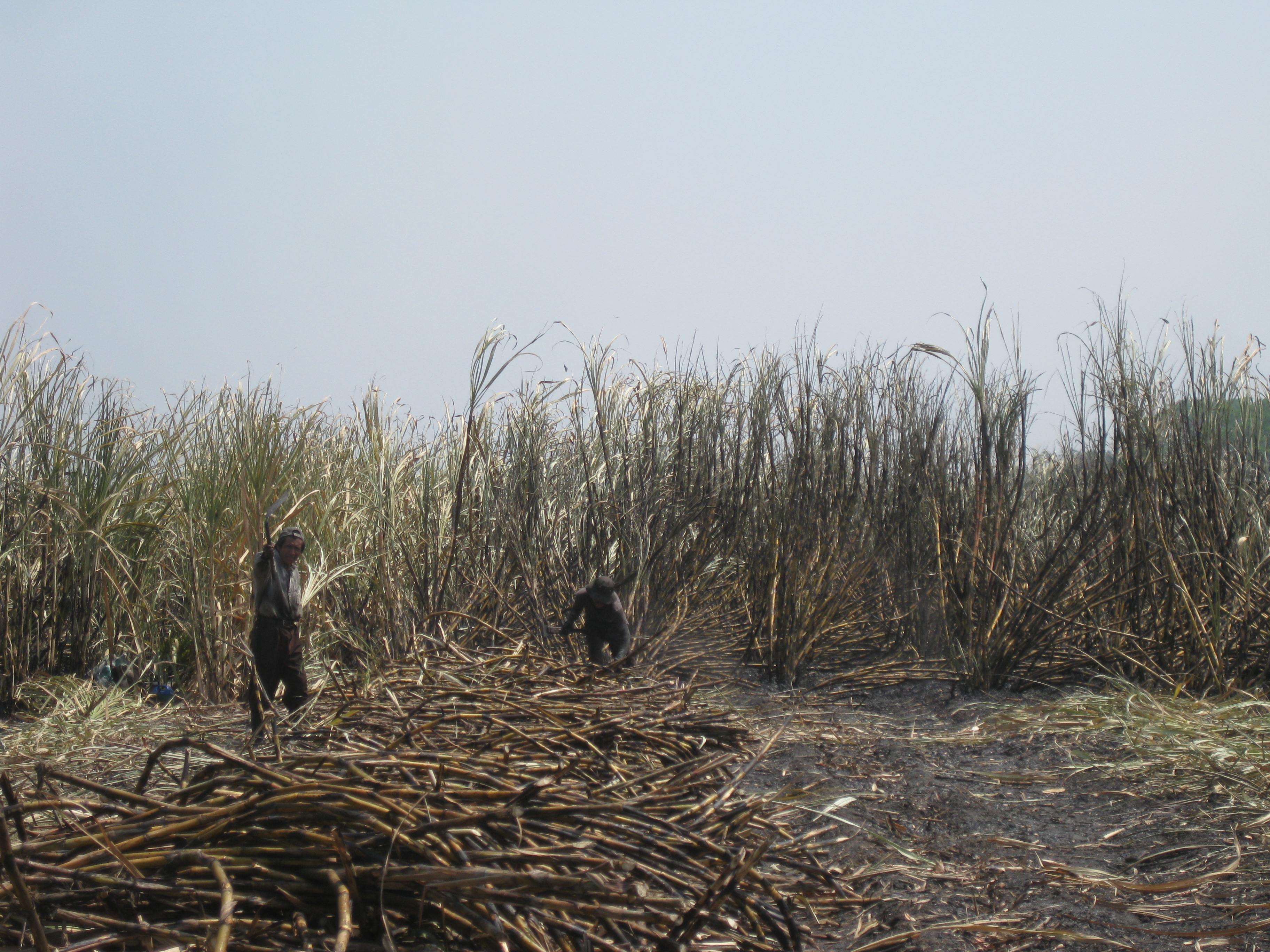
    After spending the week in La Montana speaking with farmers, I am driving the wife of a friend of the organization to the market in Retalhuleu. The air is sweet with the smell of burning sugarcane, a smell that has permeated the coast for months, one that I will never forget. I keep the truck in second gear as Graciela and I jar our way down roads ruined by overloaded semis stacked high with cut cane as white clouds streaked with black smoke billowed on the horizon. Many men and quite a few kids walk the scorched earth and cleave their way through hellish rows of blackened cane with machetes, their faces and arms swarthy with ash stuck to the sweat that runs in the midday heat. The machetes seem disproportionate in size relative to the kids.

    Workers cutting cane.

    “How old are those kids in the fields?” I ask Graciela with a grimace.

    “Some are as young as 12. Most of the kids whose parents cannot afford to send them to school start working with their fathers on the plantations.” Graciela readily responds, her tone seemingly not adequately reflecting how sad and strange this reality seems to me.

    Sugarcane is tall grass native to South Asia that has been cultivated for thousands of years. The production process in Guatemala occurs over the course of a year. The sugar cane is irrigated and left to grow on fields maintained clean through heavy applications of herbicides. After it reaches maturity, the fields are set on fire to remove the parts of the plant that are not used in the production process. This step significantly reduces manual labor costs. The cane itself is then manually cut and loosely piled into semis that are bound for nearby processing plants, as the cane loses sucrose with the passage of time. The canes are pressed to remove the cane juice, which is then processed and refined into the product completely devoid of nutritional value that we are all familiar with.

    We pass fields of sugarcane kept radiantly green during the dry season through extensive irrigation that drains the earth with large motors pulling from wells over 30 meters deep. Many farmers have mentioned that their wells have run dry as the water table is has been consistently dropping since the sugar cane plantations arrived with advanced machinery in the past five years. A well 8-10m deep is no longer enough.

    Planes hum overhead before they disappear in self-produced clouds of chemicals. The planes are dropping what is called a maldurativo, which is used to artificially ripen the cane, but has the additional effect of destroying the fruit on neighboring farmer’s land. Several farmers have spoken of mango trees dropping small unripe mangoes and of lime trees producing nothing. One of the few farmers growing vegetables in an area suffering from a very imbalanced diet decided not to plant tomatoes this year as it is too risky with the effects of the maldurativo.

    The way in which plantations affect the area is part of a global economic problem afflicting thousands of campesinos. An interaction between various variables feed a cycle that appears to be without end. Maize is not a high value export crop, thus the value generated by a hectare is low relative to palm oil, bananas or sugar. Maize is life in Guatemala. Maize and sesame prices have been increasing in recent years, which has provided some gains for farmers, but this is offset by many other factors.

    Input costs are rising. Rents are increasing. The land is degrading. In general the costs of life are increasing in this area, as are expectations related to quality of life.

    A small farmer has the advantage of exploiting his own labor and that of his family to increase profitability, but this decreases with additional land, rendering non-mechanized agriculture at a scale more than a few manzanas not very profitable. The economic analysis that I have done in conjunction with the survey paints a bleak picture with no clear path forward. The long run is more challenging as land is expected to be divided amongst children, which deepens the situation created by a lack of land and resources. Many campesinos are now forced to work on plantations to supplement their income or to pay down debt.

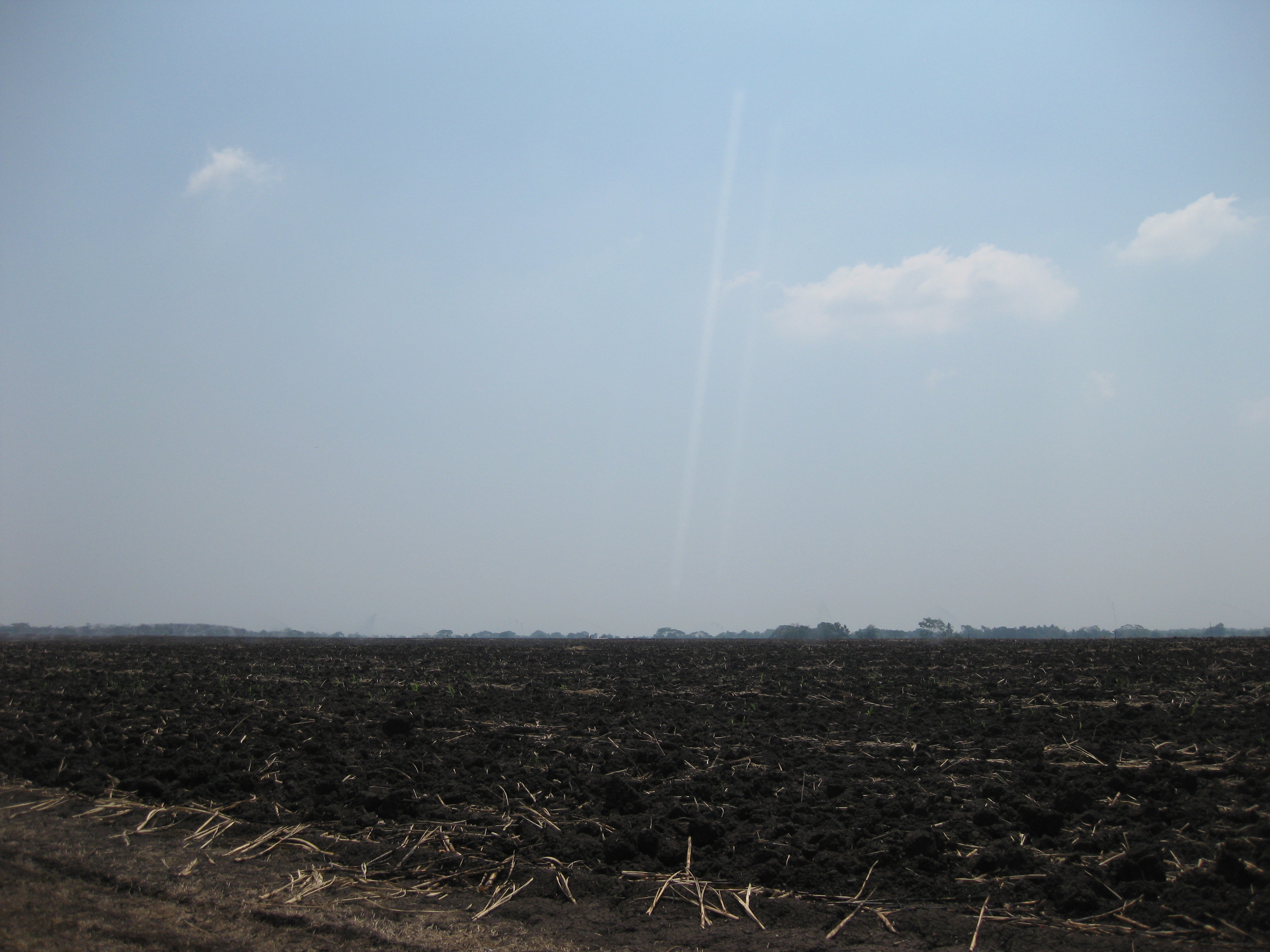
    After the harvest.

    Is this just the process of development? The transition of rural labor into industrial labor? Not all jobs that are created equal: the plantations only hire laborers that are aged from 12-25 years of age from what I can gather. The jobs are almost entirely low value manual labor that entails toiling in the fields for punishing hours every day. After just a few years many of the workers are exhausted, leading the plantations to only hire young workers.

    After age 25? There are no other jobs other than on the plantations or producing maize and sesame; there is no apparent or bright future for these kids in the fields. The viability of sustaining a family producing just maize and sesame appears increasingly difficult. This cycle is not new, but it is worsening.

    Conflict

    I spend a week in Calle 2 outside of Retalhuleu. I am interviewing, Don Pedro, a boisterous man who spins tales from the hammock about the civil war and the time he spent working in the United States. He swats at dogs and throws objects at chickens as they cluck and strut around us. He tells me about a strange farm in South Carolina where he worked only picking small cucumbers many years ago. He doesn’t know why. I think about it for a second and start laughing.

    ‘It was a farm for pickles!’ I realize.

    He tries grins with the teeth he still has and repeatedly mispronounces pickles as he laughs. I finish the interview with the following question:

    ‘Is there anything else that you want me to add?’ I ask randomly.

    ‘Well, yeah there is one thing that maybe you guys could help with since you know people in the government.’

    ‘Sure. What is it?’

    ‘Well, my brother just called me and he works in irrigation at the plantation up the river called ‘La Virgen.’ They plantation just dammed the river that runs behind the house to irrigate, el Rio Espanol. They did this a month ago with a larger river and we blocked the highway for several days before they removed the dam. Can you call anyone you know and ask for help? This can’t keep happening.’ He asks timidly.

    ‘Let’s go see the river.’ I am incensed.

    We hop on bicycles and pedal hard down singletrack trails to the river; the level is low and it is barely flowing. I shout down to a woman washing her clothes in the river who confirms that something is wrong.

    ‘Where is the dam? I want to go see it.’

    ‘Let me call my brother.’

    …..

    ‘There are four men guarding the dam right now with shotguns. I don’t think it is a good idea for you to go there right now.’

    ‘Well we need to do something. They aren’t going to do anything unless you take action like before. You should block the highways again.’ I am indignant, the Western American urge to kill for water rising in my veins.

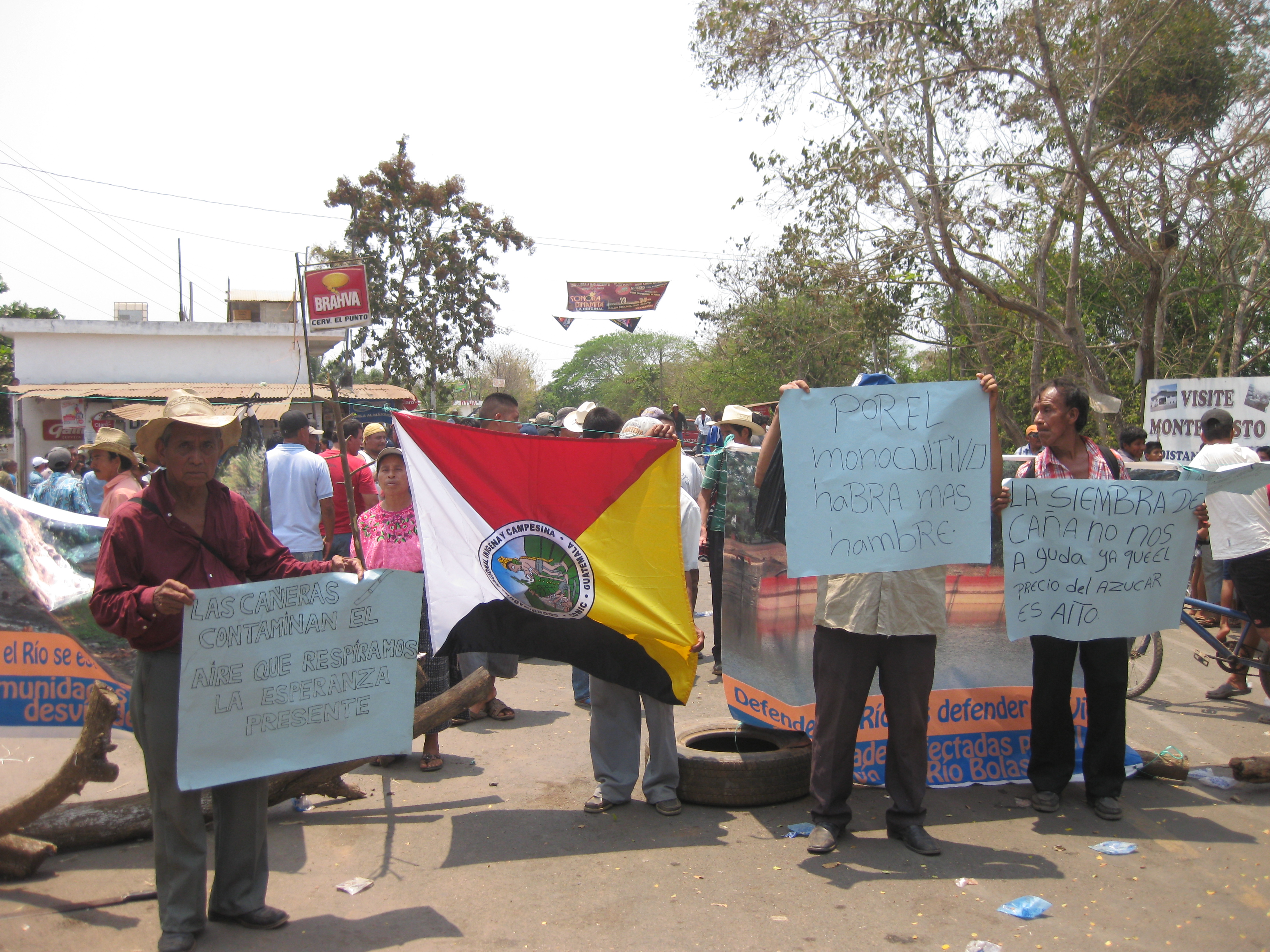
    ‘The sugar plantations pollute the air we breathe..’
    ‘For monoculture there will be more hunger’
    ‘The planting of sugar doesn’t help us, the other cost is high.’

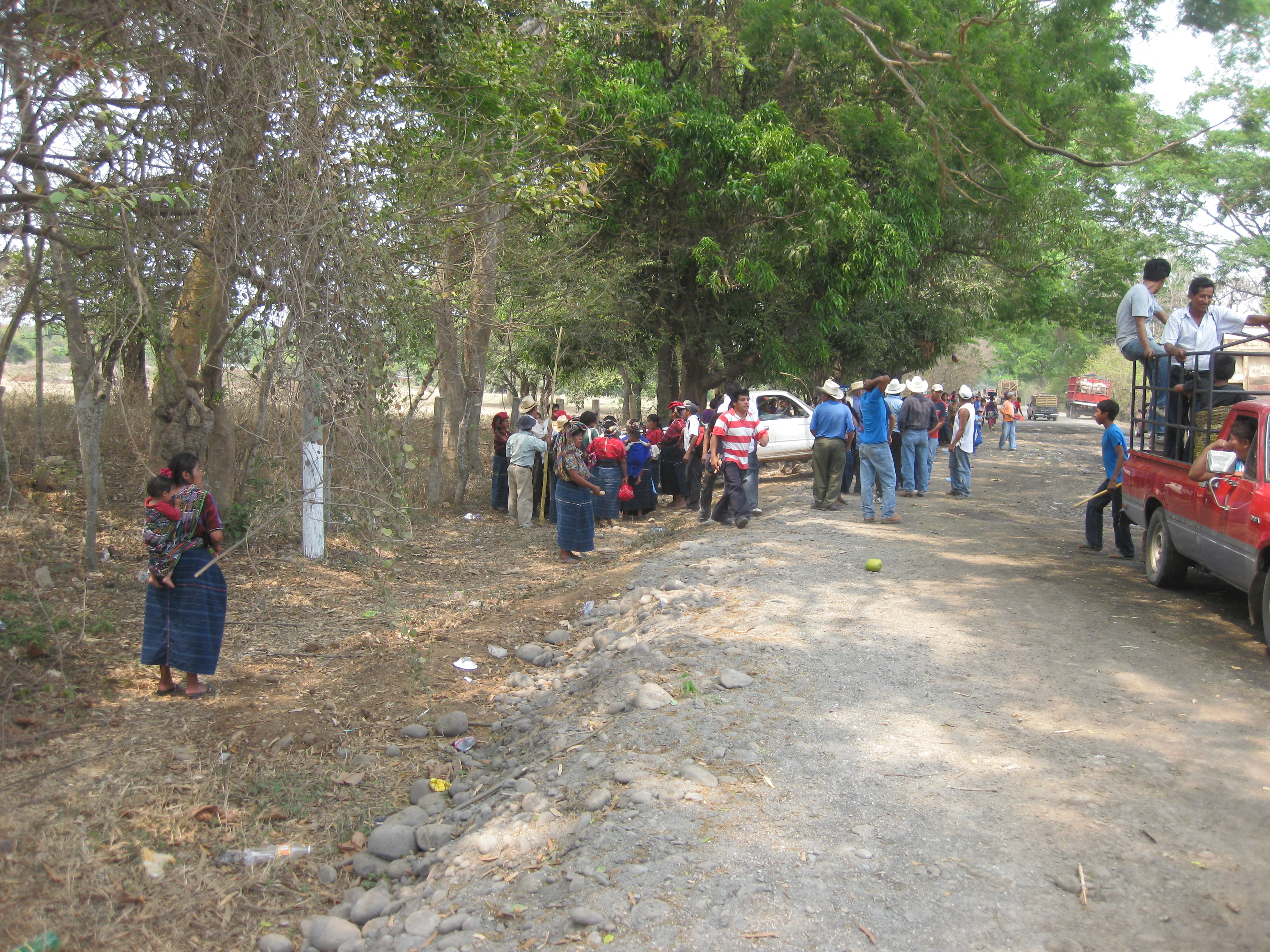
    We set out early for Xela after interviewing a few more farmers. We received word that the road is blocked, but decide it is worth the effort to try. We flag down a pickup truck that is carrying a few other passengers to carry us to the first roadblock. I get my wish: as we approach a mob comes screaming and running towards us brandishing clubs. Angela and I sit uneasily in the back of the truck as they hit the outside of the truck and force the driver to stop and turn off his vehicle. Eventually the mob subdues and returns to the blockade. The road is blocked with logs, rocks and several banners declaiming the campesino’s quandary. A woman is screaming loudly, the kind of desperate and angry wail that brings tears to my eyes. We talk with several of the protestors who explain to me that the protest is about more than simply the river being blocked, it is about air quality, it is about the roads, it is about their future. The plantations expect to expand several thousand acres in the next two years according to one of the protest organizers.

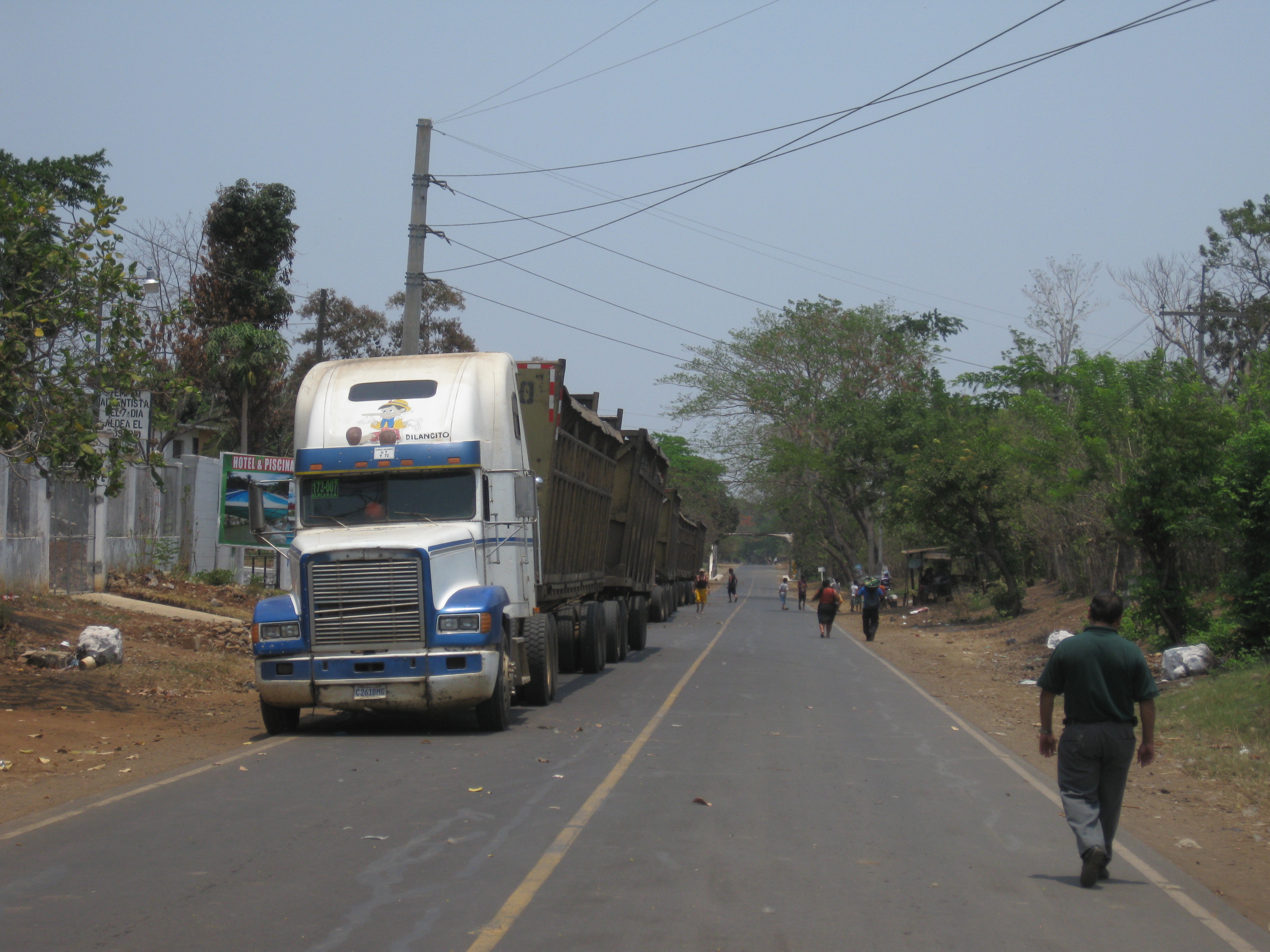
    Sugar cane trucks.

    We set out walking in the heat, past lines of parked trucks from the sugar plantations. I feel like a scab. The highway is filled with pedestrians. We stop and chat with other people walking, we buy a watermelon from a family selling fruit on the roadside and eat it on the spot. One pickup truck carrying mangos hits a speedbump and a few fall out the back, I pick them up and feast. It is beautiful.

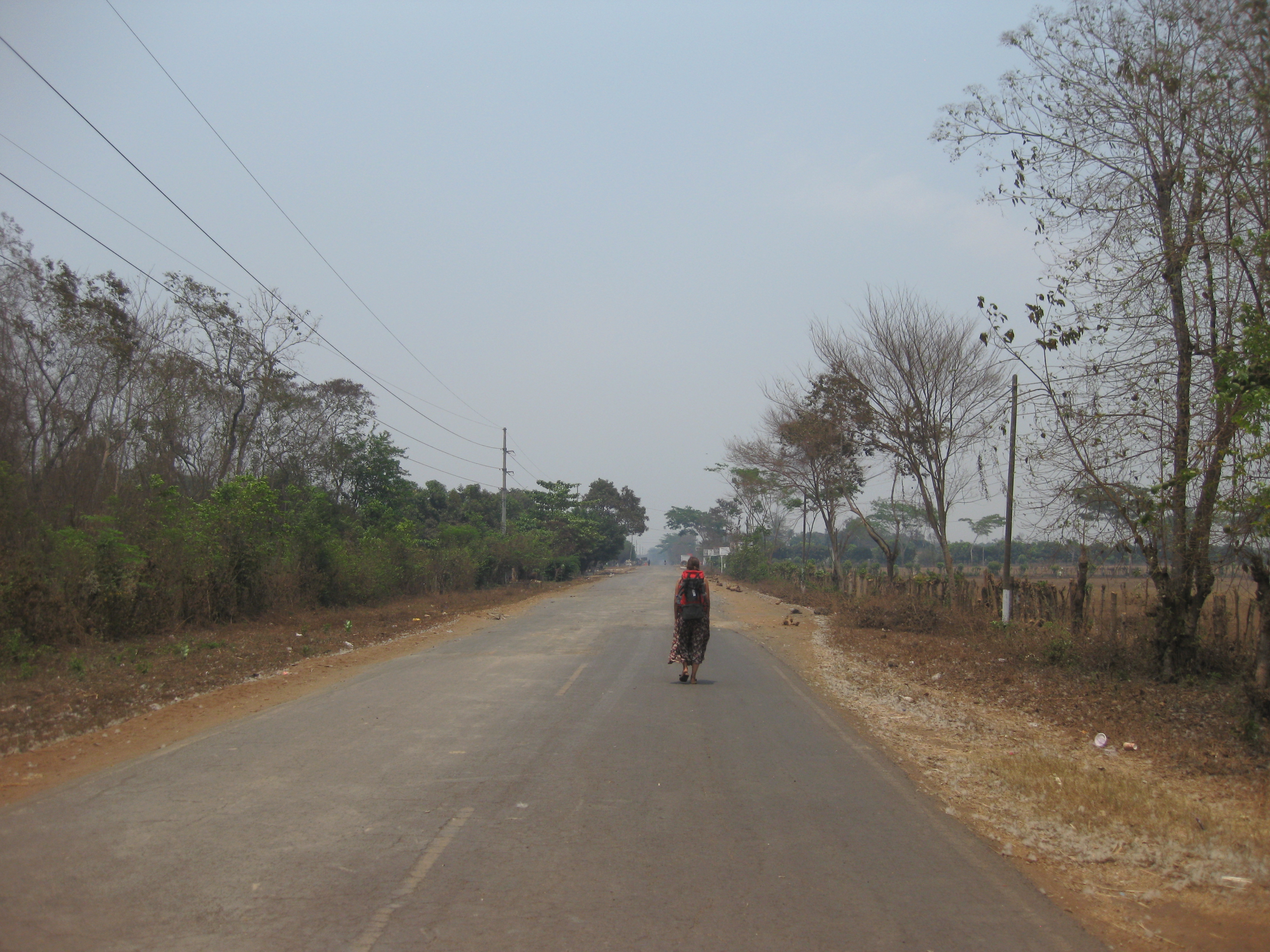
    Angela walks a desolate road.

    We arrive at the second roadblock after walking and catching rides for a couple of hours. We arrive at the second roadblock as the protest is breaking up.  A government bureaucrat makes incredibly vague conciliatory remarks while surrounded by police, ending by saying there will be a dialogue between the government, the plantations and the campesinos the following Friday. Women stand barefooted in the audience staring with eyes wizened by decades of the same rhetoric. The sugar trucks lurch back into action and we catch an old schoolbus back to Xela.

    The protest breaks up.

    The fight continues. I receive word the next week that the roads will be blocked again as the government, nor the sugar plantations, made any concessions. Unfortunately change does not happen unless it is forced to happen.

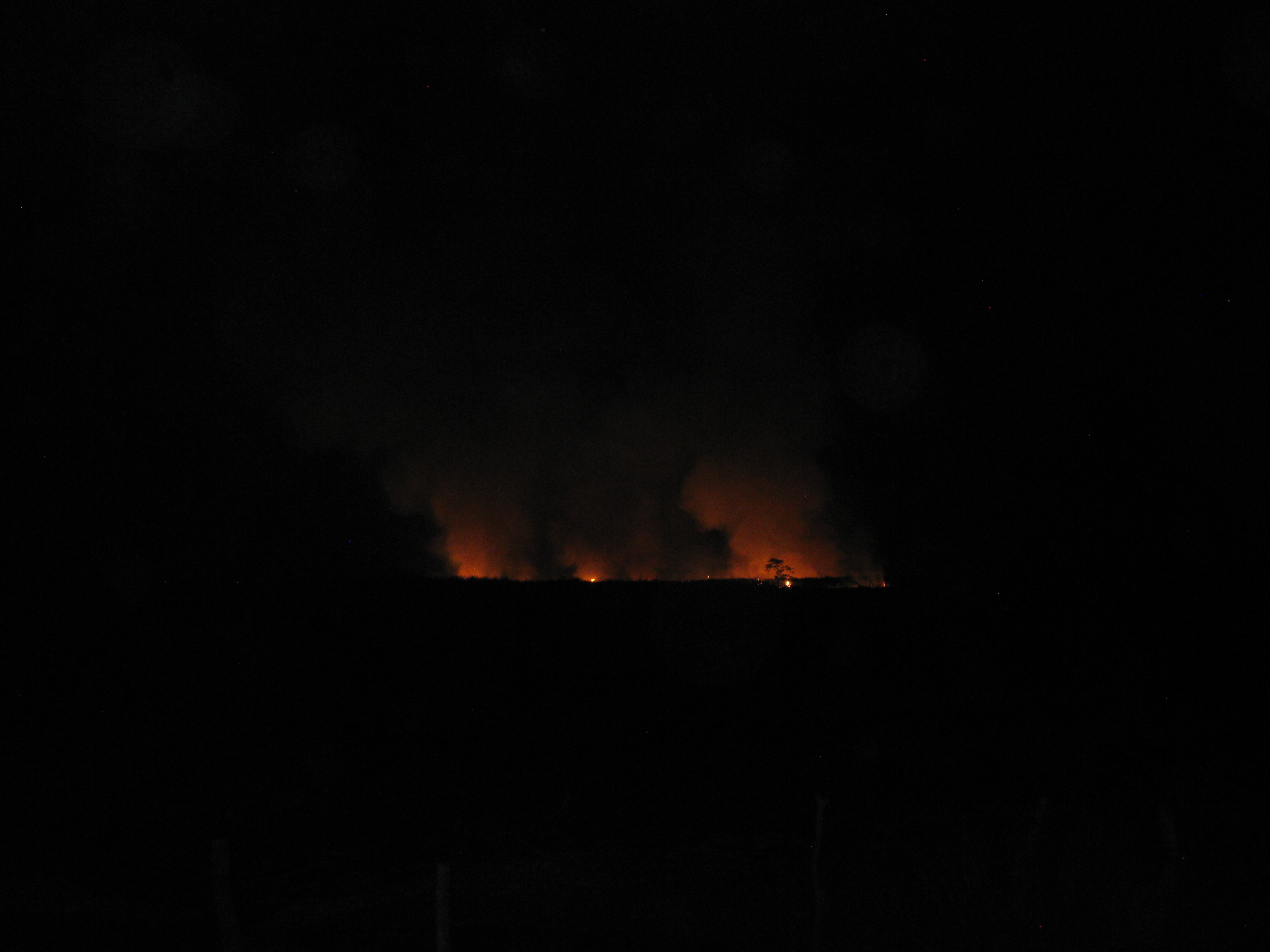
    Workers work through the night, the field burning.

    I sit watching one of the fields burn at night, the strange orange glow of the smoke and fire on the horizon evokes thoughts of burning oil fields. Ash rains down upon me as I sit on a street corner in Los Encuentros speaking to a few farmers about the sugar cane that now surrounds their houses. It is the first year it has been planted in the area. I look up and a piece of ash goes into my eye and I go for a walk by myself as I wince for the next few minutes. Ash covers everything. I stand in the darkness thinking.

    I want to live in a world where there are small farmers who have a connection to the land. I want to live in a world where people are paid fairly for their work and where we all have a right to clean air and water. I may not be directly fighting, but it seems inherent in so many aspects of my daily life. The degree of interconnectedness in our world, how the actions of millions of individuals on one continent can affect the lives of millions in another, is difficult to grasp and be conscious of at every moment. We have the opportunity to make the best choices that are in accordance with the information that we have and our values. We cannot keep diffusing responsibility, equivocating or looking to someone else. Be conscious of the decisions that you make, you choose what you support with your actions.

    The path to a better world involves widening our moral circle, the extent to which we extend moral consideration. Is it just your family? Is it your friends? Acquaintances? Fellow citizens? People who you identify with culturally? All other human beings?

    References (dead links removed 10/31/2026):

    http://www.agmrc.org/commodities__products/grains__oilseeds/sugarcane_profile.cfm