Category: essay

  • The Scat in Eschatology

    The Scat in Eschatology

    There are people stockpiling guns, batteries, solar panels, burying shipping containers, buying gas masks, dehydrating food, filling hidden tanks with water, and lining underground shelves with food all around us. You may have seen their outposts in sun-blasted wastelands, have heard about surging weapon sales, or seen survivalist literature in your local bookstore and wondered. The people behind this movement, self-described ‘preppers,’ are generally hard to see due to their penchant for camouflage clothing, but my work gives me the privilege of direct contact with them: I primarily build commercial photovoltaic (solar) systems, but also off-grid and backup power systems. Preppers comprise a significant portion of our customer base for the latter portion of the business.

    The internet, conveniently for one looking to learn more about this culture, is a breeding ground for communities of paranoid people; it creates a marketplace for fringe theories and products that would otherwise not exist in society. A cursory glance on the internet reveals that there are a few people with legitimate concerns regarding ecology and the sustainability of our industrial economy, but the overwhelming majority of the adherents seem to have already been attacked by some sort of brain-sucking amoeba that has left them constantly oscillating between schizophrenic fight or flight outlooks on life. Articles abound like: “When Colera Comes to Town.” “Martial Law Survival Strategies You Should Know.” “Body Disposal in a Crisis.” “Backcountry Belt Kit: Essential Tools to Carry Around Your Waist.” “How The Zika Pesticide Spraying Could Eventually Kill Us All.” There are a hundred times as many discussions about Chinese-made LED flashlights as there are about Malthusian economics.

    I am accustomed to the preppers asking questions like, “Will this equipment withstand an electromagnetic pulse?” I have learned how to discuss Faraday Cages with them and to avoid voicing my questions about what they imagine the apocalypse will be like. I had perceived these people as benign and merely victims of marketing and politicking that breeds paranoia to generate sales and votes, until a recent conversation with an intelligent coworker, who is a devout member of the Church of Jesus Christ of Latter-Day Saints (Mormon), made me realize I might want to rethink my opinion. We had just finished building a backup power system on a McMansion, for a man who makes and sells Biblical interpretive videos, when there was a blurb on the radio about climate change. I couldn’t resist making a remark about how we need to make some dramatic economic and cultural shifts to avoid creating a living hell, that the alternative energy industry needed to grow by leaps and bounds.


    “There are billions of dollars spent each year by people like Al Gore to make you think that we need to act immediately and change what we are doing,” he expressed with skepticism.
    “Yeah and there are billions of dollars spent each year to make you disbelieve that it is happening. I saw it with my own eyes when I was visiting islands in the Indian Ocean a couple years ago. It is a terrifying prospect for hundreds of millions of people and we will not be immune to its effects here either.”
    “I don’t deny that it is happening, just the cause.”
    “So you don’t believe that humans are causing it?”
    “Not necessarily.”
    “Then what is happening?”
    “The Rapture, The Second Coming of Christ,” he said without irony.
    From that point on I have been fascinated. As you can imagine, I was elated when I saw a billboard on my way to work the other day that advertised the Ready2Go convention – the first gun, auto, and preparedness show in Utah. The same fairgrounds would also be home to the Patriot Film Festival. That is how I found myself tearing down I-15 through rising concrete skeletons and past an endless stream of cars piled high with outdoor gear and pickups towing dilapidated campers headed out for the long weekend. Riding a motorcycle is, for better or worse, a heightened sensory experience, particularly with regard to smell. It smelled of food smoking, then of sausage, then of raw sewage, then of just plain exhaust.

    Before we get to the convention, it is worth touching upon theology for a very brief moment. Almost every religion employs, as humans have an affinity for them, traditional narrative arcs that have a beginning, a series of crisis, a climax, and then a resolution. In religious parlance: a creation myth, trials and tribulations involving the believers and the non-believers, an earthly crisis, and then the an end brought about by a deity. The field of theology devoted to the study of the final events of history or the ultimate destiny of humanity is called Eschatology.

    The Bible has many passages that reference catastrophe or apocalypse for followers to emphasize. The Gospel of Matthew 24:21-22 records Jesus saying that upon his return “There will be great tribulation, such as has not been seen since the beginning of time to this world, no, nor ever will be. And unless these days were shortened, no flesh would be saved, but for the elect’s sake those days shall be shortened.” Paul says in 1 Thessalonians 5:3 “For when they shall say, Peace and safety; then sudden destruction cometh upon them, as travail upon a woman with child; and they shall not escape.” From Isaiah 66:15-16, “For behold, the lord will come in fire And His chariots like the whirlwind, To render His anger with fury, And His rebuke with flames of fire. For the lord will execute judgment by fire And by His sword on all flesh, And those slain by the lord will be many.”

    Mormonism uses the King James Version and the Book of Mormon as primary texts. The Mormons have a long-standing tradition of prepping that is deeply rooted in their theology. Prophecy holds that there are certain events that inevitably will precede the second coming of Christ, the most relevant here are: earthquakes, widespread warfare, social unrest, and climactic weather. There are storage facilities, with billboards along the side of the highway, that specialize in food storage. The church requires each member to store a minimum of a three month food supply.

    In both cases it appears that Christ will lift up the believers, scorch the earth, and punish the non-believers. I am not sure where the earth-scorching fits in, maybe it is like how the right to destroy a sandcastle is reserved for the child who builds it.
    I arrived at the gate of the convention and I was slightly nervous that they would know I was unprepared, a Pollyana, a part of what preppers calls The Golden Horde. The Golden Horde is the teeming mass of unprepared losers that will desperately swarm the prepared in the event of disaster, and a Pollyana is someone who is irrationally optimistic in contrast to their irrational pessimism. There was a sign at the entrance table that says, “NO AMMUNITION CHECK YOUR GUNS HERE.” The man in front of me, who wore a black T-shirt with Hillary Clinton transmuted into The Joker, patted his pants and told them that he had a handgun on him. He showed his concealed carry permit and was allowed to keep it with him. I paid my entrance fee and was given a voucher for a free box of ammunition to be redeemed at the Armitek booth inside.
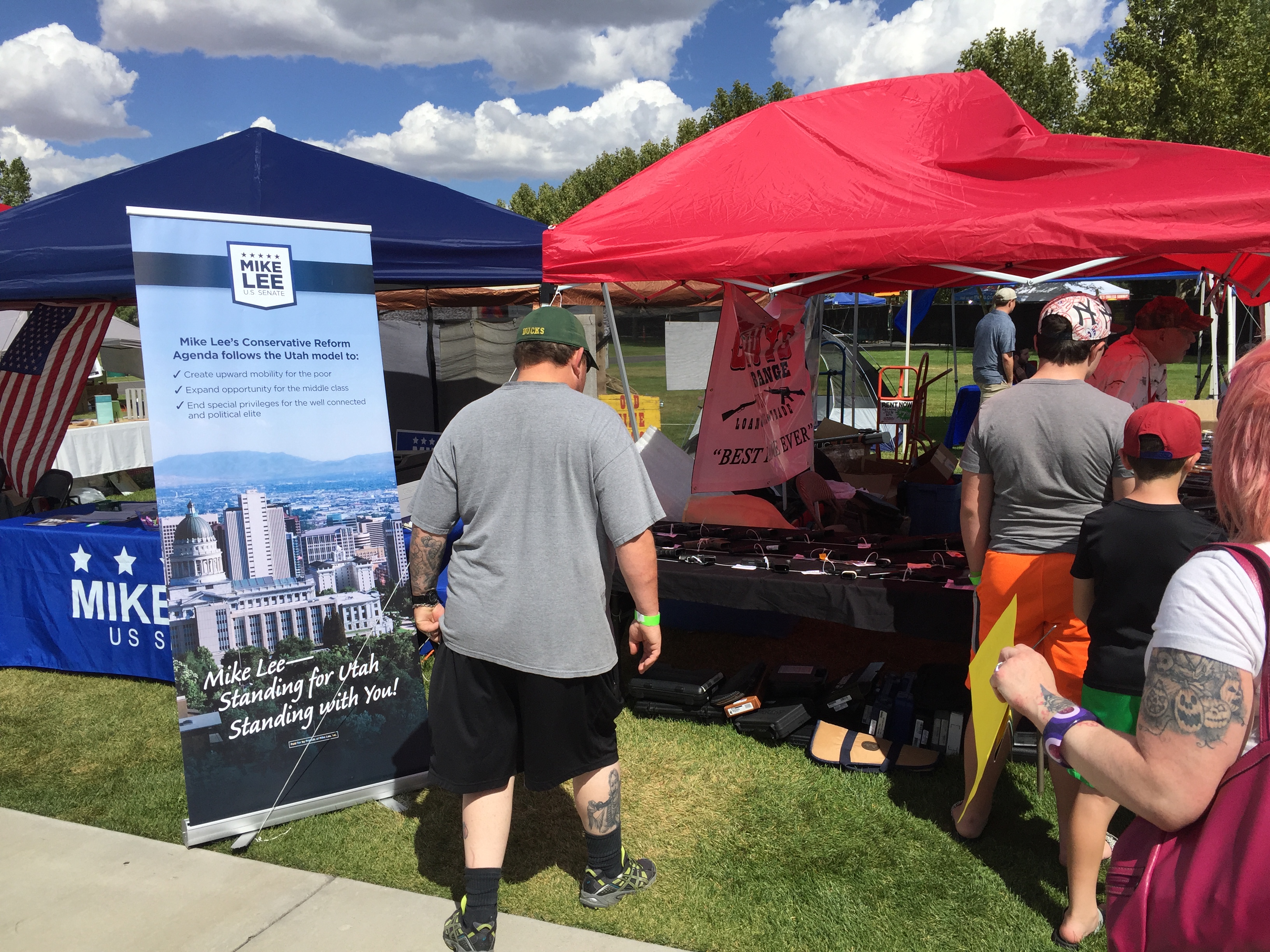
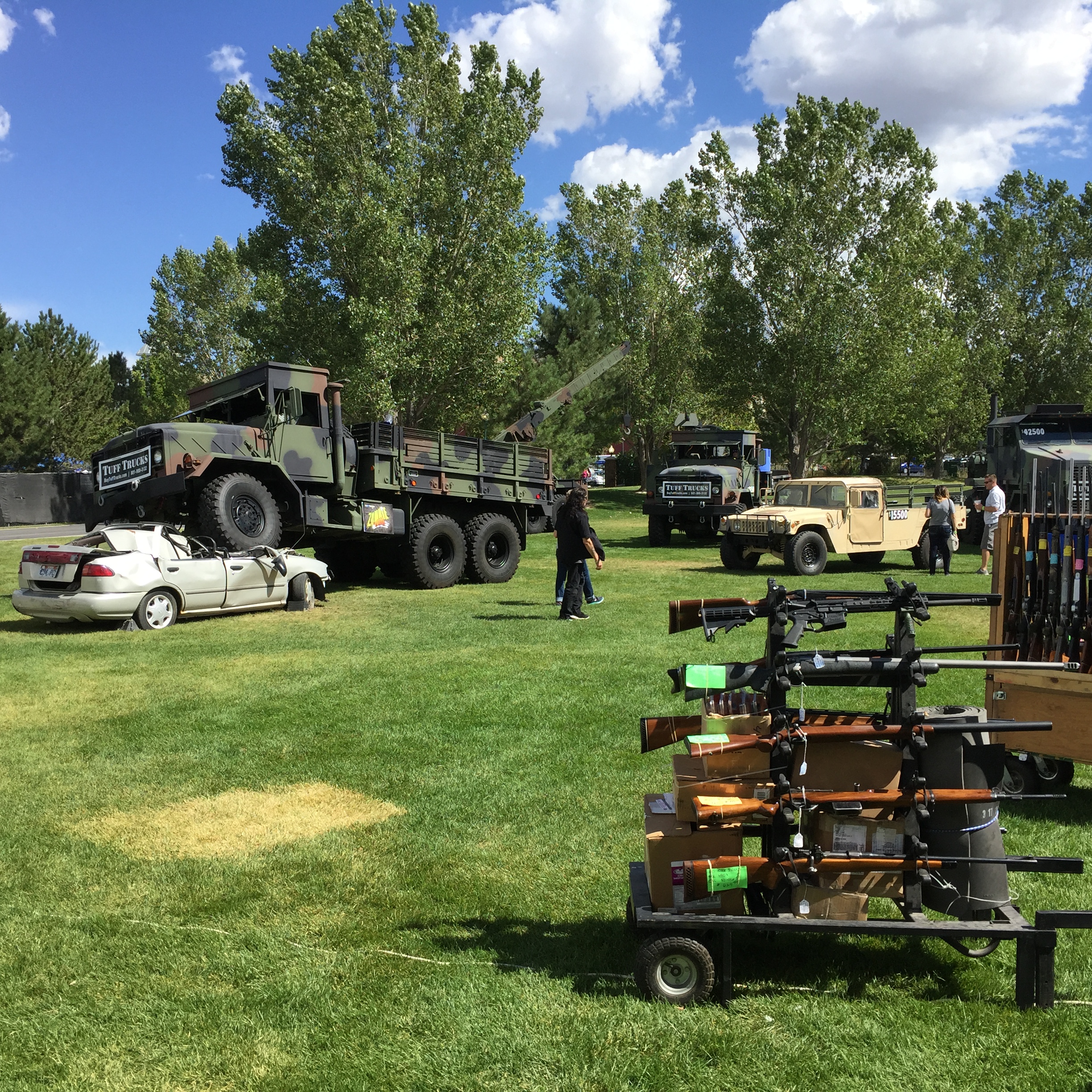
    I continued to the booths and nearly jumped in the air at the crack of an overweight man testing out a taser to my left. I wandered through booths selling handguns, fudge, weight-loss pills, caramel apples, devices for food preparation, sniper rifles, solar panels, Chinese-made knives that look like they are exclusively made for slaying carnivorous reptiles, backup batteries, The Republican Party, purses and belts covered in glittering rhinestones, Senator Mike Lee, portable emergency communication platforms, and dog clothing. Generally, it was as if Sharper Image’s designers became deeply paranoid, abandoned producing clever desktop entertainments with swinging balls and automated vacuums for more violent products, and then were forced to hawk their wares at a county fair.

    I walked past the Armitek tent, but I did not redeem my voucher for a free box of ammunition.  I got the impression that the free box of ammunition was for dealing with The Golden Horde, which I am a part of, therefore I felt it wasn’t right.

    There was one booth of particular interest that sold underground shelters impervious to nuclear weapons, chemical weapons, biological weapons, and the screams of others on the outside. The price list on the wall had prices running upwards of $65,000 for a shelter, not including a backup power system. I walked in and was immediately engrossed in conversation with a woman who is surely the high priestess of the prepper cult.

    “How many of these do you sell each year?”
    “We are constantly busy, we have a factory that stays busy and we are always upgrading or working on other shelters.”
    “Where are people building them?”
    “Everywhere. We work all over the US, Canada, even in the Bahamas. I have one up in the mountains here that you can come see.”
    “What are your customers primarily worried about?”
    “Electromagnetic pulse,” she answered emphatically.
    “The shelters aren’t cheap. Who are these people?”
    “Well you don’t have to be wealthy to afford one. You can do a lottery with your friends where 65 people put in $1000 each, and then you draw straws for the ten or fifteen people that are allowed in.” I found this so strange that I lost my train of thought as I contemplated it – my mind went immediately to my friends and family screaming outside the hatch.

    We proceeded to discuss nuclear weapons; shelter theory; alpha, beta, and gamma rays; nuclear fallout; how EMPs function; and nuclear winter. I learned that the optimum place for the Soviets to detonate an EMP is at roughly 400km about the surface of the earth and situated above the center of Kansas as this would affect a radius of roughly 2200km. I did not dare to inform her that the Soviet Union had broken up and that we had entered the 21st century. The woman was convincing, her answers were cogent and pragmatic. There was a creeping concern on my part after half an hour in the tent, a feeling that I was naive and naked. The logic is contagious when it is grounded in our contentious, violent geopolitical reality and appeals to one’s innate distrust of power structures and human decision making. I couldn’t argue. I left the tent with a price list and a five part installment entitled, “Nuclear Weapons: Who, What, When, Where, How?”
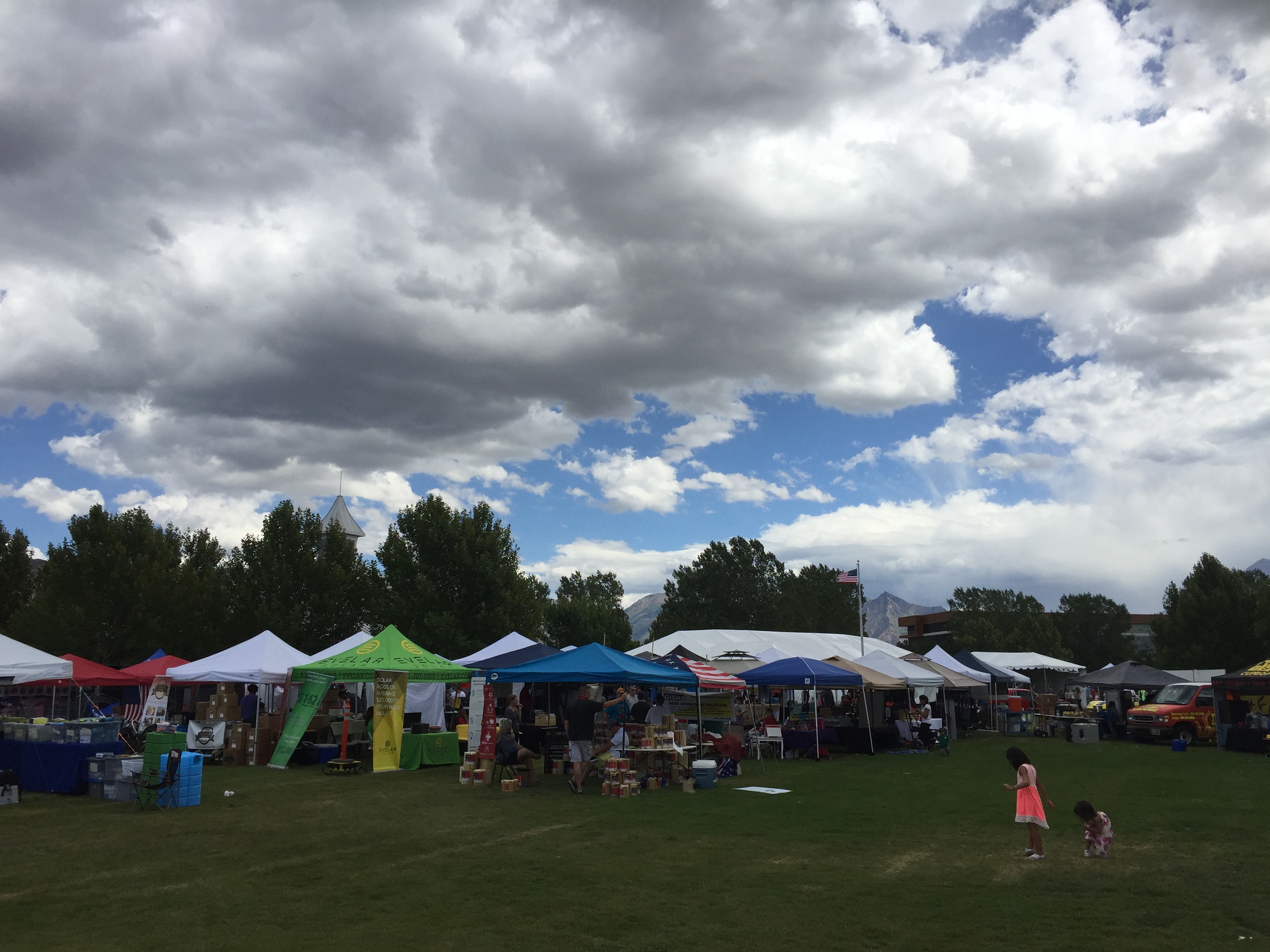
    Once outside of Utah Shelter Systems tent, I sat on the grass and looked around at the guns, the food dehydrators, the armored Corvette, and the fudge. I stepped out of the milieu of paranoia generated therein and contemplated the allure of prepping. I was suddenly reminded of that fact that I don’t want to preside over or repopulate a vast wasteland of death and decay.

    I reflect upon the convention on my ride home through the sprawl of Salt Lake City. Apocalyptic thinking intrigues and frustrates me as it is a denial of a continuous trajectory to history. It is waiting for a tumultuous break, when breaks are merely convenient narrative devices used to interpret history: The Depression, World War II, and The Renaissance. We currently are dealing with famines, seemingly interminable warfare, climactic weather events, the curtailing of freedoms, tens of millions of refugees, and suffering on a massive scale. Apocalyptic thinking is a convenient philosophical device for absolving ourselves of agency or any responsibility for what is occurring around us; it allows one to deny reality. I simply want to ask what if we let these things continue to gradually worsen and there is no break in history? No savior, no dramatic apocalypse? How do you prepare for that?
  • The Riddle of Riddles

    The Riddle of Riddles

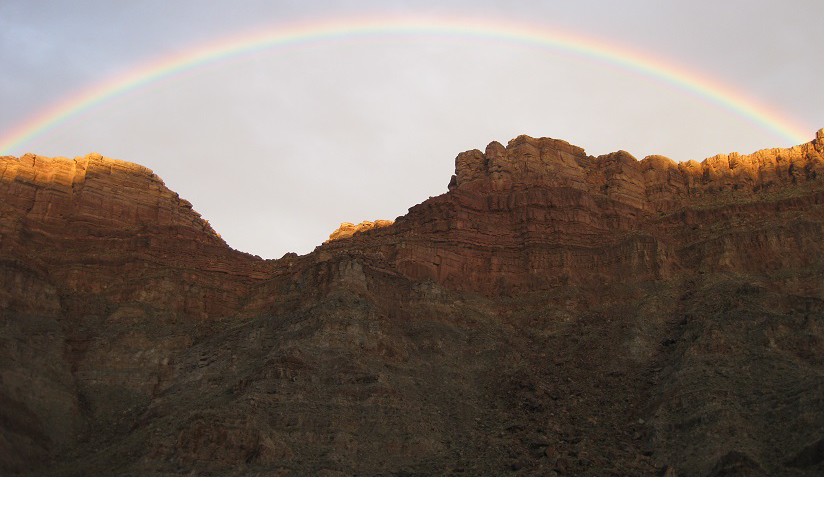
    Whether I was drawn here initially by sheer luck, skin walkers, or crystal vortices I am not sure. What is important is that I am still wandering the desert, floating down rivers, and hiding in the shade during the height of summer – this place has slowly carved a chasm in my soul. There is something about the timelessness and ruggedness of this place: in the rocks from a time when no life existed on earth, in the mysterious drawings left on cliff walls and boulders, in the juniper trees that burst forth from cracks in the rock, or when a thunderstorm turns the desert into a series of rivers and waterfalls.

    I have learned to read the canyon walls as books that tell stories of otherworldly landscapes in their leaves: shallow azure seas that teemed with life, towering crimson sand dunes, volcanic eruptions that leveled coniferous forests, a supercontinent that spanned half the globe, or one small waterhole that dinosaurs frequented. It is a monument to cycles spanning time frames that are incomprehensible to us. In the depths of the canyons at night I often imagine myself hurtling through space amidst the shimmering sea of galaxies as a mere speck on a speck. In those moments I feel completely free.

    I have come to feel a bond with others that have lived and died here over thousands of years. Those that have farmed these river bottoms, hunted game along these creeks, roamed these vast expanses, and boldly run these rivers. In untold numbers of canyons I have crouched on my hands and knees to marvel at the still visible finger prints of people in the mud of granaries, examine desiccated corncobs, and compare my own hands to the white outlines others left on the walls. I ceaselessly ponder the figures crowned with horns, wraith-like figures that fade into the rocks, the spirals winding into nothingness, and the big horn sheep dancing across the patina of desert varnish. I cannot explore or read enough. Each alcove and ledge offers the possibility of the unknown, and each additional visit a chance to put together another piece of the riddle.

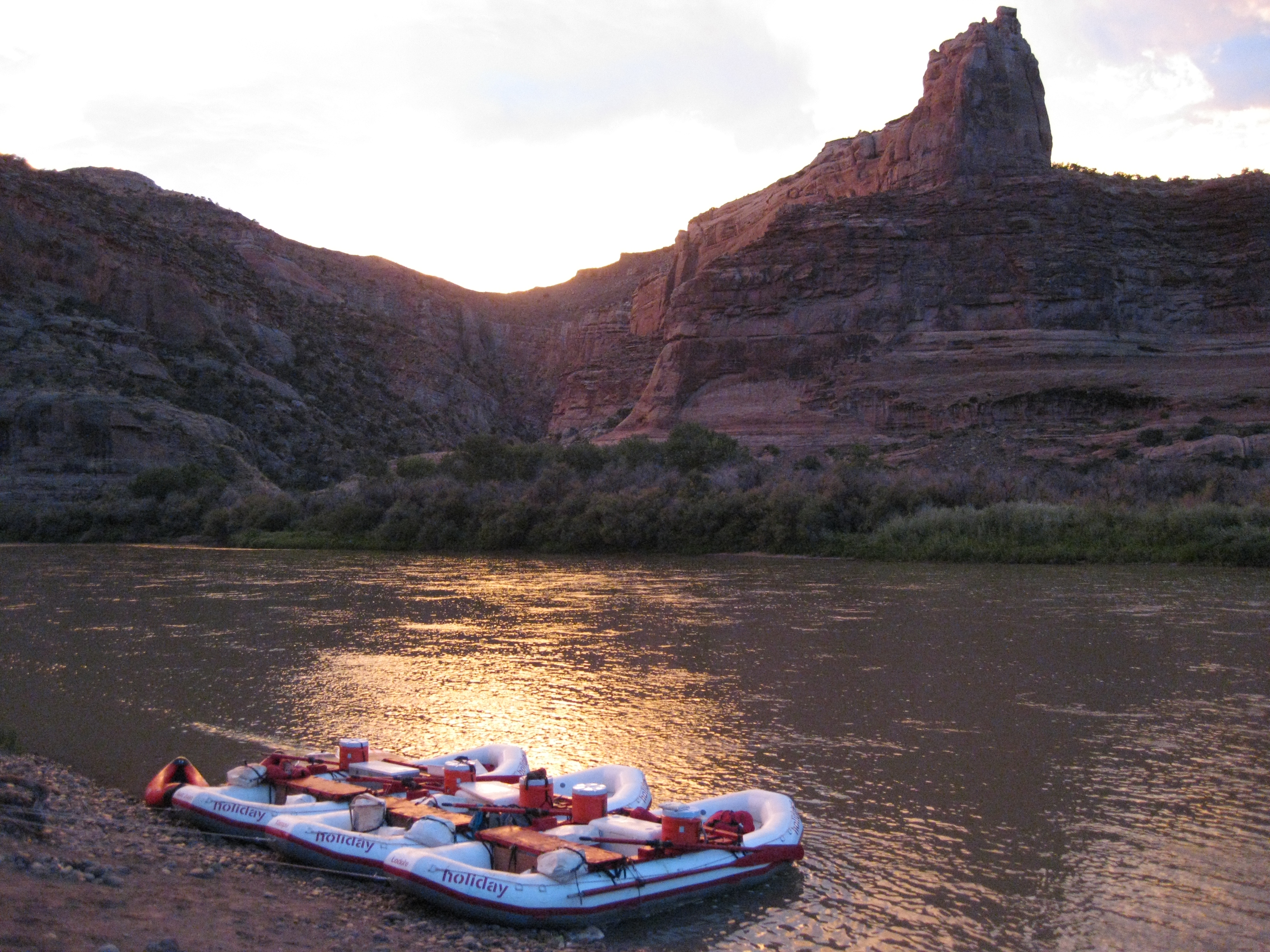
    Traveling here can be difficult, but the rewards of being swallowed by the canyons are immense. Others since time immemorial have sat along the shore of the river and looked out at the vultures soaring along the cliffs with wonder, gazed with awe at the bighorn sheep living out their lives on crumbling vertical ledges, and have tried to decipher the ceaseless murmurings of the river cutting through this land of stone. It will change you. I learned to see what is written in the canyons and sky because one man was so enraptured by these places that he spent his life  sharing them with others.

    Thanks Dee.

  • Forget the Finches

    Forget the Finches

    A rainforest can appear vacant and silent, but there are some people who say that there are more eyes than leaves, that you just have to keep your mind blank in order to see and hear the life.

    Madagascar is a small continent, massive and isolated from mainland Africa for over 70 million years. Geographic isolation and a variety of unique ecosystems ranging from desert to rainforest have led to the evolution of an incredible array of diversity, the likes of which exists nowhere else on earth. 90 percent of the reptiles and amphibians are endemic – a number which accounts for two thirds of all known chameleon species in the world. 80 percent of the 10,000 known plant species are endemic, as are roughly 50 percent of the birds. Oh and the lemurs have radiated into dozens of species filling a broad variety of ecological niches – some are the size of mice and others the size of children. The beauty of the adaptive radiation exhibited by the lemuroids and the rodential tenrecs make Darwin’s finches look like a flock of inbred sparrows.

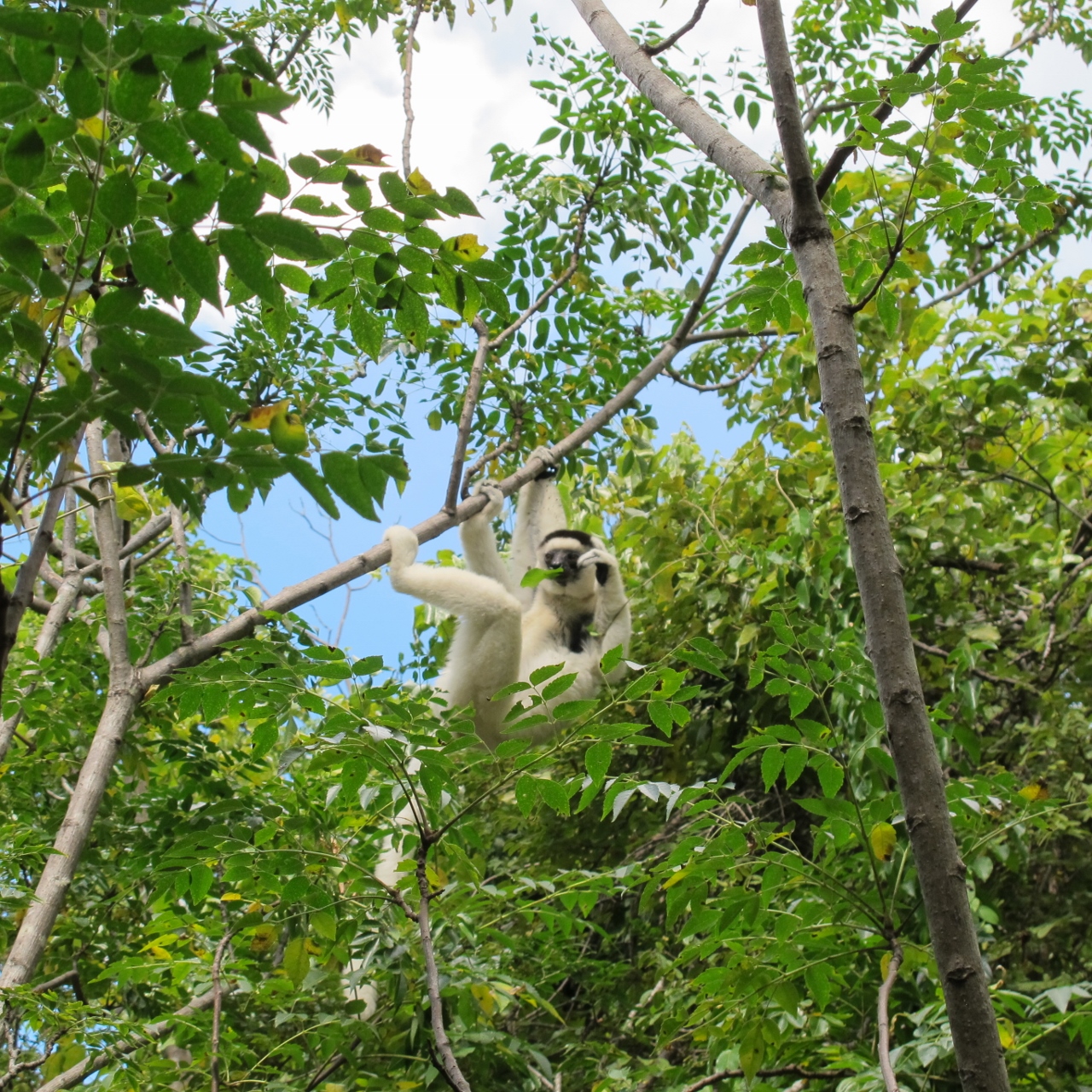
    Seeing an animal means recognizing a sound or animal form that fits a pattern latent in the mind. This process is innate, but takes cultivation. Maybe it is a set of golden eyes or a rustle in the canopy. Or the strange, beautiful humming noise a Milne-Edwards Sifaka makes just before launching sideways from one tree to another until it disappears through the jungle. Possibly the haunting horn-like wail of the Indri Indri cascading through the forest.

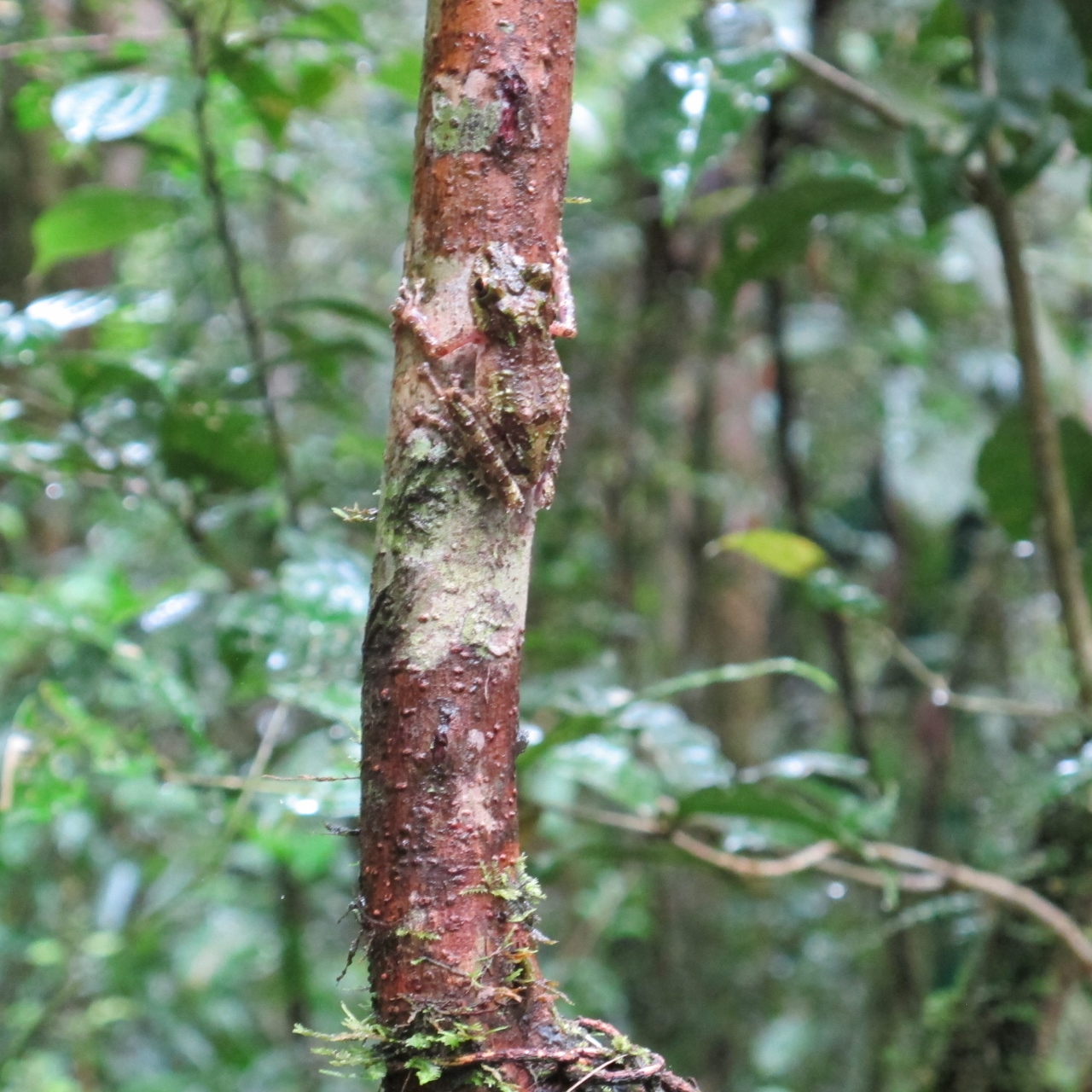
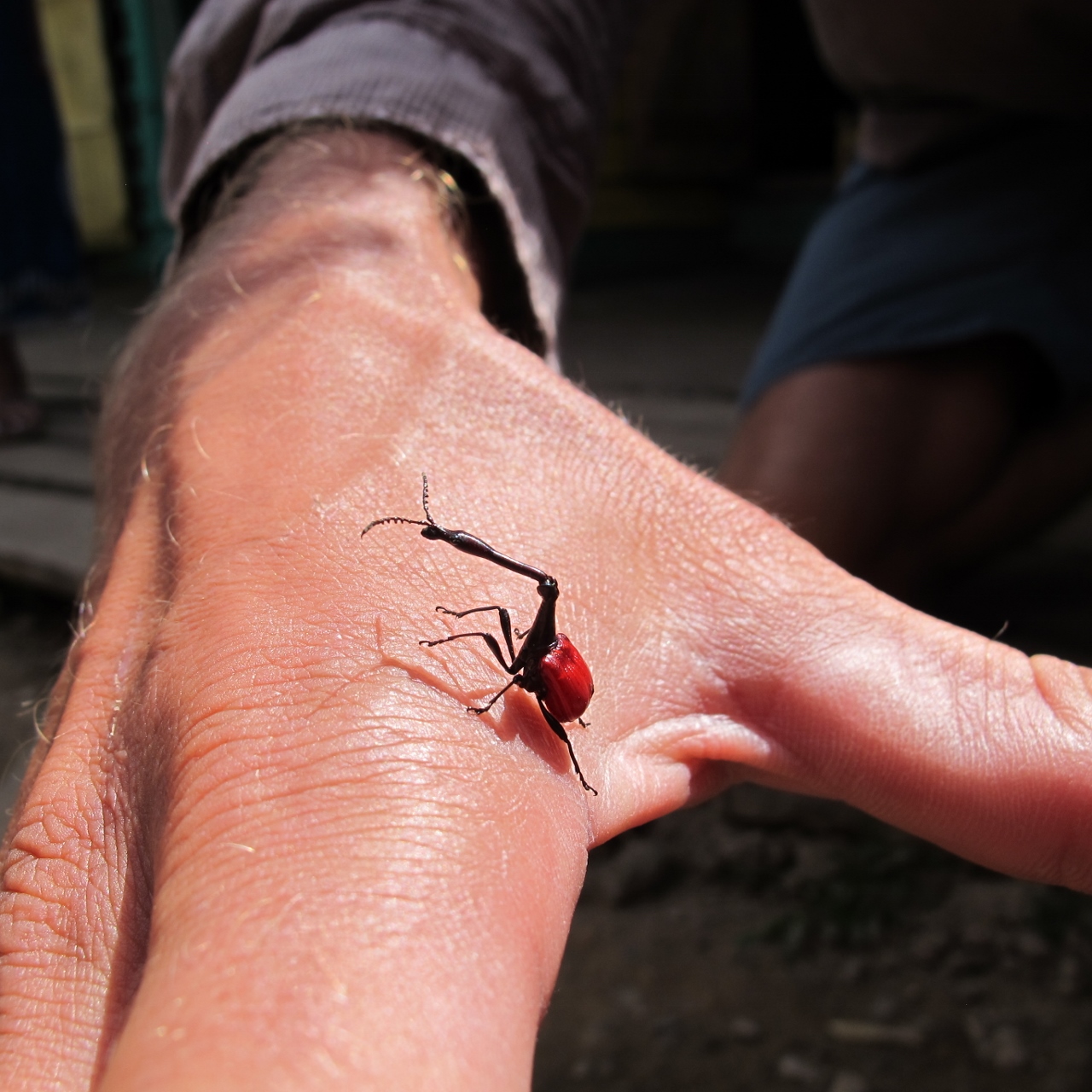
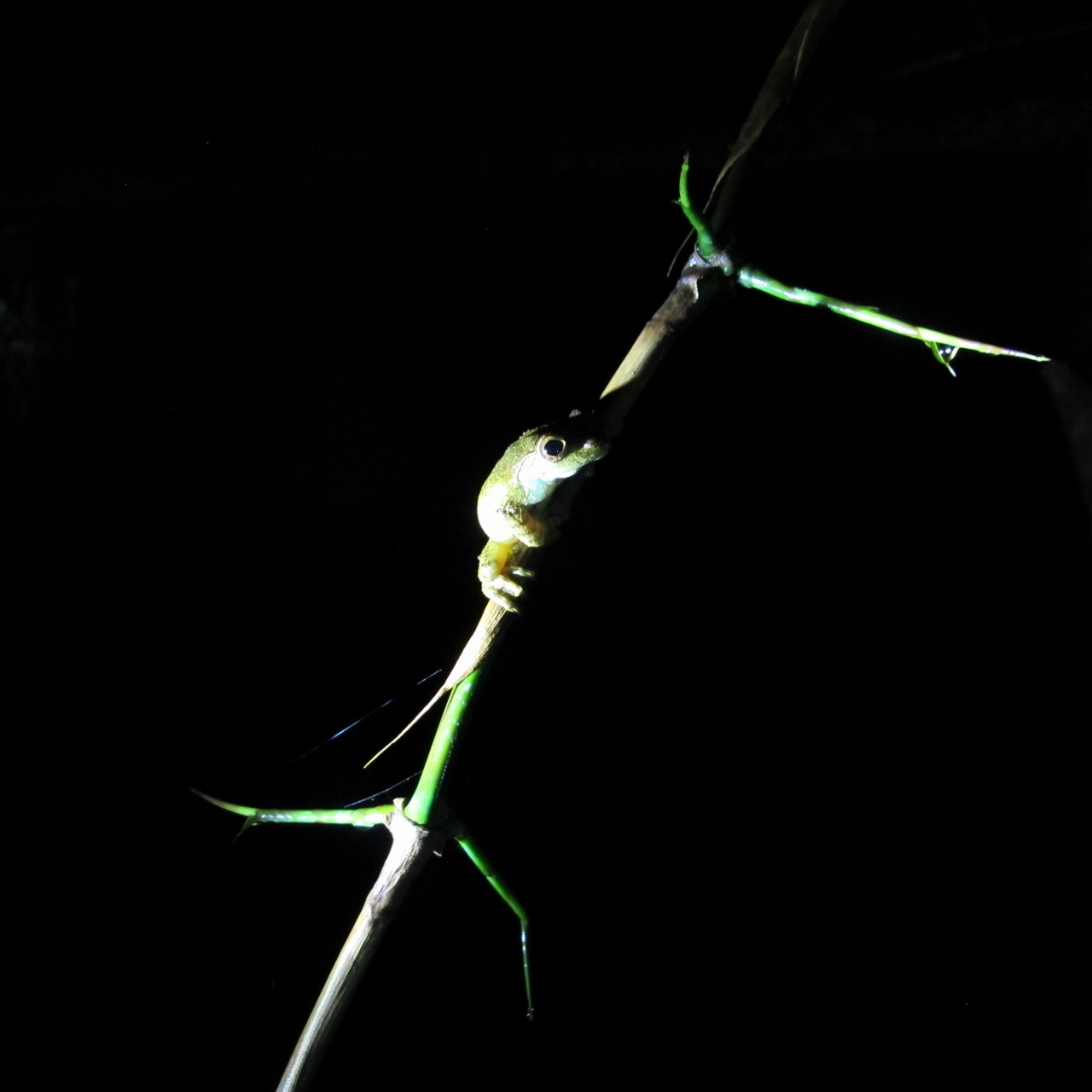
    Everything in the rainforest is alive. Leafs jump through the air on two hind legs. Sticks sprout legs and crawl. A group of flowers bursts into a kaleidoscope of butterflies. A gigantic centipede has leeches riding upon its back waving furiously in the air looking for a host. A small frog living inside the cup created by a broken stalk of bamboo. A Giraffe Beetle awkwardly poised on the end of a perforated leaf. Life growing upon life.

    Variegated packs of birds move through the forest amidst a medley of songs and chatter. Blue Cuoas jumping from branch to branch, swallowing tree frogs whole; Madagascar Paradise Flycatchers diving through the lushness trailing long white feathers; and Crested Drongos making regal sounding proclamations.

    Under the impenetrable blanket of the canopy the night resounds with a cacophony with barks, beeps, trills, and hums of frogs. Other nocturnal creatures are furtive and carefully climb through the trees with nary a sound, like the Eastern Wooly Lemur and the Brown Mouse Lemur. Their presence is only known by the reflection of their gilded eyes through the branches. The eyes of the Leaf Tailed Gecko offer no reflection; one must discern its aborescent disguise amidst myriad other dead leaves dangling from a branch.

    Chameleons crouched into leaf-like forms can be found stoically sitting on the ends of branches to better feel the approach of predators. Some are less than an inch in length, others more than a foot. Some are rose-colored, others are emerald, sky blue, grey, white, black. All of their eyes move independently, but with equal suspicion.

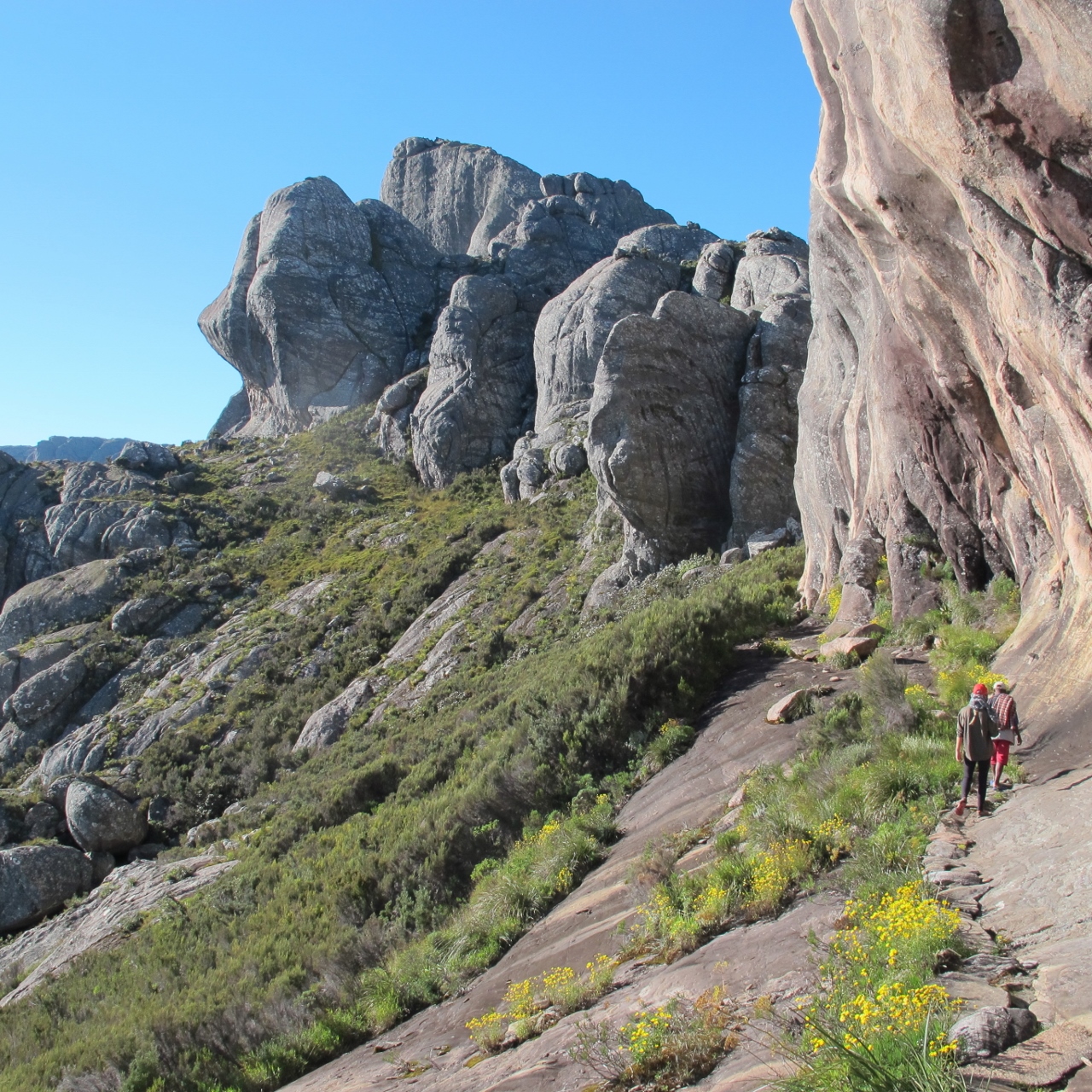
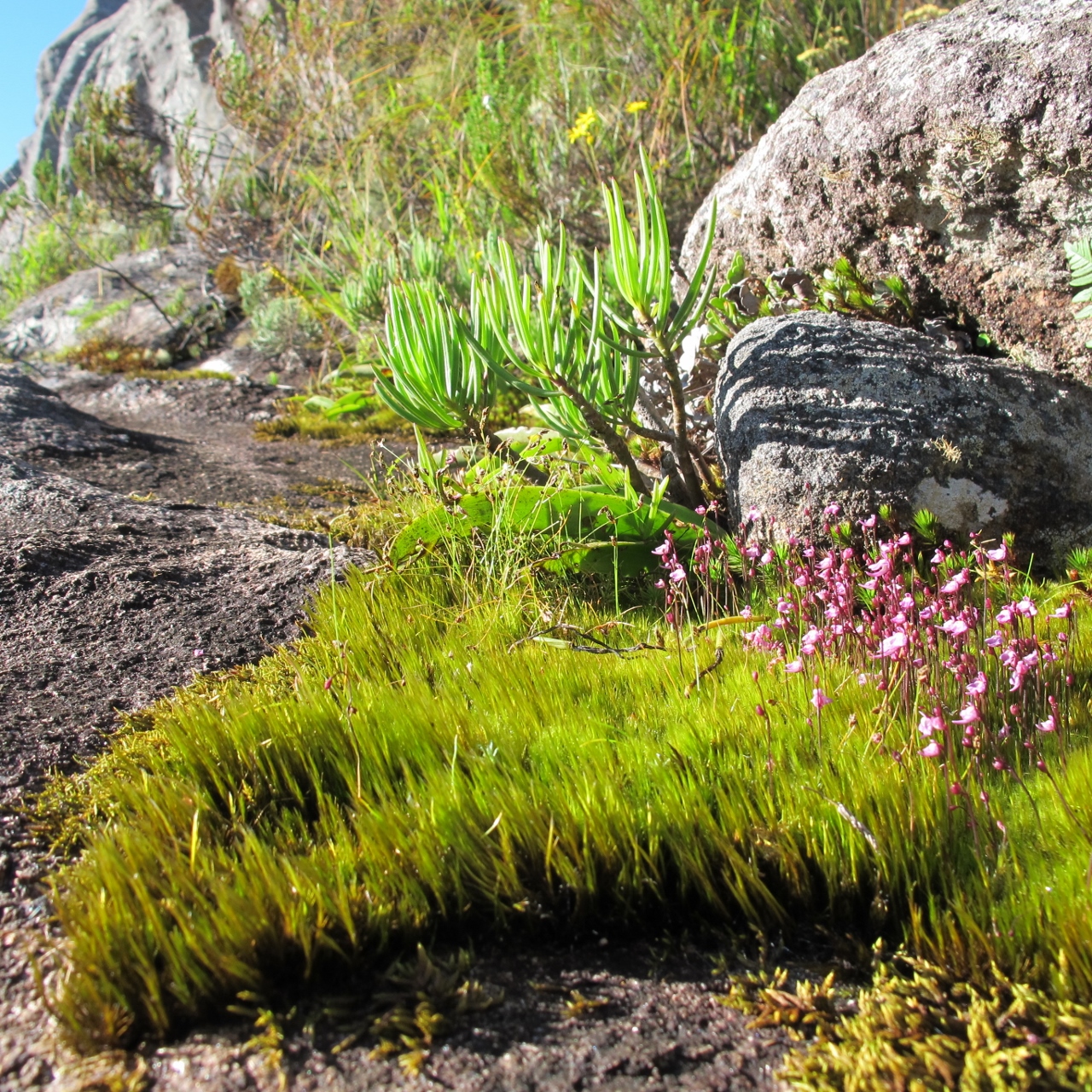
    In the center of the country, rugged, seemingly barren granite mountains burst forth from the plateau. A thick fog often envelopes them as the moisture laden air rolls in from the east. There is no towering old growth forest here – this high desert teems with life at a different scale. Out of the proliferate cracks in the granite massif pours forth spring water about which gather flowers, ferns, mosses, and bugs.

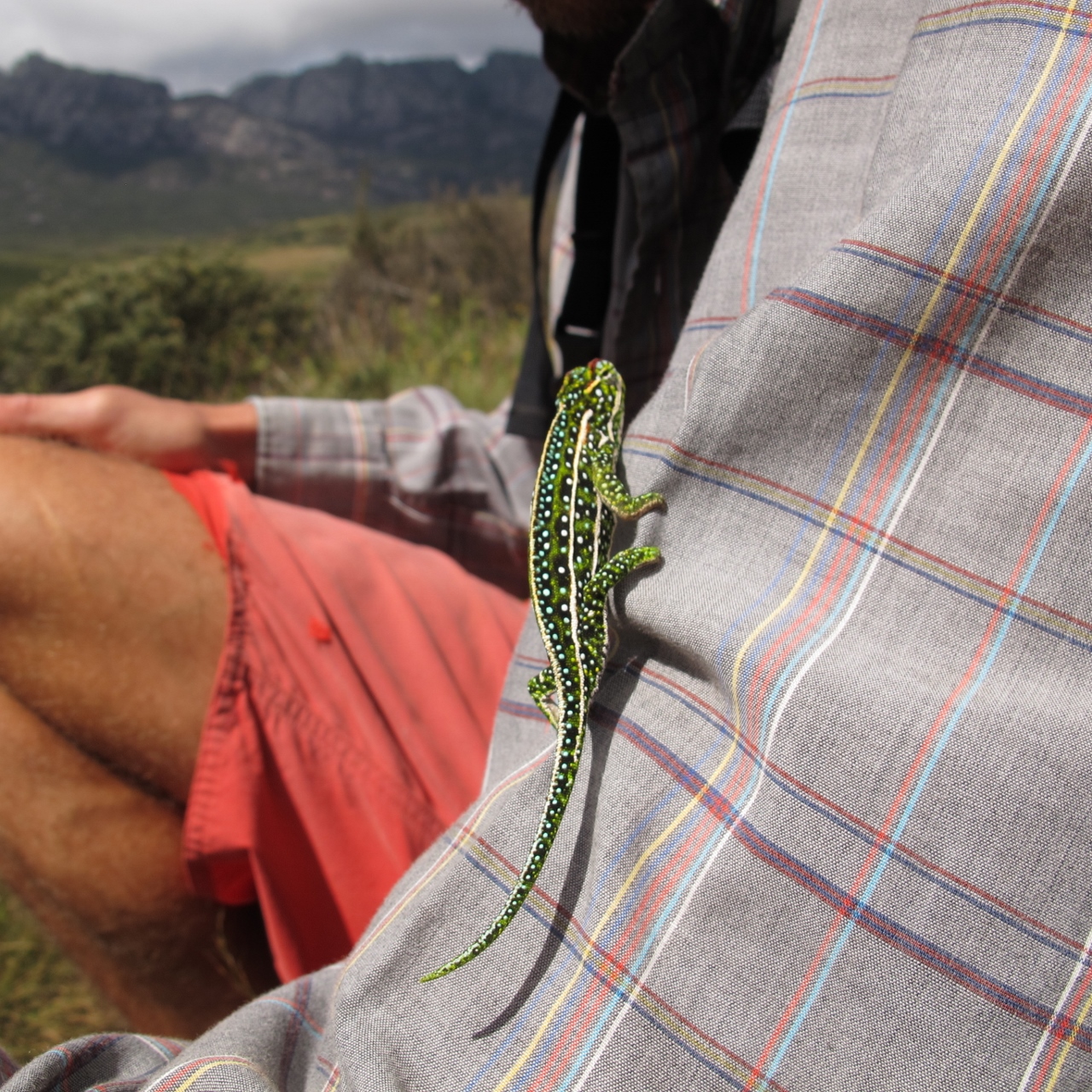
    These microcosms abound with tiny insects traversing a world of undulating sand particles and plants that give the terrain a surface area hundreds of times that visible from human scale. Shy, incongruously neon Carpet Chameleons wander the plains below. Rainbow Bush Grasshoppers clumsily jump about in a confidence likely rooted in their toxicity. The night is quiet as frigid air descends off the mountain and the lights of our galaxy begin to wink on and shimmer against the black unknown.

    The west has arid desert that is home to baobab trees and cactus. The vegetation takes hundreds of years to grow in the harsh dry environment. You could walk along in this landscape dying of thirst indefinitely, but there is a chance that you would come upon one of the canyons that slice through the landscape as verdant gashes of life. These perennial streams are lined with tropical vegetation that shakes with flying lemurs and echos with the calls of birds.

    In walking amidst such profusion and diversity of life I am reminded in a profound way that we are part of a vast organism. Wandering in the wilderness is a mental odyssey to our origins; with proper attention you can see the eternal cycle of death and rebirth that has stretched on since the dawn of life. The chameleon crawling up your shirt with its oven-mitt hands; the leech sucking away on your inner thigh; the malaria carrying mosquito buzzing around your head; the wild, edible berries along the trail; and the lemur urinating on you are striving to reveal a fundamental truth about existence.

  • Squirting Ink as a Form of Self Defense

    Squirting Ink as a Form of Self Defense

    While I saved and planned my departure for Mauritius I felt like I was in an extreme delayed gratification study, staring at a mango on a plate for months on end. Why not stay home? What is the sense in all of this wandering? Why is there so much joy for me in caroming off in an unknown direction? My drive to undertake adventures and explore the unknown has always been hard to explain.

    On the plane to Paris I wrote the following: “For me it seems that adventures and the mystery of life unfolding are the single greatest joys in life. There will always be sedentary jobs, possessions to accumulate, things to be learned through perseverance, and debts to amass and service. Death will always haunt us as an omnipresent specter though. The potential ways to live a life seem as limitless like the earth itself. Maybe I am just not meant to sit and work in – as Mark Salouka says – paint factories. I sleep better under the stars. I feel best when I rise with the sun. I often find myself want to run wild and break from the rational non-sense of society. Another justification seems to lie in my perception that society, science, religion, and technology fail to explain the mystery of mysteries. Exploring seems to be the realization of my philosophy regarding life in some way. It could be said to be pointless, self-serving, futile… but this logic can be turned against most of the activities that other people spend their lives doing whether it is working for a financial services company, designing multi-billion dollar Iphone applications that allow teenagers to send one another self-destructing photos of their genitals, of wealth accumulation, or of working in a paint factory.”

    But I am not alone. About 3500 years ago it is estimated that Pacific Islanders expanded their territory to islands that would require up to several weeks on the open sea to reach. What made them go into the blue unknown in search of islands that they didn’t even know existed? About 15,000 years ago the first waves of explorers are estimated to have crossed the Bering land bridge and roamed across two new continents. What made them go out into that white unknown of ice and snow?

    I recently read a book titled ‘The Song of the Dodo’ by David Quammen, a tome on the history of evolutionary biology and it was there I stumbled across the idea that maybe this part of me is not unique. It appears that many scientists believe that this nagging curiosity is a defining characteristic of homo sapiens. In conjunction with the development of our complex brains and limbs seems to have come about a set of traits that helped us expand out of Africa and to ultimately inhabit almost every tract of land on this planet in about 60,000 years. These traits drove us far and wide; we crossed open seas on boats, we walked across land bridges, we floated down rivers, we flew planes.

    Not every species shares this same propensity though. There are others, like the Mauritian Kestrel, that refuse to even cross small clearings in the forest. There must be evolutionary environments and genetic endowments that reinforce this trait and others that would make it a disadvantage. Explorers of any species have the ability to sow their seed far and wide. An adaptable generalist species would seemingly benefit from this trait and reinforce it as more progeny means a higher proportion of a particular set of genes in the pool.

    I began doing a bit of research and stumbled across an interesting National Geographic Article entitled ‘Restless Genes.’ The author, David Dobbs, expands upon this idea. Here is an excerpt about the gene DRD4-7R:

    “If an urge to explore rises in us innately, perhaps its foundation lies within our genome. In fact there is a mutation that pops up frequently in such discussions: a variant of a gene called DRD4, which helps control dopamine, a chemical brain messenger important in learning and reward. Researchers have repeatedly tied the variant, known as DRD4-7R and carried by roughly 20 percent of all humans, to curiosity and restlessness. Dozens of human studies have found that 7R makes people more likely to take risks; explore new places, ideas, foods, relationships, drugs, or sexual opportunities; and generally embrace movement, change, and adventure. Studies in animals simulating 7R’s actions suggest it increases their taste for both movement and novelty.”

    And this part strikes home for me, it seems to be a natural corollary to the idea of a restless gene:

    “Among Ariaal tribesmen in Africa, those who carry 7R tend to be stronger and better fed than their non-7R peers if they live in nomadic tribes, possibly reflecting better fitness for a nomadic life and perhaps higher status as well. However, 7R carriers tend to be less well nourished if they live as settled villagers. The variant’s value, then, like that of many genes and traits, may depend on the surroundings. A restless person may thrive in a changeable environment but wither in a stable one; likewise with any genes that help produce the restlessness.”

    I have always been looking for ways to justify this part of myself, but maybe it is just genetic , maybe it isn’t something that can be subjected to analysis. I think it may have been said best by Hank Williams:

    “I can settle down and be doin’ just fine
    Til I hear an old train rollin’ down the line
    Then I hurry straight home and pack
    And if I didn’t go, I believe I’d blow my stack
    I love you baby, but you gotta understand
    When the lord made me
    He made a ramblin’ man.

    Some folks might say that I’m no good
    That I wouldn’t settle down if I could
    But when that open road starts to callin’ me
    There’s somethin’ o’er the hill that I gotta see.”

    Rambling

    My papers were not quite on the up and up, so I shaved my face and cut my hair. I put on a button down shirt, khakis, and placed two pens in my front pocket to lend myself legitimacy under the weary eye of the immigration officials in Mauritius. At this point in my life I can confidently say that I understand bureaucracy pretty well, so I printed out – in triplicate – any and all documents, regardless of how superfluous, that had a seal, signature, or my name on them. On the way from Salt Lake City to Mauritius via Paris I wielded these papers like a weapon no less than three times. I think that their efficacy lies in their threat of monotony.

    I approached the immigration desk in Mauritius calmly and told the woman the following after our pleasantries, “The government just said to give me a tourist visa until they finish processing my visa application.” See what I did there? I presented the outcome that I wanted with no other options. I avoided the hours of waiting in queues that I had heard of others experiencing in similar situations.

    The only problem though was that she handed back my passport and then looked up from her papers and asked, “Which company is it that you normally work for here?”

    I stumbled here, “I don’t work…for…I have never been here before.”

    She stumbled, looked both directions, and then said, “Oh..okay. Well thank you, bye bye.”

    I had a 30 day business visa instead of a 90 day tourist visa. I cursed the two pens in my front pocket.

    Impressions

    I had spent so much time reading academic papers and books about Mauritius, examining numbers that attempted to quantify it, and analyses of its problems that I arrived with a brain filled with sociological mush without a pinch of reality. There are no measures of net beauty, blissful slumber opportunities per capita, food deliciousness index (FDI), gross hammock oscillations per hour, or gross domestic laughter. But I think that Mauritius would score high on all of these measures. There are also never any news stories announcing that the world is okay or exhorting us to do nothing as an overwhelming wave of peace has swept through the region. The remedy for this condition is to taste the mango.

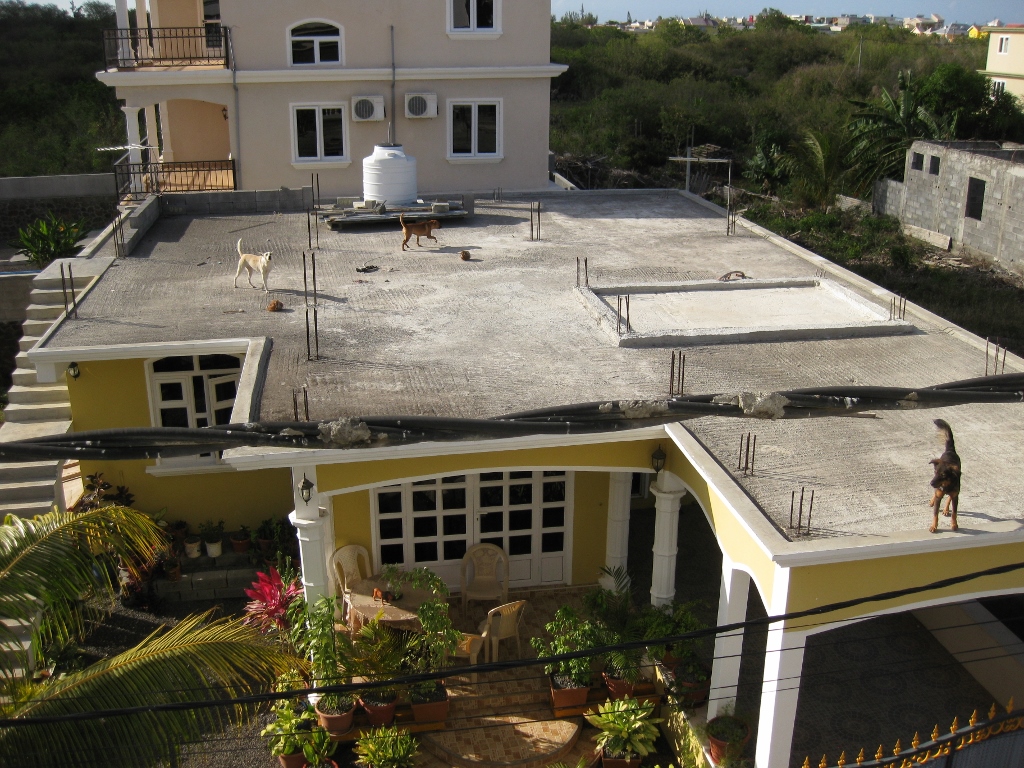
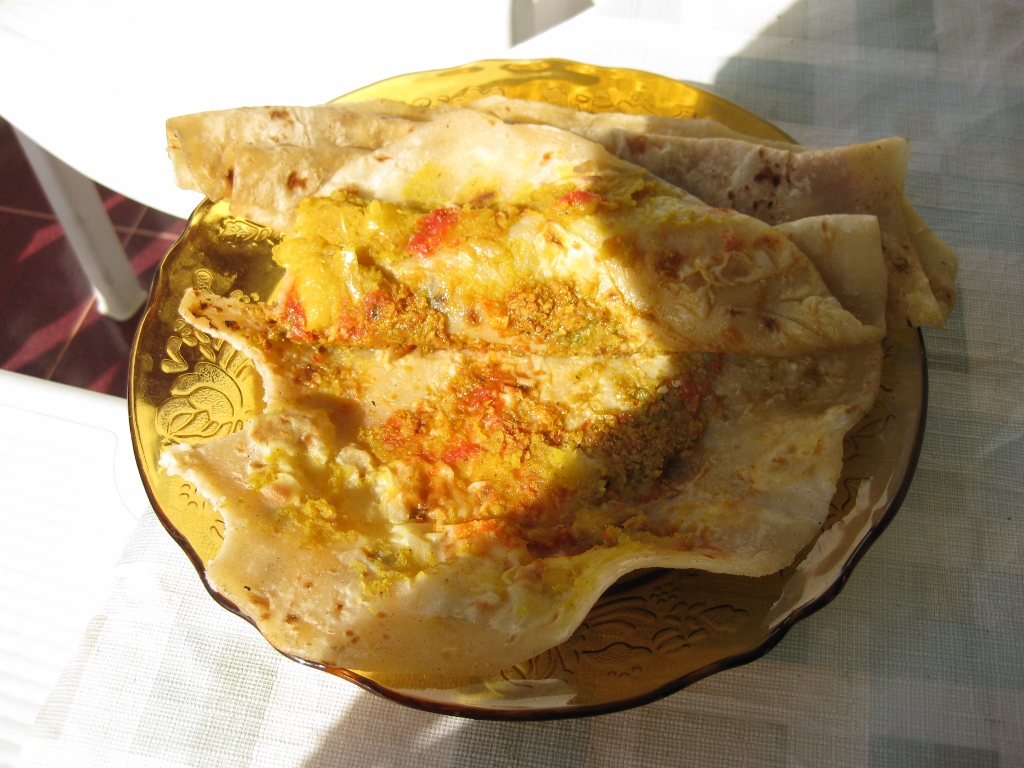
    The birds wake me each morning with the rising of the sun. Mangos are falling off of the trees on our street and my only competition is the birds. A pack of family dogs patrols the street outside our apartment. I pass my first days lazing around in and about the turquoise sea that merges with the sky if you screw your eyes up in just the right way. I still have not seen a jet ski in Mauritius and I could count on one hand the number of guns that I have seen – both things bode well for a country in my mind. The people are amazing here – friendly, content, and welcoming. Culturally, it is midway between Europe, Africa, India, and China. You hear it when people speak and in the food you eat. Roti – the national dish of sorts – is the best food in the world rupee for rupee. It consists of a fried flour wrap filled with assorted sauces, chilis, and curries that is readily available whenever necessary. Mauritius is a sauce country, this seems to exemplify its culture to me.

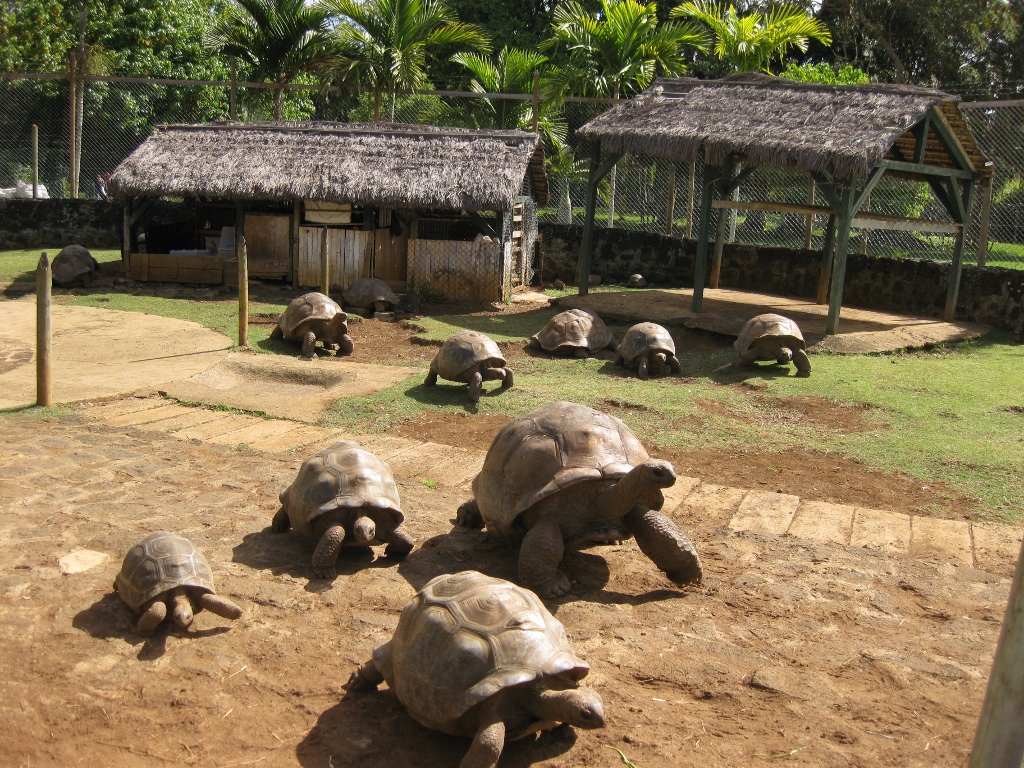
    We visited the Sir Seewoosagur Ramgoolam Botanical Garden and saw a dozen or so tortoises imported from all over region. Despite their ersatz environment, I was mesmerized by their beauty as they charged at us from the other side of the pen after their lunch was delivered. The largest was 150 years old. It was nearly as interested to watch the packs of French tourists touting IPads descend upon the pen.

    We bought a Suzuki motorcycle with 125cc’s of Merlot colored fossil fueled fury. I turned 30 and wanted to go explore the southern part of the island for my birthday. I turned out into the left lane and we started the epic 40 mile journey south on the main highway. Rain began to fall on us early on as midday clouds gathered around the pinnacles of the Moka Mountains. The mountains rise as forested islands in the midst of a boundless expanse of green sugarcane not unlike the blue sea that the islands of Mauritius rise up from. It felt like we were flying with the engine roaring; I wanted to howl and make obscene gestures at the elderly, until a pair of them passed us in their miniature car going twice our speed. We passed mansions on dirt roads in the middle of nowhere, slums, dilapidated colonial buildings, gleaming skyscrapers, textile mills, and a tuna cannery. I muscled the bike through the concrete tandoori oven called Port Louis by splitting through traffic and riding the shoulder. Lauren complemented me on my driving with a flattering comparison to a fictional symbol of masculinity and daring from Hollywood, but I self-effacingly deflected the remark by comparing myself to a cat on a skateboard acting on pure fight or flight responses. We stayed at a friend’s place in Flic-en-Flac, a coastal town along the west coast.

    The mountains around the island are all remnants of the giant caldera that formed the island and then collapsed. Black River Gorges National Park encompasses the majority of the mountains on the southern part of the island. It also happens to contain some of the last remaining old growth forest – less than 2% of it remains on the island – and consequently the majority of the remnant populations of many endemics like the Mauritius Kestrel, Mauritian Flying Fox, Pink Pigeon, and Echo Parakeet. The Mauritius Kestrel population was as low as four individuals in 1974 – the rarest bird on earth at the time. The numbers have rebounded, but remain modest. There is a limited amount that can be done when the primary problems that a species faces are habitat fragmentation and destruction.

    We packed up early and left to explore the park. As we drove into the park a mongoose slinked across the road a disappeared into the brush. The mongoose was intentionally released by the government to help control disease bearing rodents, despite the knowledge that it had previously wreaked havoc elsewhere. It was less than a decade before the government was striving to eradicate the mongoose after it decided that chickens and all manner of other animals were as good as or better than rats.

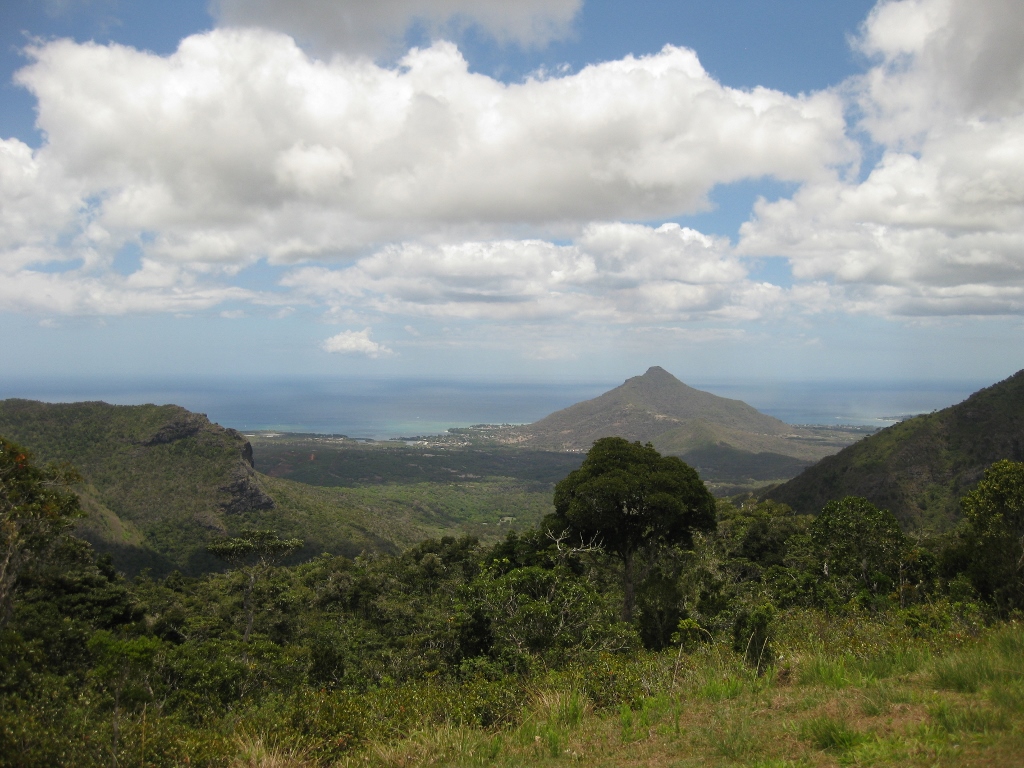
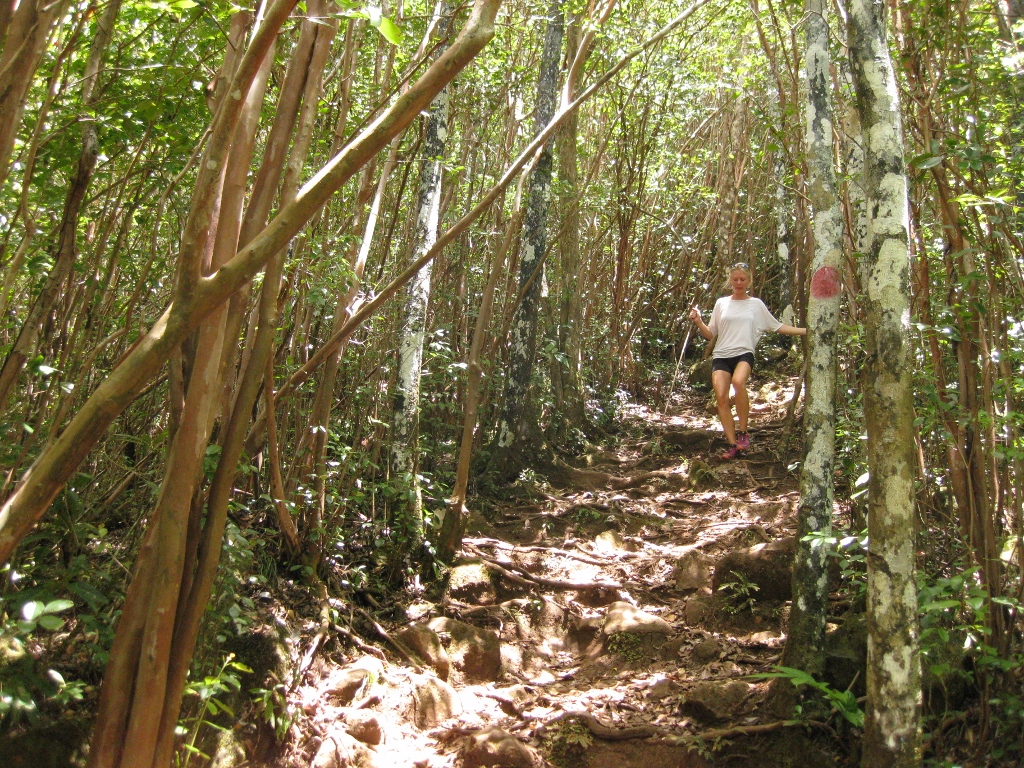
    We walked several well groomed but poorly marked trails that switchbacked up the mountainside. All of the forest through which we passed appeared to have been logged at some point. I didn’t notice it until a few hours had passed, but the forest seemed impoverished of insects; I saw a few butterflies and dragonflies, but not much else. We reached a lookout and looked down valley upon the sea. A few white Tropic Birds with their tendril tails rode currents below us. I paced around the overlook trying to take in everything and then suddenly I saw two bright green birds streak across below me. I tried to contain my giddiness as I hollered for Lauren to come see the Echo Parakeets. The parakeet had rebounded from as few as ten individuals to as many as 300 through the remarkable efforts of a few dedicated conservationists, in fact the same ones that saved the Kestrel. We looped back and hopped on the motorcycle. I hooted in my helmet as a Crab Eating Macaque loped across the road in front of us as we rode back to Flic-en-Flac.

    Octopus Project

    We awoke at 5:45 the following morning to return to Pereybere and then catch a ride to the east side of the island where we had a meeting to examine a UN GEF funded project building octopus burrows for fisherfolk out of reclaimed telephone poles. The director of the organization in charge of the program, Environmental Protection and Conservation Organization (EPCO), explained that the program arose after declining fish catches drove many fisherfolk to work for the government mining sand to feed the insatiable demand for concrete on this nearly treeless island. (The concept of sand mining is possibly a better example of a mind numbing and endless task than working in a paint factory.) The problems with sand mining eventually became apparent and the industry shifted to the crushing of mined rocks. This left many fishermen out of work with few directions to turn. The octopus burrow project was designed to both help rehabilitate the fishery and help sustain the fisherfolk. We wanted to see how it was working.

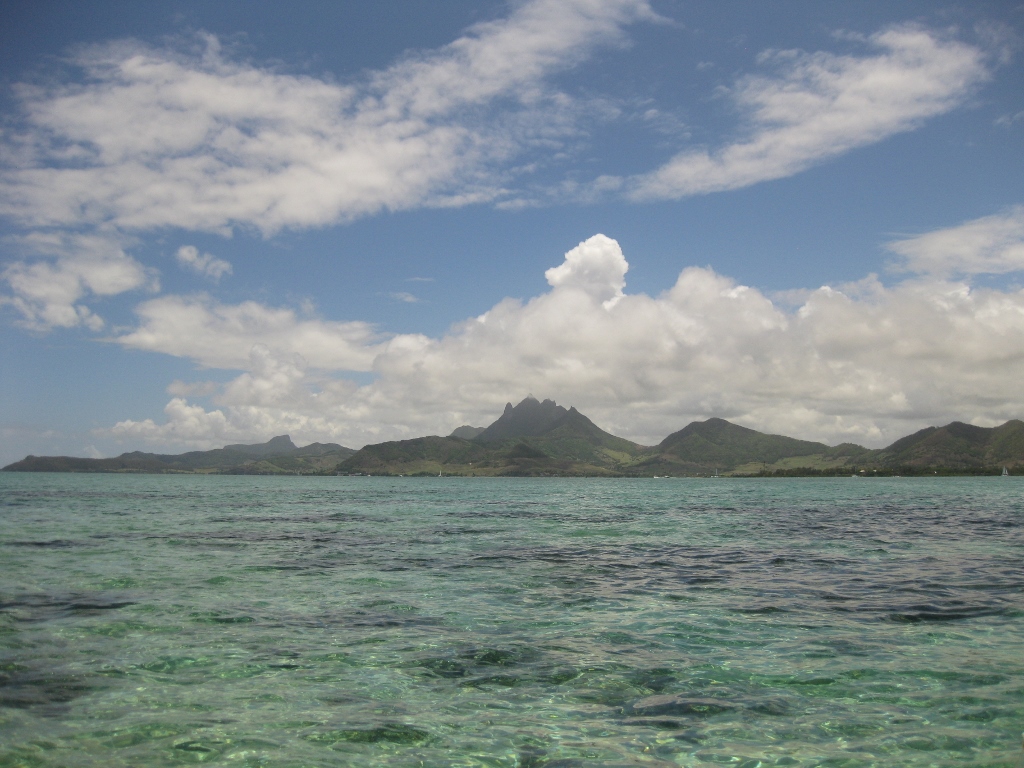
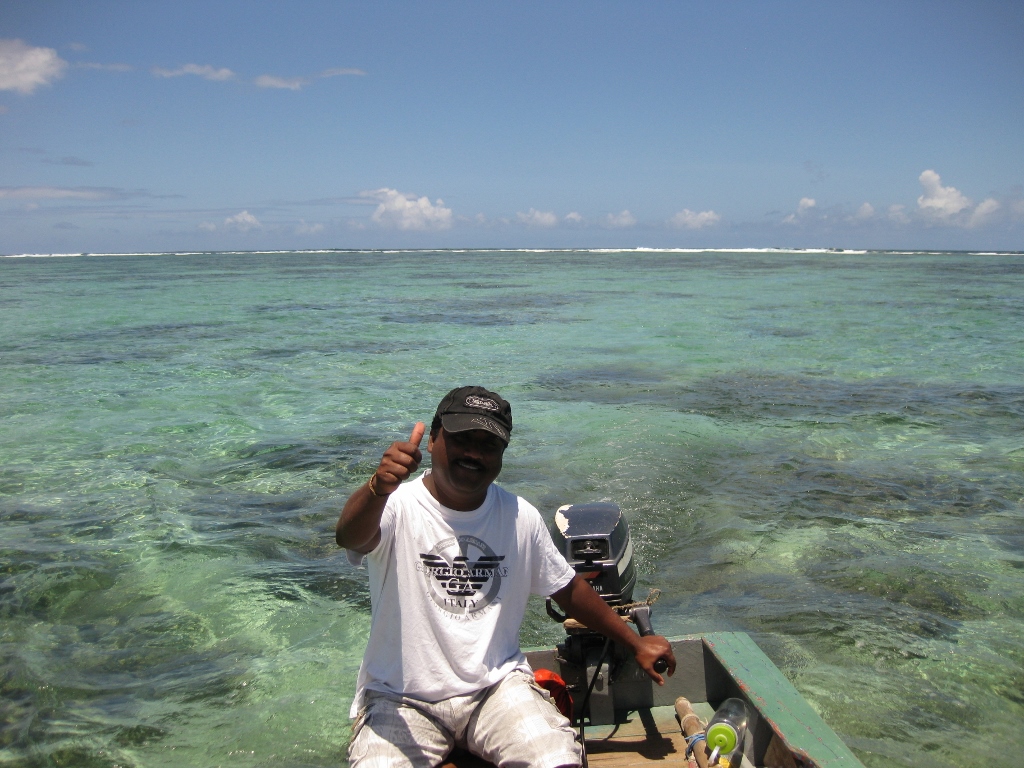
    We boarded a handmade wooden boat with a fisherman named Dost – a Creole word that means friend. We puttered out towards the surging whitewash of the reef break and looked back upon the Bambous Mountains above Grand Reviere Sud Este. The water was absolutely clear and less than two meters deep. I leaned over the gunwale, which listed the boat to one side, in order to peer down at the kaleidoscope of coral.

    I jumped into the other splendorous world that covers 70% of the earth’s surface and stuck my snorkel in my mouth. The fish seemed sentient and curious as we examined one another. They let me get close to admire their incredible forms and scintillating scales, and colors that surely exist nowhere else. The fish would disappear and reappear as they wove their way through corals with shapes that seem floral, cerebral, and dendritic. I found one large lobed brain that teemed with a miniature microcosm of colored fish. I gestured Lauren over and we relished the beauty of it in a complete absence of words.

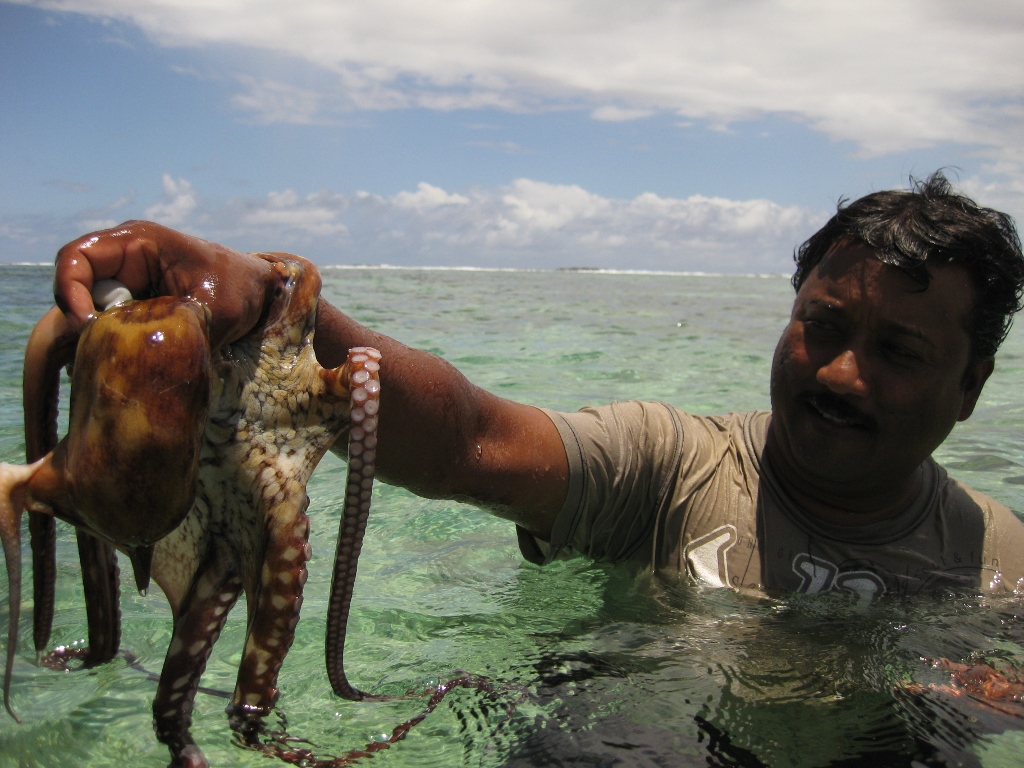
    Dost gestured us over and we followed him over to an octopus burrow. He began prodding into the burrow with a rod and drew an ink spraying ball of arms out that he grabbed as it tried to make its Houdini-esque escape. It grabbed onto his arm and he repeatedly had to tear it loose. I stared with rapt attention as it furiously changed colors and patterns. He let it swim for a moment and it descended to the bottom, felt around, shrunk its size, and changed to match its surroundings. It is not just an octopus. The symbol ‘octopus’ does not begin to convey the beauty and complexity of that animal. Nor does ‘coral reef’ begin to encompass what I saw.

    I identify with that octopus – how it changes to reflect its environment and how it strives to defend itself by spraying ink. I think that I might be doing that right now. We ate it later.

  • Earth is an Island

    Earth is an Island

    I am leaving to spend the winter in Mauritius, an island 45km in width by 65km in length that lies approximately 2000km east of continental Africa. The island serves as a rare case study in ecology as it is one of a few places to have remained uninhabited by humans until recent history. It has a robust record from visitors and inhabitants of the native flora, fauna, and changes that the island underwent over the past 400 years. Not only was the island devoid of humans – it was devoid of land mammals all together. A circumstance that came about due to the island’s young age and the challenge that relative isolation poses to the introduction of land mammals. This void provided the opportunity for a plethora of spectacular endemic reptile and bird species to evolve, which fostered fascinating accounts from the first human arrivals.

    Early accounts – the first in 1598 – described large flightless birds and included preposterous drawings of them that attracted significant attention in Europe. The bird came to be known as the Dodo, the etymology of which is thoroughly contested. The birds had lost the ability to fly as a result of an abundance of food on the ground and a lack of predators. Many were hunted and noted by sailors, a few explorers documented them over the years, and a couple of them were reputed to have made it to other continents aboard ships as curiosities. Portuguese and Dutch sailors continued to use it as a way point where they could fill their holds with upside down tortoises – which could live for years in this fashion and provide fresh meat during their voyage– and to hunt goats and pigs that they had introduced. Eventually, a day arrived when there were simply no more Dodos to be found. The last reliable account of a sighting occurred in 1662 – sixty years after humans arrived. Extinction was not a concept at the time, therefore many commentators and scientists obstinately argued that the bird was mythical and never had existed. It took over 150 years before there was scientific consensus that it had existed and its extinction had been induced by humans. The Dodo has taken its place in our collective consciousness due to its distinction as the first recorded case of human induced extinction.

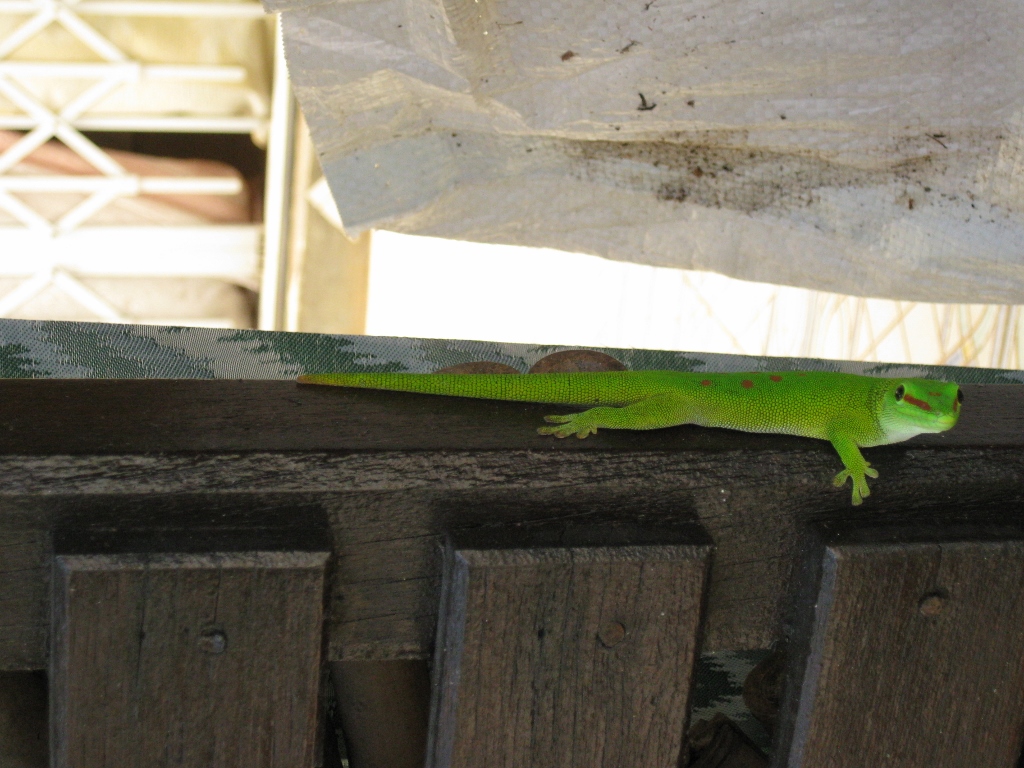
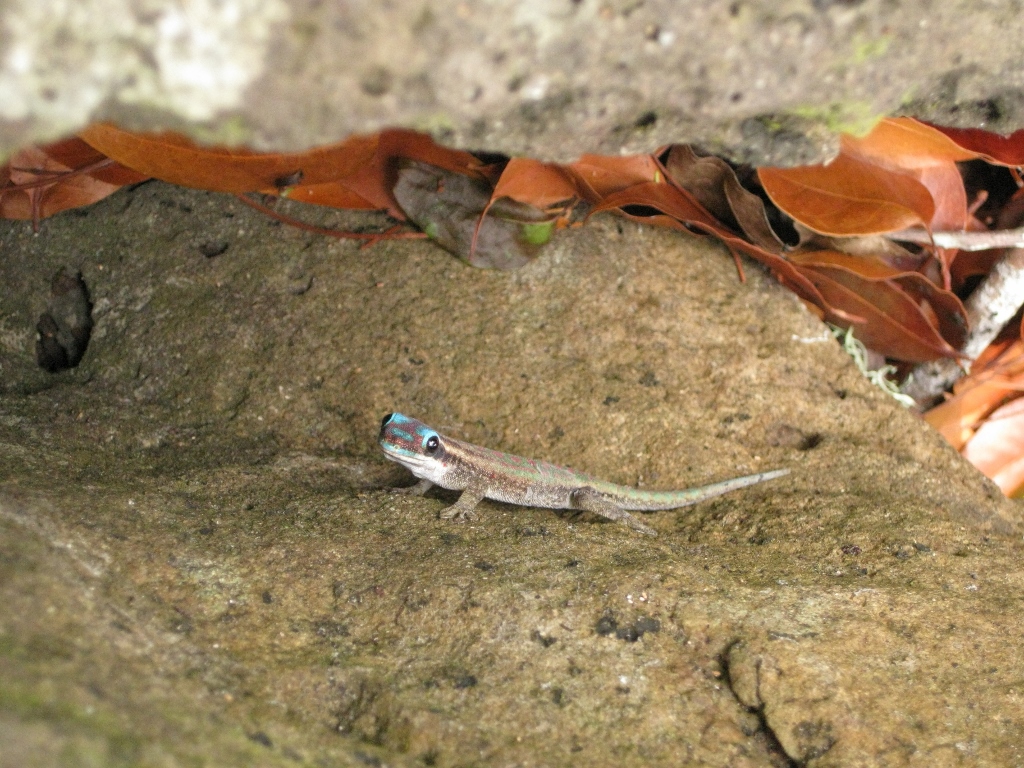
    The story of Mauritius does not end with the demise of the Dodo. Humans, as they have done in every corner of this planet, brought rats, mice, and pigs that predated reptile and bird eggs. Forests were cut to export hardwood, then for building materials, then for tea plantations, and then for sugar plantations. Goats grazed what had been razed. Africans were imported and sold as machinery to work the sugarcane. The population grew exponentially. A few people became wealthy. The patience and resilience of the giant tortoise proved insufficient, the hardwood heart of the forests fell, the exotic birds lost their homes and their cacophony grew faint, and fewer colorful geckos lit up the day. Dozens of species quickly and almost silently went extinct over the coming centuries. Some of the first environmental protection laws in the world sprung up, and then were ignored out of political and economic expediency.

    Today, 1.3 million people live on the main island, mostly near the coast. The seas are rising and the weather is changing. Annual mean temperature has gone up .74C relative to the 1961-1990 mean. Yearly rainfall averages are down 8% since the 1950s, with more of it coming during extreme events. Resources on the island are strapped. Only 25% of the island remains forested. 90% of the cultivated land is occupied with sugar cane which has to be exported to purchase the 80% of the island’s energy which comes in the form of imported fossil fuels.

    Mauritians face even greater challenges in the coming years due to climate change. The Mauritian government and the UN International Panel on Climate Change projects are dire. It is projected that the mean annual temperature will rise by 1-2C by 2060, 1.1-3.4C by 2090. Decreases in precipitation will continue, but the likelihood of tropical storms and destructive storm surges will increase. It is possible that 50% of the island’s beaches will disappear by 2050 due to changes in sea level and more forceful storm surges. Utilizable freshwater resources are anticipated to decrease by up to 13% by 2050. Fisheries are expected to be disrupted as sea surface temperature changes shift migration patterns and cause consequent changes in ecosystems. The third largest coral reef in the world protects the islands, but 80%-100% of live corals would perish with a 3.28C increase in temperatures, a realistic possibility by 2100.

    Mauritians have recognized the threat that climate change poses and have taken steps to mitigate and adapt to anticipated changes, despite recognizing that the nation is minimally responsible for the plight it faces. In 1991, the island created the multi-sector National Climate Change Committee. In 2010 the Ministry of Environment and Sustainable Development created a Climate Change division. Through these institutions the nation has created a National Climate Change Adaptation Policy Framework, a tool that guides the government in taking necessary steps to adapt and mitigate with the aims of creating resilience and sustainability. Why haven’t we done the same?

    On Islands

    Islands have always gripped the imagination of writers from Aldous Huxley to Kurt Vonnegut to William Golding. They provide a setting or system with limits that are tangible within the human mind where a chain of actions can unfold and conceivably reach its limits. Islands have allowed us to speculate on inequality, ecology, happiness, evolution, and societal structures.

    7.1 billion of us live on an island that is adrift in a vast sea of space.

    I remember in my economics courses learning about Robert Malthus, a scholar in the 19th century who postulated that, “The power of population is indefinitely greater than the power of the earth to produce subsistence for man.” He theorized that earth had a finite amount of land, but people had a seemingly infinite ability to procreate and generate needs. This would one day lead to a catastrophe if we walked blindly into the future. In many of my classes he was dug up just to be refuted as a prophet of non-sense through the invocation of the deus ex machina technology. Was he wrong?

    We have been on this island as a species for around 200,000 years and we have thoroughly transformed this planet during that time. In that time frame we have managed to populate every corner of this planet. Elizabeth Kolbert, in The Sixth Extinction, calculates that there are roughly 50 million square miles of land area that is not covered by ice. Of this area, roughly 27 million acres have been directly transformed through agriculture, pastoralism, logging, mining, and the building of civilization. Three-fifths of the remaining 23 million acres is forested, although not necessarily virgin. The other two-fifths are mountains, deserts, and tundra. Kolbert’s primary focus in the book is an examination of our present time, one that many have come to refer to as ‘the sixth extinction.’ There have been five other mass extinctions since the dawn of life on earth, precipitated by various reagents, but climate change has always been a significant factor in the collapse of species and ecosystems. She estimates that, “one-third of all reef building corals, a third of all freshwater mollusks, a third of sharks and rays, a quarter of all mammals, a fifth of all reptiles, and a sixth of all birds are headed toward oblivion.” The reasons are complex: a warming planet, ocean acidification, habitat destruction, the snowball effect of biodiversity loss, competition from introduced species, the globalization of microbes, and most important of all: the incredible speed at which all of this is occurring – the same problems that Mauritius faces, but on a grand scale.

    A parallel concept is that of the anthropocene, one that has been advocated by Nobel laureate Paul Crutzen to denote our ‘human-dominated geological epoch.’ It is clear that we will leave a mark in the geologic record through carbon deposits from our fossil fuel use, from nuclear fallout, from dramatically morphed landscapes, and through the mass extinction event that is currently unfolding. He cites the following reasons for consideration of the concept:
    Human activity has transformed between a third and a half of the land surface of the planet.
    Most of the world’s major rivers have been dammed or diverted.

    Fertilizer plants produce more nitrogen than is fixed naturally by all terrestrial ecosystems.
    Fisheries remove more than a third of the primary production of the oceans’ costal waters.
    Humans use more than half of the world’s readily accessible fresh water runoff.

    Back to Malthus: It looks like he was wrong in some ways, and right in others. Our island no less has finite limits than any other island does; it is just vaster in terms of resources and its ability to act as a pollution sink – we have billions of palm trees instead of the proverbial one. The areas, like Mauritius, where limits have been reached are simply able to acquire what they need from elsewhere, but at some point there aren’t any more elsewheres. Technology has enabled us to do more with the finite resources that are on this earth and we have perpetually pushing our limits. A major part of the growth and progress that humanity has made since the industrial revolution began a few hundred years ago was made possible through the exploitation of non-renewable fossil fuels, metals, and minerals. We have also over-exploited resources that are renewable like soil fertility, game, fisheries, and forests. The technology that has enabled this form of growth has been of a kind that merely enables us to use and move these resources at a faster rate to enrich the present at the expense of the future. There seem to be cries resounding from every corner of the globe and in every field that we are approaching or have passed ecological limits, and have entered uncharted territory.

    Creating a Better World

    I feel a deep connection to this earth, not as a mere philosophical standpoint, rather in a way that completely shapes my worldview. It is grounded in an awareness of reality, of the atmosphere entering and exiting my lungs, of the rainwater that fills my veins, and of the sun’s energy in my food. This is my home. My values and ethics are derived from this connection. I spend months each year sleeping outside, staring at the stars. I travel to other countries to satisfy my curiosity about other landscapes, people, and animals. I enjoy eating exotic and delicious foods. I like being able to explore this place and enjoy a rich life.

    Recognizing the reality and depth of our ecological crisis, and not just an abstract concept, has been a difficult road for me. I experienced years of cognitive dissonance, holding discordant views that lead to internal conflict. I saw myself as being enriched by something that was paradoxically destroying the very thing that I loved and was creating suffering.

    Many years ago I started the process of letting go of a future that I had been socialized to believe was our destiny. In this dream there were no constraints, humans were in control, technology had an infinite ability to address any problems that humanity faced, and the economy would grow perpetually – we forever would have more freedom and wealth. Inequality was not an issue as there was plenty. In this dream we are all atomized individuals, beholden to no one or anything – without limits. I had to pass through the five stages of the Kubler-Ross Model: denial, anger, bargaining, depression, acceptance. This dream is dead whether we like it or not.
    I wasn’t sure what to do with about it, how to respond. The acceptance part comes at little easier if we realize that this conflict is based in a broader myth: that we need an extractive, exploitative economy in order to grow ourselves out of scarcity – the primary driver of human suffering. According to this view, as long as there is poverty and hunger in this world, then to do anything but grow as quickly as possible to ameliorate these pestilences is immoral. It follows that we need to transform this world into a place fit for human habitation. And so we justify every new power plant built, every gallon of carcinogens dumped into a river, every missile launched, every ton of carbon spewed into the atmosphere, and every tank of pesticide sprayed from an airplane.
    What takes precedence: the environment or humanity? Mu! The two are one and the same.

    We are bound in a symbiotic relationship with everything else on this earth. It is not possible for us to do damage anywhere without damaging ourselves. A relationship requires that both parties give and in doing so both will be made better off. The earth has always been able to provide enough, but it has been misallocated, wasted, or been minimized by the – never scarce – capacity for dissatisfaction in humanity. Will we let the specter of scarcity and our tendency to exploit drive us towards a situation in which we face the true horrors of scarcity? What is the alternative?

    Until recently I had been looking towards myself – and each individual – to change our lives with the belief that in this fashion humanity could change overnight and we would avoid the looming catastrophe. This individual died along with the aforementioned dream – there never was an individual. We are facing a global crisis and we need to look towards collective, community-based solutions.

    Revolutions occur when new information appears that is irreconcilable with the dominant framework or zeitgeist. The dominant mover of civilization seems to be the same one that, up until this point in history, has been on a linear trajectory: the centralization of power. From groups, to bands, to villages, to cities, to city-states, to nations, to? Through warfare, trade, finance. Civilization in the past few hundred years under the reign of fossil fuels has advanced more towards this goal that at any other point in history through globalized markets, industrial scale production, and almost instantaneous communication. It has also enabled an unprecedented concentration of wealth and power. Power structures are most concerned with maintaining power and therefore action to deal with our ecological crisis simply cannot manifest from within a system that is its driver and primary beneficiary. It has been decades since we became aware of our current predicament and we have only deepened the crisis whilst our current system has scrambled to assimilate a reality with which it is wholly incompatible.

    There are many prescriptive actions to take, but ultimately civilization needs to evolve to fit the planet, rather than the other way around. We are currently wasting our days away in contemplation while standing at the start of the path towards a better future, unable to take the necessary steps. The challenge we face is so truly daunting as there is one thing that technology cannot help us to overcome and that is ourselves. We need to expand our collective social conscience, ignore that voice in our head that demands more, and in doing so we will create a better planet.

    “I believe in political solutions to political problems. But man’s primary problems aren’t political; they’re philosophical. Until humans can solve their philosophical problems, they’re condemned to solve their political problems over and over and over again. It’s a cruel repetitious bore.” – Tom Robbins