Category: writing

  • drugs, travel and meditation

    drugs, travel and meditation

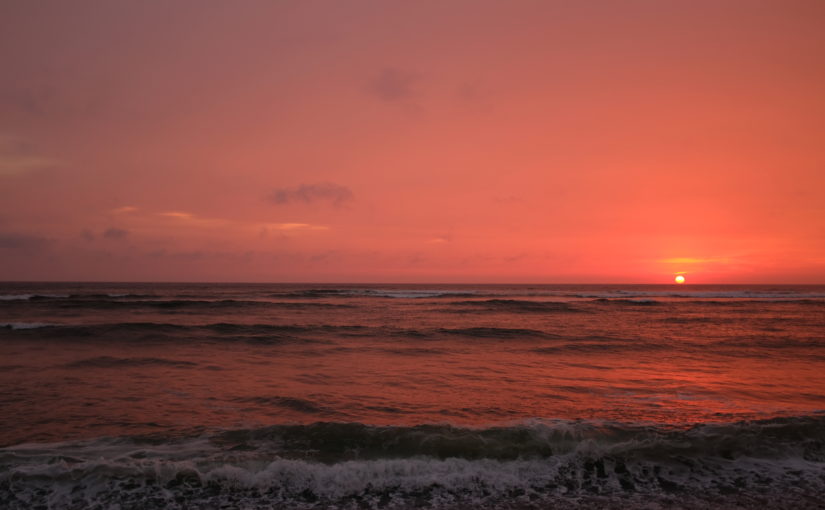
    I want to start by first explaining the weather in Lima, Peru, where I currently live, as it is a really good metaphor for my mind. Lima really only has two seasons – winter and summer. The only thing that really separates them is the sun, during half the year it is out and the other half it is absent, the city shrouded by a dull leaden blanket of clouds. During these months of grey, the days seem to blur together; it becomes difficult to demarcate the passage of time as everything seems to sit in stasis due to some undefinable malaise that permeates the air. It is difficult to get up in the morning as colors are dull, flavors are off, and the air carries a bone chilling cold.

    The pending arrival of summer is first noted by warmer air and a stronger sun despite the blanket of clouds. During the middle of the day, the sun will occasionally break through the grey for few hours at a time. Just before the it appears on these days, the clouds will often descend as a fog thick fog upon the city, but the sun eventually becomes so strong and relentless that the clouds have no choice but to flee, the homogenous mass breaks apart and forms individual clouds that stream like phantasms up from the ocean as they desperately seek refuge from the sun between the buildings of the coast. With the appearance of the sun the buildings and homes of the city are resplendent as their colorfully painted facades shine, trees fill out with green, flowers bloom and fill the air with scents that transfix, flocks of parrots chatter as they careen between buildings and the world regains some sense or meaning.

    I have struggled with depression for years, although it is more like Lima’s winter than the more tempestuous forms of depression that exist. Over the years I have found a few recourses that have become a vital part of my life as they help lift the clouds from my mind so that I can see the sun again; they erode the feeling of separation that I feel and help to remind me that I am an inseparable part of a universe that evades comprehension. I would like to talk about why and how I discovered them.

    I was taking summer classes fourteen years ago and I was sitting in my room one day, looking out my window and watching cars rush past. The glass looked surreal, like it had oil smeared on it. I had been reading a few moments before, but I got distracted by a the glass and a lecture that I had heard in physics about forms of matter and the professor had said that glass could actually be considered a liquid and a solid, as its structure was very slowly flowing at all times. My thoughts shifted to the books that I had been reading recently – On the Road by Jack Kerouac, One Flew Over the Cuckoo’s Nest by Ken Kesey and The Tibetan Book of the Dead. These books were like a mirror that lead me to examine myself. I saw myself running on a treadmill towards an always distant self-realization, happiness or success. They contained values that had been absent in my earlier development as a person, values of self-exploration, of adventure, of love and happiness existing absent material wealth or professional success. They planted the seed in my mind that maybe I didn’t have a genetic chemical imbalance, that maybe I wasn’t wrong in feeling empty and depressed leading my life as it was. One Flew Over the Cuckoo’s Nest led me to question the mainstream psychology and psychiatry system, in which I found myself a patient, as simply providing chemical versions of the horrific treatments that patients were subjected to in the middle of the 20th century. My chemical lobotomy consisted of Paxil, Wellbutrin, and Trazadone at the same time. One to numb me, one to put me to sleep, one to get me up.

    How did I end up receiving my diagnosis and chemical lobotomy? I had started taking these drugs because, when I was thirteen, I began struggling in school and causing problems with teachers and administrators.  I couldn’t stand the monotony, the conformity, the rote learning, the authority. It wasn’t just school though. In the town where I grew up, everything was ostensibly perfect, yet there was something sick about it. There is a line in a Walt Whitman poem that goes like this, “Smartly attired, countenance smiling, form upright, death under the breast-bones, hell under the skull-bones.” Everyone there seemed to be busily moving about and twitching like flies or small birds – never still or content. Their titles and outward appearances were in order, but I knew that they sniffed their socks, talked to their dogs, peed in their pools, drank themselves to sleep, and hoarded things that they didn’t need. There were suicides talked about in hushed tones, cheating swept under Oriental rugs, and swindling was just business. Money and material things always seemed to take precedence over love, or ethics, or community. Everyone seemed to create themselves as an individual through work and consumption. It all seemed to stem from the pernicious illusion of personal inadequacy or inferiority, not out of a desire for a better world. I felt so much pressure, to be, to act, to dress, to conform to all of it. No matter what, I didn’t fit in. Eventually, I saw it as this war against me, but fighting back only seemed to make the problem worse. My grades had taken a nosedive. I was withdrawn and refused to do my schoolwork. I couldn’t sleep, except for in class it seemed. I remember feeling incredibly self-conscious and nervous. The situation was framed as being dire, my path was irreparably veering off course. I got ground down gradually and my parents decided that I needed help, so we sought out a solution that our health insurance would cover to avoid the inevitable dismal future to which even a brief stumble would lead. I welcomed the pills in the end as I had a strong desire to just fit in, to be a normal kid.

    I began seeing a psychologist and a psychiatrist. They seemed to just be an extension of the very thing that I despised, that was driving me mad. They seemed disinterested and not overly concerned with truly trying to understand me; I could see right through their clever questioning and feigned compassion. It didn’t take long before I was diagnosed as having anxiety and depression problems, something that I could have told them the moment that I walked in the door. These issues were the result of “a brain chemistry imbalance.” That meant that my mind was a problem and that I needed to, indefinitely, ingests pills from pharmaceutical companies in order to function properly within the confines of society. That was the start of years trying to fix myself with increasing doses and varied cocktails. I went on and off the drugs several times in the ensuing years; they made me numb, they had side-effects, I stopped, I found myself in a dark place again, I began taking them again.

    After my second year in college I got an internship with a major healthcare corporation. I hoped to put to use the computer savvy I had learned in the past few years of studying engineering. I spent that summer in a cubicle, working eight to five, staring at a computer, rarely speaking to anyone, and observing my counterparts that had been doing the same thing for decades. We had Hawaiian Shirt Fridays. Cubes games were rehashed in the break room. I was regularly asked a question that inspired horror in me: What do you want to do with your life? I couldn’t answer with what was really in my heart:  anything other than this, including, but not limited to: shooting birds at the airport to keep them from being sucked into jet engines, picking trash out of compost with a spike on the end of a wooden pole to render it aesthetically pleasing to homeowners ( something which I later did), become a streetwise junkie that prognosticates for pedestrians, or exist on the margins of society performing poorly paid work so that I could keep my mind free to later do the monetarily worthless things to which I gave meaning.  I drove an hour each way and went mad in the river of glass, concrete and steel. I knew in the back of my mind that there had to be more to life than this, but this was the life seemed to be my destiny, what I had been groomed for and this internship was a trial that I had to endure.

    I went to see the beady eyed, creepy psychiatrist that I had seen years before – I always felt like he was psychically molesting me – and I practically begged him for medication to make reality not so real. He, nor I for that matter, appeared to have any understanding of what it means to be human as we continually added drugs to my cocktail and upped doses in an attempt to short-circuit my mind. I just felt numb and a deep sense of loss for the part of me that was being smothered, but I didn’t know what that part truly was. Numb to the world, I really stopped caring at work, the infinite monkeys typing clicking away on type writers, well I figured that I could just let them do the work. Instead of working, I often occupied a toilet stall playing chess on a handheld organizer and reading books.

    The complex mix of feelings at the time created a sense of reckless abandonment within me. I started lashing out against the hyperrational mechanism that I saw as opposed to myself. It was futile, but cathartic in some way. I hadn’t figured out yet how to channel any of this into a creative force of any kind. My mind became unhinged, but it took a while before I found my nadir. I was back at school and the chemicals showed their true inefficacy. The problem, whatever it was, began manifesting itself in other ways. It was like squeezing a balloon – one of those long ones that are used to make circus animals – the air just moves elsewhere. I cut the cable to all of the apartments in my complex the morning of Superbowl Sunday. Not just one wire, I sadistically disabled the boxes beyond repair. I got into fight at bars and parties, I took a shit inside the new phonebook sitting outside my rude neighbor’s door, I pushed all of the buttons in elevators when exiting, regardless of whether there were other people inside. I ripped the head off of a robotic Santa and ran off with it into the night. I robbed manger scenes during Christmas break, first only the Baby Jesuses, but then indiscriminately. (One funny thing that we found out during this period was that the owners of the manger scenes keep clandestine stockpiles of baby Jesus for just this purpose. We figured it out because some days they would have the infant replaced before any stores were open the next day.) I don’t think anyone could have said that I was ‘progressing.’
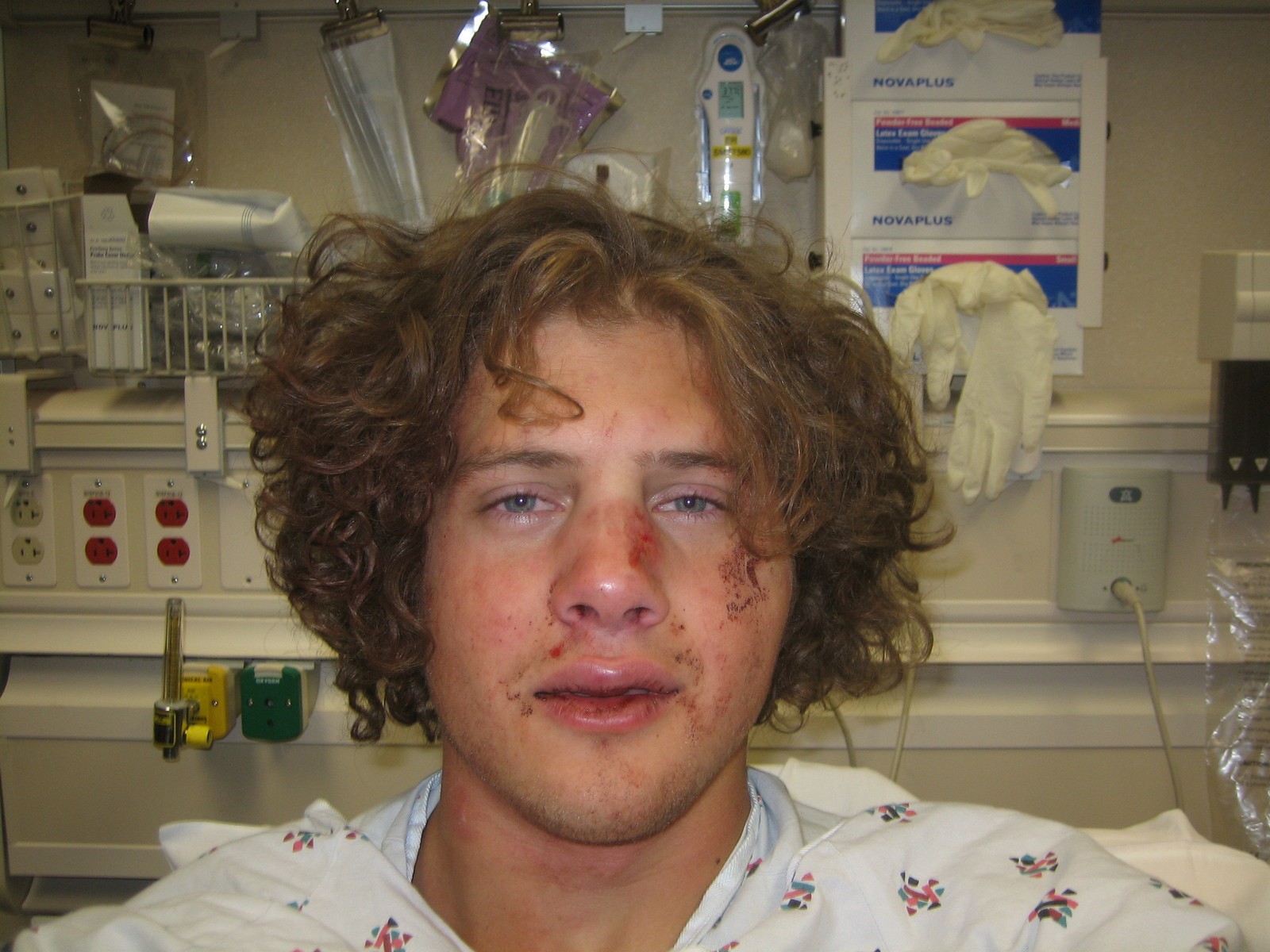
    After starting a brawl in 2006.

    Returning to me sitting in my room staring at the window and out the window at the same time – in this moment of reflection I realized that I was just going through the motions, advancing towards a place that I didn’t even want arrive at, against every instinct that I had. I seemed to be repressing, or not even exploring, my own desires and trying to develop my own view of reality. Instead I was substituting the values and meaning of others and therefore was inevitably disappointed with the outcome. I felt exhausted physically, tired of constantly feeling the need to simulate what was expected of me. I felt like I didn’t even exist, like I was a fragmented image constructed out of magazine clippings. This wasn’t living – this was just another form of suicide.  In the poem Howl there is a line that goes “What sphinx of cement and aluminum bashed open their skulls and ate up their brains and imagination?” That was why I had needed the pills, but they were also a form of suicide.
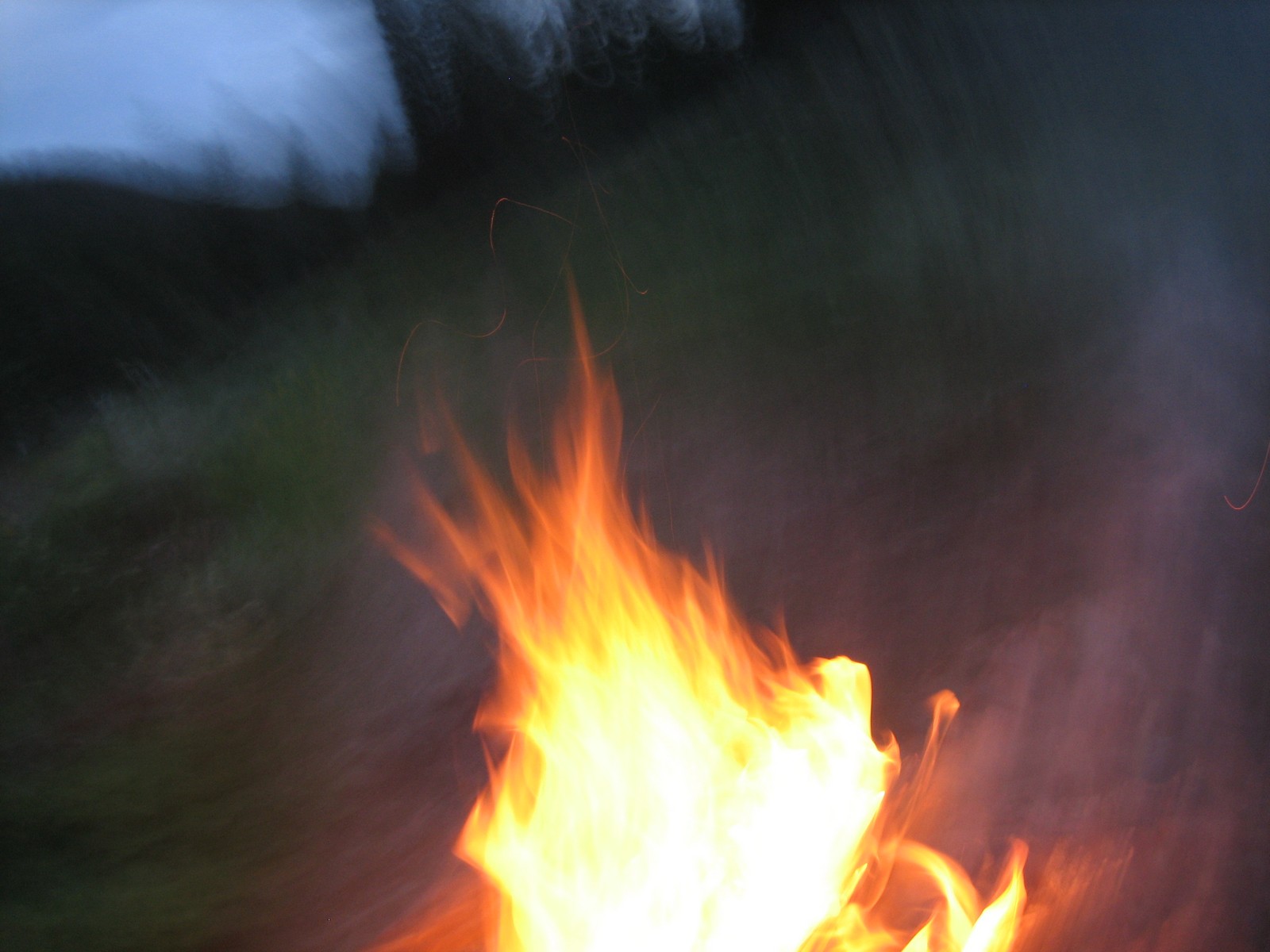
    Tripping in the mountains of Utah

    My mind was raw and I was capable of anything in that moment. I feel like I truly asked myself for the first time in that moment: What should I do? What do I want to do? I saw that the world was vast – there were so many different lives I could lead and places that I could explore. I didn’t have to take this path, but I didn’t know what path to take and I had previously felt too afraid to go adventuring. As I sat staring out the window, the phone rang. It was my friend Karina. She asked if I wanted to go into the mountains with her and take mushrooms the following weekend. I agreed and decided in that moment to stop taking all of the pills. The was going to veer off course and find another path.

    As the mushrooms took effect in the mountains the clouds lifted, and the world was no longer grey. I laid down in a creek and reveled at the moss under a waterfall, I marveled at the lines on my hands, I breathed deeply to smell the summer wildflowers in bloom. As darkness descended, we built a fire and the dancing of the flames was one of the most beautiful things I had seen in my life. As I looked up, I was forced to take a deep, slow breath to steady my mind as the profound reality of the Milky Way – our galaxy – overwhelmed me completely. I lay down on the ground that night and I wondered whether this was just a temporary feeling, something fleeting, whether I would return to the way that I had been before. This was the start of a different life and I have never been the same since I saw the complex beauty that coexists with all of the ugliness, death, and pain that characterizes life. After this experience, I dropped all of my classes in university, went traveling in Asia and started meditating. Drugs, travel and meditation have become integral parts of my life that have changed me for the better and help me to continue growing. I will share experiences that I have had with each one in further blog posts.
  • Story time!

    A personal blog feels anachronistic in 2020 – like some quaint past time that existed, like scrapbooking, before more rapid, visual methods of sharing and communication existed. There are many forces at work here, but I think the main reason this sentiment exists is that a good many people are telling themselves that they have too little time for reading, writing or storytelling in general. Or possibly that it just doesn’t have much value. During the past few years this logic had distorted my relationship to writing and I was having difficulty creating anything; it seemed like it would have no value to anyone else. I made the mistake of conflating the primary purpose of writing, which is to reflect, understand and express oneself with the secondary purpose of creating something that others value. This kind of writing block is indistinct from the mental block that prevents many of us from pursuing our passions: we let our values get distorted by those of others.

    Each individual’s reality is constructed of the stories that we tell ourselves – about existence, about those around us, about the natural world, about what has value. The majority of my writing has always been about travel as it provides a physical and cultural landscape that offers experiences that we can contrast against the stories that we have in our minds. It can be a healing process that helps us grow as we encounter people with different values that lead lives we hadn’t imagine existed beforehand – suddenly our horizons expland. It can help us to feel freer and empowered to escape or change the dehumanizing systems that may have led us to travel in the first place. Reading and writing are mental travel – they are tools that can help us to navigate the stories that provide structure to our reality. Reading enables us to reflect and grow as we take a journey through a landscape that someone else has created. Writing requires us to reflect deeply upon our experiences in order to create a landscape that we can share with others, for their benefit and ours.

    Traveling, reading and writing enrichen the strange and wondrous journey that is existence. I am going to continue writing and sharing stories about my life, beyond just travel, with reckless abandon. I am going to deliver verbose and self-important prose about myself living with intention that inevitably will be interwoven with esoteric concepts. These reports will detail my exploration of the finges of my mind as I attempt to carve out a peaceful, loving existence amidst a hostile landscape. I will attempt to give consciousness and recognition to that which lacks it; I will attempt to tell alternative stories. It is my quiet and solitary form of resistance against the story that tell us that furniture is better than a jungle, that teaches you that you can consume your way to happiness, that iceberg lettuce is delicious, that animals don’t have feelings, that the earth was created 6,000 years ago, that sitting at a desk the entire day is okay, that the finite is infinite, that you deserve this and I deserve that, that tomatoes should be white on the inside, that when the seas rise we will just move to a higher location, that feelings are meant to be silenced, that quicker is better, that we don’t have souls, that violence can beget peace, and that the future is going to be better – just wait!

  • The Roots of Reality

    The Roots of Reality

    “I want to show you the reality of the people who live here, will you come?” It was with this question that the day veered off in a direction that rattled me deeply, a day that I will never forget. I looked out over a community that dotted a hillside near San Christobal Verapaz that lacked electricity – over forty homes and a school. I had spent that past few hours interviewing homeowners regarding their needs and resources, examining their homes, and thinking about ways in which we could bring cheap, clean electricity to this community. I drank glass after glass of pinol and cola. No homes had more than a few possessions – clothes, a table, and a few beds. Some of them had up to ten people living in one home. I had not been given much information beyond the name and phone number of a contact – Cesar. He translated most of my questions from Spanish into Poqomchi´. As I finished up my visits, the community had a few elements that didn’t make perfect sense. It had been recently settled. The homes were all of the same design –cinder block arranged into a three room 3m x 10m structure. The electric grid was nearby, but not connected. I generally like to take in information and build my own narrative rather than to outright ask questions, so when Cesar asked me this question about the reality of the people here, near the end of my visit to the community, I simply said “Let’s go.” I took a few last photos of the school and then we hurried down a footpath to reach a pickup truck that waited below.

    We climbed into a black pickup truck and sped off towards San Cristobal.

    “In 1981, 1982, and 1983 thousands of people from this area disappeared or were murdered,” Cesar explained. “Many of them have never been found. In 2012, the government permitted anthropologists to explore the grounds of a military base near Coban, where they encountered four mass graves that were filled with over 500 people – men, women and children. These remains are being tested and matched to families who have reported missing relatives. One family received their father’s yesterday and they are having a funeral this afternoon. We are going to bury his bones today.”

    We parked the car and started walking. We didn’t get far before Cesar stopped me and said, “Bring your camera.”

    “Really?”

    “Yes.”

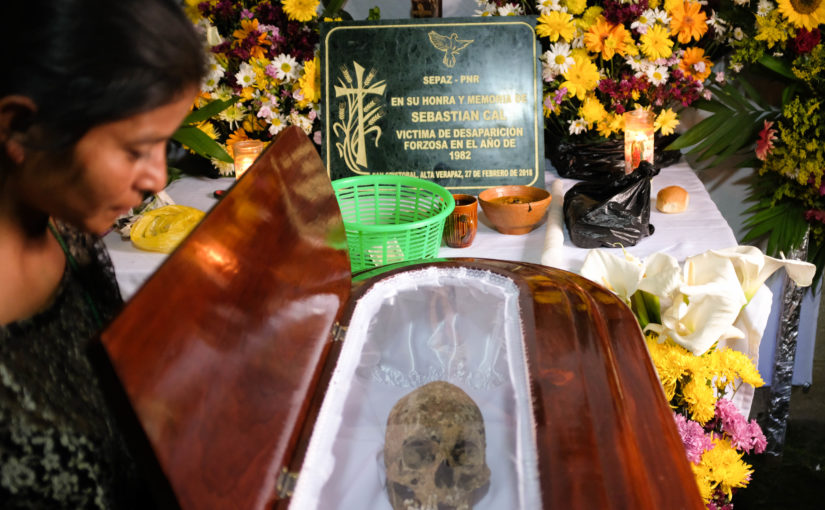
    I went back to the truck and grabbed it. We walked on a dirt path that bordered a creek through verdant pastures with coffee plantations in the distance. We arrived at a small home where a few dozen people were gathered. Cesar ushered me in and introduced me rapidly to the family members of the deceased. We then stepped into a room whose floor was covered in pine needles and the air was redolent with the smell of burning copal. There was a casket in the middle of the room and two women standing on either side. A black and white picture of a serious looking young man sat on the casket that was flanked by brilliant flower arrangements.

    Cesar opened the casket and a sheet covered the remains. He asked one of the women to uncover the remains. She did so, closed the lid, and then opened a viewing window for me to see what remained of Don Sebastian. I stood in silence. There was a deteriorated and broken skull peering out at me from the casket. Something slipped inside of me; the moment seemed too deliberate. It was like the world had colluded to bring me there, so that I would see this skull from an innocent man that had been kidnapped and murdered. I felt panic well up inside of me, for what reason and from where I cannot say. I could feel the hollowed out eye sockets of the skull peering into me and the eyes of everyone else in the room watching me. I felt like I let this happen, despite it having happened before I was born. Thoughts poured through my head in the interminable silence, how atrocities like this were happening today, how those of us who did nothing were responsible for letting people like Don Sebastian just fall through the cracks, letting them just disappear. We are complicit.

    “There are no words,” Cesar said.

    “There is nothing that I can say,” was all that I managed to say. What could you say and to whom? I looked around the room at the faces of everyone else as I took a deep breathe.

    “You can take photos.”

    “Really? You are sure?” I directed my question at everyone in the room. The women nodded. I interpreted this as them wanting the story of their father, relative, or friend, who had been nameless, buried in a hole with hundreds of other people for over thirty years, to be told. I snapped a few photos rapidly, vowing in my mind to tell this story.

    We set out. I carried some flowers and the family shouldered the lacquered casket that scintillated under the scorching midday sun. The procession packed into waiting vehicles and the casket was loaded into the bed of the pickup. I realized at this point that they had been waiting for us, we arrived in the truck that would carry the casket to the cemetery.

    We stopped in front of the faded white façade of the Catholic Church that overlooked the central square. We filed into the church and Don Sebastian was placed in front, again surrounded by flowers. The priest spoke at length in Spanish and performed arcane rituals whose significance was lost upon me. I knew that many of the people didn’t speak Spanish from my interviews and this was made clear by the fact that most of the crowd completely disregarded his commands to sit and rise. It put me at ease, because I didn’t understand either. As he went through his rituals I watched a group of kids wrestle and giggle between the rows of pews, making a racket that echoed off the concave roof of the building. The parents let them be; I decided that the laughter of these kids is what should have been written in the bible. The priest did not laugh.

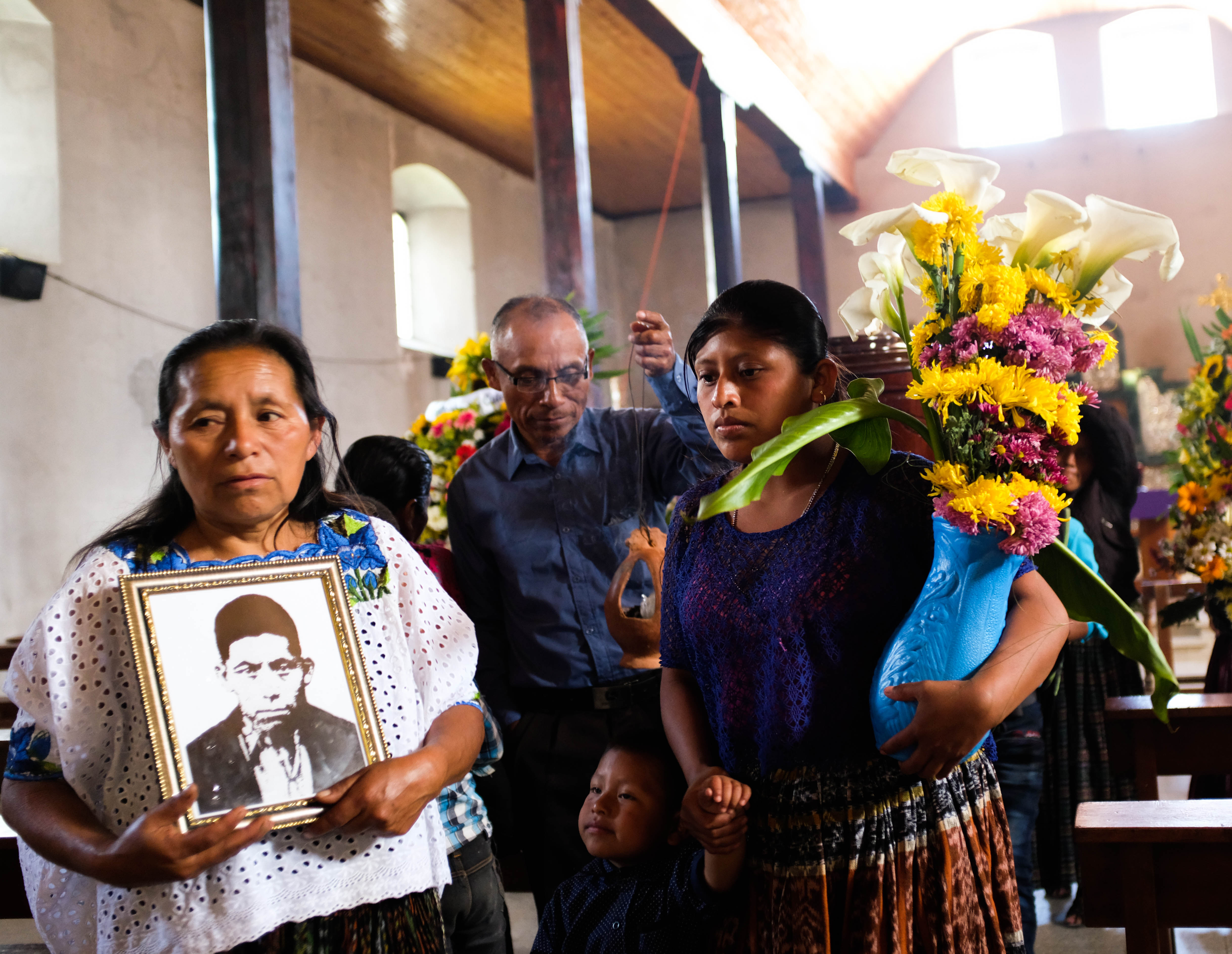
    We departed from the church on foot. The women and children wore hand-made guipiles and dresses of woven of every color under the sun. The family took turns carrying the casket and flowers. People lined the sidewalks, stood in doorways, and peered out from windows.

    I gestured to the people watching us pass and asked Cesar, “Do most of the people know why we are here today? Do they know what happened?”

    “Yes. I would say most of them know about the disappearances and the mass graves. Almost every person in this community was directly affected by the civil war.”

    I told Cesar that most people from the United States did not know about what happened in Guatemala. We were not taught that the our government backed and armed oppressive regime after oppressive regime because land reform threatened US interests in the country. We were not taught that these successive regimes killed and disappeared between 140,000 and 200,000 mostly indigenous peasants in what amounted to genocide. In a particularly terrible period in the 1980’s, entire villages were razed and burned to the ground. A story is often told that the guerillas who advocated land reform were partly responsible for this violence, but a United Nations-backed commission – La Comisión para el Esclarecimiento Histórico – found that the government was responsible for 93% of the killings.

    The violence did not end as the war wound down. The truth was too much of a threat. Archbishop Juan Gerardi, a defender of human rights, investigated and documented the atrocities and crimes that occurred during this period in a report entitled Guatemala: Nunca más. Two days after it was published he was beaten to death in his own church.

    Every Guatemalan that I have asked has told me that the history of the civil war is not taught in school there either. They say that possibly in university – a public one, not a private one – you will learn about what happened here. Social amnesia is an intentional process orchestrated by individuals and institutions that benefit from appropriation of land or resources, slavery, colonization, or looting of public goods for private gain. History is ignored, or rewritten in a way that doesn’t clearly define who benefitted and who lost, facts are distorted, intent and causation obscured. As time goes on rage is replaced with resignation in the face of injustice, memory fades around who took what from whom, and a new normal solidifies. The threat of punishment, redistribution, or retribution slowly fades. The wealth and resources that were appropriated don’t fade away though; they grow in value.

    We blocked the streets and traffic politely waited behind us with nary a horn. We marched on towards the green foothills that cradled the city. I caught a few words from a girl that was talking with Cesar that piqued my interest.

    “Why would I believe in words written in a book? I don’t trust them. They are just someone else’s view of the world; the way that they want other people to see. I know that trees, rivers, and mountains have spirits, yet none of that is in the bible. I think we should all just trust what we know. The story of the bible is the story of the colonizers.” She spoke with passion and I listened in admiration.

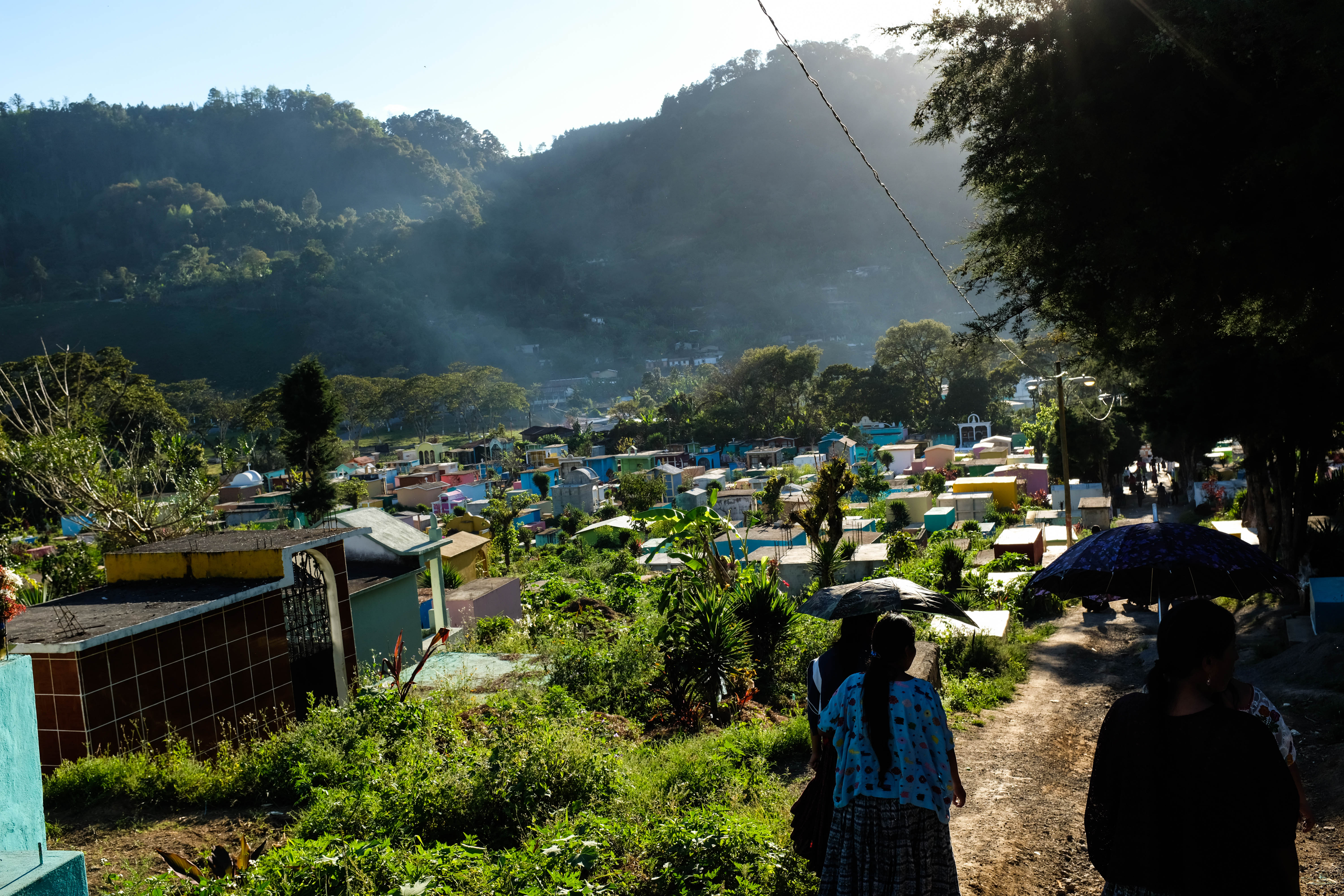
    As we walked, I met a woman named Lourdes that who worked with an organization that worked to document the history of San Cristobal from ancient times to recent history – meaning she documented from Poqomchi´ creation myth to the aftermath of the Guatemalan Civil War. We walked side by side through the graveyard.

    She swept her hand over the back of the graveyard. “Most of these graves in this area are from people who died in the conflict. One of the most important leaders of the pueblo is buried here. He managed to buy two large coffee plantationsusing credit and then returned the land to the people that it rightfully belonged to. The movement was gaining momentum and power, it was a threat and wealthy people took notice. He was kidnapped and murdered, just like Don Sebastian. What they did worked – the land redistribution movement here was halted by fear. But they didn´t stop killing,” she explained as a matter of fact.

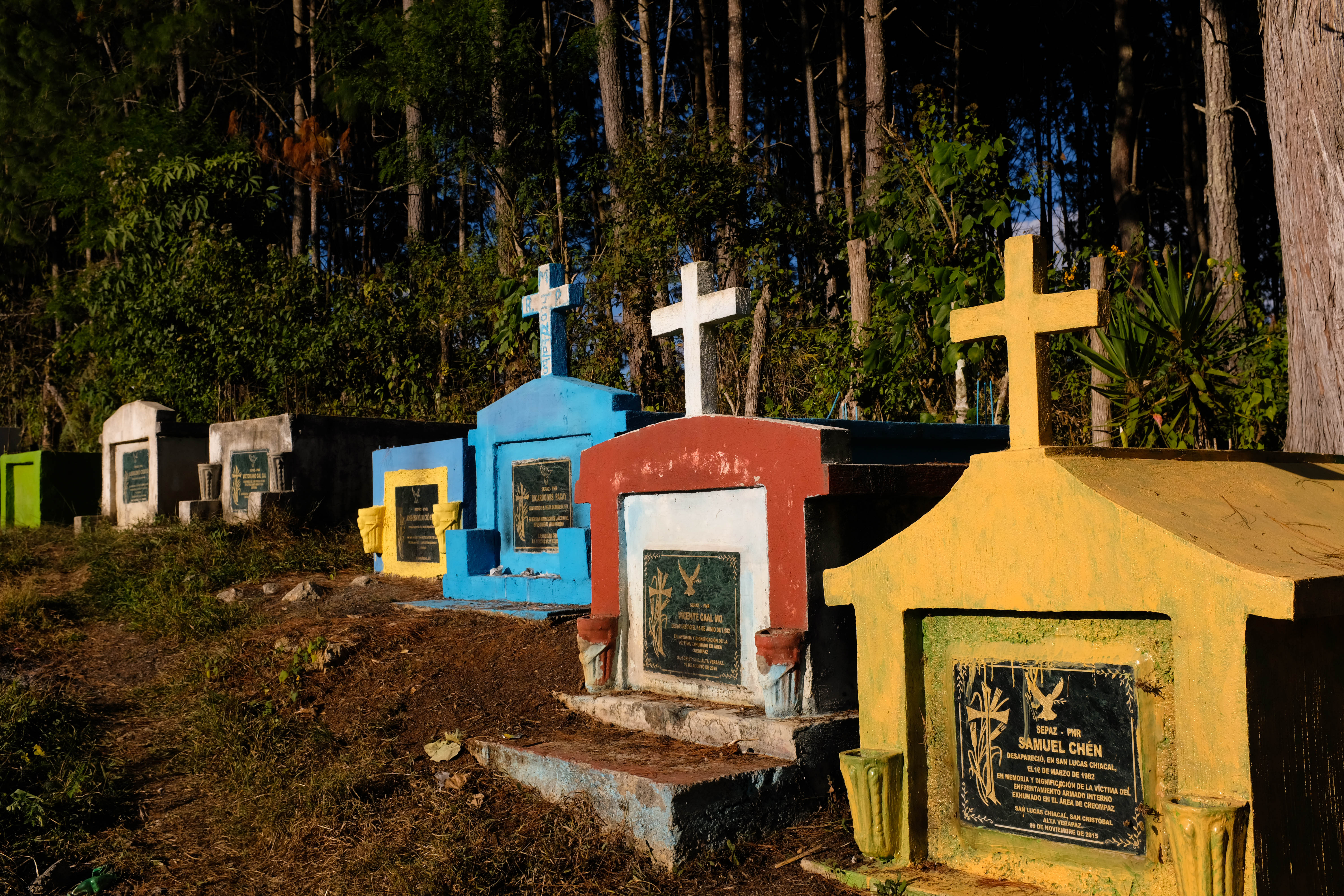
    We continued on in silence, sweating under the power of the sun. The path was lined with graves that identified the deceased as being a victim of forced disappearance or internal conflict. Just like on Don Sebastian’s plaque – the date of their disappearance, date of discovery, and location of discovery were listed on the plaque. Many of the plaques listed their location of discovery as CREOMPAZ.

    “Where is CREOMPAZ?” I asked Cesar.

    “That is the military base in Coban where some of the largest mass graves from the civil war were discovered. Many of the bones show signs of torture. The facility was where people were brought to be tortured, murdered, and then thrown in holes as if they were animals. So far about 130 of the 550 remains found there have been identified.”

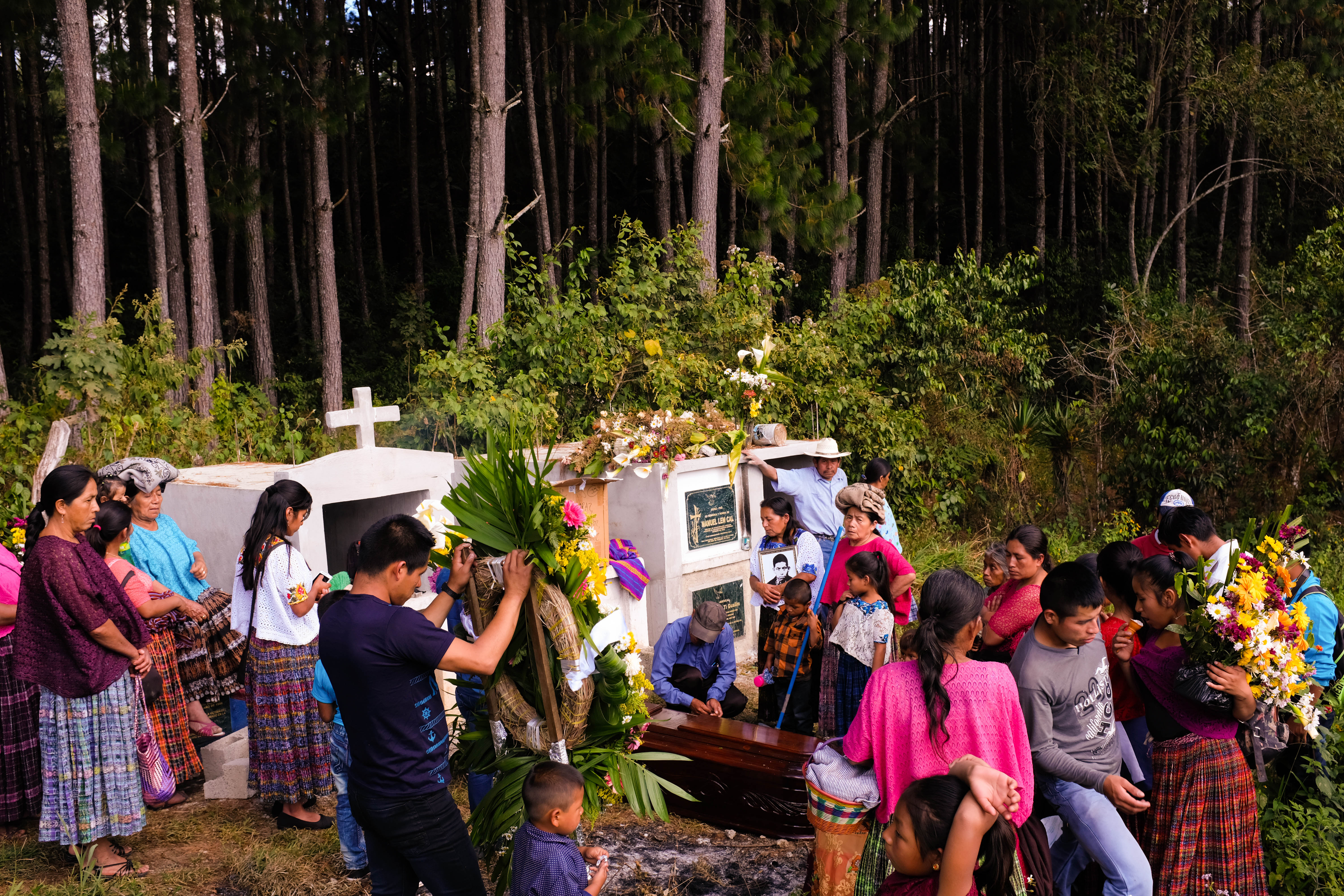
    We gathered around the casket. The wind whistled through the pines. A man was selling ice cream to many of the attendees. A woman began to speak. Her voice shook as tears welled up in her eyes and she choked back sobs. I listened and cried quietly as she poured forth words that seemed like they had been burning inside her for decades. I can only remember the parts that were seared into my memory.

    “Don Sebastian was murdered for believing that we had rights and for trying to protect them. He was murdered by a government and a military that say they are there to protect us, but in reality they are there to protect what the wealthy and the powerful. There is no government that is legal in the eyes of the pueblo. They are there to protect the people who took our land, the people that are the reason why I make just enough money each day to feed my children and have to rent a place to live,” She faced the sun and her tears caught the amber afternoon light as she let loose, “What have they ever done for us? They don’t care about us. If there was a president, or a policeman, or a soldier in this casket there would be a parade and a band. For us, for someone from the pueblo?” She waved her hand around at the small group of people standing around the casket. “Nothing.” Her eyes continued blazing with rage and hurt as she translated everything into Poqomchi´.

    Everyone stood mute or sobbing. Don Sebastian’s daughter stood beside the casket holding his photo. She managed to choke out, “If they hadn’t killed him, he might still be alive today. I might have a father.” She looked up towards the sky. “Why did they take you from us? What happened to you?” She fell to her knees beside the casket and trailed off into sobs and wailing. When she finally regained her composure she began to pray in Poqomchi’. The rest of the crowd joined with soft prayers or chants in the same tone, just above a whisper. I closed my eyes and the sound shook me deeply as the words were imbued with a force, something timeless that I could feel, but not understand.

    Silence eventually descended until only the pines spoke. I thought again about how many more times this same funeral would play out here and in innumerable other parts of the world.

    Don Sebastian was placed into his tomb and then we stood as it was meticulously sealed with cinderblocks and concrete, seemingly waiting to make sure that this time he would not be deprived of his right to a peaceful place to rest under any circumstances.

    We turned our backs on his grave and walked in silence for a while before asking Cesar, “Did the Civil War affect your family?”

    “No, not directly. Like everyone, they lived in fear. But nothing like the people here. The brother of Rueben, the founder of our organization, disappeared and he still doesn’t know what happened to him. So this is all very person and something that he lives with each day. He paid for most of this funeral and another recent one,” he explained.

    I hopped into the back of the pickup with the woman who made the impassioned speech at the funeral. I introduced myself. Erlinda sat with her two little kids huddled around her. I wasn’t quite clear what her relation was to the Don Sebastian.

    “Was Don Sebastian your father?”

    “No, he was a good friend of my father. They were both professors and were working to return land back to our people. I think what happened to Don Sebastian happened to my father as well. I think he was kidnapped and murdered. I never knew why I grew up without a father for a long time. When I was a little girl, we fled our village as soldiers burned our home and everything that we owned to the ground. We ran into the mountains to hide and were forced to eat whatever we could find. We were forced to come to the city for refuge, but we had nothing. Eventually, I began to wonder why other kids had fathers and I did not. My mom explained that he had been disappeared, our land had been taken, and that was why we were living in extreme poverty. I started looking for my father over 20 years ago. My mom and my sisters gave up – they don’t want to get involved in it or think about it. I am the only one who can’t let it go. I need to know what happened to him, if he is dead or alive. I just want to know him – I would even forgive him if he had another family. I just want to know. I named my son,” she nodded towards the boy who clung to her side, “Mariano after my father.”

    “How did you end up in La Colonia?”

    “I was renting and working with barely enough money to feed my children when I met Reuben and he decided to help me. I have two jobs – taking care of my children and making money to feed them. I barely make any money because I never had the chance to study when I was a girl. I want to study because that is the only way that anyone can get ahead, but I have to work every minute just to feed my daughters and pay for their school supplies. I work so hard, I work from dawn to dusk and get paid 15 Quetzales (two dollars). Barely enough for food,” She paused to think before saying, “Maybe when my girls are a bit older I can go back to study.”

    We arrived back at the home where we started. Smoke was billowing out from the cooking fire under a massive pot of saqkik – a dish made with corn meal and, in this case, chicken. The table was loaded with tamales wrapped in banana leaves. Darkness had fallen and a nearly full moon lit up the fields. Saqkik is eaten without utensils and kids gathered around me and howled in laughter as I sloppily ate the saqkik and let it drip from my beard.

    “Hunger, which kills silently, kills the silent. Experts speak for them, poorologists who tell us what the poor do not work at, what they don’t eat, what they don’t weigh, what height they don’t reach, what they don’t have, what they don’t think, what parties they don’t vote for, what they don’t believe in.

    The only question unanswered is why poor people are poor. Could it be because we are fed by their hunger and clothed by their nakedness?” – Eduardo Galeano

  • Buscando a Alex

    The Metropolitano in Lima is much more than just public transport – if you let it, it can carry you from dream to reality and vice versa. It is truly a bargain.

    You set out walking towards the Metro station that is only a few blocks away from the heart of Miraflores. Beautiful people abound in Miraflores; the sound of heels clicking resounds as people go from cafes to restaurants to shops with smartly-attired canines. Lovely old couples dance in the main park amidst well-fed stray cats that stretch and preen.

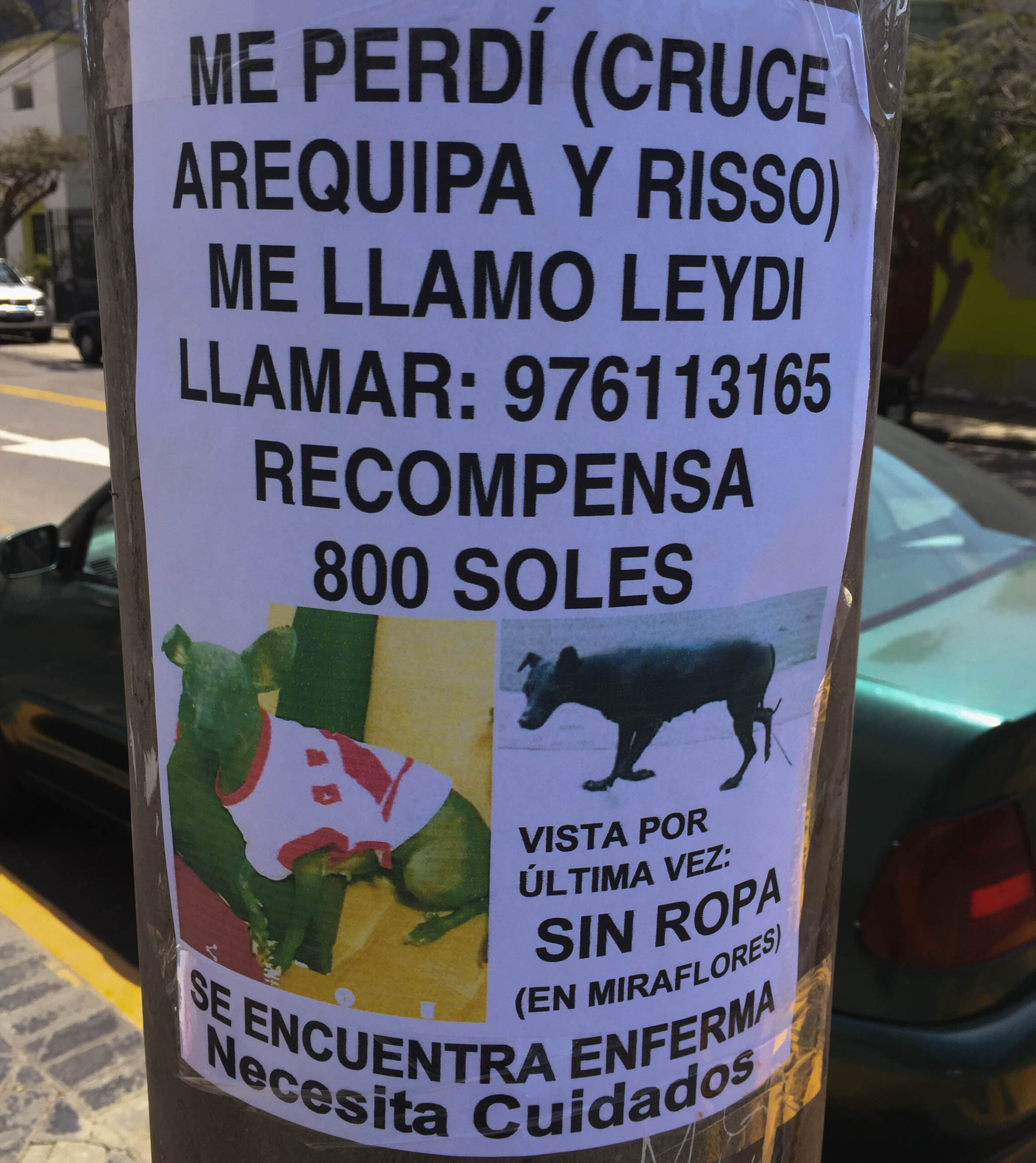
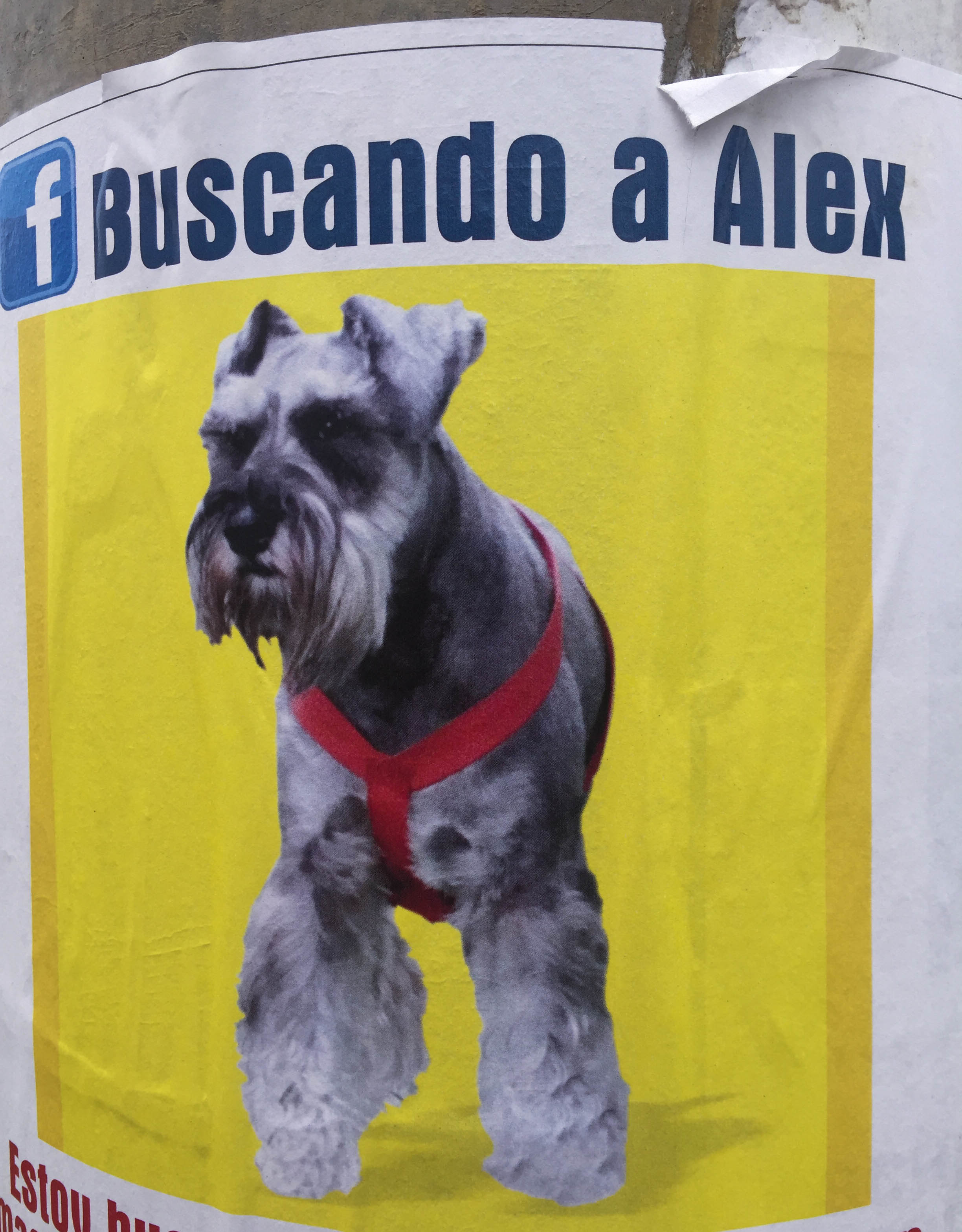
    Vista por última vez SIN ROPA = Seen for the last time WITHOUT CLOTHES.

    Tourists saunter around staring at the world through the screens of phones and cameras. Verdant trees line the streets with leaves that flutter in the breezing that is blowing off of the Pacific. Luxury cars emerge from towering walls topped with electrified barbed-wire.

    You stop for a coffee and overhear two American girls talking and staring at their phones.

    “Ugh look at this guy – Pedro – he just superliked me. Uhhh BYE.”

    “How are you even on Tinder right now? The WiFi here sucks. This site says that the Art Museum is cool.”

    “Yeah, but it isn’t here on the list of the top five things to do in Lima.”

    A few stops away and you enter reality. As you step off the train people look at you strangely; you can tell that you are out of place. A few of them will stop to tell you that you will be robbed. Most people hurry about with their purses or backpacks clutched to the front of their bodies. Trash blows around on the greasy streets or lies heaped in piles. You try your best to keep your wits about you, while at the same time avoiding tripping on any crumbling sections of sidewalk or inexplicable gaping holes. The people whose office or shop is the street look out at you from weary eyes set in faces that appear to have long ago tired of this place. The sidewalk and road are used as shops with cars, bicycles, televisions, and appliances in various states of disassembly or repair strewn about. You have to step over mangy dogs and parts as you walk. The air is filled alternatingly with smells of frying food, urine, truck exhaust, and trash rotting in the sun. Reggaeton blasts out of cars and stereos as bottles of beer are passed around. When you ask for something specific you are told, “Hay de todo” and then are told where it can be found.

    You sit on a bench eating popcorn and watch the world go by. You reflect upon your life. How are the hands that some people are dealt so different from those of others? How nice are the bed time stories that we are told about equal opportunity, fairness, and justice that let us fall gently back into our dream. An elderly lady frying dough hands gifts you a heaping plate smothered in honey saying that she wants you to have nice memories from Peru. You think about how the current president of Peru, under threat of impeachment for receiving bribes in order to steer a contract to a Brazilian construction company, just brokered a deal to pardon a former president of the opposition party that was convicted of “serious crimes against humanity” in order to avoid being removed from office. The former president oversaw death squads that killed thousands of indigenous people in horrific ways and directed the forced sterilization of over 300,000 women. He was just released.

    You have dinner later with friends. The topic of Peru’s independence from Spain comes up. You say the following:

    “I am pretty sure, like most independence movements, it was powerful people looking to get more power, control, and wealth for themselves. The revolution happens, but the same power structures stay in place. I imagine the people of Spanish descent continued to control the land and wealth of the nation, but they simply no longer had to pay taxes to Spain. But not much changed for the poor or indigenous people. That is how the revolution happened in the United States as well.”

    A very well-educated and clearly wealthy Peruvian girl responds in perfect English:

    “That is not how it happened here in Peru. It was for the benefit of all Peruvians since we don’t have racial groups or classes like that here – we are all of mixed descent.”

    She looks nothing like the people without electricity or running water in the mountains. You don’t say anything because you don’t want to make a scene in front of a group of people that you have just met.

    You are a gringo.

  • The Scat in Eschatology

    The Scat in Eschatology

    There are people stockpiling guns, batteries, solar panels, burying shipping containers, buying gas masks, dehydrating food, filling hidden tanks with water, and lining underground shelves with food all around us. You may have seen their outposts in sun-blasted wastelands, have heard about surging weapon sales, or seen survivalist literature in your local bookstore and wondered. The people behind this movement, self-described ‘preppers,’ are generally hard to see due to their penchant for camouflage clothing, but my work gives me the privilege of direct contact with them: I primarily build commercial photovoltaic (solar) systems, but also off-grid and backup power systems. Preppers comprise a significant portion of our customer base for the latter portion of the business.

    The internet, conveniently for one looking to learn more about this culture, is a breeding ground for communities of paranoid people; it creates a marketplace for fringe theories and products that would otherwise not exist in society. A cursory glance on the internet reveals that there are a few people with legitimate concerns regarding ecology and the sustainability of our industrial economy, but the overwhelming majority of the adherents seem to have already been attacked by some sort of brain-sucking amoeba that has left them constantly oscillating between schizophrenic fight or flight outlooks on life. Articles abound like: “When Colera Comes to Town.” “Martial Law Survival Strategies You Should Know.” “Body Disposal in a Crisis.” “Backcountry Belt Kit: Essential Tools to Carry Around Your Waist.” “How The Zika Pesticide Spraying Could Eventually Kill Us All.” There are a hundred times as many discussions about Chinese-made LED flashlights as there are about Malthusian economics.

    I am accustomed to the preppers asking questions like, “Will this equipment withstand an electromagnetic pulse?” I have learned how to discuss Faraday Cages with them and to avoid voicing my questions about what they imagine the apocalypse will be like. I had perceived these people as benign and merely victims of marketing and politicking that breeds paranoia to generate sales and votes, until a recent conversation with an intelligent coworker, who is a devout member of the Church of Jesus Christ of Latter-Day Saints (Mormon), made me realize I might want to rethink my opinion. We had just finished building a backup power system on a McMansion, for a man who makes and sells Biblical interpretive videos, when there was a blurb on the radio about climate change. I couldn’t resist making a remark about how we need to make some dramatic economic and cultural shifts to avoid creating a living hell, that the alternative energy industry needed to grow by leaps and bounds.


    “There are billions of dollars spent each year by people like Al Gore to make you think that we need to act immediately and change what we are doing,” he expressed with skepticism.
    “Yeah and there are billions of dollars spent each year to make you disbelieve that it is happening. I saw it with my own eyes when I was visiting islands in the Indian Ocean a couple years ago. It is a terrifying prospect for hundreds of millions of people and we will not be immune to its effects here either.”
    “I don’t deny that it is happening, just the cause.”
    “So you don’t believe that humans are causing it?”
    “Not necessarily.”
    “Then what is happening?”
    “The Rapture, The Second Coming of Christ,” he said without irony.

    From that point on I have been fascinated. As you can imagine, I was elated when I saw a billboard on my way to work the other day that advertised the Ready2Go convention – the first gun, auto, and preparedness show in Utah. The same fairgrounds would also be home to the Patriot Film Festival. That is how I found myself tearing down I-15 through rising concrete skeletons and past an endless stream of cars piled high with outdoor gear and pickups towing dilapidated campers headed out for the long weekend. Riding a motorcycle is, for better or worse, a heightened sensory experience, particularly with regard to smell. It smelled of food smoking, then of sausage, then of raw sewage, then of just plain exhaust.

    Before we get to the convention, it is worth touching upon theology for a very brief moment. Almost every religion employs, as humans have an affinity for them, traditional narrative arcs that have a beginning, a series of crisis, a climax, and then a resolution. In religious parlance: a creation myth, trials and tribulations involving the believers and the non-believers, an earthly crisis, and then the an end brought about by a deity. The field of theology devoted to the study of the final events of history or the ultimate destiny of humanity is called Eschatology.

    The Bible has many passages that reference catastrophe or apocalypse for followers to emphasize. The Gospel of Matthew 24:21-22 records Jesus saying that upon his return “There will be great tribulation, such as has not been seen since the beginning of time to this world, no, nor ever will be. And unless these days were shortened, no flesh would be saved, but for the elect’s sake those days shall be shortened.” Paul says in 1 Thessalonians 5:3 “For when they shall say, Peace and safety; then sudden destruction cometh upon them, as travail upon a woman with child; and they shall not escape.” From Isaiah 66:15-16, “For behold, the lord will come in fire And His chariots like the whirlwind, To render His anger with fury, And His rebuke with flames of fire. For the lord will execute judgment by fire And by His sword on all flesh, And those slain by the lord will be many.”

    Mormonism uses the King James Version and the Book of Mormon as primary texts. The Mormons have a long-standing tradition of prepping that is deeply rooted in their theology. Prophecy holds that there are certain events that inevitably will precede the second coming of Christ, the most relevant here are: earthquakes, widespread warfare, social unrest, and climactic weather. There are storage facilities, with billboards along the side of the highway, that specialize in food storage. The church requires each member to store a minimum of a three month food supply.

    In both cases it appears that Christ will lift up the believers, scorch the earth, and punish the non-believers. I am not sure where the earth-scorching fits in, maybe it is like how the right to destroy a sandcastle is reserved for the child who builds it.

    I arrived at the gate of the convention and I was slightly nervous that they would know I was unprepared, a Pollyana, a part of what preppers calls The Golden Horde. The Golden Horde is the teeming mass of unprepared losers that will desperately swarm the prepared in the event of disaster, and a Pollyana is someone who is irrationally optimistic in contrast to their irrational pessimism. There was a sign at the entrance table that says, “NO AMMUNITION CHECK YOUR GUNS HERE.” The man in front of me, who wore a black T-shirt with Hillary Clinton transmuted into The Joker, patted his pants and told them that he had a handgun on him. He showed his concealed carry permit and was allowed to keep it with him. I paid my entrance fee and was given a voucher for a free box of ammunition to be redeemed at the Armitek booth inside.

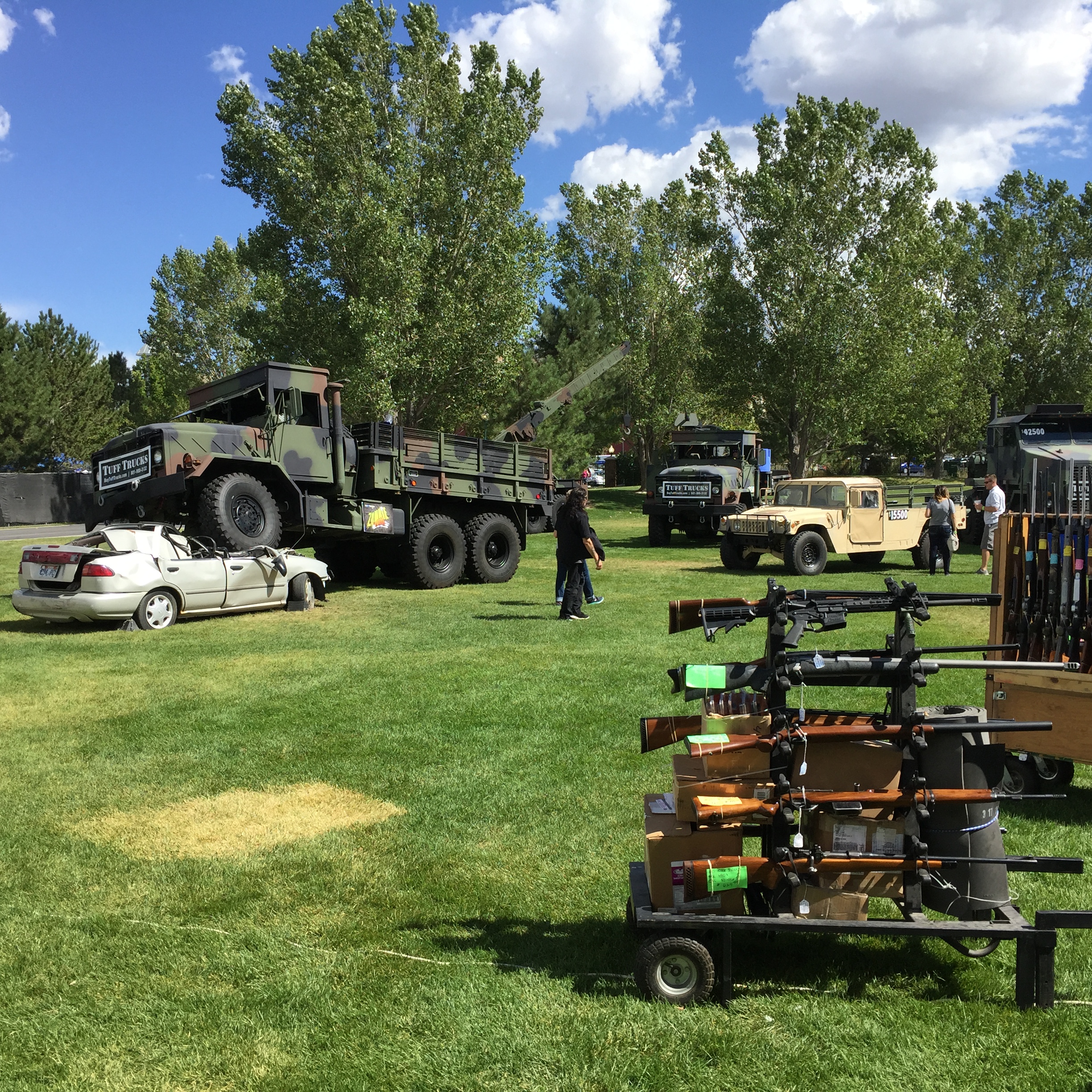
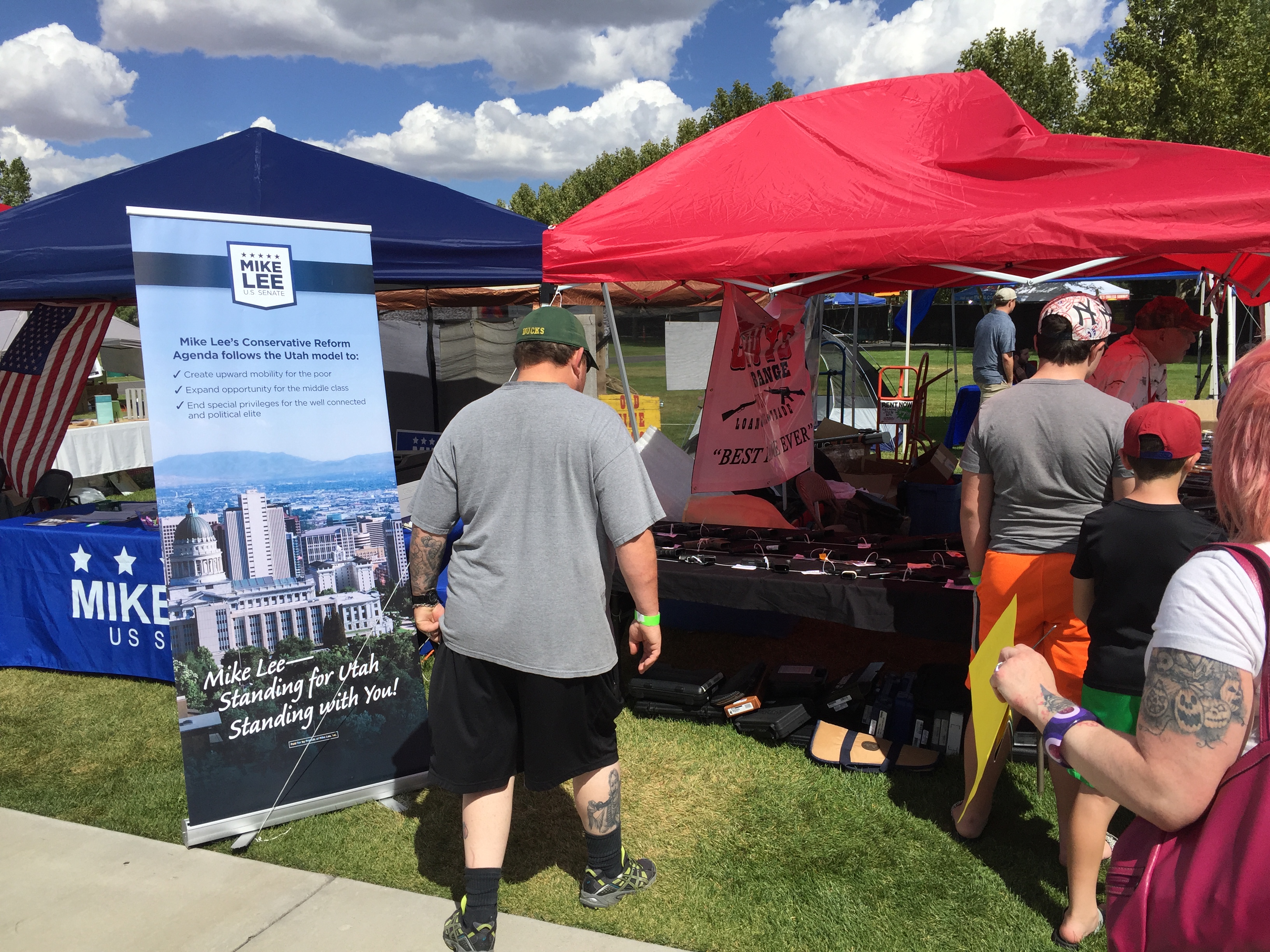
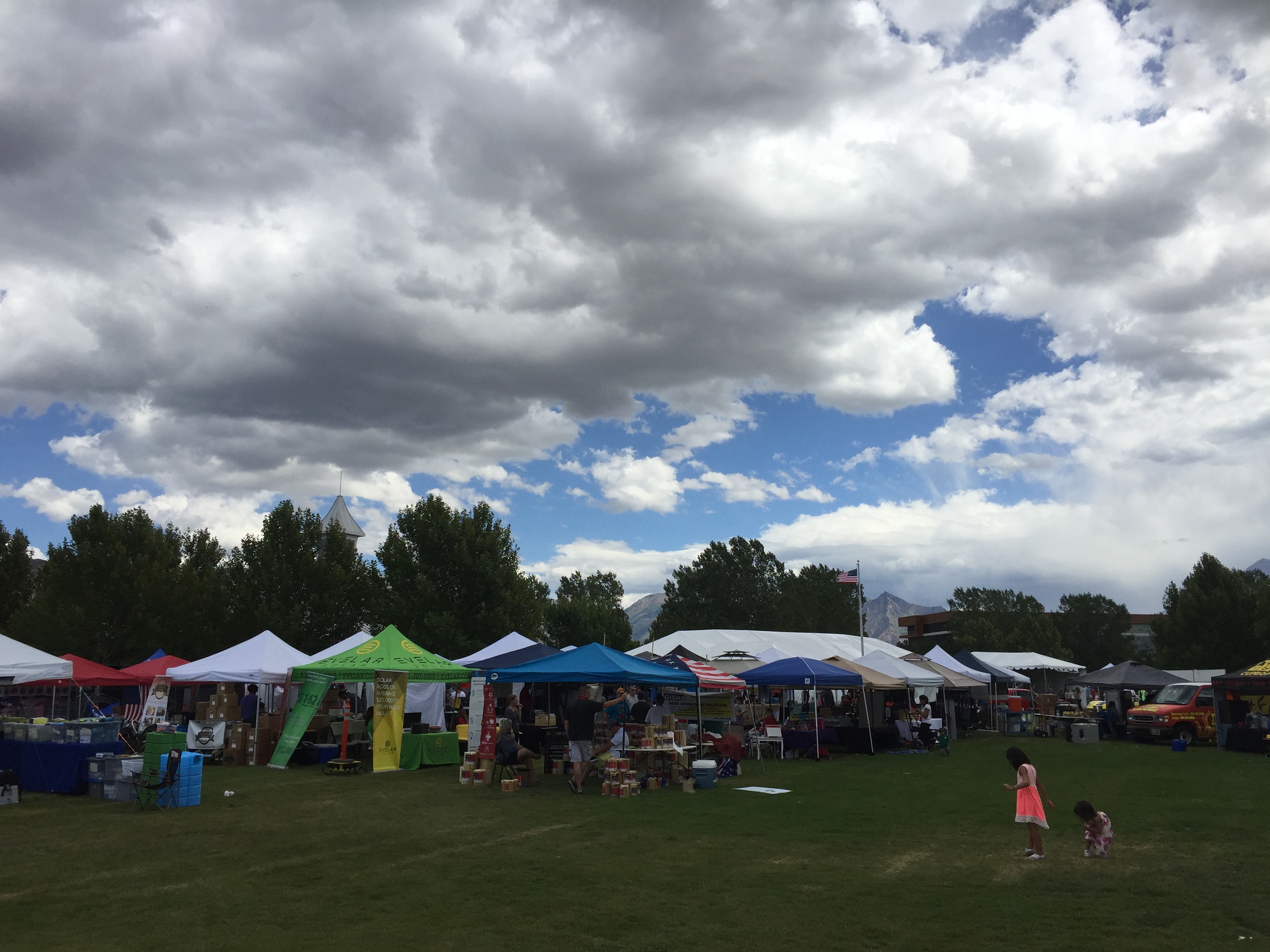
    I continued to the booths and nearly jumped in the air at the crack of an overweight man testing out a taser to my left. I wandered through booths selling handguns, fudge, weight-loss pills, caramel apples, devices for food preparation, sniper rifles, solar panels, Chinese-made knives that look like they are exclusively made for slaying carnivorous reptiles, backup batteries, The Republican Party, purses and belts covered in glittering rhinestones, Senator Mike Lee, portable emergency communication platforms, and dog clothing. Generally, it was as if Sharper Image’s designers became deeply paranoid, abandoned producing clever desktop entertainments with swinging balls and automated vacuums for more violent products, and then were forced to hawk their wares at a county fair.

    I walked past the Armitek tent, but I did not redeem my voucher for a free box of ammunition.  I got the impression that the free box of ammunition was for dealing with The Golden Horde, which I am a part of, therefore I felt it wasn’t right.

    There was one booth of particular interest that sold underground shelters impervious to nuclear weapons, chemical weapons, biological weapons, and the screams of others on the outside. The price list on the wall had prices running upwards of $65,000 for a shelter, not including a backup power system. I walked in and was immediately engrossed in conversation with a woman who is surely the high priestess of the prepper cult.

    “How many of these do you sell each year?”
    “We are constantly busy, we have a factory that stays busy and we are always upgrading or working on other shelters.”
    “Where are people building them?”
    “Everywhere. We work all over the US, Canada, even in the Bahamas. I have one up in the mountains here that you can come see.”
    “What are your customers primarily worried about?”
    “Electromagnetic pulse,” she answered emphatically.
    “The shelters aren’t cheap. Who are these people?”
    “Well you don’t have to be wealthy to afford one. You can do a lottery with your friends where 65 people put in $1000 each, and then you draw straws for the ten or fifteen people that are allowed in.” I found this so strange that I lost my train of thought as I contemplated it – my mind went immediately to my friends and family screaming outside the hatch.

    We proceeded to discuss nuclear weapons; shelter theory; alpha, beta, and gamma rays; nuclear fallout; how EMPs function; and nuclear winter. I learned that the optimum place for the Soviets to detonate an EMP is at roughly 400km about the surface of the earth and situated above the center of Kansas as this would affect a radius of roughly 2200km. I did not dare to inform her that the Soviet Union had broken up and that we had entered the 21st century. The woman was convincing, her answers were cogent and pragmatic. There was a creeping concern on my part after half an hour in the tent, a feeling that I was naive and naked. The logic is contagious when it is grounded in our contentious, violent geopolitical reality and appeals to one’s innate distrust of power structures and human decision making. I couldn’t argue. I left the tent with a price list and a five part installment entitled, “Nuclear Weapons: Who, What, When, Where, How?”

    Once outside of Utah Shelter Systems tent, I sat on the grass and looked around at the guns, the food dehydrators, the armored Corvette, and the fudge. I stepped out of the milieu of paranoia generated therein and contemplated the allure of prepping. I was suddenly reminded of that fact that I don’t want to preside over or repopulate a vast wasteland of death and decay.

    I reflect upon the convention on my ride home through the sprawl of Salt Lake City. Apocalyptic thinking intrigues and frustrates me as it is a denial of a continuous trajectory to history. It is waiting for a tumultuous break, when breaks are merely convenient narrative devices used to interpret history: The Depression, World War II, and The Renaissance. We currently are dealing with famines, seemingly interminable warfare, climactic weather events, the curtailing of freedoms, tens of millions of refugees, and suffering on a massive scale. Apocalyptic thinking is a convenient philosophical device for absolving ourselves of agency or any responsibility for what is occurring around us; it allows one to deny reality. I simply want to ask what if we let these things continue to gradually worsen and there is no break in history? No savior, no dramatic apocalypse? How do you prepare for that?

  • He Lived For Your Sins

    He Lived For Your Sins

    We use objects to tell the stories of our lives, as much for ourselves as for others – they serve as a link between our memories and the physical world. A sauce pan might bring you back to digging through a dumpster in the warehouse district of Berkeley one lovely fall. A particular coffee mug might evoke memories of a perfect nipple illuminated in dim morning light.  A coin from New Zealand might remind you of the sound of a loaf of Wonderbread hitting a pedestrian from the back of a moving truck in Auckland. Yet letting go of memories and material things is a requirement for mental sanity. It is an axiom that everything must fade.

    With that in mind, I try to live a minimalist life devoid of the voluminous trappings that have become the comfortable bars of the prison that is modern Western existence. I feel that people who have storage units are abhorrent and unquestionably mentally ill.

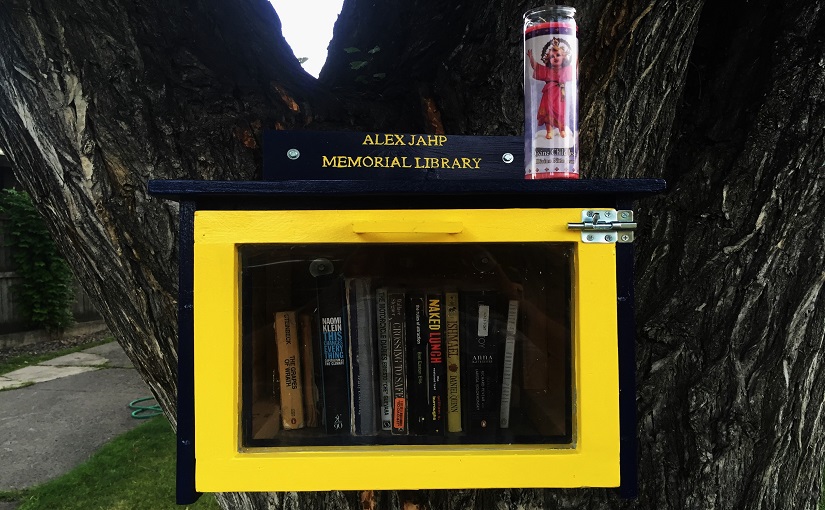
    I will have to let go of lovers, geniuses, friends, dopers, malingerers, creeps, and curmudgeons of the first rate. I will miss you at your best, in the heady days of Tangiers, Mr. Borroughs. Mr. Darwin – if we evolved from apes, then why do we seem so much more capable of committing self-destructive acts and base cruelties that seem beneath all other species? Bret Easton Ellis – you have always been there as that twisted friend that I understood and enjoyed hanging out with as long as too many people didn’t see. John Nicols – the chotas and zopilotes will never take our minds or our humanist solidarity. Mr. Robbins – if only you were a woman… Naomi Klein – let me finish my goddammed coffee before we go starting any revolutions; take it easy!  To all of you: I can only hope that all of you find eyes as greedy and minds as credulous as mine.

    In turn for my generosity I get space for new books that are more offensive, hilarious, and confounding than anything that has ever graced my shelves besides Finnegan’s Wake.

    Don’t forget me while I am here. Swing on down to the Memorial Library – Sugarhouse Branch.


  • Stake Your Being

    The quotidian
    food pellets and delusions
    who is at the helm?

    Cricket chirps resound
    devoid of past or future
    only boundless hope

  • The Riddle of Riddles

    The Riddle of Riddles

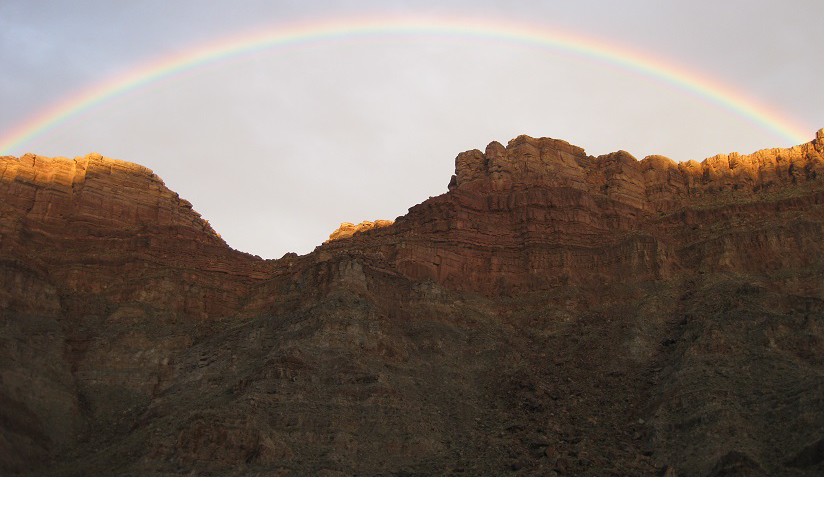
    Whether I was drawn here initially by sheer luck, skin walkers, or crystal vortices I am not sure. What is important is that I am still wandering the desert, floating down rivers, and hiding in the shade during the height of summer – this place has slowly carved a chasm in my soul. There is something about the timelessness and ruggedness of this place: in the rocks from a time when no life existed on earth, in the mysterious drawings left on cliff walls and boulders, in the juniper trees that burst forth from cracks in the rock, or when a thunderstorm turns the desert into a series of rivers and waterfalls.

    I have learned to read the canyon walls as books that tell stories of otherworldly landscapes in their leaves: shallow azure seas that teemed with life, towering crimson sand dunes, volcanic eruptions that leveled coniferous forests, a supercontinent that spanned half the globe, or one small waterhole that dinosaurs frequented. It is a monument to cycles spanning time frames that are incomprehensible to us. In the depths of the canyons at night I often imagine myself hurtling through space amidst the shimmering sea of galaxies as a mere speck on a speck. In those moments I feel completely free.

    I have come to feel a bond with others that have lived and died here over thousands of years. Those that have farmed these river bottoms, hunted game along these creeks, roamed these vast expanses, and boldly run these rivers. In untold numbers of canyons I have crouched on my hands and knees to marvel at the still visible finger prints of people in the mud of granaries, examine desiccated corncobs, and compare my own hands to the white outlines others left on the walls. I ceaselessly ponder the figures crowned with horns, wraith-like figures that fade into the rocks, the spirals winding into nothingness, and the big horn sheep dancing across the patina of desert varnish. I cannot explore or read enough. Each alcove and ledge offers the possibility of the unknown, and each additional visit a chance to put together another piece of the riddle.

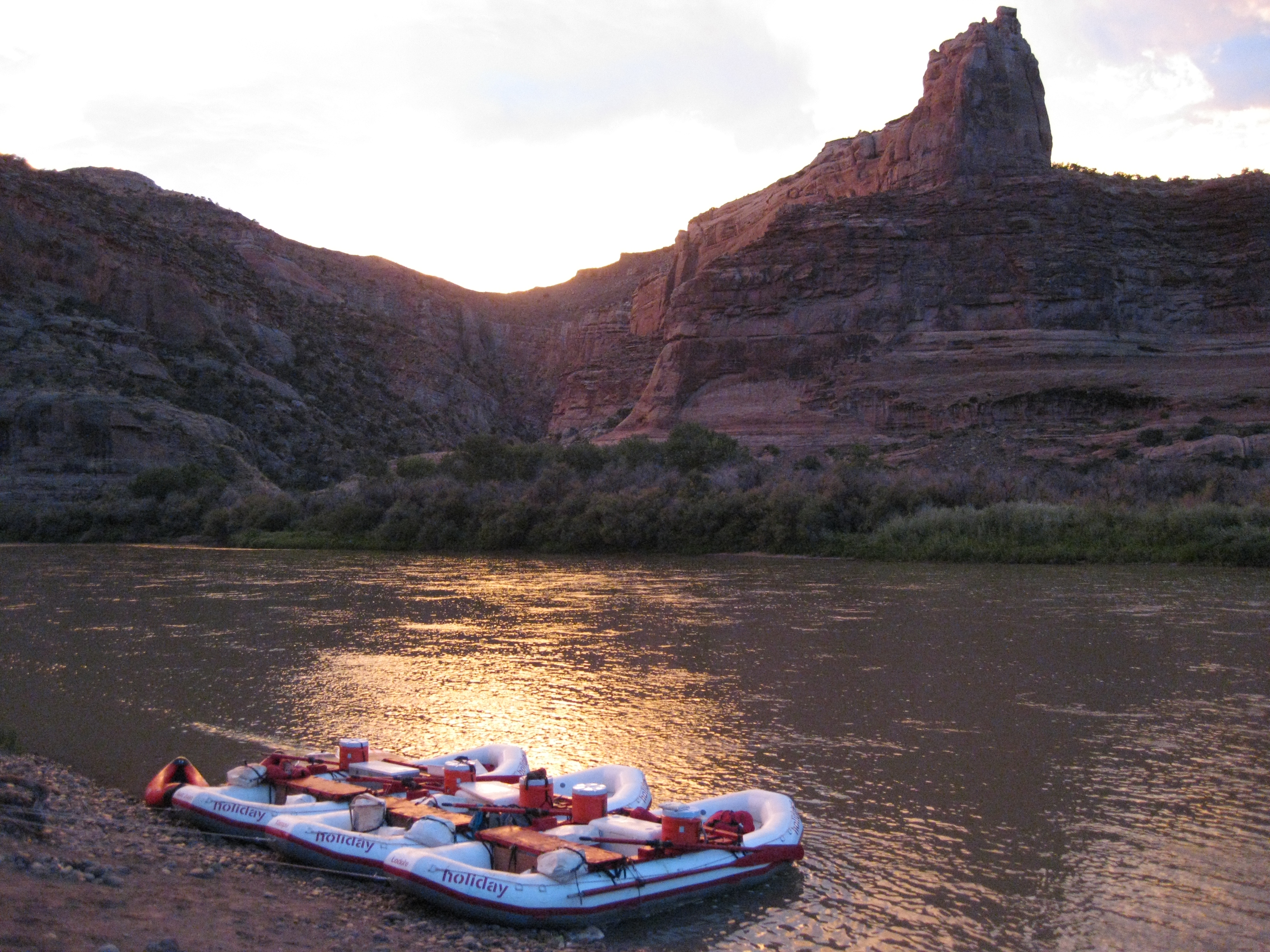
    Traveling here can be difficult, but the rewards of being swallowed by the canyons are immense. Others since time immemorial have sat along the shore of the river and looked out at the vultures soaring along the cliffs with wonder, gazed with awe at the bighorn sheep living out their lives on crumbling vertical ledges, and have tried to decipher the ceaseless murmurings of the river cutting through this land of stone. It will change you. I learned to see what is written in the canyons and sky because one man was so enraptured by these places that he spent his life  sharing them with others.

    Thanks Dee.

  • Forget the Finches

    Forget the Finches

    A rainforest can appear vacant and silent, but there are some people who say that there are more eyes than leaves, that you just have to keep your mind blank in order to see and hear the life.

    Madagascar is a small continent, massive and isolated from mainland Africa for over 70 million years. Geographic isolation and a variety of unique ecosystems ranging from desert to rainforest have led to the evolution of an incredible array of diversity, the likes of which exists nowhere else on earth. 90 percent of the reptiles and amphibians are endemic – a number which accounts for two thirds of all known chameleon species in the world. 80 percent of the 10,000 known plant species are endemic, as are roughly 50 percent of the birds. Oh and the lemurs have radiated into dozens of species filling a broad variety of ecological niches – some are the size of mice and others the size of children. The beauty of the adaptive radiation exhibited by the lemuroids and the rodential tenrecs make Darwin’s finches look like a flock of inbred sparrows.

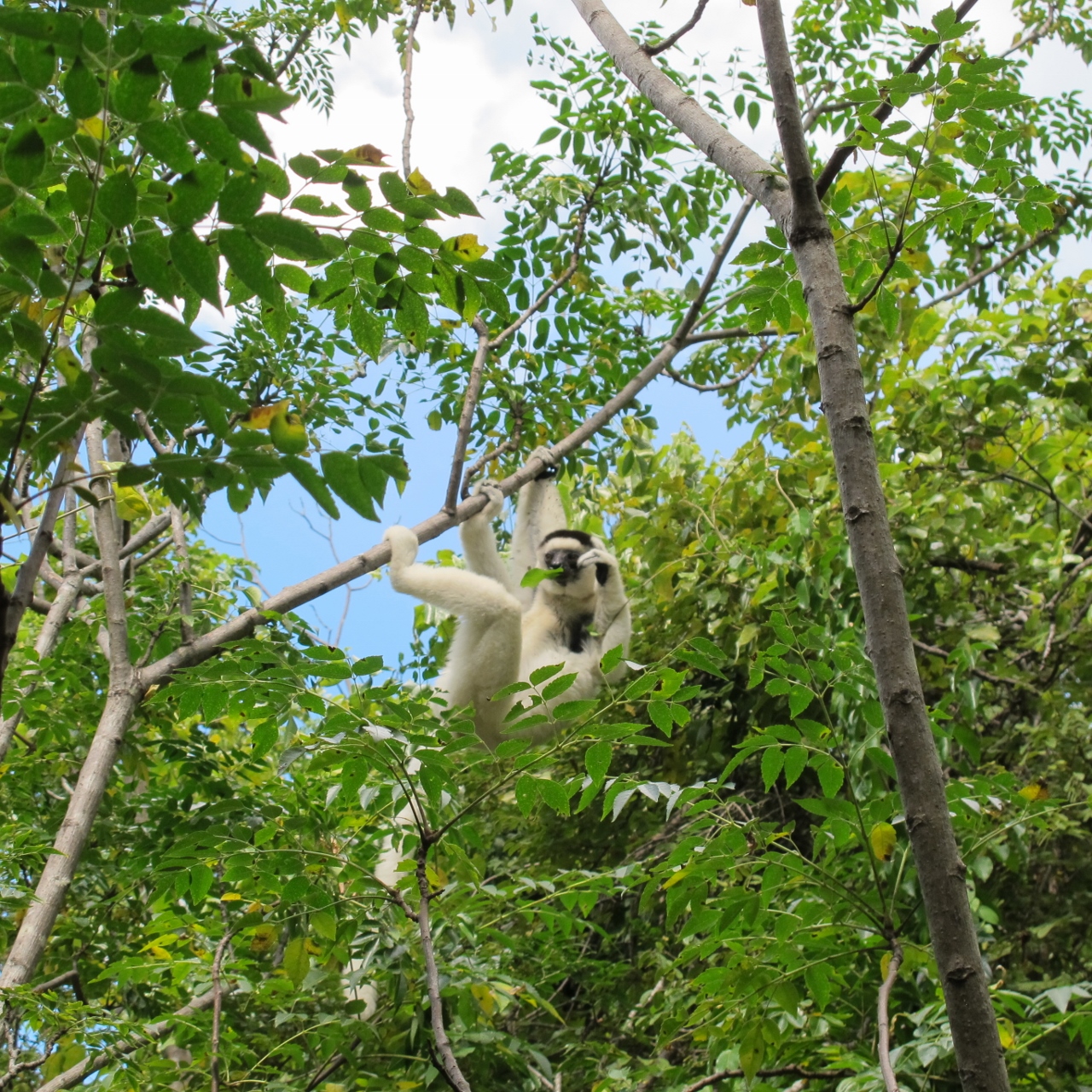
    Seeing an animal means recognizing a sound or animal form that fits a pattern latent in the mind. This process is innate, but takes cultivation. Maybe it is a set of golden eyes or a rustle in the canopy. Or the strange, beautiful humming noise a Milne-Edwards Sifaka makes just before launching sideways from one tree to another until it disappears through the jungle. Possibly the haunting horn-like wail of the Indri Indri cascading through the forest.

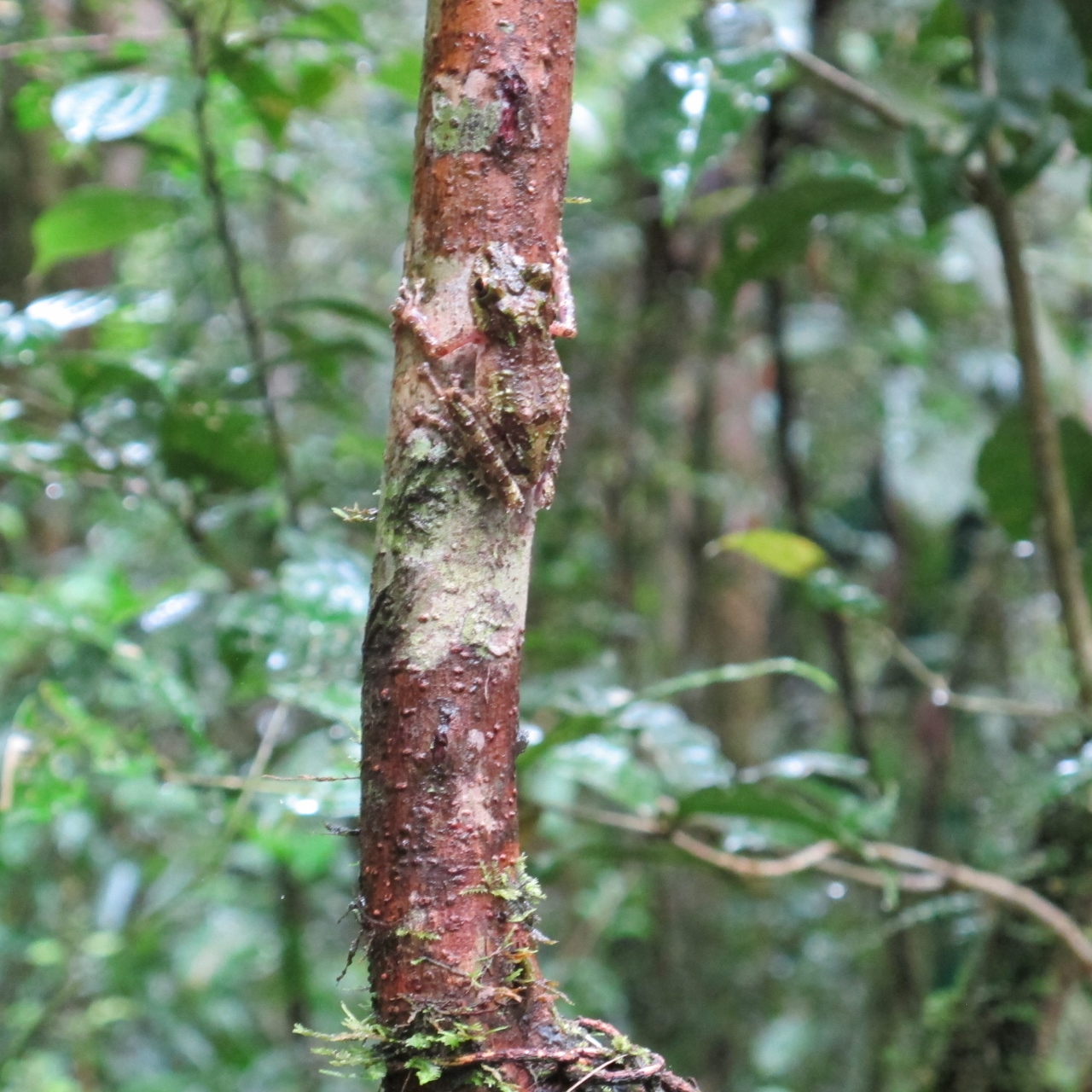
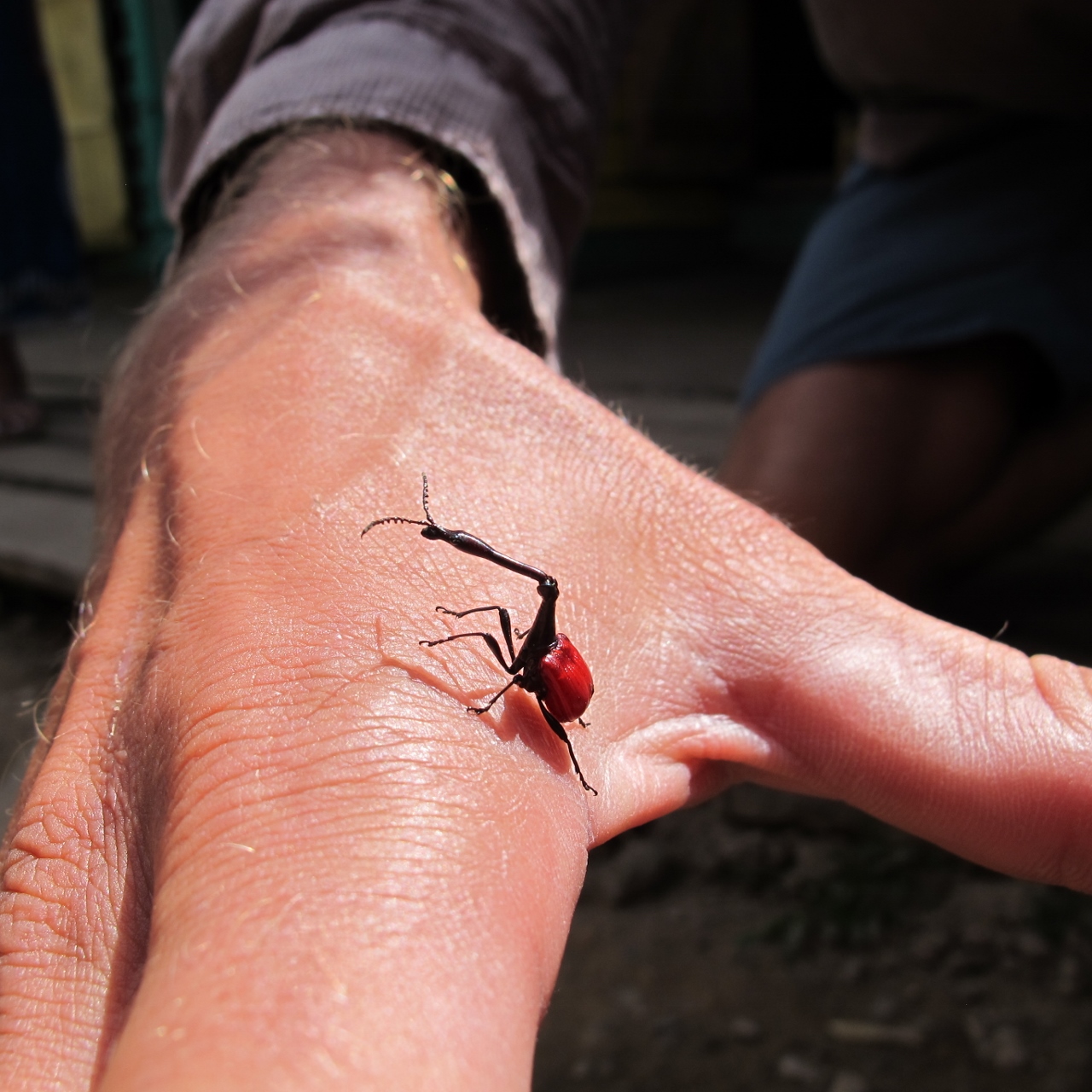
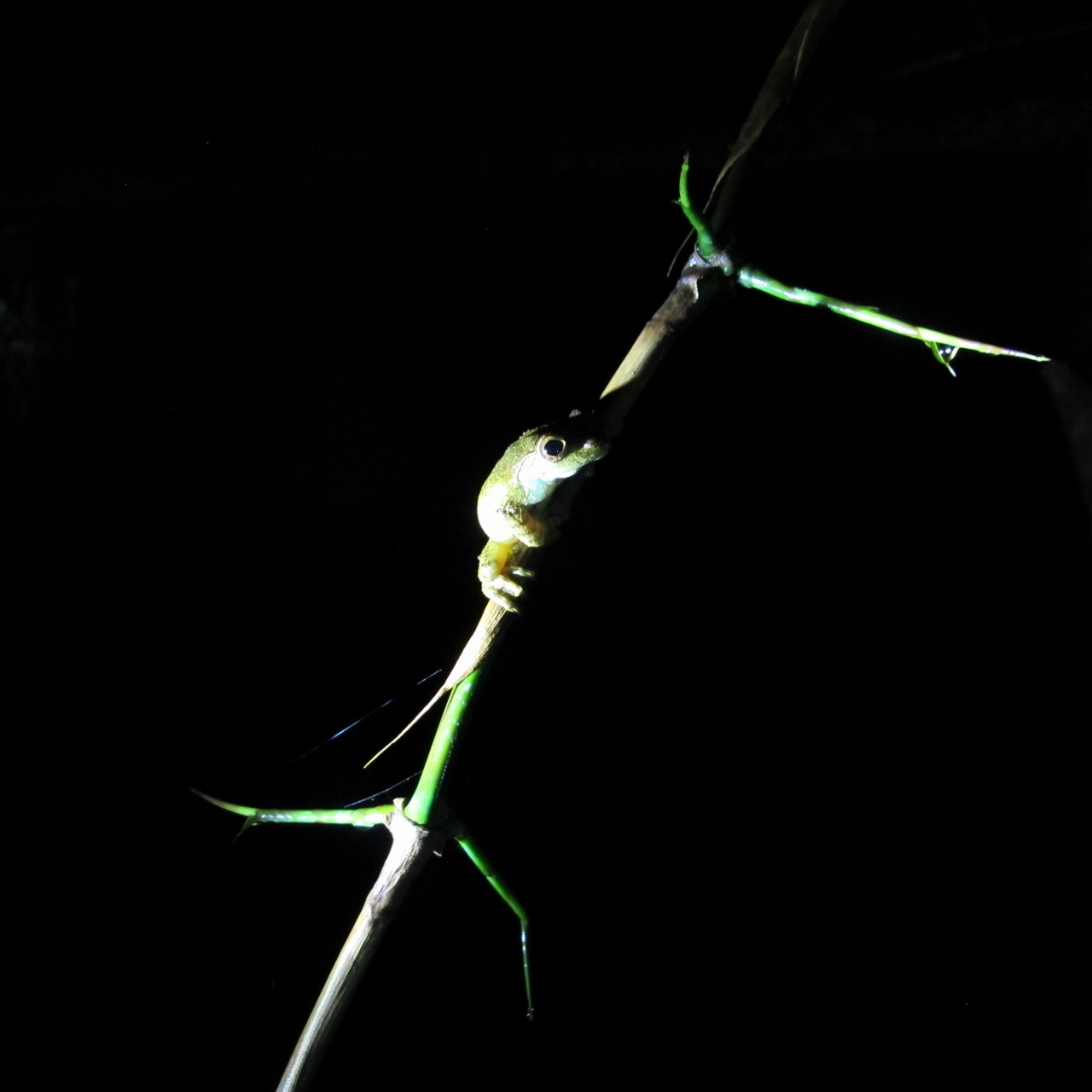
    Everything in the rainforest is alive. Leafs jump through the air on two hind legs. Sticks sprout legs and crawl. A group of flowers bursts into a kaleidoscope of butterflies. A gigantic centipede has leeches riding upon its back waving furiously in the air looking for a host. A small frog living inside the cup created by a broken stalk of bamboo. A Giraffe Beetle awkwardly poised on the end of a perforated leaf. Life growing upon life.

    Variegated packs of birds move through the forest amidst a medley of songs and chatter. Blue Cuoas jumping from branch to branch, swallowing tree frogs whole; Madagascar Paradise Flycatchers diving through the lushness trailing long white feathers; and Crested Drongos making regal sounding proclamations.

    Under the impenetrable blanket of the canopy the night resounds with a cacophony with barks, beeps, trills, and hums of frogs. Other nocturnal creatures are furtive and carefully climb through the trees with nary a sound, like the Eastern Wooly Lemur and the Brown Mouse Lemur. Their presence is only known by the reflection of their gilded eyes through the branches. The eyes of the Leaf Tailed Gecko offer no reflection; one must discern its aborescent disguise amidst myriad other dead leaves dangling from a branch.

    Chameleons crouched into leaf-like forms can be found stoically sitting on the ends of branches to better feel the approach of predators. Some are less than an inch in length, others more than a foot. Some are rose-colored, others are emerald, sky blue, grey, white, black. All of their eyes move independently, but with equal suspicion.

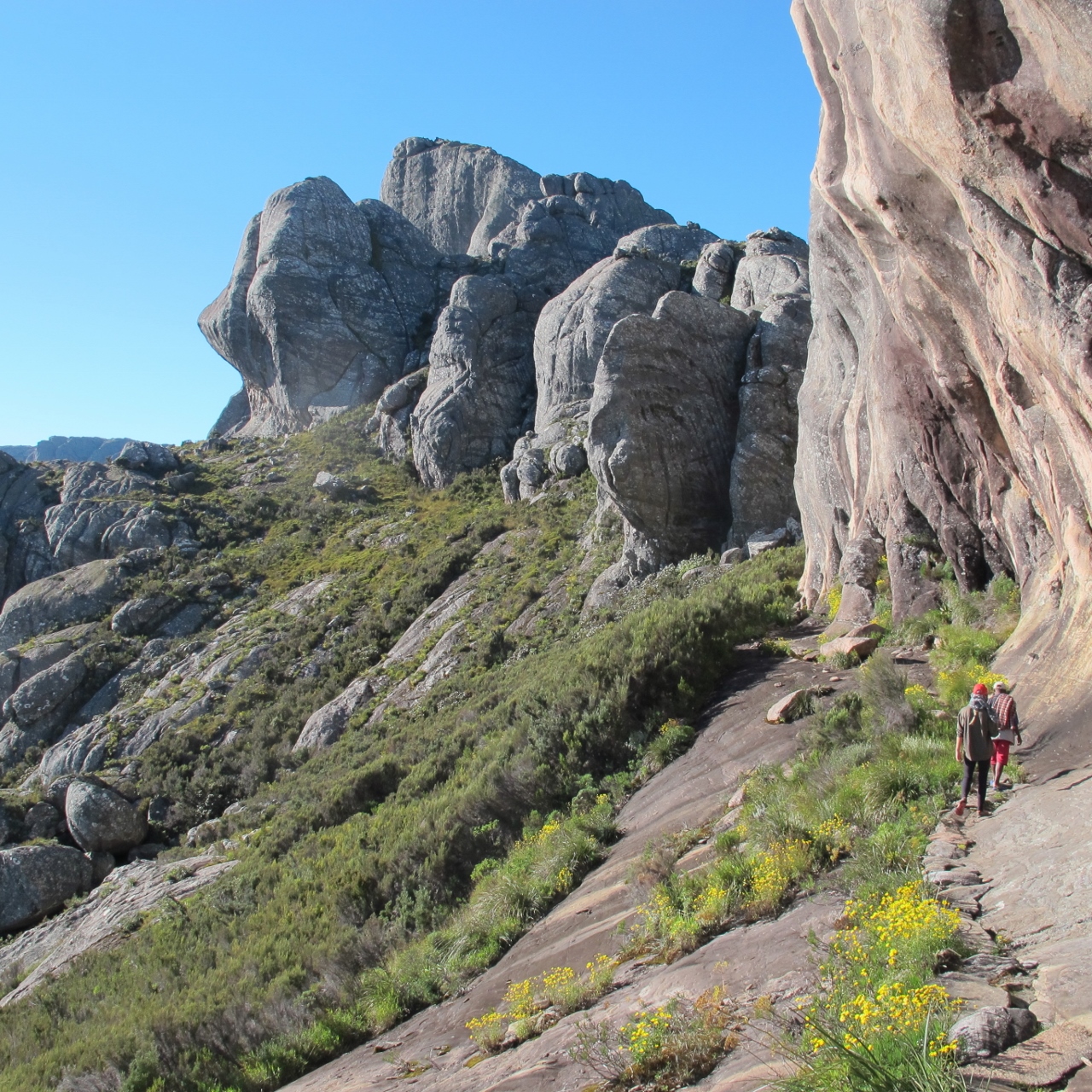
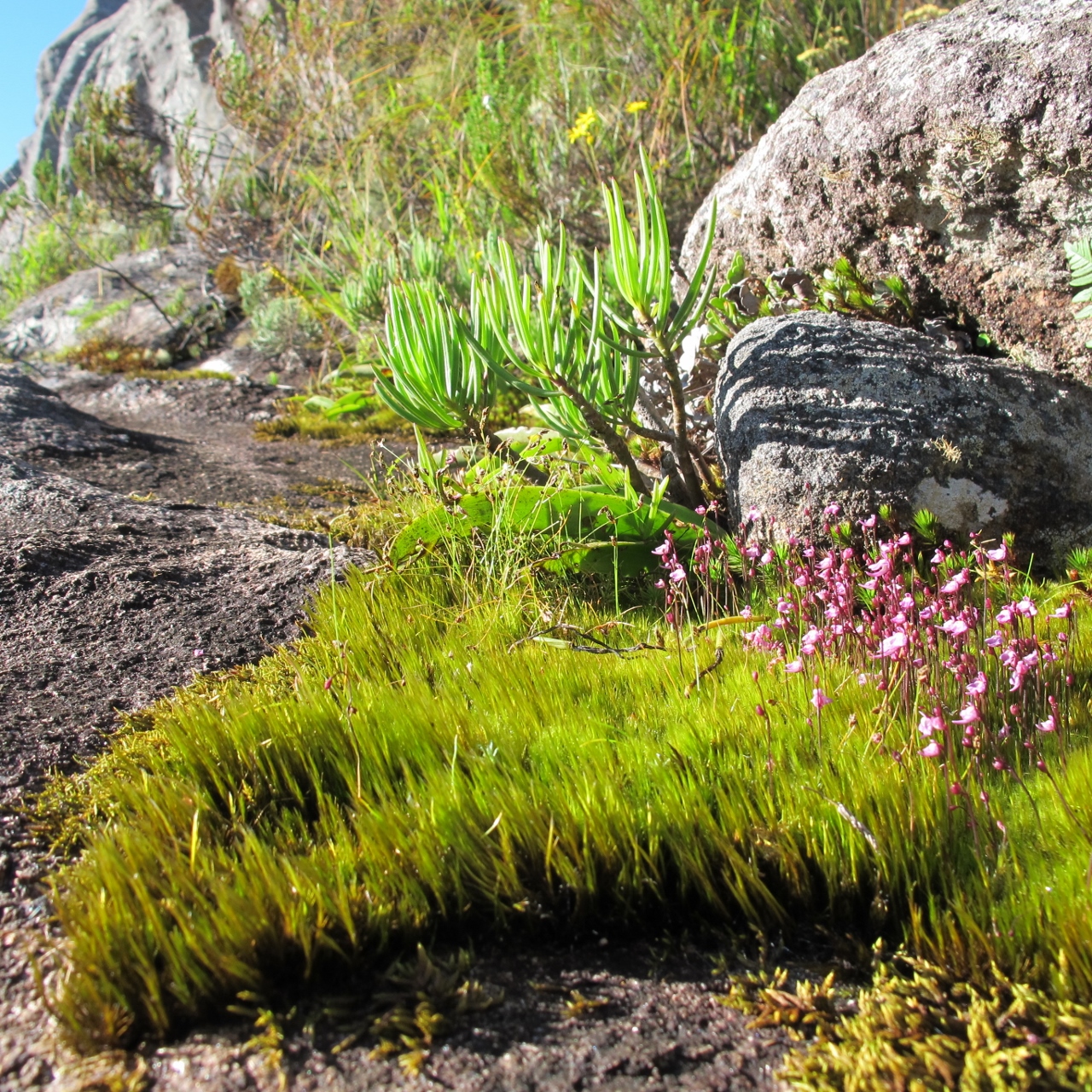
    In the center of the country, rugged, seemingly barren granite mountains burst forth from the plateau. A thick fog often envelopes them as the moisture laden air rolls in from the east. There is no towering old growth forest here – this high desert teems with life at a different scale. Out of the proliferate cracks in the granite massif pours forth spring water about which gather flowers, ferns, mosses, and bugs.

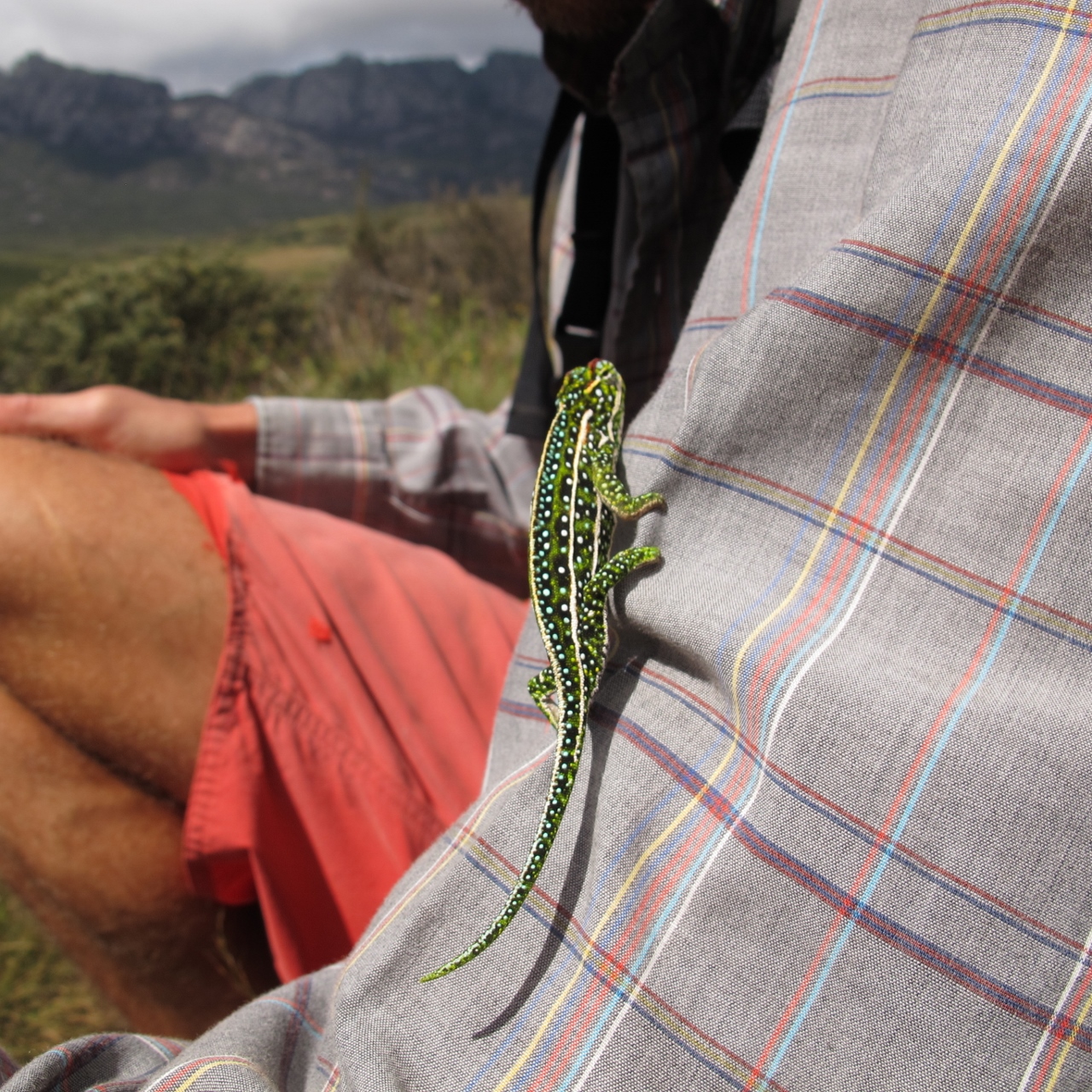
    These microcosms abound with tiny insects traversing a world of undulating sand particles and plants that give the terrain a surface area hundreds of times that visible from human scale. Shy, incongruously neon Carpet Chameleons wander the plains below. Rainbow Bush Grasshoppers clumsily jump about in a confidence likely rooted in their toxicity. The night is quiet as frigid air descends off the mountain and the lights of our galaxy begin to wink on and shimmer against the black unknown.

    The west has arid desert that is home to baobab trees and cactus. The vegetation takes hundreds of years to grow in the harsh dry environment. You could walk along in this landscape dying of thirst indefinitely, but there is a chance that you would come upon one of the canyons that slice through the landscape as verdant gashes of life. These perennial streams are lined with tropical vegetation that shakes with flying lemurs and echos with the calls of birds.

    In walking amidst such profusion and diversity of life I am reminded in a profound way that we are part of a vast organism. Wandering in the wilderness is a mental odyssey to our origins; with proper attention you can see the eternal cycle of death and rebirth that has stretched on since the dawn of life. The chameleon crawling up your shirt with its oven-mitt hands; the leech sucking away on your inner thigh; the malaria carrying mosquito buzzing around your head; the wild, edible berries along the trail; and the lemur urinating on you are striving to reveal a fundamental truth about existence.

  • Explore Mauritius

    Explore Mauritius

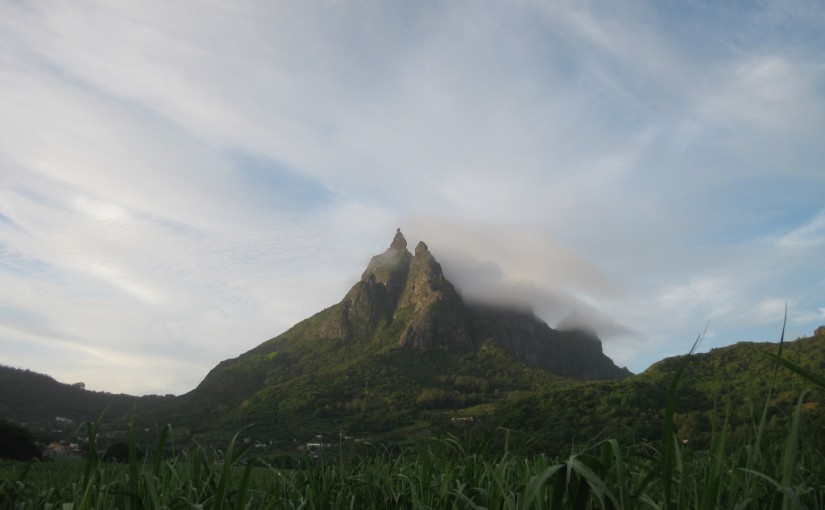
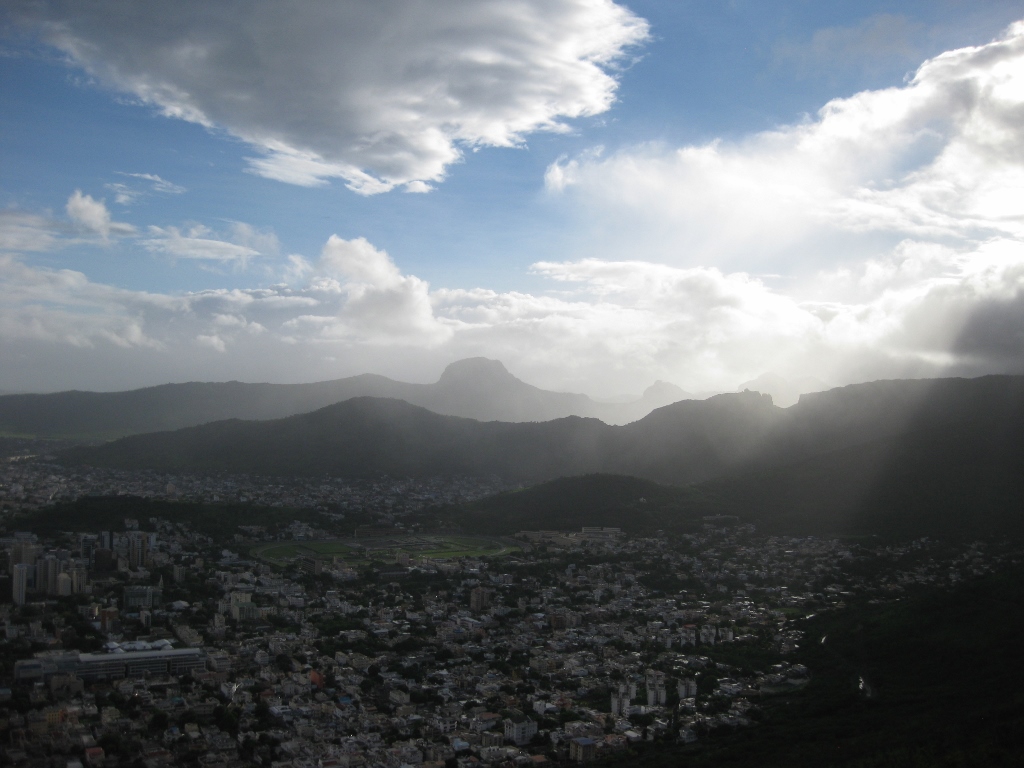
    It is a strange undertaking to simply arrive somewhere with the intention of undertaking a project, but with limited knowledge of the place, an inability to speak the local language, and no idea of what type of project to undertake. There were the additional constraints of having only five months worth of time and quite limited financial resources. I found myself last November in just this situation. For the first few weeks I watched insects crawl on the walls, read books and papers on climate change the environment, tested if I could give myself diabetes with mangos, figured out that the local beer made my hands and feet itch, and contemplated the human condition. I could identify many things that other people should be working on like pollution, waste, energy production, food security, education, inequality, corruption, and industrial tourism. Mauritius was not very different than the majority of the world in the problems that it faces, but many were more acute due to the constraints of living on an island. None of these areas seemed appropriate for me to delve into though.

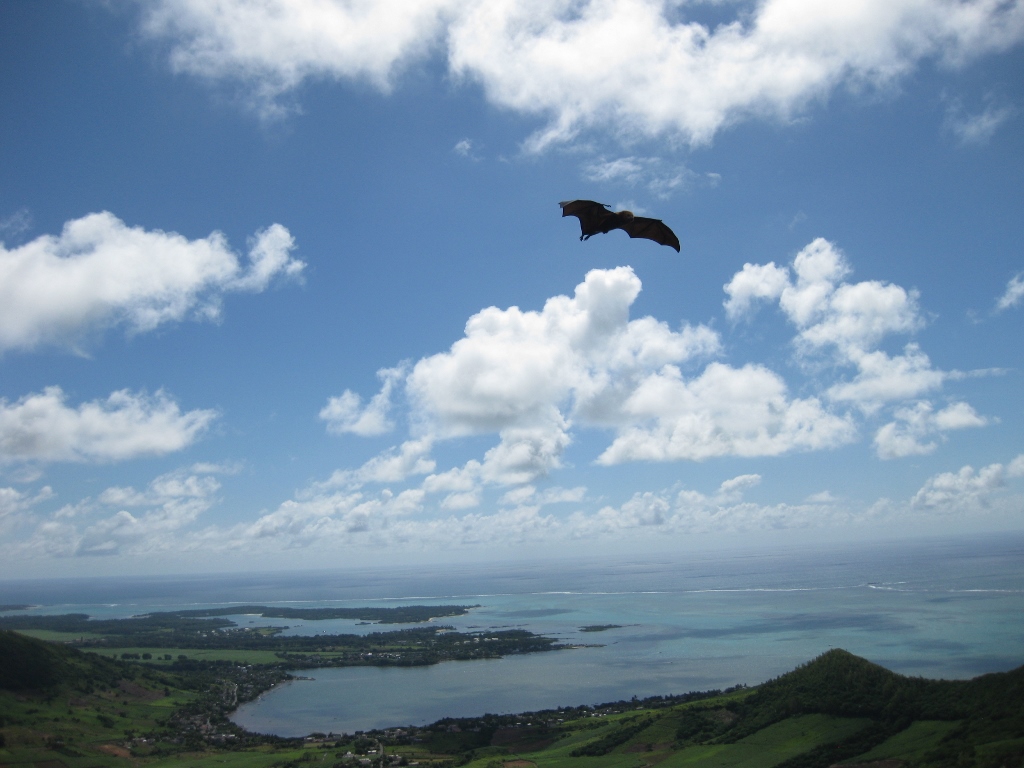
    After a month I felt no further along. I could not help but think that I could not find anything to do because I had an incredibly limited skill set and simply was not up to the task I had set for myself. If you need a problem to deal with you can always create one yourself. The first project that I needed to undertake in Mauritius was to help myself as the malaise and boredom were too much. I abandoned the illusion of altruistic action and returned to just doing what I enjoyed. I set about exploring the scattered remnants of natural areas on the island. I found happiness in the quiet of the forest and the inspiration on the peaks. I breathed deeply in the open, relishing the reprieve from the oppressive concrete sprawl and sugarcane wastes. It did not take long before I had hiked all of the well-known trails and peaks. I began scouring the internet and asking around to uncover new frontiers. I began bringing my GPS with me, taking photos, and writing about the trails. I hiked during cyclones in the howling winds and rain. I baked my arms in the tropical sun and came home sliced to bits by vicious tropical plants.

    Thus I found my winter project in the creation of a website called Explore Mauritius. I aimed to compile a detailed comprehensive guide that would enable Mauritians and tourists alike to experience the same joy I felt in the limited remnants of nature on the island. Additionally, I hoped to foster a stronger community around outdoor activities to protect these areas for posterity. In sharing something that I love I managed to combine many of the various skills that I already possessed and also learn a few new ones as I designed the website itself and the interactive map that became the centerpiece of it all. The map was built using Google Fusion Tables as the platform and Garmin Basecamp for editing tracks.

    The number of people who use the website and are getting outside is growing every week. I stumbled into doing exactly what I intended to do at the outset.