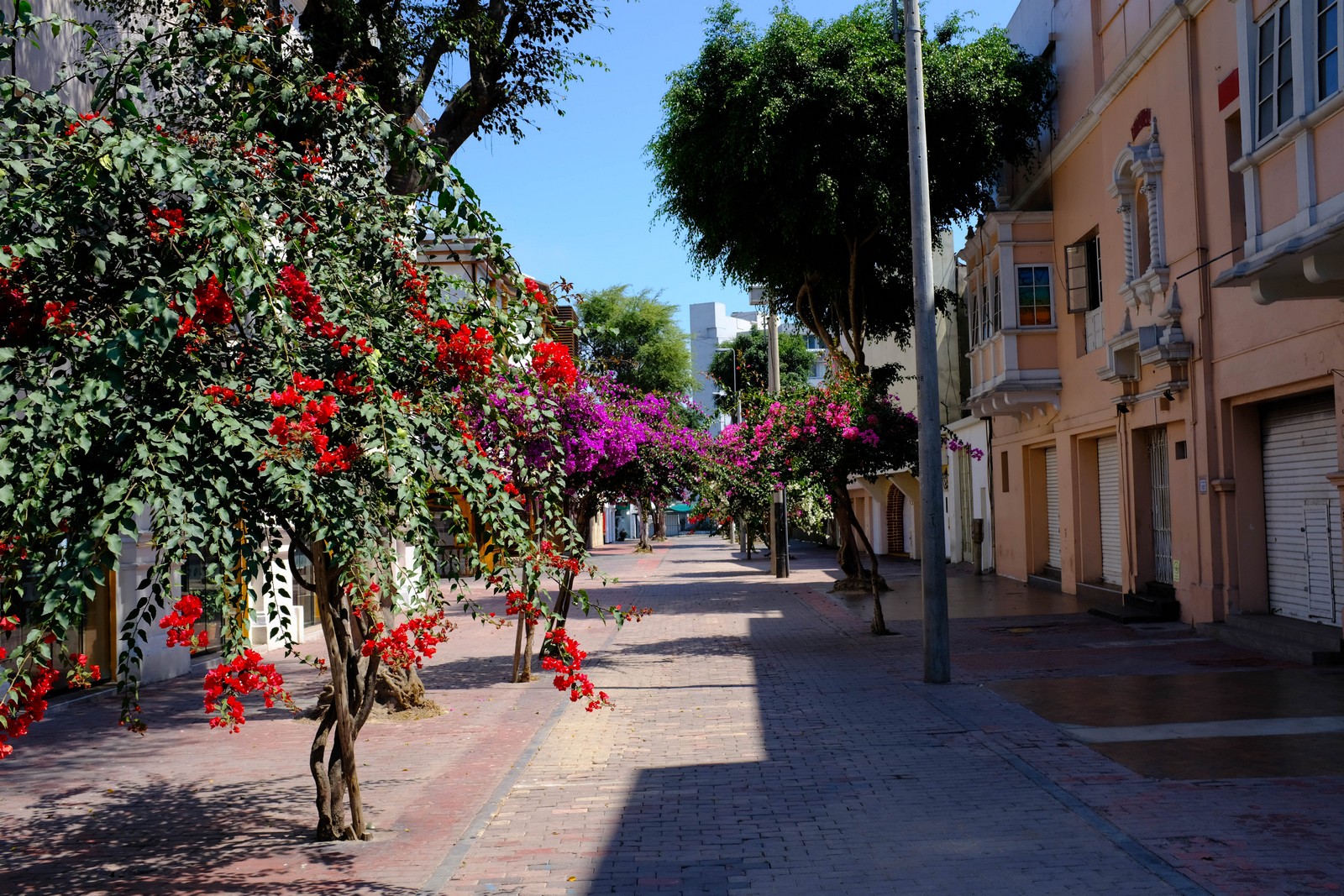
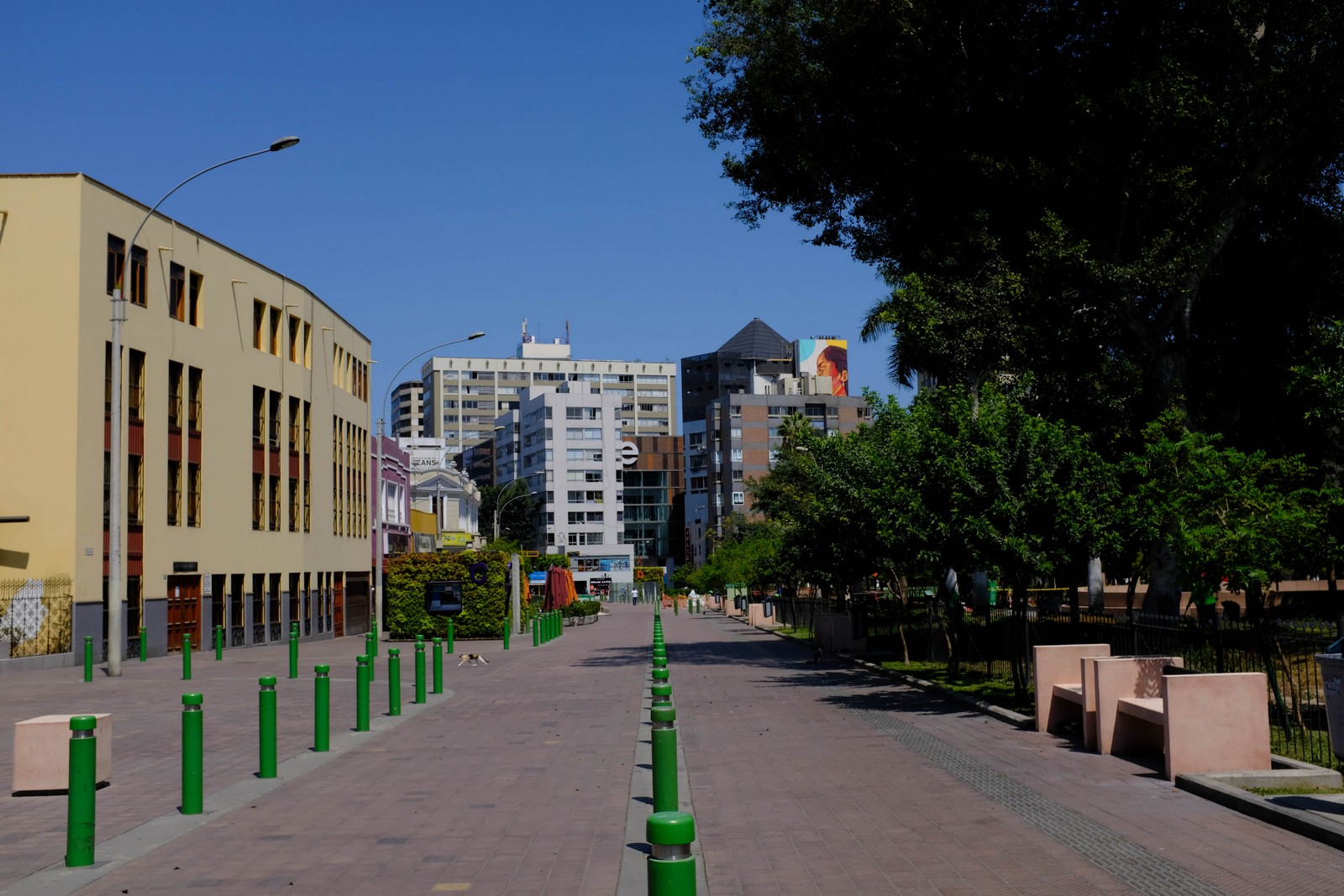
When I walk out the door on Calle de Amparo, I always look both directions before stepping out onto the sidewalk: to the left the narrow street climbs to the city center and to the right it descends towards the Plaza de Lavapiés. Both sides are lined by graffiti-covered roller shutters that are perpetually down. Mid-morning the street is washed and cleaned, leaving it devoid of trash and giving the false impression of recent rain each day. At any other point in the day, I’ll encounter a different scene.
Whether I go to the left or the right, I often come across what I call “les assemblages” in the early morning. These are visually arresting piles of incoherent detritus on the sidewalk created by nocturnal trash pickers pulling objects out of bins. A deranged assemblage, particularly those that that includes both food and electronic devices, can make me nauseous on sight alone.
Assemblage #4: A small electric fan lying on its side next to a filthy stuffed polar bear with one partially amputated leg overflowing with polyester. Both have been doused in what appears to be gochujang. The sauce has congealed into stalactites on the fan blades; the bear’s polyester marinates in a puddle of it atop a real estate agency flyer.
Assemblage #15: Large, particolored pottery shards scattered strewn amidst a muted backdrop of coffee grounds. The focal point of the piece is an airplane neck pillow that appears to float on a sea of semi-translucent, cerulean liquid with an egg-white consistency. The viscous liquid flows downhill cutting its way through the shards and coffee grounds, but once on open ground refuses to spread out or absorb into the bricks for unclear and concerning reasons.
The sounds of screams from fights in the plaza or periodic police raids frequently echo through the narrow chasm between the buildings at the hour of les assemblages.
Walking right takes me towards the Plaza de Lavapiés, which is raucous at all hours with music, people playing cards, and people whiling their time away. A peculiar feature of this area is that there are frequently roller suitcases scattered on the sidewalk, their clamshells splayed open. They are typically empty, but sometimes there is clothing strewn about as well. They haunt me. Are they from newly arrived immigrants? Were they stolen? In any case, what happened to their owners?
This street rarely fails to evoke a negative reaction from anyone that has lived in Madrid for any period; it’s synonymous with drug pushing and violence for many people.
— ¿Ya conoces todos los pushers? Es que hay uno en cada esquina allí.
—Pues…en la noche tengo miedo de caminar allí sola.
—No estoy en contra de la inmigración, pero…
If I walk to the left, I pass the Plaza de Nelson Mandela. There is often a middle-aged man sitting in his wheelchair at the top of the street just past the plaza. We acknowledge one another in passing but have never spoken. His regular presence piques my curiosity. What could he tell me about life? What does he know about this area?
I’ve only seen him once in another location. I stepped out the door on an unusually warm fall afternoon and looked downhill towards the right. In the middle of the road a shopkeeper from a produce shop down the street was straining to push him up the steep street towards his building. They came to a stop in the middle of the road, still a block from his building. At this moment, a young, blonde, well-dressed man — white button-down shirt, leather messenger bag — was headed in the opposite direction with purpose.
The man pushing the wheelchair addressed him in Spanish with a heavy Bangladeshi accent:
—Perdona. ¿Nos puede ayudar? Él vive arriba, justo después de la plaza. ¿Puedes empujarlo el resto del camino?
—Por supuesto
There was no further exchange between anyone. I watched as the young man rearranged his messenger bag, grabbed the handles of the wheelchair, and started up the incline. The other turned around and began descending back towards his shop. I vowed in that moment to tell the story of the other pushers of Lavapiés.
As I write the only sound that I hear is the dull roar of rocks perpetually tumbling in the surf. A month and a half ago the energy of the city was such that my windows rattled day and night as a steady stream of traffic passed below. Then on a Sunday night the quarantine was declared and on Monday the world was different.
I awoke on the first day to a chorus of birds in the trees that line my street, but gone was the old man who wheeled a cart full of fresh bread around, the call and response of taxi horns and the knife sharpener who roamed the streets whistling with his grinding wheel in tow. The rapidity with which public spaces had cleared created a surreal anxiety-inducing ambiance. I imagined myself in the empty streets of a Western with an invisible enemy that would only fight at a range closer than ten paces.
In every crisis, I imagine that there are moments that would appear tranquil to an outside observer, but the individuals who are living those moments rarely feel anything resembling internal peace. As the city slowed, my mind was still attuned to its now absent frantic rhythms, but there was nowhere to go and no way to expend that energy. My lesser developed lizard brain told me to flee or fight, but prefrontal cortex worked assiduously to keep me at home. I found myself indulging somewhat in hoarding impulses (I went to the store for wine and peanut butter), calling long lost friends and reading the news incessantly. I found myself pacing the apartment, organizing and cleaning to keep myself occupied. I couldn’t concentrate on work tasks and I couldn’t read the stacks of books that I dreamed the week before of having time to read. Writing was out of the question.
Then I got an unexpected text message – the other residents of my building somehow managed to get my phone number and included me in a group chat. In the three months that I had lived in the building, I had only exchanged pleasantries with a few of the elderly couples that live here. I knew not one of their names. There was an effort at coordination and overall concern for other people in the group, but I became focused on the way that the crisis appeared to have activated their base instincts: they shared videos – without condemning them – of the military brutalizing people for violating the quarantine restrictions, propagated rumors of snake oil cures, mused about the prospect of a crime wave from jobless hoards, demanded that all surfaces be doused in bleach each day, declared that no resident should leave the building unless it was a true emergency, mounted an aggressive inquiry after a dog turd of unknown origin was discovered near the front door and idly speculated about the couple across the street whose kids cry constantly. I felt like these people were panicking and I worried that it could turn against me. I vowed to go out each day for a walk and to continue seeing my friends.
I did not dare say anything as I hoped to maintain a low profile. I contemplated pretending to not speak Spanish if they tried to engage me any further. It all reminded me of an expression that is commonly used in the rural areas of Peru:
“Pueblo chico, infierno grande.”
From the roof
Almost immediately my apartment felt confining but as soon as that feeling arose, a thought came forth from the ether in response: maybe there was a way to get access to the roof of the building?
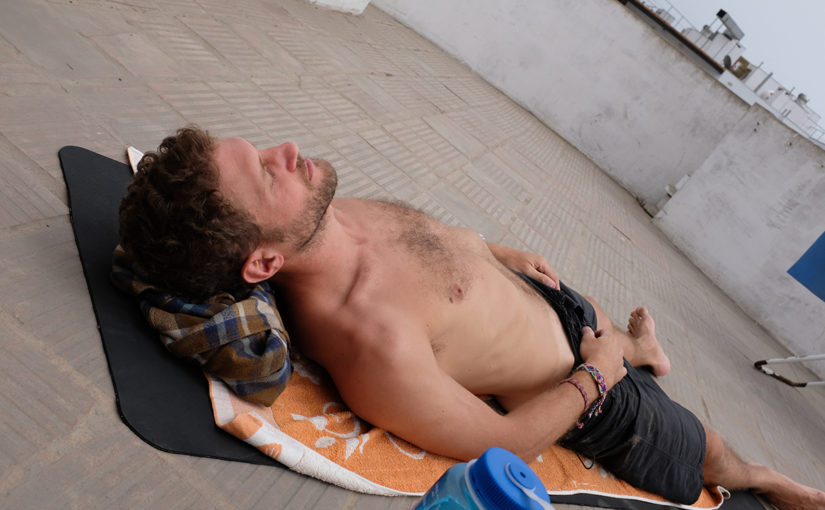
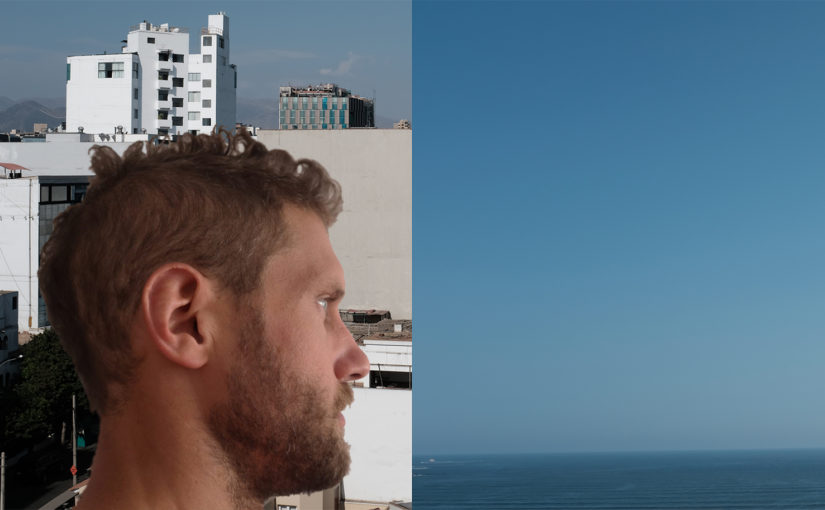
I furtively ascended the stairs to avoid creating suspicion and arrived at the eighth floor. There were two doors – one was clearly for an apartment. I gently tried the other knob and it opened. The roof! The sun was radiant and had transformed the color of the Pacific into that of the Caribbean. I carefully repressed the joy that I felt with the covetousness of a child who has just discovered something and wants to make sure no one else finds out about it. I marveled at the view as I paced the abandoned roof amidst broken wires, pigeon shit and scattered pieces of concrete. I swept the roof and found a camping chair with an awning at the grocery store that I began sitting in for hours each day.
As the days went on, I gradually adjusted to the slow and repetitive rhythm of the quarantine. I found myself far more present and conscious of my environment, especially the living things that I shared the space with. What I remember from this solitary week on the roof: a mass migration of seabirds bobbed and weaved past. Vultures perpetually stood perched on corners of nearby buildings like gargoyles. Boobies dive bombed and feasted upon a shoal of sardines that a pod of dolphins encircled. I saw a Grey squirrel – a recent immigrant to Peru – for the first time running on the powerlines in my vicinity.
In my apartment
I realized that I wasn’t alone in my apartment either. I share the space with one variety of fly on a full-time basis and two others that come and go as they please. The family of permanent residents, which have laid claim to the bathroom, is quite adept at ignoring me. They would let me get so close with my eye that it blurs without even the slightest reaction. Nor were they willing to respond to English or Spanish – I wondered if I was being hoisted by my own petard. The occasional lonely mosquito or moth was drawn in by my bedside light and arrived to provide me company through the night.
I began eating my breakfast standing up, because I spend the rest of the day sitting down. I stand in front of the window, looking out upon the street and the building across the way. I just watch each day begin without any expectation that it will be very different from the last.
One morning I heard a voice shout in English, “Do you live here or are you stuck here?”
It was the woman that lived across the street. I answered her and we introduced ourselves.
I had been wondering about her as I had only seen her by herself in the apartment since the quarantine started, but there was always a man with her before. I asked her, “How are you doing? Are you getting by alright by yourself?”
I instantly liked her when she defiantly responded, “Hah. I have never been busier. I am just writing all day.”
These meetings have continued. I eat my breakfast and she reads on her balcony. Sometimes we just wave to one another and say hi, but other days we talk about writing (she is a screenwriter), about her husband who is trapped in Minneapolis, about how our lives have changed and about how beautiful the city has become. We are only occasionally interrupted by the passing of a car, something that now seems like an insufferable intrusion.
On the roof
During the second week of the quarantine, I was drinking wine on the roof when Giaconda from 503 arrived with her daughter Alejandra. I knew from the memos around the building and the group chat that she was the president of the building. I assumed that I was going to receive a lecture for being on the roof; I assumed a standoffish posture. This did not come to pass. We chatted briefly in English and my plan to feign ignorance of the Spanish language fell apart. Then a few days later, another couple – Jorge and Luisa – arrived with a bottle of wine just before the sunset. Then Andrea and Jose came with beer and a joint. Then Pierre, Rafael and Aldo with his boxer. I put faces to nearly every name from the group chat over the coming days.
When Pierre arrived, he asked a few of us on the roof – with a straight face – “Do you know what rule I have implemented to make sure the virus doesn’t make its way into my apartment?”
No one said anything. I awaited an answer about dousing your doormat in bleach or putting soap under your fingernails.
He said with a grin, “Whenever any of my girlfriends come over, I make them take their clothes off at the door.” We had entered a different space than the group chat.
The quarantine has entered its sixth week and a constantly varying group of us has continued meeting on the roof each evening (while continuing to practice safe social distancing of course.) The crisis managed to lift the depressing grey blanket of pollution from the city, but it also parted the curtain upon a world that I did not know could exist. A space was created on the roof in which complete strangers gather in this socially fragmented city for the simple joy of having company. Sometimes we merely sit in silence and inhale the rich smell of the sea being swept up off of the bluffs. When a new piece of bad news surges forth – a significant jump in cases or hospitals reaching their capacity – the fear that grips everyone’s lives is palpable. But most of the time we have conversations that veer off into the intimate and deep as we discuss our families, our passions, our childhoods and our plans for what we will do if we can ever do it again.
One night I went up to the roof and Rafael was already up there looking at the stars.
I mused aloud – “There is probably no one alive that has ever heard Lima this quiet. Maybe 80 or 100 years ago it was like this.”
Rafael thought about my remark for a moment before responding – “There were long periods of curfew when I was young, during the years of terrorism. It was different back then, far quieter even, because you might get shot for setting foot outside. We would have parties that were called “de toque a toque” (from curfew to curfew) because you would start drinking and dancing when the curfew started at night and continue until it ended the next day.”
This conversation led to many others about what Peru used to be like. I am reminded how the majority of people in this world have endured significant crises beforehand. This country only emerged from decades of violence and economic hardship at the start of the millennium. These people who are decades older than me have endured food shortages (there were shortages of even basic necessities like flour, sugar and oil) and car bombs in the streets (Both Rafael and Giaconda have friends who lost eyes due to flying glass). I learned that the cross that shines brilliantly over Lima is constructed out of downed electricity transmission towers that the terrorists dynamited decades ago to cut power to the city. These people are resilient and take pride in handling the crisis stoically through solidarity, humor and mutual aid.
I look forward to the sunset each day, to passing time with these people that I would never have had time for otherwise. It creates a sense of normalcy and comfort amidst isolation and chaos.
In the streets
Each night, the windows and doors of the apartments that line my street slide open and the silence of the city under quarantine is shattered by raucous applause, music and piercing whistles. It began as a means to show our gratitude for everyone that is risking their life to keep us safe, healthy and fed, but I think that the nature of it has changed over time.
I read articles about the resolve fading in other cities as the quarantine drags on; that fatigue eventually silenced the streets. This has not happened in Peru. And in my case, I have become even more dedicated about the practice as time has passed. The cavalier attitude that I had at the start of this crisis has been replaced by empathy for the stress that my neighbors are enduring and a serious concern that I could potentially put one of them or all of them at risk through my actions. The nightly applause is a small gesture that I feel enables me to acknowledge and express my gratitude for the efforts and sacrifices that my neighbors are making to ensure our collective well-being. We are not alone in this.
The destructive rhythms of Lima have ground to a halt.

I lay on the couch,
sit on the floor,
pace on the concrete roof,
and dream
of floating through a redrock desert on a swollen river;
of walking though a verdant forest under towering trees;
of sitting on a ridge line looking out upon endless ranges.

I don’t want to go back.
It is important for a writer to write about their world with the idealistic hope of arousing the most rarified elements of the human spirit – understanding, empathy, compassion, curiosity – in a reader by providing a window onto that world. Welcome to my balcony caballero.
On Easter Sunday I was reminded of the many countless people around the world performing selfless acts of kindness by my neighbor Linda. She knocked on my door early in the afternoon.
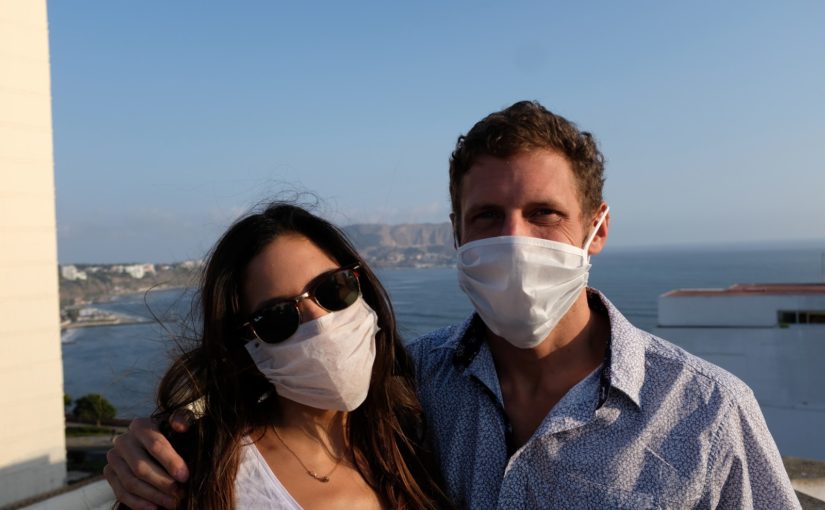
“What kind of mask have you been using?” she enquired. I gestured over to my table and said, “I just have one of the cheap ones from the market that probably don’t do too much.”
“I made these for everyone in the building. Take one of these so that you are safe,” she said with a smile.
She recounted that another resident of our building had ordered a 50 pack of surgical masks, but they arrived and much to her disappointment seemed to be of dubious quality. She rapidly and correctly identified the problem: they allowed too much air to pass through. After multiple experiments sewing in various types of fabric that would filter the air better and limit its free flow, she came across a vinyl shower curtain type material that she had left over from an interior decorating project that she had done years before.
I took the mask and examined it closely, scrutinizing the impermeable rubber layer.
She touted the benefits, “It doesn’t allow anything through. I even tried it with water, and it didn’t allow even one drop through.”
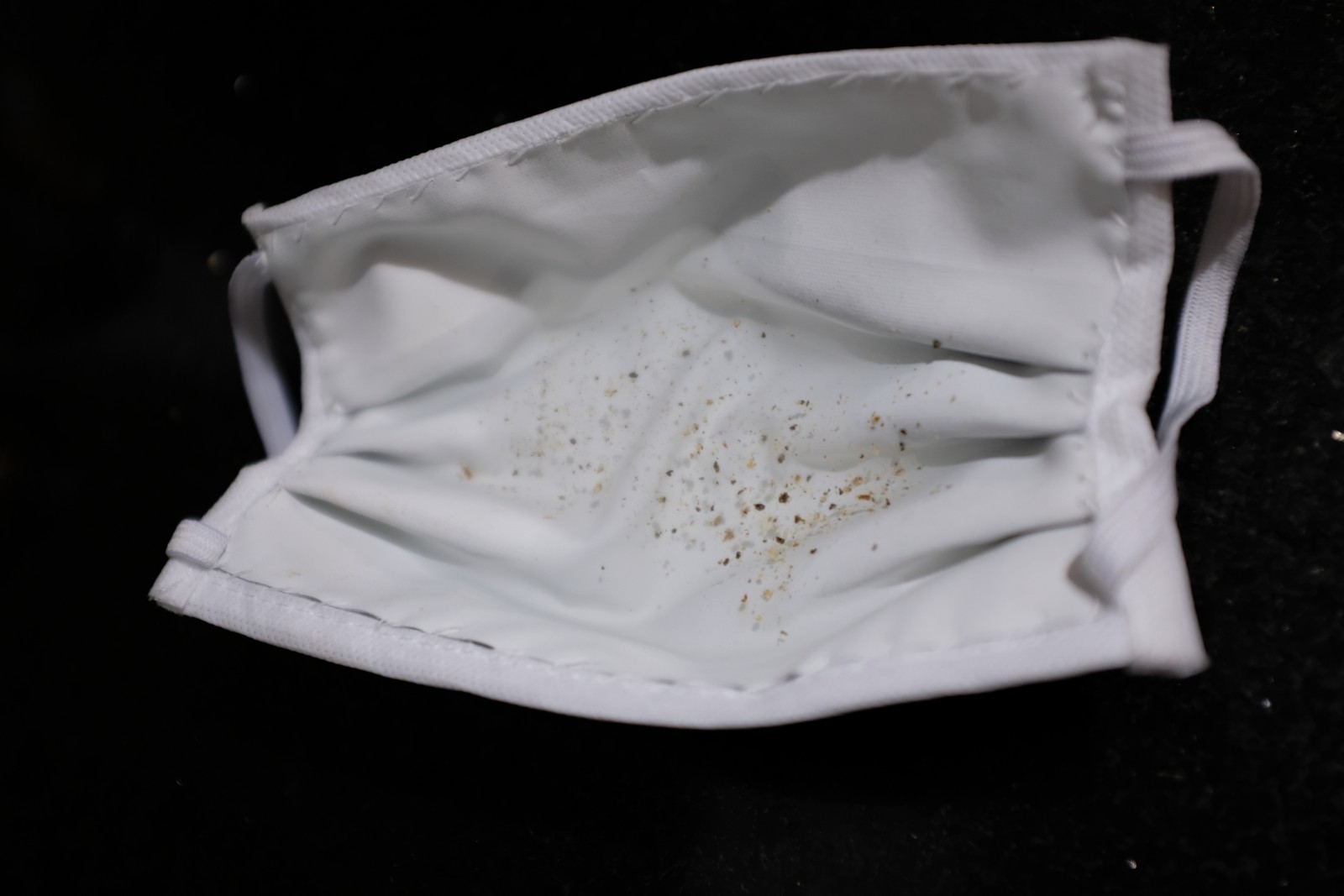
The mask filled with water. (Pepper added for contrast and depth, not to induce sneezing and increase my neighbors anxiety.)
“I hope it allows air through,” I said politely.
“My husband said the same thing,” she said dismissively.
She is right that wearing a mask that doesn’t allow any air to pass through it does make it 100% certain that you will not contract COVID-19 through your airway.
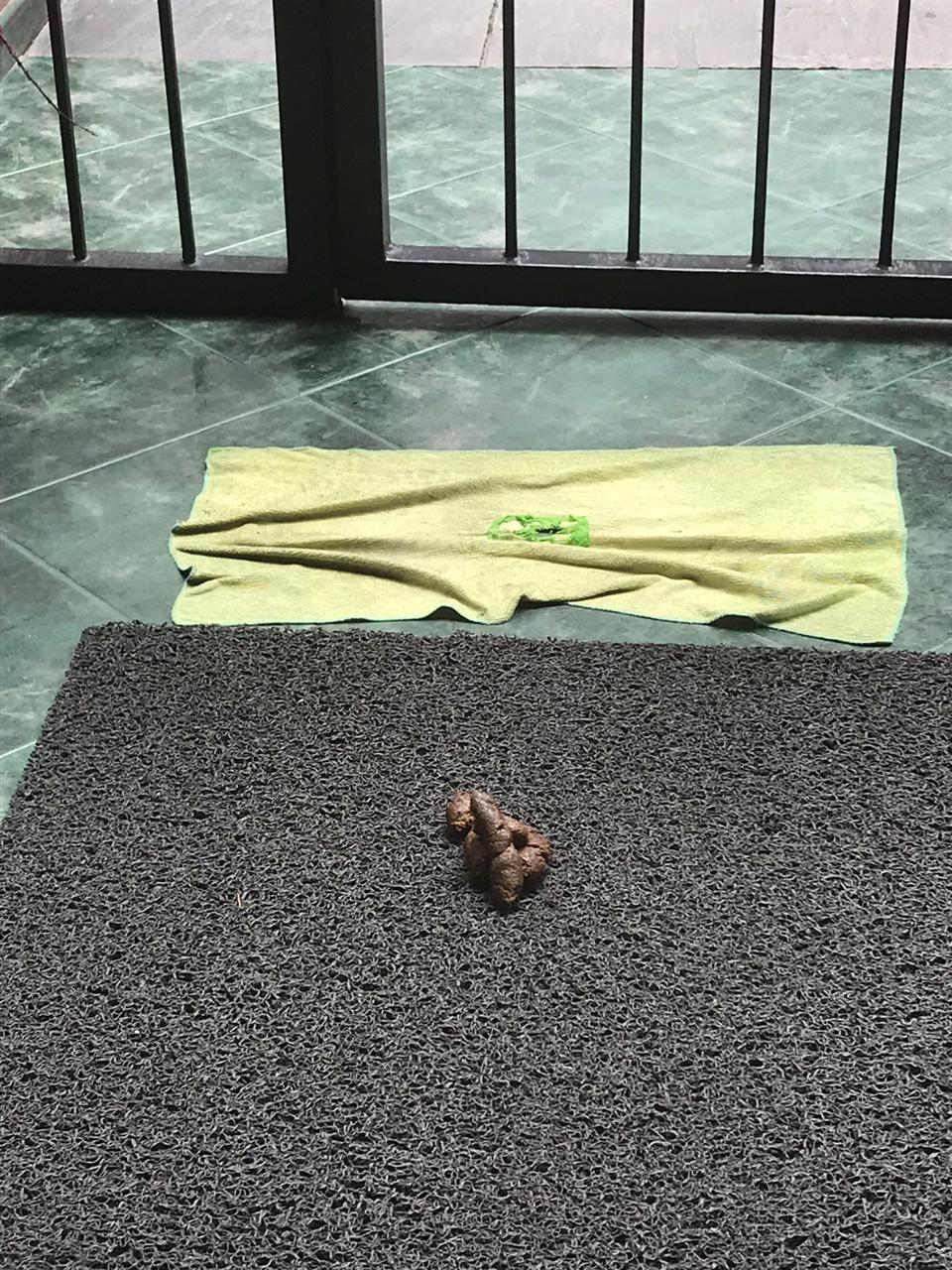
Several of my neighbors would have appreciated these masks over the previous days as tensions rose as rumors spread through the building of a shocking development on the first floor that was compromising all of our health, a sanitary crisis. These rumors in the coming days would lead to baseless accusations being flung around that would pit neighbor against neighbor. It appeared to have been seemingly intentionally left there, carefully placed in the middle of the doormat for maximum effect. Wild theories were put forth, including that someone entered from outside – adding to the concern of contagion. It wasn’t clear if the gate was left unlocked in this theory or if the intruder bypassed the electric fence that surrounds the building. The inferno was stoked by the fact that the building’s management was safely ensconced in their homes due to the quarantine rendering revision of the security cameras impossible.
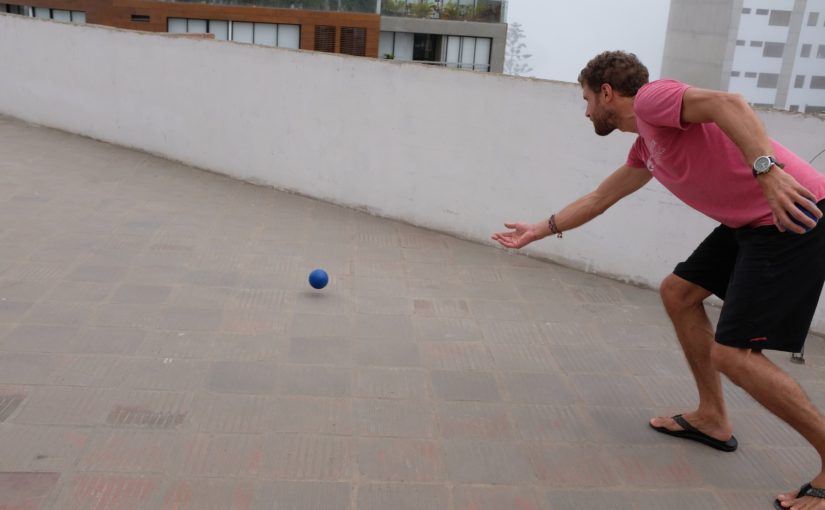
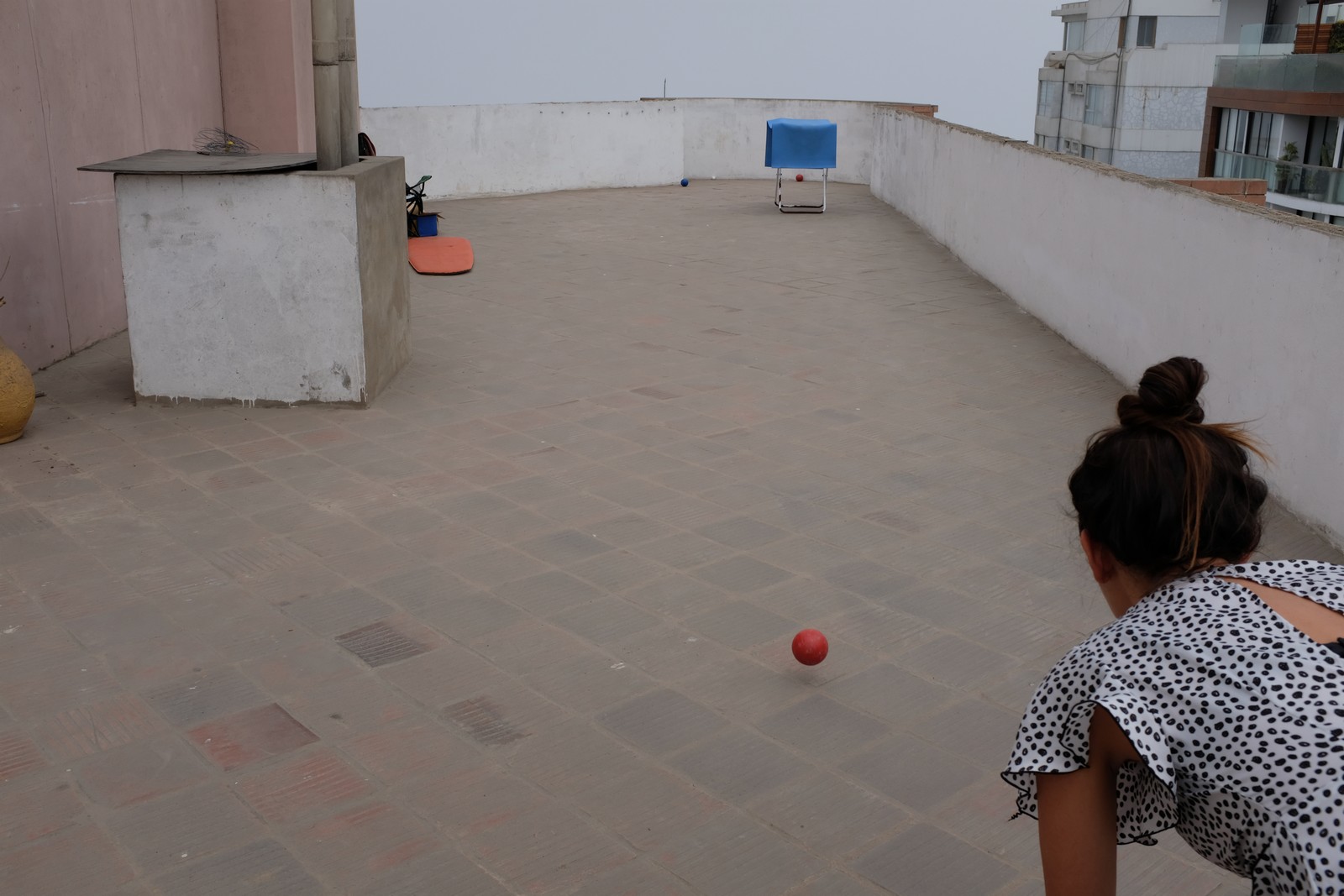
The pulse-quickening suspense of this interminable wait combined with the restrictive nature of my newly acquired mask drove me to the roof of the building. To play bocci. Without a mask. As I ascended with my friend Olga, we passed one of my neighbors that I hadn’t met beforehand named Pierre. We exchanged pleasantries and carried on our way.
In the midst of our bocci game, Pierre joined us on the roof to introduce himself.
“Hi – Im Pierre.” We introduced ourselves. “I live in apartment 302. I am a photographer and I am losing all of my inspiration being trapped in the building with no one to shoot. And when I saw you guys pass on the stairs I thought that it would be great to take photos of you. We could wait for a day with nice light – like today – and just do something casual. Let me show you my work on Instagram to see if you are interested.”
We scrolled through his photos. All of them were of sultry women dressed in lingerie giving the camera provocative glances, well unless they were bent over in a way that might lead to a neck injury if they tried to look into the lens. I didn’t know what to say, so I didn’t say anything. Thankfully, Olga carried the conversation by changing the subject and switching to French. We exchanged contact info, but I don’t think that Pierre wants to have a photoshoot with me.
My mental state ebbs and flows. Never before have I had the chance to run an experiment like this, to sit for weeks on end in the same place, largely determining what each second of my day looks like. These conditions can precipitate out the good and toxic elements that flavor each day. This is what it looks like.
The city is quite quiet. There are no cars, no people after 6pm. A voice speaking any language other than Spanish or a car that sounds abnormal bring me to the window to look out. I have seen five different species of bird in Lima that I did not know existed beforehand – I wake up each morning to their raucous calls and songs as if I am in the jungle. These emerald and cerulean birds were always here, they didn’t migrate with the virus, they were simply rendered mute by the urban machine. I live several blocks from the beach and my bedroom now sounds like I am on the beach each night; I can tell when a swell comes in from how loud the waves are as they tumble the rocks along the coast.
It has been impressive how quickly the measures that we are enduring have become reasonably normalized. The initial discomfort that resulted from the repressive confinement has faded and has been replaced by a mere ennui. There have now been multiple days in a row when I haven’t left my apartment and haven’t really felt much of an urge to do so. Every couple of days the government imposes even more draconian policies and each time it bothers me less. We are at the point where I can only legally go outside during two days this week – just for groceries and while wearing a mask. These are strange times though. Everyone wears masks. We all avoid one another in the street. No two people walk together. I see a video online of a body or person being removed from a building two blocks away from me on a stretcher enclosed in a clear plastic bubble.
Each morning I get up to meditate. I feel inordinately sensitive to everything that happens around me. I imagine that this is a direct result of the sensory deprivation that I am experiencing. I observe the doves that roost outside my window as they gather materials to build their nest. I watch the flies and bugs that live in my apartment with intense curiosity. I slowly approach them to avoid spooking them, bringing my eye close for a macroview. I have even caught myself speaking to them, in jest I tell myself, but maybe this is how insanity begins?
My mental state is directly correlated to how much I stare at the amidst whirling media vortex that gathers up – often without regard for the dubiousness of its origin – and spews forth medical reports without sufficient explanation, information about unproven cures, geopolitical propaganda related to the crisis, anecdotes from frontline workers, reports of shortages, recipes for quarantine comfort foods, reports of surpluses, reports of boredom, reports of exhaustion, reports of bodies in the street, fun craft projects, discussions of how to dress for online meetings, reports of stock markets surging, and reports of economies collapsing. Charlatans become scientists. New comedic geniuses arise. Politicians proclaim themselves doctors and epidemiologists. Those pandering false hope become heroes. Doomsayers become prophets.
I have started having frequent nightmares about the virus, earthquakes and the death of loved ones. I woke up screaming once this week. My quotidian existence though is relatively mundane. Weekends are a meaningless concept. I regularly lose track of what day of the week it is as it is irrelevant. I do little laundry as most of my days are spent in my underwear or my pajamas.
I met a girl – Olga – a few weeks before the quarantine started that was here in Lima for a work project for several months. We are very different people, but when the quarantine was imposed, we found ourselves trapped in our respective apartments alone. Her work promptly laid her off and she is working to find her way back to Santiago. We began visiting one another to have company, moving between one another’s apartments by taking specific routes on which we are less likely to encounter police with our addresses memorized and grocery shopping bags in hand. We now spend several days each week together cooking, reading, watching movies, drinking wine and helping each other to navigate these strange and difficult times. We have become close friends, forced together under the circumstances to openly share our lives with on another.
I watch other countries with horror as I sit feeling relatively safe in Peru due to the stringent measures that have been imposed. Ecuador serves as a reminder of what could happen here. I find myself thinking about exit strategies for Peru, about political/economic/medical measures to strike a manageable balance between cases, medical resources, and the need for a functional economy. I wonder about what travel will look like three months from now: without a vaccine how can global travel function?
These are strange times in good ways as well. Each evening I head up to the barren concrete roof that caps my building to watch the sunset. A few nights ago, there was a rare clear sky above Lima. Olga and I finished a bottle of wine as we looked up at the stars and fantasized about what we will do and where we will travel when this is all over. We talk about how good we truly have it in this very moment, that it is all just a matter of perspective.
How life has changed in the past week reminds of this quote from Hemmingway’s “The Sun Also Rises”:
“How did you go bankrupt?” Bill asked.
“Two ways,” Mike said. “Gradually and then suddenly.”
There was one case, then a few days later six cases. The response from many was that these were just imported cases and that there was no community transmission, hence no need to be overly concerned. Nonetheless, there were reasons for anyone who understands the economy and institutions of Peru to be gravely concerned about the country’s ability to handle an epidemic that require extreme caution and a proactive response:
Lima has roughly 10-11 million residents densely packed into the city. These citizens use overcrowded public transportation to commute and Lima would never be held up as an example of a city with good hygiene and sanitation practices.
The Peruvian public healthcare system before the arrival COVID-19 appeared to be underfunded and quite stressed to meet demand. In any case, the healthcare system in Peru is far inferior to the completely overwhelmed system of Italy.
An estimated 73% of the workforce is employed in the informal sector. These people are working in jobs that often pay minimum or less than minimum wages. These may be people who work in professions that don’t pay taxes such as in an informal markets or roaming the street selling soda or food. In any case, these are not people who generally have significant savings to weather economic or medical hardship.
There are an estimated 800,000 Venezuelans that have arrived fleeing their home country’s economic and political ruin. It is difficult to find hard data, but I think it would be safe to say that the majority of the Venezuelans here do not have significant savings and are employeed in professions that do not provide any form of safety net (informal sector). Many people are working in restaurants, bars, delivery services or on the street.
In the past few weeks various reports and articles were published that detailed what measures had proved successful in China, Korea, Hong Kong and Taiwan in their battle against the virus. These articles highlighted widespread and rapid testing, social distancing measures and contact tracing as being of vital importance to flattening out the slope of the caseload. Thinking began to shift – it was now widely acknolwedged that global community spread was inevitable, but that measures needed to be taken to avoid a health crisis of unknown magnitude. Few people in Peru seemed to think that the government would be capable of implementing strict quarantines, widespread closures of businesses or the degree of social distancing that would be required to properly control the spread of the disease.
On Friday (13/3) it seemed quite apparent to me that things were getting serious and that our lives were going to change, although still seemed a bit distant in this moment. My honest reaction, along with that of my friends, was to go out drinking to say good-bye and toast to the end of the world as we knew it.
On Sunday (15/3) rumors began circulating that there was to be a message from the president to the nation in the afternoon. The administration was unable to keep a lid on the subject matter of this message and it was widely circulated on Whatsapp that a strict quarantine/stay-at-home order was to be be announced.
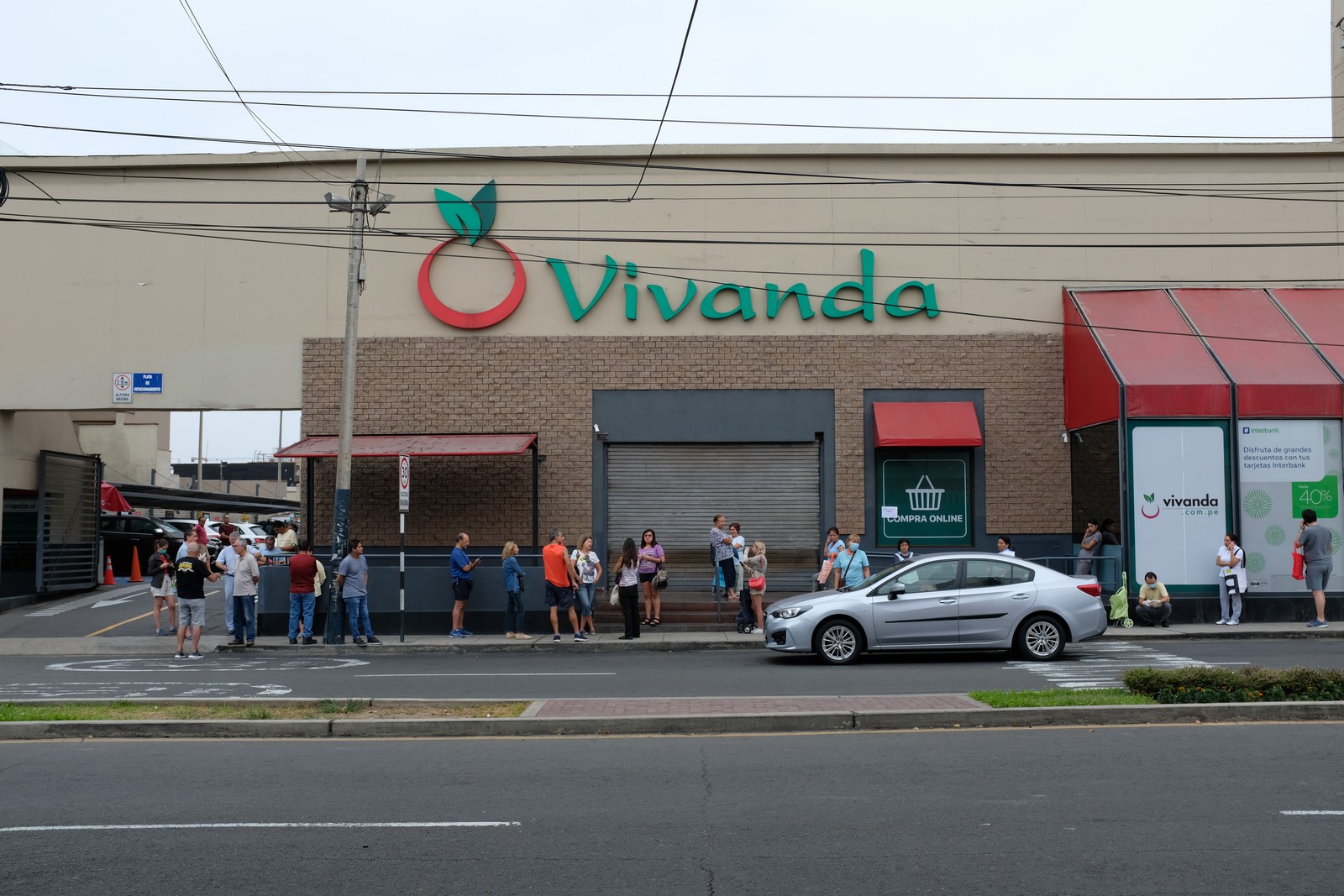
Line at a grocery store in San Isidro.
I had been following the news in the US and had gone out shopping during the last week to bulk purchase essential things like rice and beans. I decided to head to the store to stock up on some other items, but primarly to get a feeling for the public response to the rumors. When I arrived at the store, a greeter sprayed with hands with alcohol and then I merged into the mass of people walking briskly through aisles and bumping into one another as they frantically grabbed items. The shelves of rice and beans were empty, although there were notices announcing the rationing of essential items. I was stockpiling non-essential items: onto the non-essential items: peanut butter, olive oil and bottles of wine and liquor
At 8pm the president of Peru – Martin Vizcarra – announced that Peru was declaring a state of emergency for the next 15 days or until the end of the month. This meant that there would be a strict quarantine/stay-at-home order put into place – people would only be allowed to leave their homes to purchase essential items, to work in an essential industry, to seek medical care or to help the elderly/disabled. The borders would be closed to all passenger transport. Peru would also halt all internal transport. Essential services would remain open – hospitals, supermarkets, banks and pharmacies.
I fully support the Peruvian governments decision. It has comforted me that the government is taking the situation seriously and responding appropriately, but it has definitely raised my personal anxiety levels. The situation for myself as a foreigner here had already become quite complicated; the virus had already caused the organization where I work to make significant cuts and to plan for further cuts that threaten my job. I don’t know if I will have a job going forward, I don’t know what will happen to my family/friends in the US and I don’t know when I will be able to see them again. But I have built a life here that I simply cannot abandon with a few days notice.
After the announcement was declared, I went out with a few friends to have our last supper. The Indian food that we ate was delicious, but the restaurant was packed with foreigners and the staff seemed quite anxious to get us out of there and close. We went to a nearby Irish pub, I was expecting there to be a spirit of reckless abandon and end-of-the-world comraderie, but the mood was somber. Most people stared down at their phones as they tried to understand what was going on here and globally.
Day 1 (16/3/2020) – I didn’t sleep that night as the quarantine went into effect. At 5am the city was completely quiet and the birds sang outside my window in the dark. There was a good swell in and I could hear the waves crashing against the coast. There had been no specific communication around surfing and a text I had received said that the rules did not go into effect until 8am, so I decided to go for it. I put on my wetsuit, grabbed my new board and then ran bare-footed down the dark, quiet streets. I stretched on a bridge that straddles the coastal highway and read the surf. After five minutes, I decided to see if anyone would stop me. The normal police officer stood near the bottom of the stairs, but he faced away as he watched a video on his phone. With barefeet, I was able to pass by him without making a sound.
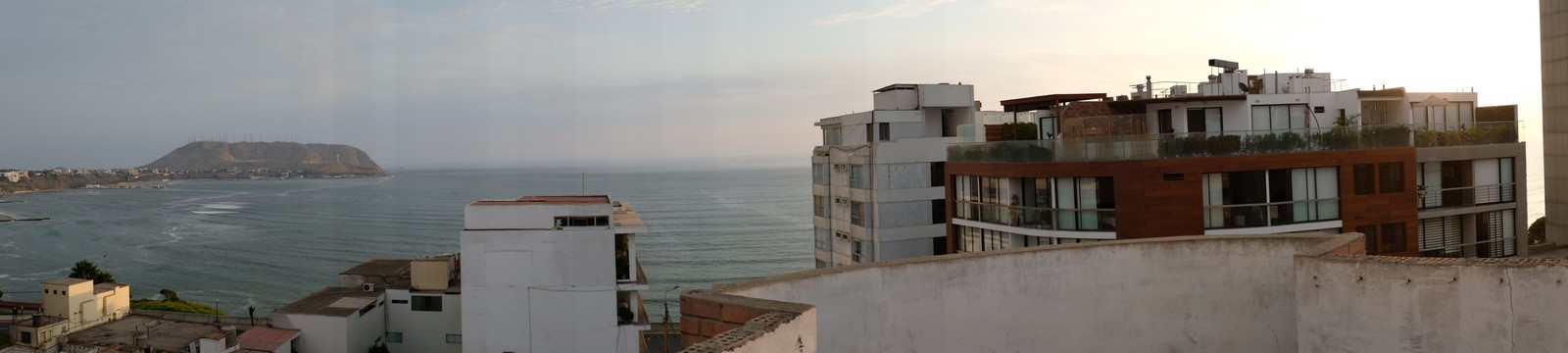
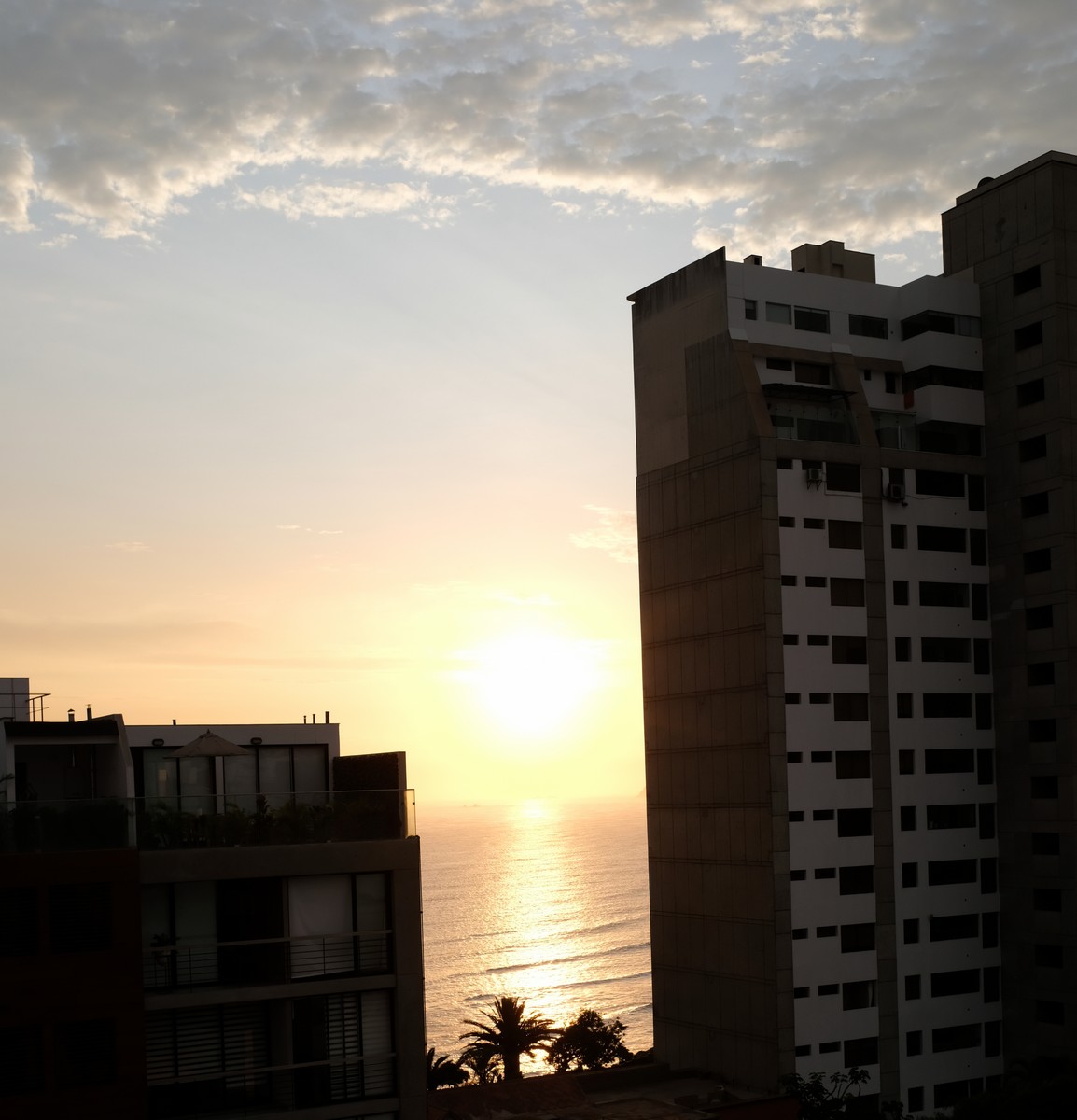
A panorama from my rooftop.
I zipped up my wetsuit and paddled out into frothing lines. I paddled with intensity, trying to get some of the stress and anxiety out of my body. I had assumed that there would be many other people with the same idea, but there was not another soul in the water. The majority of the waves were too large for the break and simply exploded as they arrived – impossible to ride. Reading large waves correctly and positioning yourself can be difficult with other people competing for waves, but after half an hour and a few incredible waves there was still not another person surfing at this break or any of the others along the coast. I forgot about the virus and the state of the world as I carved across the faces of glassy towering waves. Boobies and pelicans rode the faces of the waves and dove into the water around me. I fell off a wave and looked at the coast – there were four police cars and roughly 25 people on the shore that all appears to be watching me. I became concerned, but I figured that pleading ignornace would suffice. In any case, I kept surfing as there was no reason to cut the session short. I caught one last incredible wave – going airborn as I came off the lip as it closed out. I decided to head in.
As I arrived at the shore the three dozen police officers and government officials just stared at me. One government official was filming me with his phone. I unzipped my wetsuit and then ran half naked and bare-footed back to my apartment without exchanging a word with anyone.
Despite the epic surf session, it was quite a difficult day. The air was thick with anxiety and concern regarding the virus, but also the economy. I had become transfixed by the spread of the epidemic over the past two months and under quarantine there was not much to do but simply watch the spread of the virus and the deterioriation of the markets. The sentiment and moment reminded me all too well of the financial crisis in 2008. There was still significant movement around the city of cars and pedestrians – everyone was getting situated and the government had allowed two days of flexibility – but only to a certain degree – to enable everyone to arrive home.
Day 2 (17/3/2020) – I live by myself and I turned to family, co-workers and friends to distract myself and navigate this difficult time. We exchanged hilarious memes from people in similar situations, checked up on how everyone is doing and gossiped about the future. My mood oscillated between seriousnes due to the gravity of the situation and gallows humor to cope with my absolute lack of control.
The government became concerned that large segments of the populace that were already in a difficult economic situation may turn towards looting and crime. A curfew from 8pm-5am was therefore imposed. The government declared that it will give roughly $120USD to the 3 million most vulnerable Peruvians, although they made it clear that Venezuelans will be excluded from this assistance.
I went out for a long walk to the store. I make a lavish dinner accompanied by wine and icecream. I sleep deeply in the quiet of the night with the sea breeze pouring in the window.
Day 3 (18/3/2020) – The mood has changed a bit – there are now soldiers in the streets with roadblocks set up at various points.
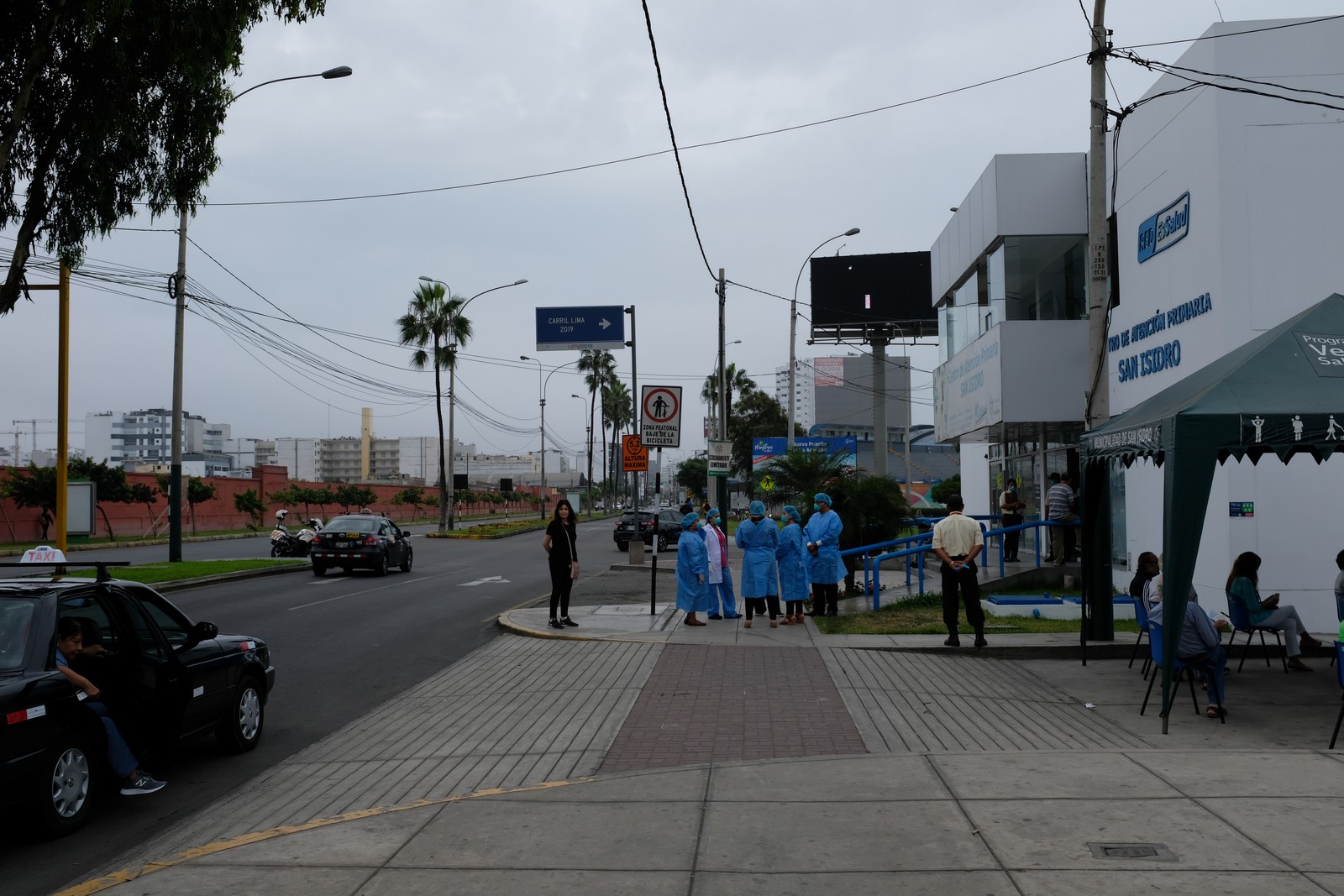
The scene outside a clinic in San Isidro.
My day is occupied with two things:
The cash flow and budget situation at work has gotten more complicated. Employees are notified that our hours will be cut and that certain employee’s contracts may be terminated early.
I watch from afar in horror as the US government continues to struggle to create an effective response to the rapidly spreading virus. I feel like the US in recent years has turned into an artificial dream (or nightmare): a debt fueled, globalized orgy that relies upon the populace lying to themselves to keep the party going. The country chose a reality TV, informercial president to lead it and his gross insuitability to lead a nation is on full display during these times of adversity. Viruses do not care about rhetoric – nature will leave a pile of bodies in the background as you spin falsehoods. President Trump is overly focused on the economic reprecussions, but fails to understand that the repercussions of an unchecked epidemic for which the US has done little to prepare will lead to far graver economic consequences than imposing appropriate and stringent measures early on. Many politicians, scientists and medical professionals in the US have the additional advantage of troves of data and information from countries where the outbreak has already struck, but have also been slow to sound the alarm. Many did use the assymetry of knowledge to dump their stock portfolios before the market crashed though.
At 8pm I suddenly heard clapping. The entire city came out on their balconies and leaned out windows to clap for the first responders, the doctors, the nurses, the police, sanitation workers – everyone who is risking their life to keep this city operating. This hasn’t been easy for anyone, so it also feels like a show of solidarity, a recognition of the sacrifices that everyone is making for the common good. It made me feel less alone and my eyes welled up with tears as I clapped and whistled.
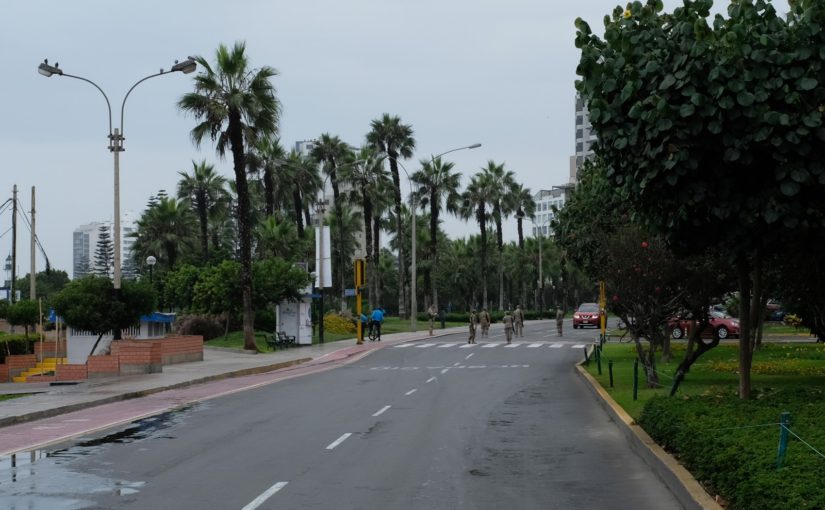
Day 4 (19/3/2020) – In the early morning darkness – before the birds start singing – there was not a single sound other than the subtle roar of the surf. The city has likely never been this quiet in modern times. I stuck my head out the window and there were no people, no cars, no smell of exhaust. I laid back down and reveled in the beauty of the moment before reality started creeping in.
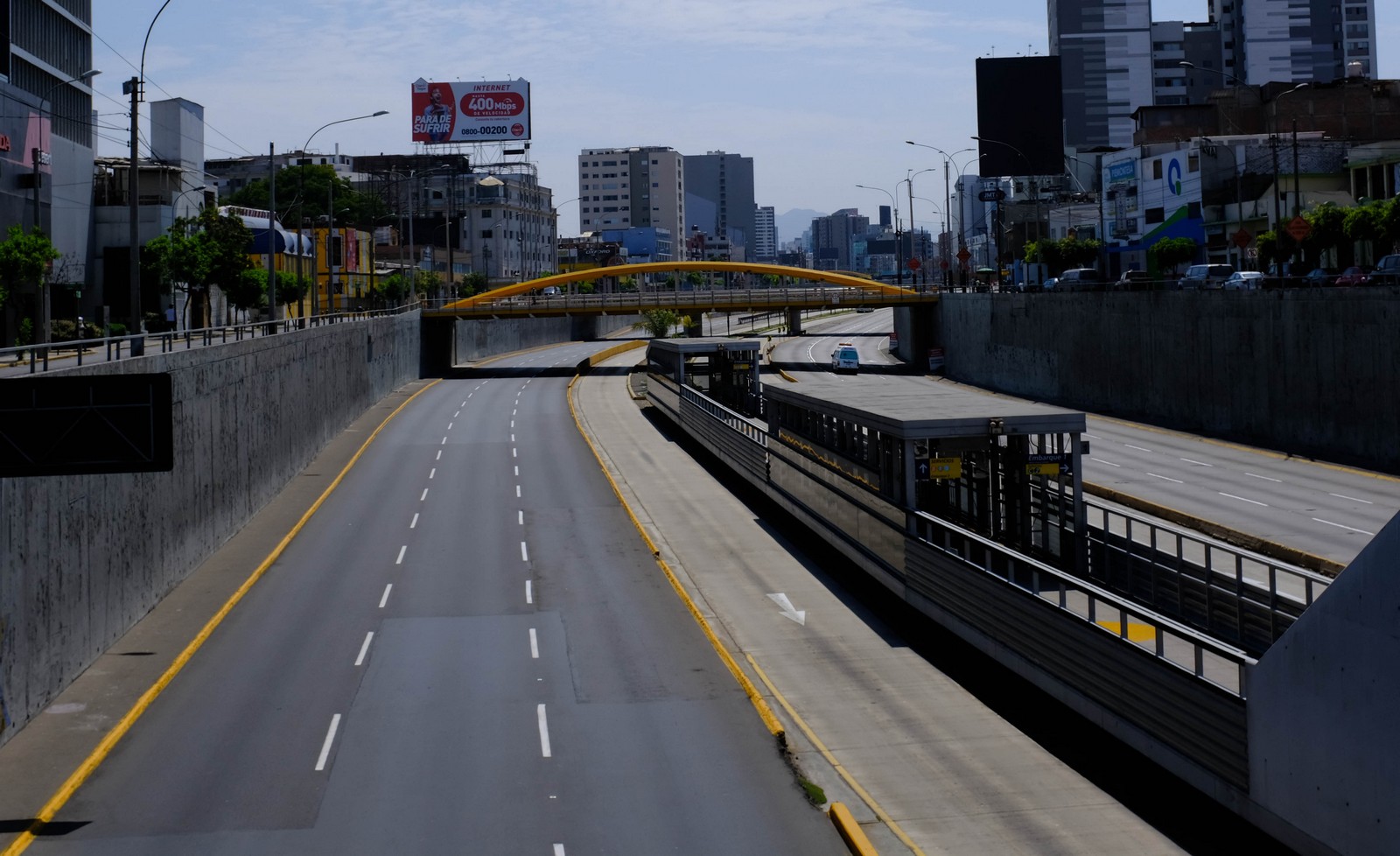
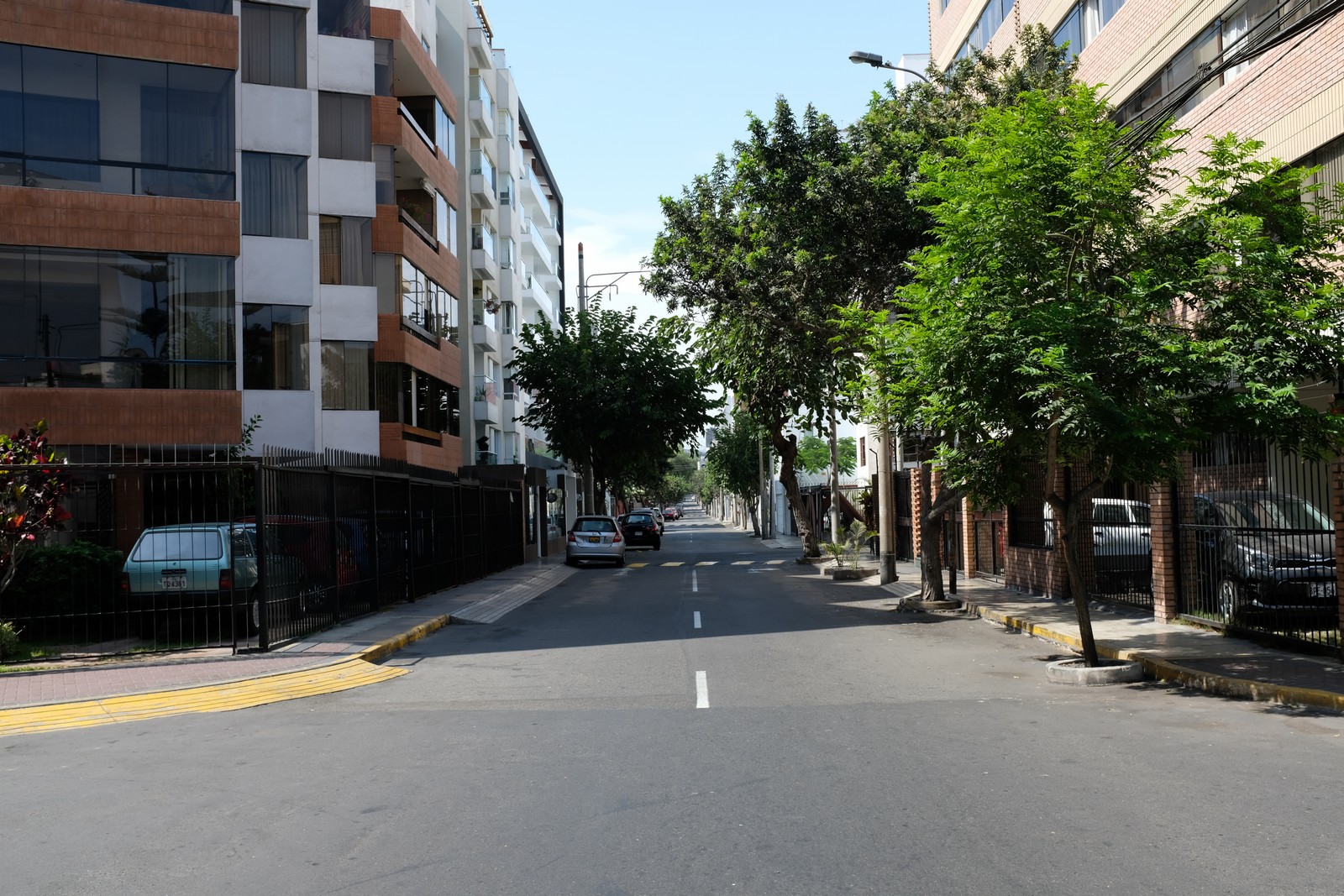
An empty street.
I put on my shoes and headed out for a quick run. Other people are out walking their dogs, so I don’t perceive this as being an issue. People do look at me strangely though. I reach a nearby park without having any issues and run a half dozen laps before making my way back home. The Peruvian quarantine does not make exceptions for exercise or give guidelines for how to properly go outside, but if the quarantine is to be maintained for a long period of time, it will be necessary for mental health that citizens can resume exercising and walking freely within appropriate constraints. I was personally hoping to do a lot of surfing with my downtime, but the entire coast has been closed – the ocean is empty of people.
Videos circulate on Whatsapp of the police beating people and arresting people that are violating the curfew or movement protocols, of police firing guns into the air to clear people of the streets. It scares me that the situation here could deteriorate if the virus and civil order are not carefully manged.
I watched Samsara and my conclusion was that there has never been a more appropriate time to watch this movie. It is a meditation on how far humanity has disconnected itself from nature, but also from our own spirituality, in our quest for perpetual growth and dominion over the earth. I wonder with some anxiety and shameful yearning if the virus might lead to the wholesale collapse of the order that I have known for my entire life and something better might emerge as a result. Part of me sees collapse and a reset as necessary for the planet and the long term well-being of humanity. Any manmade system is bound to collapse, especially one built on perpetual growth, boundless destruction and ever increasing complexity. The more complex and larger a system becomes, the more dire the consequences will be as it unravels and collapses.
I lay in bed thinking about Robinson Jeffers, a poet who wrote around the time of the Great Depressionan and WWII, that has inspired me greatly with his philosophy of inhumanism. He defines it as “a shifting of emphasis and significance from man to notman; the rejection of human solipsism and recognition of the trans-human magnificence.” I feel like this philosophy is quite apparent in this excerpt from his poem “The Broken Balance”:
III
That light blood-loving weasel, a tongue of yellow Fire licking the sides of the gray stones, Has a more passionate and more pure heart In the snake-slender flanks than man can imagine; But he is betrayed by his own courage, The man who kills him is like a cloud hiding a star.
Then praise the jewel-eyed hawk and the tall blue heron; The black cormorants that fatten their sea-rock With shining slime; even that ruiner of anthills The red-shafted woodpecker flying, A white star between blood-color wing-clouds, Across the glades of the wood and the green lakes of shade.
These live their felt natures; they know their norm And live it to the brim; they understand life. While men moulding themselves to the anthill have choked Their natures until the souls die in them; They have sold themselves for toys and protection: No, but consider awhile: what else? Men sold for toys.
Uneasy and fractional people, having no center But in the eyes and mouths that surround them, Having no function but to serve and support Civilization, the enemy of man, No wonder they live insanely, and desire With their tongues, progress; with their eyes, pleasure; with their hearts, death.
Their ancestors were good hunters, good herdsmen and swordsman, But now the world is turned upside down; The good do evil, the hope’s in criminals; in vice That dissolves the cities and war to destroy them. Through wars and corruptions the house will fall. Mourn whom it falls on. Be glad: the house is mined, it will fall.
IV
Rain, hail and brutal sun, the plow in the roots, The pitiless pruning-iron in the branches, Strengthen the vines, they are all feeding friends Or powerless foes until the grapes purple. But when you have ripened your berries it is time to begin to perish.
The world sickens with change, rain becomes poison, The earth is a pit, it Is time to perish. The vines are fey, the very kindness of nature Corrupts what her cruelty before strengthened. When you stand on the peak of time it is time to begin to perish.
Reach down the long morbid roots that forget the plow, Discover the depths; let the long pale tendrils Spend all to discover the sky, now nothing is good But only the steel mirrors of discovery . . . And the beautiful enormous dawns of time, after we perish.
V
Mourning the broken balance, the hopeless prostration of the earth Under men’s hands and their minds, The beautiful places killed like rabbits to make a city, The spreading fungus, the slime-threads And spores; my own coast’s obscene future: I remember the farther Future, and the last man dying Without succession under the confident eyes of the stars. It was only a moment’s accident, The race that plagued us; the world resumes the old lonely immortal Splendor; from here I can even Perceive that that snuffed candle had something . . . a fantastic virtue, A faint and unshapely pathos . . . So death will flatter them at last: what, even the bald ape’s by-shot Was moderately admirable?
Day 5 – (20/30/2020) – The global projections have gotten significantly worse. Cases have spiked in the US as testing has begun to gradually increase. My anxiety is heightened as two of my family members work in the medical field: one in a fire department/ambulance service and another works in an intensive care unit at the hospital. It seems to be commonly accepted knowledge of those working in the field that there are far more cases in the community than are being confirmed and reported.
Within the organization where I work we were notified regarding further serious financial cutbacks and several employees are forced to decide whether they should upend their lives and return immediately to their home countries or if they are committed to staying indefinitely in Peru without income in coming months. Normally, when their is a crisis like this, residents of wealthy nations simply flee home until it passes. This case is different as at this moment the wealthy nations are the epicenter of the outbreak. Peru has more proactively responded to the crisis and appears to be better poised to contain the outbreak than US, the UK, or Europe. There are two main concerns going forward in Peru:
What if Peru proves incapable of containing the outbreak – how will the situation unfold?
Whether Peru contains the outbreak or not, it is quite luckly that transportation to the country will be disrupted for a significant amount of time. This represents a pretty scary scenario, especially with uncertainty looming over our jobs. I will likely be saying goodbye to some friends that I may not see again for a long time, if ever.
For the past week I felt dumbstruck and unable to concentrate. I tried to read and I couldn’t. I tried to write and I couldn’t. I tried to meditate and my mind writhed with thoughts. It looks like this could potentially go on for months. I realize that I am not in that good of mental shape and that I must find a better daily routine and way to navigate these difficult times. I am generally inclined to shut down and close myself off. In this case, I have surprisingly been willing to admit that I am scared, anxious and lonely. I have been trying to keep it in mind that everyone else is in the same position and been working to reach out for everyone’s mutual benefit. I vowed to try to get into a better routine the following day. To meditate, to write and to meter my news intake.
I decided to walk to the market, which is quite far away. On the way two men yelled from across the street offering me cocaine and marijuana.
“Just try it! You don’t have to pay for it if you don’t like it.”
I just laughed and asked them if they are out of their minds. As I approached the market I got apprehensive. I am not too worried about sanitary conditions in markets most of the time, but something seemed to bother me about buying anything in the market that has been handled by too many people or that is just sitting out on display at this moment. The main door to the market was three quarters closed and not very much natural light appear to make it inside. I couldn’t bring myself to enter and buy anything – I turn around and begin my walk back to my apartment.
Day 6 (21/3/2020) – As I meditated in the morning my mind continued to churn, but I seemed to derive a certain about of equanimity merely from sitting in the corner of my room. Nothing happened. Life continued outside. The sun rose and the breeze rocked the curtains. I go up to the terrace and watch a flock of countless seabirds diving and feasting upon a school of sardines. They are closer to the shore than I have ever seen them before, clearly because there are no people or boats. It is a beautiful scene. I think about how animals and ecosystems have been under assault by humanity for thousands of years – they are getting a rare reprieve.
In the afternoon I went to the supermarket to buy a few items for dinner. I walked in the middle of the street to avoid walking near othe people on the sidewalk. A police car approached me and slowed down. It paced me perfectly with the police officer staring at me from behind dark sunglasses before he stopped and got out of the vehicle. With his face only half-visible behind a mask, he motions motion me over to the sidewalk and we begin speaking in Spanish:
“Do you speak Spanish?” The officer asks me.
“Yes, I live here.”
“Can I see your permission to be walking right now?” He asks forcefully.
“I am going to buy groceries. I am on my way to the supermarket.” I point to the supermarket nearby.
“You need to be carrying a bag if you are going to the grocery store and without a bag you don’t have permission to be walking in the street right now. We are taking people like you to jail. I am going to call for another officer.”
“I am carrying a backpack – that is my bag.”
“A backpack is not a bag.” He points towards another pedestrian with a normal shopping bag – “That is a bag.”
“That is a bag, but a backpack is also a bag. It is actually better than a bag because I can carry more groceries in this backpack.”
“To us a backpack means that you are a tourist and you don’t have papers to be walking in the street.”
“I am going to the grocery store to buy food. I don’t need to be carrying papers to do so.”
“But you don’t have a bag. And where is your mask? You should have a mask.”
We went in circles for a few minutes longer until the other officer, presumably his supervisor arrives. The officer with whom I had been speaking approached the vehicle and explained the situation to the supervisor. The supervisor doesn’t even look at me and seems irritated that he was even called here. The officer then returned, took a photo of my ID and told me to hurry up and do my shopping.
I felt a bit rattled after this as I watched dozens of people pass with dogs and backpacks I feel as if I was profiled and hassled for no clear reason. I am worried that the police and soldiers will not maintain an appropriate balance between the humane treatement of people involved in this crisis and ensuring that the government mandate is enforced.
Before the curfew took effect for the night I heard shouting outside that echoed between the buildings. There was an overweight well-off man with a miniature Chihuahua berating a guy who is picking through the trash from behind a mask – something that only someone in a dire situation does.
“Get out of here! You are breaking the law! You are putting everyone at risk. I am calling the police!” He has his phone out and is videotaping the poor guy.
Everyone was leaning out their windows and on their balconies. I bit my tongue and did not say anything out of fear of creating problems for myself.
I am very concerned about a breakdown in civility and compassion. The virus carries risks globally and that is why it is now being treated differently than the other atrocities that are currently ongoing and have killed hundreds of thousands. It doesn’t care about wealth, borders, geopolitics, religion, or race. In fact, the virus helps to expose how inequalities, political rhetoric, corruption and privitization of basic services put us collectively at risk. An unequal society in which a person is forced to dig through the trash to feed themselves leaves everyone at greater risk of a serious epidemic, but the blame for this cannot be put on the individual that is digging through the trash. We need to be compassionate and take care of one another. If you see someone digging through the trash – whether during an epidemic or not – give them money or food instead of threats and shaming.
I had relished a vision of life in my travels that has continued to thrive inside of me, years after all of the other things I contracted on those trips have gone. It may lay dormant for a time, but a fever begins if too many of the following preconditions are present at any given moment: mundane work routines, traffic jams, gradual wealth accumulation that has no clear purpose, planning more than one year in advance, mainstream news, two weeks of vacation a year and holidays that involve excessive materialism. For years I had used this vision to guide me. I lived a wild and carefree existence.
During these years I roamed far and wide, floating rivers, roaming in the mountains and sleeping outside under the stars. These were years of cheap beer, whisky out of plastic jugs, occasional dumpster diving, mushrooms as a regular part of my diet, naked parties, and free love despite the fact that many of us smelled terrible (me) as we (me) primarily bathed in the river. I would work half the year almost every day and then spend half of the year as free as a bird. Six months hitchhiking through Mexico and Central America. Five months riding my bike to Guatemala. I met a girl on that trip – Lauren – who I happily let throw a wrench in my spokes, which led to me staying in Guatemala seven more months. Then we moved to New York City for seven months. Then we moved to Mauritius for seven months. The time blurred by.
After living in Mauritius, my relationship with Lauren was frayed and I felt mentally exhausted. The past few years had reinforced my belief that the instability and lack of direction in my life was going to make it difficult for me to have many experiences or things that are considered a natural part of one’s life progression like a wife, sharp kitchen knives, a house, a garden, a dog, or kids. I thought I might want those things later on, so I figured it would be wise to plot a course in that direction as I had just turned 30. I decided that my years of rambling were coming to an end, that it was time for me to start a career and move on the next phase of my life.
I decided to move to the Western slope of Colorado to do a work-trade program at a solar trade school that permitted me to study renewable energy system design and construction. At the end of the work-trade program, I was offered a job based out of Salt Lake City, Utah managing renewable energy projects. This move was sadly also the end of my relationship with Lauren. I settled into my position in Utah making far more money than I had ever made beforehand and found myself as a cog in the humming American economy. I worked diligently, slaving away at the ‘ol sun mine. I slept on a mattress on the floor of a shared house, paid minimal rent, drove my beat-up old car and cooked nearly all of my own meals.
After a year and a half, I felt uncomfortable, like I didn’t fit in, like something was missing. I had no urge to do any of the things that I had imagined I might want to do with my new found wealth and stability like have a wife, kids, a dog or a house. I spent quite a few months depressed, earnestly struggling to understand or at least suppress my feelings. Where could I go from here? I couldn’t go back to traveling, in my mind those times had come to an end. In any case, I was reluctant to make any significant changes as I had invested so much into this life change and it had cost me my relationship with Lauren. I saw my previous existence as simply escapism and hedonism; I was framing my life in a series of binaries: stability or instability, rootedness or nomadism, growth or escapism, deep relationships or ephemeral relationships. I thought that stability inherently translated to personal growth. After a year and a half it was clear that there was something inside me though – let’s call it an idea – that was firmly lodged between the lobes of my brain that was telling me to leave, that was telling me that this life wasn’t right for me. Why am I constantly yearning to move? Why do other ideas or visions of life have no staying power or impact with me? Why don’t I have a nesting impulse or find sufficient joy in material goods to keep me working to buy them? Just like a parasite, ideas probably need a suitable host to flourish and some formidable ones had taken colonized me. I reached a breaking point and decided to take a trip with the hope that it would give me space and time to reflect.
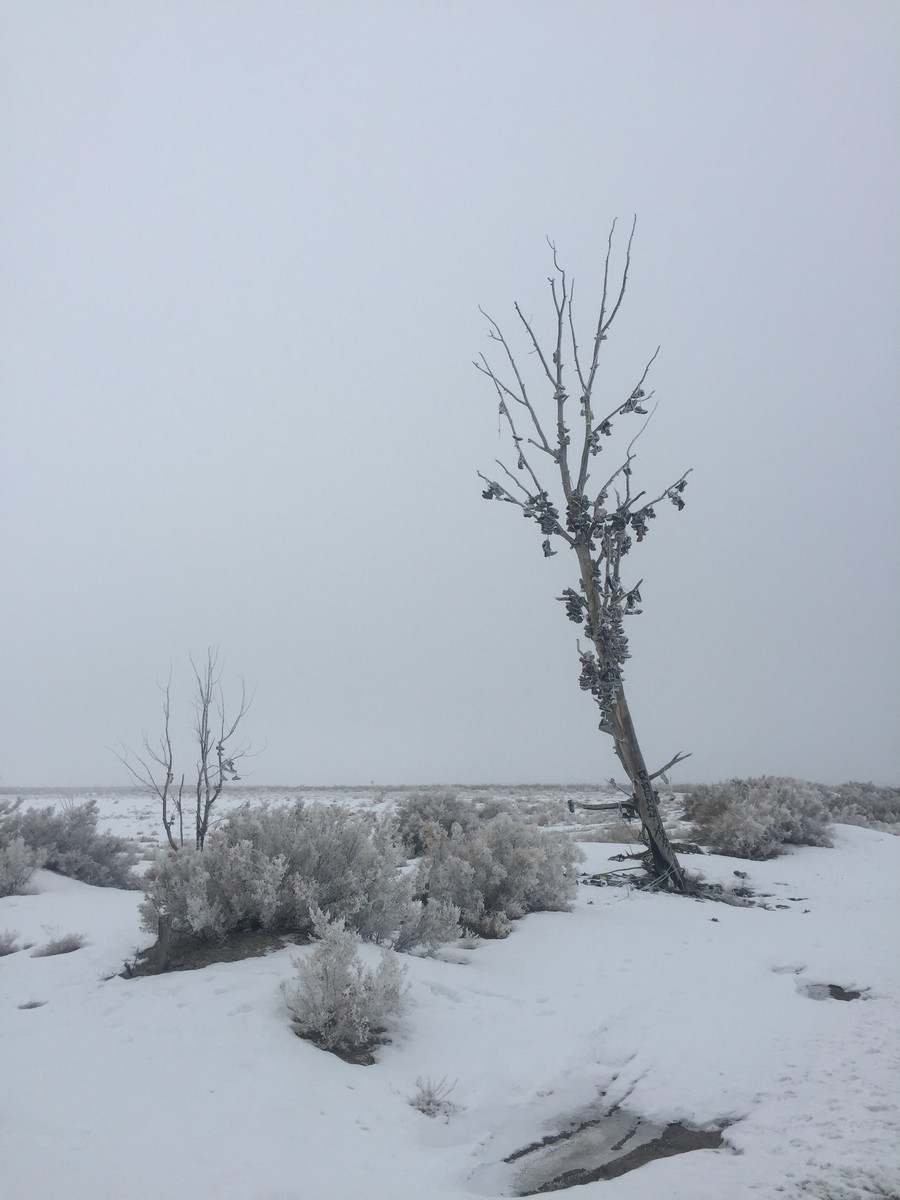
I started my journey just after a blizzard had swept through the west and a cold, high pressure system had settled in. I left headed for the wilderness in Death Valley, California; this journey would be as much a physical journey as a mental journey. I drove for several days, camping at hotsprings amidst the white landscape with a few other strange individuals. The nights were long and cold. I would stay in the hotsprings until just before I intended to go to sleep, haul my naked body out of the pot, dry myself with a towel as quickly as possible, put on a pair of underwear and my boots before running across the crunchy snow to my sleeping bag with my core still warm.
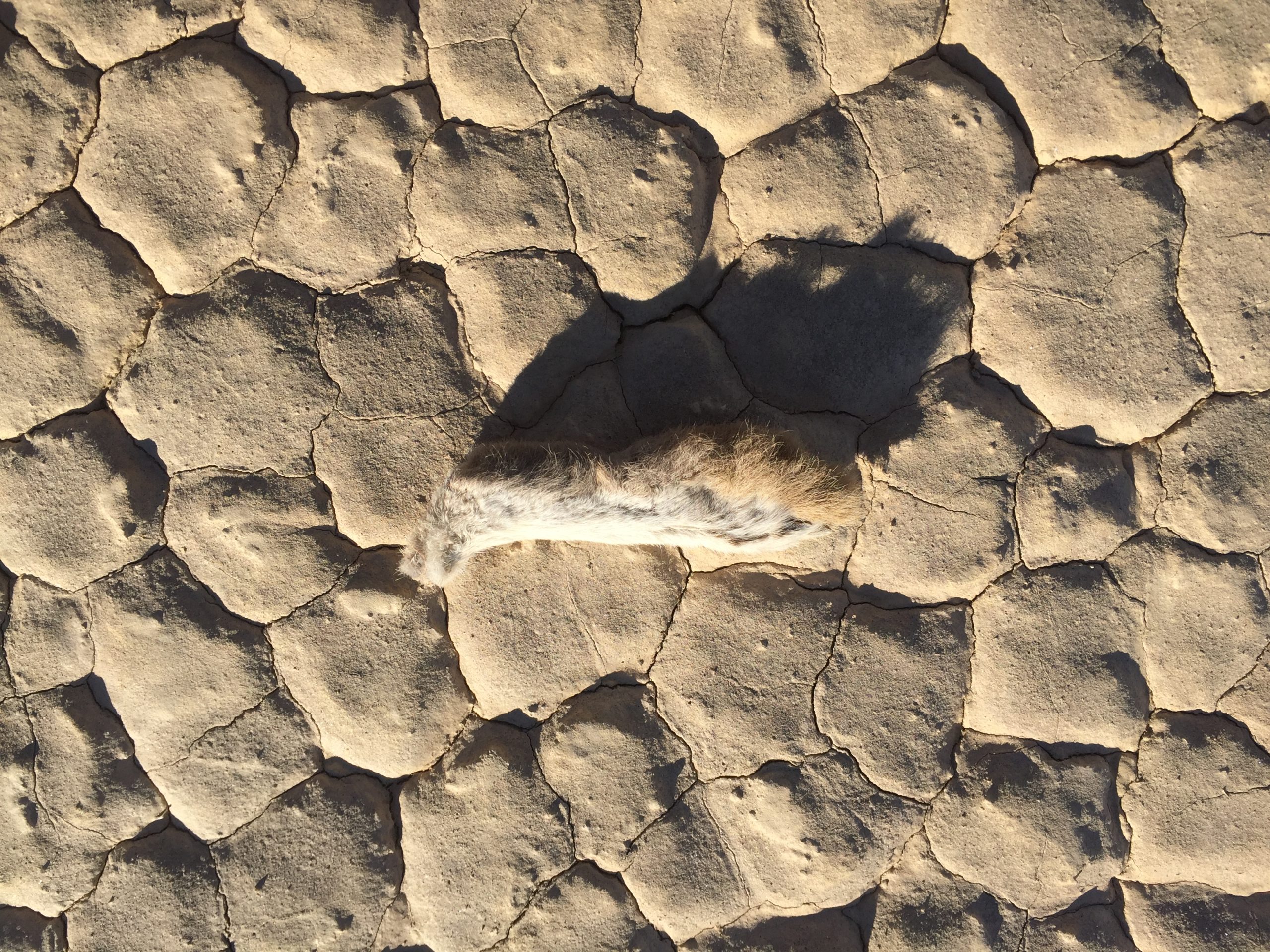
My last night before arriving in Death Valley I sat in my tent late at night and examined a map of the area. I marked out a route to a desolate part of the national park where I could assuredly find solitude. Upon reaching this place I couldn’t sleep the first night. I got up and went outside my tent; I stood alone staring up at an infinite black ceiling scintillating with mystery, a sliver of a waxing moon lingering. I felt to the fullest degree separate, alienated. As I lay down in my tent, I found myself wandering through strange landscapes and unlived lives; I wondered how people lived before civilization and all of its distractions. Silence rang out around me apart from the sporadic chatter of two small rodents on either side of me. I felt swallowed by cold blackness. Sleeping outside by one’s lonesome can rive the façade of whatever convenient narrative we adopt to walk about this world. It can be hard to shut your eyes.
But the
reward, of feeling at home, of facing this fear and letting yourself be
swallowed by the blackness of night only to wake upon yet another dawn is
vitally important – this has been the true human experience since the dawn of
consciousness.
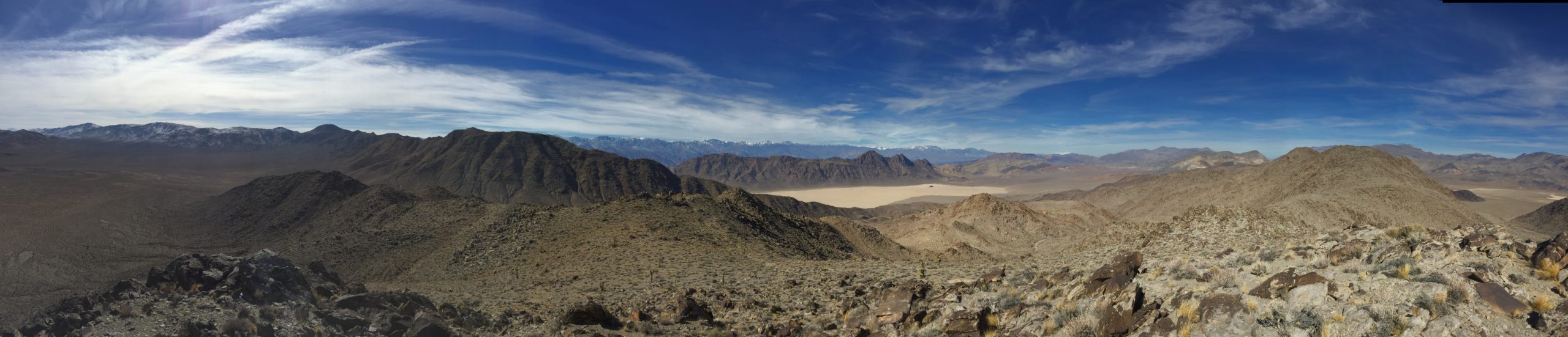
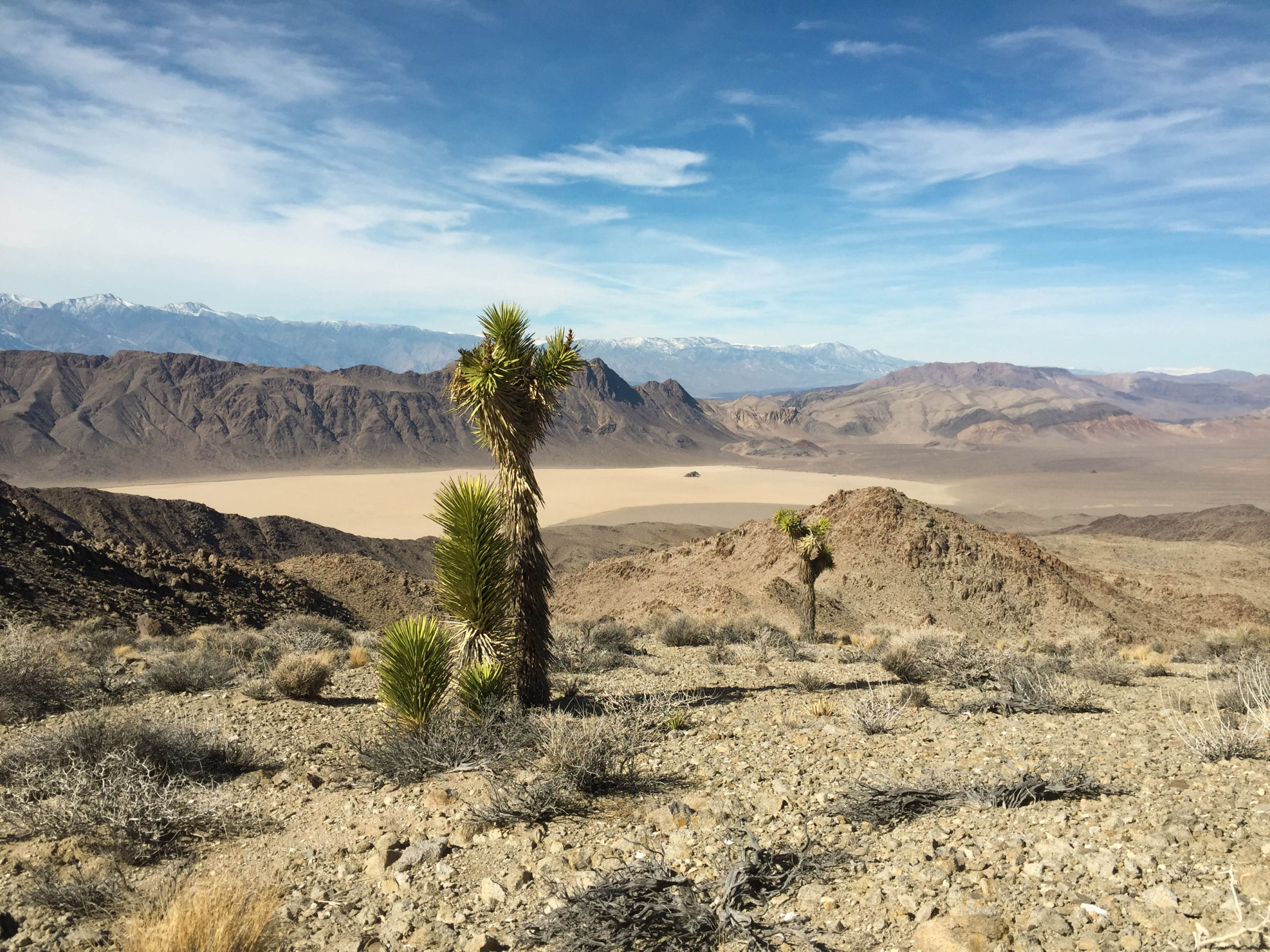
The following morning, I packed enough food and water for the entire day before setting out walking along a spine of rocks cradling an expansive plain peopled by Joshua Trees. Distances and scale seem naturally distorted in Death Valley, out of proportion. I didn’t see much wildlife, but I frequently stooped to examine the tracks of coyotes and bighorn sheep in the sand.
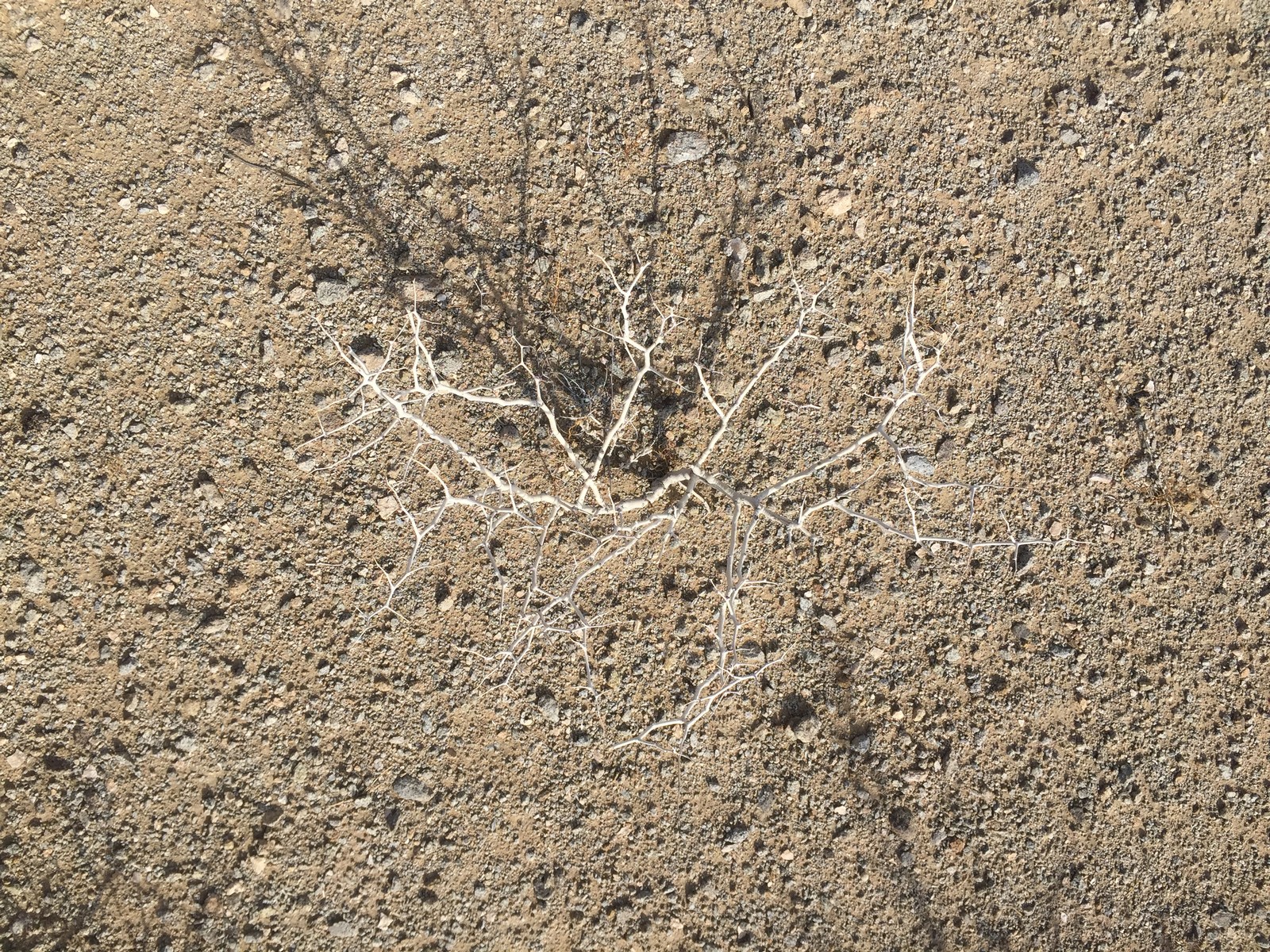
I quickly crested the head of a canyon that fed out to the Racetrack Playa shimmering in the distance. The Race Track is home to a strange phenomenon in which rocks with time and the elements migrate across the surface of a perfectly flat sandy expanse. Nearly all of these rocks have been taken by visitors. I continued descending until I found a nice sloping rock on a windswept outcropping where I could sit and revel at the expressive Seussian forms of the Joshua Trees wildly gesticulating. I pulled my knees up to my chest and tried to feel the place. The vast, inhospitable landscape was a mirror in which I glimpsed my small pitiful self: an ego trying to give expression to itself in a world devoid of meaning. I saw each of us valiantly struggling, indistinguishable from the other lifeforms that peopled the landscape. Each Joshua Tree, each shrub, each lichen, has a story to tell that has been defined by its aspect, the dominant wind direction, rainfall patterns, the shadows from other plants… So it goes for whatever is inside of each of us. Slowly we are twisted, gnarled, sometimes into beautiful forms, other times into grotesque haunting shapes, but in any case we will be desiccated and swept away.
I took a long gaze from my vantage on the peak at human existence and how adrift modern civilization had become. Looking out across the lanscape and reflection on my the previous night, it was easy to understand mankind’s impulse or the original impetus to address human needs. We are fragile creatures – ill-suited to many different environments. Human existence is defined by the existence of a self and a feeling of dislocation from all that surrounds us. Separateness is a complex matter as it is intuitively false, but rationally true. The other, whether the physical earth or human inhabitants, is a source of both anxiety, fear, excitement, and joy. We have constructed a society and erected edifices to try to ameliorate the external threats to our being posed by the natural environment, but this has only seemed to widen the gap for many people… to create a vast distance between us and our natural origins.
Human civilization long ago surpassed the point of having the resources and ability to meet all of humanities basic needs and now we have entered a surreal age untethered from need or purpose in much of the world. We now rise each day under the illusion of scarcity and we – the majority – let the system continue because it gives each of us a small allotment of commodity food pellets and a semblance of purpose. Instead of the anxiety that is natural to human existence, we have created a different form of anxiety as we run on society’s treadmill, constantly outrunning a fate of rejection from our artificial existence back into the harsh natural abyss from whence we crawled. This system has no clear goals or limits and any system without these two things is destined to destroy itself.
Notwithstanding this lack of purpose, onward we march, classifying, simplifying, substituting false definitions and narratives for nearly everything, including other humans. Inherent to this type of thinking is the ability to commit acts of violence, to take, to ignore the independent rights of other beings to one’s own benefit. A tree becomes board-feet. A human becomes a unit of labor. A section of the ocean or a strip mine is measured in yield. Cattle, pigs, chicks, the majority of life on earth is scientifically managed and industrially slaughtered, but arrives perfectly for the commodified American dream devoid of history, in neat bloodless packages. We thunder onward in a race full of pomp and circumstance, but that is only really definable as an unrelenting pressure to name, possess, and exploit all that exists in the most efficient manner possible.
I felt my mind going into a downward spiral without an end. My breathing was shallow and rapid, my brow furrowed and I wasn’t even paying attention to where I sat. I took a deep breath and recentered myself. Despite existing within this ugly system, I felt an undercurrent of mystery flowing through everything, something ethereal that cannot be subsumed by logic or rationality. There is rhythm in silence, patterns in darkness – a thread weaving everything together. Suddenly my thoughts and reality connected. I saw a turkey vulture riding the air rising off of another mountain, rolling and yawing in the invisible forces that buffeted it. I glimpsed an alternative to this logic, to this machine. It lies in finding a deeper meaning to existence that is rooted in something that I am certain resides in every living thing. The turkey vulture was giving expression to its essential birdness. A lizard scampered to a rock beside my head and tilted its head curiously as I made eye contact. An explosion of recognition and understanding passed through me, tears were suddenly streaming down my face. I closed my eyes. I thought about the light or the spirit that animates me, that has been with me since I entered this world; it is curious, radiant with joy and hope, constantly in search of love and a feeling of connection, but also fragile. I thought about my parents, their faces as I first remember them as a child appeared but then faded into their current aged faces. I let out a sob and felt the wind sweeping the tears off my jawbone as I realized that inside of each one of them resided this same spirit, this same light, this same ineffable energy. That they are fragile, that they don’t have all of the answers, that they seek love, that they have dreams, that they are just trying to do the best that they can, that they are vulnerable. I had never thought about myself, my parents or any of the billions of beings on this planet in quite this way before.
I slowed my breathing again. I saw my life passing from the perspective of my spirit as it endured defeat and rejection within this inhumane system, how it had been nearly completely suppressed to reduce my suffering. Why? The vociferous demands and pressures of society had forced me to attenuate its quiet voice; it had caused me great suffering to constantly run contrary to the direction of the systems that I lived within from seemingly the moment that I was born.
In the months preceeding this trip I had found myself at a critical fork in my life path. I had spent years trying to find my spirit and to listen to it, but I had stopped in recent years because that part of me seemed directionless, unproductive and reckless. I felt like I needed to change myself to avoid ending up unhappy later on in life, but this line of thinkingresulted in me finding myself depressed and frustrated almost immediately. Thus, there were two paths forward: listen to my spirit and let it guide me in life or to ignore it and risk irreparably losing my direction. The second option involves less exertion and affords a certain amount of stability and comfort for some people, but it had become apparent for me that this was not a tenable option. What I had been seeking all along was not escapism nor hedonism; I had merely been seeking a way to give voice to my spirit through action. A vulture that doesn’t fly, that doesn’t give expression to its birdness, is merely food for other vultures.
A profound realization like this, a deepening of your empathy and understanding, is difficult to come by. It is a rare gift that we have to cherish, but figuring out how to integrate a realization like this is even more difficult. I knew that I needed to make a drastic change in my life. The most immediate barrier that I could see to my growth was the job and lifestyle that I was leading – I carefully began plotting my departure and quit six months later. I began looking for volunteer opportunities with development organizations in Latin America where I could put my skills to work for the benefit of others. I was offered a position with an organization in Peru. Once again, I found myself storing the few things that I had that I couldn’t bring with me in other people’s basements and packed a backpack and duffle bag with the essentials before heading out into the unknown.
We are born into a story, socialized and educated to believe in a certain narrative arc regarding the human life; this story is always framed as the path towards joy, prosperity, peace and love. Every society’s story is laden with latent values (and judgements of other values) that range from materialism to spiritual growth, sedentism to nomadism, monogamy to polyamory, acceptance of authority to critical thinking, patriarchy to matriarchy, democracy to hierarchy, rugged individualism to communitarianism, environmentalism to an exploitative ethic, selfishness to sharing, openness to reticence…isms ad nauseum. Without a frame of reference that enables us to deconstruct our milieu, we are fish that cannot see the water in which we swim. Travel has given me a frame of reference.
What is my story? I spent the first 18 years of my life in Lake Forest, Illinois, USA. Statistics and demographic information can only reveal so much, but I think in this case it can explain a lot. Lake Forest is the 34th wealthiest city in the United States with an average household income of $268,922 in 2019, according to Bloomberg. The 2000 US census showed a population of 19,375 people with racial makeup that was 95.80% White, 1.35% African American, 0.06% Native American, 2.45% Asian, 0.13% Pacific Islander, 0.44% from other races, and 0.77% from two or more races. Hispanic or Latino of any race were 0.87% of the population. In summary, it is a wealthy and relatively homogenous place.
My mother grew up here and her family owned a successful manufacturing business in a nearby city that brought them wealth and recognition. They had six children that were raised in a large country house that is reputed to have been quite wild. When she was a kid, she occasionally rode her horse to school in a display of eccentric privilege. My grandfather took hunting trips around the world to kill all sorts of animals that are now considered threatened or endangered. My grandma is rumored to have had affairs, including one with a highschooler that led to the heartbroken young man publicly smashing her yellow Chevy Corvette with a shovel. Their house was raided by the police at one point to seize the marijuana grow operation that the kids were running on the property, but family connections had led the police chief to tip off my grandma before the calvary arrived. They went yatching with the likes of Ray Crock – the creator of McDonalds – and complained when “new money” like Mr T. moved into town. My mother seems to have come out of this strange upbringing with a slightly distorted view of life, but having learned quite a bit about what path she didn’t want to take.
My father
grew up in the town next door – Lake Bluff – his parents were both god-fearing
Protestants that had worked hard all of their lives. They were descendants of
later waves of immigrants from Prussia and Greece and had arrived in Lake Bluff
through hard work. They had two children that took very different paths. My
aunt dropped out of school to focus her attention on drugs and art. My father
seems to have come out of his childhood with a strong drive to transcend the
shameful middleclass existence that his parents led amidst such opulence and to
break away from the conservative, religious dogma that he was fed by his parents.
They met in high school and started a relationship that endured through college, although not without some time periods that are never discussed. They were married around age 25 and attempted to settle down in Lake Forest, despite having limited money. The early years are blurry but the memories that I have of my dad include: digging up plants from other people’s property to landscape our property; men coming in black suits to threaten us after it had been discovered that my dad had flipped our electric meter upside-down so that it would spin in reverse as we consumed electricity; the purchase and use of illegal fireworks (this includes actual dynamite he got from some connection in Kentucky); long hikes in the woods near our house with him; finding cocaine in his desk drawer; his purchase of a Porsche without consulting my mom; driving around in the Porsche whistling at women; firing a pistol into the wall to kill a rodent that lived therein and extravagant vacations put on his company credit card (one of which ended with him getting into a brawl at a bar and getting his forehead split open on the corner of a table). He was volatile and occasionally abusive around the house. I loved him and we had a strong bond, but I always had to gauge his mood to determine if it was safe to be around him.
I remember
my mom being perfect, although cracks would occasionally appear in her façade.
She seemed largely content with raising us keeps and keeping the household
together. She devoted every second that she could to teaching us, clothing us,
entertaining us and feeding us. I loved her deeply and she always served as a bulwark
against my dad. Nonetheless I remember tears and fights between her and my
father regarding money, drinking and relationships with other women.
The gamble
of moving to Lake Forest, buying a house and trying to make it all work paid
off materially. My father completed his MBA and became quite successful in
financial consulting. We moved into a larger house and had nice cars that
regularly changed. We continued taking luxurious trips around the country. My
father was mired in this world, participated in it, but couldn’t quite fit into
it no matter what he did and was therefore internally miserable. He emphasized
critical thinking, equality and justice during occasional moment, but the primary
values of the household revolved around work, wealth, and appearance. Hard work
was not emphasized as much in some other families though as I was regularly
told as a kid that I shouldn’t worry about anything as I was “an attractive,
white male.” I remember my parents and siblings regularly sitting at the dinner
table vivisecting their friends, coworkers and neighbors for social or
sartorial faux paus. Or reveling in schadenfreude at the failed marriage or
bankruptcy of another family in town. It was difficult for me to avoid internalizing
this type of thinking and to keep it from consuming me internally. There wasn’t
much love in the house during these years.
The story that my parents intended for me to internalize was that hard work, intelligence, bending the rules and keeping up appearances will bring you wealth and happiness. This wasn’t the way that I came to see it – I saw unhappiness, my father trapped in a system that he hated, my mom trapped in a marriage that lacked love and a society that seemed to revolve around kicking or pushing others down to bring yourself up. But I only knew this world and I definitely knew that I didn’t fit into it and was floundering. This caused intense anxiety and depression for me as I implicitly believed, and was explicitly told, that anyone else who lived differently was poor and miserable. I had no way to disprove this theory as I really didn’t know anyone that lived any other way.
I decided to attend college largely out of fear that otherwise I might end up as one of those poor and miserable people. During my first two years of college I never attempted to break any of this down. I continued dating a girl whose life and family revolved around wealth and appearances. I was studying engineering, doing well academically and did my best to maintain the appearance that I was ready to assume my rightful place in society as an attractive, white male. When it all fell apart, which I wrote about in the last post, I decided that I needed to put physical distance between myself and this milieu.
The first real travel that I did was moving from Chicago, Illinois to Salt Lake City, Utah. Any travel, even if it is around the city in which we live, gives us an opportunity to be exposed to different stories, to other ways of relating to existence, ourselves, others and the world around us. But it is ultimately up to us as individuals to be receptive and pay attention. In Utah, I had my first exposure to people that were leading different lives and thought differently, people that had chosen to focus their lives on certain activities – skiing, climbing, biking and playing music. This made me start thinking about my own life. It never had felt like my life beforehand for some reason – it had just felt like I needed to stay within the white lines that had been painted for me. How did I want to lead my life? What constitutes a good life? What did I even like doing? My years of nomadism began when I saw that I could just physically leave if I didn’t like a place, that I could live where I wanted and how I wanted.
After a year
I left to Nepal and India, places that viscerally challenged my worldview and
beliefs with sights, odors, sounds and a distinct rhythm of life. My inability
to communicate with anyone made the entire experience even more disorienting. At
night there were human beings strew across the concrete of the city sleeping.
Sacred cows roamed the streets freely. Open defecation was commonplace. Leprosy
was still an issue. People swarmed us and begged. The roads, train stations and
markets were pure chaos – the press of humanity, of over a billion people
practicing different religions and speaking different languages trying to carve
out an existence. Amidst all of this, joy, peace and love flourished. I caught
a glimpse on this trip of a different way of life, but I hadn’t even begun to
understand it. I returned to school with
a renewed dedication derived from dreams of travel.
I graduated college in May, 2008. I fought forest fires that summer to save money and then found myself teetering between entering the white-collar professional world, which was the path advocated by parents and peers alike, and pursuing my dream of traveling. The decision ended up being largely guided by the financial crisis that was unfolding at that moment – even if I had truly wanted to find an office job, almost no one was hiring at the time. I had one job interview before I became committed to my life of wandering. It changed my life.
The only way that I got myself to attend the interview with Chase Bank for a Personal Banker position was by playing the mental game that the vast majority of people in the United States are playing: I tried to convince myself that if I could just do something that I didn’t like for long enough to generate money, then I could be free to what I enjoyed. I began sweating as soon as I received the phone call because getting this job would require me to convince my interviewers that I wanted this job that I didn’t want. I immediately felt an urge to begin taking the anti-anxiety pills that I had relied on in previous years. I shaved my face and bought a suit at Men’s Warehouse.
I had read Walden that summer and was haunted by this quote – “I say, beware of all enterprises that require new clothes, and not rather a new wearer of clothes. If there is not a new man, how can the new clothes be made to fit? If you have any enterprise before you, try it in your old clothes. All men want, not something to do with, but something to do, or rather something to be. Perhaps we should never procure a new suit, however ragged or dirty the old, until we have so conducted, so enterprised or sailed in some way, that we feel like new men in the old, and that to retain it would be like keeping new wine in old bottles. Our moulting season, like that of the fowls, must be a crisis in our lives. The loon retires to solitary ponds to spend it. Thus also the snake casts its slough, and the caterpillar its wormy coat, by an internal industry and expansion; for clothes are but our outmost cuticle and mortal coil. Otherwise we shall be found sailing under false colors, and be inevitably cashiered at last by our own opinion, as well as that of mankind.”
I entered the conference room and was greeted by four pale faces sat behind a desk, some sort of panel of midlevel managers taken from the far-flung, forsaken branches of the bank in the Chicago suburbs. We covered the formalities; I kept a copy of my resume on my lap to make sure that my words corroborated the carefully tailored distortions written in lifeless Arial Narrow. I worried that I might lose control of my hands and watch them float away or that my face would tire from smiling incessantly, but neither came to pass. I was shaking though; my mind alternated between thinking that I should have drank either more or less coffee. My anxiety spiked as it became apparent that merely handing them my resume and answering a few mundane questions was insufficient to get me a piece of the sweet apple pie that is America. They wanted me to do some role playing, but I was already role playing. You can see how this might become confusing.
“Okay. Let’s pretend that I am a bank customer who simply wants to make a deposit. You will be my teller. Your goal is to convince me to refinance and move my mortgage to Chase Bank.” She actually pretended to be driving a car; her hands rotated an imaginary steering wheel, directing her car to the hypothetical air tube and speaker through which we would communicate. I wondered whether her feet were also operating imaginary pedals, but I couldn’t see them under the desk to check.
“Hello, I
would like to make a deposit. Could I have a deposit slip?” She calmly leaned
towards the non-existent speaker.
“Good afternoon! I will send that right out to you!” I can’t remember if I pretended to put it in the airtube or not, but my adrenaline was mounting amidst a sense of impending doom.
“While you are writing that out, DO YOU CURRENTLY HAVE A HOME MORTGAGE!” I asked in sheer terror, surprising myself as I nearly yelled the last part at the fictional speaker and the woman.
“Yes, but
it is with another bank.” She curtly replied, seeming somehow unfazed by my
loss of control.
“Have you ever thought about…..refinancing… your loan with Chase Bank? It could…..save money. RATES ARE LOW!” I consciously took breaths in between words in an attempt to hold it together, making it until the last bit before my tone and volume began rapidly fluctuating again. The adrenaline and disgust were rising rapidly and overcame me. I wondered if they could smell the sweat and fear. Maybe they even enjoyed it? I contained the overwhelming urge to run.
I felt
like some sort of lab rat being grotesquely tortured, completely incapable of
understanding the overarching purpose for having electrodes attached to my
miniature nipples. I was shaking at this point, my fists balled, my pupils
dilated, and my feet twitching in fight or flight response. They asked me some
benign questions and things slowed down a little bit. The adrenaline slowly
wore off and I sat in a post-ictal state as they talked more about the
specifics of the Personal Banker position. I peered out at the glimmering SUVs
backed up behind a red light. I observed a woman talking on her phone in one
car, looking absolutely crazy as she gesticulated in the absence of context. I
alternatingly glanced at the desk, at these people, at my shoes.
“Are you motivated by financial incentives?” A bald man officiously squaring a stack of papers over and over again asked me. The stack of papers had been square for several minutes at this point.
“No, I wouldn’t say so.” They paused for a moment, taken aback by the answer. Their reaction forced me to reevaluate my response and I bumbled as I backtracked a bit. “Well….I mean… it depends. I want to earn money.” I couldn’t lie. It all fell apart, but the honesty was a release. I knew the job was lost at this moment. I viewed my general indifference to pecuniary remuneration as a virtue, yet what I had just said was tantamount to confessing to a battery of priests that you don’t believe in god. These people worshiped money – there was no other reason they would work within that befouled temple.
I walked out of the sterile box into the afternoon sun with new knowledge about myself and the world. Chase Bank changed my life! I went home and bought a plane ticket to Mexico that left a few days later to go volunteer for a non-profit organization run by a family friend. The oragnization was in the Yucatan Peninsula and focused on assisting families that had been displaced by the creation of a protected archeological zone. The families had lived on their ancestral lands since time immemorial and only knew agricultural techniques that were appropriate to that area. The government had given them marginal land that required them to grow different crops and use different techniques of cultivation. The organization was trying to help them in this transition.
I flew into Cancun and felt an immediate disdain for the energy that heavy tourism had created. This feeling was compounded as the executive director of the organization took me to Burger King – in the middle of the culintary paradise that is Mexico – to eat. I spent a few days with him traveling around to communities, visiting projects that they had going and working in the fields. He left after a week and then I was the only person that spoke English in a small truckstop town in the middle of the Yucatan Peninsula. I spoke barely any Spanish, but enough to help out with activities in the fields and around the house. It also became clear that the organization had a strong religious affiliation and purpose, thus much of the time spent in attempted conversations with the family that I lived with revolved around them maligning all of the other members of the community that were not a part of their church and for them to proselytizing to me. They would regularly pressure me to pray with them or to say grace. They would put a bible on my pillow every morning. They would regularly tried to explain that I was unhappy because I hadn’t accepted god as my savoir, but I could generally escape these conversations by feigning a lack of understanding.
There were
some ruins nearby that I desperately wanted to visit. The ruins had been part
of the impetus for the creation of the archeological reserve. One day, the
preacher from the church offered to take me there. The true purpose was for him
to have me as a captive audience for his proselytizing for half of a day, but I
was willing to make this sacrifice. I only remember two things from that day.
1. There was a litter of newborn puppies in the middle of our lane on the road.
We were going quite fast, but there was ample room for the preacher to swerve
and miss the puppies. I didn’t panic until it became clear that it was to late
and I screamed at him. He coolly responded that he did it intentionally, that
they were street dogs that no one was going to care for and that he was putting
them out of their misery. 2. The ruins had been near the border with Guatemala.
I became curious about Guatemala. Everyone in Mexico told me it was dirty and dangerous. The religious hypocrisy drove me over the edge one day and I left town with no clear plan, but I knew that this wasn’t the place for me. The desire to go to Guatemala was stuck in my head and I met a few other travelers on the road that told me that I should go there. I bought a bus ticket south.
I arrived to Xela in Guatemala for Christmas and checked into a hostel called Casa Argentina. This hostel also served as the base for a non-profit trekking organization – Quetzaltrekkers – where I intended to volunteer.
On top of Volcan Santa Maria at sunrise
It became quickly apparent that the stories I had been told about Guatemala were ignorant, gross oversimplifications. It is a predominantly indigenous country with 24 languages and cultures spread across a mountain ranges and jungles sandwiched between two oceans. A place where the magical realism of Latin American literature actually exists; seemingly anything can happen with inexplicably beautiful and horrifying events unfolding concurrently. Guatemalans accept and live within this reality; they are proud of it. For me the indigenous Mayan cultures that thrived in the highlands and the crazy gringos with whom I lived and worked showed me an entirely new range of possibilities for existence.
Sunrise from atap Volcan Tajamulco
At this time, Quetzaltrekkers was an idealistic, anarchic, egalitarian commune of sorts. We guided treks for tourists in the mountains and volcanoes of the country recounting the history of the civil war and information about the ecology of the region. Any profits generated were used to support a school and orphanage for street kids and we lived off of the tips given by the clients. Status and authority did not exist within the organization – all decision making was done democratically, and everyone rotated through the different roles and responsibilities within the organization.
Seamus the shameless Leprechaun
There were volunteers from Germany, Belgium, France, the UK, Australia and US – brilliant people exploring existence. It wasn’t acknowledged at the time, but in the depths of the financial crisis it seemed like the world was poised for changed, that we could create a different future out of the ruins of capitalism. Quetzaltrekkers felt like an oasis or a laboratory where we were free to explore alternatives. Everyone piled into a dilapidated, leaky house with half a dozen bedrooms that various people shared. Bodies were scattered everywhere, graffiti and murals covered the walls, and there was only one bathroom with an electric showerhead that indiscriminately delivered shocks. The food for the trips was made in-house – we baked our own bread, made our own made our own kombucha and brewed ginger beer. Our lives were further spiced up with a steady diet of substances as the kitchen fridge was a medicine cabinet that included LSD, MDMA, hash and countless edibles. We threw wild parties and lavish feasts to raise money for the organization that were famous. We talked, cooked, danced, drummed, sang and laughed our days away.
On the rim of Volcan Santiaguito
Between Xela and our time sleeping outside on trails it was a semi-feral existence. The sunrises and nights spent out under the stars on these trips filled me with awe. I felt a deep connection to the places where we wandered and stayed, something that we were always trying to deepen. One of the more vivid memories of this time is a trip that we made to Volcan Santiaguito – a live volcano that erupts erratically throughout the day. We did this not out of bravado or merely to take photos, it was to feel the volcano, to feel the earth, to feel the energy. We staying up all night captivated by the power of the earth as it shook, howled and spewed forth glowing molten rocks. Risking our lives, we made offerings of liquor to the earth and to the gods before running up to the rim of the volcano to look into it. I would have welcomed immolation in that moment as I had found what I had been looking for my whole life. It was there. I don’t mean physically in the crater of the volcano, rather inside of me, inside of us. This ineffable energy that vibrated in each one of us, an energy of joy, love and purpose. It isn’t something that you can buy or possess, it exists in many places but isn’t on any maps. It is ephemeral and has to be created in each moment. My time in Guatemala changed my life and those of everyone that was a part of this madness. I am still friends with many of these people, some of whom I haven’t seen in a decade. This experience still feeds all of us, its spirit alive in each and every one of us. I am still wandering the earth looking for it.
A normal night in the office
A year after I had returned from Guatemala, I was wearing a shirt from the Queztzaltrekkers that said Xela on it. I looked in the mirror and realized that Xela is my name backwards.