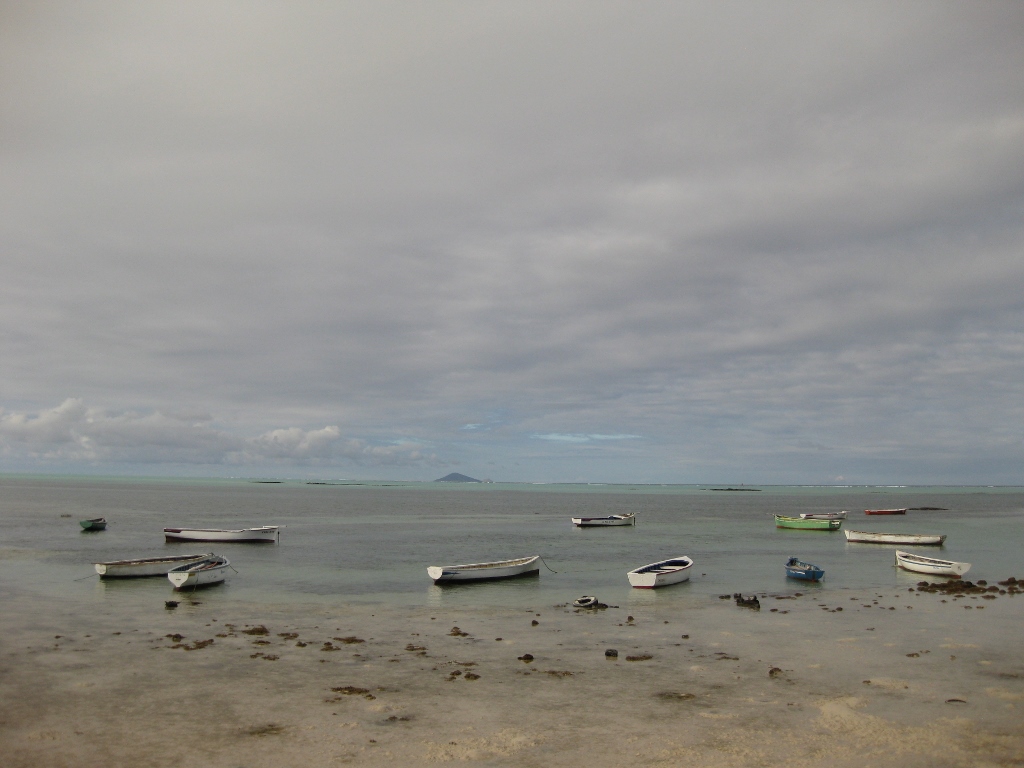
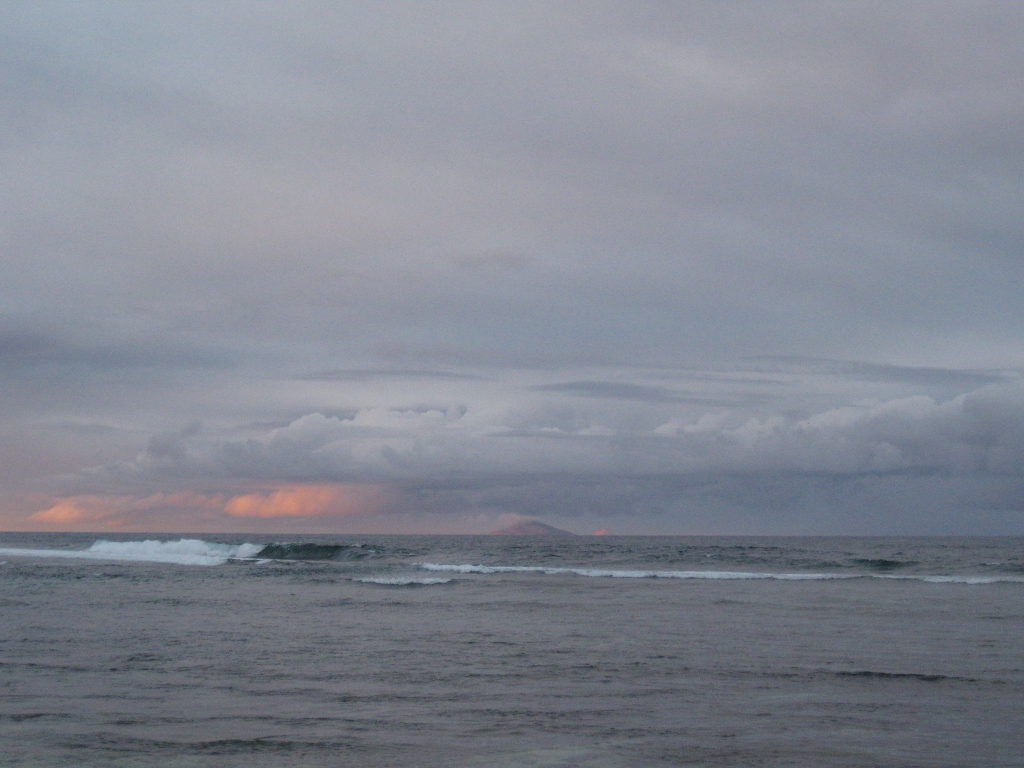
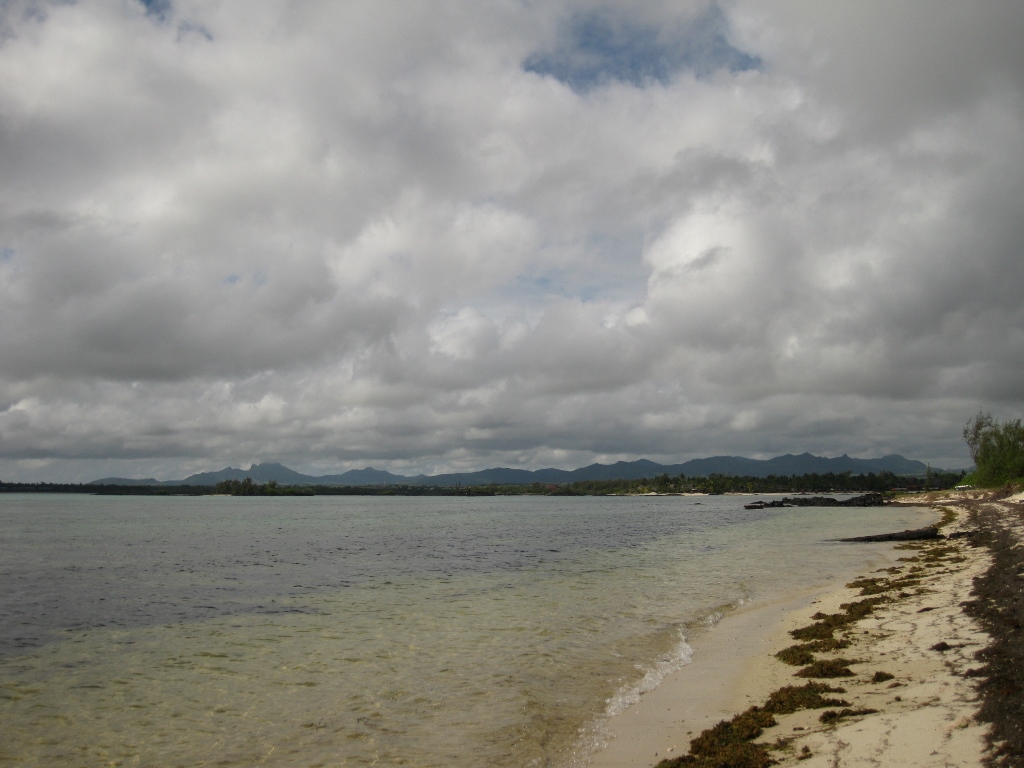
It is a strange undertaking to simply arrive somewhere with the intention of undertaking a project, but with limited knowledge of the place, an inability to speak the local language, and no idea of what type of project to undertake. There were the additional constraints of having only five months worth of time and quite limited financial resources. I found myself last November in just this situation. For the first few weeks I watched insects crawl on the walls, read books and papers on climate change the environment, tested if I could give myself diabetes with mangos, figured out that the local beer made my hands and feet itch, and contemplated the human condition. I could identify many things that other people should be working on like pollution, waste, energy production, food security, education, inequality, corruption, and industrial tourism. Mauritius was not very different than the majority of the world in the problems that it faces, but many were more acute due to the constraints of living on an island. None of these areas seemed appropriate for me to delve into though.
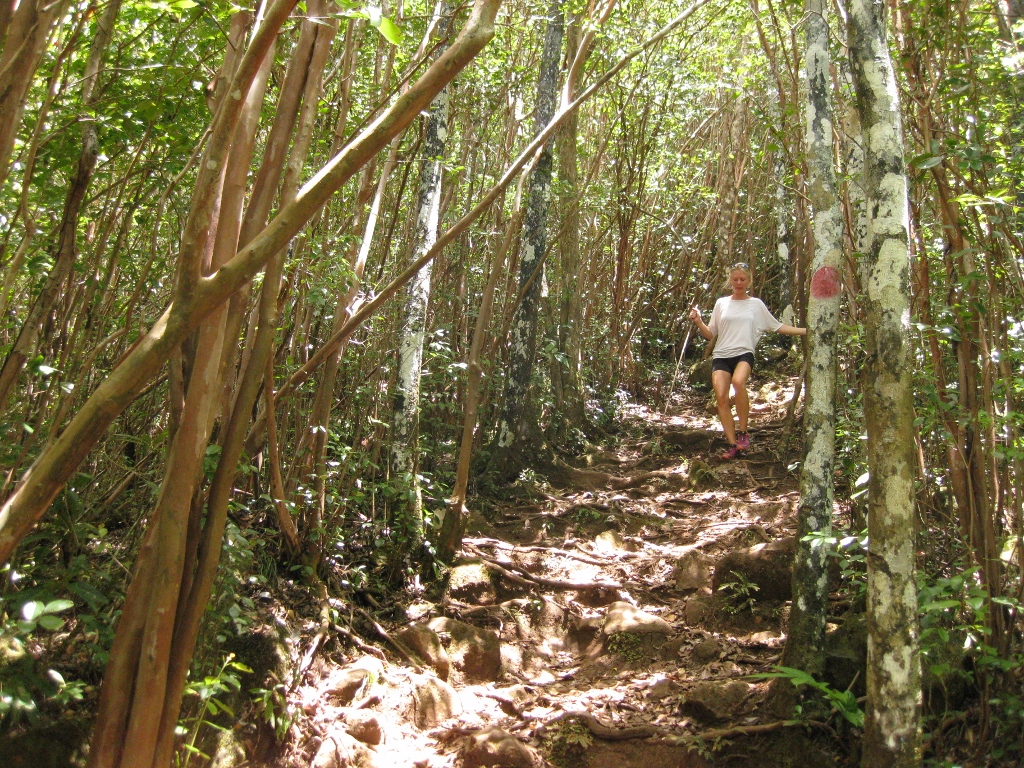
After a month I felt no further along. I could not help but think that I could not find anything to do because I had an incredibly limited skill set and simply was not up to the task I had set for myself. If you need a problem to deal with you can always create one yourself. The first project that I needed to undertake in Mauritius was to help myself as the malaise and boredom were too much. I abandoned the illusion of altruistic action and returned to just doing what I enjoyed. I set about exploring the scattered remnants of natural areas on the island. I found happiness in the quiet of the forest and the inspiration on the peaks. I breathed deeply in the open, relishing the reprieve from the oppressive concrete sprawl and sugarcane wastes. It did not take long before I had hiked all of the well-known trails and peaks. I began scouring the internet and asking around to uncover new frontiers. I began bringing my GPS with me, taking photos, and writing about the trails. I hiked during cyclones in the howling winds and rain. I baked my arms in the tropical sun and came home sliced to bits by vicious tropical plants.
Thus I found my winter project in the creation of a website called Explore Mauritius. I aimed to compile a detailed comprehensive guide that would enable Mauritians and tourists alike to experience the same joy I felt in the limited remnants of nature on the island. Additionally, I hoped to foster a stronger community around outdoor activities to protect these areas for posterity. In sharing something that I love I managed to combine many of the various skills that I already possessed and also learn a few new ones as I designed the website itself and the interactive map that became the centerpiece of it all. The map was built using Google Fusion Tables as the platform and Garmin Basecamp for editing tracks.
The number of people who use the website and are getting outside is growing every week. I stumbled into doing exactly what I intended to do at the outset.
I am no longer marooned on an island in the Indian Ocean. My departure had overtones of finality as it is unclear when I will make it back to a part of the world that is about as close as I can come to the opposite side of the world from Utah (see Map Tunneling). In my head I said goodbye to the faces of friends; the stress over my failure to learn French or like baguettes and foie gras; my disgust with the hoards of overweight, leathery tourists sunning themselves like glutted Komodo Dragons; the miasma generated by the billowing smoke of trash fires; my addiction to the fried, rolled curry deliciousness that is roti; my fragile mind addled by boredom that bristled with the shouts of the crazy lady that lived next door, the CD of Christian music that played on repeat everyday, and the kid who made noises like Moses Hightower from Police Academy. I reflected that I was orphaning my interminable project – exploremauritius.org (I wrote about the project here) – to map out the trail systems and natural areas of Mauritius. I felt proud of this child, but realized that I would no longer be there for it and could merely hope that it goes out into the world and labors arduously forevermore. I sat in Charles de Gaulle airport and kicked my feet up in anticipation of the joy I imagined that deadbeat fathers experience when they leave home into the bliss of utter irresponsibility. No more ballet recital or parent teacher conferences, just cheap beer, Pizza Bagels, and Eggo Waffles. It never came; I was not cathartically transmogrified. Mauritius still occupied my thoughts – in that moment I felt a deep connection with the place, it felt like a part of me. The foundations of my life philosophy were shaken by the thought that being a deadbeat might not be so easy as it is impossible to fully abandon anything. I furrowed my brow, deep in contemplation. I wanted to give form to Mauritius, to find a way to relate to it in a more concrete manner.
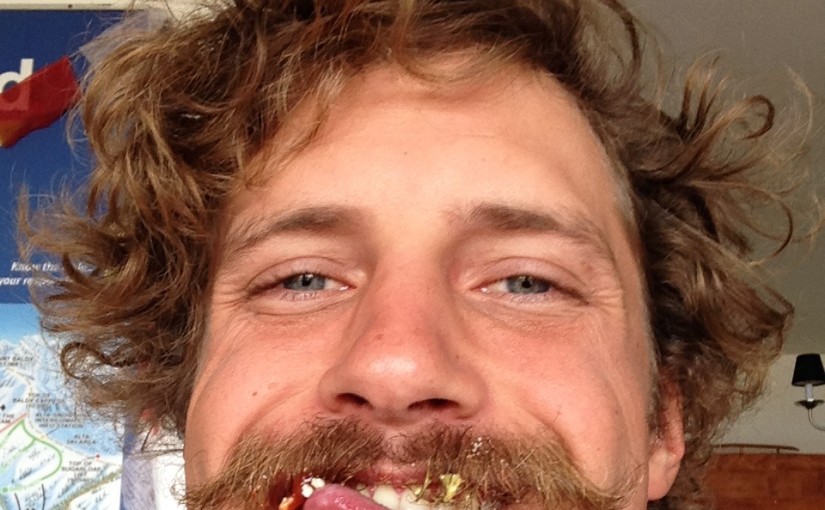
I groped for parallels with every object around me. Mauritius is not like a notebook, a smelly sandal, a bag of dried fruit, or a trashcan. The exercise felt ridiculous after a moment, but maybe I didn’t have to create a convoluted analogy, maybe the answer was right under my nose. The thought that Mauritius has no readily apparent utilitarian raison d’etre shed some light on the matter; it is bold and vain. After ruminating on this thought for a few minutes I felt the fingers of my hand gently twisting the ends of my mustache. Sacre bleu! Mauritius is most akin to the baroque mustache flourishing on my upper lip that I call ‘The Rajah.’
It is an ever-flowering wellspring of youth that brashly bursts forth with joie de vivre on a face that otherwise is a monument to functionality in a steady state of decay. It exists largely on aesthetic grounds, serving as a reminder that life in the end is a gigantic practical joke. Mustaches are not all tickles and giggles though – vanity has a cost. A mustache of any complexity requires two utilitarian hands to regularly groom it and twist it into shape – it is not capable of supporting itself. A mustache strives to look effortless, pristine, and independent, but this is only the appearance it offers from a distance. As one comes closer the heavy traffic that the mouth requires to support a variety of superfluous appendages like mustaches must pass through the baleen-like barrier of the mustache. Countless flavors and smells accumulate in profusion – the rich and the rotten. The existence of a mustache requires adaptability to changes in the dictates of style, a recognition that the upkeep grows correspondingly with time and complexity, and there is always a risk that it will simply run it course. Mustaches draw ire and accolades, but in the end both are senseless; it is just there – it need not be justified or explained.
This day I would begin an odyssey that would shake the weltschmerz from my girdle. I would walk the coast of isle peopled with inhabitants whose languages remained completely beyond the ken of my discerning ear and whose clime would test my mettle to the utmost.
I arose with my nerves steeled for the unknown. The day’s heat proved formidable even though the cocks had only just begun to crow. At I had minimal information on the route, but I had at least been assured by various learned acquaintances that the public beaches were fair grounds for the setting of camp and that there was food for the eating.
I walked out the main gate of our compound and turned to the right, despite the plan that I had to turn left. The sentry who assiduously guarded the entrance paced the road and as a speaker of my native tongue was likely to inquire what my plan was. The reasons being too complicated to explain drove me to bravely change course. I endeavored to head due north on a series of rarely trod bovine paths beset on every side by brambles and vegetables of a rather spiny nature. I was forced to turn back upon my trail multiple times as I navigated these wastes strewn with refuse. My tunic was sodden after a mere ten minutes.
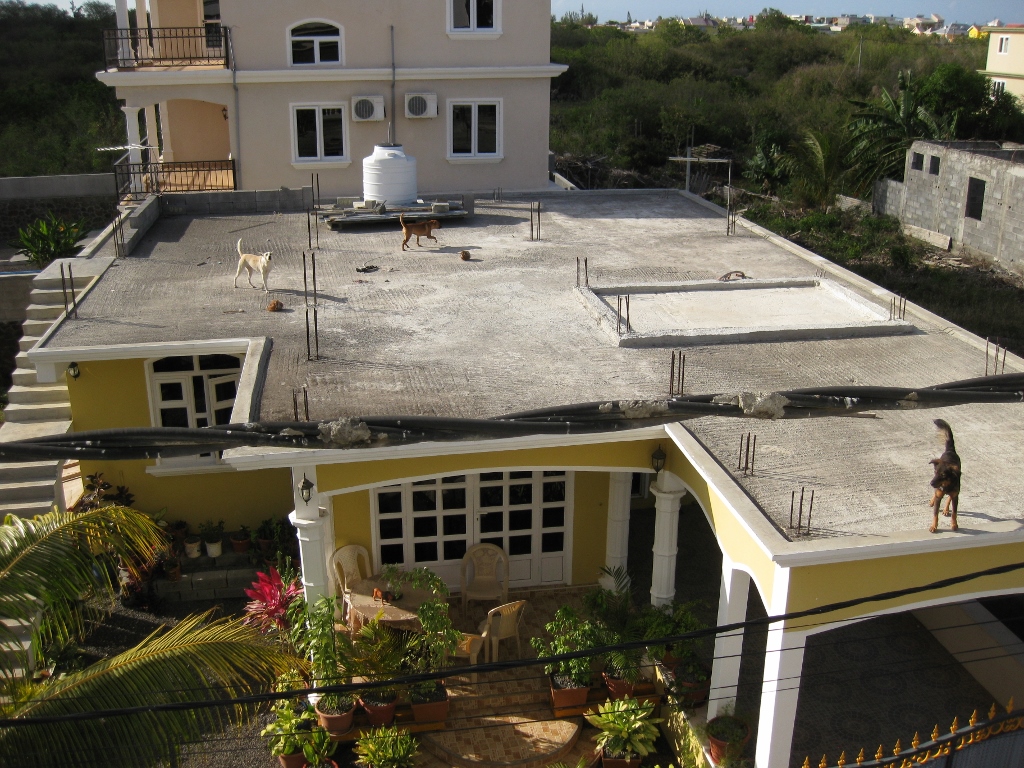
I marveled at inexplicable concrete castles along dirt roads that were not only devoid of nobility or gentry, but there was nary a groundskeep or caretaker to be seen. I was led to wonder what chicanery inspired such frivolity.
I reached the northernmost point of the island– a sign marked it as Cap Malhereux – and then began walking towards the yoke of the eastern sun. The Orient proved to be sparsely populated compared to the Occident. The paths were rife with mechanical conveyances that threatened my life at high velocities with little room for refuge.
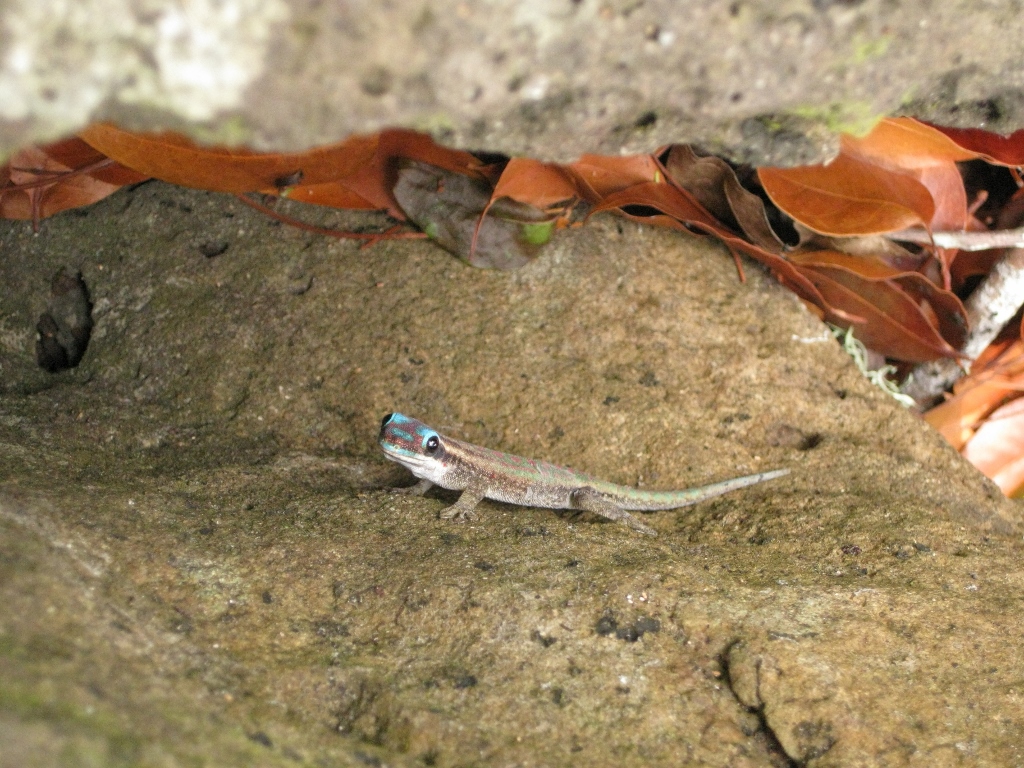
I walked along the beach when possible and gazed upon uninhabited, rugged northern isles that local lore spoke of as inhabited with the most bizarre and uncomely reptiles imaginable. I shuddered at the mere thought of these blind boas and neon lizards. Previous travelers had assured me that they had exterminated all such fauna from this island.
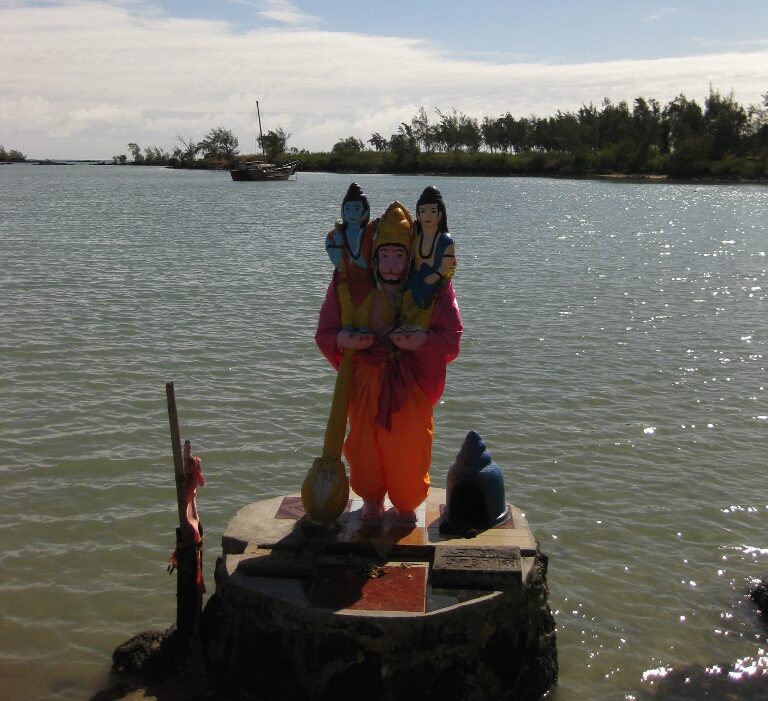
I made frequent pit stops at shrines along the coast. I approached one from a distance that was dressed regally and appeared to be of significant import, only to find that upon closer examination the figure had a half simian half man face. I never have seen such a creature on this island. I later found out that this thing was called Hanuman, a beast that once mistook the sun for a mango and tried to eat it in his youth. A story that I venture to say is preposterous.
My feet had already begun to ache and blister. I sought respite in the shade of a food hawker’s stand. I shared a mirthful moment with a group of shirtless men gathered around a booth who laughed at one of the few utterances that I was able to manipulate my tongue into uttering in the local dialect: ‘Un roti de poisson avec beaucoup pimen.’ After saying this the locals will hand you a roll filled with spices, fish, and chili.
My exhaustive research indicates that prior to 1638 there were no permanent inhabitants of this tropical island. The Dutch had a colony on Mauritius from 1638 until 1715 when the French took control of the island who held it until the British came in 1810. It has a history of being passed around like a lady of the night and appears to have few of its original natural charms left. The creole language that is native to these islands is a mix of African Bantu language, French, English, Arab languages, and Indian languages.
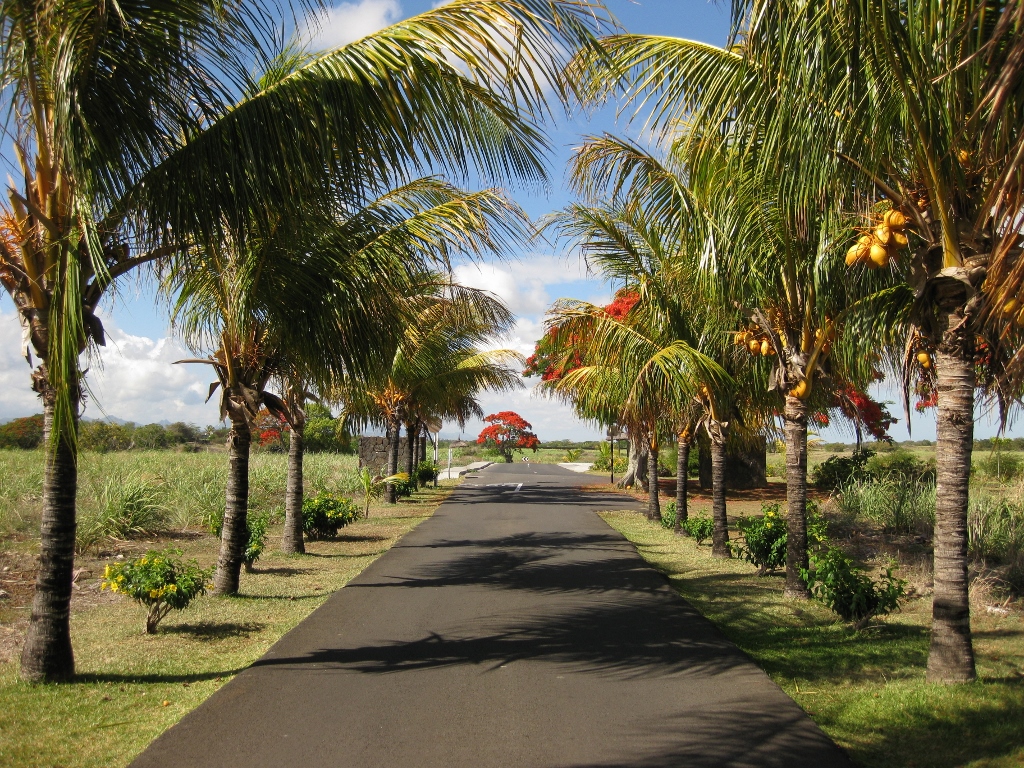
The chili in the food left my mouth ablaze and brought tears to mine eyes, which I promptly stifled to avoid doing injury to the perception of my peoples. Thence I tried to hug the coast and avoid the majority of the traffic. Beads of sweat materialized from the ether upon my forehead and rivulets cascaded down my face. I strode in the darkness granted by the benevolent branches of trees. Many of these trees were brilliant and quite unlike anything that exists in my native land. They loomed magnificently over the road and gave me the impression that I was part of a grand procession. I was marveling at the splendor of existence, when a long ratlike creatures scurried across my path and slinked into the undergrowth and leaf litter. I deeply regretted how this creature befouled the image that I had conjured in my mind.
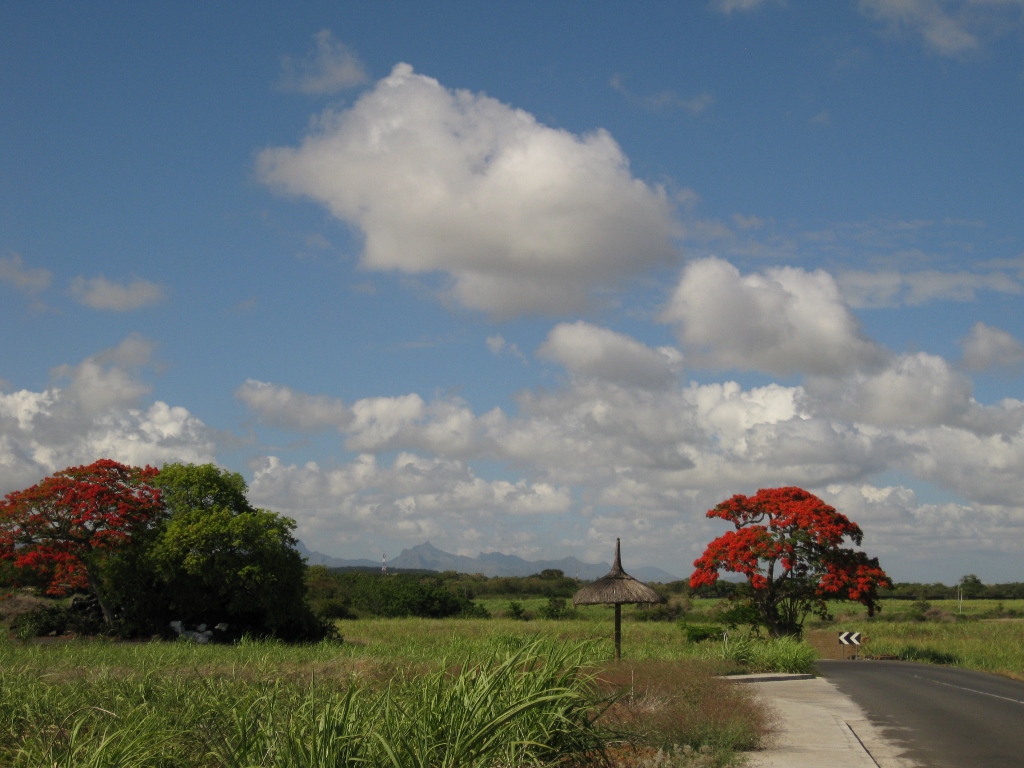
The coast retreated from the road, but thankfully the breeze continued to caress me with the gentleness of thousand butterflies flapping their wings. I found myself adrift in a vast sea of sugar cane – what a delicious sight!
I passed through a city called Goodlands. I stuck my hand into the reddish soil and it crumbled into dry dust before sifting through my fingers. The name Goodlands seemed to have been given to the place in jest. It was at this moment that I realized that I was over a league away from the coast, somehow my stalwart navigational skills had foundered.
I reached a place called Poudre d’Or with the sun having passed west of its apex. After shouting at a local man I was informed that the name of the town translates to ‘golden powder.’ After another bit of time I managed to find cold water and a fried noodle dish called mine frite. I relished both to a degree that would be lewd to place in print and would besmirch my literary reputation.
I laid down in a park and drift into a blissful slumber. I waved a greasy turkey drum stick in my hand at passersby and pontificated on a subject that had been troubling me.
“Hear ye, hear ye. It is not only the earth’s ancient failure to provide conditions that are conducive to the building of civilization in the untold leagues of deserts, tundra, and mountains that mar her countenance that I wish to discourse upon this day, but rather a topic of more vexing concern: our grand civilizations are now under constant threat from unruly tides that threaten to inundate our coasts, a dearth of water in the hinterlands that makes the sustenance of our barleycorns difficult, and mercurial tempests that terrorize our lands.”
“It is unconscionable, it is abhorrent to the sensibilities of the most brilliant of species for whom this domain was erected. I decry that there is only one thing hindering our limitless expansion and we are therefore engaged in nothing short of mortal combat with this final foe – the earth. I ask thee how shall we respond: Can we subdue this wily savage and gentrify it or will we humble ourselves and accept that parts of it shall forever remain indomitable due to their immutable and uppity constitution?”
“If we accept a position as a mere vassal we will have to recognize and abide by a myriad of constraints and implicit duties of stewardship, therefore I exhort my intelligent and sensible listeners to push onward towards the culmination of a task that began many millennia ago. Our laudable and infinitely brilliant minds – those that have allowed mankind such success in outcompeting every other species and shaping our very environment – shall not prove themselves insufficient to putting an end to this irrational and immoral savagery that we have heretofore put up with. I proclaim that it will be no more difficult than bottling lightning or leashing a cloud!”
The cackle of a group of roustabouts drinking away the afternoon woke me with a start. I was planning on sleeping in the park, but the men sitting around drinking cider and the amount of trash sent me walking. I was disappointed as the isolated pristine white beaches that my mind had conjured and held onto like a prized mirror-finished marble had become tarnished by the corrosive effects of reality.
The inhabitants of the island had pasted a variety of posters along my route with the intent of advancing their chosen candidate for political office. The content of the posters seemed, like many of things on the island, impenetrable to me. One party used a picture of a rooster pecking cubes to represent their party and the primary candidate in this region had a name that is unprintable. I withered under the late afternoon sun. I provisioned in Roche Noir near the coast where the proprietor warned me about the perils of being waylaid on the coast by thieves.
I was walking without relish and had entered a very remote region. My feet felt as if they were being rendered into ground meat as I trod onward under the tangerine sun. It had rotated around the earth and now dipped below the trees with a tangerine tint. I tossed my pack down, took off my shoes, and then hobbled into the ocean like a bipedal crab. The sea trembled with anger and its menacing vibrations broke against the black rocks of the coast. I laid down in the water, casually relieved myself, and stared out at the horizon hoping against meeting a kracken or giant devilray upon this occasion.
I reluctantly returned to the beach to cook dinner while there was still light. I sautéed various vegetables to which I added small fishes. The sun painted the distant isles rouge as I suspiciously eyed the foreboding, dark clouds on the horizon. It seemed prudent that I move with haste to make ready my canvas.
The first drops began to fall. I had obtained a new big top canvas after great difficulty immediately before my departure that I began to assemble, but I was dismayed to find that it would not come together. I sat down in consternation with the realization that this was a death knell for this undertaking – I would have to return embarrassed to my abode and make designs for another journey. I prayed to my normal god, but also ventured to offer a few kind words to that monkey figure that I had seen previously in the day.
I set off down the beach. Fortune favored me and I was rewarded with the discovery of a vacant beach castle. I approached the building and unloaded my rucksack under a tree. I curled up in the unerected canvas of my big top, but was immediately disturbed by an odor that led me to believe that the place could be nothing other than a feral cat latrine. Sheer indolence left me impotent to move and I hunkered down with unshakable fortitude. I was thankfully able to drift off to sleep each time there was a break in the rain.
I woke up and saw a break in the clouds that permitted me to gaze upon the scintillating night sky. I ruminated on the shapes and patterns that stars created in the sky. What was clearly a bear to me other fools held to be a big dipper or just a random group of stars as if god had merely sneezed them into existence. I began to get damp and shivered intermittently. I didn’t even once think that I was a miserable wretch. Eventually an orange glow in the east lit up my red eyes.
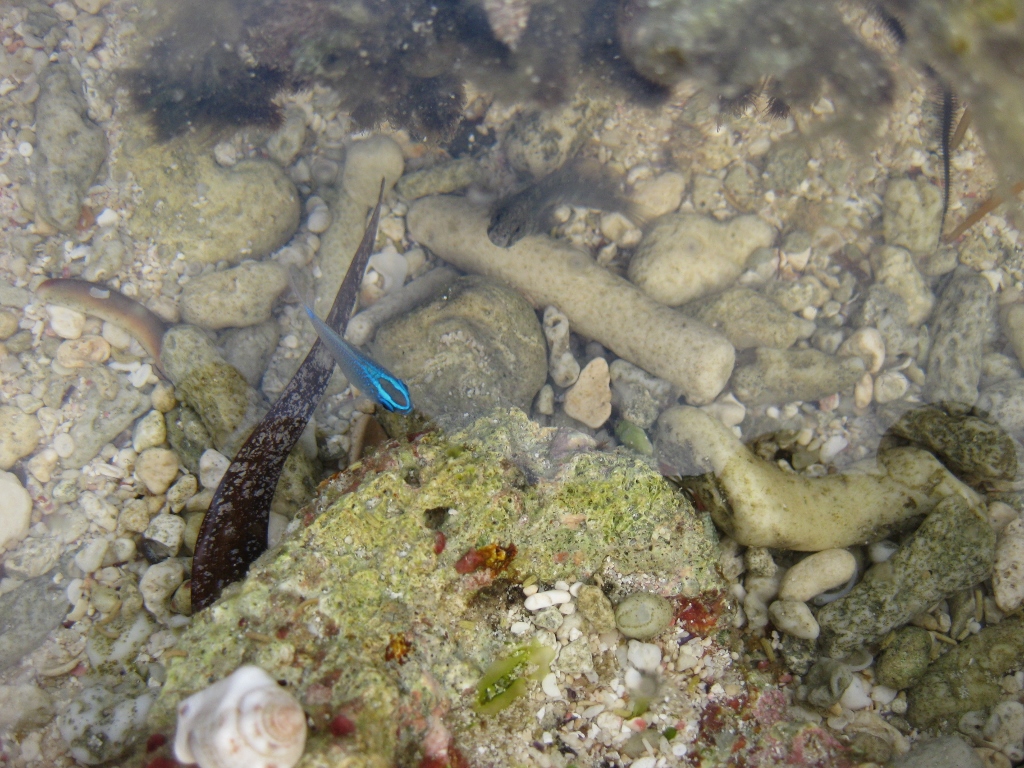
I went down to the black rocks again to make breakfast and tea. The night had left my mind blank and it was easily hypnotized by the sound of the waves. I peered into small pools that teemed with colorful, furtive fish and gangly, writhing starfish. I saw what looked like a miniature black and white flying Arabian carpet floating through one pool.
I set off down the beach heading south. The wind misted me with salty air. I reached another beach and I started a conversation with a guard while I waited for the bathroom stall to open up. It seemed to help pass the time as I was in dire need of the toilet. He asked me a few questions about my native land and then asked me about an incident that I had not kept abreast of due to the nature of my travels.
“I was watching the news yesterday and it said that black people were rioting because police shoot a black kid,” he said.
“Yes, but you see it is a really complicated situation,” I was not sure how to respond.
“No. No. The blacks are all bad,” he said confidently and reassuringly. I was soaked in sweat from colonic concentration.
“My friend, life is tough for a lot of people in that part of the world. It would be hard for me to relate the difficulties to you,” I had to pause and take a deep breath to keep the sardines from jumping out of my can. “But I can assure you that the darkness that courses through the hearts of my countrymen exists here just the same. The dodo is just…” I trailed off as I saw a stripling exit the bathroom and ran with the utmost gentility.
While I saved and planned my departure for Mauritius I felt like I was in an extreme delayed gratification study, staring at a mango on a plate for months on end. Why not stay home? What is the sense in all of this wandering? Why is there so much joy for me in caroming off in an unknown direction? My drive to undertake adventures and explore the unknown has always been hard to explain.
On the plane to Paris I wrote the following: “For me it seems that adventures and the mystery of life unfolding are the single greatest joys in life. There will always be sedentary jobs, possessions to accumulate, things to be learned through perseverance, and debts to amass and service. Death will always haunt us as an omnipresent specter though. The potential ways to live a life seem as limitless like the earth itself. Maybe I am just not meant to sit and work in – as Mark Salouka says – paint factories. I sleep better under the stars. I feel best when I rise with the sun. I often find myself want to run wild and break from the rational non-sense of society. Another justification seems to lie in my perception that society, science, religion, and technology fail to explain the mystery of mysteries. Exploring seems to be the realization of my philosophy regarding life in some way. It could be said to be pointless, self-serving, futile… but this logic can be turned against most of the activities that other people spend their lives doing whether it is working for a financial services company, designing multi-billion dollar Iphone applications that allow teenagers to send one another self-destructing photos of their genitals, of wealth accumulation, or of working in a paint factory.”
But I am not alone. About 3500 years ago it is estimated that Pacific Islanders expanded their territory to islands that would require up to several weeks on the open sea to reach. What made them go into the blue unknown in search of islands that they didn’t even know existed? About 15,000 years ago the first waves of explorers are estimated to have crossed the Bering land bridge and roamed across two new continents. What made them go out into that white unknown of ice and snow?
I recently read a book titled ‘The Song of the Dodo’ by David Quammen, a tome on the history of evolutionary biology and it was there I stumbled across the idea that maybe this part of me is not unique. It appears that many scientists believe that this nagging curiosity is a defining characteristic of homo sapiens. In conjunction with the development of our complex brains and limbs seems to have come about a set of traits that helped us expand out of Africa and to ultimately inhabit almost every tract of land on this planet in about 60,000 years. These traits drove us far and wide; we crossed open seas on boats, we walked across land bridges, we floated down rivers, we flew planes.
Not every species shares this same propensity though. There are others, like the Mauritian Kestrel, that refuse to even cross small clearings in the forest. There must be evolutionary environments and genetic endowments that reinforce this trait and others that would make it a disadvantage. Explorers of any species have the ability to sow their seed far and wide. An adaptable generalist species would seemingly benefit from this trait and reinforce it as more progeny means a higher proportion of a particular set of genes in the pool.
“If an urge to explore rises in us innately, perhaps its foundation lies within our genome. In fact there is a mutation that pops up frequently in such discussions: a variant of a gene called DRD4, which helps control dopamine, a chemical brain messenger important in learning and reward. Researchers have repeatedly tied the variant, known as DRD4-7R and carried by roughly 20 percent of all humans, to curiosity and restlessness. Dozens of human studies have found that 7R makes people more likely to take risks; explore new places, ideas, foods, relationships, drugs, or sexual opportunities; and generally embrace movement, change, and adventure. Studies in animals simulating 7R’s actions suggest it increases their taste for both movement and novelty.”
And this part strikes home for me, it seems to be a natural corollary to the idea of a restless gene:
“Among Ariaal tribesmen in Africa, those who carry 7R tend to be stronger and better fed than their non-7R peers if they live in nomadic tribes, possibly reflecting better fitness for a nomadic life and perhaps higher status as well. However, 7R carriers tend to be less well nourished if they live as settled villagers. The variant’s value, then, like that of many genes and traits, may depend on the surroundings. A restless person may thrive in a changeable environment but wither in a stable one; likewise with any genes that help produce the restlessness.”
I have always been looking for ways to justify this part of myself, but maybe it is just genetic , maybe it isn’t something that can be subjected to analysis. I think it may have been said best by Hank Williams:
“I can settle down and be doin’ just fine
Til I hear an old train rollin’ down the line
Then I hurry straight home and pack
And if I didn’t go, I believe I’d blow my stack
I love you baby, but you gotta understand
When the lord made me
He made a ramblin’ man.
Some folks might say that I’m no good That I wouldn’t settle down if I could But when that open road starts to callin’ me There’s somethin’ o’er the hill that I gotta see.”
Rambling
My papers were not quite on the up and up, so I shaved my face and cut my hair. I put on a button down shirt, khakis, and placed two pens in my front pocket to lend myself legitimacy under the weary eye of the immigration officials in Mauritius. At this point in my life I can confidently say that I understand bureaucracy pretty well, so I printed out – in triplicate – any and all documents, regardless of how superfluous, that had a seal, signature, or my name on them. On the way from Salt Lake City to Mauritius via Paris I wielded these papers like a weapon no less than three times. I think that their efficacy lies in their threat of monotony.
I approached the immigration desk in Mauritius calmly and told the woman the following after our pleasantries, “The government just said to give me a tourist visa until they finish processing my visa application.” See what I did there? I presented the outcome that I wanted with no other options. I avoided the hours of waiting in queues that I had heard of others experiencing in similar situations.
The only problem though was that she handed back my passport and then looked up from her papers and asked, “Which company is it that you normally work for here?”
I stumbled here, “I don’t work…for…I have never been here before.”
She stumbled, looked both directions, and then said, “Oh..okay. Well thank you, bye bye.”
I had a 30 day business visa instead of a 90 day tourist visa. I cursed the two pens in my front pocket.
Impressions
I had spent so much time reading academic papers and books about Mauritius, examining numbers that attempted to quantify it, and analyses of its problems that I arrived with a brain filled with sociological mush without a pinch of reality. There are no measures of net beauty, blissful slumber opportunities per capita, food deliciousness index (FDI), gross hammock oscillations per hour, or gross domestic laughter. But I think that Mauritius would score high on all of these measures. There are also never any news stories announcing that the world is okay or exhorting us to do nothing as an overwhelming wave of peace has swept through the region. The remedy for this condition is to taste the mango.
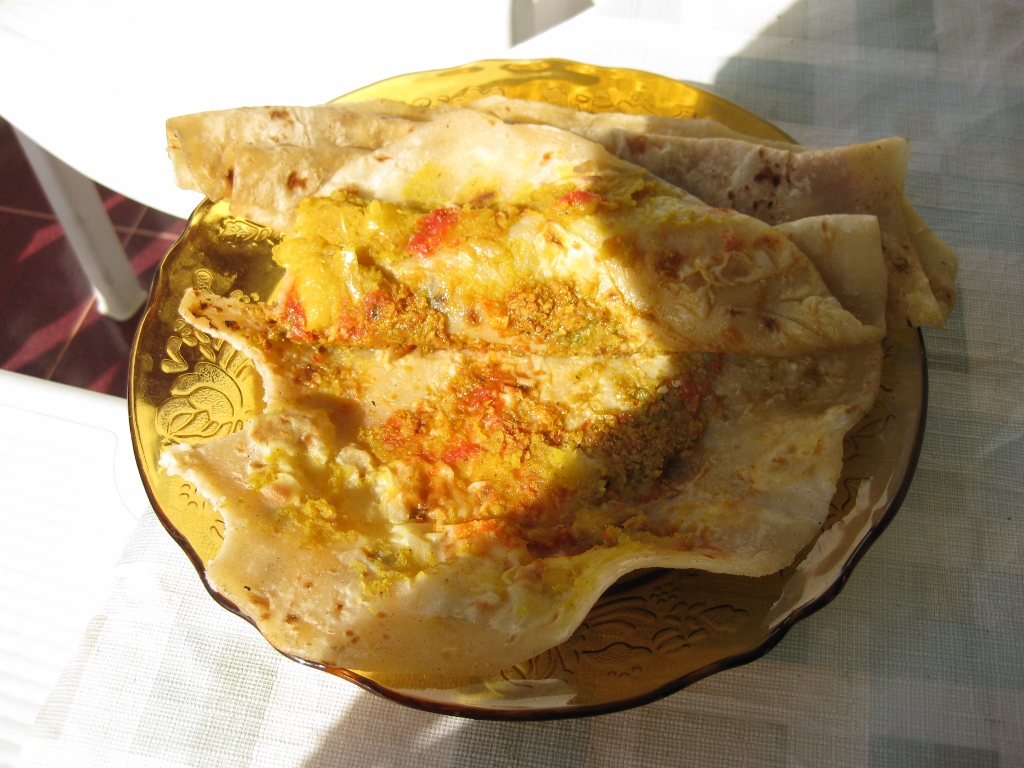
The birds wake me each morning with the rising of the sun. Mangos are falling off of the trees on our street and my only competition is the birds. A pack of family dogs patrols the street outside our apartment. I pass my first days lazing around in and about the turquoise sea that merges with the sky if you screw your eyes up in just the right way. I still have not seen a jet ski in Mauritius and I could count on one hand the number of guns that I have seen – both things bode well for a country in my mind. The people are amazing here – friendly, content, and welcoming. Culturally, it is midway between Europe, Africa, India, and China. You hear it when people speak and in the food you eat. Roti – the national dish of sorts – is the best food in the world rupee for rupee. It consists of a fried flour wrap filled with assorted sauces, chilis, and curries that is readily available whenever necessary. Mauritius is a sauce country, this seems to exemplify its culture to me.
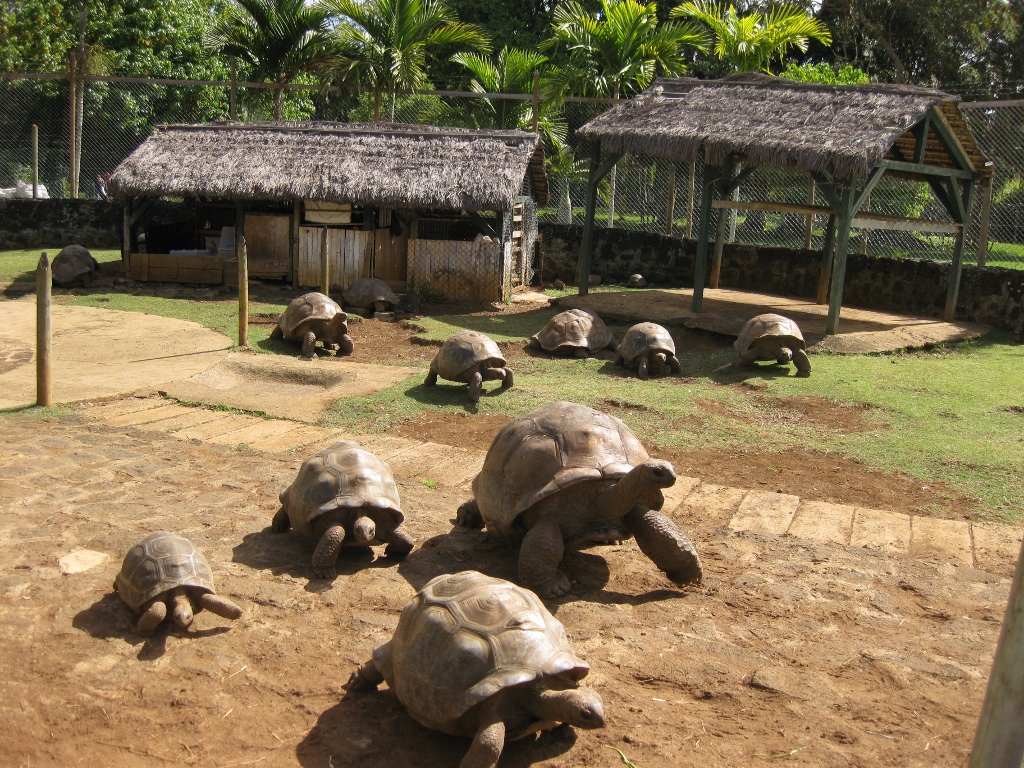
We visited the Sir Seewoosagur Ramgoolam Botanical Garden and saw a dozen or so tortoises imported from all over region. Despite their ersatz environment, I was mesmerized by their beauty as they charged at us from the other side of the pen after their lunch was delivered. The largest was 150 years old. It was nearly as interested to watch the packs of French tourists touting IPads descend upon the pen.
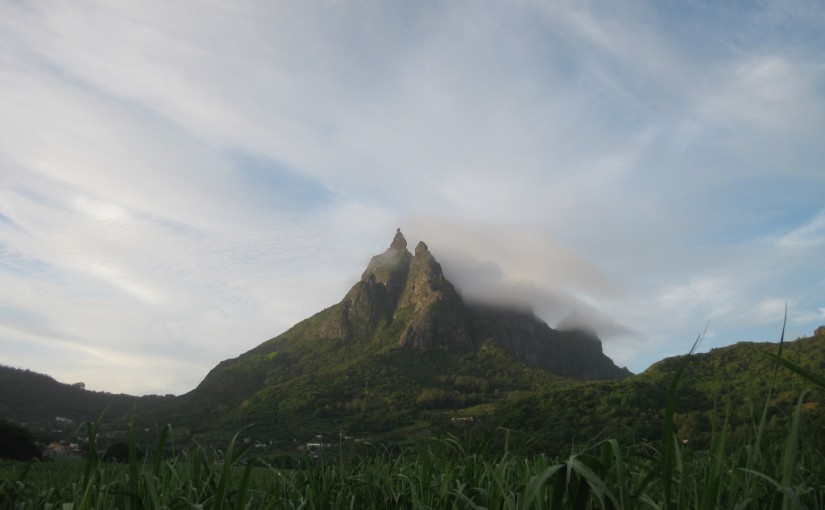
We bought a Suzuki motorcycle with 125cc’s of Merlot colored fossil fueled fury. I turned 30 and wanted to go explore the southern part of the island for my birthday. I turned out into the left lane and we started the epic 40 mile journey south on the main highway. Rain began to fall on us early on as midday clouds gathered around the pinnacles of the Moka Mountains. The mountains rise as forested islands in the midst of a boundless expanse of green sugarcane not unlike the blue sea that the islands of Mauritius rise up from. It felt like we were flying with the engine roaring; I wanted to howl and make obscene gestures at the elderly, until a pair of them passed us in their miniature car going twice our speed. We passed mansions on dirt roads in the middle of nowhere, slums, dilapidated colonial buildings, gleaming skyscrapers, textile mills, and a tuna cannery. I muscled the bike through the concrete tandoori oven called Port Louis by splitting through traffic and riding the shoulder. Lauren complemented me on my driving with a flattering comparison to a fictional symbol of masculinity and daring from Hollywood, but I self-effacingly deflected the remark by comparing myself to a cat on a skateboard acting on pure fight or flight responses. We stayed at a friend’s place in Flic-en-Flac, a coastal town along the west coast.
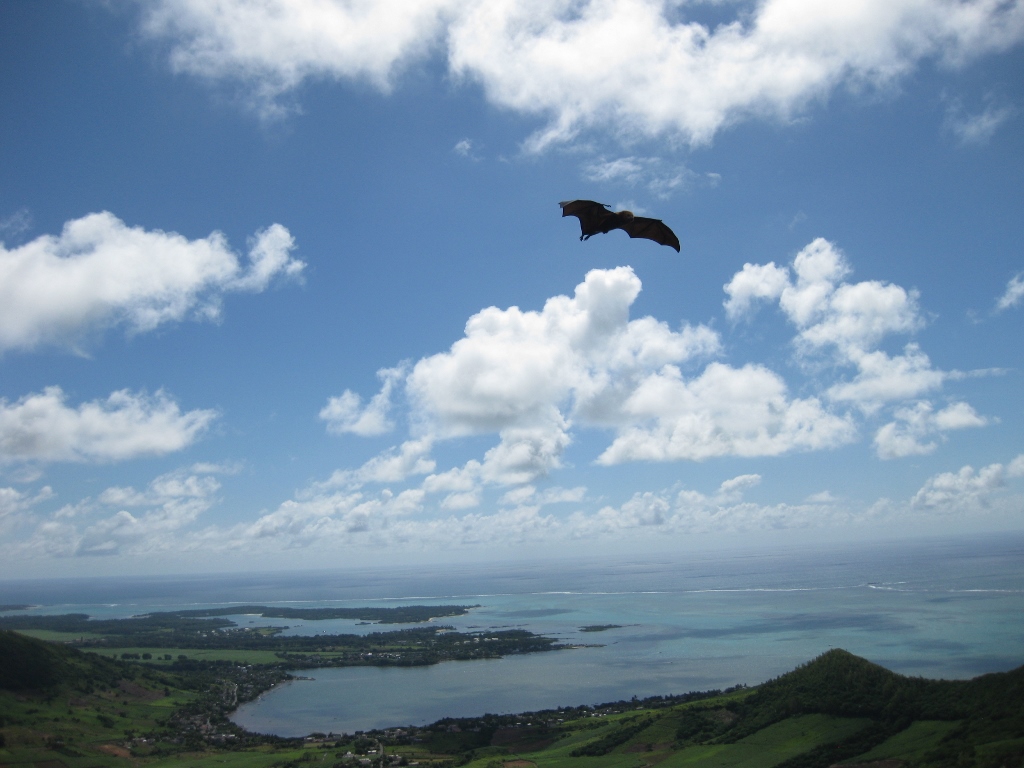
The mountains around the island are all remnants of the giant caldera that formed the island and then collapsed. Black River Gorges National Park encompasses the majority of the mountains on the southern part of the island. It also happens to contain some of the last remaining old growth forest – less than 2% of it remains on the island – and consequently the majority of the remnant populations of many endemics like the Mauritius Kestrel, Mauritian Flying Fox, Pink Pigeon, and Echo Parakeet. The Mauritius Kestrel population was as low as four individuals in 1974 – the rarest bird on earth at the time. The numbers have rebounded, but remain modest. There is a limited amount that can be done when the primary problems that a species faces are habitat fragmentation and destruction.
We packed up early and left to explore the park. As we drove into the park a mongoose slinked across the road a disappeared into the brush. The mongoose was intentionally released by the government to help control disease bearing rodents, despite the knowledge that it had previously wreaked havoc elsewhere. It was less than a decade before the government was striving to eradicate the mongoose after it decided that chickens and all manner of other animals were as good as or better than rats.
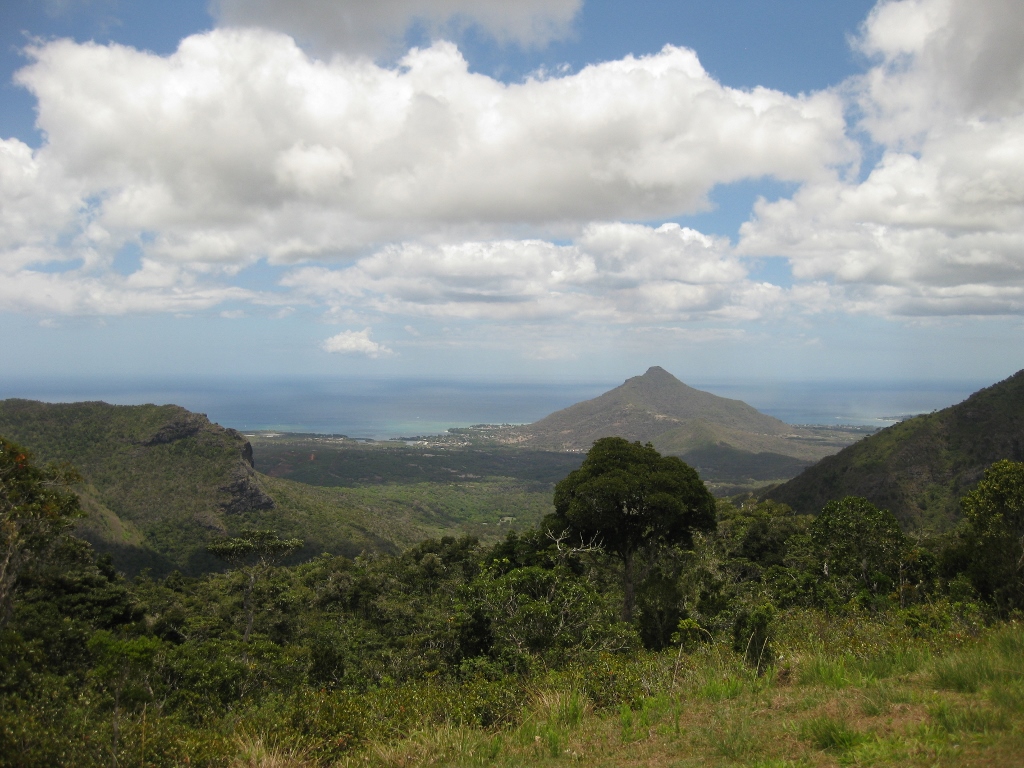
We walked several well groomed but poorly marked trails that switchbacked up the mountainside. All of the forest through which we passed appeared to have been logged at some point. I didn’t notice it until a few hours had passed, but the forest seemed impoverished of insects; I saw a few butterflies and dragonflies, but not much else. We reached a lookout and looked down valley upon the sea. A few white Tropic Birds with their tendril tails rode currents below us. I paced around the overlook trying to take in everything and then suddenly I saw two bright green birds streak across below me. I tried to contain my giddiness as I hollered for Lauren to come see the Echo Parakeets. The parakeet had rebounded from as few as ten individuals to as many as 300 through the remarkable efforts of a few dedicated conservationists, in fact the same ones that saved the Kestrel. We looped back and hopped on the motorcycle. I hooted in my helmet as a Crab Eating Macaque loped across the road in front of us as we rode back to Flic-en-Flac.
Octopus Project
We awoke at 5:45 the following morning to return to Pereybere and then catch a ride to the east side of the island where we had a meeting to examine a UN GEF funded project building octopus burrows for fisherfolk out of reclaimed telephone poles. The director of the organization in charge of the program, Environmental Protection and Conservation Organization (EPCO), explained that the program arose after declining fish catches drove many fisherfolk to work for the government mining sand to feed the insatiable demand for concrete on this nearly treeless island. (The concept of sand mining is possibly a better example of a mind numbing and endless task than working in a paint factory.) The problems with sand mining eventually became apparent and the industry shifted to the crushing of mined rocks. This left many fishermen out of work with few directions to turn. The octopus burrow project was designed to both help rehabilitate the fishery and help sustain the fisherfolk. We wanted to see how it was working.
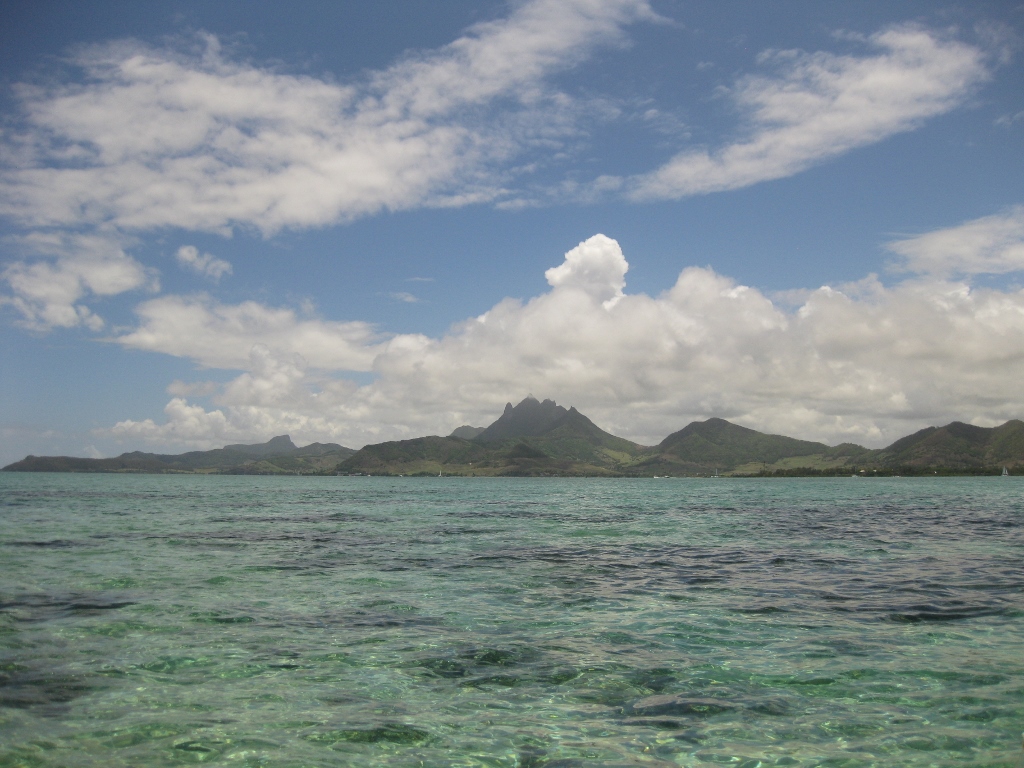
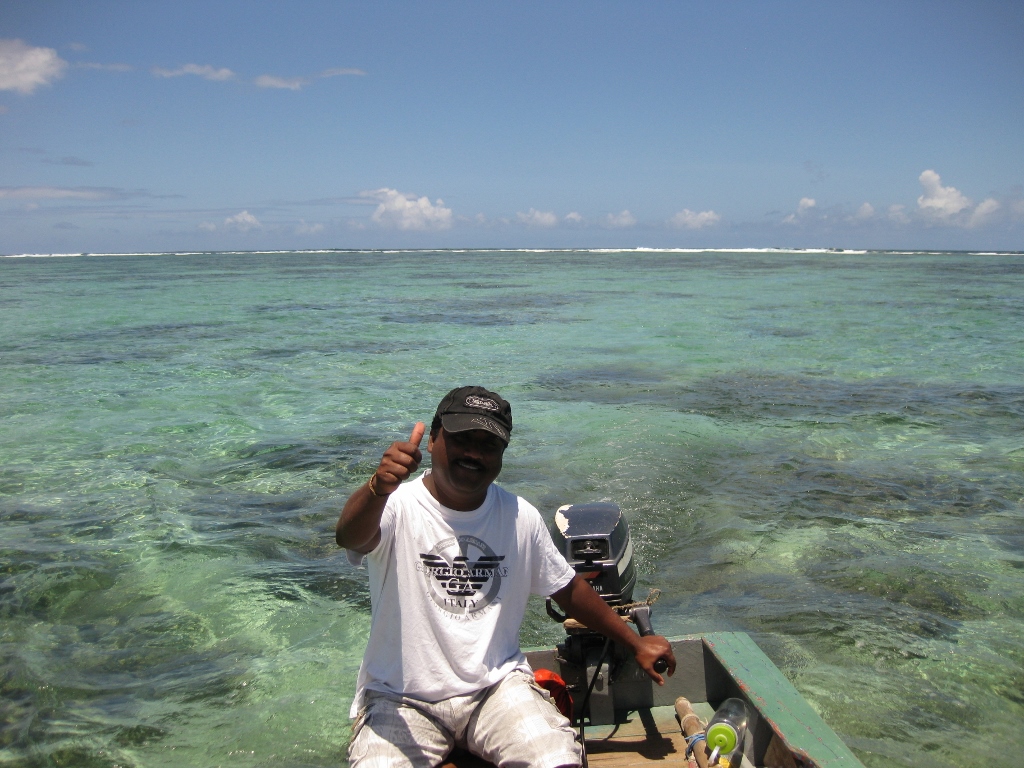
We boarded a handmade wooden boat with a fisherman named Dost – a Creole word that means friend. We puttered out towards the surging whitewash of the reef break and looked back upon the Bambous Mountains above Grand Reviere Sud Este. The water was absolutely clear and less than two meters deep. I leaned over the gunwale, which listed the boat to one side, in order to peer down at the kaleidoscope of coral.
I jumped into the other splendorous world that covers 70% of the earth’s surface and stuck my snorkel in my mouth. The fish seemed sentient and curious as we examined one another. They let me get close to admire their incredible forms and scintillating scales, and colors that surely exist nowhere else. The fish would disappear and reappear as they wove their way through corals with shapes that seem floral, cerebral, and dendritic. I found one large lobed brain that teemed with a miniature microcosm of colored fish. I gestured Lauren over and we relished the beauty of it in a complete absence of words.
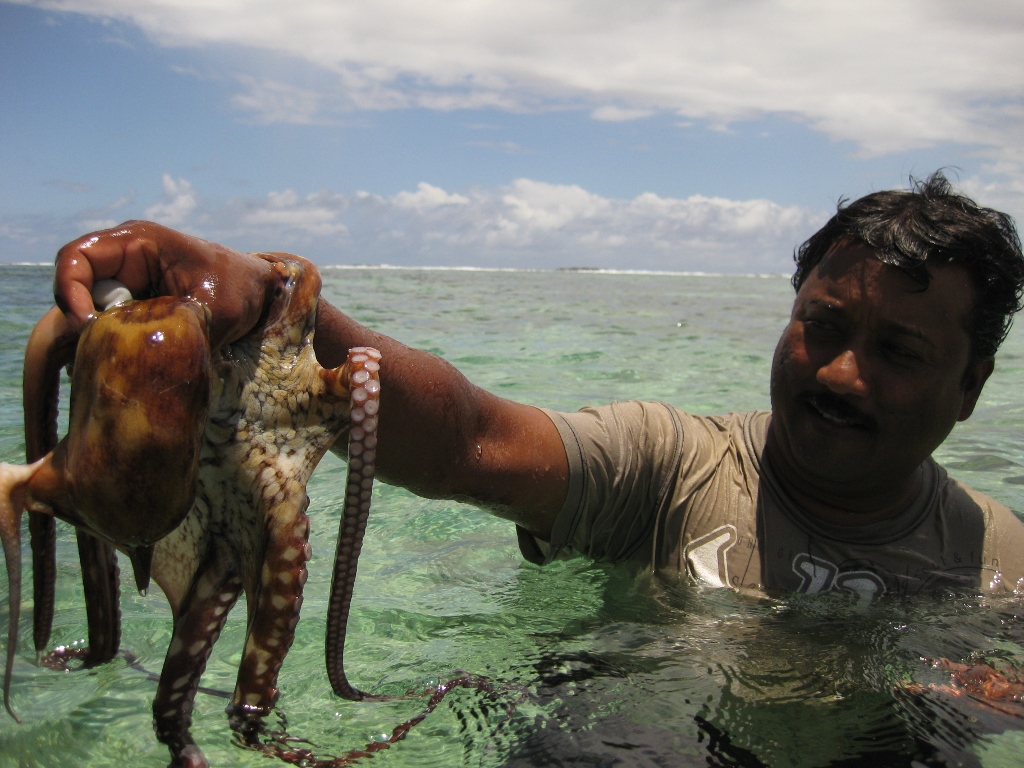
Dost gestured us over and we followed him over to an octopus burrow. He began prodding into the burrow with a rod and drew an ink spraying ball of arms out that he grabbed as it tried to make its Houdini-esque escape. It grabbed onto his arm and he repeatedly had to tear it loose. I stared with rapt attention as it furiously changed colors and patterns. He let it swim for a moment and it descended to the bottom, felt around, shrunk its size, and changed to match its surroundings. It is not just an octopus. The symbol ‘octopus’ does not begin to convey the beauty and complexity of that animal. Nor does ‘coral reef’ begin to encompass what I saw.
I identify with that octopus – how it changes to reflect its environment and how it strives to defend itself by spraying ink. I think that I might be doing that right now. We ate it later.
I wrote a book. I delved into writing full time after I quit working construction in New York this past February. There were many reasons why I quit, but mainly it had to do with the company using improper permits to perform mediocre quality work with underpaid undocumented immigrants (and me) in hazardous work conditions (subzero temperatures without a heater) for six days a week. It was blatant exploitation. We were often not paid for weeks on end, despite the contractor running around picking up the tab in Manhattan bars. We were just trying to get by though and there we succeeded. There could be a story here about how this experience inspired me to undertake this project.
When I think about my life, I can see it as nothing but a story that I write. I think that our minds are first and foremost story generating machines. They take disparate, bewilderingly complex events and string them together into storylines, beliefs, and judgments that make reality appear intelligible. We classify them with single words and devise crude chains of causal logic. We ascribe motives, emotions, and traits to individuals and they, to us at least, play the roles that we have scripted for them to play. We go through each day simply fitting events into our storyboard. Thus each person builds the universe.
A closer look, a break with our myopic perspective, reveals a far cloudier and uncertain picture – there are myriad perspectives. Stories have an incredible amount of power in shaping our view of ourselves and the world around us. I used to believe that I was defective, as if there was some sort of quality control somewhere with an objective measure for determining the quality of a person. I once believed that life was a material quest and that success was having as much as possible; that I had to assiduously work in a box and be a lawyer, doctor, or businessman; that we were created by a god to pillage this earth and that this is to be called progress, that the world is a dangerous place and people are inherently bad; that hitchhikers are straight off skid row – depraved addicts and sexual deviants running from something.
I wrote about myself as an anomalous character running amok and making a mess of a script that had seemingly already been written. The original script did not include: howler monkeys, guns pointed at my head, drugs, motorcycles, hitchhiking, volcanic eruptions, Spanish cokeheads, saintly truck drivers, car accidents, foreclosure, or wandering just for the sake of wandering. I sure am thankful for these additions though.
I turned my journals from a winter of hitchhiking into something in the Bryant Park library over the course of a few months. I am not sure that I am finished with it. I do feel the need to give an explanation for why I did this, but I feel like I would just be composing a story that was an amalgamation of various book jackets.
Some people believe that coyotes are a form of god, others believe that they are vermin that we haven’t won the war against yet. I do believe that if you sleep on the ground it is impossible to get up on the wrong side of the bed.