Category: memoir

  • The Deus Ex Machina Chaos

    At the end of November I had been out of work for a while and as much as I would like to use my outsized brain to trap or spear animals, to hew a home out of the forest, to break stallions, or to cultivate a field, I was forced to accept that this was not a realistic possibility at this juncture in my life. I got a call from a friend asking if I wanted to do some demolition work for a few weeks here in Brooklyn. I impulsively answered, ‘Yes.’

    After moving to New York from Guatemala I had been doing a lot of thinking and I felt a little unstable, like I was on the verge of something. My mind did sommersalts and wove itself into knots; it vomited forth and then became constipated.  It is just what my brain does sometimes. It isn’t always clear what has emerged from turmoil such as this, but I came up with something and wrote it down. Here is an account of breaking down both physical and theoretical walls and finding something beautiful in the space that was left.
    The strangeness of New York and its complexity was reflected in the job itself: I worked with a Croatian who has been here five years named Mate (accent on the e) and a Muslim from Burkina Faso named Ibrahim who had been in the country for less than a year. Mate lived in Queens, had two kids and a wife who was an English teacher. Ibra, as I took to calling him, was younger and was working to make money for his family in Burkina Faso. He was a married man and was saving to bring his wife over someday. Ibra had no papers and Mate had just received his green card. I amused myself by thinking of myself as an indigenous immigrant.
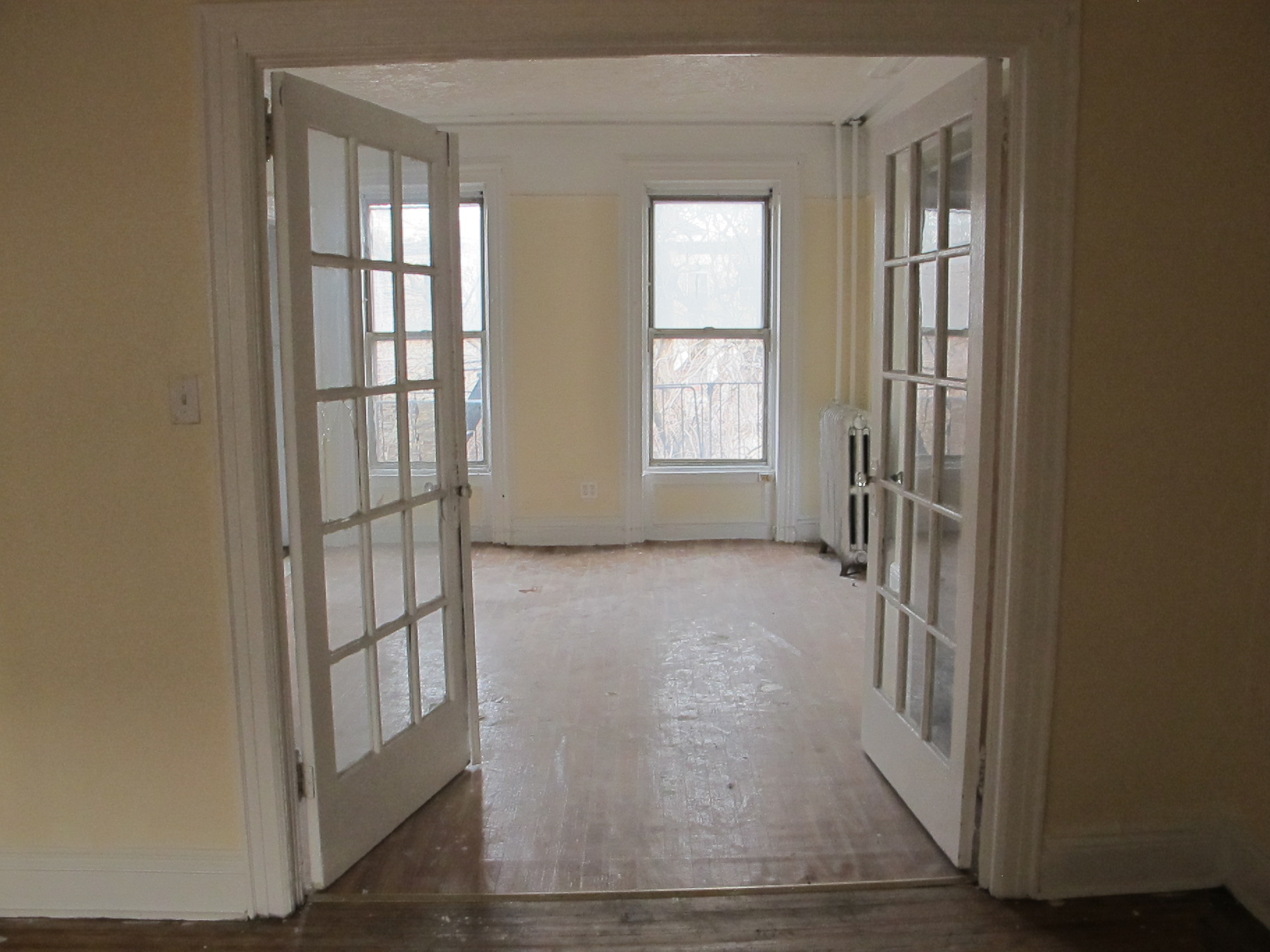
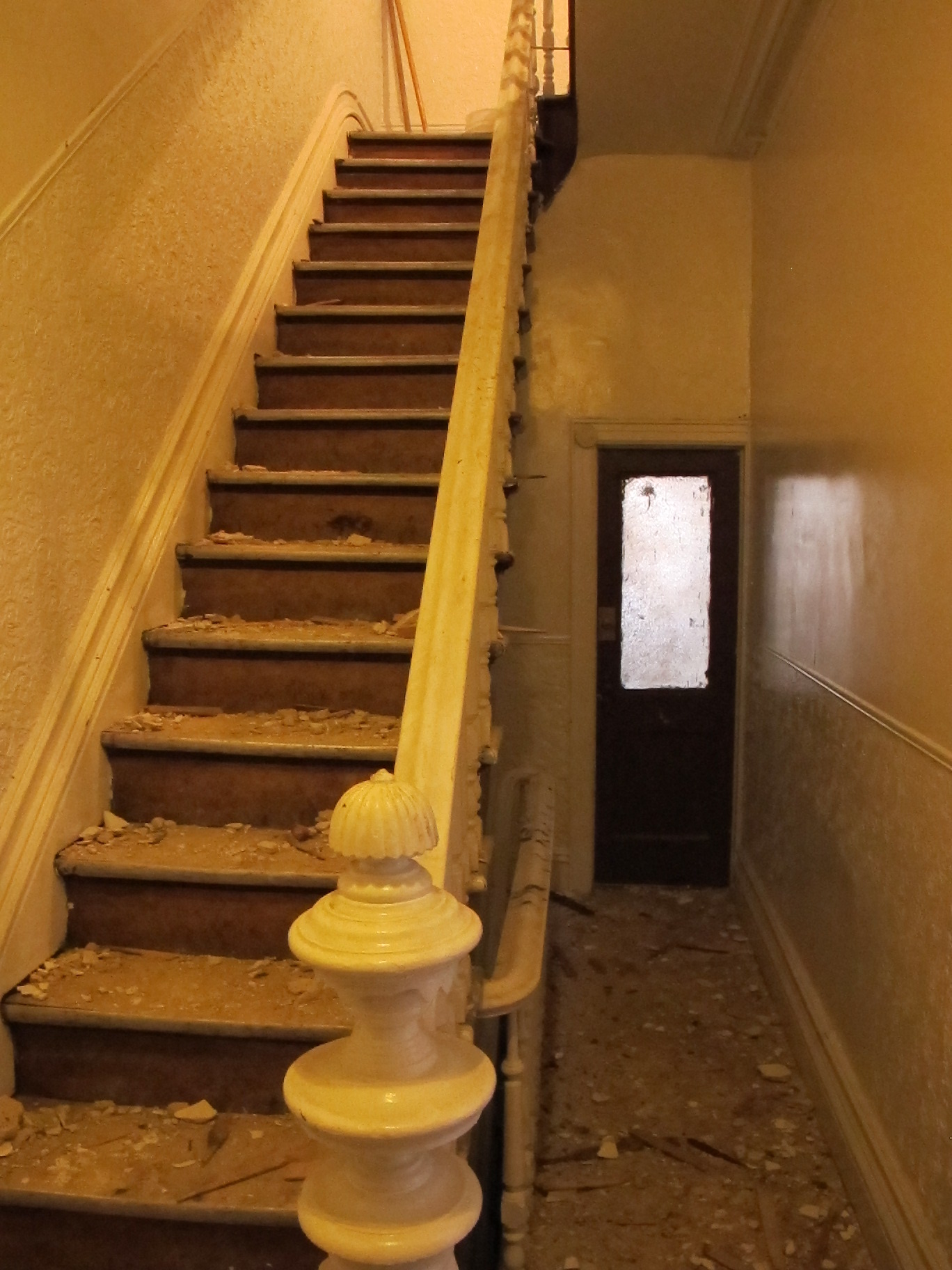
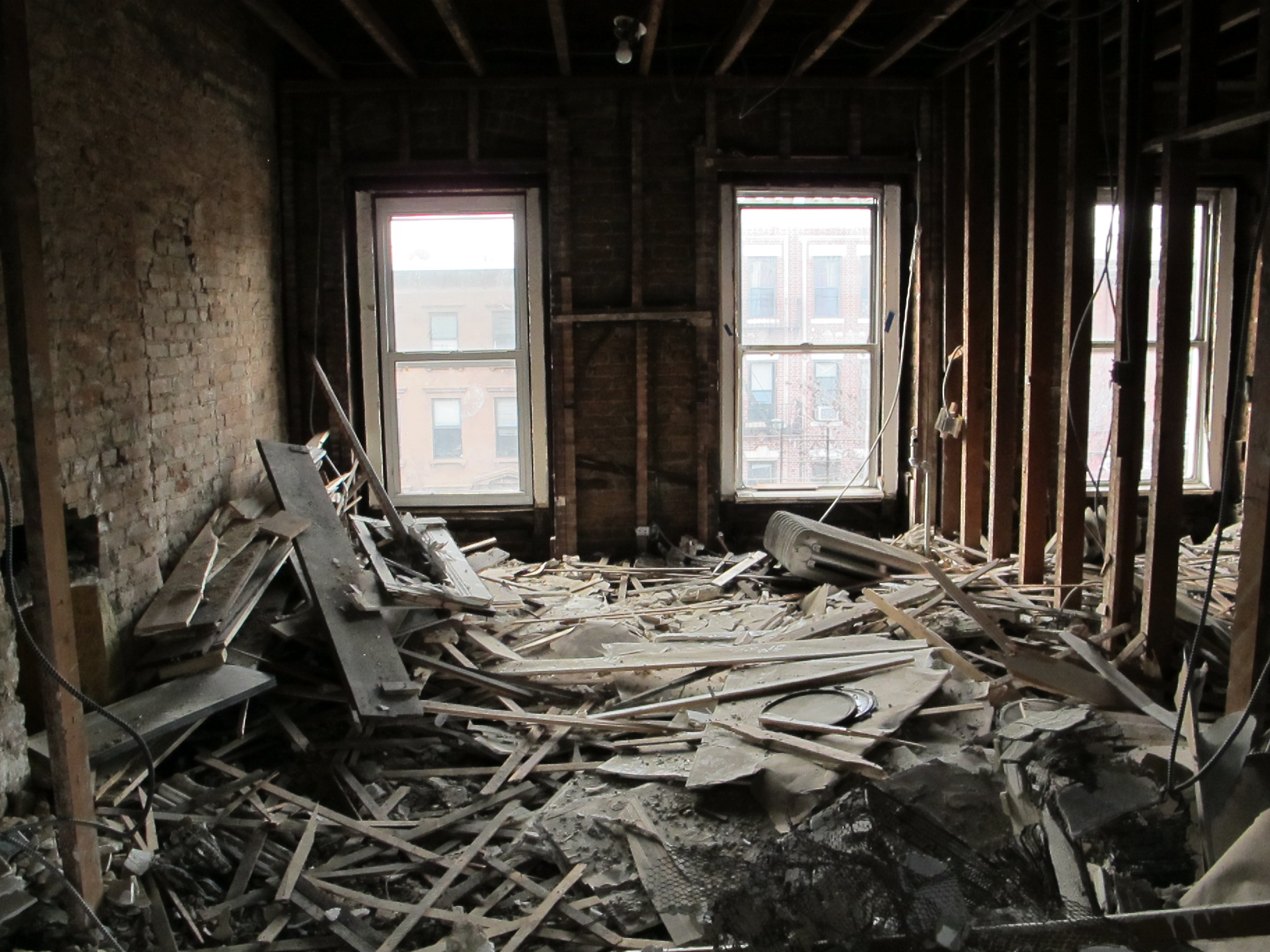
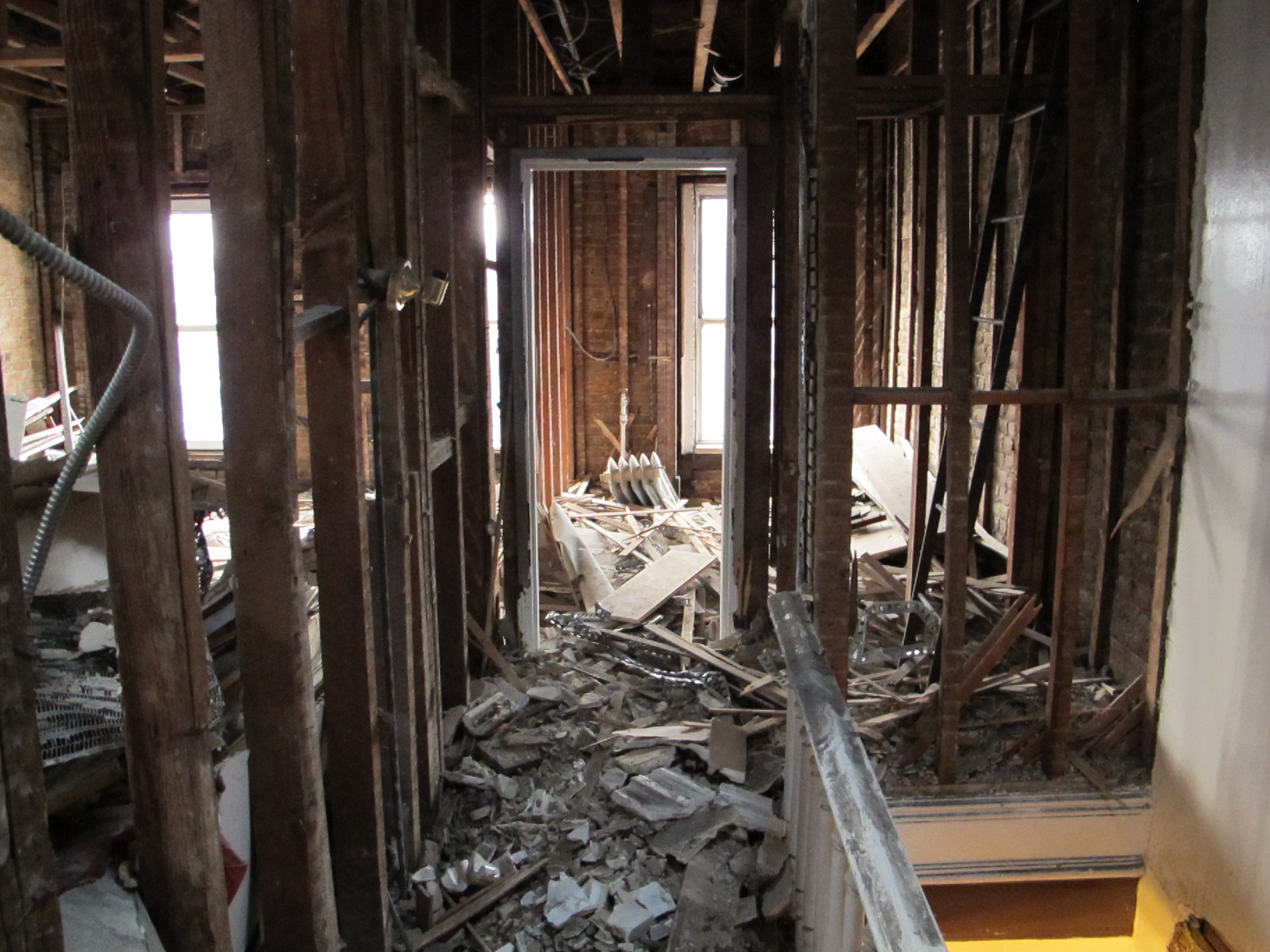
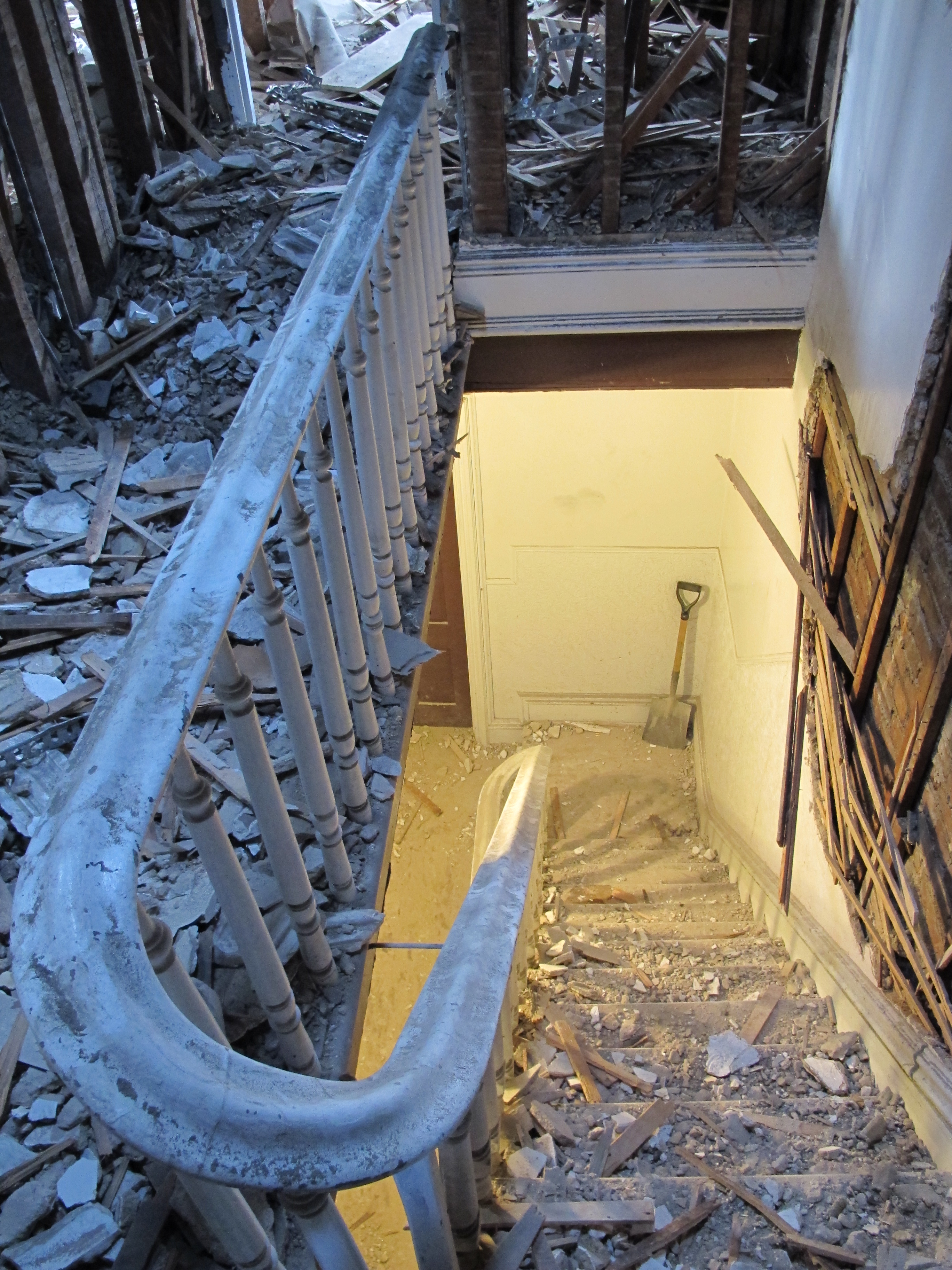
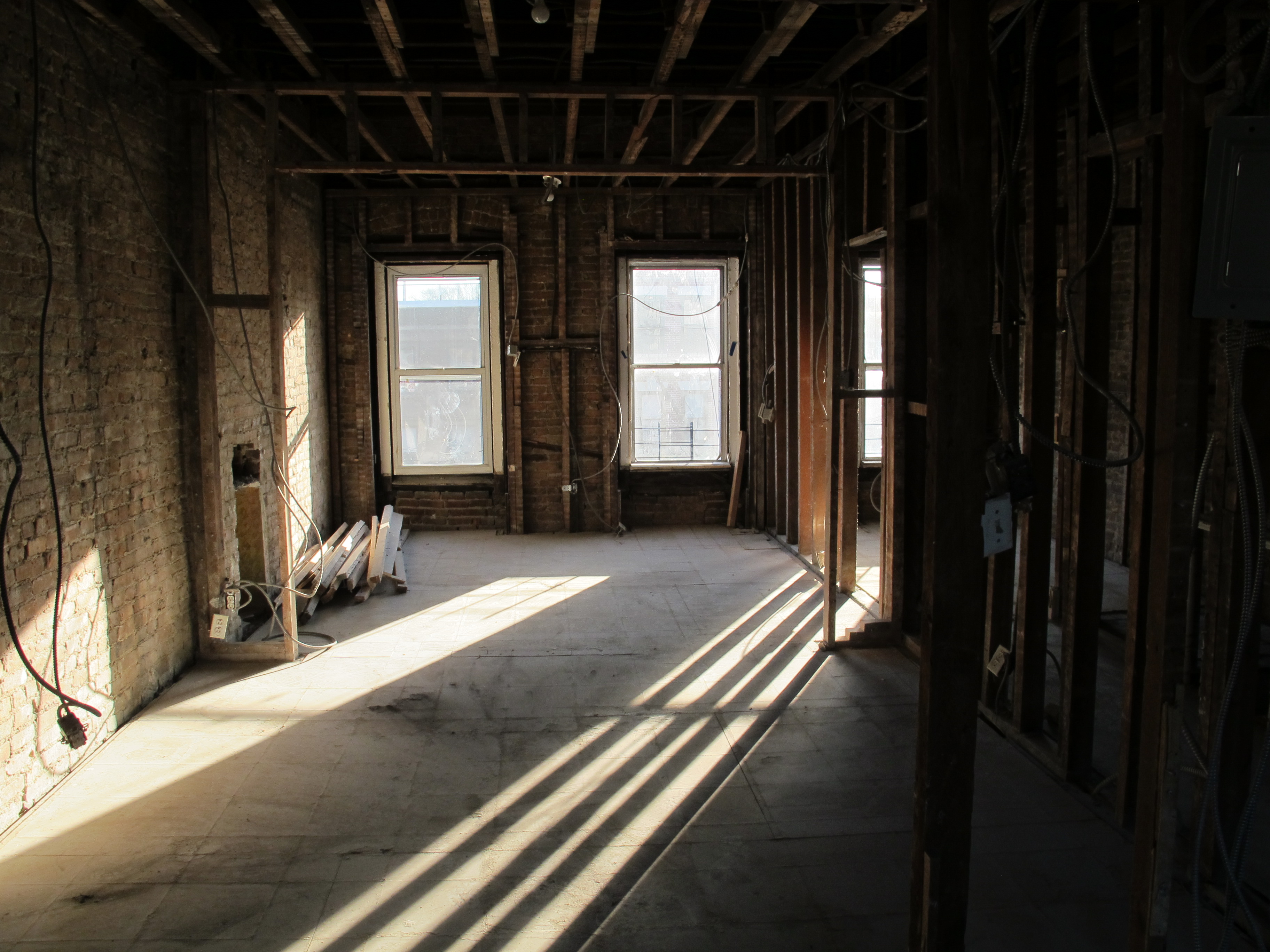
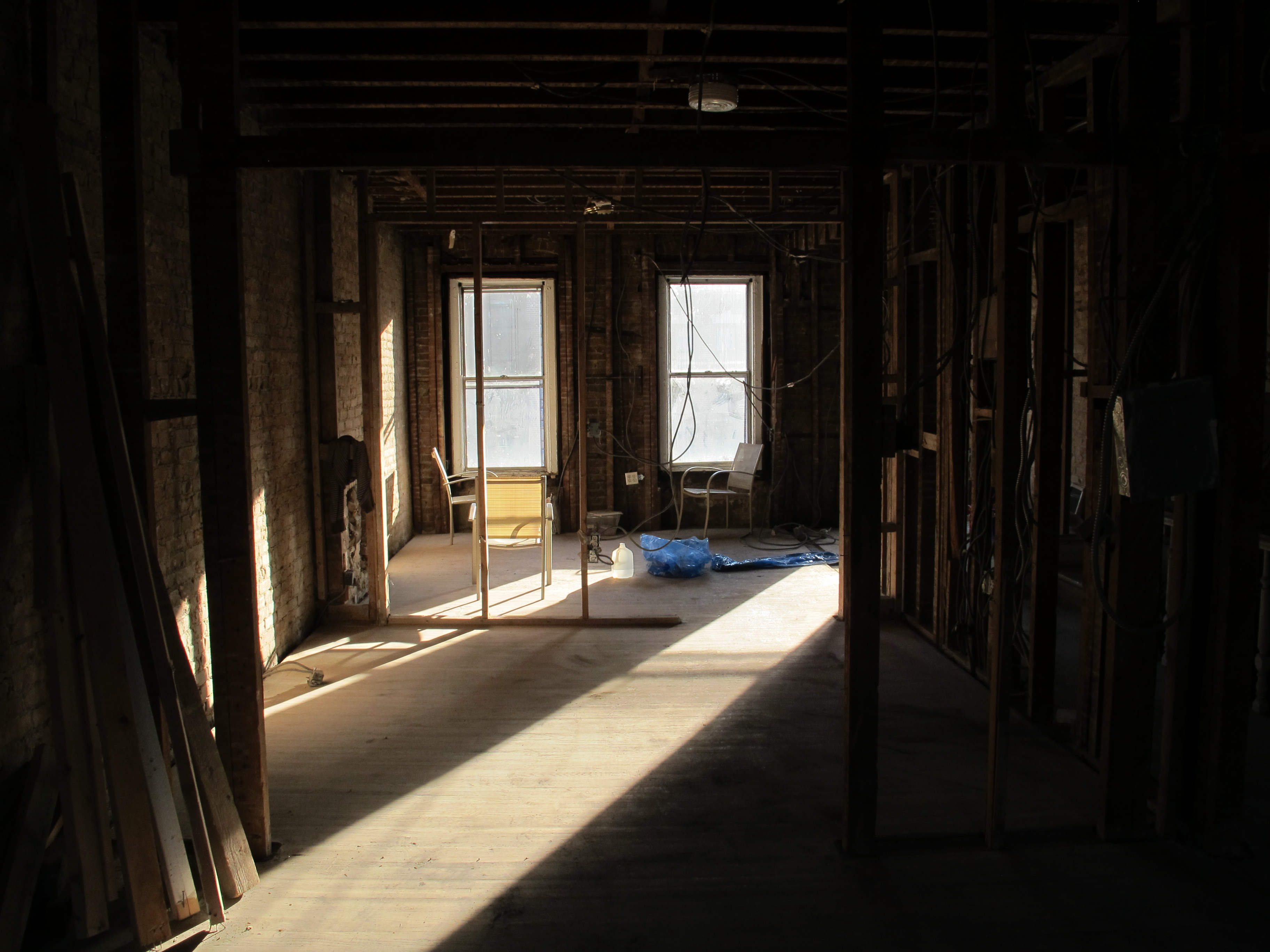
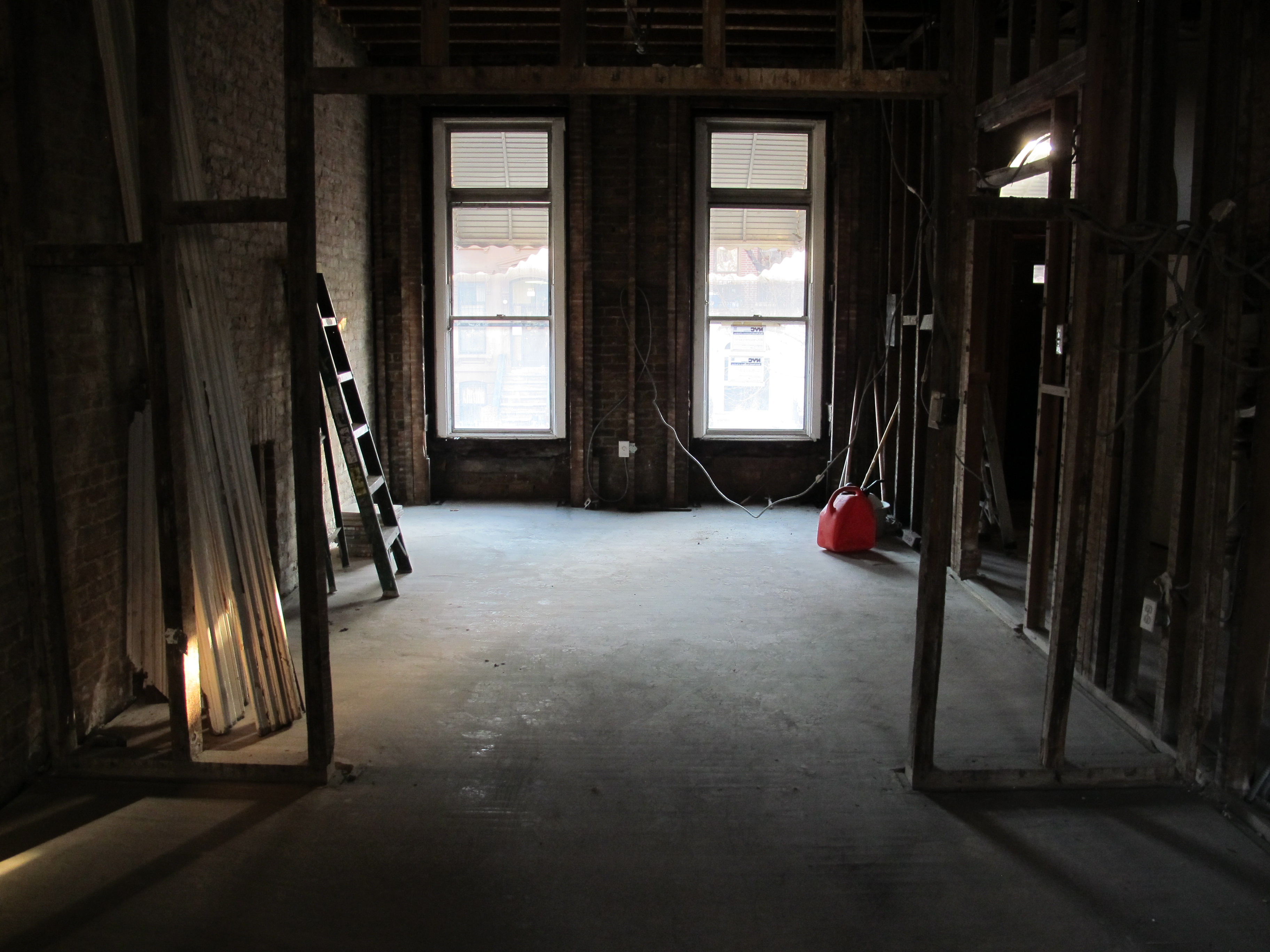
    Our task was to demolish a four story brownstone, meaning that we were to gut out the interior down to the structure. I initially walked into the house wanting to decry the waste of our modern obsession with continually reinventing ourselves, but the reality that I came to see, was that the house was a shithole.
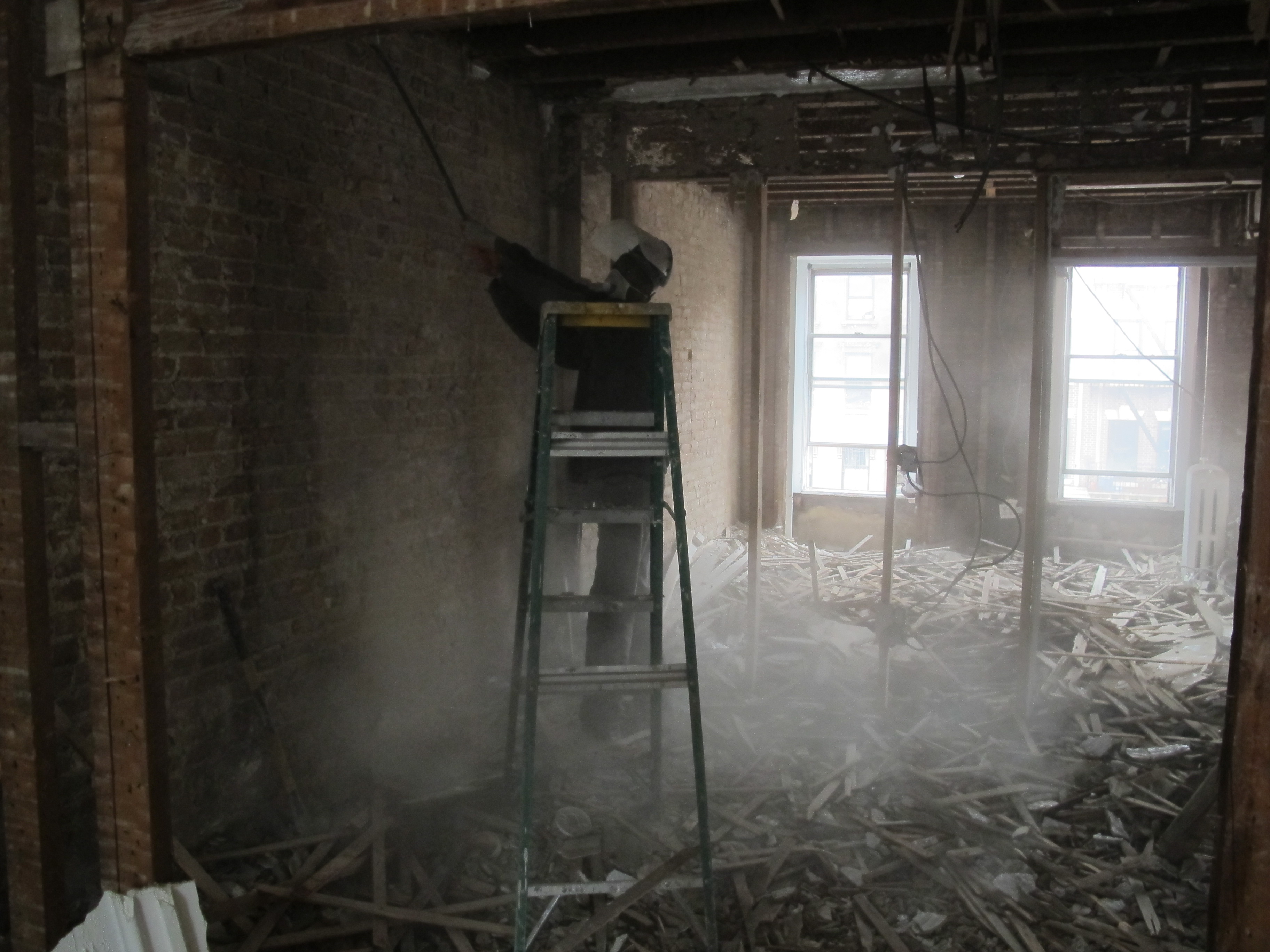
    On the first day, I grabbed a crowbar and a sledge hammer and set to work without much pomp or circumstance. I swung the sledge and softened the walls and then dismantled them with the crowbar. The drywall shattered, cracked, tore, pulverized. The wood cracked, splintered, screamed as it twisted and clattered dryly as it tumbled to the floor. It was not long before I was several feet deep in debris, panting, coughing in a cloud of dust with wires dangling in my face.
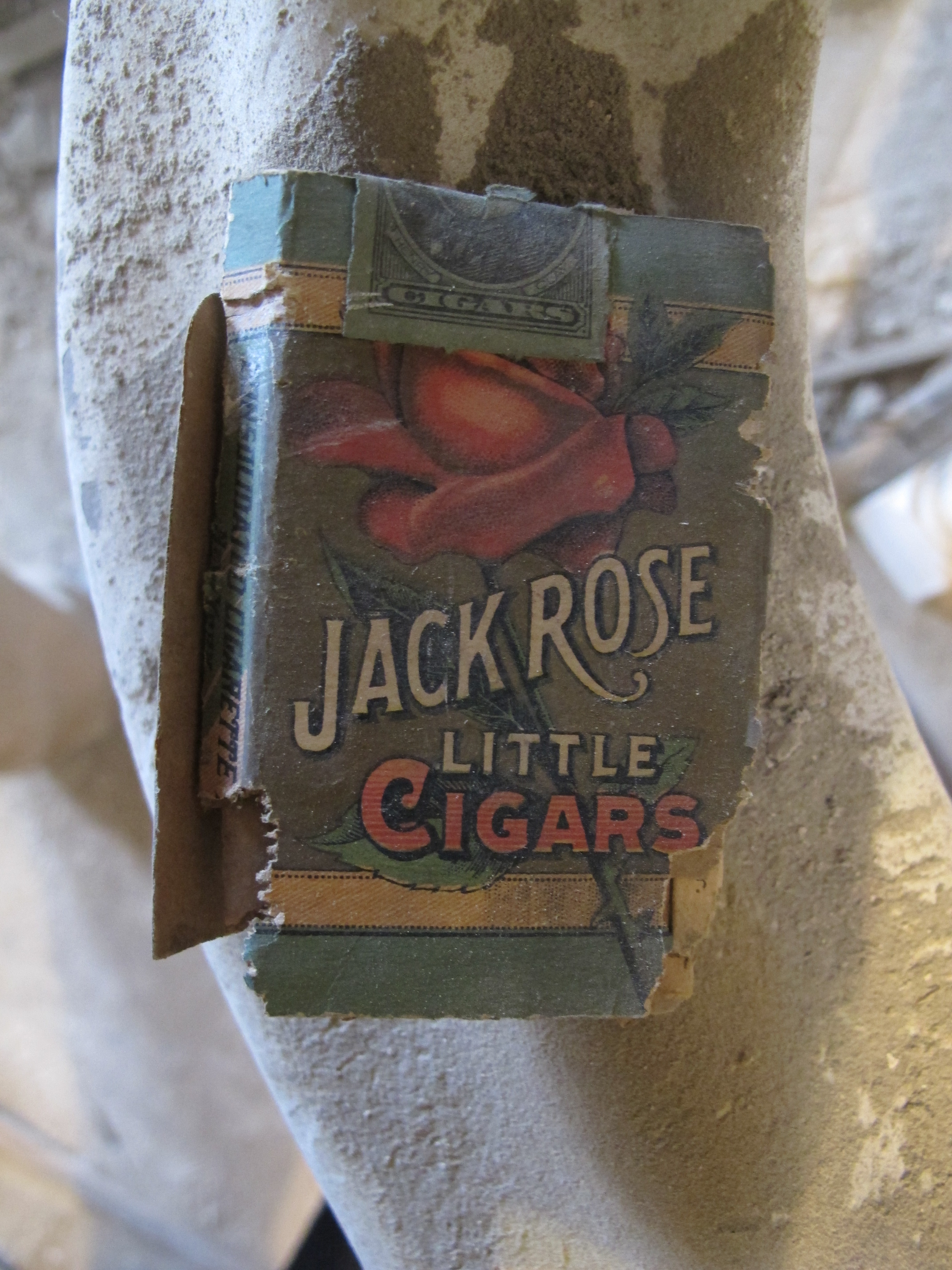
    As I pulled down the first of many ceilings, huge chunks of drywall shattered on my head and tumbled to the ground. Construction refuse, newspapers, and panes of glass all rained down upon me. A strange black soot that had accumulated over the past hundred years billowed from the ground after cascading down on my face and through my hair. Some chunks flew out the open window as I swung, tore, ripped, mangled, and mashed. I poked my head out the window and feigned concern for any onlookers, but only once.

    I ended the first day blackfaced. Ibra actually became whiter. We laughed at each other. The shower at home ran black and my eyes burned and my hands shook in exhaustion.
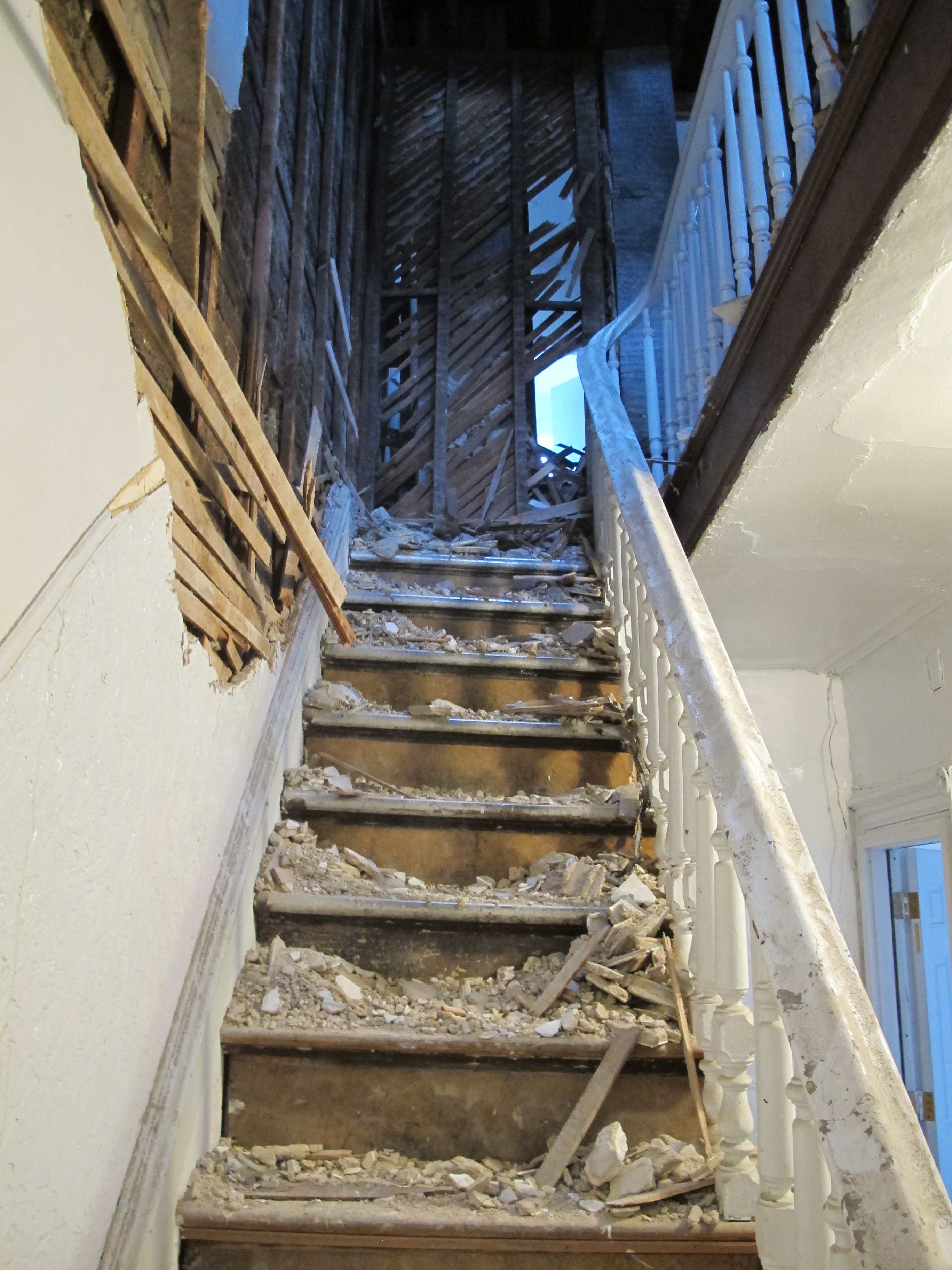
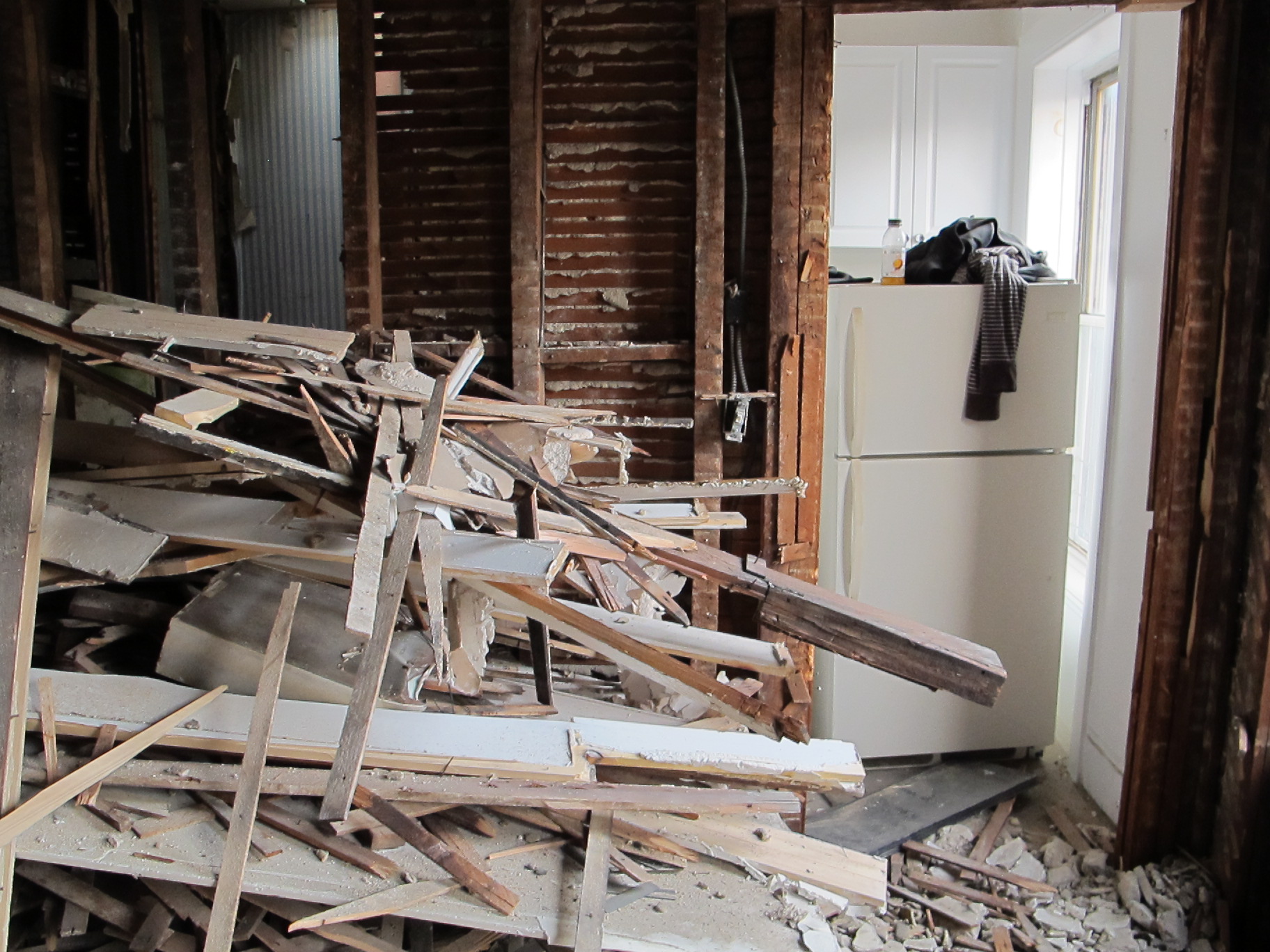
    As the days passed, we worked our way down from the top floor, breaking everything and then hauling it down to the truck that we fought to park. We loaded buckets full of plaster, hauled them down the stairs, and loaded them into the truck. We worked six days a week. 8 to 4:30 for five weeks. I initially thought about how much I liked work like this as I didn’t have to think. I just had to use my body and whittle the hours away. For better or worse, this left plenty of time to think about other things.

    Here are some things that I remember:

    Ibra constantly waved his cigarette in the air, using his hands to gesture, while indiscriminately intermingling French and English. On a seemingly hourly basis he stopped to chain smoke and lecture me on the perils of working too hard. We eventually warmed up to one another and I found myself intentionally prolonging lunch each day by asking questions so that I could sit in the warmth of the sun that streamed in through the window for a few minutes longer. Mate frequently recounted stories of atrocities from the wars the ravaged the Balkans in the 1990’s. The deaths of his friends at the hands of snipers, his sister nearly dying from a missle strike, ethnic cleansing, the massacre at Srebrenica.
    ‘Are you going to bring your wife over here?’ I ask Ibra in slow, patronizing English.

    ‘If I get papers.’

    ‘How do you get papers?’

    ‘I don’t know. There are ways.’

    Mate spoke up, ‘Most of my friends, immigrants from Croatia and Poland, got their papers through marriage. It is incredibly expensive now though. When I arrived five years ago you could pay a woman 4100 dollars, but now it is up to 12,000 dollars.’

    ‘So this is common?’

    ‘Oh yeah. It is good business. One person makes money and the other one gets papers.’

    ‘You have to find the right girl. I know one girl that my friend married. Always calling for money. Always want money. She is no good to this man,’ Ibra countered.

    ‘Some people are better than others. My friend has married three different girls for money. He went back to visit Serbia and fell in love with a girl. He was already married though and had to stay with that girl. So he paid his friend to fly to Serbia, marry the girl, and then come back with her.’

    ‘He paid his friend to marry a girl he was in love with?’

    ‘Yeah! And bought him a ticket home!’

    Another day Irba and I were looking out the window and I saw a man feeding his chickens food scraps.

    ‘Look….chickens.’ I pointed at them.

    ‘You know…Those are the first ones I have seen here in America. The first chickens.’

    ‘Really?’

    ‘Yeah. You only see dead ones. The meat, never the chickens.’
    ‘There are some here. My girlfriend has 28 of them.’

    ‘Now that is a good girl.’ He said this earnestly, but we both laughed.

    One day I sat in a patio chair in the half demolished living room of the first floor, transfixed by water cascading out of the ceiling  and spattering upon the dusty floor as Mate disconnected radiators.

    Sometimes, for fun, I used the sledge like a battering ram or swung the crowbar like a baseball bat.

    One time I stuck my head through a hole that I punched in the wall and twisted it like Jack Torrence.

    A dog pooped directly behind the gate of the truck. I stepped in it, Ibra stepped in it, I smeared the bottom of a trashcan through it and then Mate touched it with his gloved hands, I rolled the handcart through it. I dumped a small amount of drywall dust on it with the hopes that it would work like cat litter. I then giggled as Ibra saw me do this, thought it was a good idea and got carried away; he dumped his buckets all over the pavement making a massive mess.

    Most days our banter faded as we got into a taxing rhythm of work. In these moments I got unadulterated solitude to focus pointedly on my existence.
    One day I leaned over and tilted my face to look in the mirror of the truck and was greeted by two red embers staring back at me from a bearded and lined black face. It precipitated a strange reaction, the reagents of which were being stockpiled over previous weeks: Who am I? What are you doing? Are you crazy? What is all of this about? Am I a meth head and I don’t even know it? What am I going to do with the rest of my life?

    Each day I looked on as well-heeled couples leisurely strolled by and young people sat on stoops smoking cigarettes. Often they glanced at me and then averted their eyes. Who are these people? Are they smarter than me? Do they earn a fortune staring at computer screens? Manipulating numbers? Selling more products that no one actually needs by pandering to their innermost dreams and hopes?

    Pangs of bitterness coursed through me often. My thoughts whirled around myself: I have many talents and skills, yet this is how I was spending my days at age 29: demolishing the interior of a house on an illegal jobsite in unregulated conditions, sucking in my air through a mask tinged gray with dust as I hauled buckets of trash all day? Look at you now. Did I actually have any talents or skills? Am I just an idiot who cannot recognize his station in life? Like a goose that thinks it is a swan? Everyone else seemed so relaxed, moneyed, and secure.

    I found myself despising New York for all its glaring inequity and crassness. I cursed myself for coming here, for deliberately throwing myself into what is the antithesis of my values in many ways. I felt stupid.
    My rational brain frequently structured thoughts like this: If I was more _______, I would __________.

    I wrote this down: ‘This building is a bombed out hell.’

    Still, I tried to lose myself in my work. I used phrases that angry old men used to describe what I was doing like ‘putting my nose to the grindstone’ or ‘keeping my head down and working through the winter.’ I would also try to release the inner turmoil physically: I would I run at a wall and kick my boot through, trying my best to relish the explosion of wood and brittle plaster that resounds on the floor. I eviscerated the snaking conduit arteries within the walls. If you can imagine, the joy even evaporated from these antics.

    On cold days, I had to work even harder just to stay warm. I mused that maybe this was a forced labor scheme learned from my boss’s previous life in the former Yugoslavia.

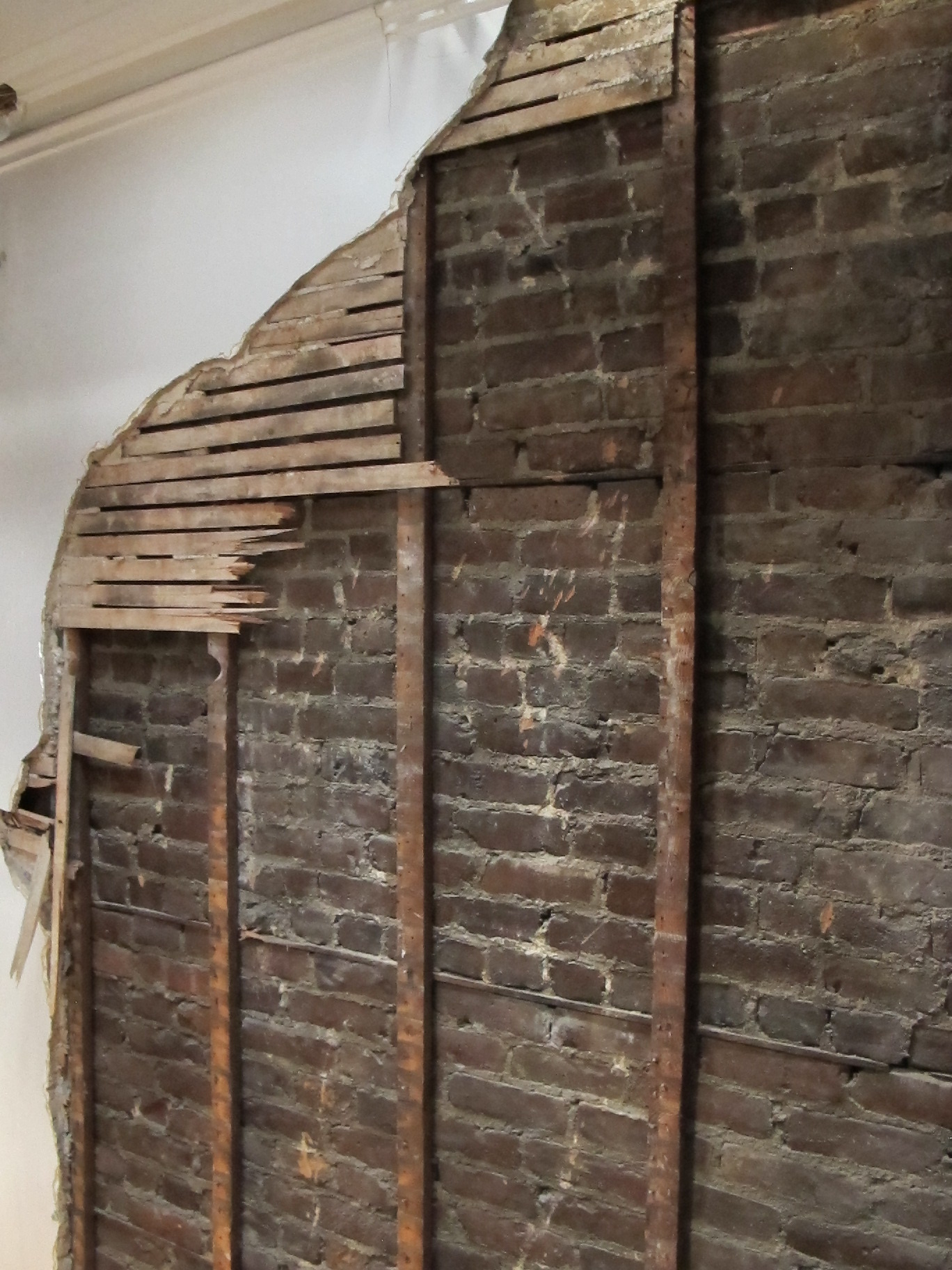
    The plaster covered brick walls were the worst. I broke them apart by starting a small necrotic ulcer in the center and assiduously expanding it outward with rhythmic hammer swings.
    I found  a slip of paper in my shirt pocket that I wrote one night while I was drunk that said the following:

    ‘Mate worked with several Natives in Canada in forestry. Many of them had spent time in prison and would unabashedly tell him about murders that they had committed or other strange stories. One day in prison, one of the men recounted, another inmate returned from a visit with friends or family. He sat down in a communal area, but quickly got up and began vomiting. One of the other inmates noticed that the vomit was littered with pills and immediately ran over and started picking them out of the vomit and swallowing them. In no time at all, a crowd of inmates swarmed and ate all of the pills out of the vomit.’

    One day Mate and I went to the scrap metal yards. I listened to the radio as we drove around in the truck with the heat as high as it would go. It was the coldest day of the year so far, the kind the radio described in sinister, ominous tones: the cripplingly cold Canadian air mass descended upon New York threatening the transportation system, our elderly, our children, our jobs. It was always there, the Canadian air mass, looming over us, waiting to descend. I hopped out of the truck to unlock the bed at the first yard, which was crawling with a bewildering diversity of mechanical beasts that roamed piles of steel that glimmered in the dim winter sun. I experienced a new sensation of being insignificant, of being too organic. The yard was frantic; it is open 24 hours a day, seven days a week. We were hurried through by men dressed indistinguishably from astronauts; even the people seemed mechanical.

    I was genuinely giddy when we returned to the house to pick up the cream of the crap: copper, brass, and aluminum. The allure of money for producing nothing draws hundreds of people living on the margins of society to scour the city in search of metal each day. They intruded and cajoled us at our job site regularly. They are like blue collar carnies. Before we arrived, we discussed strategy as Mate had done this a few times; we needed to give the impression that we were in the business. If you don’t do this, they will apparently take the chainmail right off of your back.
    We took the money load to what I would describe as a quaint community scrap yard, as if there were such a thing. The garage door opened to a few men huddled around a 55 gallon drum with flames licking out of the top. One man had a spider web, the center of which was on his nose, tattooed across his face. A pitbull sat in a reclining chair wearing a down vest, looking the most comfortable of all. The manager approached and helped us to sort the metal into piles. Spidey communicated in grunts and lurched around like a black frankenstein, staring me down if I look at him. We pretended that we knew how much everything was worth and that we wouldn’t settle for anything less than top dollar. The manager pretended that we had an insignificant amount of cheap metal that he was indifferent towards.

    ‘Where does all of this go?’ I venture to ask.

    ‘China. All we do here is bundle it and ship it out,’ he answers.

    $842. Raw materials from all over the world, manufactured in China, used in America, shipped to China, recycled in China, remanufactured in China by foreign owned businesses, shipped to America.
    Increasingly my mind churned about the limitations of growth, climate change, materialism, globalization, energy, the environment, inequality, the cognitive dissonance displayed by my countrymen, how maybe we should just commit to destroying the earth and ourselves, maybe we should blot out the sun with coal fire power plants operating at maximum capacity to power nothing but televisions playing pornography and Die Hard movies twenty four hours a day, dildos, and meth factories; start fighting human beings against one another with antiquated carpentry tools for sport; cut down every last tree; torpedo the whales; shit in our wells; have a Superbowl everyday; fire nuclear weapons at the moon; light the surface of the ocean on fire; rape everyone except for the elderly who we will leave to rot in the acid rain that falls from the sky; eat the vitamin D deficient children; and napalm the polar ice caps.

    I wished the anxieties and the stresses of each day would wash off just like the filthy mask that I wore each night in the shower, but they didn’t. I felt beaten, my levity lost.
    I read compulsively in every spare second. I tried to think my way out of the misery in which I was mired.

    My rational brain also liked to use these thoughtforms:

    Everything will be better when _____________.

    ‘All of those years that you spent laughing and enjoying yourself to the fullest were all for naught since they didn’t prepare you for the real serious world.’

    ‘You should go to grad school so that you can be a productive member of society.’

    I was walking to work one day and I saw a discarded tin can, that someone only bothered to half crush. I empathized with that can.

    One day, I rode the train home and several people saw the open seat near me, approached, and then shied away at the last second. It was alright though since they were merely crude automatons. I was enlightened because of my ability to perceive the absolutely purposeless cagelike void in which we found ourselves.

    Sometimes I held back tears as I hauled buckets up and down the floors of the brownstone.

    My mind can be a whirring maw that consumes everything and turns it all into shit as its gyre tightens around my own little miserable existence.

    I walked around overstimulated,  feeling constantly abraded. I didn’t laugh at the rats in the subway anymore. I walked with my head down. I thought rationally about sex.

    I descended down into the doldrums of purposelessness, stagnation, and confusion. I wallowed in a dark, deep pit. It was apparent that my mind was broken, completely dysfunctional. Day after day it went in loops about my life, about relationships, about work, about this world. I was stuck in some literal, rational mode, constantly analyzing, critiquing, and reacting. I lived in an algorithm where N goes to infinity. I found myself living in abstraction, all experience filtered through an artificial conceptualization of the world. Recognizing this is not the same as understanding it.

    I thought about how canaries that are put in mines might just die because they don’t want to live in a fucking dark and lifeless hole.
    It seemed like I would labor in a cold filthy brownstone forever, that was until my boss unexpectedly ran out of money and laid me off to wander the splendorous dog shit strewn streets of New York once more.

    One day as I sat on the couch, in the simplest terms possible, everything exploded into a dizzying particolored lollapalooza. There was suddenly infinite subtlety in the myriad of intertwined flavors of the chai tea that I sipped, in the plants that shimmered in the afternoon light and gently swayed in the heat rising off of the baseboard radiators, and in the multilayered music vibrating through the air redolent with all of the telltale smells of life in my apartment. I sat transfixed by my resplendent world. I saw it.

    I saw that the world is not the map that I created of it. A Euclidian, linear, limited variable perspective  is a vast oversimplification that ignores the inherently complex and chaotic order of nature and the interaction of limitless interconnected variables. It is a theoretical world assuming smooth planes, rational actors, continuity, and limited physical constraints.

    We will be forever unable to model or build a perfect facsimile, we will always be left with an approximation or an incomplete construction. Reality is nowhere but in the infinite recursive complexity of my bodily systems and in the vortexes of steam that twist and dissolve above my mug.

    The compulsion to make projections and see finality is just a failure of imagination. It is an abstracted way of viewing the world that ignores the infinite beautiful uncertain complexity that abounds.

    The unpredictability of existence means that our lives are a series of choices and actions, thousands each day. In doing this we create ourselves, our conception of humanity, and our world. There are many areas of life where we are unable to exercise choice, but we are wholly responsible for the realms in which we can.

    Life is no different than a work of creation or art. Each one of us stands in front of a canvas in the same stupefying confusion of having no idea how we got there or what is expected of us. There is a limited set of supplies that similarly has no provenance.  The background of the canvas has already been filled in before our eyes snap open. A work is created through an accumulation of choices and actions applied over time. There is no ideal work in the same way that there is no ideal life, there is only the one that exists. The bewildering beauty of life lies in the incomprehensible task of creating the completely subjective work that is ourselves.

    I am tumbling across a lightless undulating plain.

    I am swept onwards by forces that I cannot know.

    The terrain is nothing more than that which passes.

    Up, down, to and fro.

    There is no beginning or end.

    The darkness is vertiginous and lonely.

    A rational tempest swirls inside of me.

    I try to give sense to the senseless.

    I strain to discern form in the void.

    I conceive and am inevitably confounded.

    Then, I am startled from my reverie by faint music in my head.

    I suddenly feel the plain, although it passes no differently than it ever has,

    the hillocks and declivities of birth, death, love, joy, and sadness.

    I sit in quiet contemplation, admiring the melodic progression.

    The song is entitled: ‘I am a preposterous half rational half animal chimera stumbling through an abysmal eden hurtling agonizingly fast towards.’
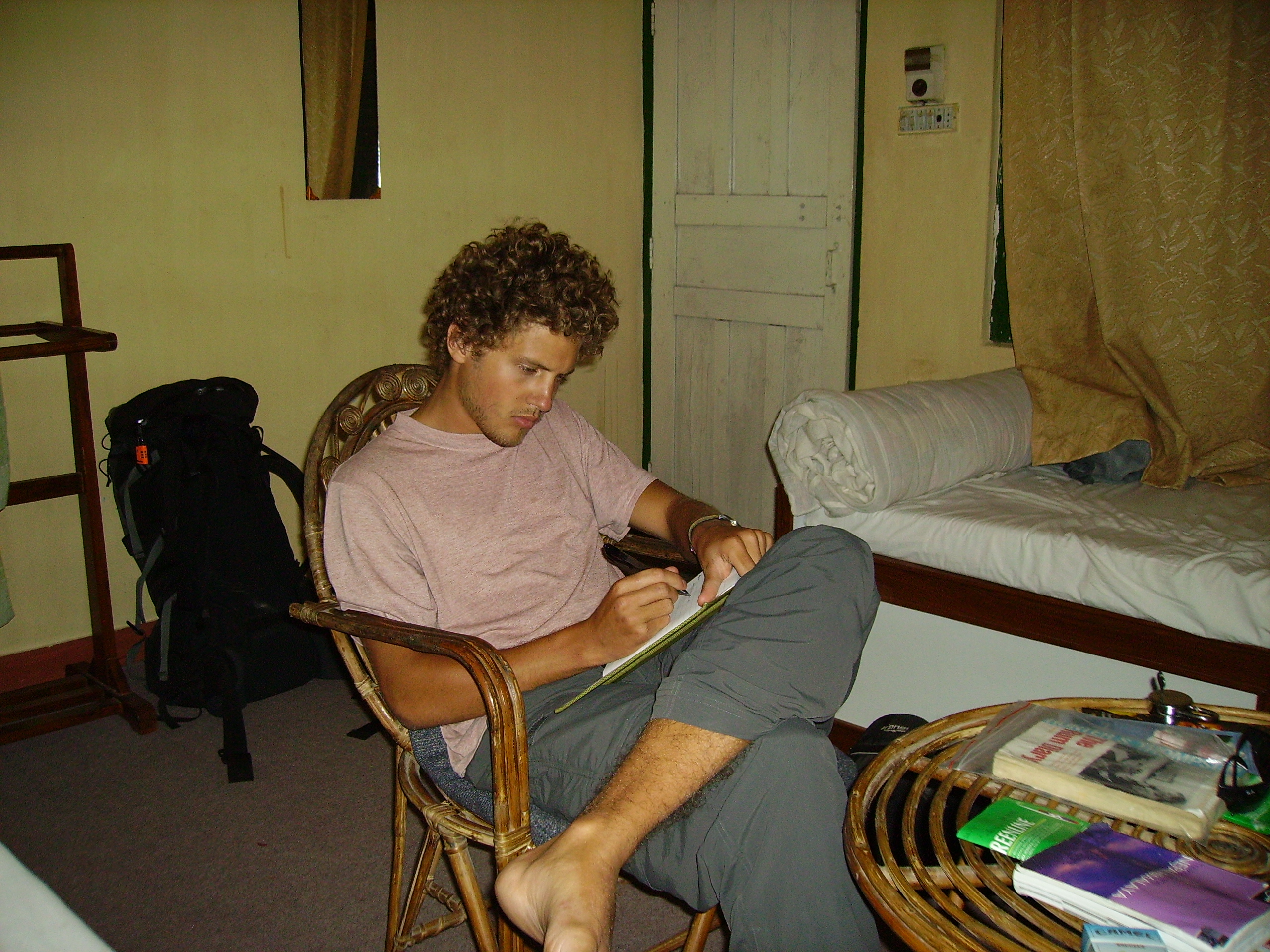
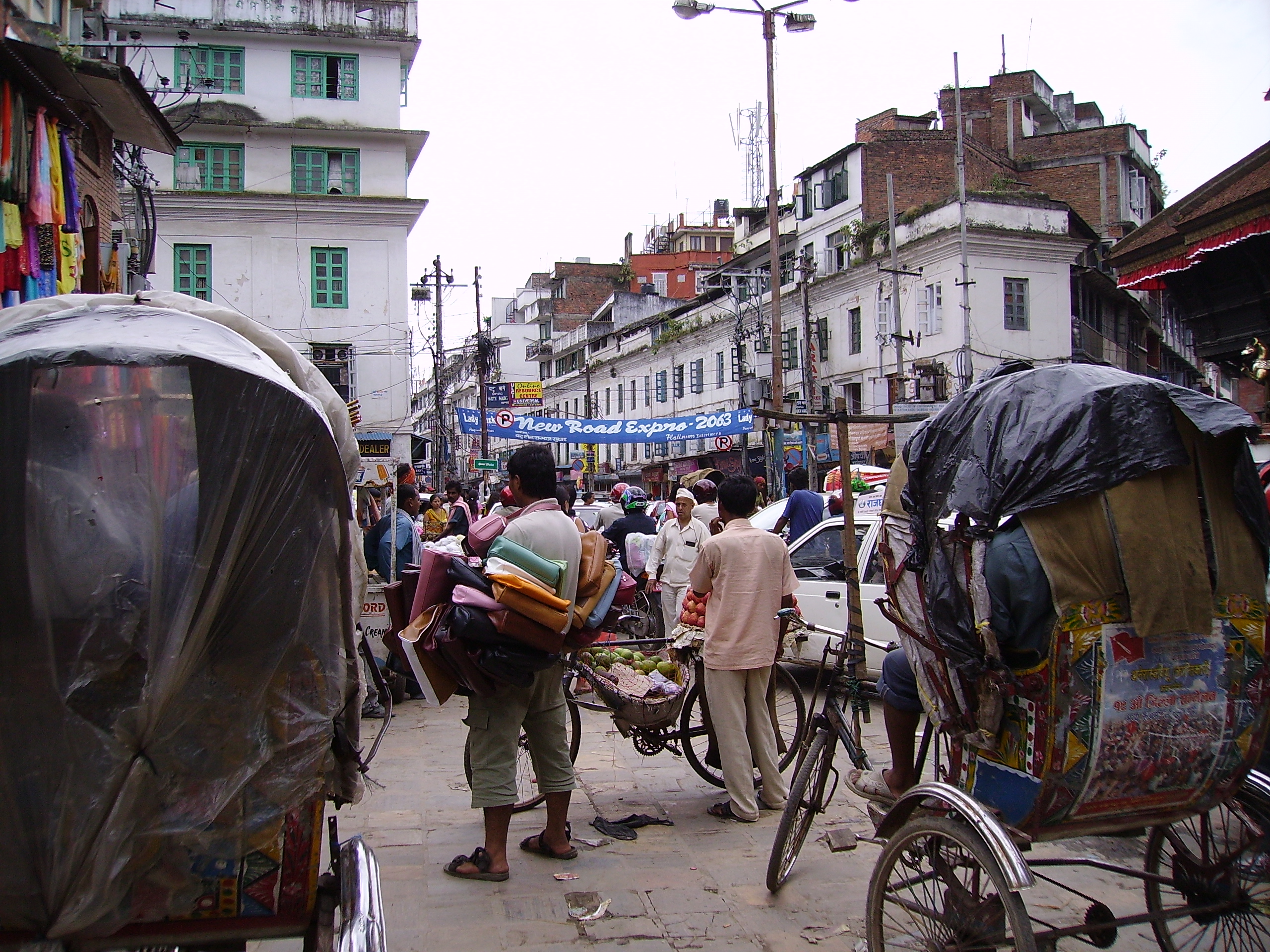
  • Free Food for Thought

    I can never set foot in New Zealand again. I am not sure why I am writing this, although I guess I could say that about most things that I do. It is a compulsion. I also put on weird and different clothes when I sit down to write. Not anything too strange though, just a weird assemblage that seems conducive to whatever I am going to write. I am wearing a pink knit hat, two pairs of pants, a long sleeve shirt, and an unbuttoned dress shirt right now; all are grey besides the hat. I am going to tell one of those stories that many of us have, ones that have changed our lives irreparably, that we simply don’t talk about it. These are often sad, but grow in hilarity with time. Maybe a side of ourselves that is deeply unsettling was briefly exposed or maybe we simply hit our nadir? It seems inevitable and significant as I look back, although there is no one who actually knows exactly what happened, not even myself as the dissolute wretch who supposedly did all of these things. Certain events undeniably occurred, and regardless of how this night unfolded in its entirety.

    This is when my writing first began.

    There were many things that happened beforehand, years beforehand, that set the stage for what may be my most amazing of performances. I firmly believed that I was going to die young for a long time. I used to drink a lot and take drugs. I aimed for the sun.

    I had just quit taking Paxil, Wellbutrin, Trazodone a few weeks before we left on this trip, a cocktail that was the result of years seeking to fix myself that began with continually increasing doses of Prozac when I was a teenager. I had generalized anxiety problems. I had depression problems. I was a problem. These prescription drugs were the gateway drug for me. I was diagnosed as having a brain chemistry imbalance, something that needed to be addressed by ingesting things in order for me to function properly.

    Nepal was the first place that I ever bought drugs on the street. We arrived in Kathmandu and before we even had found our hotel I was offered hash by a man who smelled of urine and was swaddled in rags. I might have even initially taken this as an auspicious sign that I wouldn’t overpay. I handed my backpack to my friend Anthony, who I was traveling with, and followed the strange figure into a damp alley strung overhead with clothes lines. I am not even sure how we communicated as I look back, but I guess there isn’t too much to communicate. Hash, money, exchange. I passed over the money and then he reached into the rags near his waist, behind his back, and then his hand delved lower, reaching into the most foul of crevices to pull out a small tinfoil wrapped bundle. I thought of the owl pellets that we dissected in elementary school. The warm, moist bundle was deposited in my open palm. Out of some strange respect for this man, I did not throw it on the ground or make a disgusted face. Or maybe it was because I really didn’t care; I just wanted to get high. In hovel of a hotel room, I opened it and it even looked like a little black turd composed of small hand rolled droppings. I never smoked that hash. It could have actually been feces for all I know. I found a better supplier later that day, who kept the hash in a less intimate place.

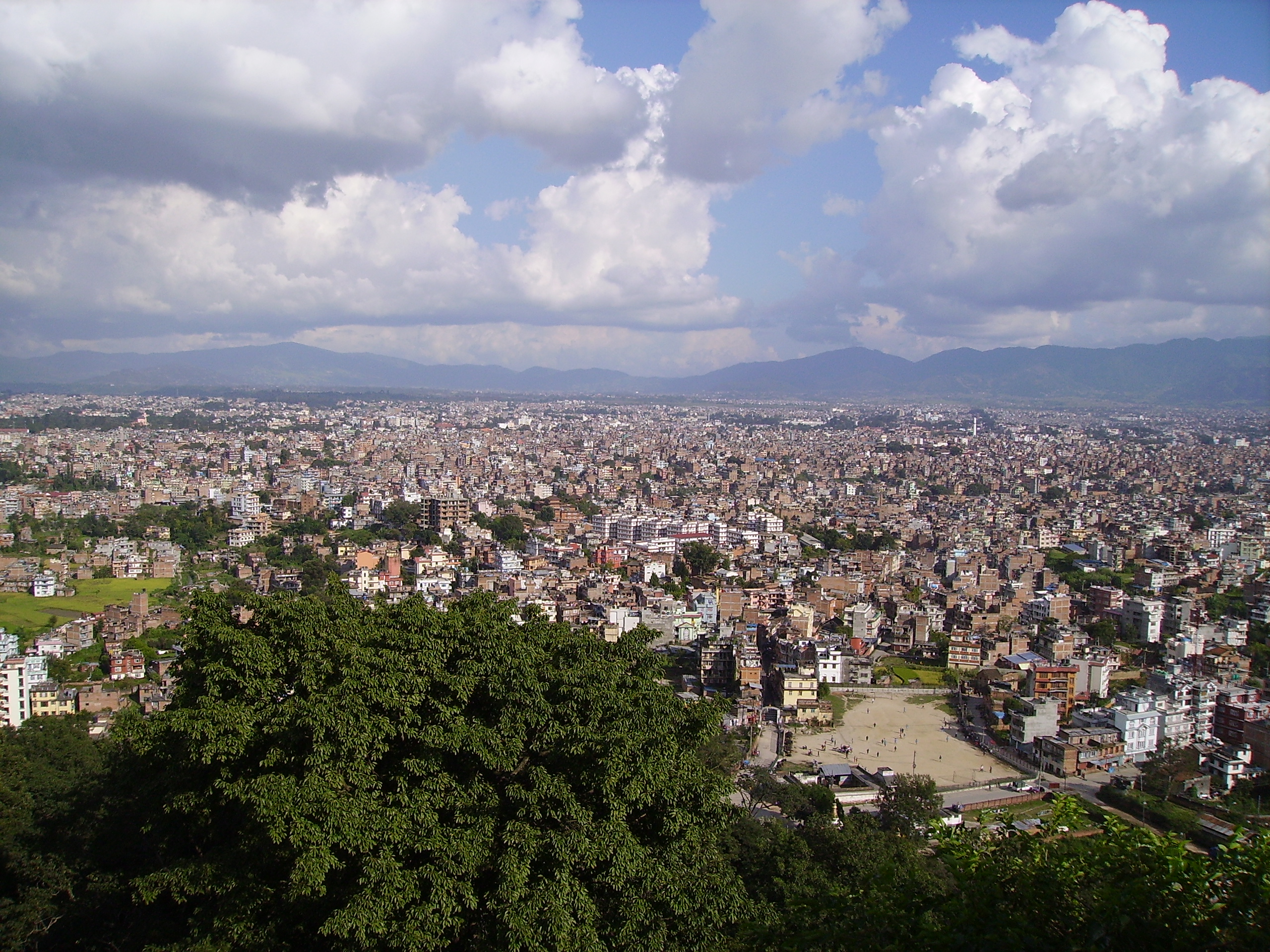
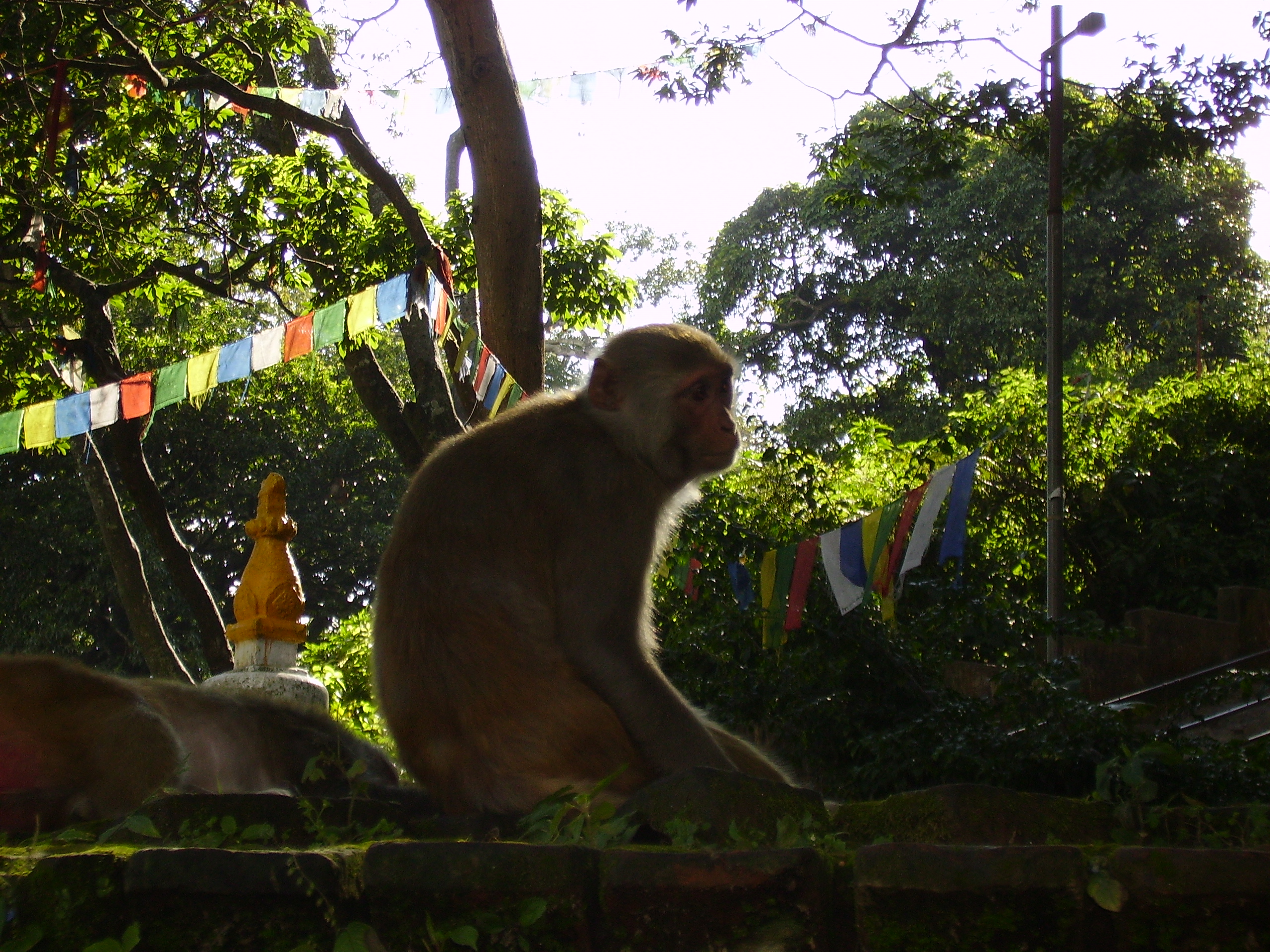
    I had money, time, and exploring the world was a time tested rite of passage. I would leave my white bread existence behind. I would grow spiritually, culturally, intellectually and I could do nothing wrong. Everything was novel and brilliant. I just needed to quell my broken mind, to keep it at bay. It only seemed right to start smoking cigarettes, but not the industrially produced ones, rather I would roll each one with my own hands. Smoking hash would allow me to break out of my square, humdrum perspective and take in the vast and varied expanse of the world. Going out drinking would let me see the underbelly of the city and meet new and different people. We did some cultural exploration, The Monkey Temple, Durbar Square, ect. But much of our time seemed to be spent in bars drinking or wandering about high on hash.

    We quickly became bored with this existence and planned to leave for the mountains to go trekking, but travel often makes people constipated and I am one of those people. My stomach was engorged with five days of dal bhat and momos. I decided to take some laxatives and clear myself out, something that I had not yet done as the thought of explaining what I needed to a Nepali pharmacist seemed embarrassing and difficult. In reality it was really easy: I did a phenomenal pantomime of taking a pill, squatting, making farting noises, and rapidly gesturing from my butt to the ground. The pharmacist almost fell on the ground laughing and I was handed some strange Nepali laxatives. They looked like little balls of tar, almost like the aforementioned turd nuggets of hash. I didn’t read the instructions and took two. Nothing happened that afternoon and we were leaving the following morning. I took two more.

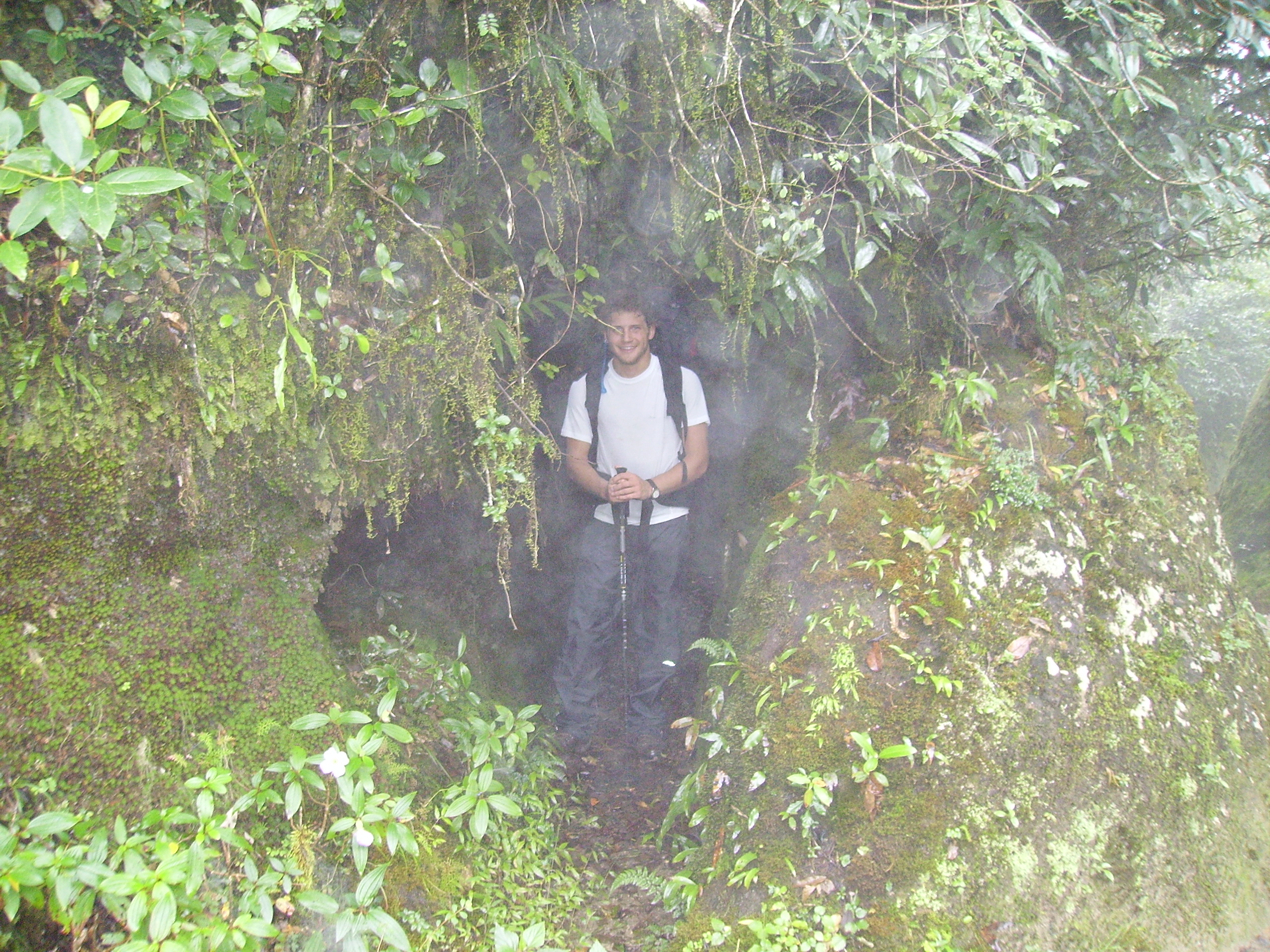
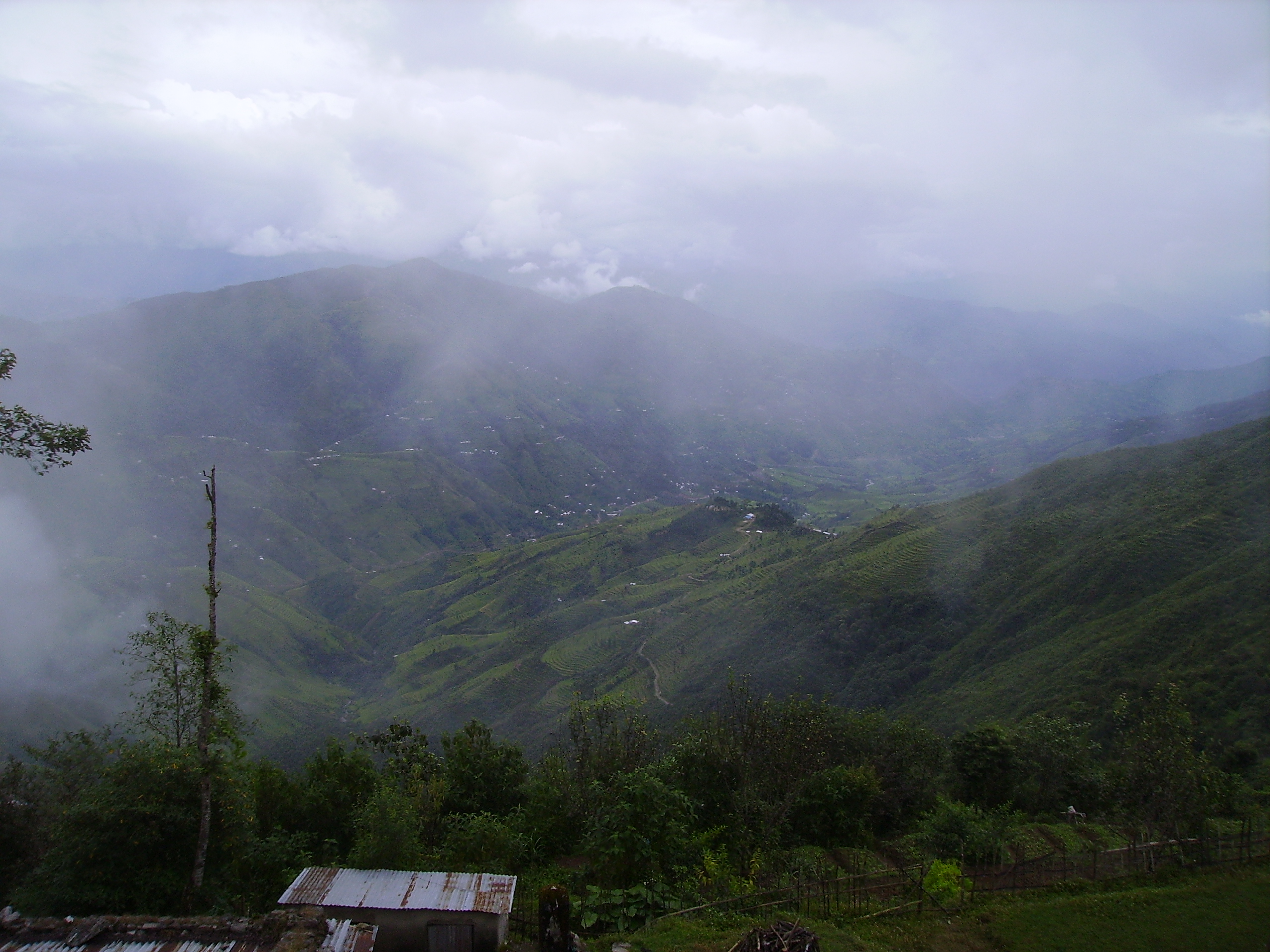
    We started out trekking under monsoon rains that should have dissipated weeks beforehand. It steadily fell down upon us and quickly crept in through our layers. There were trees full of monkeys that we taunted who jeered back. We walked through a few small villages that were carving out an existence on the steep mountainside. I remember vividly when the pills took effect: we were climbing an endless series of switchbacking stairs. Also: there were leaches, on the leaves, on the trees, on the shrubs, on the grass, everywhere. I ran into the trees in a deep seated Freudian anal panic and I pulled down my pants and the rain fell down upon my bare thighs, the leeches crawled onto my arms and up my legs. I pulled out the toilet paper and that got soaked. This was only break of the initial dike that held back the long pent up flood that flowed over the rest of the day. On two instances villagers giggled and laughed at me as I clenched my cheeks and ran, only to fall short of any privacy. A few days later we got lost in the fog and rain, hundreds of leeches made it to our skin, we pulled them off, their anticoagulant caused blood to keep running, and we eventually arrived at a hotel shivering and covered in blood.

    After the monsoons washed us out of the mountains we decided to head to India until the season passed. Our flight was delayed for hours. Upon asking what time the flight would arrive, I received the unperturbed answer of:

    ‘Today, sir.’

    ‘Where are you headed?’ A heavy English accent from across the way inquired. I looked up to see a shiny headed bald man in his early forties dressed in the colorful hippy garb of Thamel.

    ‘Delhi for a few weeks.’ I nonchalantly responded.

    ‘Why the fuck would you do that?’ His harsh tone took me aback a bit.

    ‘Oh… Well I guess since it is the capital city and we want to see some of India and the monsoons are still dragging on.’

    ‘Delhi is a shithole. You should spend one day there seeing the sights and then get out.’

    ‘Hah. Well, where are you going?’

    ‘I am doing a motorcycle trip starting from Delhi.’

    We talked for the next hour about our respective lives and travels. Mark was from New Castle, was newly divorced, owned his own company, and seemed hellbent on living out his lost years. We boarded the plane and headed to our respective seats when he proposed the following before walking away:

    ‘You should come along with me on the trip. It will be unlike anything you have ever done in your lives.’

    We sat in our seats and don’t say too much at first, both of us pensive.

    ‘That guy is a little crazy, huh?’ I broke the silence.

    ‘Yeah. That trip sounds cool though.’

    ‘Definitely. I wish we could go, but it really doesn’t make any sense.’

    We continued talking around the point for a bit.

    ‘It would be really incredible. Maybe we should think about it. Do you know how to ride a motorcycle?’

    ‘Yeah, but not a proper one. I have ridden dirt bikes quite a bit.’ This is an outright lie. I had never been on anything with two wheels other than a bicycle.

    ‘Me too, I used to always ride my dad’s motorcycle around the neighborhood.’

    ‘Well, let’s just talk to him and see what his plan is. We don’t have to commit to anything.’

    We rented motorcycles that night in Karol Bagh as the days light turned deep red in the smog. I did not know how to shift a motorcycle, nor brake. Anthony and Mark rode their motorcycles back to the hotel, but I said that I was uncomfortable riding in the rushhour traffic of Delhi. I paid one of the guys from the bike shop to ride the bike to the hotel while I took a cab. I made a plan.

    ‘What time are we getting up tomorrow?’

    ‘Seven’

    I woke up at 6:40 quietly and snuck out to my bike. I quickly familiarized myself with it and then rode it around the parking lot a few times before riding it around the circles of Connaught Place. Mark and Anthony woke up and we started riding. Within the hour I was weaving between cars, laying on my horn, dodging cows, swerving around trucks headed the wrong direction on the divided main artery of Highway 1 as we rode towards Amritsar.

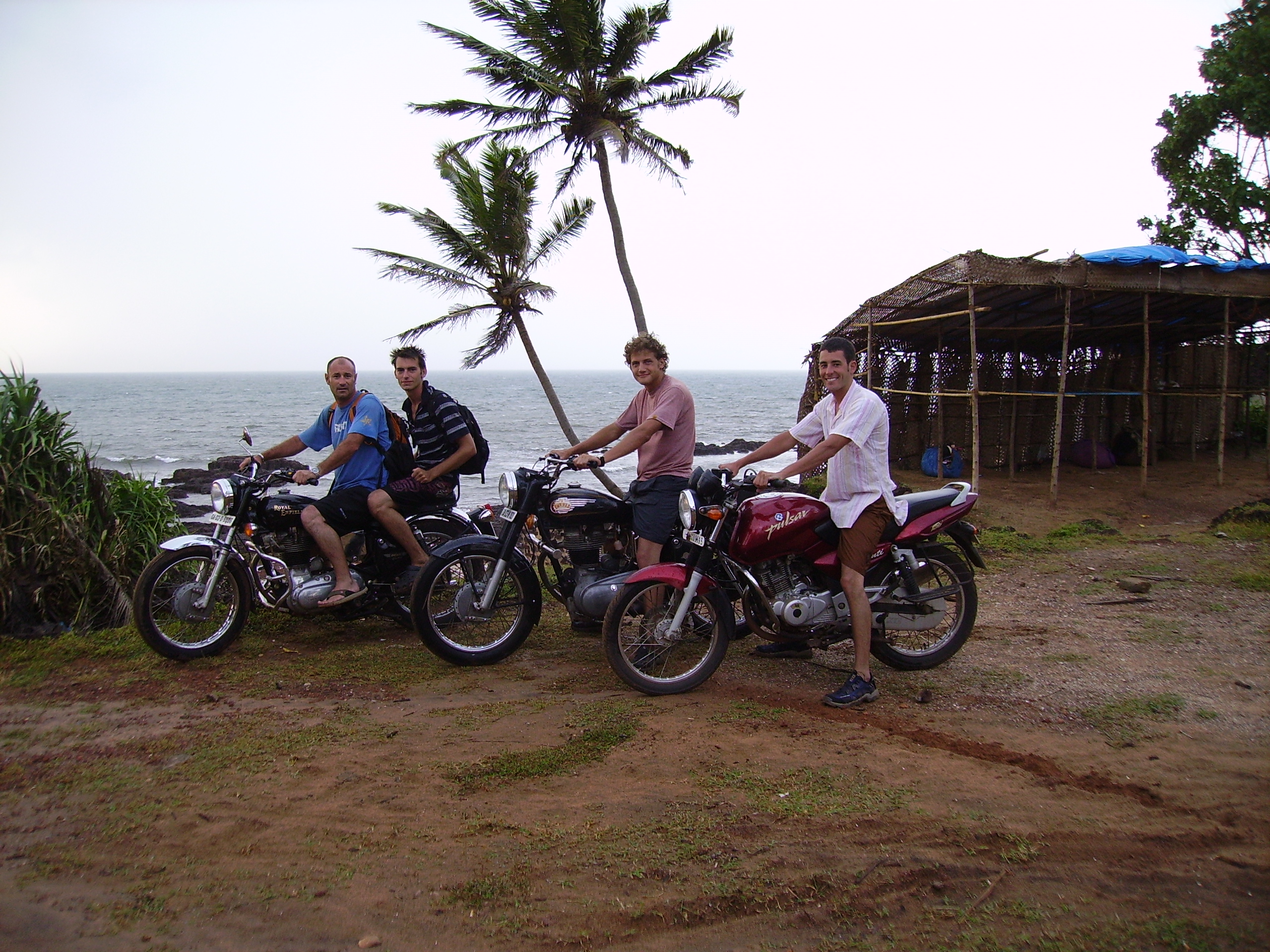
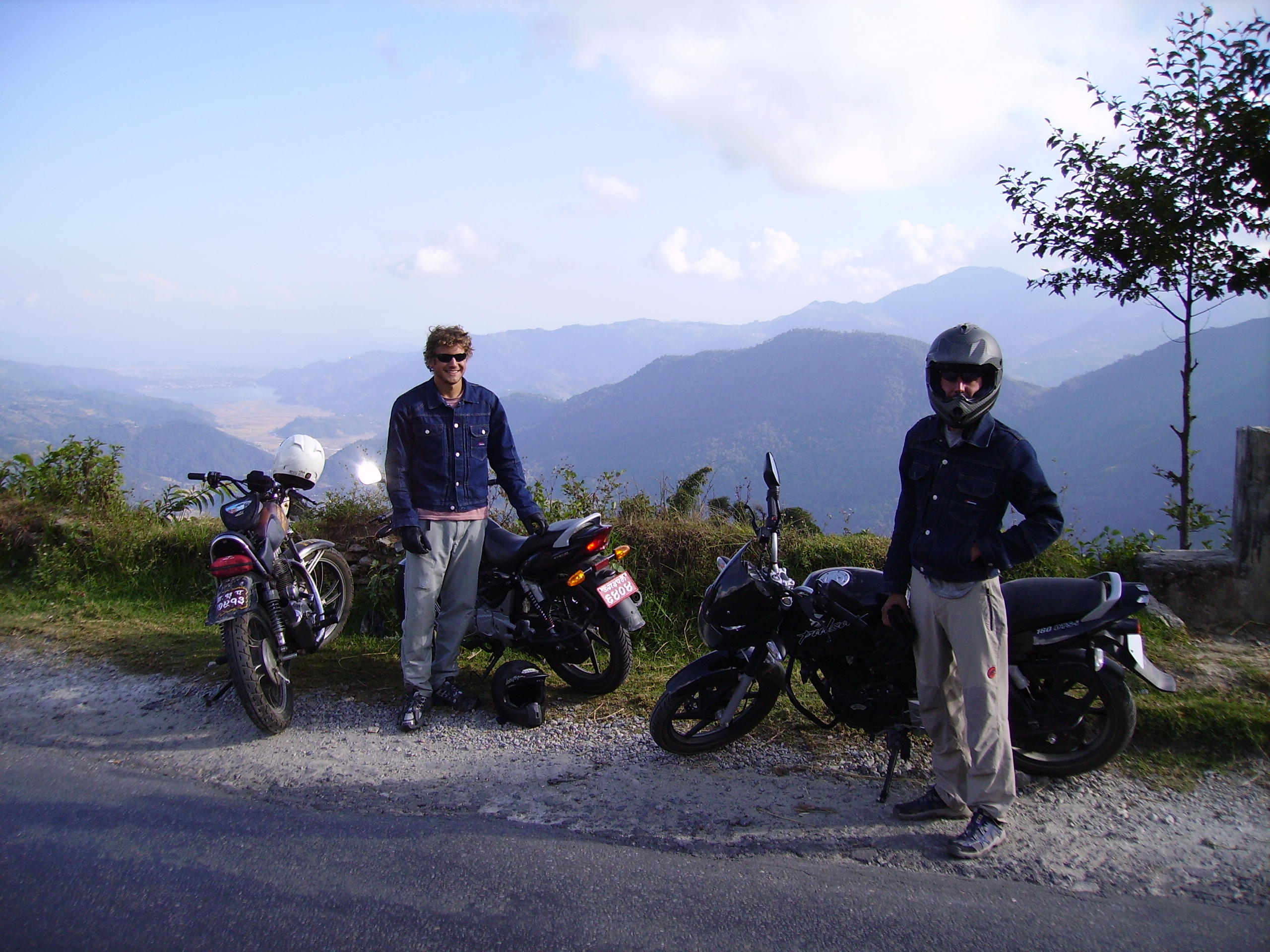
    Every day for the next few months as we rode around India and Nepal seemed scintillating. We were riding a high that we kept pushing on our travels. I drank and smoked and drank and rode. I blew through police roadblocks, I got beaten with a nightstick, I got thrown out of a Bollywood party, I toppled over my riding my motorcycle drunk and high through sand the night before some Englishmen intended to accomplish one of the strange and meaningless feats they do for bragging rights: loading a motorcycle on an elephant and riding it across the river, nearly killing myself countless times, getting thrown out of Gandhi’s grave/memorial… It goes on.

    I awoke on the morning of the day before my 22nd birthday in Bangkok, in a minimalist, blindingly white hotel room in Khao San Road. The time we had spent in Bangkok was a much welcomed reprieve from months spent dirtbagging around India and Nepal. I was living life. I was walking the face of the earth living out the life that I had been denied in all my preceding years, the life intended for me. Unfortunately, our arrival in Bangkok seemed to illuminate the impending end of the trip. This served to fuel my wanton desire to do something, for something to happen. I never knew what, but going to seedy locals and badgering my mind with substances seemed to be the conditions that I determined would be fortuitous for it to happen. I just didn’t want the wave to crest.

    We boarded a Thai Airways flight to Auckland that night. My birthday arrived at midnight and the airline had a policy of free cocktails on all international flights. I made the flight attendants aware that it was my birthday and they fed me whisky at  a rate befitting of this momentous occasion. I passed through customs in New Zealand, indifferently answering questions regarding what environs my boots had tromped through, what microbes that they may be carrying.  They were not concerned about my current state or where I had been, what malignancies were growing within me.

    Auckland assailed me as the jet lag set in and the drinks wore off. The day passed in a frustrating blur of expenses and uncertainty about our plans. Anthony had been sick with stomach parasites for some time and was weary of continuing on. I did not like this place. It was hostile to my bohemian lifestyle. It impinged on my craven consumption through expense and customs that were more clearly articulated in my native tongue. The drinks were too expensive to get properly drunk. An old proper bitch of a lady informed me that I could not enter her restaurant wearing sandals. My freedom currency was not good everywhere.

    Anthony and I found a place that believed that as long as we had money, we had class. We drank and ate. We amassed a proper tab before our night even began. I needed to rein in my spending. I had brilliantly bought a fifty or so Xanax at a pharmacy in Bangkok in anticipation of an event such as this or the potentiality that I would need to sedate myself in response to any one of the intrusive strains of thought that challenged my current form of existence. This is called ‘anxiety.’

    I washed down one Xanax, then two with gulps of cheap, golden whisky. The pint was gone before we left for the night. We set out for a place called World Club, some backpacker hotspot. Bottles of champaign were only $20 or so. I ordered one and drank it straight out of the bottle. Anthony felt sick and did not want to accompany me on my journey into oblivion. I indifferently let him leave the bar, thinking that it was his choice if he wants to miss out on what was sure to become the most spectacular night of my life. The stiff collared patrons seemed timid, unwilling to listen to my riveting stories from the other hemisphere, and revel with me. I needed to get this party going, kick things up a notch. I was twenty-fucking-two years old! I was fucking traveling the world! I ordered another bottle of champaign and set foot on the dance floor. All of the girls were strangely dancing with men who were not me, something that I had to change through gratuitous exhibition of my dance moves. I moved quickly and unselfconsciously. They were coy. I drank more to relax a bit and seem more approachable. My memory started to relax at about this time as well.

    Then I was standing out on the street. It seemed strange to me how lively the streets were in such a backwards country at this late hour.  I stood on the curb contemplating a variety of options in my dulled brain. Maybe I can get a drink somewhere? Or maybe I should go to bed? Where is the hostel? What is its name? Where should I go?

    Oh.

    A boxy old bread truck suddenly pulled up in front of me to drop bread at a convenience store. The driver hopped out, grabbed a palette out of the open back door, dropped it off in a convenience store and then got back behind the wheel. The back door was still open. As he pulled away, I ran up behind and swung in using a handrail through the cloud of diesel smoke.

    There were so many people on the streets. The lights streamed by. I was likely the most intelligent, interesting, and controversial man on earth. The people that we were passing on the streets seemed to look on expectantly with hungry eyes, likely in need of sustenance at this hour. I had hundreds of loaves of delicious, fortified white bread at my disposal. I also had an arm like a cannon, which I never employed in sports out of a deeply ingrained disdain for the brutality and degradation of the human spirit that resulted from such competition. I was not opposed to using it for benevolent purposes though and this seemed like a propitious occasion. I would be a modern day Robin Hood, both despised and revered. I cocked my arm with a loaf loaded in my right hand. I released the first loaf with perfect timing at a couple at we balled past. They were amateurs and failed to received the pass and seemed confused rather than grateful. No thanks, no wave.

    I began indiscriminately distributing loaves. I wasn’t in this for the praise; I was doing it on principle. Teenagers. 12 loaves. A couple with their arms locked. 17 loafs. A man in a tuxedo. 24 loafs. A couple of girls laughing and stumbling about. 27 loafs. A derelict. 31 loafs. A car suddenly appeared close behind us. Perhaps he would like a loaf. There was a windshield between us, but it is the thought that counts. I aimed a loaf right for the figure behind the wheel. He showered praise upon me with the golden lights that sat upon his car. The bread truck slowed. It stopped.

    I giggled, hopped down, and began teetering away. There was yelling behind me that quickly descended upon me with blows. I obstinately resisted; my lizard brain was alarmed. Who dared to challenge my right to free living? There were two hitting me and then there were more in uniforms. I fought back and then everything went black.  I was just trying to…..

    I awoke with a start. There were alarms going off in every part of my body. The walls were white. My bed was nothing but a stainless steel shelf attached to the wall. My clothes were shredded and I was covered in blood. I had no clue where I was, but luckily I could lie on my bed and kick the steel door. Guards arrived and warned me to stop. I continued. I wanted an explanation as to why I was in this box and in this condition. Where was I? What happened?

    I was finally led to the desk of the arresting officer. He filled in a few gaps, memories began trickling back. I was charged with theft of 32 loaves of bread and assault. I tried to explain that I didn’t steal the loaves, that I gave them away. I explained that I was then forced to defend myself as the truck driver and I had different perspectives on private property. These were halfhearted attempts as we both knew the condition that I was in the night before.

    ‘Well, where do we go from here? What are my options?’

    ‘You basically have three options. One. You plead not guilty. We take your passport until your trial and a verdict is rendered. This could take a while. Two.  You plead guilty. This would be quicker. There is a chance that you would receive community service, which could take several months to set up and complete. If you don’t complete it, we would put warrants out for your arrest. Three. Your pretrial hearing is in a week. You book a ticket to leave the country before your trial and enjoy your last week in New Zealand. We will put out warrants for your arrest if you miss your trial and you will be arrested if you return.’

    ‘Which option would you recommend for someone in my position?’

    ‘The last one.’

    The wave crested and I washed up back on the shores of reality. I arrived back home in a sorry state a week later and began fighting to regain myself. I had walked one path to its destination and it was time to start down another one. I would no longer just loaf my life away.

  • White and Blue

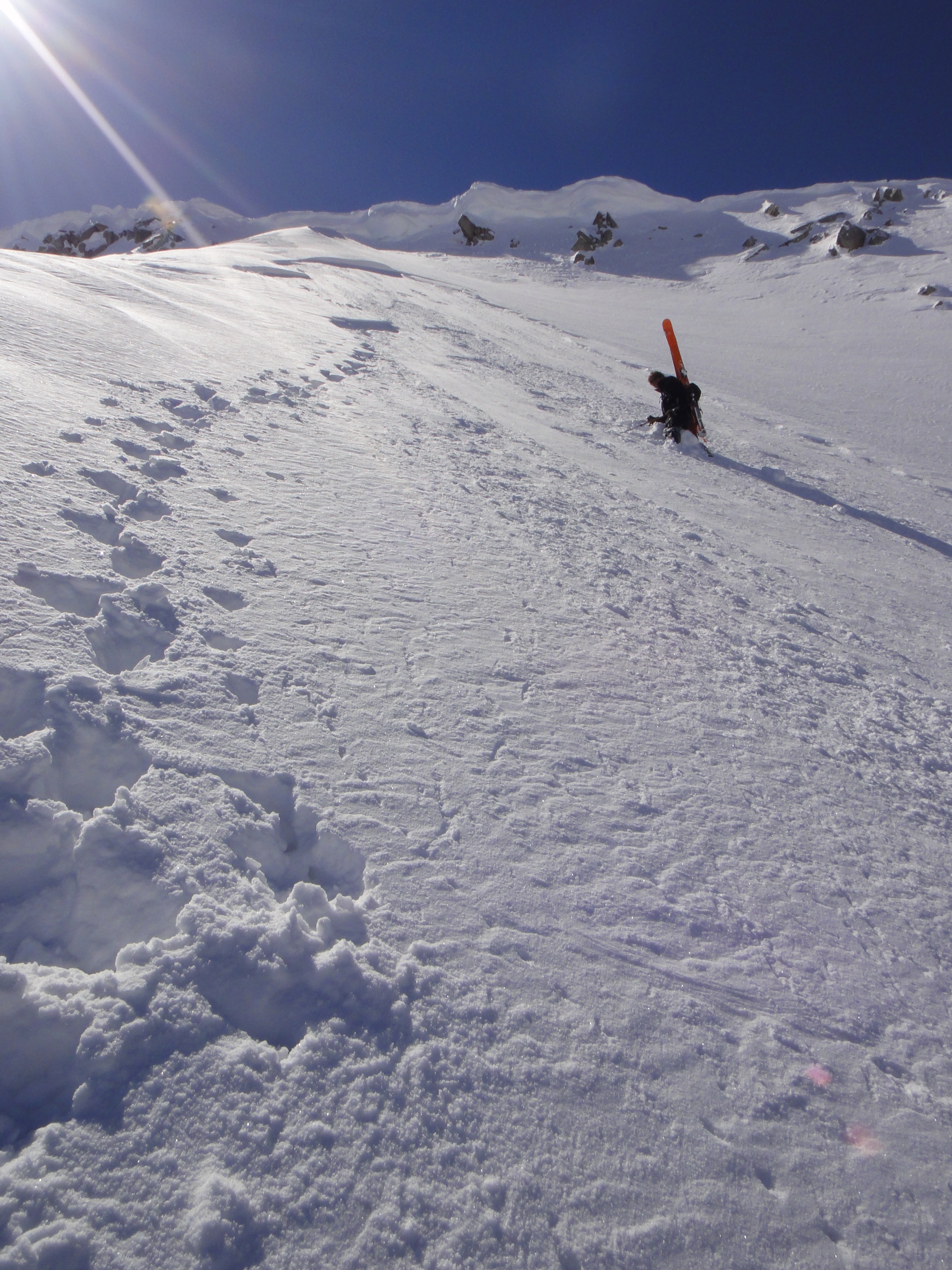
    Small slab I undercut on Coalpit Headwall.

    2010-2011. It started to snow in early October and did not cease until the following summer; the storms were relentless and were drawn to the Wasatch mountains in Utah from the Southwest, from the Northwest. At this point in my life I did very little other than ski; I spent five or six days a week working as a ski patroller and every other moment I could in the backcountry of the Cottonwood Canyons. I skied all but a few days between Halloween and Easter, trying to take advantage of a once in a lifetime winter. The amount of snow that fell can be quantified in the number of cups of coffee that I drank per day, which topped out at roughly 12 before I decided that I had a problem. I would wake up before 5am for both avalanche control and days in the backcountry; I tried to keep going, always knowing that it was bound to stop at some point. But there were so many lines and chutes that I had been lustfully eyeing for years, waiting for the right moment to approach.

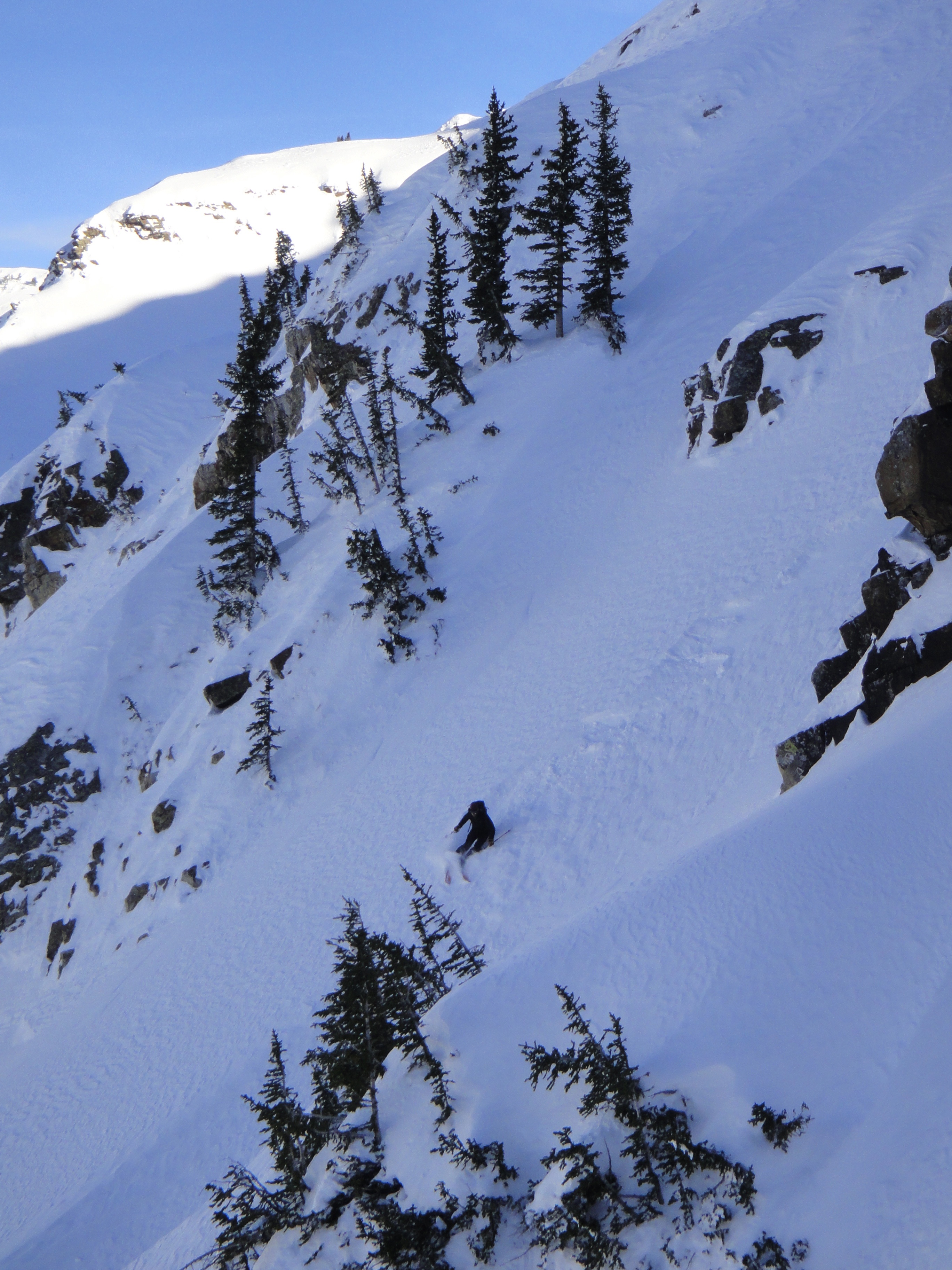
    Monte Cristo, The Hypodermic Needle, Mount Dromedary, Thunder Bowl, lines off Mount Superior; memories of deep powder shimmering under a blue sky, of hours of trailbreaking, of stable conditions, of standing atop monochrome monoliths remain as pleasant, but hazy recollections.  Although there is one foray into the backcountry that has endured as it is of a different character; it has a tinge of danger and disaster. The mind understandably works this way; its self preservation instinct is better served by searing threats to life and limb into the memory than the tranquil and pleasant.

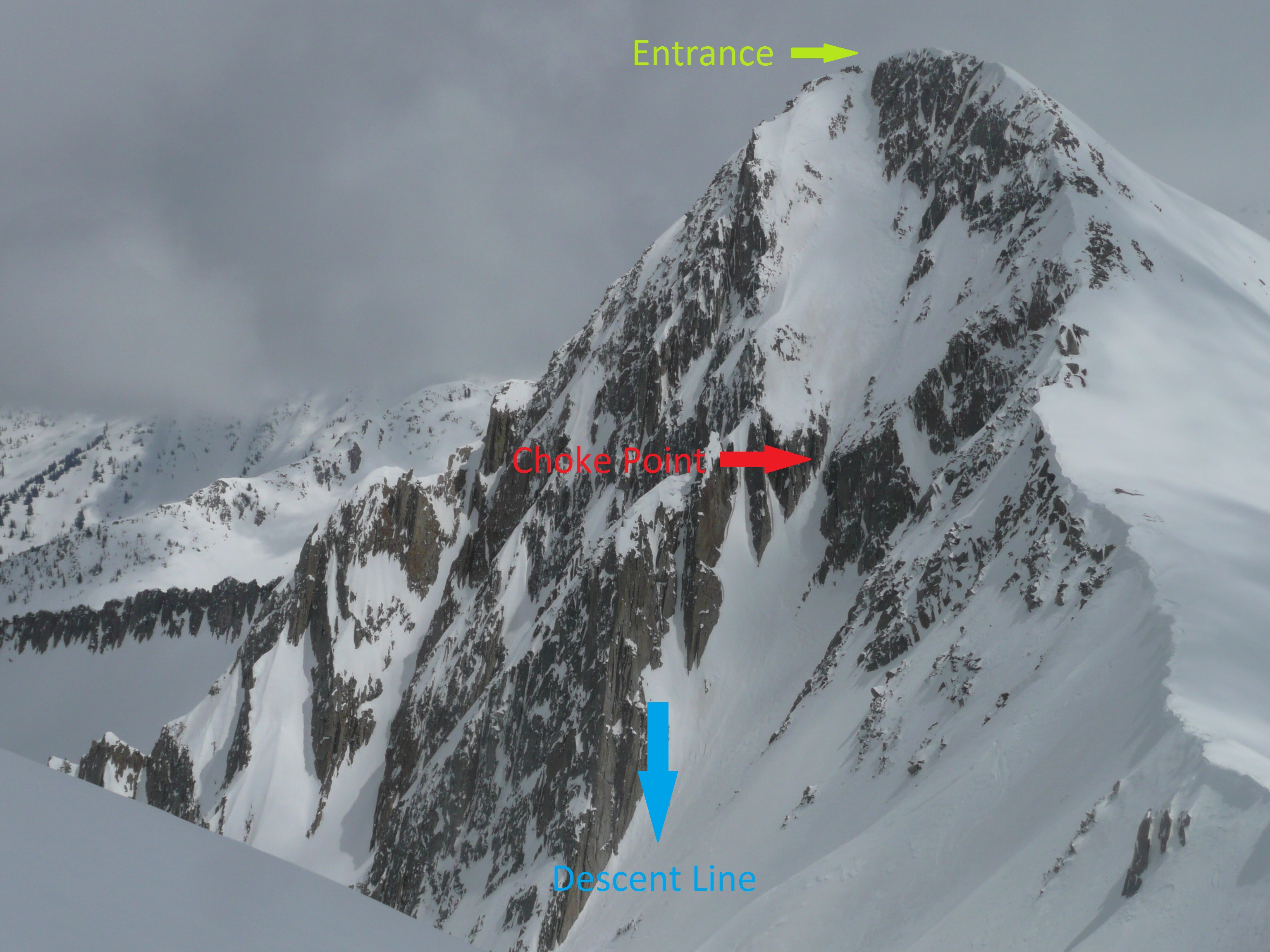
    The Northwest Couloir of the Pfeifferhorn. Steep. Narrow. Classic. An hourglass shape, the upper end of which feeds you into a constriction that terminates with a cliff, typically requiring a rappel, before opening into a vertiginous apron. The line consists of a 1000 foot descent with an average pitch of 50 degrees. The approach to the remote 11,326 foot peak is long and committing. The couloir itself is noted for its often treacherous conditions, something that I hoped to avoid by skiing it after the right storm.

    In the middle of February a storm was approaching that promised to drop a significant amount of snow on top of what was a stable snowpack. My friend Joel and I had decided that we were going to make an attempt on the Pfeifferhorn the following day; for me this meant calling in sick to work, something that I didn’t lose any sleep over. Joel and I had undertaken a few different adventures together and our demeanors were well matched. Joel has a love of skiing that is matched with fearlessness and intelligence, despite his Australian origin. His ability to carefully navigate the perilous backcountry with savvy can lead to nothing other than thoughts of a snowbound version of Mick Dundee.

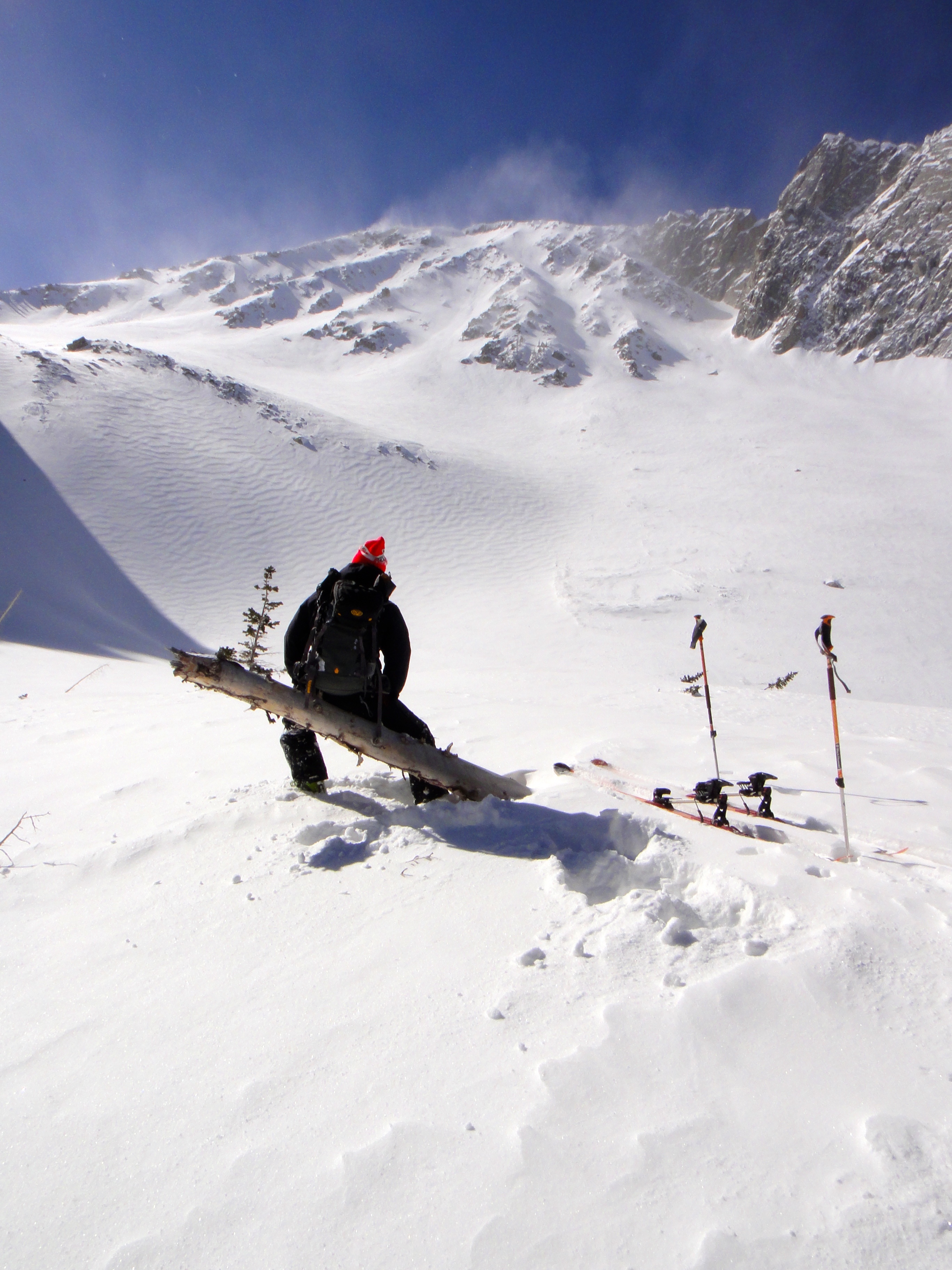
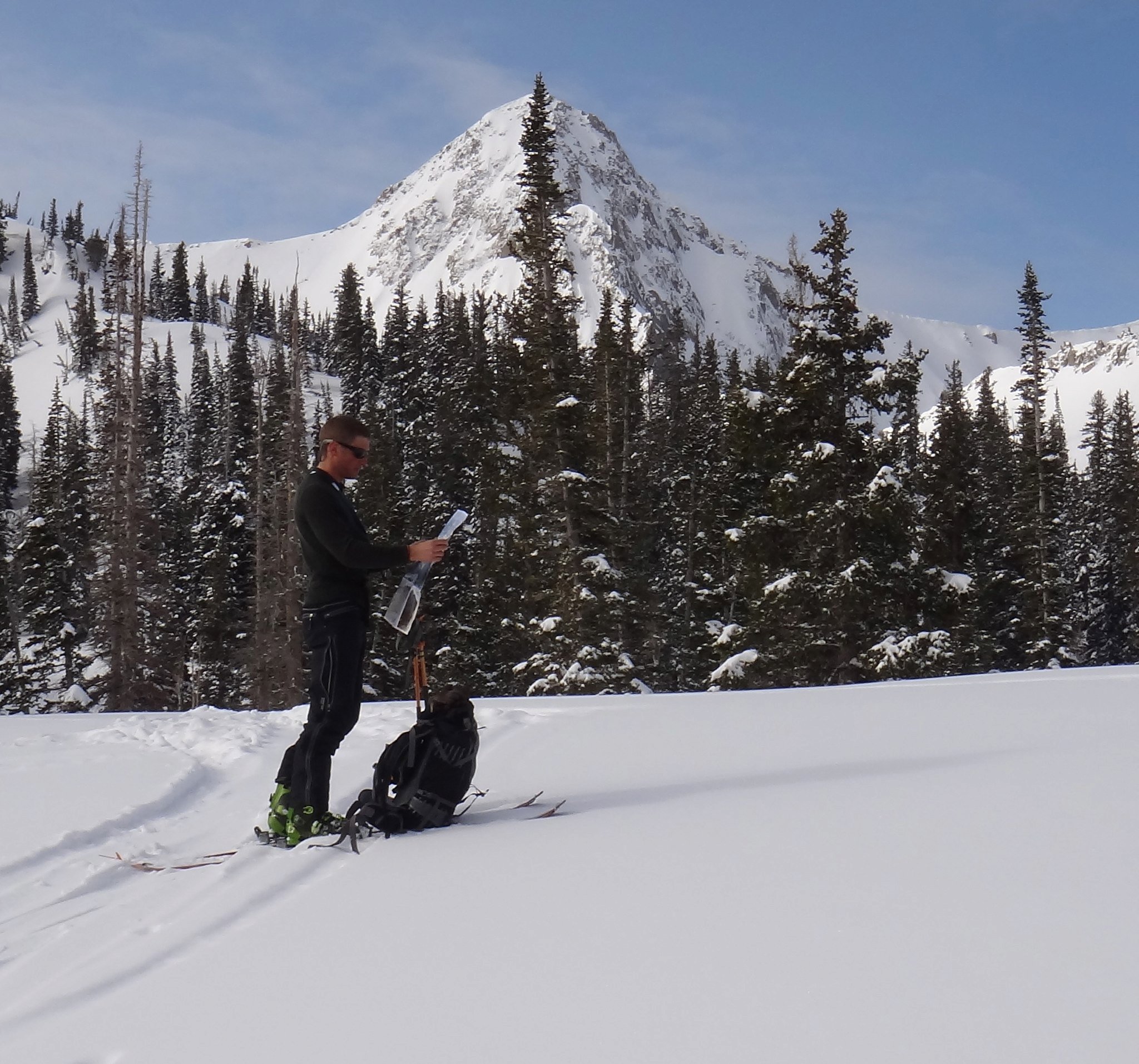
    Pfeifferhorn in the background.

    I woke in the morning darkness to take a look at the weather stations around the Wasatch and the avalanche report; it looked like it was going to be a perfect day. The Northwest flow had dropped a foot of snow without any terrifying wind or other irregularities from what we could gather.

    We parked in Little Cottonwood Canyon and started skinning towards Red Pine Lake in the predawn glow, slowly making our way upwards with our headlamps aglow. We broke trail through the fresh light snow, sweating despite the morning chill. The surface began to shimmer as the sun broke over the crest of the range, the pristine blanket covering every surface took on a blinding pure whiteness. We assessed the conditions perpetually; everything seemed stable and lacking in spatial variability. The peak was within sight, intimidatingly looming over us, growing with each lunge forward.

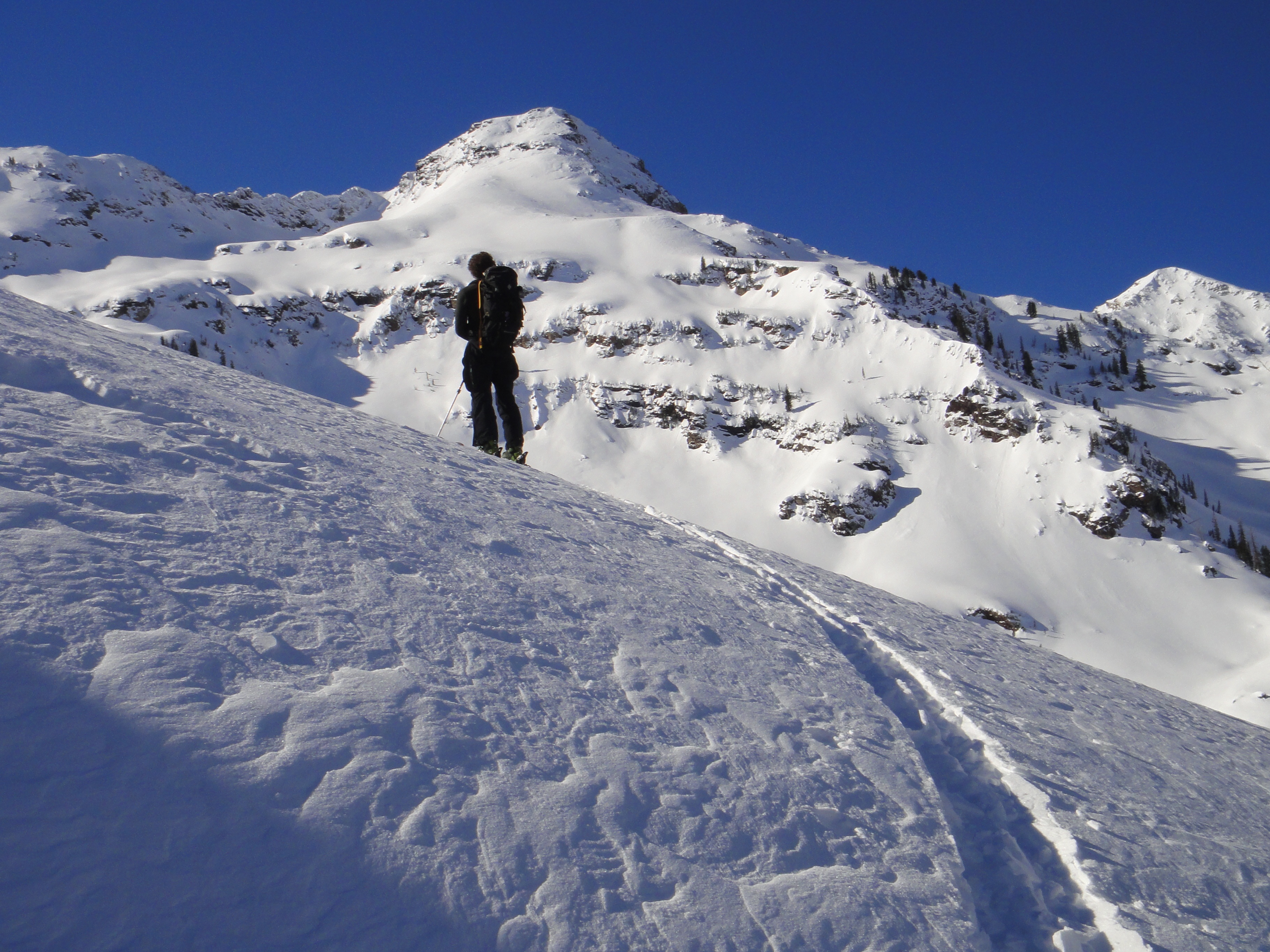
    Looking at Mount Dromedary

    Touring in the Wasatch gives me a feeling of remoteness and peril despite the hum of cars in the canyon below and the thunder of Howitzer artillery up the canyon. It is a different world beyond the road; it is harsh and unforgiving.

    There is a very little that I remember from the approach despite the many hours that elapsed; I often go into a strange meditative state as I step and breathe. We bootpacked the shoulder before standing on top and peering out upon the rugged and serene landscape as a gentle wind swept over and chilled us. It was noon. We put on our harnesses. I prepped my daisy chains to clip into the anchors, and checked the rope.

    ‘Do you feel good about it?’ I asked Joel as we looked over the seemingly vertical precipice that lay in front of us.

    ‘It looks a little icy and scoured, but I feel good about it. You?’

    ‘Yeah, it just looks like the entrance to any couloir.’

    ‘Who is going first?’ Joel asked me.

    ‘Uhhhmm….I’ll go? I’ll back off if it gets sketchy.’ These moments are always strange. You are putting yourself up against your own judgments about the conditions. The first person is the canary.

    Joel turned on his helmet cam and I cautiously stepped into the couloir. Adrenaline coursed through my veins, a temperamental chemical that can either go the way of fear or focus; I channeled it as I moved out towards the right shoulder of the couloir to check its condition. The sound of my edges grinding against the icy surface filled the air as I cut across; it was slightly terrifying. I stopped to take a deep breath at the shoulder, which held some snow, but I decided to traverse back and forth across the couloir rather than trying to make turns. There was nothing that a normal human being would identify as skiing yet.

    The slope got steeper and the walls began to close in. The couloir at this point consisted of nothing but sheer ice, something that is typical in the upper end of couloirs. I meticulously worked my edges on the surface; I tried my best to keep my doubts and concerns at bay. The anchors were within sight, as was the powder field below. The cliff did not look substantial and a fall, as long as I didn’t hit any rocks, would mean nothing but landing in the soft cushion of fresh snow that covered the lower end.

    I worked my way down into the choke point, moving with slow deliberateness. I muttered gratefully about how sharp my skis were and yelled my plan up to Joel. As I neared the choke point my ability to hold an edge was progressively compromised by its concave shape, I was only holding an edge with my tips and tails.  I committed too far before realizing that I was precariously balanced above a cliff on ice, unprepared to take a fall. Moments slipped away as I held my edges at a ridiculous angle perpendicular to the 50 degree slope and stared at the anchors that were several feet beyond my grasp, with a rope someone had left behind strung through. My legs started to burn and quiver as I schemed to get out of this predicament. There was no boot packing or side stepping back up; the ice  and shape of the surface made these options out of the question. The cliff was just an icy ten foot waterfall and there should be perfect snow below. There seemed to be only one option; I quickly thrust my hand out for the rappel anchors and rope, hoping to quickly clip my harness in after I got a grip. Ice is best understood from a tipping point perspective, you have purchase until you don’t; it isn’t something that is gradual or forgiving. I felt the tails of my skis give out as I reached forward over the tips of the skis. The rope was doubled over through the anchors. I only managed to grab one end.

    I didn’t have enough time to fully appreciate what was happening or I was simply to disoriented by the way in which it happened. As my tails lost their edge I fell backwards, meaning I was on my back with my head downslope as I went over the icy, rocky chokepoint. My arm ricocheted off of several rocks as I tumbled and gained speed. The whiteness that I had appraised from above as comforting, soft snow received me with the harsh thud of blue ice. I began to gain speed, feeling the irregular surface of the ice below me grating against my back. I tried to stop myself with my skis, tried to catch an edge, but they simply exploded off my feet. My head remained downslope; I starfished outwards, swinging my arms and legs wildly in an effort to create friction.

    I tilted my head backwards and saw myself headed towards rocks at a speed that I would place at around 30 miles per hour. My mind didn’t panic as there wasn’t time. Huuuuuuuuuuu Ahhhhhhhhhhhh Huh huh Huh Oh I remember making some guttural animal sounds as I continued futilely flailing.  Everything unfolded rapidly, but with an intense and clear focus. The last thought I remember: I never thought I would actually see my own death or that it would be so easy. The rocks came near, but contour of the couloir cradled me, carrying me safely past. As soon as this disaster was averted I found myself rotating through the air, white, blue, white blue. I hit a wind lip built up on a minor fork in the lower portion of the apron headfirst. I cartwheeled nearly to the bottom of the ski line before stopping. I remember having some sort of strange moment as absolute silence enveloped me; the world had stopped turning. I slowly stood up and looked in fascination at the hundreds of feet that I had descended in seconds. There were no alarm signals yet, just shock. I looked down to see red slowly spattering the snow below me; blood was running off of my arm that stilled griped the rope that I pulled through the anchors.

    I didn’t have time to look at where the blood was coming from before the panic set in. Joel! The shape of the couloir meant that he was only able to watch me disappear over the lip from his vantage. I needed to get within ear shot of him; I needed to let him know I was alright and that he shouldn’t descend. I was gasping, fighting to get enough air as I kicked my boots into the ice, adrenaline pushing me upwards.

    I caught sight of him standing at the choke point; he had gotten ahold of the anchors. We shouted back and forth, although I don’t think we were close enough to understand one another. Suddenly he jumped off the lip of the cliff and hit the sheet of ice. He had a Black Diamond Whippet Self-Arrest ski pole that he drove into the ice with his weight until it was ripped from his hands. I stared on in silent horror as I watched him gain speed, taking the same ride that I had just miraculously survived, and pass within a few feet of me at incredible speed. There was no sound other than the roar of his synthetic ski gear over the ice.

    I found myself running down back towards the same point where I had found repose. Joel had managed to pass another 20 feet beyond my mark and lay in a heap with his avalanche airbag deployed.

    ‘Are you alright?’ I shouted down.

    ‘You need to go get my ski.’

    ‘Where is it?’

    ‘It is stuck in the choke point.’

    I accepted this gravely and started upwards without asking any other questions. My arm began to stiffen and get cold from the blood that ran down it. My lungs and legs burned as I tried to work quickly under the assumption that Joel had probably sustained some kind of injury. I was running on nothing but adrenaline at this point, although I started to shake with a freshly conditioned Pavlovian fear  as I approached the cliff once more, carefully toe pointing as I went. I grabbed Joel’s whippet that had been ripped from his hands and then began ascending the blue ice below the cliff.

    I saw the ski jutting out from a crack in the rock above my head and understood why Joel jumped. I kicked out and carved handholds to ascend the final icy pitch to the ski. I carved out a sturdy handhold as I stood perched over the icy abyss and began to swing the ski pole at the ski to try and dislodge the ski. On my third strike it broke loose and began a chattering bouncing ride downwards towards Joel. I yelled in vain with the hope that it would miss Joel.

    I began my descent, working my way across slope to recover poles and skis that were incredibly separated by hundreds of feet. One of my skis had come down vertical and with such force, that only a few inches protruded from the snow and ice. I eventually reached Joel again and collapse into the snow next to him.

    ‘Holy shit! Are you alright? What’s going on?’ I let out in release.

    ‘I am good, but I am not sure if I can move my knee, I think I tore something. We need to get out of here though, get me that ski and we will see what I can do.’

    I finally looked at my arm. It had swollen to what seemed like twice its normal size and had a significant injury exposed at the elbow from hitting rocks that managed to rip through three layers of clothing. I was convinced it was broken, but accepted it with calm resignation. Everything was not all seriousness though; we were laughing hysterically within minutes, lost in shock and adrenaline.

    ‘I cannot believe we are alive. Did that really just fucking happen? To both of us?’

    ‘Are you jealous that I made it further than you?’

    A significant amount of time had elapsed in this whole episode; we were well into the afternoon. We still had a run out down Maybird Gulch that was not short or simple. Joel tried moving his knee and had some range of motion and not too much instability. I helped him into his skis and watched in gratitude as he was able to carefully begin working his way downwards. An inability to ski would have likely meant spending an evening out.

    Joel, with an injured knee, skied with skill that left me astonished. We reached the car in the twilight, both shivering and drained, mentally and physically. I took off my gloves and looked on in horror at my bloody hand and the pinky finger that was completely black and waxen with frostbite.

    ‘Whoops!’ I hold out the claw to Joel and start laughing.

    We descended the canyon and recounted our respective stories over a pitcher of beer, looking haggard and talking manically, oblivious to the other people in the bar. We realized what had been our undoing: the storm system had arrived from the Northwest, the direction that the couloir faces. It had come in slightly warm with brief rain that had served to bond the fresh snow to the existing snowpack everywhere else. In the Northwest Couloir it had frozen rapidly, due to the direction of the couloir and the wind, and merely created a sheet of ice that attracted no snow. Joel clarified another part of the story, he had lost one of his skis as he tried to kick his ski into the sheet of ice to get purchased; it chattered down the couloir and became lodged in a crack midway through the cliff. Joel decided to jump and try to dislodge it with his ski pole before taking his downward journey. He realized that we needed that ski to get out of the backcountry and there simply was no decent way of getting it.

    Joel had to go to the hospital the next day and found out that he had indeed torn a ligament in his knee. I returned to work and tried to continue on like nothing had happened despite my inability to move my elbow joint. I had no insurance, so going to the hospital had to be avoided. I hid my broken wing out of fear of getting caught in my lie and out of a certain degree of shame over what had happened.  I did not want to recount the tale, but after a few questions from people on my patrol team, I spun the tale with a grin. Stories eventually just become a piece of you, telling them helps the process along.

    I have since developed a deep seated fear of slippery surfaces above precipices; a fear that I find to be completely rational. I have been on an endless summer since that winter finished. Joel has gone on to more ridiculous feats, including supporting his ski habits through the practice of law.

  • Preflightal Cortex

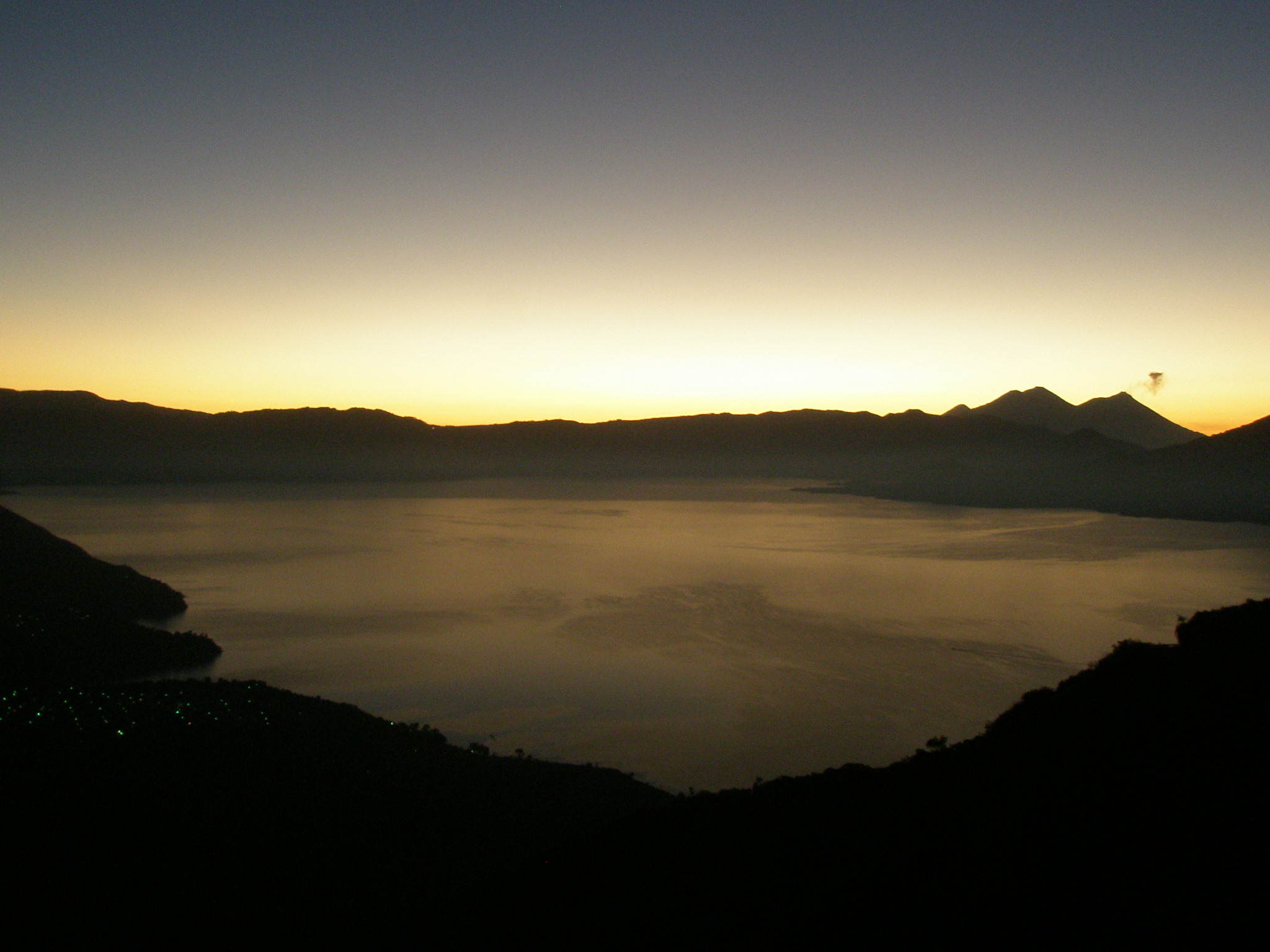
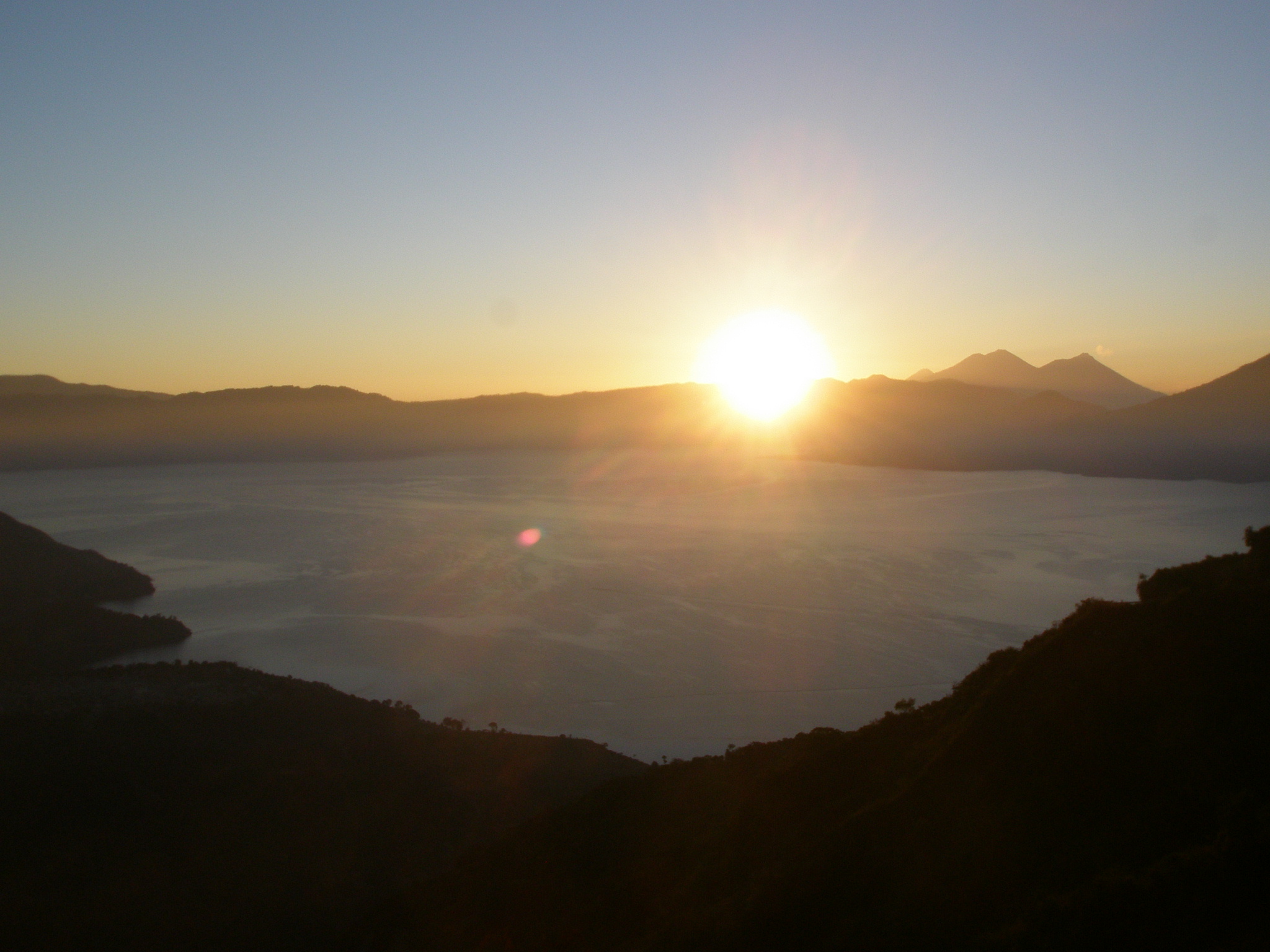
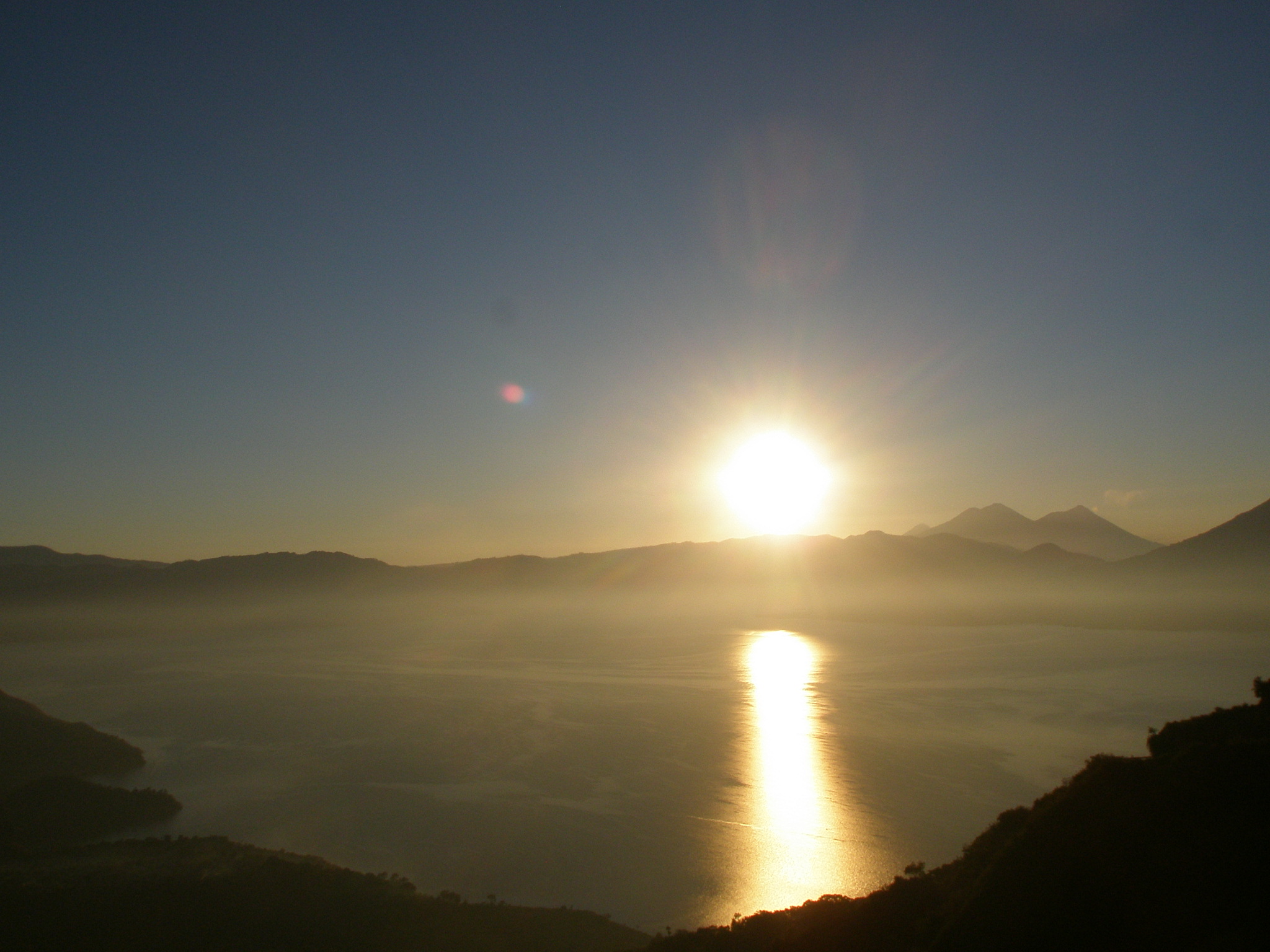
    Lago de Atitlan, Guatemala

    I don’t even know where to begin with this day, somehow the idea of flying back to America has produced a fight or flight response; it seems as if I have already chosen flight once. So this story is about flight, through and through. I am going to be honest about my life: it hasn’t been normal for a long time, if ever. I don’t have any identifiable career path. I don’t have health insurance. I don’t have any money saved for the future. I have paid rent for a total of ten months in the past six years; I have essentially lived out of my backpack and car. I have been flying for a long time. I set off into the Sonoran desert two years ago by myself with a backpack. I felt like I needed to experience the world, to countenance the world as my bare self. I am not sure if I can explain this impulse to anyone who has never had it.  I came home to Utah after six and a half months, worked for six months and then I found myself crossing the border ten months ago into the unknown, or at this point, slightly familiar on a bicycle.

    I am not actually coming back to America yet, just visiting for a month, but I feel like a dog when it sees suitcases sitting by the door. The pacing and salivating start as synaptic maps light up in recognition of similar circumstances, physical stress manifests with an unclear referent. All signs point to change, point to uncertainty. Is the kennel going to come out?

    Lago de Atitlan, Guatemala

    The kennel? What is this all about? When I think about America, it evokes images of frantic energy, flashing lights, insufficient time and people that seem lost. I like tranquility and having time to do read, write, relax, meditate, converse, hike, run, ride my bike, cook. I like being challenged, physically, mentally, culturally, linguistically. The concept of America is somehow synonymous with a kennel that will deprive me of the freedom to do these things and losing the ability to do what I love obviously worries me. It is the time demand, time that seems invaluable to me, time that is finite and all that I have, flowing past continually.

    When I think about all of this and it is like when the kennel is brought out, suddenly the whining and panting begin, the urge to urinate on expensive rugs rises quickly. I want to run out of the house, into the street, into the unknown.

    Lago de Atitlan, Guatemala

    I wake up to swim, sip coffee, meditate, take an excessively long hot shower, and ruminate on the banks of the emerald expanse of the lake. I watch all of the advancing and dispersing waves from the water taxis ripple the surface, they wink at me when they meet, the sunlight glancing off the shifting angle of their surface. I rudely appraise them as the mug touches my lips.

    I am languidly sipping my coffee with subtle alarms going off in the depths of my mind telling me to get it together, but I literally think like this: You are being irrationally anxious Alex. It will all work out, don’t stress out. If you act patient, calm and tranquil, then everything will be fine.

    This works until I nonchalantly check my email and see that my flight leaves two hours earlier than I thought. The alarms are bellowing and my adrenaline is spiking, yet I casually pack my things despite the sweat pouring down my body.

    I glide across the lake in a water taxi; I look outward, wishing all of the stunning scenery would pass by faster as it assails me with its resplendent beauty. I speed walk towards the bus stop, peeing on a fence that lines the road. The driver of the next bus mashes the pedal to build momentum for steep climbs, bracing himself against the window for the sinuous sections.

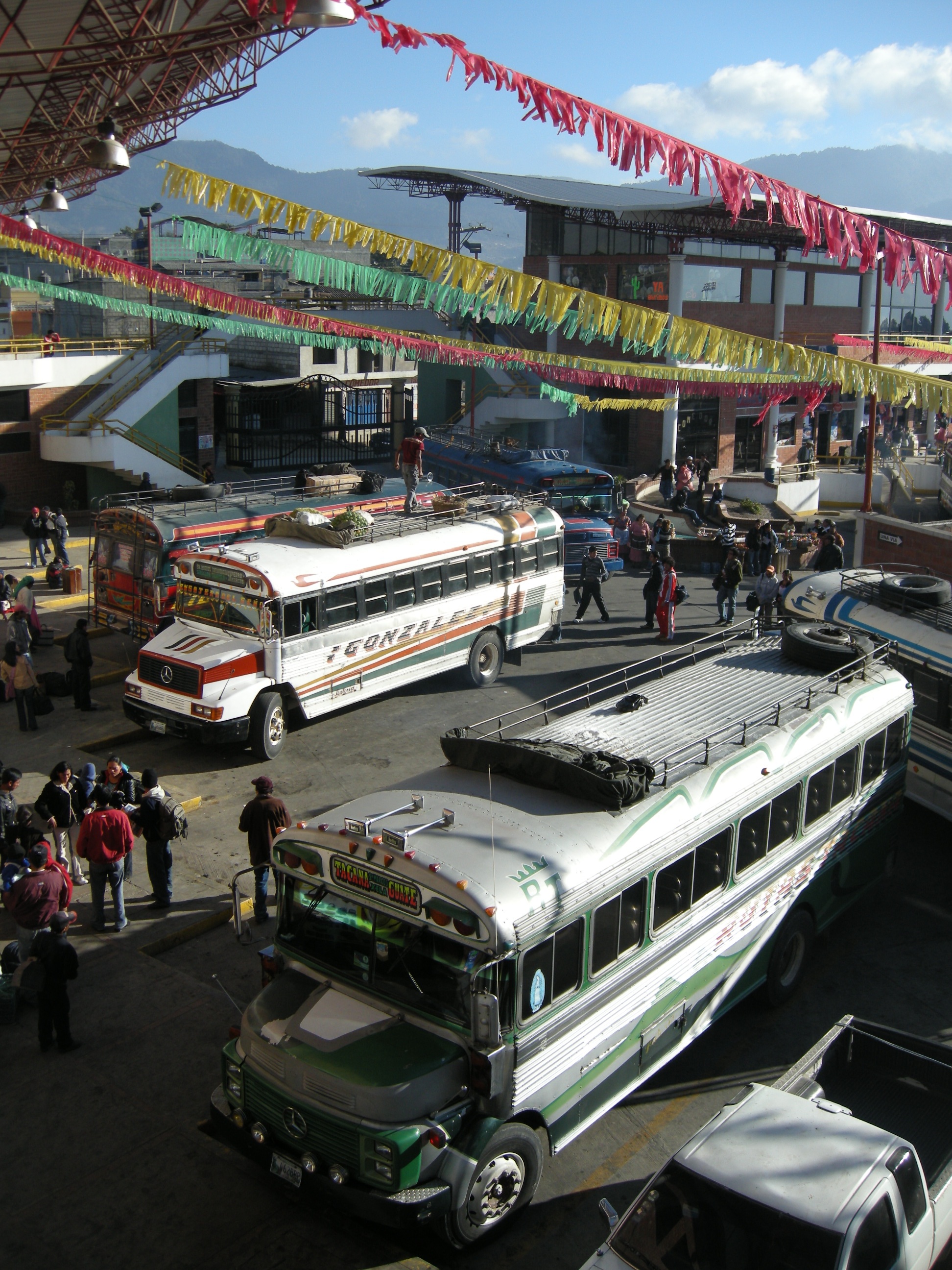
    Buses in San Marcos

    The ayudante is in a perpetual state of manic motion, scrambling on the exterior and swinging through the interior; I can only liken it to how Curious George would behave if the man in the yellow hat had given him several grams of cocaine before putting him in the cage and loading him on a bus, but Curious had courageously chewed his way through the steel bars and begun to frantically evade hallucinated men in yellow hats pursuing him.

    There is still plenty of time. OH MY GOD THERE IS DEFINITELY NOT PLENTY OF TIME. I keep telling myself that it will be alright, that I am being irrationally anxious to fret each time the driver stops to pick up a

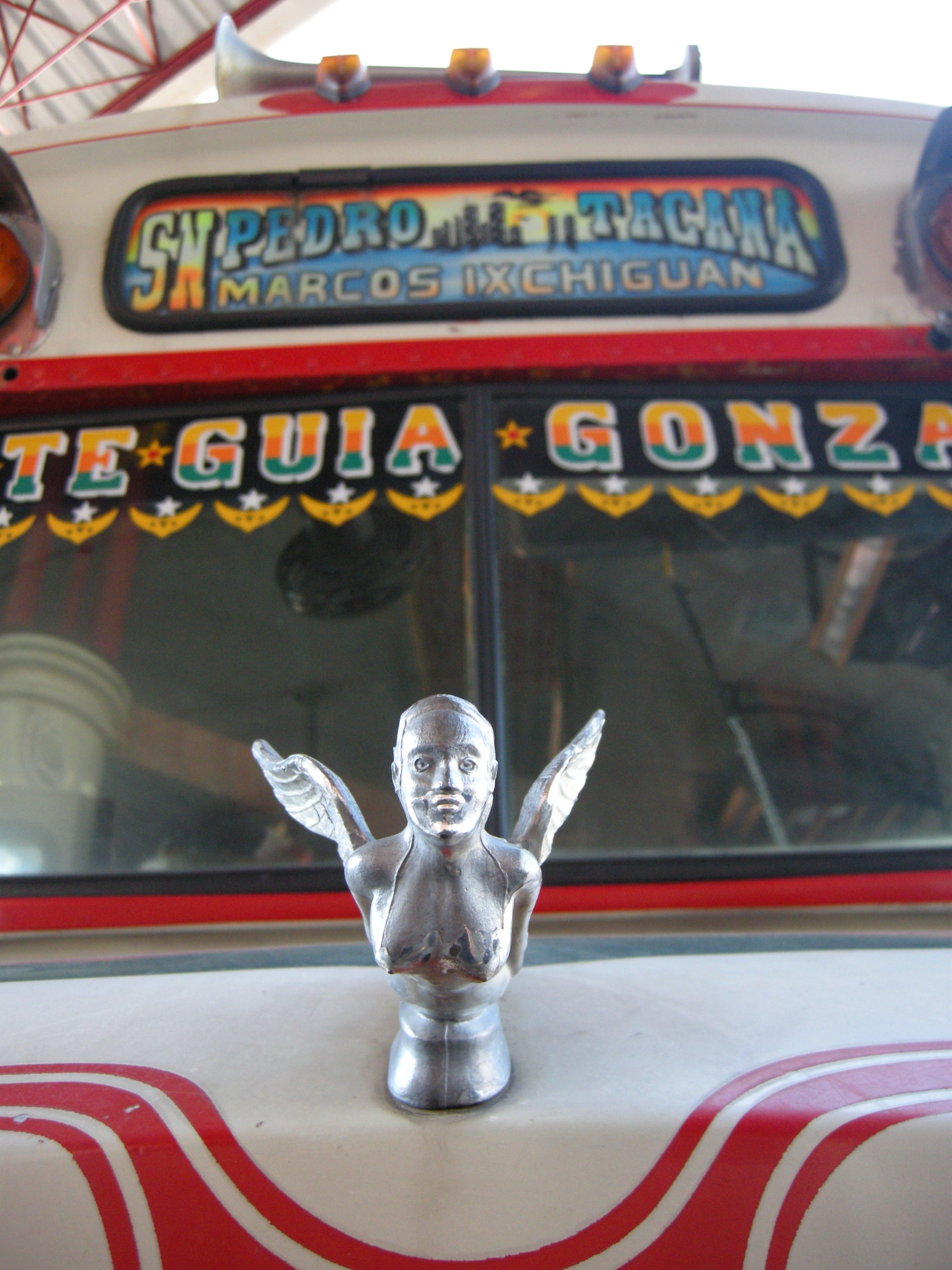
    Hood ornament on a different bus.

    person that materializes out of a cornfield or slows down to send a text message. An hour before the flight takes off, 22km outside the city the police decide to stop the bus and have a roadside discussion with the driver. Be calm. Be calm. BE CALM? The fucking $800 international flight leaves in an hour. I was supposed to be there, what, five hours before to have x-rays taken of my genitals? To be asked asinine questions and have my pathetic possessions pawed by the prying fingers of the ever expanding surveillance state? To….AHHHHHHHHHHHHHHHH……

    No, I don’t want your charity cookies or any of those fucking ice cream cones that somehow never melt and always look perfect! Aguas? Jugos? Frutas? No. Aguas? Jugos? Frutas? NO! STILL NO!

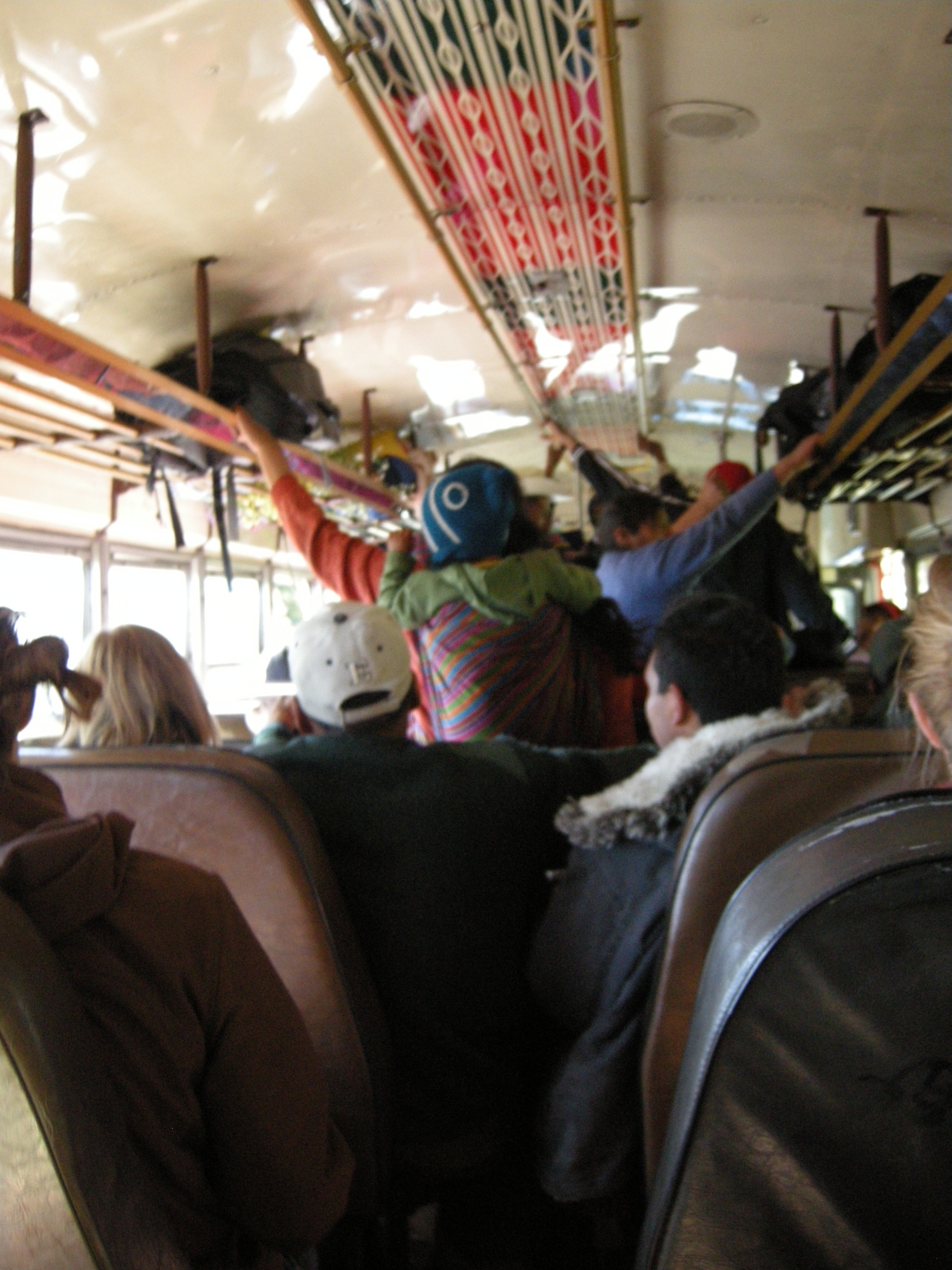
    Inside a Chicken Bus

    All of the chi infused into my 12 chakras by bathing myself in the healing and tranquil energy portal that is Lago de Atitlan has precipitated into fulminating anxiety when mixed with the reagent reality. We drop into the smog and traffic of Guatemala City and I get off the bus in front of a Walmart where I hail a cab. I manually force my charkas into order and calmly tell the driver that my flight leaves in 45 minutes and that I am therefore in a slight hurry.

    He whistles. ‘Do you lose your ticket if you don’t make it?’

    ‘I am not sure.’ I sit thinking for a minute as he weaves through traffic.

    ‘I think I will make the flight as Guatemalans are friendlier, more helpful people than Americans.’ I am definitely trying to convince myself here, while offering a compliment.

    I run out of the cab, thrusting sweaty money that I had been palming for the past 15 minutes into his hand. There is no one at the ticketing desks, although the screens still flash information regarding my flight that leaves in 30 minutes. I find out where the United Airline’s offices are located, run there, run past the door, run back and burst in amidst frantic gesticulations and panicked Spanish, likely conveying a level of urgency that would be expected of someone transporting a freshly harvested organ. After trying to persuade me to take a flight the following day, he accepts that I am not going to leave him alone unless I try to make this flight.

    ‘Can you carry those bags onto the plane?’ He asks quickly as we both look towards my massive bag stuffed with two handmade wool blankets and a kilogram of mole negro. I feel like this is a question that he should answer, not me, but I am definitely not going to say no.

    ‘Uh.. Yeah.’ I say this with one eyebrow raised and my head tilted.

    ‘Do you have any liquids in your bag?’

    ‘Uh…No.’ The  mole negro is somewhere between a liquid and a solid.

    ‘Okay, let’s go get you checked in.’

    We run downstairs and he frantically pushes buttons. I get to security and there is almost no line, I fill out my documentation haphazardly and approach the desk. The customs official calmly scans my passport and glances at my documentation. I see a red popup box start flashing on her computer screen that says something about ‘Illegal Resident Alien.’ My hear drops, but she closes the popup and slams down the stamp. I am sent on my way.

    I load my bags onto the conveyor belt and step through the metal detector. I watch the face on the woman monitoring the screen as my bags pass through. Come on, come on, come on. She halts the belt. She calls someone else over. Both of my bags are seized and pulled off to the side.

    ‘Are these your bags?’

    ‘Yes.’

    ‘Can I see your passport and ticket please?’

    Fuck! 20 minutes. The mole! The waterbottle! All of the strange shit that I am carrying back!

    After glancing at my ticket she looks up with a shocked expression on her face.

    ‘Sir! Your flight leaves in just a few minutes! You need to go! Run!’ She hands me my bags and sends me running. I want to kiss her and the ground of this amazing country.

    I run through the tile floored terminal, my cowboy boots clomping and echoing through a place that is already not Guatemala. I already had my documents checked to make sure I was acceptable to enter this organized, capitalized, surveilled, clean, hierarchical world. I am not even the last person to board. I stare out the window as the smog and disorganized sprawl disappear as we ascend into the clouds.

    There are TVs on every seat now, 100 channels of satellite TV that you can pay for with a credit card. It glares in my face. I resist looking at it, but it will not let me turn it off. Insurance, resorts, things, services. I briefly think about how one day they might just figure out that they should charge you to turn it off, to make the commercials stop, to have peace and quiet in your mind.

    The ground is visible; there is something wild about this, something that alters perspective, not just visually. There was a time not very long ago when humanity had never looked down upon itself from planes, from space. Nobody had seen the earth from this vantage. It looks like an outpost destined to be reclaimed as nature patiently bides its time against the impudent intrusion. Everything in Houston, Texas glimmers with steel and glass. There are tall buildings at the center, where it is the most dense and the least green, before gradually becoming less dense along the spokes of concrete that radiate out from the center. These arteries are flowing with cars, but occasionally clot with traffic, flowing away from the heart, the pulse and flow will shift the following morning. In, out, in, out.

    The identical houses on the outskirts remind me of a kindergarten project where we made a big model of a town and all of the houses and buildings were milk cartons. An empire boldly built out of milk cartons, one that lasts just until someone realizes that plastic bags or tetra packs are superior. It was just a project, just something that we had to do so that we could learn, but it held no importance beyond that, just a phase. Look what we can do! It was destroyed at the end of the year as we had no use for it anymore; we all moved on to do something else, we grew up and did something a little less crude, a little better, something with more meaning and more permanence.

    Traveling lifts you out of the routine into the completely novel; everything is vivid, sounds are louder, smells are stronger, light is more beautiful. I marvel at the people, the fashion, the seriousness, the technology, the opulence. The smell of cookies and perfume pervades throughout.

    Going through customs to enter the United States is one of my most outwardly despised, but inwardly relished activities. I make up my flight number on the entry form as I can’t find my ticket. As I wait in line I hear a security official speaking aggressively to someone. I look over to see a Muslim woman wearing a hijab being singled out and escorted away. She follows obediently, but her four year old son is not compliant. He is at the perfect height to run under all the elastic line dividers, laughing and dancing as he goes. The government official sternly orders him around to no avail, the mother looks on with indifference. He paces and tries to maintain his cool as the kid taunts him from just beyond his reach. This goes on for several minutes, the kid oblivious to all of the cold technology watching him, to the global inequalities, problems, terrorism, security, bureaucracy, religions… They finally corral him and then they are led away. He is wearing a diaper that I imagine to be full of feces that he similarly accepts with utter indifference.

    I reach the customs official, he has a shaved head and greets me with stern formality. This conversation is authentic and occurred in front of a massive line of people, but seems like a hilarious parody of many that I have had previously.

    ‘What were you doing in Mexico and Guatemala?’

    ‘Riding my bicycle South.’

    ‘What do you have some sort of goal or mission? Are you out to prove something?’

    ‘Nope, just riding my bicycle because I like to ride.’

    ‘Yeah sure. That is cool and all. Yeah. Maybe you will have some story to tell your grand kids if you make it, if you don’t die. You need to start thinking though, you need to think about safety, you only get one life and you need to be careful, be careful with it.’

    ‘Yeah, but if we only get one life, then we need to live it, right? We only get one shot, one experience. I want to make it a good one.’

    ‘None of it matters if you are dead.’

    ‘Hmmm…..’ I figure I will be the one to end the discussion, better not to escalate.

    ‘Just be careful. You are all set.’

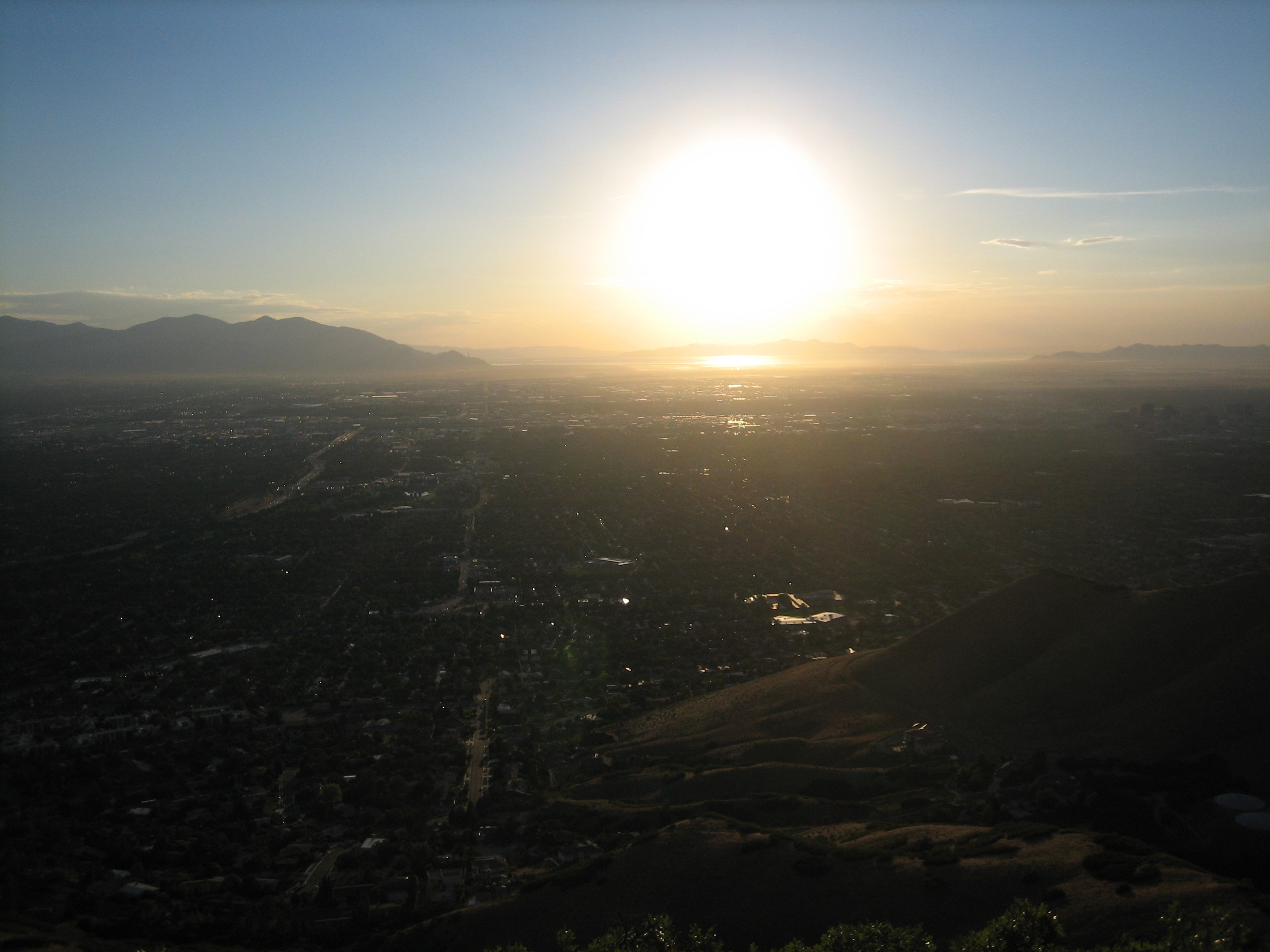
    Salt Lake City

    Many people feel the need to comment on my lifestyle in inappropriate contexts, as if they are threatened by it. This man and I view life as incredibly important, but reach different conclusions given this premise. This man concludes that he should avoid risks and sit behind a desk, calling it a life lived. I think that I do need to slow down, find peace and contentedness in a more stable life; I feel some exhaustion, some wear and tear, but my philosophy will never be shared with this man. I think about the neatly groomed dog in the SkyMall catalogue wearing a ThunderVest that ‘eliminates 90% of house pet anxiety,’ that looks like its eyes are bulging out as the vest forcefully constricts its breathing to calm it.

    What is a life lived? It sounds like me and this guy are both suffering from the same delusion: that any of it matters. You can fight it until the bitter end, you can give in early, you can cryogenically freeze yourself, you can make monuments in your honor, you can leave a prodigious brood, you can write incessantly, you can just float along. Embrace the cage, howl at the moon, eat Alpo, eat butcher shop scraps, get neutered, chase bitches in heat, have a huge litter, hump a table leg, chase rodents, bark at the television, get rabies, get fleas, get groomed, stick your head out the car window, get put down by the man you worship or get hit by a car.

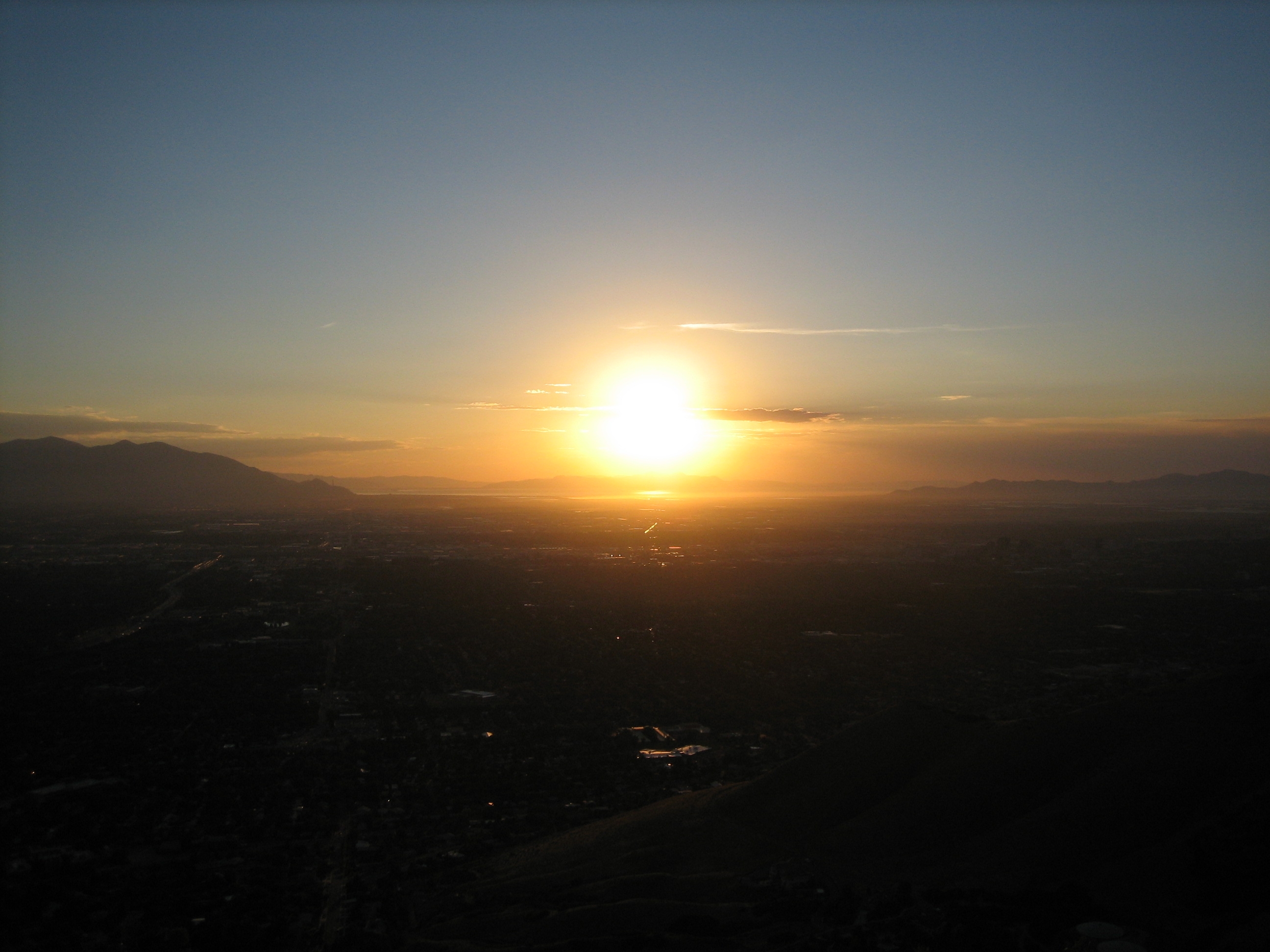
    Salt Lake City

    I refuse to live a story that has already been written, a story that is not my own and has a dubious ending. I think that life, that our one chance to live an incredible life, to sculpt our experience like a piece of art is bewildering, but it is the gift I have been given.

    Then I land and it is turbulent; I am a mess of anxiety and indecision. What the fuck am I doing with my life? Does everyone here know something that I don’t? What am I going to do in the future? How will I afford to live? Why do all of these people have so many shiny things than me? I have no plan. Where am I going to live? Are all of these people just going to laugh at my dreaming, at my sincerity as some type naivety? Does anything that I have done matter? What is wrong with me? I am as lost as ever. I cannot believe all of the specious bullshit that I pontificate from a cloud pulpit that disperses as soon as the wind blows. I make choices and then get unhappy with the results? Anxiety about things you cannot change? What am I, a child?

    I fight for a while, until I accept it all and let it go. We ultimately have the choice of how we perceive everything, of how we react. The mind can make hell out of paradise and find light on the darkest of nights. Life is a free gift that we should gratefully accept and do whatever we want with.

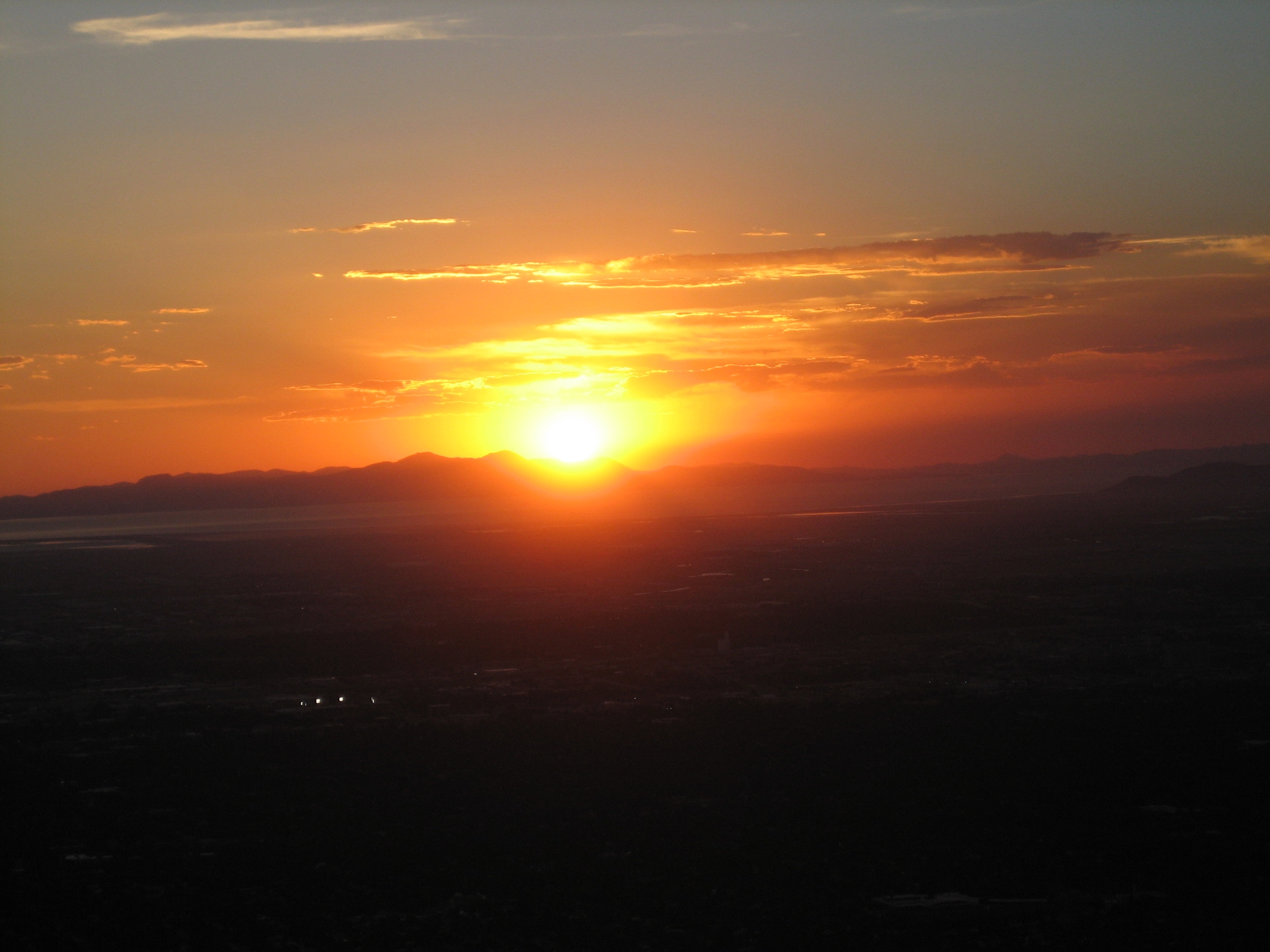
    Salt Lake City

    America is clean, safe, violent, opulent, unequal, prepackaged, natural, processed, beautiful, frantic, serene, creative, homogenized, paved, wild, free, a prison, corrupt, stable, transparent, a monster, a beacon of hope, growing, faltering, surveilling, protecting, bellicose, racist, integrated, religious, materialistic. America is a concept that emerges from the people who live here, it is all of these things.

    Everything, all of it fades when I am immersed in the love of my friends and family. After all of this I am slightly less domesticated, a little more wise and none the richer.

  • Until The Day It Stops

    This scene, this day, has run through my head thousands of times. Over and over again, every action, every moment, trying to understand it all. It is one of those moments that unexpectedly and indelibly changes your life. It fades though, for better and worse, like any other event in one’s life. It seems important to me to write this down, for both personal catharsis and remembrance.

    South towards Cottonwoods, 2011.

    March in the Wasatch Mountains is invariably perfect; the mountains are either being blanketed in fluffy powder by heavy spring storms or bathing in the spring sunshine. I worked as a ski patroller for several years Park City, Utah and always looked forward to March, a month that arrives like dawn after the gloomy frigid night that is February. Work starts picking up, but everyone’s mind is on summer and the levity of silly season builds.

    I ended up doing this job as a result of a strange series of events, but in hindsight it seems like something that had to happen; how could I not have worked a job that involved throwing dynamite to set off avalanches with the sunrise, getting paid to ski, and helping people under physically challenging conditions? I got an EMT certification in college on a whim and it became the credential that helped me get every job that I had after college for several years as I was unwilling to go into the mundane grind with obeisance.

    Park City, Utah 2011

    The people that I worked with ski patrolling will never be far from my mind, as they were some of the best people I have ever met, especially the team that I worked with for my first year. We maintained a perfect balance between getting our work done safely and efficiently, freezing our faces in grinning rictuses with the fine spray of S-turns made through  untracked champagne powder, barbequing, and witty banter while sipping coffee.

    March 12th, 2010 was a Friday, the end of the work week for my team. The sun broke on a high pressure day with no fresh snow, a cold morning under a deep blue sky. I rode up the chair in the morning to the station where I was working, eying up the overnight grooming job and feeling the sting of the mountain air on my face. The main run descending from our shack had been groomed and glistened in the morning sun; it is a steep straight shot that doglegs to the right near the bottom. From our shack I could look out onto the rest of the Wasatch range, over into the Cottonwood canyons and into Park City itself. There is a ritual each and every day: each day we all arrived at the shack an hour before any customers rode up the chair and dispersed to check our area at face numbing speeds. We followed up with coffee time in the shack, a time of discourse on subjects ranging from relationships, to bicycles, to This American Life, to backcountry skiing, to summer jobs, to who brought what food to cook for the day. This is the most tranquil time of the day.

    We alternated taking laps through our area during the day, but everything had been idyllic all week, no accidents. Spring was in full effect; the restaurant deck was full of people lazing in Adirondack chairs with layers of clothing draped nearby, sipping beers and reveling in the sun. We fired up our barbeque and sat outside our shack maintaining a running commentary regarding every person who stepped off the chair lift as we ate tubular meat products of uncertain origin. Life as a ski patroller is challenging, a blase attitude towards everything is created by the universally acknowledged reality amongst every individual patroller that nobody, including coworkers, is as cool or righteous as you are. There is nowhere to go from here; it can paralyze you unless you arduously keep this insidious attitude at bay, as relationships with other human beings become nearly impossible. After eating and ruminating deeply on this concept,  I decided to take a few laps with another patroller named Mike R. before we finished out the day.

    Wasatch Mountains, Utah 2011

    We were hiking up a nearby ridge discussing where we should drop into the trees for a session of combat skiing, a form of ski destroying, sadistic skiing under bad conditions that becomes a weird fetish for anyone required to ski under any and all conditions. I let my skis hang over the edge, ready to drop in when a call came in over the radio from a patroller, Mike T., notifying us that he had just witnessed an accident on a nearby run. The call seemed routine and there were a few other people who were in position to second respond to the call, but we decided nonetheless to wait and see what resources were needed before dropping off the ridge.

    A moment later a panic tinged call came in for every resource that we had available, except for a defibrillator. Mike R., and I chattered our skis down the irregular and hard ridge as quickly as possible. I arrived at the shack first, in perfect time to grab some of the equipment that the other patrollers were unloading out of the shack and begin descending. My heart was already pounding; something was very wrong.

    I took the fast groomed run down from our shack as quick as I possibly could while carrying a backboard and a trauma pack; I fought to maintain control as the backboard jerked me from side to side as it caught wind with each turn. I was worried that I would overshoot the spot where the accident was, as it was called run left, in the trees. There was no missing it though; I saw a few people standing on the side of the run, popped off my skis and launched down into the trees where a young man looked up at me with blank eyes, copious amounts of blood staining his face and the snow around him. He had lost control near the start of the dogleg and collided with a tree. EMT training is about teaching you routine, as you need the ingrained steps to be able to approach a situation like this. Mike T. and I haltingly ran through a rapid, adrenaline spiking assessment; there was something resembling breath, a very faint wheezing and a weak, virtually nonexistent pulse. He had severe blunt force trauma to his head and chest. I remember thinking that this can’t be happening, this isn’t happening. I remained surprisingly calm in a detached way, watching myself go through the motions.

    We called in a code red; patrol’s signal for anyone in respiratory or cardiac distress. We began CPR. Claire, someone who was accustomed to situations like this, had arrived with a defibrillator, quickly followed by Mike R. and Randy with a toboggan. Claire took charge of the situation and everyone quickly integrated themselves, continuing CPR, as I fumbled with the defibrillator. With shaking hands I attached the electrodes of the defibrillator, which mechanically announced in a neutral voice ‘No shock advised.’ I futilely pressed the little button with a lightning bolt several more times. It all seemed like it was happening slowly and through a lens smeared with Vaseline.

    We alternated giving CPR, breath and compressions; I looked down into the pale face of someone who looked just like me, my same age, before giving each breathe, felt the laterally unequal response from his ribs with each compression, only pausing when  surprised by the quick arrival of the helicopter. Amidst much yelling and exertion, postholed up to our hips, the five of us lifted him onto a backboard – he was incredibly heavy in a way that seems inexplicable – and out of the tree well. We loaded him into a toboggan with Claire kneeling over him continuing CPR. I frantically dug the toes of my boots in, running alongside and giving Mike R. an unnecessary push downslope towards the helicopter and more advanced care.

    Then it was completely quiet. I looked around for the first time and immediately realized that the group gathered was his ski buddies. I shifted my gaze down to the snow, I didn’t say anything, couldn’t say anything, in the end nobody did.  Randy, Mike T. and I started picking up all of the equipment that was scattered about, aimlessly moving it from place to place in transfixed shock. I looked at my hands, my fingers wore ripped rubber gloves coated in blood, they seemed suddenly frozen with cold. I became needlessly preoccupied with the loss of my work gloves, aimlessly searching, ultimately to no avail. We slowly skied down the run without saying anything; as if we wouldn’t have to deal with what lay at the bottom if the run never ended.

    We came across the helicopter in the middle of a run and looked on momentarily as the flight medic and nurse worked diligently, using last ditch efforts as a few patrollers assisted. It set in at that moment; I took off my skis, turned my back, and began walking up the run towards the chairlift, to get back to the shack and finish the menial tasks that mark the end of each day; there was nothing else left to do. I seemed to be in some sort of postictal state; everything seemed surreal and obscenely lit by the afternoon sun.

    Randy, Mike and I rode the chair back to the shack together. I looked over at them and then tears ran down my face for the rest of the ride up. I began shivering, the cold cutting to my core. It began, the unrest, the replaying, the constant oscillation between many different thoughts; trying to grasp it all; trying to convince myself that I, that we, had done the best we could; pitying him, me, us all; images painfully bursting forth, provoking unrest.  For a long time I just wanted it all to stop, but it comes from somewhere deep, like the tears, somewhere so deep that it isn’t controllable; it just washes over, completely taking over.

    Death is there like the sun, taken for granted, ignored, but occasionally we become aware,  forced to acknowledge its blinding brightness, its ubiquity; in these moments it passes through the temporal, transparent pettiness that characterizes our lives, to illuminate more profound, substantive truths about existence. It transmutes our perception as we watch its light suffuse everything that abounds. It is what defines life; it is the very fountain of beauty and love.

    When we cry about death it seems to be equally about those who remain as those who were lost; none of us truly understand it. There might be something to learn from it though.

    Until the day it stops.