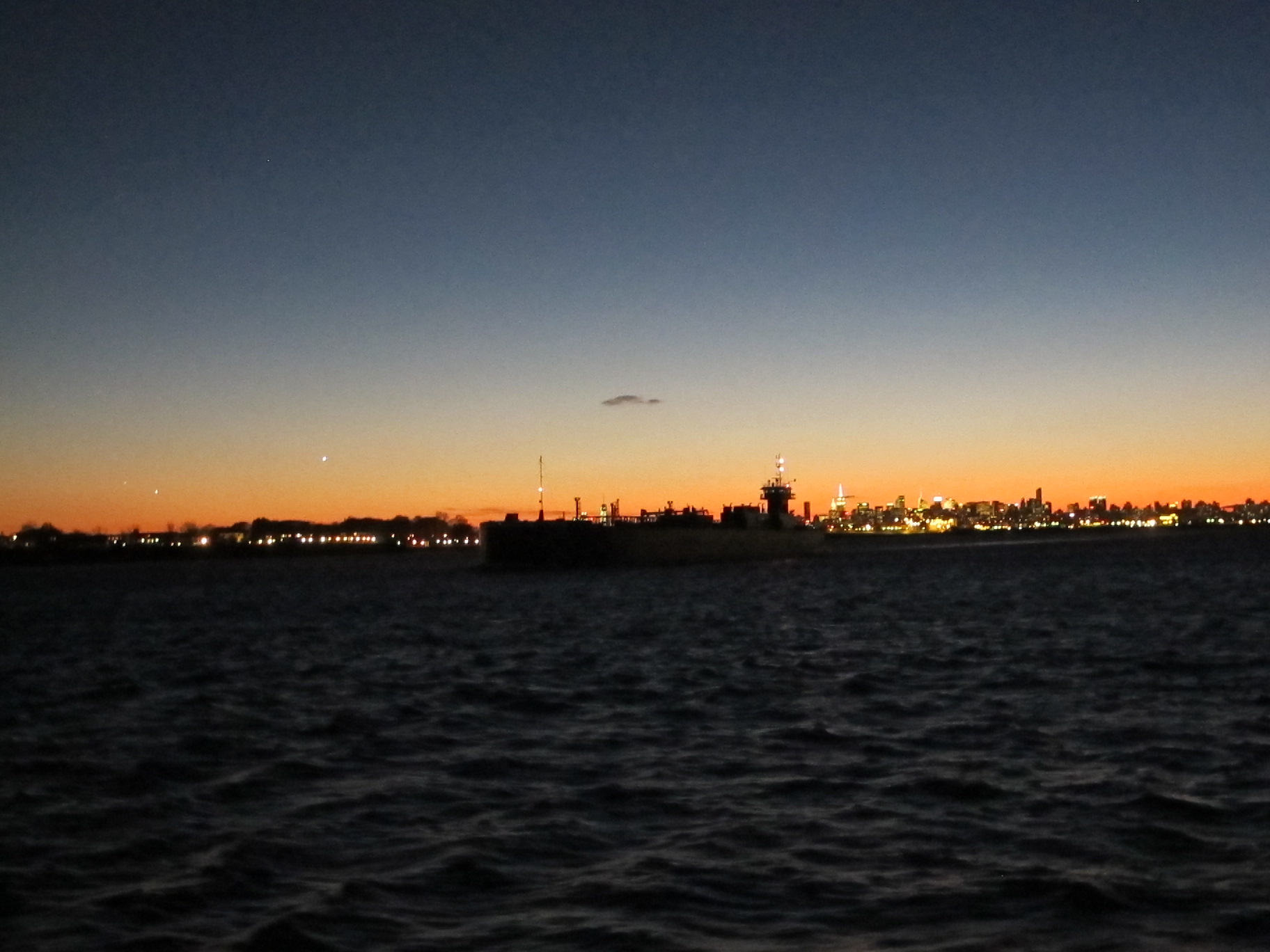
Some people call it New York; others call it The Great Satan. I called it The Empire of the Straight Line. Anyways, I knowingly went into the maw of a beast that I had previously contemplated and watched wearily from a distance. It is hard to resist anthropomorphizing the city into a slovenly, unhealthy, greedy blob that perpetually rumbles with indigestion as it greedily ingests and consumes ever increasing amounts of people, energy, and raw materials before belching, vomiting, and sweating out their waste forms in all directions. So I am not even going to bother trying. I am certain it would trade its grandmother into sex slavery for mid-level tickets to a Bruce Springsteen show at Madison Square Garden. It is an obsessive compulsive patient that strives to control everything around it and a self-admiring insomniac. It is left brain biased; possibly afflicted with Asperger’s Syndrome that manifests itself in an uncompassionate and grinding obsession with logic, rules, and order that create a create an awkward social environment.
This spring I left on an Amtrak bound for Salt Lake City via Chicago. As the train exited the station I got an erection that lasted for hours and made walking around the train a challenge. I did not socialize during this entire period, but it wasn’t really an optioon as there was yet no observation car.
I found an audience after leaving Chicago with whom I could share some of the sentiments and ideas that I had refined in New York – a recent college graduate from Wesleyan named Anna on her way West for the first time. She asked what I did when I was in New York. I told her that I founded and ran a non-profit called the Anti-Alliteration Alliance. That we worked to rid the earth of the societal scourge that is rude redundancy and vain verbosity through selling voodoo dolls of Wall Street executives. That being said, I told her that I didn’t want to talk about work though as writing was my passion and I wanted to share some ideas that I had been honing over the past few months. I gently began by explaining that our conception of history and society revolves around the idea of progress measured through material production and technological complexity – more speed, more mobility, more choice. That this gives the illusion that humanity has been on one continuous march towards a better future – effectively justifying the extermination of other cultures, environmental degradation, poverty, and the liquidation of millions of minds. That the quantifying logic of our material society demands exchange for everything, that everything be accounted for, and owned. And I informed her that it is simply impossible to question this conception of history from a materialist perspective that is so deeply socialized into us, as by its very nature it cannot assimilate all of the other essential human functions unless they somehow can be fit into a scheme of material production and consumption. I wondered aloud how you place a value on love or community or peace? I asked of her: Is not a civilization that finds peace, establishes equality, harmony with its environment, takes care of its young and old, meets the spiritual and material needs of everyone, and offers a deep sense of community a superior and highly productive society?
I posed the question of what the hypothetical destination is for this run away train? Is the apotheosis of our society to unshackle ourselves from the limits imposed by the natural world and to live free in the ceaseless hum and glow of a technological cradle strung together with wires and tubes that meet all of our physical needs? It would be the triumph of efficiency, production, and control. We would be machines within this system and corporations would still be people.
I confided to her that this logic needs to be supplanted, that we need to return to our roots in the natural, primal, and animalistic. That we needed a way to demonstrate the true nature of existence. I told her – with a glance in either direction at the baby boomers taking pictures incessantly with their IPads – that we could break with many of the implicit assumptions through ritualized sacrifice. There would be no exchange. There would be no material progress in the act. We would ritualize the reality that death and change are the fundamental characteristics of life. I told her that my idea was to start an institution where we would all sacrifice something that we loved – we would pile it together and set it ablaze. I could see her nervously wringing her hands in her lap. I self-consciously added that people and animals were not within the scope of this idea. Although maybe we could simply eat the baby boomers? I grinned and raised my eyebrows. It would solve a lot of problems as the tribute paid to the top of our pyramid seems rather unsustainable. I added that there would definitely be drums and dancing.
I casually mentioned that New York is the embodiment of this hyperrational, homogeneous, sterilized ideology. The rationality is manifest in the straight lines, in the ceaseless hum, in the endless efficiency, in perpetual striving towards nothing. I informed her that I was not a robot and consequently during my time in New York I regularly had to repress urges to run amok, howling through the logical confines lewdly waving my genitals like a blueballed baboon. I delved deeply into myself and told her that this stemmed from my curiosity and my bewilderment at the nature of existence. That I can see that there is something unknowable and immeasurable coursing through the molecules of everything on this earth.
I told her that the turmoil that we see around the world currently is a manifestation of the irreconcilable nature of our economic, religious, and political institutions and man’s evolving image of himself as an interconnected, monocrop set to overrun the earth. We now see our ability, from many different vantages, to shape our environment. We see the reality of the spaceship earth; interconnectedness and oneness is indisputable. A glimpse of the finite is seen in the confines of our spaceship. The only way to grapple with the problems that humanity faces is by turning inward, not towards technology, further division, and complexity, rather through finding a way as individuals to realize the inherent beauty, joy, and tranquility in simplicity. The perpetually striving and greedy individual mind needs to become a thing of the past. The future needs contentedness that stems from more creation, collaboration, sharing, learning, sex, music, dancing, movement of the physical body, family, and meaningful work.
Her face throughout the conversation seemed marred by an amalgamation of intrigue and terror. I assured her that I was unlikely to do anything in the immediate future.
I left for Colorado and slept outside for the first time in months; for six years I had slept outside for over a hundred days a year. I stared up at the night sky and saw innumerable stars. I realized that if my eyes were more sensitive the entire night sky would be white with light.
I left one morning from Hotchkiss to hitch towards New Mexico to visit my dad. I caught a ride with a lady named Brenda who had me ride the first hour in the back of her pickup bed, but then moved her arthritic husky to the back and invited me up. I reached for the seatbelt and she furrowed her brow before scornfully saying, “Oh you are one of those?” She was wearing her seatbelt though. She alternated pulls between Crown, Bud, and her pipe as she wove along the sinuous mountain roads and occasionally swerved off onto the gravel shoulder. The anonymity of hitching makes it a beautiful platform for storytelling. Brenda had two sons and lived for most of her life in Trinidad, Colorado. She ran businesses – a cleaning service, a thrift store, a small restaurant – and never made it clear if she had an old man. I glanced from her face to the road and felt a small pang of adrenaline each time she swerved outside the lines. Everything felt apart abruptly when her son was shot to death, her other son joined the Navy, and she went on the lam. I am generally a brick wall to sexual innuendo and subtlety, but there were enough overt references to her abysmal sex life to set off alarms. She shouted at an elderly lady hunched behind the wheel of a Volkswagen as she ran her off the road for driving too slow.
I got dropped off in Gunnison and began walking through town in flip flops. I chuckled with the realization that hitchhiking in flip flops had the benefit of being quite disarming as very few serial killers and rapists likely wear flip flops. So I was feeling pretty good about my prospects. I quickly caught a ride in a pickup with a guy named Brian who showed me the carcass of a deer that a snowplow had hit and launched high into the limbs of a tree. I ended up outside of Salida.
An old grey station wagon slowly passed and then stopped ahead. I jogged up and a gravelly voice billowing smoke said, “Take your time, no need to rush.” I tossed my pack in back and jumped into the passenger seat next to a grey haired woman in a peasant dress with a cigarette dangling from the corner of her mouth.
“Joy.”
“Alex.”
She guided the car up the pass and into the barren and expansive San Luis Valley. She was from Vermont, but had lived out West for a few decades and currently lived in a strange community called Crestone that lay against the mountains near the Great Dunes National Park. It was an intentional community that had never fully developed – a still born hippy dream. Maybe it lacked intent. She at one pointed lived there for a year without any water or power. She had slowly converted a yurt into a permanent structure. She lit each cigarette with the fading ember of the last and carefully answered all of my questions.
“Here and there a few people come into the community and cause trouble. We drive them out ourselves – there are no police there, they never come out our way. Sometimes we have to organize posses, you know, without the horses and rifles, but still a posse, to run ‘em out.”
“What do you do for water and food?”
“Well there definitely isn’t an abundance of either. We get by. There are some wells. We aren’t too sustainable though; we can’t really grow much this high.”
I got dropped on a desolate stretch near the Crestone turn off. My next ride was with a young guy named Dirk who was red-eyed and giggling from the moment that he pulled up. He cracked up at anything that I said. I never could really ascertain why he was out in this area, but he rambled on about exploring some formerly productive mining claims.
I ended up on the roadside in Alamosa. I quickly caught a ride from a guy named Carlos who was streaked with tattoos. I liked him the moment he opened his mouth though and we kept each other laughing. He talked freely and frankly about his time in prison for grand theft auto. He took hits off of his dugout pipe and waxed poetically about turning his life around, the history of the area, his family, and love. He went out of his way to show me the oldest church in Colorado.
I couldn’t find a ride in Conejos as darkness descended. I stood on the roadside next to an abandoned building as the desert wind buffeted and chilled me. My dad ended up picking me up. I lay on his floor and listened to his erratic breathing punctuated with gasps and coughing; he sounded like a dog chasing something in a dream. I wondered what was breathing? He got up at 4:45am in pitch darkness to head to work each day. He then came home late and drank wine with abandon. I wondered later on what it is that he is chasing in his waking dream?
I missed the tranquility, space, uncertainty, heterogeneity, and inherent joy of nature. I missed life’s adventure. I learned that a long distance relationship with the Milky Way doesn’t really work; you have to make eye contact at least occasionally. I had time to slow down for the first time in months. Suddenly I saw that the tempest raging in my mind was just cancerous thinking in which our society was mired metastasizing, a useless and ceaseless spinning of gears. I thought that I would never assimilate into New York, but it colonized my mind instead. If you don’t know who the maniac is on the Amtrak within the first few hours – it is you.
For years I would go downstairs at night to fix myself an outsized bowl of cereal. I found a strategy that was foolproof in preventing any harm from befalling me over the years: as long as no one knew that I was scared, then no harm could befall me. I would, exuding tranquility and lack of concern, descend the stairs and walk into the kitchen on the first floor with my heart racing. I would prepare the bowl of cereal, careful to not take any concerned glances at the impenetrable darkness in the windows and to ignore the floor that creaked with my steps. There were innumerable presences whose actions depended directly upon mine skulking beyond my periphery. I would calmly ascend the stairs, but with a little additional quickness added to my step. When I stepped off the plane in Salt Lake last week I felt similar to how I felt when I had made it to my room safely with the bowl of cereal. I no longer had to be scared and pretend.
On Saturday snow began falling early in the morning with wind blowing it sideways. I rode up into the cloud shrouded mountains with my brother and sister to do one of the most amazing and ridiculous of things: skiing. It makes no sense, it is like being a hampster on a wheel. It may have been the low light or lack of depth perception, but I felt as if I was floating. I felt weightless on a white cloud with everything else blotted out through its sheer brightness and uniformity.
I saw a few old friends on the mountain and at dinner who crushed me in hugs and laughed as I unselfconsciously rambled at a mile a minute about skiing, New York, relationships, writing, reading, and work. Friends and family piled into my mom’s apartment to make pizzas and have a few drinks. It felt like a summit of immeasurable importance as we made light of our uncertain futures, poor choices, hopes, and fears. We reminisced about life and the years that had passed. We tossed logs in the fireplace and howled in laughter.
One of the stories that came up during the night was that of the Blue Sisters. With the years memories seemingly pass through a sieve comprised of irregular holes that incomprehensibly let some things drop away while others remain. The Blue Sisters saunter into my mind as unpredictably as they did as hooded apparitions into our neighborhood many years ago.
There was slightly less than a decade left in the millennium when I first encountered the twins. I remember waiting at the bus stop with my dad and brother. They came walking towards us in matching dark blue hooded sweatshirts with the hoods raised and framing their faces. We didn’t grow up in a neighborhood where people were friendly or for that matter even knew who most of their neighbors were. No words were exchanged between us as the two walked side by side, pushing a baby carriage. The traffic kept rushing by on Waukegan Road, filling the silence with the whir of tires. As they passed I looked into the carriage, which wasn’t far from my eye level, and saw several cats lazing in a cocoon of blankets.
As these encounters became routine, we became perplexed. They didn’t look like they were ready to go to work, as they were perpetually shrouded in sweat suits, and nobody walked around our neighborhood except with a very clear purpose or in the case of emergency. We found these peregrinations to be ominous and bizarre, even without the addition of the stroller cats.
My brother and I whispered as they passed. Witches. Satanists. Sacrifice animals. Entire house is a litter box. Pet cemetery in their yard. Raise animals to eat them. Drink own pee. Spent time in mental hospital. Child drowned in pool behind their house. Walls covered in carpet. We spun fantastical explanations for local phenomena that implicated the sisters. We talked to other kids, trying to grasp what we were dealing with. We talked big, plotting flaming bags of feces and fireworks through the mailslot. We kept our distance though, as it was preferable to all parties involved that the sister’s remained a mere object of speculation.
My family was the closest thing that Lake Forest, Illinois has ever had to carnies or hillbillies. We lived on the West side of town, where no blue blood would dare reside as people there had to shamefully work for their money. There were six of us kids, a family unusually large for a community of miserable heirs and striving, anxious professionals. We put additions on our house with our own hands. We had a pig that came inside to eat in our kitchen that we predictably named Wilbur. We had chickens, including a fighting cock named Sunny who was involved in three separate traffic incidents; I still laugh imagining our neighbors stepping out of their German sedans with their brows furrowed as they examined the bloody, white squawking animal that would have been as out of place than a black person on our street. Sunny recovered each time. I would tell other kids that my dad was drunk at a cockfight in Waukegan and bought it after it won a six round bout. We had rabbits. We raised grey squirrels. Chipmunks that invariably escaped and homesteaded within our walls to my dad’s chagrin. Birds. Turtles. Snakes. We built tree houses and forts, complicated eyesores that our neighbors called the city building inspector over. We shot guns in the backyard, at bee’s nests or at the boxes on the telephone pole. (We knocked out phone service to the neighborhood one time and I remember lying to the man from the telephone company while my parents were at work after he inspected the bullet riddled box.) My brother and I played with fire regularly and held pissing contests off of every highpoint within a several mile radius.
We were also the type of people that refused to leash our dogs. This led us into frequent confrontations with our neighbors. One of our neighbors was a prominent architect at Skidmore, Owings and Merrill that my dad always described as ‘being so uptight that you could put a lump of coal up his ass and in a week you would have a diamond.’ One day my mom answered the door and he stood in front of her with a gnarly, yellow streaked dog turd on a piece of fine white china. He said, ‘Your dog left this in my yard.’ My mom offered an insincere apology while quickly closing the door to stifle back her laughter. Our laughter poured out the open windows of our un-air conditioned house as he walked down the driveway.
One halcyon fall day, my brother, sister and mom were walking with our German Shorthaired Pointer named Belle. We stopped in front of the Blue Sister’s house to inspect a pentagram painted in red on their mailbox when Belle decided to squat with quaking haunches over their front lawn. We had to continue walking down Ashland Road as she would refuse to make eye contact and hurry through the act if we did not give her privacy. We heard unintelligible screaming come from their front door, but continued on our way. Belle casually trotted up with us as we were in the midst of discussing the other weird people who lived in an underground brick pyramid of a house at the end of the street. Suddenly, we heard a car coming up behind us at a rapid speed, its engine roaring. We saw a brown Crown Victoria coming at us and we moved to the curb, but something didn’t seem right as the car was going too fast and seemed not to acknowledge our presence.
We hopped into the grass and the car narrowly missed hitting us, an unintelligible howl of language came out the windows at us. We saw the matching dark hoods as they passed. They quickly turned around on the round-a-bout and boomeranged back at us. We were well clear when they flew past in a flurry of tongues and tire squealing rage. We took a back route home and kept looking over our shoulders as we huddled against my mom for safety.
We didn’t know who actually lived under the hoods until we called the police. The police arrived at our house and spoke candidly with my parents about the Blue Sisters. Lake Forest handles legal issues in a different manner, always trying to handle them with a certain amount of discretion. We were told how after a call from a neighbor, the police had staked out the house for several days, waited for the sisters to leave, then freed their mother from a chair to which she was tied and took her into state custody. At this point the police found hundreds of cats and walls painted with pentagrams and other errata. They learned through various encounters that the sisters spoke some sort of ‘satanic language.’ We were told to stay away as the police wanted to do the same.
My dad realized that he had attended highschool with them and had almost asked one of them to prom. He remembered them as cute blonde cheerleaders who were a little odd. How life weathered them into such oddities will remain one of life’s mysteries.
My dad has a penchant for novel, passive aggressive solutions to problems, like using a cell phone jammer to silence other passengers on public transportation. The following morning he waited at the bus stop with us, Sony Handycam in hand. He had decided that videotaping them would both provoke them and provide us with a modicum of security. They walked towards us on the sidewalk with their cat carriage. My dad hit record, aimed the camera at them as they approached on the narrow sidewalk, and we sat in quiet anticipation. He panned with them as they moved and it almost seemed like nothing would happen until one of them exploded. One of them started screaming in the devil’s tongue and the other was yelling for my dad to shut it off. He kept taping them, morning after morning, until they stopped coming past.
Another day we were playing baseball in our neighbor’s large front yard when my dad saw them walking past on the sidewalk at the far end. He quickly grabbed the bat from me and then several baseballs. He proceeded to toss up balls and hit fungos and line drives at them. We laughed and loved him for these antics. Then, one day they were just no longer around. A year or so later my dad stumbled across a newspaper article detailing their arrest with dozens of cats living in a van.
As I sat with friends and family collectively weaving stories and nearly crying with laughter, I suddenly understood life. The questions of purpose and direction that vexed me in New York seemed meaningless, laughable in this moment.Everything seemed laughable as I had everything that anyone could ever want. These dreamers, these cynics, these wanderers, these weirdos are all that I believe in. I love you all.
At the end of November I had been out of work for a while and as much as I would like to use my outsized brain to trap or spear animals, to hew a home out of the forest, to break stallions, or to cultivate a field, I was forced to accept that this was not a realistic possibility at this juncture in my life. I got a call from a friend asking if I wanted to do some demolition work for a few weeks here in Brooklyn. I impulsively answered, ‘Yes.’
After moving to New York from Guatemala I had been doing a lot of thinking and I felt a little unstable, like I was on the verge of something. My mind did sommersalts and wove itself into knots; it vomited forth and then became constipated. It is just what my brain does sometimes. It isn’t always clear what has emerged from turmoil such as this, but I came up with something and wrote it down. Here is an account of breaking down both physical and theoretical walls and finding something beautiful in the space that was left.
The strangeness of New York and its complexity was reflected in the job itself: I worked with a Croatian who has been here five years named Mate (accent on the e) and a Muslim from Burkina Faso named Ibrahim who had been in the country for less than a year. Mate lived in Queens, had two kids and a wife who was an English teacher. Ibra, as I took to calling him,was younger and was working to make money for his family in Burkina Faso. He was a married man and was saving to bring his wife over someday. Ibra had no papers and Mate had just received his green card. I amused myself by thinking of myself as an indigenous immigrant.
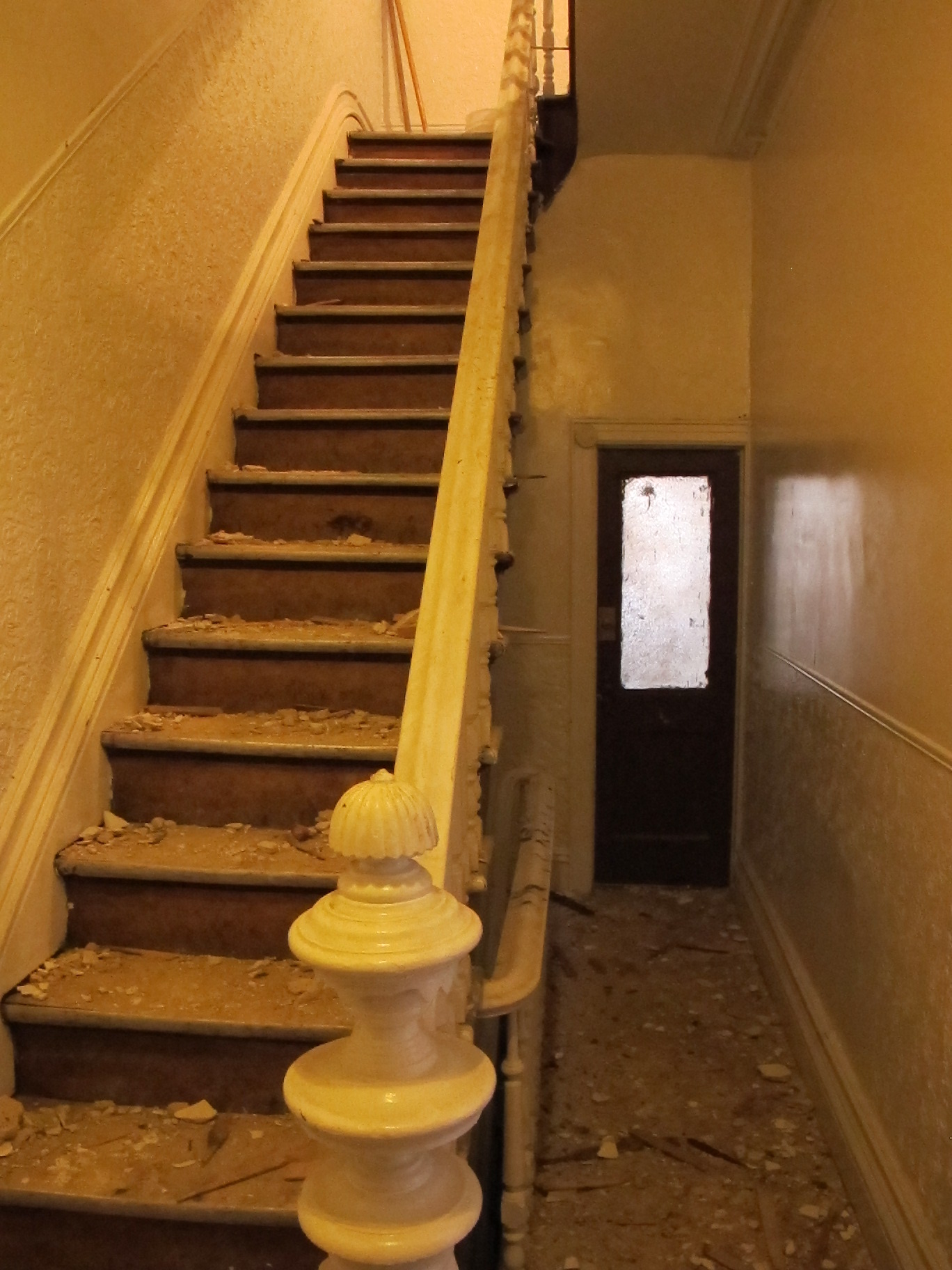
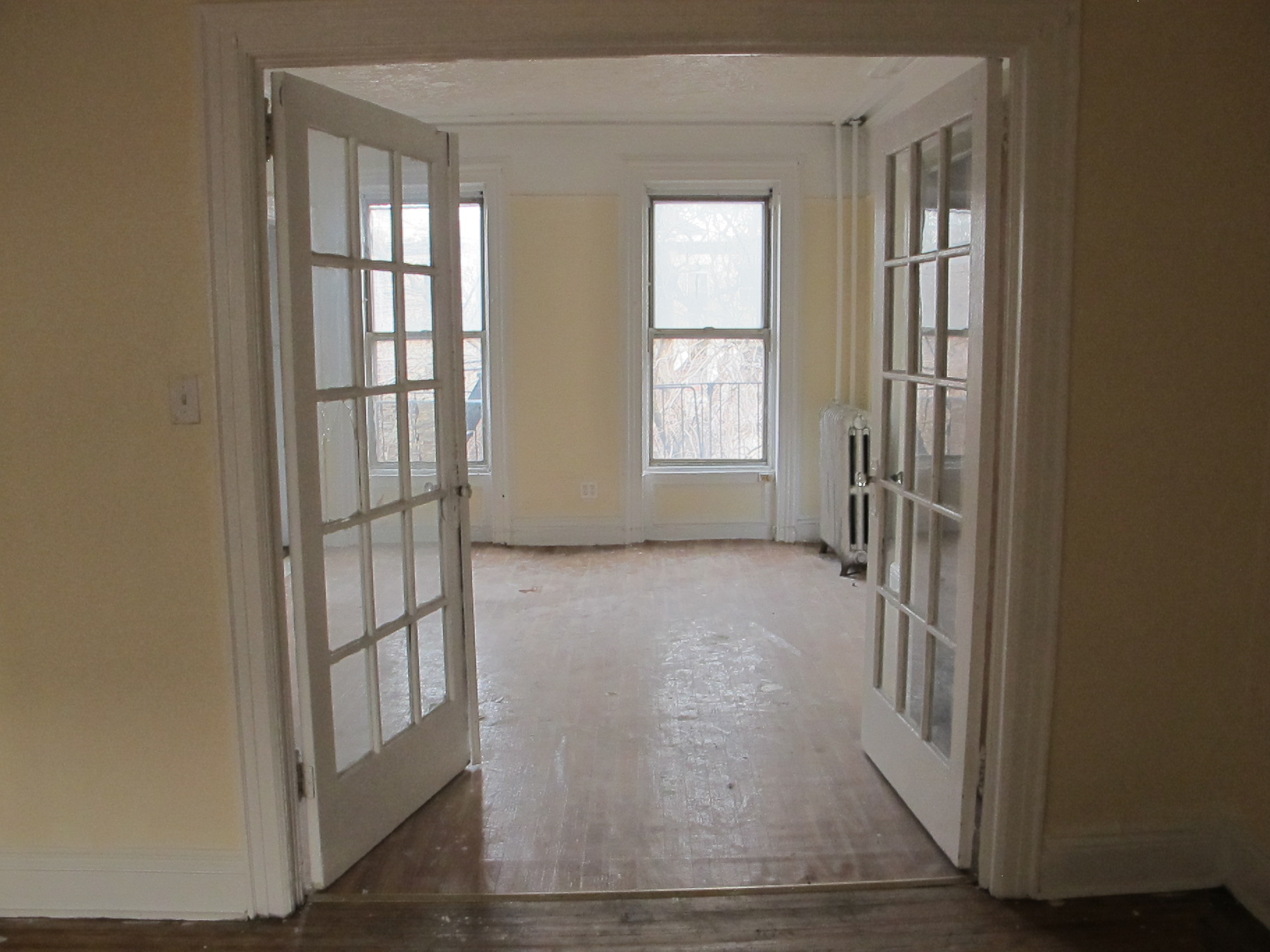
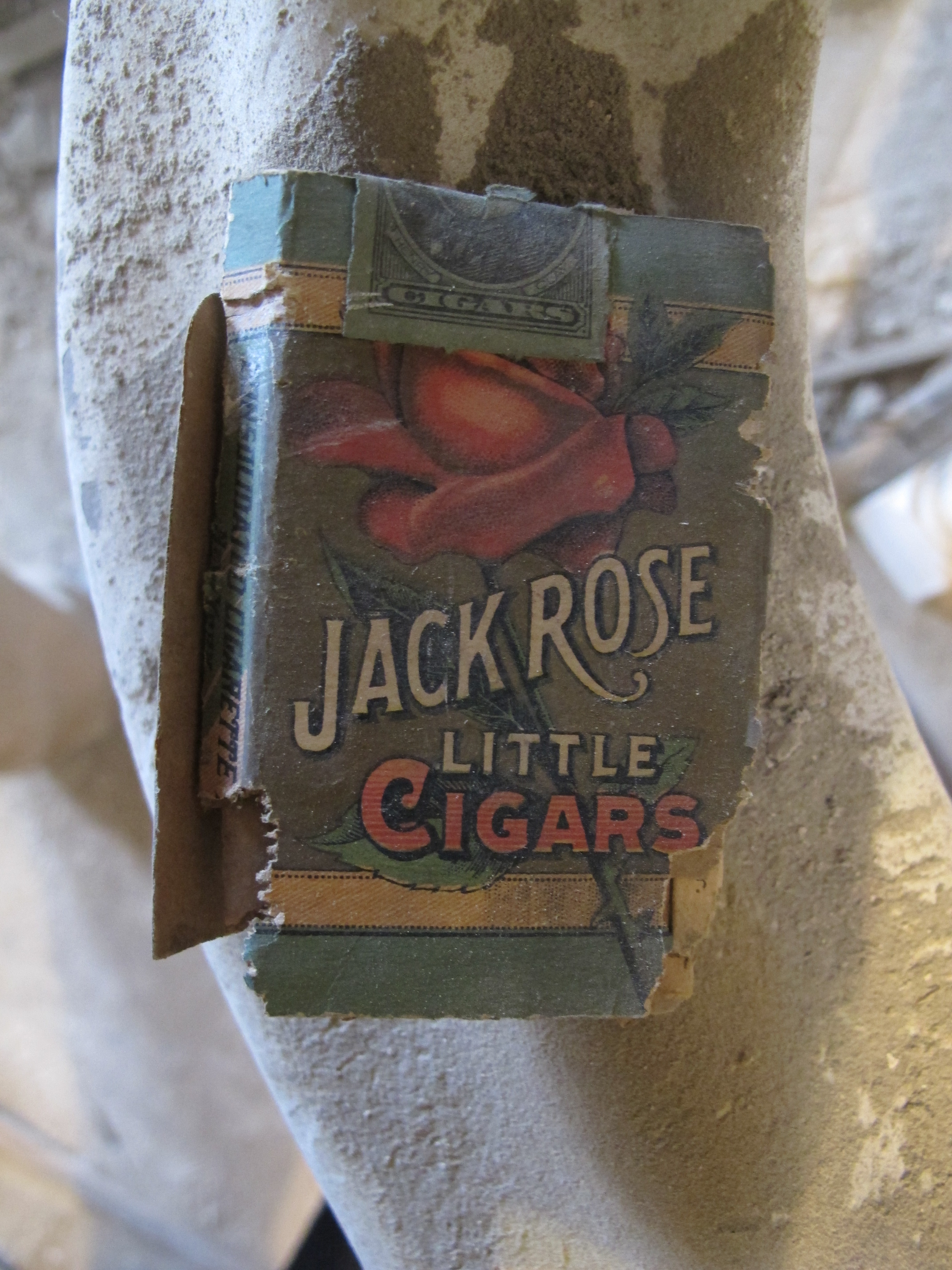
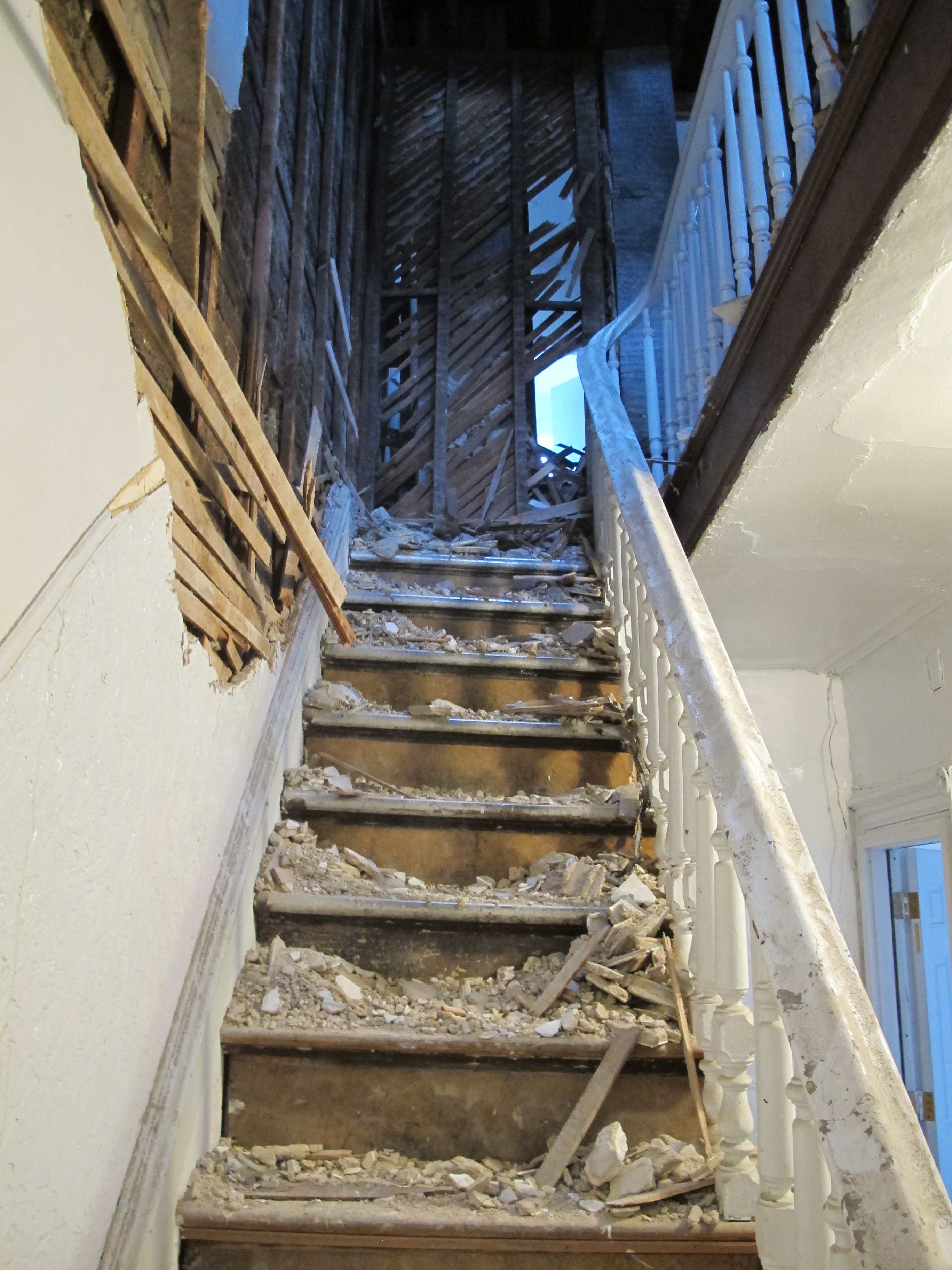
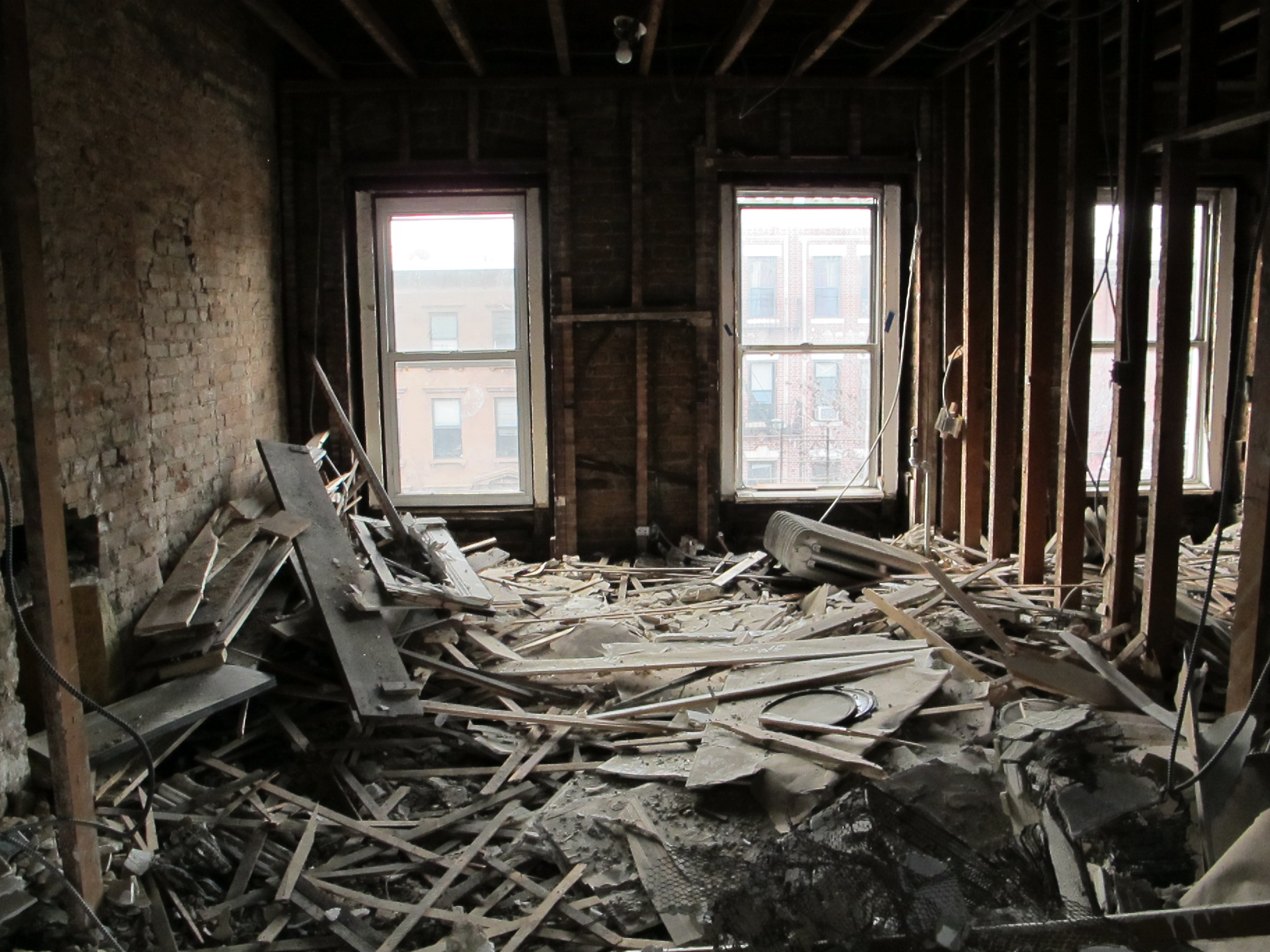
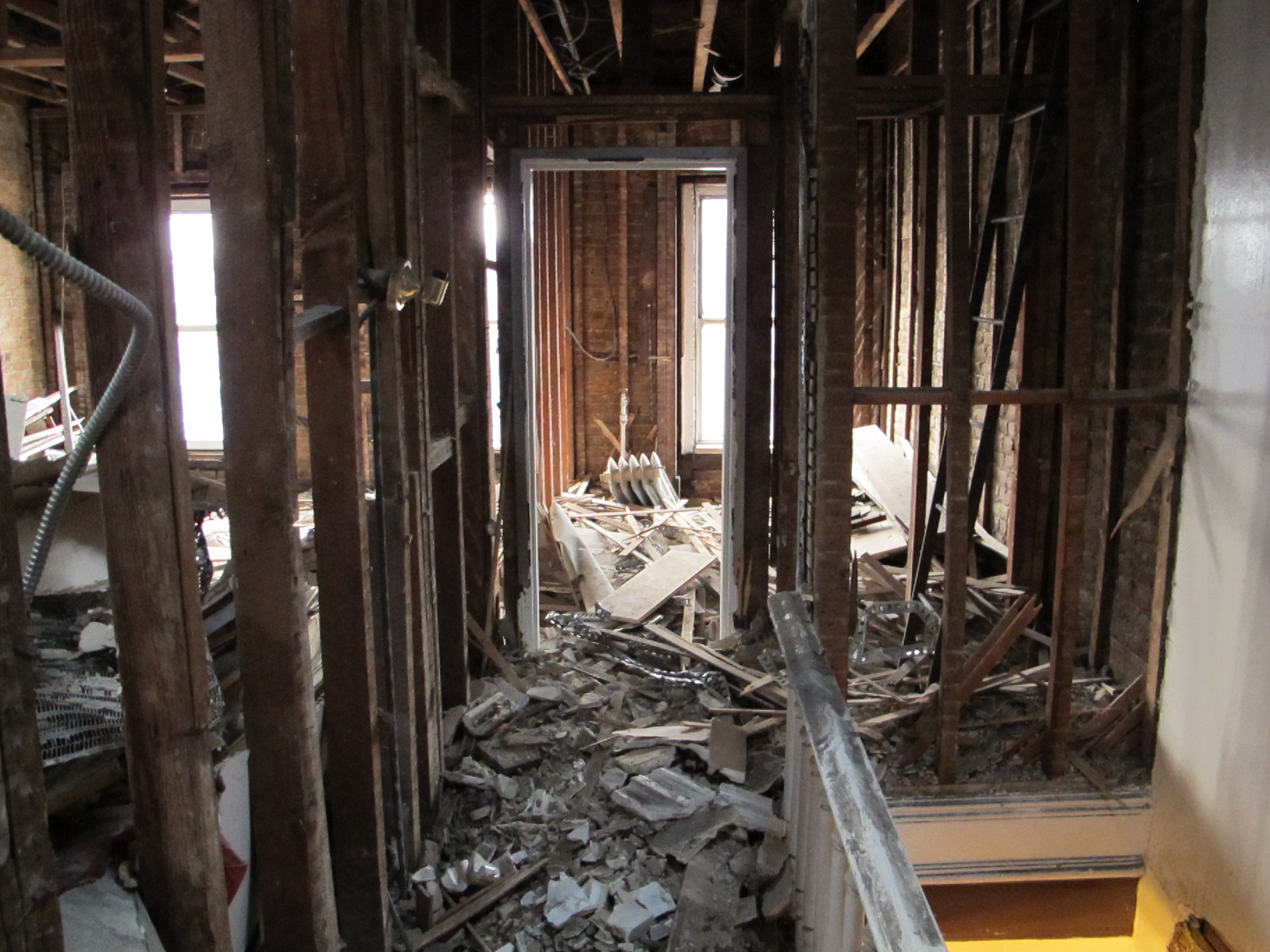
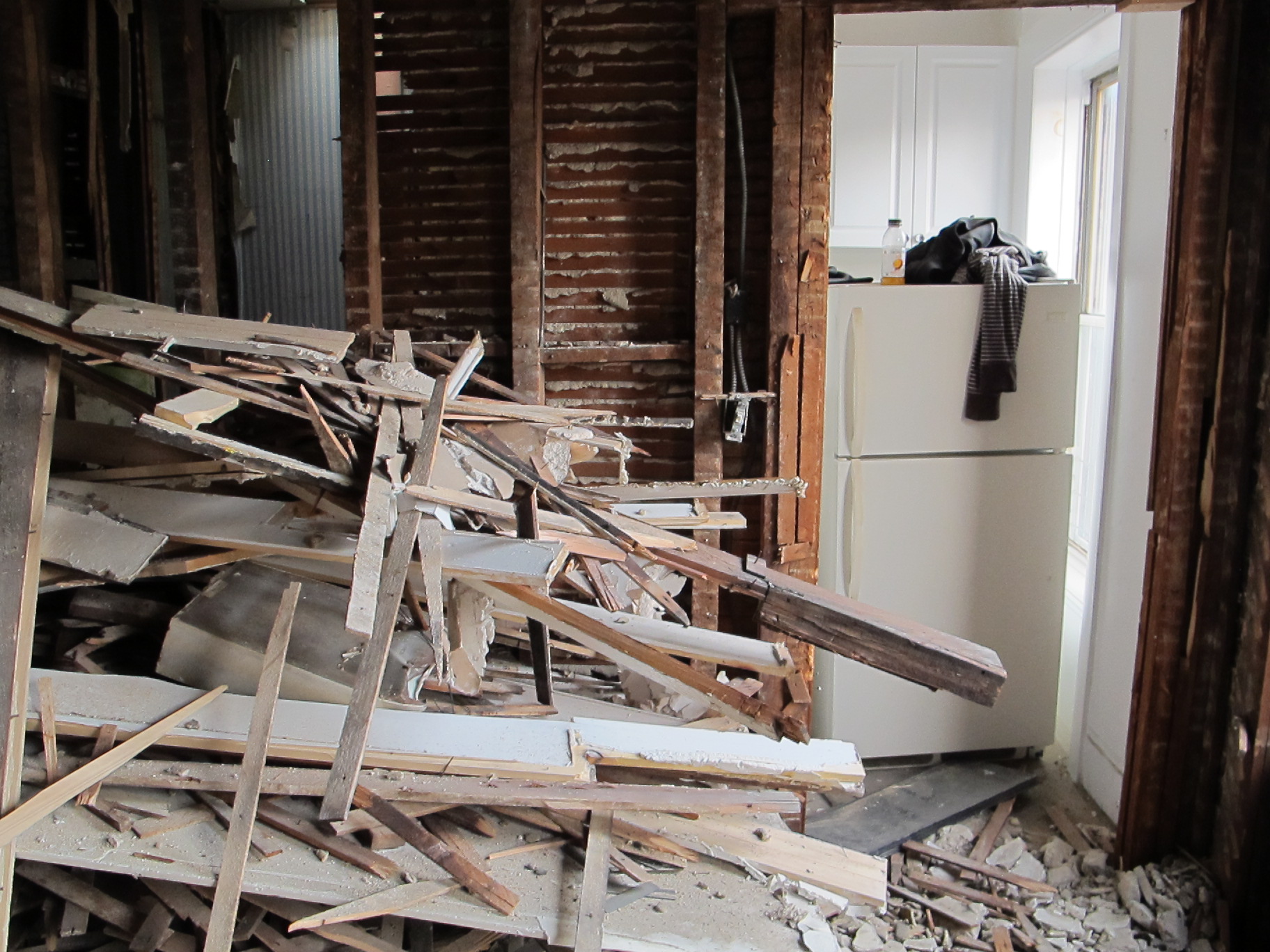
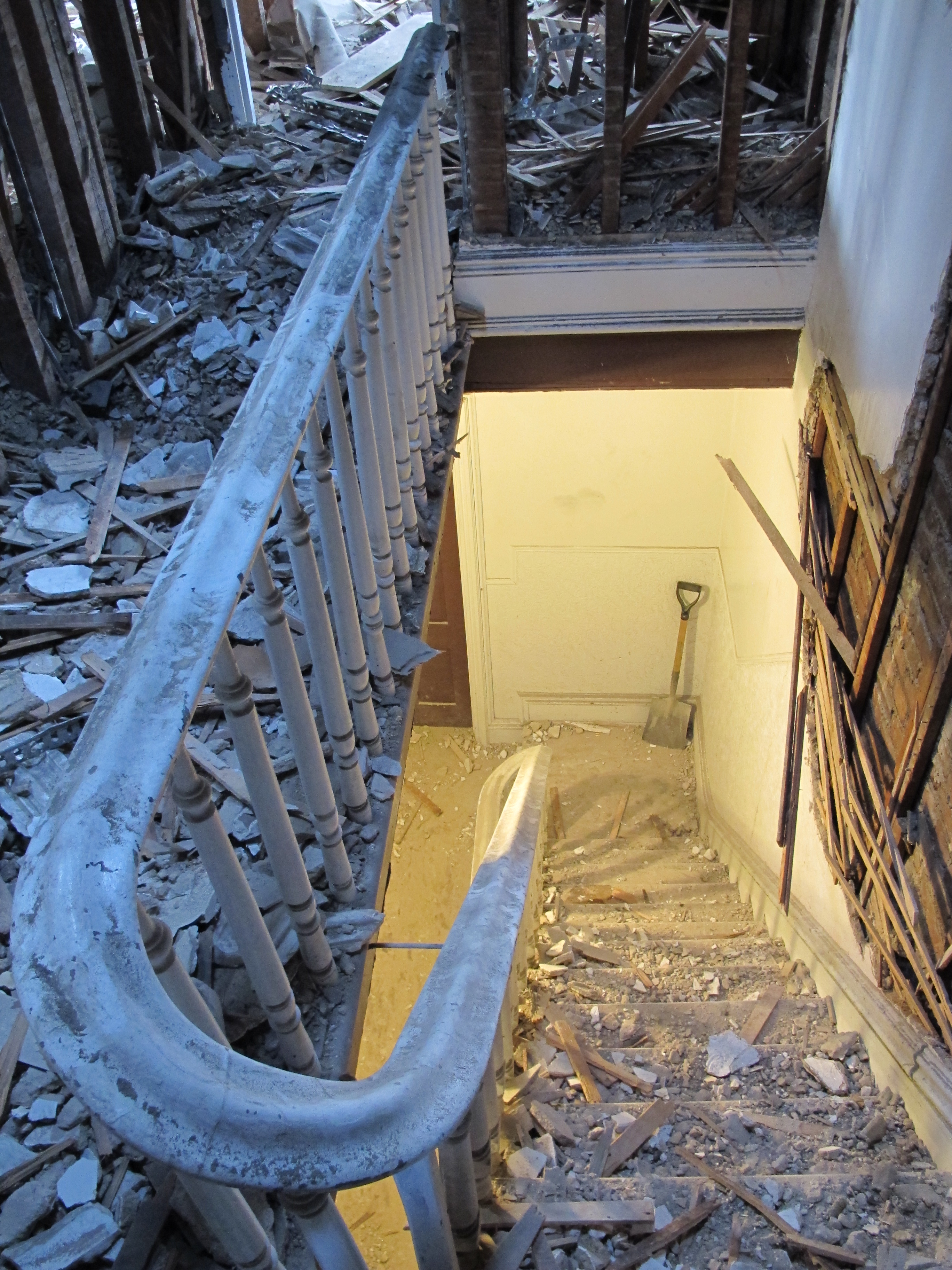
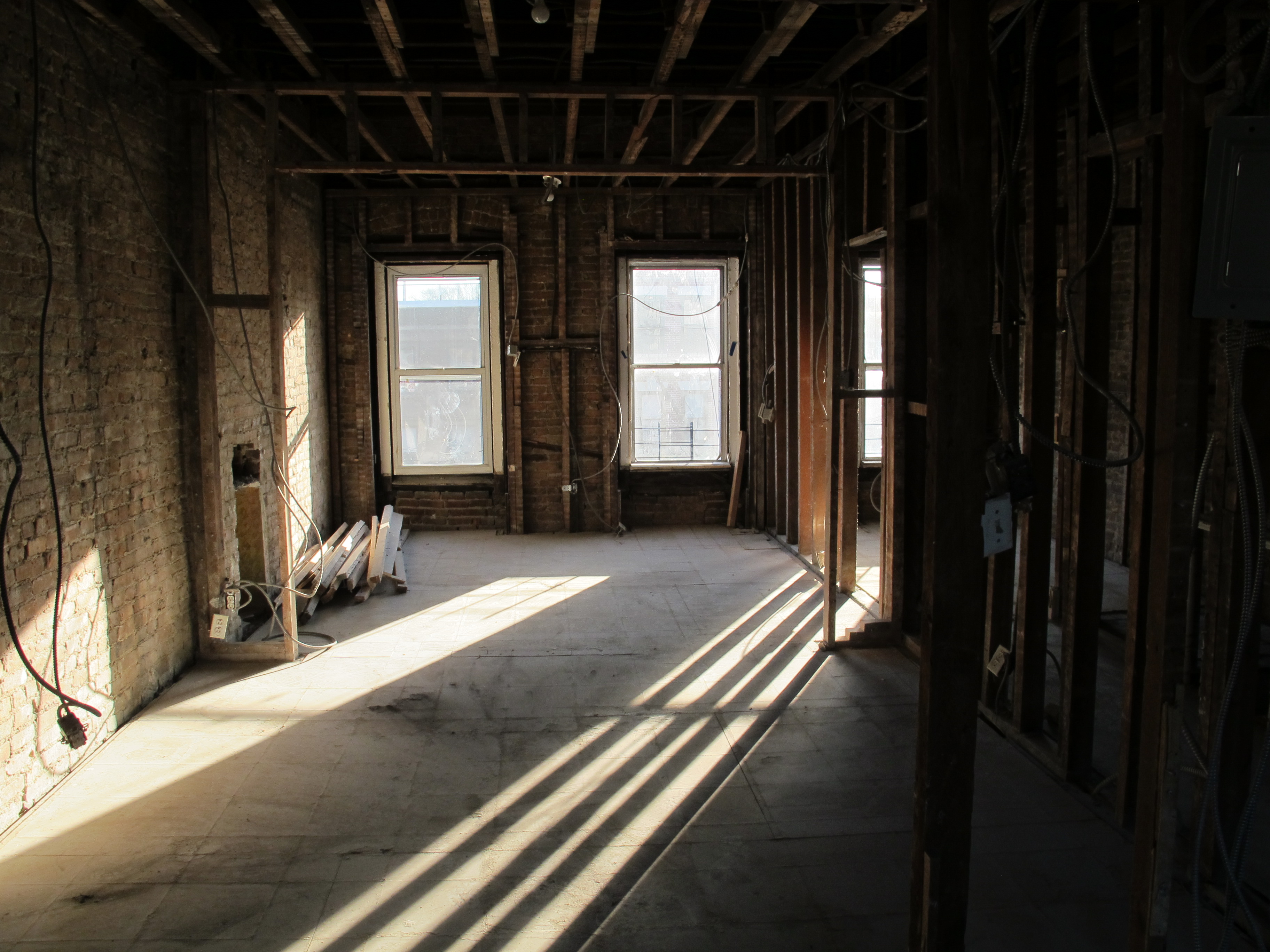
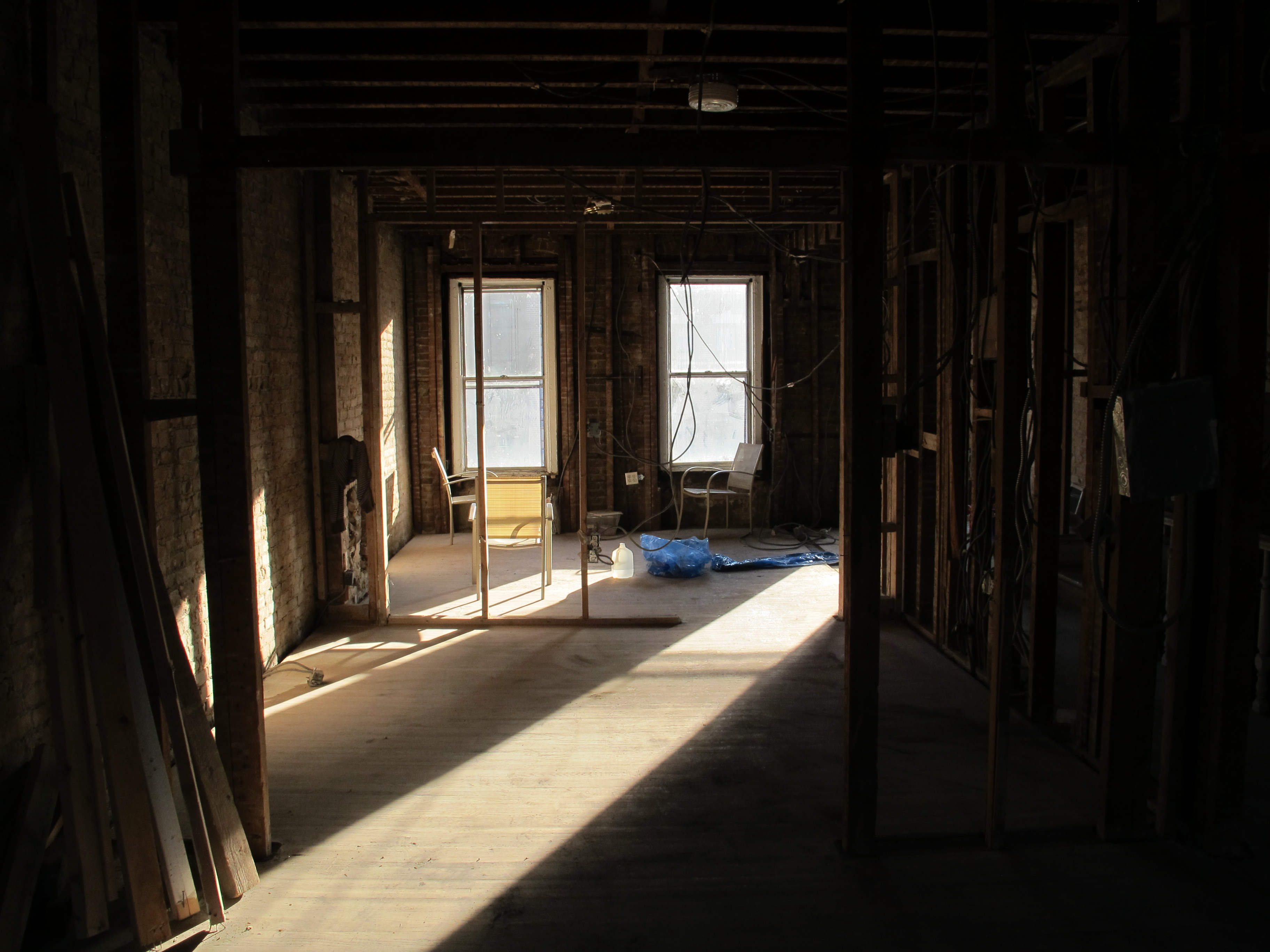
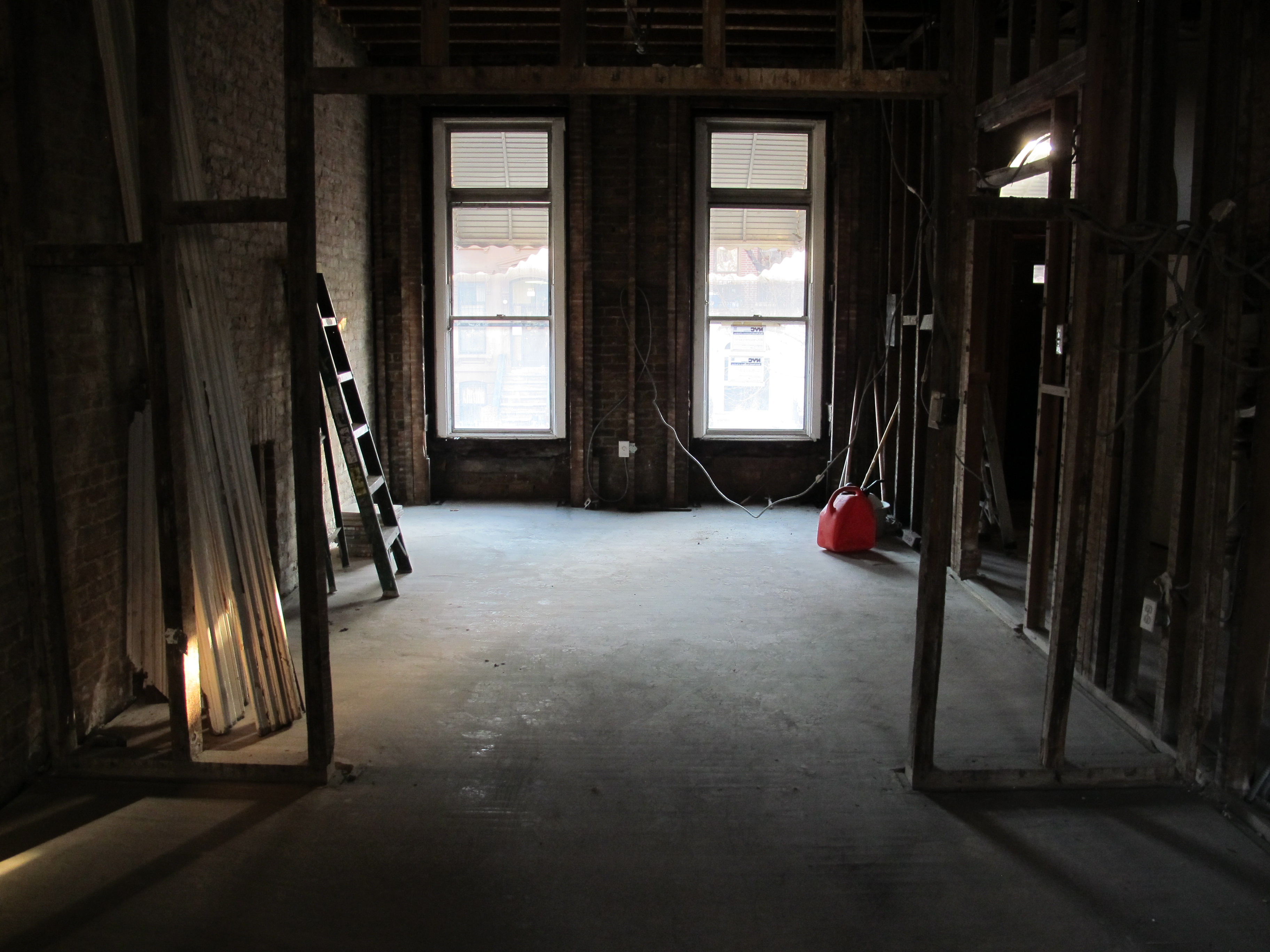
Our task was to demolish a four story brownstone, meaning that we were to gut out the interior down to the structure. I initially walked into the house wanting to decry the waste of our modern obsession with continually reinventing ourselves, but the reality that I came to see, was that the house was a shithole.
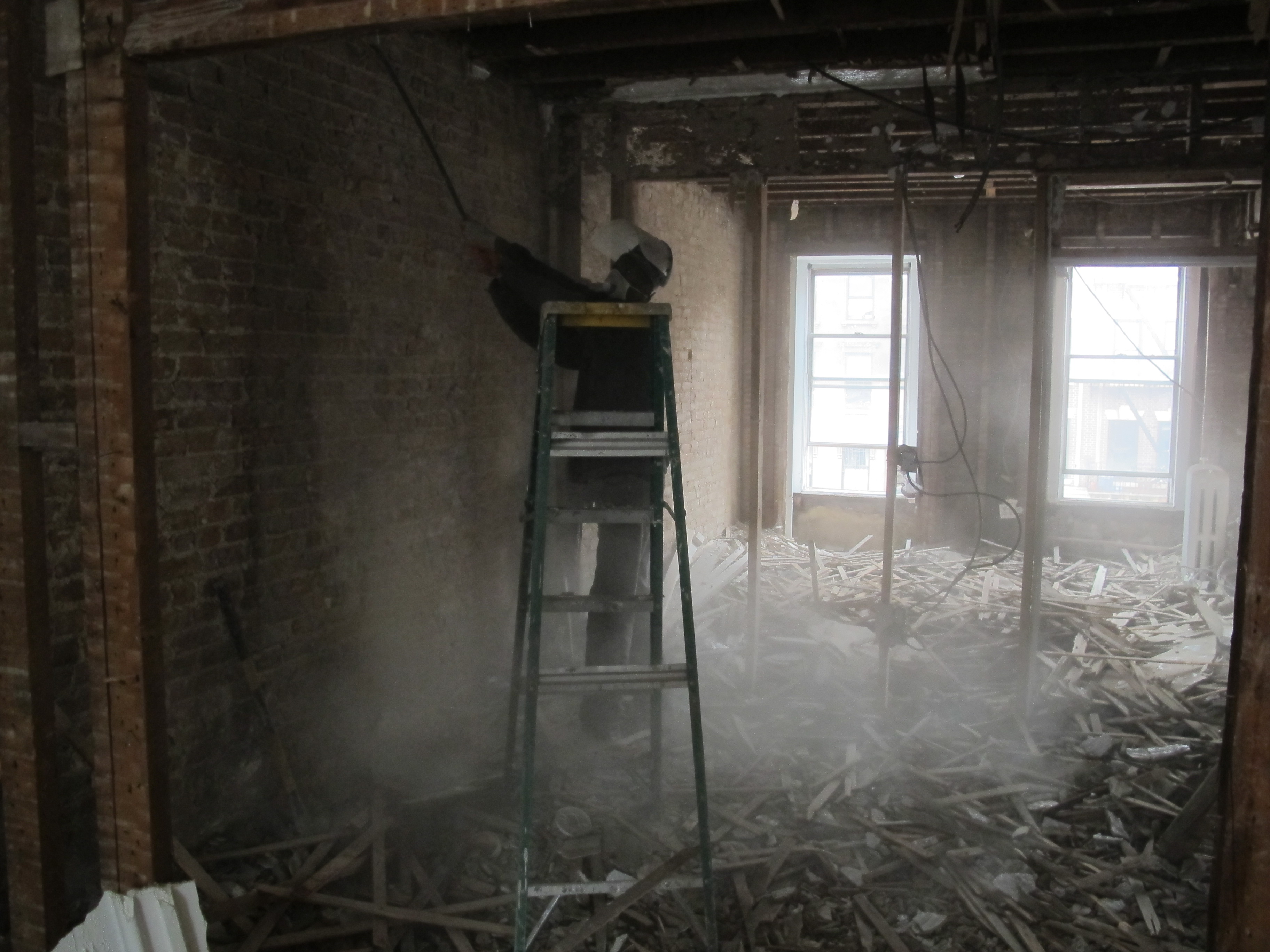
On the first day, I grabbed a crowbar and a sledge hammer and set to work without much pomp or circumstance. I swung the sledge and softened the walls and then dismantled them with the crowbar. The drywall shattered, cracked, tore, pulverized. The wood cracked, splintered, screamed as it twisted and clattered dryly as it tumbled to the floor. It was not long before I was several feet deep in debris, panting, coughing in a cloud of dust with wires dangling in my face.
As I pulled down the first of many ceilings, huge chunks of drywall shattered on my head and tumbled to the ground. Construction refuse, newspapers, and panes of glass all rained down upon me. A strange black soot that had accumulated over the past hundred years billowed from the ground after cascading down on my face and through my hair. Some chunks flew out the open window as I swung, tore, ripped, mangled, and mashed. I poked my head out the window and feigned concern for any onlookers, but only once.
I ended the first day blackfaced. Ibra actually became whiter. We laughed at each other. The shower at home ran black and my eyes burned and my hands shook in exhaustion.
As the days passed, we worked our way down from the top floor, breaking everything and then hauling it down to the truck that we fought to park. We loaded buckets full of plaster, hauled them down the stairs, and loaded them into the truck. We worked six days a week. 8 to 4:30 for five weeks. I initially thought about how much I liked work like this as I didn’t have to think. I just had to use my body and whittle the hours away. For better or worse, this left plenty of time to think about other things.
Here are some things that I remember:
Ibra constantly waved his cigarette in the air, using his hands to gesture, while indiscriminately intermingling French and English. On a seemingly hourly basis he stopped to chain smoke and lecture me on the perils of working too hard. We eventually warmed up to one another and I found myself intentionally prolonging lunch each day by asking questions so that I could sit in the warmth of the sun that streamed in through the window for a few minutes longer. Mate frequently recounted stories of atrocities from the wars the ravaged the Balkans in the 1990’s. The deaths of his friends at the hands of snipers, his sister nearly dying from a missle strike, ethnic cleansing, the massacre at Srebrenica.
‘Are you going to bring your wife over here?’ I ask Ibra in slow, patronizing English.
‘If I get papers.’
‘How do you get papers?’
‘I don’t know. There are ways.’
Mate spoke up, ‘Most of my friends, immigrants from Croatia and Poland, got their papers through marriage. It is incredibly expensive now though. When I arrived five years ago you could pay a woman 4100 dollars, but now it is up to 12,000 dollars.’
‘So this is common?’
‘Oh yeah. It is good business. One person makes money and the other one gets papers.’
‘You have to find the right girl. I know one girl that my friend married. Always calling for money. Always want money. She is no good to this man,’ Ibra countered.
‘Some people are better than others. My friend has married three different girls for money. He went back to visit Serbia and fell in love with a girl. He was already married though and had to stay with that girl. So he paid his friend to fly to Serbia, marry the girl, and then come back with her.’
‘He paid his friend to marry a girl he was in love with?’
‘Yeah! And bought him a ticket home!’
Another day Irba and I were looking out the window and I saw a man feeding his chickens food scraps.
‘Look….chickens.’ I pointed at them.
‘You know…Those are the first ones I have seen here in America. The first chickens.’
‘Really?’
‘Yeah. You only see dead ones. The meat, never the chickens.’
‘There are some here. My girlfriend has 28 of them.’
‘Now that is a good girl.’ He said this earnestly, but we both laughed.
One day I sat in a patio chair in the half demolished living room of the first floor, transfixed by water cascading out of the ceiling and spattering upon the dusty floor as Mate disconnected radiators.
Sometimes, for fun, I used the sledge like a battering ram or swung the crowbar like a baseball bat.
One time I stuck my head through a hole that I punched in the wall and twisted it like Jack Torrence.
A dog pooped directly behind the gate of the truck. I stepped in it, Ibra stepped in it, I smeared the bottom of a trashcan through it and then Mate touched it with his gloved hands, I rolled the handcart through it. I dumped a small amount of drywall dust on it with the hopes that it would work like cat litter. I then giggled as Ibra saw me do this, thought it was a good idea and got carried away; he dumped his buckets all over the pavement making a massive mess.
Most days our banter faded as we got into a taxing rhythm of work. In these moments I got unadulterated solitude to focus pointedly on my existence.
One day I leaned over and tilted my face to look in the mirror of the truck and was greeted by two red embers staring back at me from a bearded and lined black face. It precipitated a strange reaction, the reagents of which were being stockpiled over previous weeks: Who am I? What are you doing? Are you crazy? What is all of this about? Am I a meth head and I don’t even know it? What am I going to do with the rest of my life?
Each day I looked on as well-heeled couples leisurely strolled by and young people sat on stoops smoking cigarettes. Often they glanced at me and then averted their eyes. Who are these people? Are they smarter than me? Do they earn a fortune staring at computer screens? Manipulating numbers? Selling more products that no one actually needs by pandering to their innermost dreams and hopes?
Pangs of bitterness coursed through me often. My thoughts whirled around myself: I have many talents and skills, yet this is how I was spending my days at age 29: demolishing the interior of a house on an illegal jobsite in unregulated conditions, sucking in my air through a mask tinged gray with dust as I hauled buckets of trash all day? Look at you now. Did I actually have any talents or skills? Am I just an idiot who cannot recognize his station in life? Like a goose that thinks it is a swan? Everyone else seemed so relaxed, moneyed, and secure.
I found myself despising New York for all its glaring inequity and crassness. I cursed myself for coming here, for deliberately throwing myself into what is the antithesis of my values in many ways. I felt stupid.
My rational brain frequently structured thoughts like this: If I was more _______, I would __________.
I wrote this down: ‘This building is a bombed out hell.’
Still, I tried to lose myself in my work. I used phrases that angry old men used to describe what I was doing like ‘putting my nose to the grindstone’ or ‘keeping my head down and working through the winter.’ I would also try to release the inner turmoil physically: I would I run at a wall and kick my boot through, trying my best to relish the explosion of wood and brittle plaster that resounds on the floor. I eviscerated the snaking conduit arteries within the walls. If you can imagine, the joy even evaporated from these antics.
On cold days, I had to work even harder just to stay warm. I mused that maybe this was a forced labor scheme learned from my boss’s previous life in the former Yugoslavia.
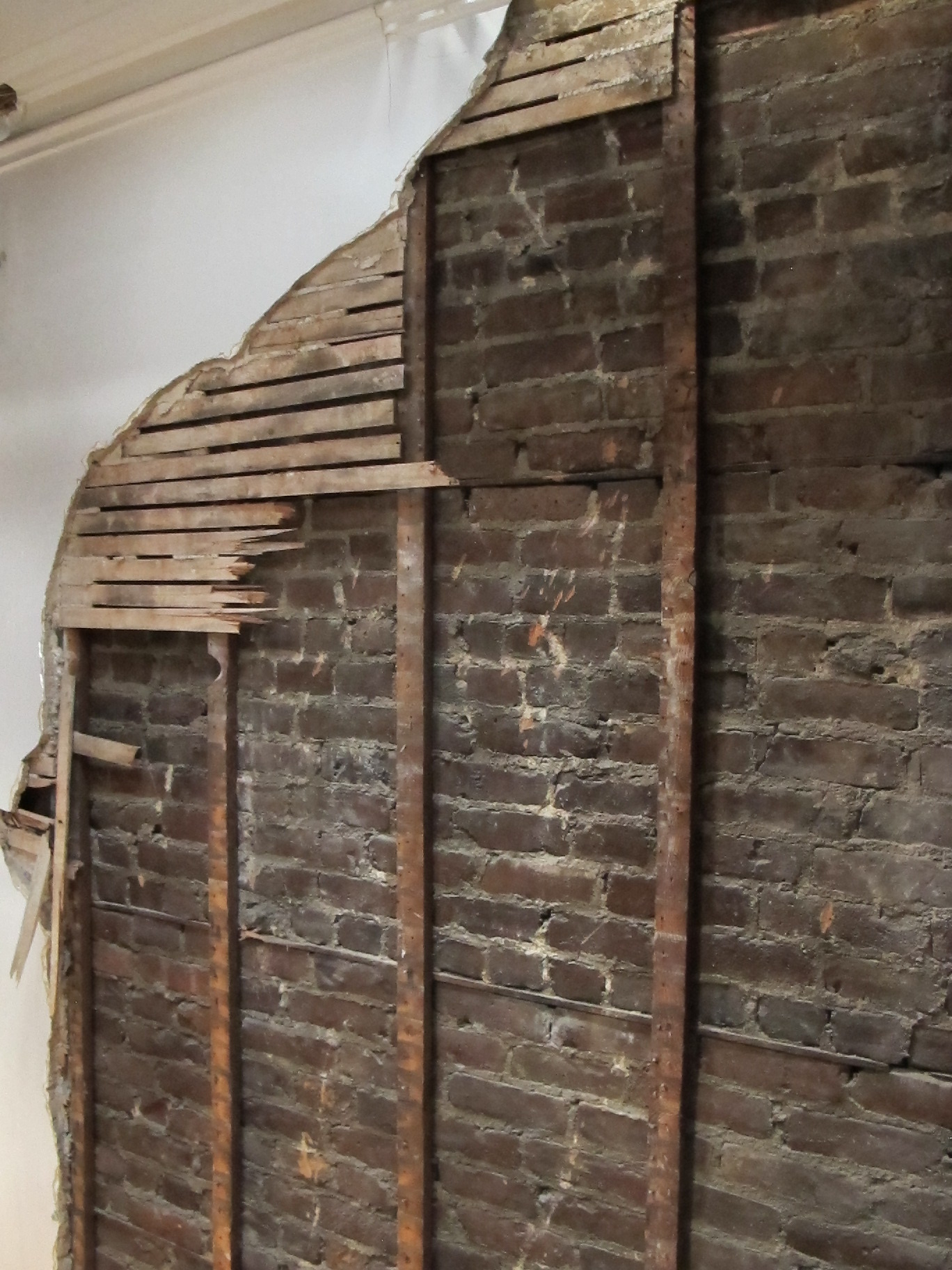
The plaster covered brick walls were the worst. I broke them apart by starting a small necrotic ulcer in the center and assiduously expanding it outward with rhythmic hammer swings.
I found a slip of paper in my shirt pocket that I wrote one night while I was drunk that said the following:
‘Mate worked with several Natives in Canada in forestry. Many of them had spent time in prison and would unabashedly tell him about murders that they had committed or other strange stories. One day in prison, one of the men recounted, another inmate returned from a visit with friends or family. He sat down in a communal area, but quickly got up and began vomiting. One of the other inmates noticed that the vomit was littered with pills and immediately ran over and started picking them out of the vomit and swallowing them. In no time at all, a crowd of inmates swarmed and ate all of the pills out of the vomit.’
One day Mate and I went to the scrap metal yards. I listened to the radio as we drove around in the truck with the heat as high as it would go. It was the coldest day of the year so far, the kind the radio described in sinister, ominous tones: the cripplingly cold Canadian air mass descended upon New York threatening the transportation system, our elderly, our children, our jobs. It was always there, the Canadian air mass, looming over us, waiting to descend. I hopped out of the truck to unlock the bed at the first yard, which was crawling with a bewildering diversity of mechanical beasts that roamed piles of steel that glimmered in the dim winter sun. I experienced a new sensation of being insignificant, of being too organic. The yard was frantic; it is open 24 hours a day, seven days a week. We were hurried through by men dressed indistinguishably from astronauts; even the people seemed mechanical.
I was genuinely giddy when we returned to the house to pick up the cream of the crap: copper, brass, and aluminum. The allure of money for producing nothing draws hundreds of people living on the margins of society to scour the city in search of metal each day. They intruded and cajoled us at our job site regularly. They are like blue collar carnies. Before we arrived, we discussed strategy as Mate had done this a few times; we needed to give the impression that we were in the business. If you don’t do this, they will apparently take the chainmail right off of your back.
We took the money load to what I would describe as a quaint community scrap yard, as if there were such a thing. The garage door opened to a few men huddled around a 55 gallon drum with flames licking out of the top. One man had a spider web, the center of which was on his nose, tattooed across his face. A pitbull sat in a reclining chair wearing a down vest, looking the most comfortable of all. The manager approached and helped us to sort the metal into piles. Spidey communicated in grunts and lurched around like a black frankenstein, staring me down if I look at him. We pretended that we knew how much everything was worth and that we wouldn’t settle for anything less than top dollar. The manager pretended that we had an insignificant amount of cheap metal that he was indifferent towards.
‘Where does all of this go?’ I venture to ask.
‘China. All we do here is bundle it and ship it out,’ he answers.
$842. Raw materials from all over the world, manufactured in China, used in America, shipped to China, recycled in China, remanufactured in China by foreign owned businesses, shipped to America.
Increasingly my mind churned about the limitations of growth, climate change, materialism, globalization, energy, the environment, inequality, the cognitive dissonance displayed by my countrymen, how maybe we should just commit to destroying the earth and ourselves, maybe we should blot out the sun with coal fire power plants operating at maximum capacity to power nothing but televisions playing pornography and Die Hard movies twenty four hours a day, dildos, and meth factories; start fighting human beings against one another with antiquated carpentry tools for sport; cut down every last tree; torpedo the whales; shit in our wells; have a Superbowl everyday; fire nuclear weapons at the moon; light the surface of the ocean on fire; rape everyone except for the elderly who we will leave to rot in the acid rain that falls from the sky; eat the vitamin D deficient children; and napalm the polar ice caps.
I wished the anxieties and the stresses of each day would wash off just like the filthy mask that I wore each night in the shower, but they didn’t. I felt beaten, my levity lost.
I read compulsively in every spare second. I tried to think my way out of the misery in which I was mired.
My rational brain also liked to use these thoughtforms:
Everything will be better when _____________.
‘All of those years that you spent laughing and enjoying yourself to the fullest were all for naught since they didn’t prepare you for the real serious world.’
‘You should go to grad school so that you can be a productive member of society.’
I was walking to work one day and I saw a discarded tin can, that someone only bothered to half crush. I empathized with that can.
One day, I rode the train home and several people saw the open seat near me, approached, and then shied away at the last second. It was alright though since they were merely crude automatons. I was enlightened because of my ability to perceive the absolutely purposeless cagelike void in which we found ourselves.
Sometimes I held back tears as I hauled buckets up and down the floors of the brownstone.
My mind can be a whirring maw that consumes everything and turns it all into shit as its gyre tightens around my own little miserable existence.
I walked around overstimulated, feeling constantly abraded. I didn’t laugh at the rats in the subway anymore. I walked with my head down. I thought rationally about sex.
I descended down into the doldrums of purposelessness, stagnation, and confusion. I wallowed in a dark, deep pit. It was apparent that my mind was broken, completely dysfunctional. Day after day it went in loops about my life, about relationships, about work, about this world. I was stuck in some literal, rational mode, constantly analyzing, critiquing, and reacting. I lived in an algorithm where N goes to infinity. I found myself living in abstraction, all experience filtered through an artificial conceptualization of the world. Recognizing this is not the same as understanding it.
I thought about how canaries that are put in mines might just die because they don’t want to live in a fucking dark and lifeless hole.
It seemed like I would labor in a cold filthy brownstone forever, that was until my boss unexpectedly ran out of money and laid me off to wander the splendorous dog shit strewn streets of New York once more.
One day as I sat on the couch, in the simplest terms possible, everything exploded into a dizzying particolored lollapalooza. There was suddenly infinite subtlety in the myriad of intertwined flavors of the chai tea that I sipped, in the plants that shimmered in the afternoon light and gently swayed in the heat rising off of the baseboard radiators, and in the multilayered music vibrating through the air redolent with all of the telltale smells of life in my apartment. I sat transfixed by my resplendent world. I saw it.
I saw that the world is not the map that I created of it. A Euclidian, linear, limited variable perspective is a vast oversimplification that ignores the inherently complex and chaotic order of nature and the interaction of limitless interconnected variables. It is a theoretical world assuming smooth planes, rational actors, continuity, and limited physical constraints.
We will be forever unable to model or build a perfect facsimile, we will always be left with an approximation or an incomplete construction. Reality is nowhere but in the infinite recursive complexity of my bodily systems and in the vortexes of steam that twist and dissolve above my mug.
The compulsion to make projections and see finality is just a failure of imagination. It is an abstracted way of viewing the world that ignores the infinite beautiful uncertain complexity that abounds.
The unpredictability of existence means that our lives are a series of choices and actions, thousands each day. In doing this we create ourselves, our conception of humanity, and our world. There are many areas of life where we are unable to exercise choice, but we are wholly responsible for the realms in which we can.
Life is no different than a work of creation or art. Each one of us stands in front of a canvas in the same stupefying confusion of having no idea how we got there or what is expected of us. There is a limited set of supplies that similarly has no provenance. The background of the canvas has already been filled in before our eyes snap open. A work is created through an accumulation of choices and actions applied over time. There is no ideal work in the same way that there is no ideal life, there is only the one that exists. The bewildering beauty of life lies in the incomprehensible task of creating the completely subjective work that is ourselves.
I am tumbling across a lightless undulating plain.
I am swept onwards by forces that I cannot know.
The terrain is nothing more than that which passes.
Up, down, to and fro.
There is no beginning or end.
The darkness is vertiginous and lonely.
A rational tempest swirls inside of me.
I try to give sense to the senseless.
I strain to discern form in the void.
I conceive and am inevitably confounded.
Then, I am startled from my reverie by faint music in my head.
I suddenly feel the plain, although it passes no differently than it ever has,
the hillocks and declivities of birth, death, love, joy, and sadness.
I sit in quiet contemplation, admiring the melodic progression.
The song is entitled: ‘I am a preposterous half rational half animal chimera stumbling through an abysmal eden hurtling agonizingly fast towards.’
It was called depressing back then to write like this, nobody wanted to hear it. It went against the culture of make believe and eternal optimism. I lived in New York during those years, a place that for a century was held in popular esteem as a beacon of hope, as the manifestation of the greatness of the ideology that took root after the world wars ended, a place where materialism and its culture reached new heights. There were more cars in the Unites States than people. We used machines and energy to perform most of our daily tasks. We were able to eat tropical fruits in the dead of winter and eat meat on a daily basis. We regularly took trips to other climates to find reprieve from harsh Northern winters. We had incredible hospitals offering extremely complicated procedures and body modification. We regularly threw out perfectly good clothes if they were not of the same style being marketed currently. Overconsumption of food, alcohol, drugs, and tobacco were the primary problems with which our society struggled. The Western world had embarked on a journey to ameliorate conflict through growth and a more equitable distribution of its spoils, a distinctly materialist philosophy that was intended to supplant or transcend the divisions hewn by religion and ethnicity.
There were periods of ostensible tranquility, although maybe the violence just took on another form. There assuredly was extreme violence against the natural world to which our destiny is inextricably linked. There was also a more subtle war against the individual, against the human spirit. Later on conflict over resources began to occur.
It took many decades, but the economic and political machine was taken to its apogee by rational thought and it began to groan and occasionally falter. There are problems with the idea of perpetual growth; we live in a world of limits. The resources were bound to begin to feel the strain and we were forced to search ever farther, scouring and scarring the globe as we did so. The productive machine required an ever expanding resource and energy base to feed an ever expanding population that expected an ever increasing quality of life. It was required to work even harder to try and hold back forces that worked against it assiduously like friction or gravity against a perpetual motion machine.
We all wanted to believe that we had created the perpetual motion machine though, that we could continually invent our way out of problems and continue on this path. That was how it gradually became a marketing game, a game in which statistics and studies were produced to inform us about our ever improving quality of life, unprecedented freedom, expanding resource base, essentially that everything was the best that it could possibly be.
When those of us who lived through those times look back upon them though, we all felt the discord deep within ourselves. We knew what was going on as our military roved the world ‘freeing’ oppressed people, opening up their markets and resources; we all knew it as the air, water, and soil became increasingly polluted and unproductive; we all knew it as excess housing was built and then millions were forcefully evicted, we all knew it as record profits were trumpeted as 40 million people lived from government handouts during those years. Those who experienced this discord too overtly and were disillusioned as to the nature of reality, were often diagnosed with mental illness and left to fend for themselves. Addictions and escapism ran rampant.
Politically and economically everything became more precarious with each passing year. The social safety net and the legislated equality that resulted from the war years were dismantled starting in the 1980’s and more inequality was created than ever before to preserve the illusion for the few.
Our politicians and business leaders deemed it necessary to strive at all costs to maintain the status quo. Interest rates were perpetually slashed and legal constraints lifted to remove some of the friction constraining the perpetual motion machine. Our government at the time, or really everyone, just kept borrowing against a future that was incapable of actually paying all of the debts with which it was being saddled. Economic bubbles swelled and burst, often several times in the same decade as the dream machine took itself too literally. It became necessary to preemptively address any threats. Our calls and internet usage began to be monitored by a vast information gathering network with no clear purpose. Drones first began to appear in the skies over our heads. More citizens were imprisoned in a vast and ever expanding network of prison complexes run by private companies. Some were held without trial.
The paragons of our society at this time were the manipulators, the ones who created nothing but an illusion through numbers that did not correspond to reality and reaped fortunes similarly denominated in numbers that only existed in computers. Most of society had a vested interest in maintaining their slice of the imaginary pie. The politicians, the businessmen, the academics, and the bankers largely merged into one ideologically cohesive group to trumpet the perpetual motion horse on which they had staked their money. We had a president who exhorted us to ‘go shopping’ days after thousands of people died in an attack on the physical pillars of this ideology in New York. A mood familiar to all of us as individuals took hold on a national scale, one of repression, denial, and a grasping for the comfort of childish ignorance.
The ground upon which we stood was undergoing tectonic shifts, yet we refused to adjust to this reality. No one at the time knew what was to come and we consciously avoided thinking about it. You have to understand that we couldn’t countenance what this said about our culture, about our country, about ourselves as inextricable cogs in this vast machine. It would have all fallen apart overnight and we were terrified by what alternatives existed. It was all that we knew. The established order tried to assimilate all threats and challenges. The problem is that the shifts were of an order of magnitude that could not be managed, like trying to hold back a glacier or cap a volcano.
Wasn’t there a way to have reached a more moderate, more just, more humane outcome? As we look back upon and teach about this era in world history it is clear that the seeds of this dissolution had been sown long before we ever became conscious of the growing problems. It seems axiomatic now that the perpetual motion machine would eventually succumb to natural forces and that change is the only constant, but this experiment had to run its course for us to now understand. At that time for anyone who did see the problems, there was nothing to do anyways but wait for the first contraction signaling the birth of the future.
I pass many of my days walking the streets and exploring the parks. The weather is capricious, oscillating between sunny warm day when the only hint of winter is manifest in the long Southern light that disappears behind the buildings far too early and grey days with a humid chill that cuts through my greasy down jacket. The squirrels are fat and indolently ascend the skeletal, naked trees. It is as if the air is different here, as if there is something constantly pending, something waiting, a chill that doesn’t subside indoors. It could drive me mad.
The city seems surreal to me, the style and structure unintelligible, yet intriguing. Everything here comes from somewhere else and exudes an overall feeling of impermanence to me, it seem precariously poised. Maybe this explains the desire to create permanence through impressive structures and the constant search for authenticity. I walk through the Metropolitan Museum of Art and see the works of hundreds of civilizations whose course could be represented by the shape of a parabola.
Anyways, Lauren and I meet a friend of hers from school at a restaurant in Williamsburg for brunch. She greets us with her boyfriend, Doug, and his son, Mitchell. Lauren and Caitlin catch up, while Doug and I talk about bicycle touring and sailing. Not more than ten minutes pass before Doug casually offers what amounts to a break from the omniscient pressure:
‘I am going to sail a schooner that the owner of this place just rented down from Maine to New York. If you have any interest in coming, I could use a hand.’
We quickly made plans and exchanged numbers. Doug anticipates that it will take us roughly three or four days to make the journey. After years of writing my present location in my journal, I was so certain that I would be in New York for a lengthy, continuous period of time that I debated giving up the practice. I am not sure why writing three letters would have been too much for me at the moment; I think of it as an amusing manifestation of my level of resignation to this place.
We go shopping the following day with the restaurant owner, who ranges the grocery store in defiance of the shopping list. I chortle as he argues contractual semantics with a thick accent while frantically loading the cart with cookies, mini muffins, brie cheese, olives, pickles, butter, hummus…. He is on an inspired spree, something that seems inappropriate to interrupt.
I wheel my bike out the door the following morning and am greeted by a flurry of white lashing my face. I haven’t seen snow in two years. I pedal hard across the Pulaski Bridge as cars howl past. I stand under the outcropping of a loading dock jumping up and down as my hands thaw. Manhattan lays across the East River, its phallic phalanx ejaculating steam skyward. Everyone else slowly begins trickling in. The restaurant owner, who seems perplexing and curious in the way that I always find wealthy people to be, plies us insistently with an armload of pita bread, a gallon of ketchup, a garbage bag of indiscriminately intermingled beef and veggie burger patties, five pounds of salt, and a pound of exquisitely marbled pork belly before we set out.
We begin unknotting ourselves from the turnpike tangles. So far we are five, but we will pick up four more along the way. In the 15 passenger van, the talk centers around the only perceptible common ground that we share at this moment: sailing. I cannot blame them for assuming that this was somehow a shared passion or skill amongst all of us. I furtively downplay my scant experience on sail boats; I am not sure how frank I should be. I have been on a sailboat once before, albeit I was working as crew for five days on a crossing. I have never seen the Atlantic Ocean before. I have never been to any of the other states that we will be passing through/along. I have known Doug only three days. I don’t even know where we are going, having neglected to look up Eastport, Maine on a map. I really just want to start talking about Moby-Dick and whales, but I suppress this urge.
I imagine New Jersey to be full of overweight teamsters. I imagine Connecticut to be a bastion of snobbish dilettantes. I imagine Massachusetts to be full of pugnacious drunkards and pale pedants. New Hampshire brings forth neither negative nor positive, aside from their respectable state motto. Maine could simply be a gigantic Red Lobster. We drive past Kennebunkport, Harvard, turns for Boston, for Cape Cod… All are loaded with strange literary and pop cultural associations.
Greg sits in front, occasionally turning around to squint through his glasses and rant in short overwhelming torrents about his work in IT marketing. His bodily movements are evocative of a terrier. Stephen thankfully keeps the conversation in the realm of sailing and living in New York.
We pick up Carlton, Joan, and Bill. They graciously feed us before setting about finishing their pack. Stephen and I are looking at old maps of New York State in the living room when Joan interrupts.
‘Is the van loaded?’ She sternly asks.
‘Uhm… I am not sure.’ I stumble in response.
‘Well, we are all waiting on you guys.’
I stifle an impudent laugh.
In the van she continues:
‘Stop at exit two, I need to use the restroom.’
‘Okay. How about this reststop?’
‘No. I want to go to a gas station.’
I am pulling off at exit one after I see a sign advertising two gas stations when she cuts in again.
‘Where are you going? I said exit two. There are better gas stations there. It is a more developed exit.’
Nobody says anything. A more developed highway exit?
‘I guess this will be fine.’ She capitulates.
We pick up Simon on the dark roadside in Maine in front of a sign for a farm that produces Maine wildflowers.
I warm to Joan as she tells me a story about a juvenile delinquent rehabilitation program where she worked many years ago. The program ran authentic horsedrawn wagon trains, pioneer style, down the East Coast to Georgia. The troubled youths would walk alongside. Tepees were set up and broken down in roadside fields each day. In typical wagoneering fashion, many teenagers got pregnant during the voyage. Life did not stop. There was a wagonmaster who would regularly beat the children, hospitalizing several of them during the course of her time working there. The wagon train rehab approach was lauded by popular media and received widespread accolades, although this faded as the sanctions for neglect and abuse mounted. Individual kids could spend over a year on various different wagon trains that bizarrely ranged the East.
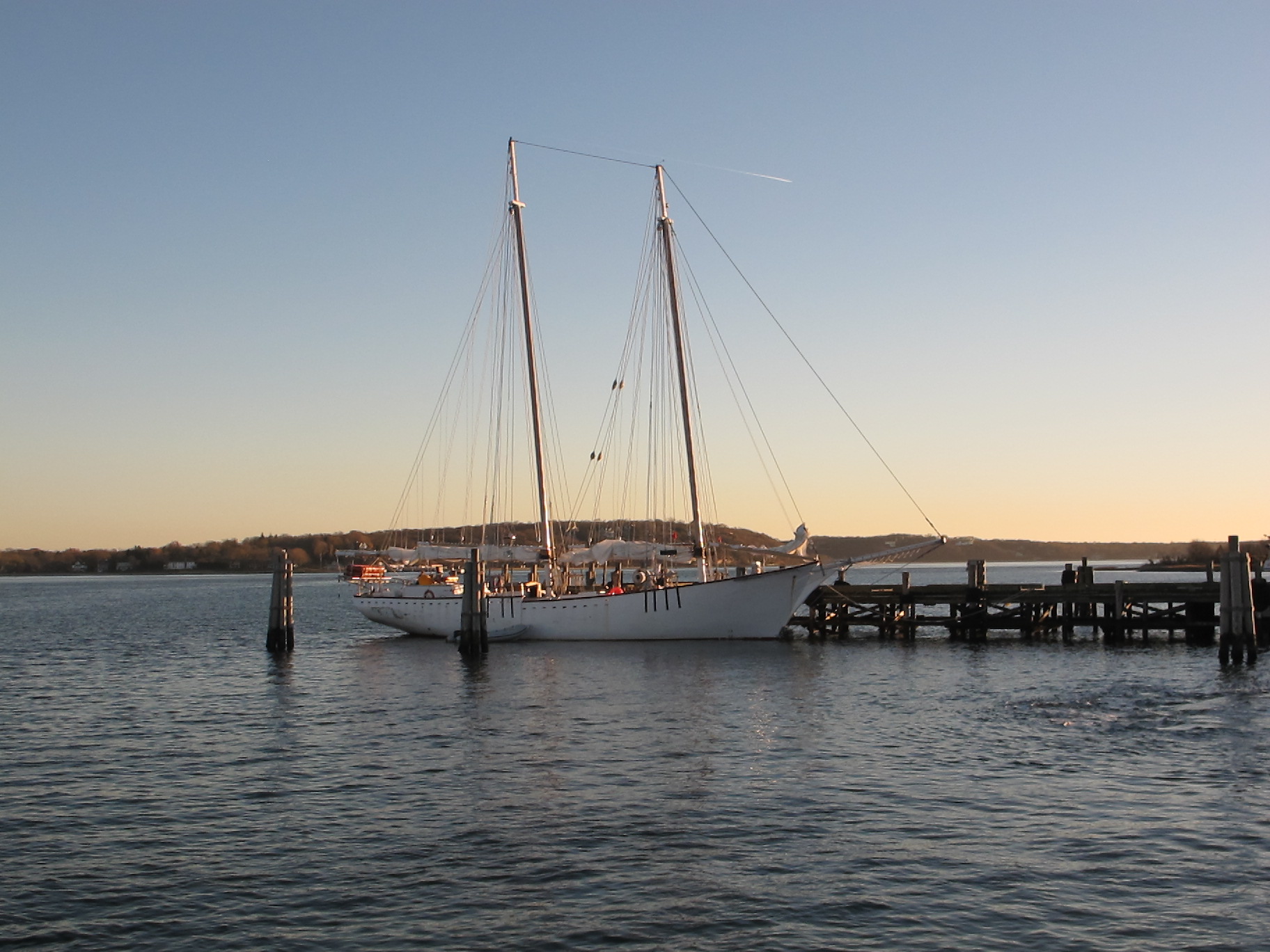
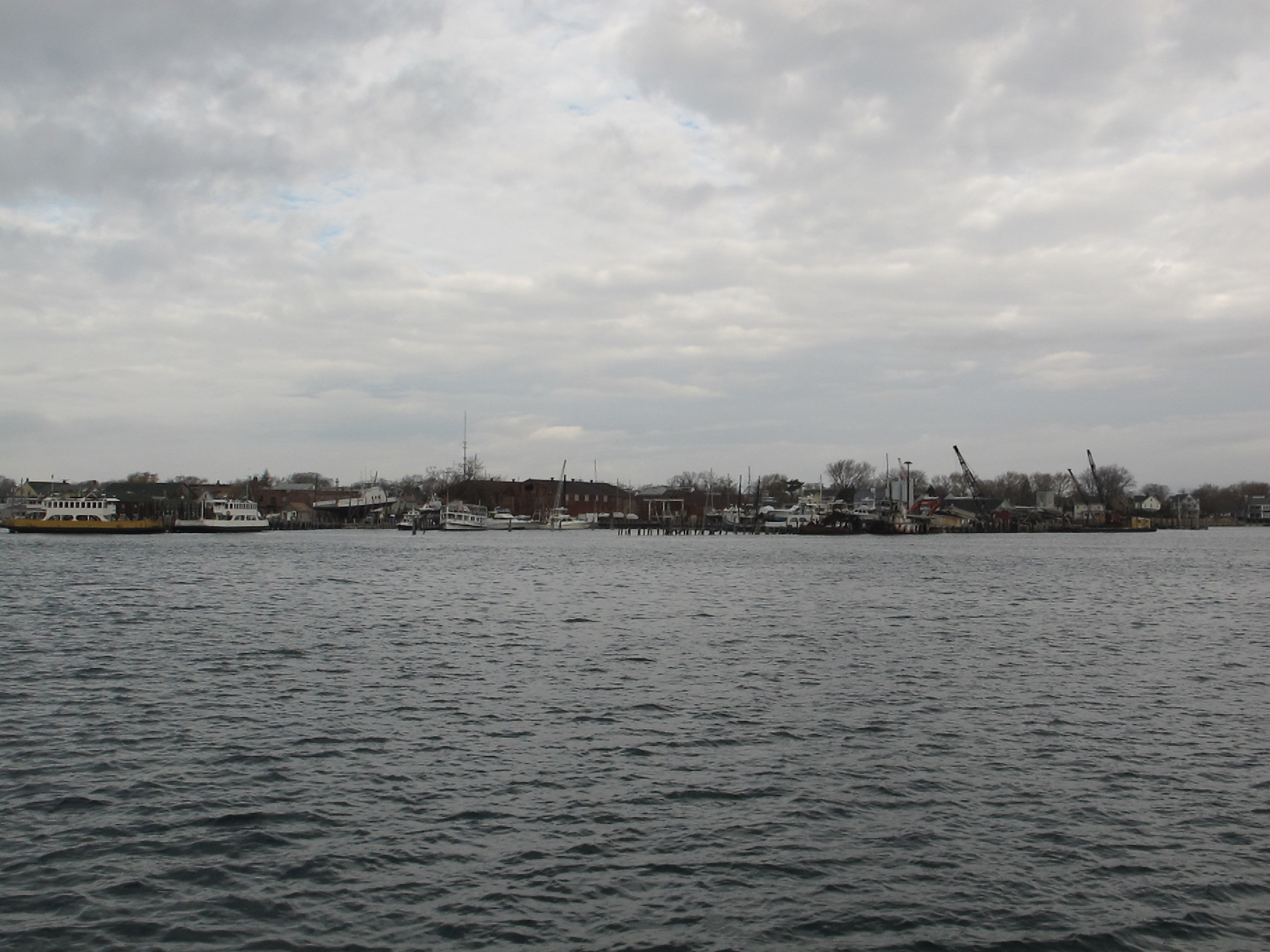
The schooner in Greenport, Long Island.
The wind carries a stiff chill with a breeze off the Bay of Fundy as we unload at the pier in Eastport. I look out upon the brilliant stars and savor the redolent stink of cod and salt water. We arrive at low tide and the twin masts of the schooner are all that are visible from behind the pier that towers out of the water. The Bay of Fundy holds the impressive distinction of having the highest tidal range in the world with an over 40 foot differential. We lower our gear on ropes and quickly find a place below deck to get out of the cold.
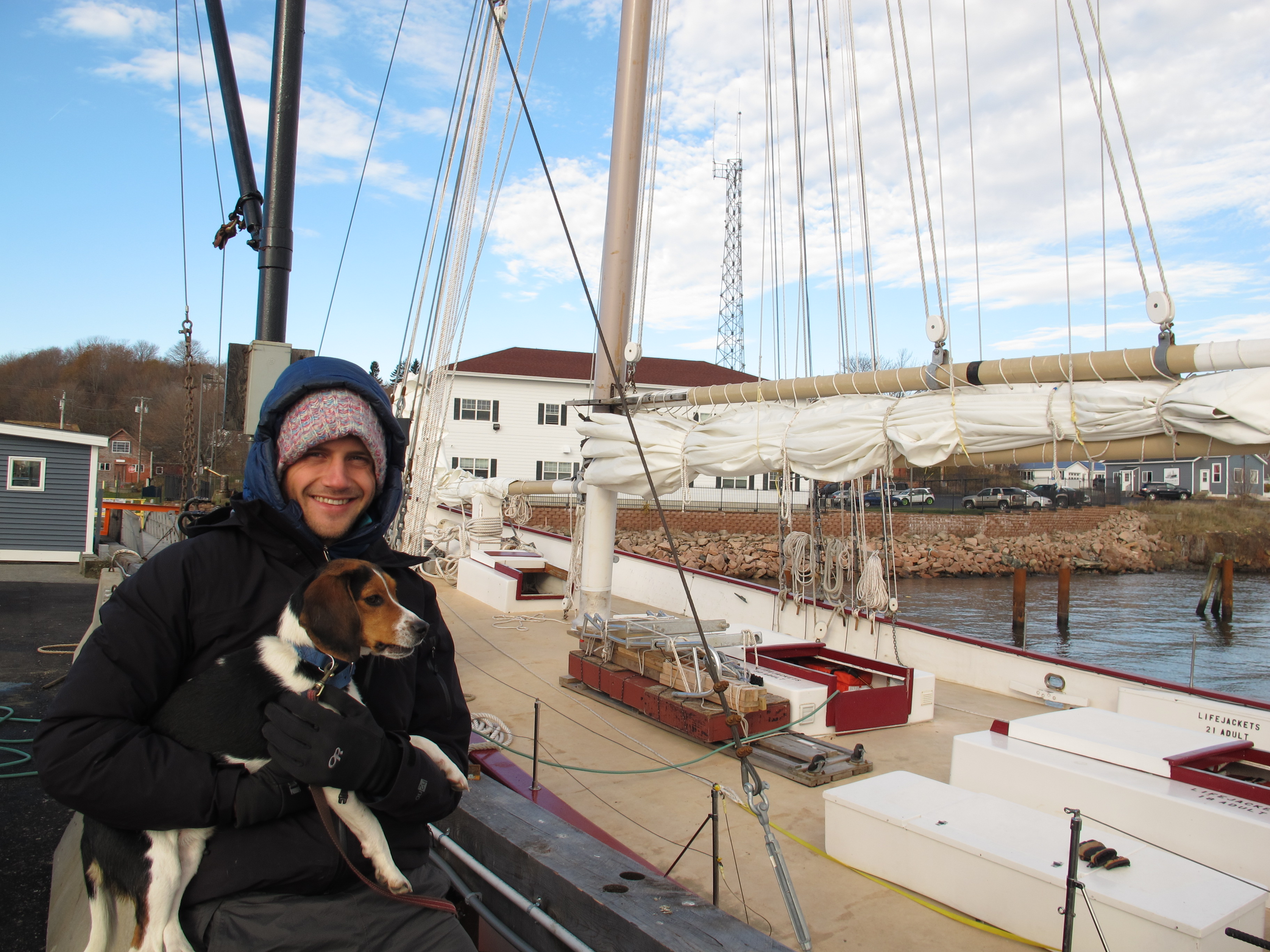
Our challenge becomes apparent as we check out the galley. The ship is in disarray with many projects left unfinished, despite assurances to the contrary. Pat, the engineer for the ship over the past few years, stands holding his beagle in his arms while discussing the condition of the ship. I overhear phrases like the following:
‘If there is a fire, don’t stand there as you will get sprayed with water that will electrocute you.’
‘The radar is not installed. We will try to get to it tomorrow.’
‘The screen on the chart plotter isn’t really working, it is scrolling and flickering.’
‘The generator is currently being run out of a five gallon bucket, so we can’t run it long.’
I put on all of my clothes and jackets before crawling into my sleeping bag.
Eastport, Maine
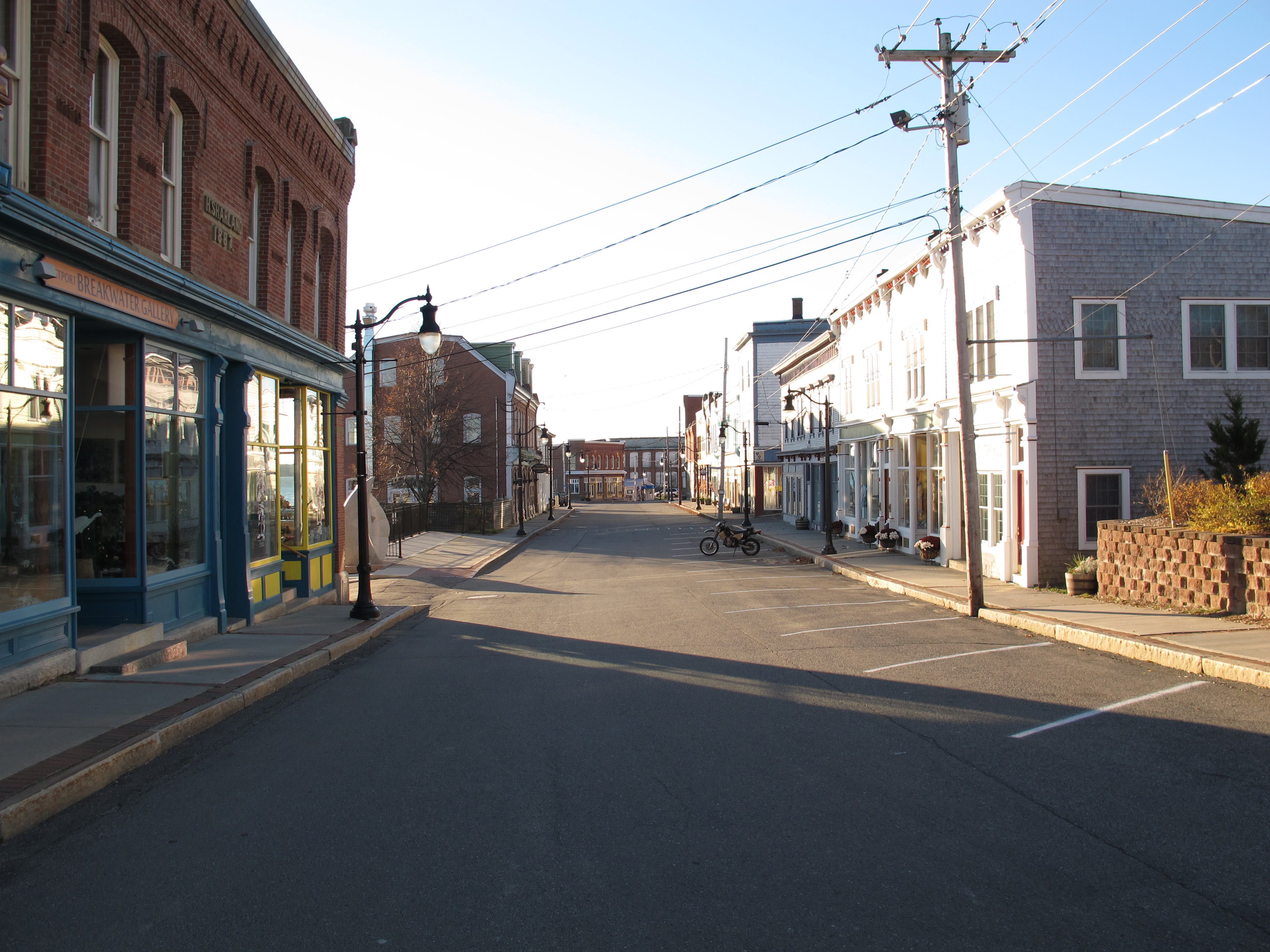
The following morning I get up at sunrise. It is too cold to do anything but go back to sleep or start moving. I set out into town, the ship having risen enough at night to allow me to step right off the hundred plus feet of fiberglass onto the dock. Nobody is about; this is why it is the best time of the day. I wander through streets and homes built with pride with an eye towards longevity. Winter has crept in here.
The morning is strange. Joan, Carlton, and Simon seem to be on the verge of mutiny. They are all genuinely vexed by the lack of communication and the general disorganization. I sit equanimously weighing their remarks, not feeling the same level of concern for some reason, possibly out of sheer ignorance. Their concerns and criticisms words do not amount to anything later on.
We fill the boat with 800 gallons of diesel fuel. It takes a fuel truck an hour at least to fill the boat. Think about that for a moment. I organize all of the food; Joan comes through later and undoes everything that I have done. I snicker when I notice.
Burton and me.
We divide the rest of the tasks. Bill and I undertake the job of attaching the stay sail in front. This simply involves wrestling unwieldy canvas and tying knots with frozen hands while precariously balancing on the bowsprit above the icy water of the Atlantic. Bill seems elsewhere; he handrolls cigarettes and carries on a curious conversation that seems to be altogether independent of me.
Dinner is an affair. The crew is already divided along strange lines with me in the typical position of not knowing where I fit in. I am generally indifferent though. We have fresh live lobsters, twelve of them. Stephen balances one into a headstand with its claws outstretched, a position it unwaveringly holds. The lobsters are lowered into boiling water head first, a death that I watch with horrified intrigue. It is definitely not ‘painless’ or ‘instant.’ I assuage my guilt by acknowledging that this is what grows here, what is fresh and readily available.
I crack and crunch. A torrent of green pours forth and mixes with the butter on my plate to create a delicious soup. The toilet in my cabin won’t flush. I lie in bed as Pat’s radio plays strange music on one side and Carlton and Joan moan on the other.
Leaving the Bay of Fundy.
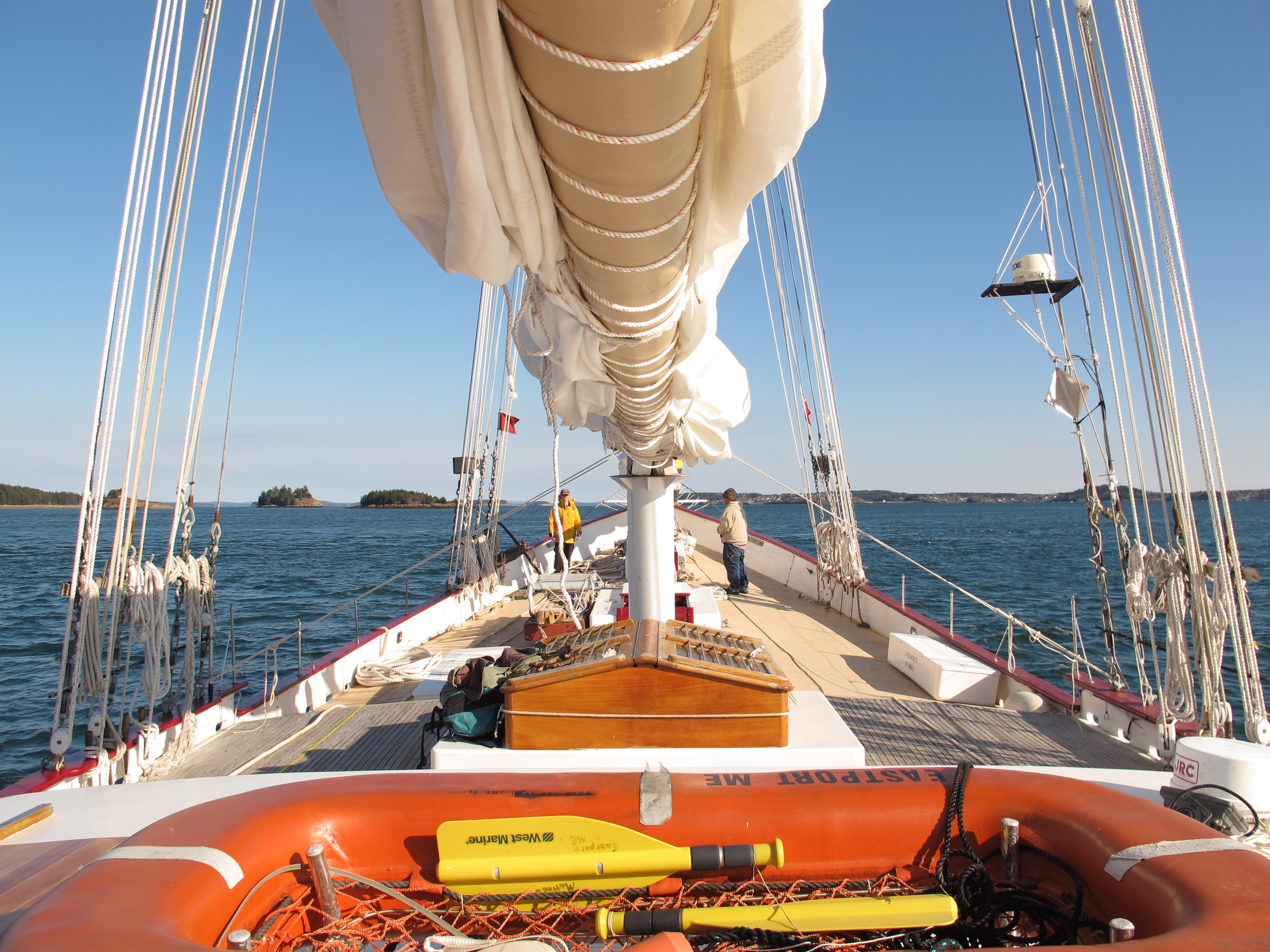
We ease out late in the morning, catching the last of the ebb tide that we hope to convey us down the coast. I watch the mysterious currents swirl and surge as the glide across the Bay. We discuss the watches: I will work with Bill and Pat from 8pm until 12am and 8am until 12pm. We will have three watches of three people, each working two, four hour shifts each day. Everyone disperses across the deck and into the cabins once this is determined; we only see each other in passing for the rest of the voyage.
I sit on a bench midship pondering the pitching and rolling that are building in my stomach as the waves build. I am utterly silent as I try to ignore the rising pitch of the complaints from my body; it is like trying to ignore a fire in the corner of a room. My hands begin to strangely tingle as time goes on; I can focus on nothing other than the sensations that are assailing my body. It is unlike anything that I have ever felt before. Burps arise that promise to ameliorate the discomfort, but they always fall short with great risk of unanticipated projection. Hold it together, with enough focus you can stay in control.
‘If you need to feed the fishes, go port side since it is downwind.’
Someone says this and I am involuntarily running with the phrase ‘feed the fishes’ echoing in my head. I brace myself against the railings and let loose thick, viscous streams of particoloured organic matter. The stream twists and moprhs as it falls towards the churning water.
Pat grins at me and tells me, ‘You look a lot less green.’
Off the Maine Coast
All of the tingling is gone out of my limbs. I vomit another time, curl up in a ball, vomit some more, shiver on the floor in the fetal position, go to my cabin, get up, vomit in the toilet that doesn’t flush and is already filled with smelly urine, eat some saltines, drink some water, vomit, I dry heave, I have completely vacated my stomach, irrational fears and nightmares taunt me in my delirium. My body is revolting.
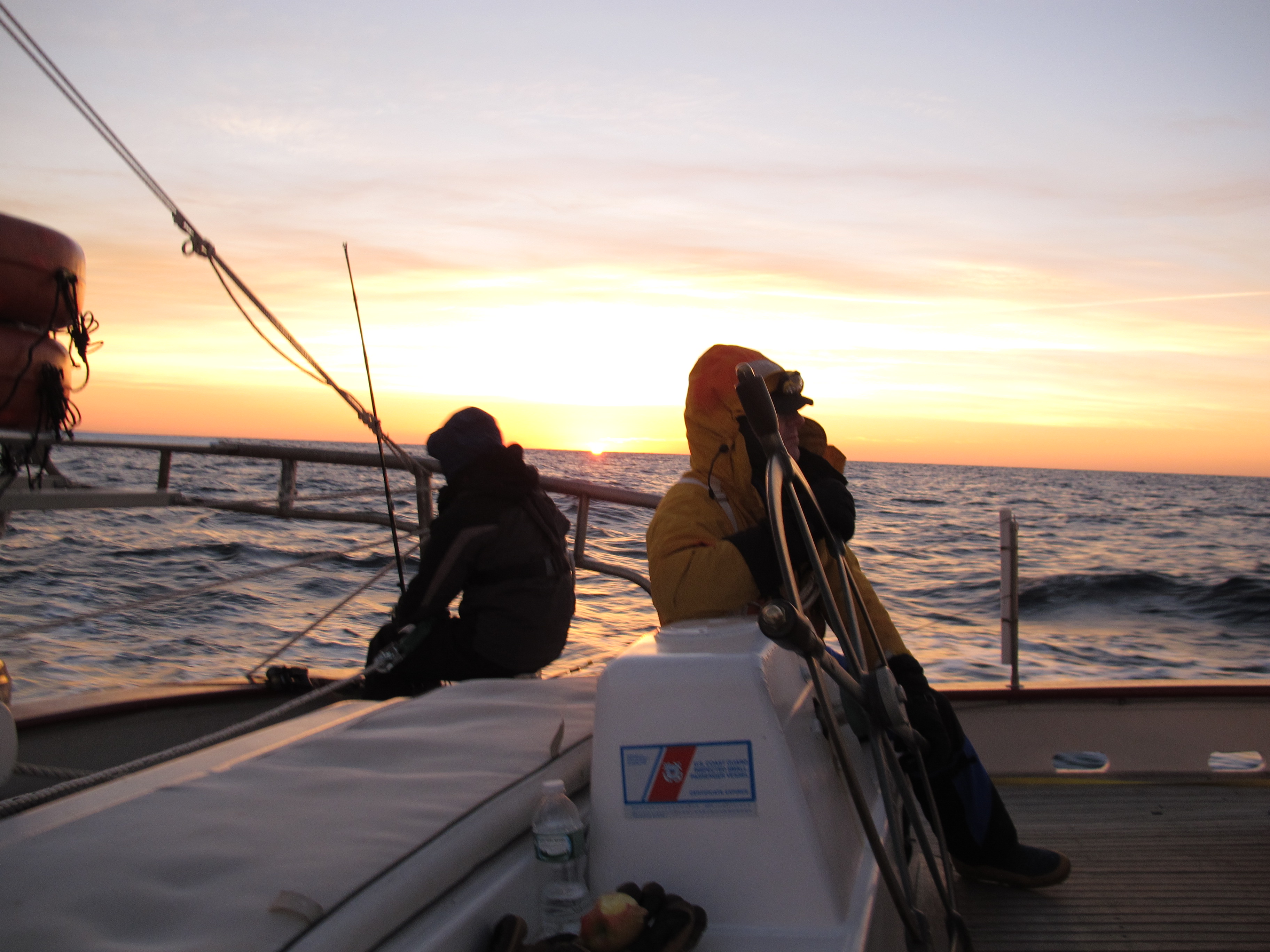
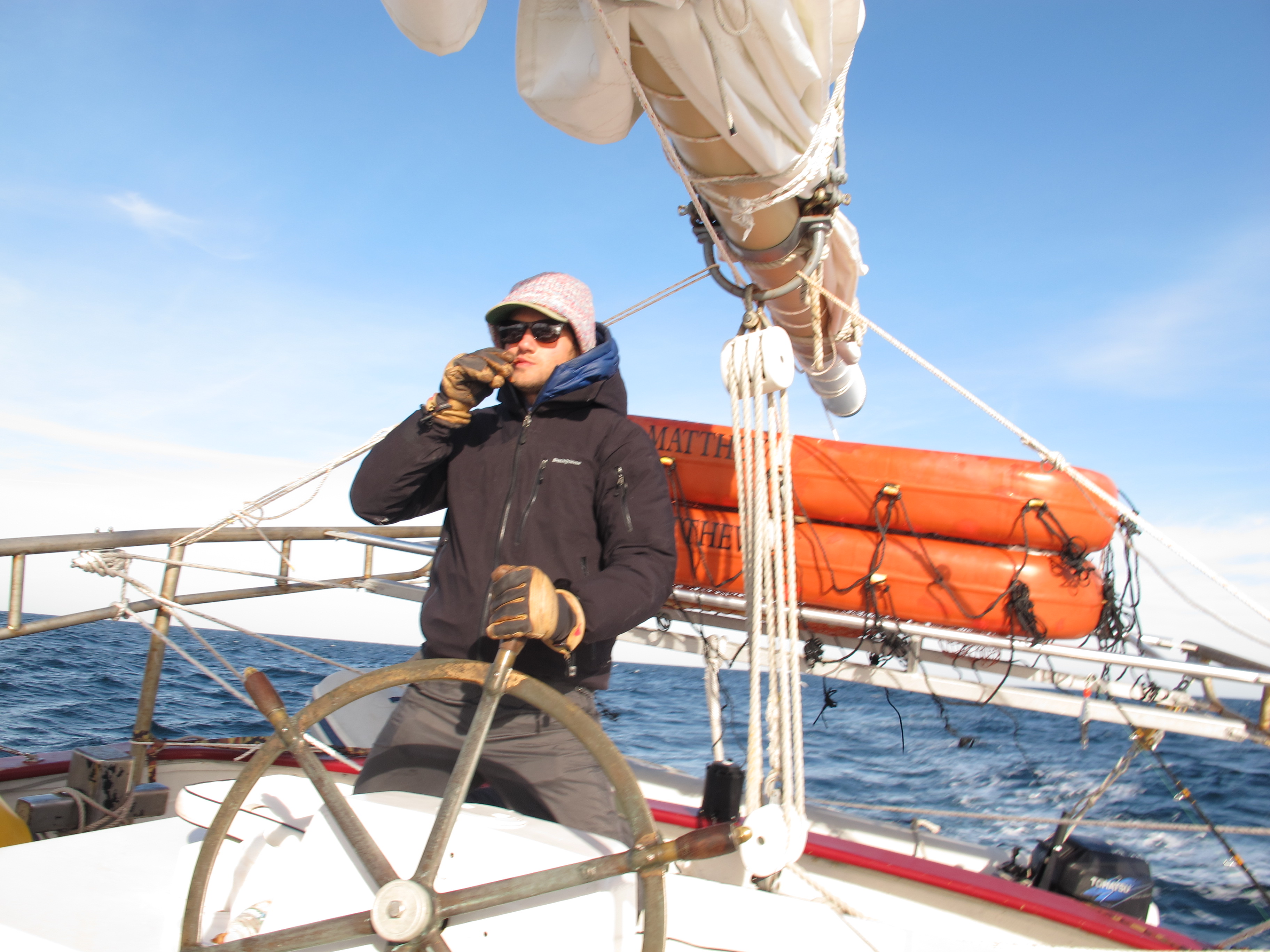
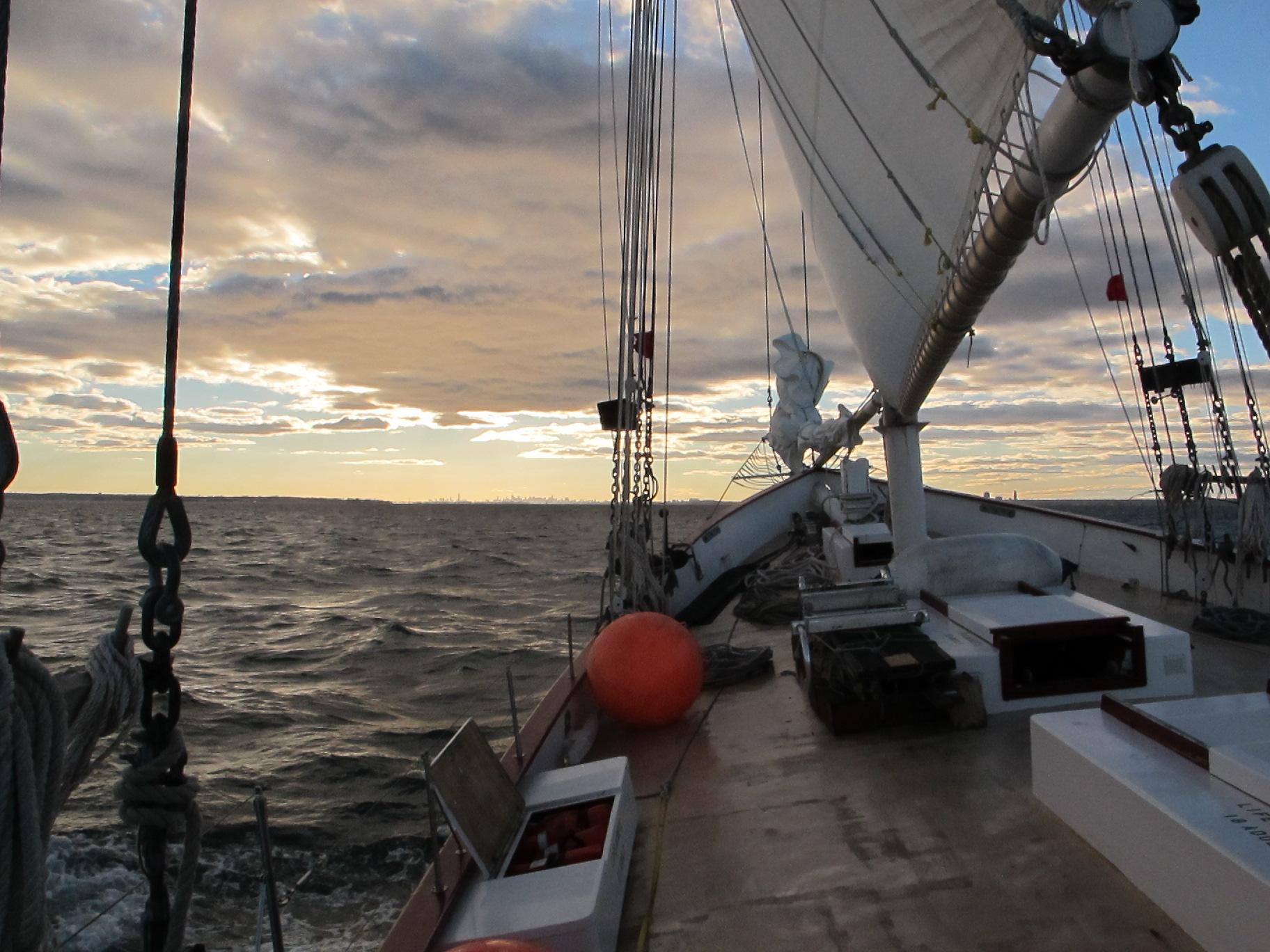
I get up for my watch and am greeted by a clear sky, the waxing moon painting a chrome stream across the water’s surface. We navigate by the stars, using them as fixed reference points. I steer the boat, initially cutting sloppy zigzags across our source as I get a feel for the rudder, the sails, and the motor in the rolling sea. Steering helps to take my attention off of the sickness.
Bill says virtually nothing during our hours on watch. I am relatively confident that he is drunk.
The radar on the boat failed to work, so we brought a second radar system, which subsequently failed to work. The boat’s primary steering compass has failed. Nobody knows how to operate the chart plotter properly and I vomit whenever I stare at the screen.
I eat an apple and a pear, which counterintuitively make me feel better. I again fall asleep in all of my clothes. My cabin smells like a truck stop men’s room. I pity myself and laugh as I lay a seaman stained blanket that I found in the cabin over myself. I roll with the boat.
Me at the helm.
I wake up in time for sunrise and sit on deck, the cold seemingly in my bones and my brain nonfunctional from privation. The coastline is out of sight and the sea remains vibrant. The wind has shifted though, despite forecasts to the contrary. It comes straight over the bow from the Southwest, stilling progress. I repress an urge that I have to talk about sailing disasters stories. We could easily be drinking our own urine and be admiring the flesh of each other inside of a week if we let ourselves get blown off course.
After my daytime watch ends, I lie in bed unable to sleep, hallucinating strange shifting shapes and cityscapes. The organic melding with the linear, with the artificial, throbbing with life, expanding, wilting. Night watch is tough; it drags on as I sit huddled against the breeze.
In the morning I struggle out of the windowless cabin to a beautiful day. Pat and I pass our watches telling rambling, loosely connected stories. One summer day I looked out into the yard with my sister, climbing up on the counter to see what was going on outside as our dog Belle ran in front of the kitchen window tossing what looked like a black ragdoll up and down. Our foray into rabbit raising ended the moment that my sister screams resounded through the kitchen upon realizing that it was her rabbit Poco Diablo.
Most of Pat’s stories begin with ‘We just went out for a few beers…’ Getting woken up to a cop toeing him with his boots in a public park, waking up cuddling a napkin dispenser, getting offered to buy crack and guns, beating his friend with a tire iron after an argument erupted as they were stealing hubcaps off a VW bus, doing whippets with Mormons as cases of whipped cream were on sale for $10, He talks extensively about his friend ‘Gay Norm’ who has at least three stories that end with ‘…and then they beat me and left me naked under an overpass.’ Pat shakes and doubles over in laughter as he tells these stories. He is frank and brash in a way that is both repugnant and refreshing.
The chart plotter fails. We are now navigating via handheld GPS and paper charts. I look over the starboard side of the boat and see a spray emerge from the water, a whale repeatedly vents into the air before turning its tail and diving. Porpoises jump in unison alongside. We quickly arrive at the entrance to the Cape Cod Canal, just in time to catch the strong current of the ebb tide.
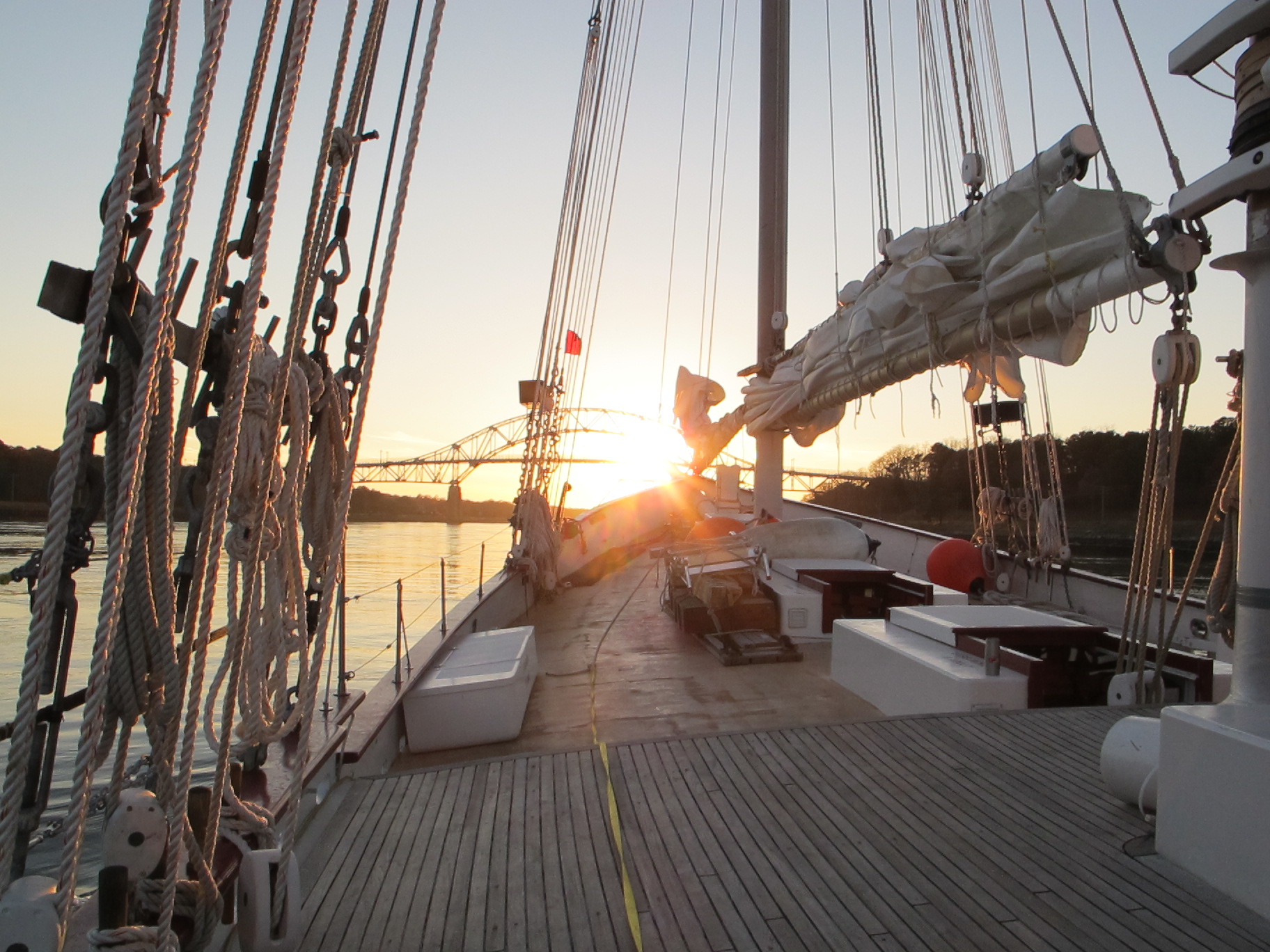
I am at the helm as we enter the canal. We radio the canal authorities who give us permission to proceed with the warning that there is a large barge coming our direction. Half of the crew is on deck. The banks are lined with serene trails peopled by pedestrians and cyclists enjoying a lovely day. Many stop to take our picture as we pass by and admire our good fortune.
Everything suddenly goes quiet; the motor cut out. I continue steering while we get the motor restarted. I can feel the tension start to build as the starter turns for a two, five, ten, twenty seconds to no avail. Our momentum begins to die and the rudder becomes useless; the current begins to direct us.
Doug calls the canal authority to advise them that we have lost power and to ask for assistance. The Coast Guard hears our distress call and scrambles a boat. We begin to spin in the canal and move rapidly portward with the force of the current that was a boon only moments earlier. It is not difficult for all of the people who line the banks to realize that something is very wrong; they begin taking pictures for a different reason. Everyone runs around the deck, a flurry of ineffective motion.
We drop the dingy and Stephen begins attempting to push us away from the portside –although it is no longer portside as we are spinning- steel bulkheads and pylons. I am giddily terrified as there is really not much that we can do and it seems like a collision with either the bank or the barge that is bearing down on us is inevitable. The Coast Guard arrives with a small boat, realizes the sheer size of our predicament and returns with a large boat just as we are nearing the steel I-beams. I grapple with a strong desire emerging from nowhere in particular for the ship to crash, wreck, catch on fire, sink. Some part of me secretly craves destruction and disaster. Unfortunately, the Coast Guard comes in fast, forcefully ramming us on the stern starboard side to straighten us out; a move that buys us a few seconds.
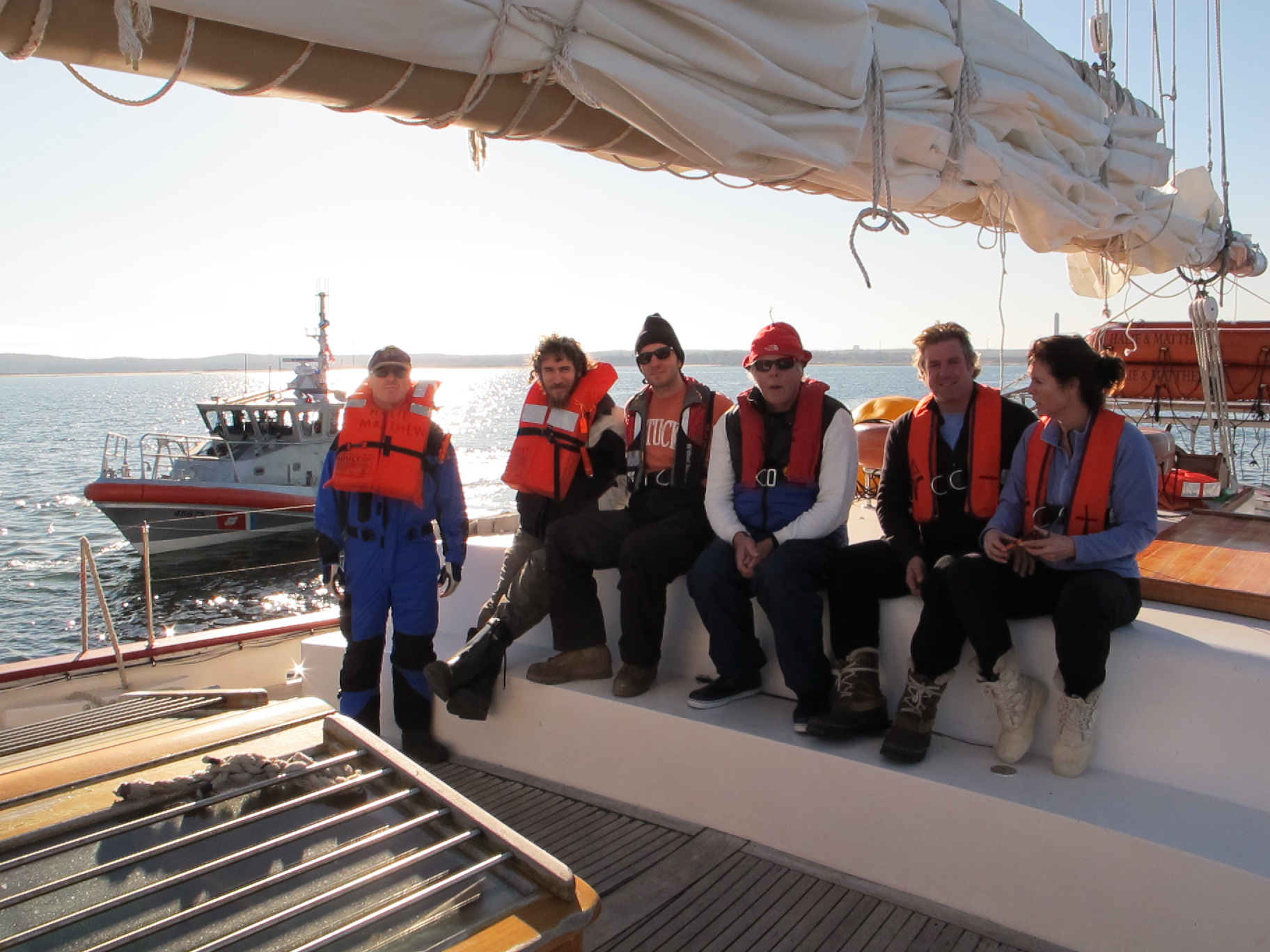
Being inspected.
Commands are quickly shouted and a rope is tossed onto our deck. We scramble to secure it and then yell for them to hit the throttle as we are nearly broadsiding the canal. I stand in wonder at how quickly this has spun completely out of control. We manage to get the motor restarted at this moment, but we are now in tow and at the Coast Guard’s mercy. The problem was a bubble in the fuel line from switching over the fuel filter just before we entered the canal. Pat remedied the situation by bleeding the injectors. We are ordered to put on life jackets and stand by as we are hauled an hour out to sea. We are boarded, inspected, and quickly sent on our way.
Cape Cod Canal
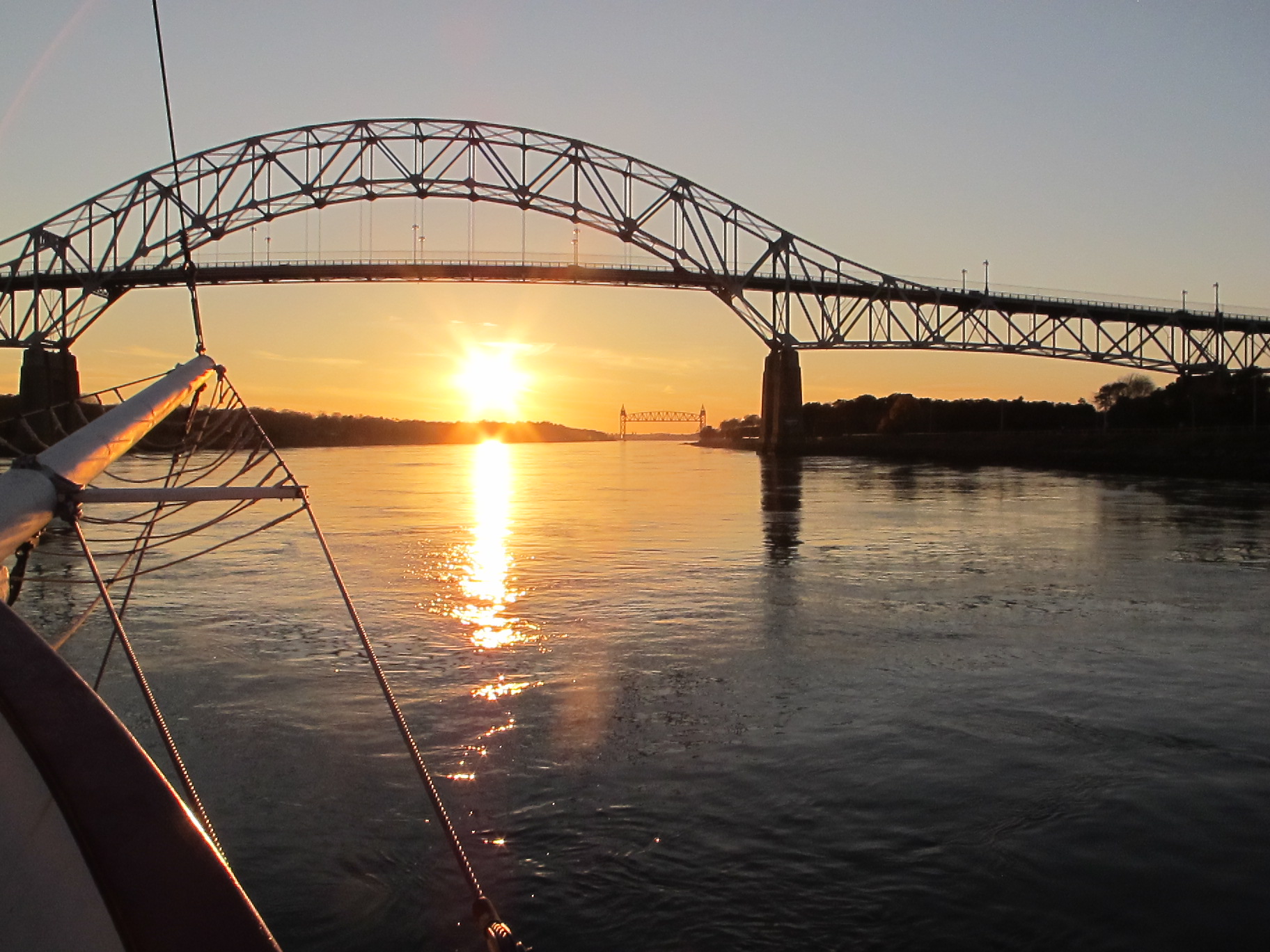
We miss the ebb tide and find ourselves fighting our way through the canal as the light wanes on the vacation homes and trees that line the banks. As we exit in the darkness we are taxingly navigating by buoy, getting close enough to each one to see the number and verify it on our charts. The fixed lights of shore seem to never move. I stare at the Newport
Cape Cod Canal
Bridge for hours. The sea has calmed, although the dancing inky surface still seems equally menacing. The dark, cold sky and the gaping maw of the sea leave me feeling lonely as I steer. I wonder about the people in the warm, comfortable houses in Newport. I imagine pastoral simplicity and tranquility. A nostalgic desire for home, for warmth, for family rises.
Greenport, Long Island
I wake up with land in sight the following day. The leaves of Oak trees float below the surface and the air smells of fall. Greenport, Long Island. The 800 gallons of diesel turned out to be insufficient. We begin our initial approach on the dock, with the dingy serving to assist. We nearly hit one dock before realizing it is the wrong one. We reposition and make another attempt with 95 tons of boat moving directly at the dock. The harbormaster is screaming as we approach with the boat in full reverse. I once again find myself consciously striving to repress a desire for the boat to smash through the dock, toss the harbormaster in the water, catch on fire, lay over on its side, spread its flames to the kitschy crab shack restaurants and explode.
The bowsprit hits a streetlight that lines the dock, bending it over sideways as the old man runs around yelling irately. Doug calmly mans the controls, making everything seem fine. We toss dock lines and pull her in.
I get off the boat on sea legs; everything seems slightly askew like in a funhouse. An old man stops me wearing similar garb to what Colonel Sanders would wear on a Sunday; I just dismiss him as another East Coast relic from a bygone era. I think it is supposed to convey affluence and evoke respect. He talks about the massive schooner that he owns and the various ‘tall ship events’ that he has attended. I feign interest until he parts with the following words that seem incongruous with his appearance:
‘Be careful here, there are a lot of guns and drugs. This place is fucked up!’
Joan, Carlton, Bill and Simon all depart as our arrival in New York is now uncertain. We need more fuel and the weather looks questionable. Stephen cracks me up with stories of accepting jobs for which he is woefully underqualified. He accepted the job of head chef on an Atlantic crossing, only to be flown home before the long leg after oversalting meat and undercooking pasta. He was the general manager of a 200 million dollar bar in Manhattan for three weeks. He has been a sommelier in Nantucket with no real knowledge of wine other than having watched a movie about it. He has been a bartender, jet ski guide, model, bouncer…..
It begins to spit on us and a thick fog settles in. There seems to be a 65% chance of stabbings.
The winds howl over the boat and gently rock us against the dock. I lie in my windowless room in the early morning listening to the cacophony of clanking, whipping, rubbing, battering, jostling, tapping, lapping..
The fuel truck arrives in the afternoon and I walk out to meet it. I see the old man who looked like Colonel Sanders the previous day walking towards me. He is wearing another stunning outfit: a woman’s widebrimmed gardening hat, boating loafers, and a white knit sweater with an American flag boldly placed in the center. He grabs my arm as I try to greet him in passing.
‘Is that truck for your boat?’
‘Yep.’
He draws in close to me, giving me a weird conspiratorial head tilt.
‘The DEC is watching that truck right now. They are watching you.’
I receive this deadpan as I don’t know who the DEC is. I assume that this is not a good thing from the manner in which I am being informed.
‘Oh…’
‘Do you have a fuel skirt?’
‘I am not sure.’
‘Are you the commanding officer of this vessel?’
‘No.’ I laugh as this comes out. Doug is walking past.
‘Hey Doug! This guy wants to talk.’
‘Gimme a minute. The fuel truck is here.’
‘It is about that.’ I am taking on the weird, furtive tone of this old man for no clear reason. Do they have one of those long distance satellite dish headphone setups? I almost want to cover my lips. Can these people from the DEC read my lips? What does the DEC want? What should I be saying to please them and throw them off my tail?
‘I need to go get this going.’ He responds sharply.
‘Sir, it wouldn’t be in your best interest to disregard me.’ The old man angrily barks.
Doug seems slightly taken aback. ‘Oh..umm… What can I help you with?’
He draws Doug in and I huddle near, intrigued by all of this.
‘The DEC is watching you. You cannot fuel here; the Coast Guard will confiscate your boat.’
‘We have permission from the harbormaster to fuel here.’
‘You can’t. Look, why don’t you just come over to my dock at Claudio’s and fuel there?’’
‘Oh I see. We pay you to use your dock or you call the Coast Guard?’
‘No! Sir, I am trying to keep your boat from being confiscated! I am your friend.’
‘You are not my friend. I don’t even know you.’
‘Yes you do. I am the owner of the ship Lynx.’
The entire thing is surreal; I am riveted in amusement. This dialogue seems strange because it genuinely was. The fuel truck driver hears all of this.
‘I ain’t fuckin’ fueling nothing if there’s gunna be any fuckin’ problems with the DEC.’
Doug calmly addresses him, ‘We have permission to fuel here. I am going to call the harbormaster right now.’ He places his phone to his ear and then turns to the old man.
‘What is your name?’
‘Mayor Nice.’
The fuel truck driver stands on the periphery and sprays chewing tobacco out of his lower lip as he shouts to no one in particular. ‘I’ve lived here my whole life an’ der ain’t no fucking Mayor Nice. Ain’t no fuckin’ Mayor Nice! That guy ain’t no fuckin’ mayor!’
Doug chats with the harbormaster and then hands the phone to the old man. He feigns an inability to hear and hangs up the phone. I start laughing in disbelief at this charade.
He pats Doug’s shoulder and ominously says, ‘Just fuel your boat sir. It will be alright.’ It seems like some sort of knowing blessing or curse. He steps into a beat up old cab and we put in another 350 gallons of diesel.
We sit around laughing later as a few locals explain that he is just the crazy old town drunk.
Doug has a friend come up to give us a hand; his name is Rand. As we walk around town he, without provocation, feels the need to make explicitly clear his disdain for all things organic or locally sourced. This is the mere sprout of something much deeper rooted. It slowly becomes apparent, as his vitriol becomes more targeted, that Stephen and I are gentrification personified. I head to bed early as the predominant form of discourse amongst Connecticutians and New Yorkers appears to be arguing and pontificating with special points awarded for shouting down the other person or not allowing them to speak at all.
Pat is stomping around the deck at 3am, waking all of us up. We sit in the cabin drinking coffee as an intimidating gale howls outside. We depart nonetheless into the darkness and begin our fight through the Long Island Sound. As the sun rises, the wind and waves do as well. The front of the boat rises and plunges, smashing and vaporizing the steep wind driven waves. The spray whips over the deck and dries into a blurry sheen on my glasses. We raise the jib and stay sails to catch a few more knots from the Northerly component of the stiff wind.
Long Island Sound
Everyone is tired and nobody has eaten as we sit braving the chill and stare at the horizon, conditions that are not exactly conducive to congenial conversation. Rand starts in again and it ramps up quickly.
‘You can take all of your locally sourced organic bullshit and shove it up your fuckin’ asses! All of you hipsters from flyoverthefucknowhere need to stop coming to Brooklyn because you heard it was cool and cheap! It isn’t fucking cheap and you are driving everyone else the fuck out with your parents paying your fucking rent!’
Tower of Babel
I am not sure how this got so out of hand, but the stress that I have felt in recent weeks reaches a crescendo as well.
‘Well where the fuck are we supposed to live? Where do people like us who can’t afford to live in Manhattan go?’
‘I don’t fuckin’ care. Just stay the fuck out of my neighborhood.’
‘How is gentrification my fault? Why are we the ones to blame for all of this? Do you think that we want to pay all of our fucking income on rent? Who ever told you New York was going to be cheap? What in the world ever made you think that real estate separated be a couple of subway stops from the most expensive real estate in the world would ever be cheap?’
Tower of Babel
‘No families can afford to live in their communities anymore. I have watched all of the black families on my block get pushed out by a bunch of fucking hipsters that don’t give a shit about the community. All the local stores are gone and converted to businesses to serve them that are too expensive. It’s fuckin’ out of hand!’
‘Look I am just tired of being made to feel unwanted here. It isn’t right for my girlfriend to come home nearly in tears because she was yelled at and made to feel as if she is the problem, as if she is the white oppressor. Why as individuals are we the problem?’
‘Because you guys are willing to pay these fuckin’ outrageous rents because it is hip!’
‘Once again: where the fuck are we supposed to go? What about the real estate investors, the businessmen, the crooked politicians, the broken system, the banks?’
There is no solution, although there may have been a slight catharsis through our venting. This is the cage: perpetual insecurity.
Tower of Babel
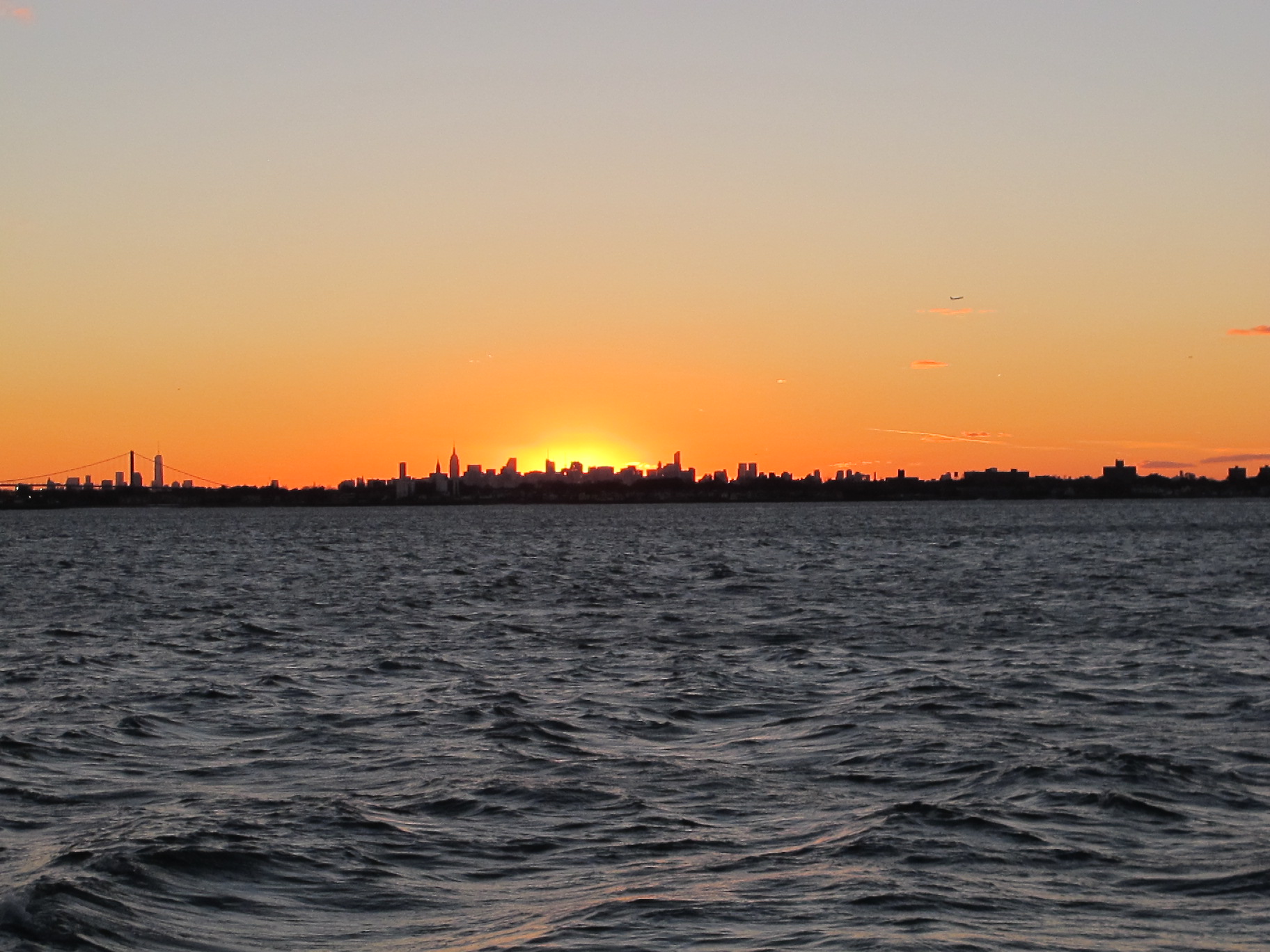
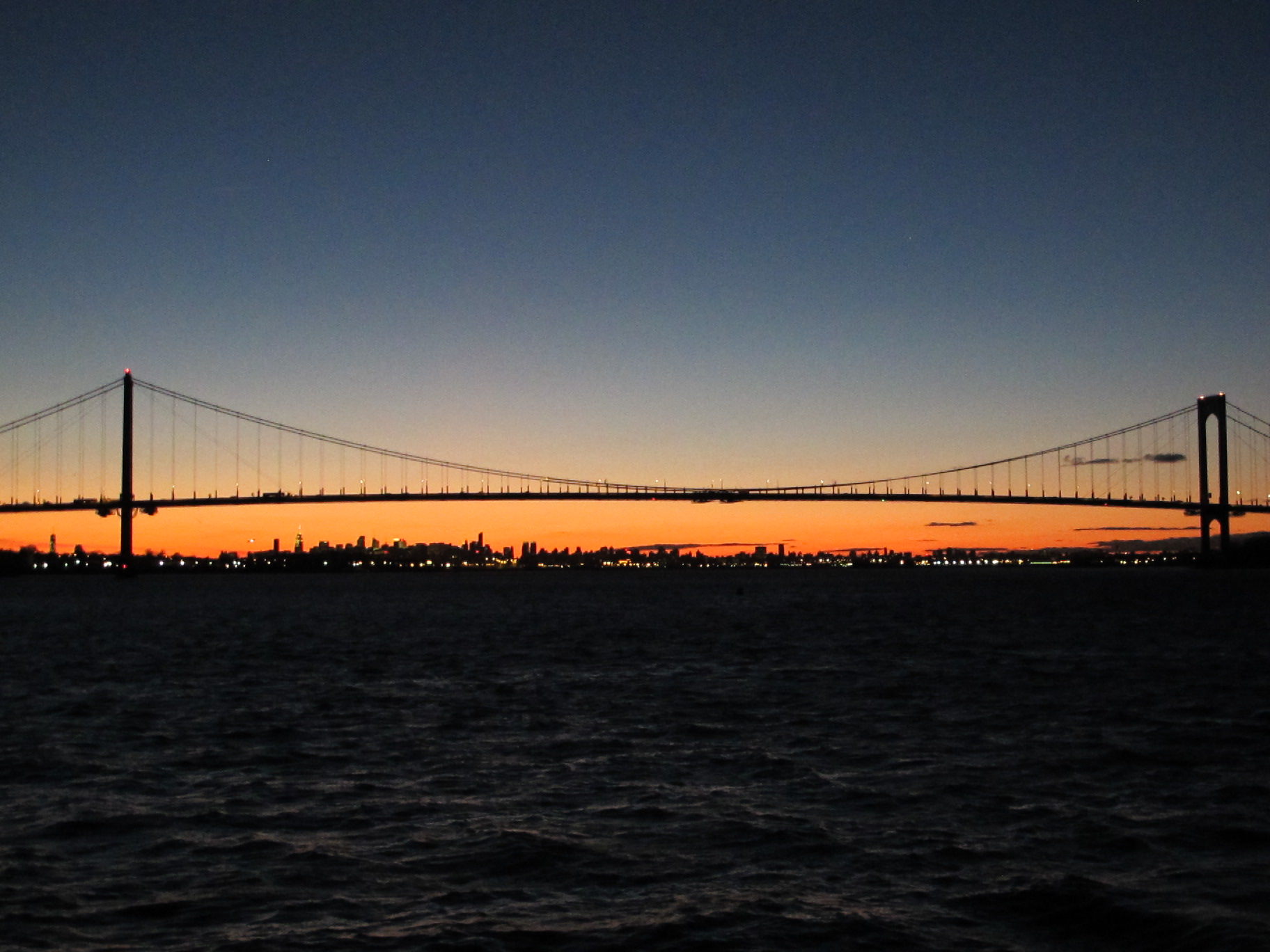
The city appears on the horizon, emerging out of the mirage that shimmers where the sea meets the sky. It grows as the day fades; it swallows the sun. The city rises around us and similarly swallows us into its glow, into its concrete web, into its madness. We enter the Bronx on the pulse of one of the main arteries, flowing in through the back entrance to the city. The air smells of asphalt, of sewage, of acrid chemicals, of exhaust. Sirens wail in the distance.
At night you can feel it the best.
It is in the decaying buildings and in the trash swirling in the cold wind.
It is in the clatter of metal and rasp of tires on concrete.
It is in the barred, the locked, the shuttered.
We silently pass each other;
your face tired and eyes downcast in the artificial light.
It would be too terrifying to ask what you are doing here,
because of what it would say about myself.
I finger the keys in my pocket and quicken my pace.